
Nine out of ten app startups fail. Not because the tech fails, but because the idea is wrong or poorly timed.
The mobile app market is growing fast. It is expected to reach $305 billion by 2026, with steady growth in the coming years. In the US alone, the app market generated $52.3 billion in 2024, showing strong demand. Behind these numbers, every founder is asking the same question: What app should I build next?
This question matters more than ever. Over 300 million Americans use smartphones. On average, people spend more than four hours a day on their devices. At the same time, tools like AI, 5G, and low-code platforms have made app development much faster and easier. In many cases, development time has dropped by 40 to 60 percent.
But building an app is no longer the hardest part. Choosing the right idea is.
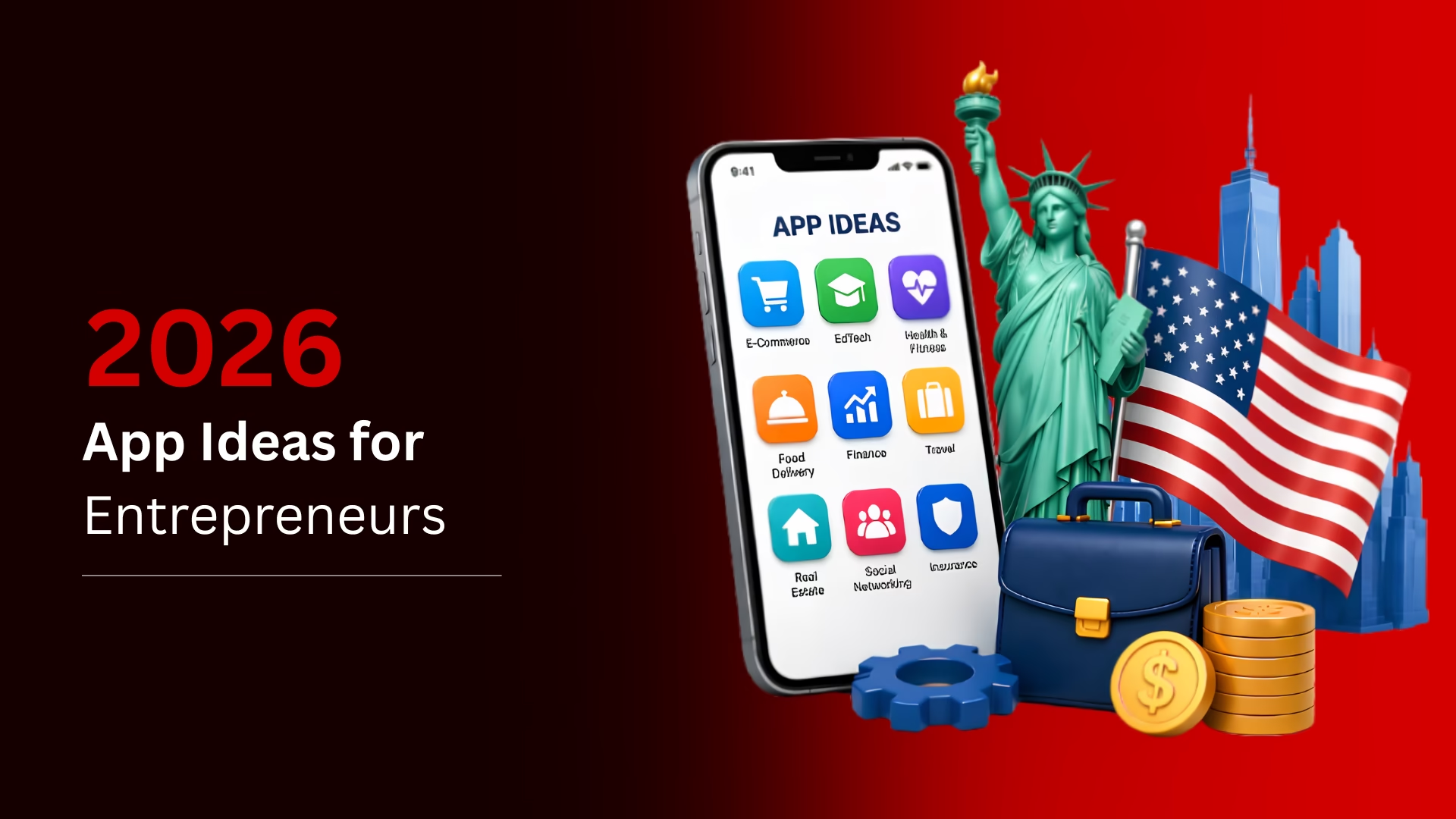
This is not a typical list of random app ideas. This guide shares 50+ practical web and mobile app ideas for 2026. Each idea is based on real market demand and organized by industry, especially for US entrepreneurs who want to move quickly.
You will also find key details for each idea, including how it can make money, important features, and why the timing is right. Whether you want to launch a simple MVP or build a full SaaS product, these ideas focus on real opportunities that can work.
Why 2026 Is a Key Year for US App Startups
Several major changes are coming together, creating a strong opportunity for entrepreneurs in the US. This is not a small shift. It’s a major transformation in how businesses run and how people use digital products.
Current software trends clearly show this growth. AI is no longer optional. Around 63% of mobile apps now include AI features. At the same time, low-code and no-code platforms are growing fast, making it easier for non-technical founders to build and launch apps in weeks instead of months.
User behavior has also changed for good. More than 55% of web traffic in the US now comes from mobile devices. App subscriptions and in-app purchases are increasing, especially in areas like health, finance, and productivity.
If you’re thinking, “Is it too late to launch an app in 2026?” — the answer is no. The trending mobile app in the US is still one of the biggest app markets in the world. Many sectors like AI tools, fintech, and health tech are still growing and not fully saturated.
The opportunity is still wide open. The real challenge is choosing the right niche, and some of the best opportunities may not be obvious at first.
We have listed! Top Questions Before Hiring App Development
How to Evaluate an App Idea Before You Build It
Not every app idea is worth months of development. Smart founders test quickly before investing time and money. Here’s a simple way to check if your idea is strong or just a distraction.
Market demand:
First, check if people are actually looking for this solution. Use tools like Google Trends, SEMrush, or even search insights to see real demand. If no one is searching for it, the idea may not work.
Revenue model:
Think about how the app will make money. Can it earn through subscriptions, ads, transactions, or premium features? Good ideas have clear and repeatable revenue streams.
Technical feasibility:
Ask yourself if a small team can build a basic version (MVP) in 8–12 weeks. If it needs years ofdevelopment, it may not be practical to start now.
Competitive gap:
Look at existing apps. Are they slow, expensive, or missing key features? Strong ideas improve what already exists or serve a group that is currently ignored.
Regulations:
In industries like healthcare, finance, or education, rules matter. Compliance like HIPAA or SOC 2 can affect how fast and easily you can launch.
Many founders wonder if their idea is good enough. The best way to know is simple: test it with real users before building. Use landing pages, quick surveys, or user interviews. These methods are cheap and give real insights.
We have listed! Top AI App Ideas
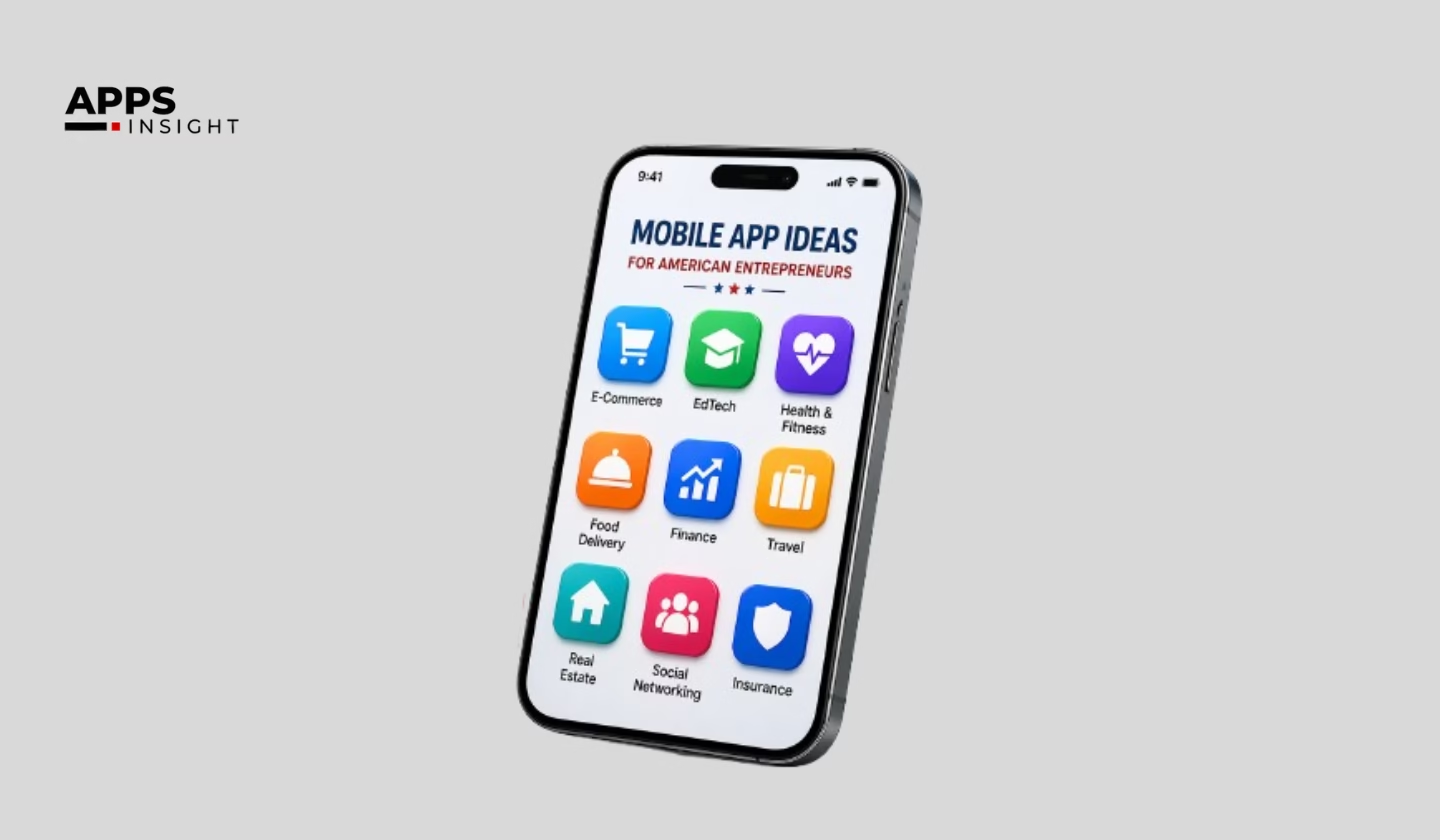
50+ Web and Mobile App Ideas for American Entrepreneurs
The ideas below are organized by industry. Each one includes the main concept, why it works, key features, and how it can generate revenue.
Some ideas are obvious. Others are opportunities that many people overlook.
Healthcare and Wellness Apps
The digital health market in the US is growing fast. Telehealth is no longer a temporary trend. It has become a normal part of healthcare. Patients now expect mobile apps for everything, from booking doctor visits to managing long-term health conditions.
1) AI-Powered Symptom Checker and Triage App
People want quick answers before deciding to see a doctor. An AI-based symptom checker can help users understand their condition instantly.
The app should allow:
- Simple text input for symptoms
- Urgency scoring to suggest next steps
- Recommendations for nearby clinics
- Option to switch to telehealth consultation
This type of app can generate revenue through doctor referrals and paid health reports.
2) Remote Patient Monitoring (RPM) Platform
RPM apps track health data like blood pressure, heart rate, and glucose levels in real time. These apps alert doctors when something is wrong.
Key features include:
- Integration with wearable devices
- Automatic alerts for abnormal readings
- Care plan automation
- Secure dashboards for doctors
This works well as a subscription-based SaaS product for hospitals and clinics, especially in the US where reimbursement policies support RPM.
3) Mental Health Matching App
There is a shortage of mental health professionals, which makes smart matching apps very valuable. These apps connect users with therapists based on their needs.
Important features:
- Matching based on specialization and insurance
- Verified therapist profiles
- Real-time availability
- Video consultation support
- Progress tracking after sessions
Revenue can come from therapist subscriptions and booking fees.
4) Women’s Health Tracking App
Women’s health apps are growing quickly. These apps help track fertility, pregnancy, menopause, and overall hormonal health.
Core features should include:
- Cycle tracking and prediction
- Symptom logging
- Lab report insights
- Educational content approved by experts
The femtech market is expanding rapidly, making this a strong long-term opportunity.
5) On-Demand Home Healthcare App
These apps connect patients with healthcare providers at home or through video calls. This includes services like nursing care, therapy, and post-surgery support.
Basic features:
- Doctor and caregiver profiles
- Instant booking
- Secure video consultations
- Digital prescriptions
Revenue comes from service fees and insurance partnerships.
6) Medication Management and Adherence App
Managing multiple medicines can be difficult, especially for older patients. These apps help users stay on track with their prescriptions.
Key features:
- Medication reminders
- Drug interaction alerts
- Barcode scanning for identification
- Auto refill options
- Caregiver notifications
- Integration with health records
These apps are especially useful for patients with chronic conditions or multiple prescriptions.
Healthcare apps are moving toward convenience, personalization, and real-time care. Apps that combine AI, data tracking, and seamless user experience will continue to grow in demand.
Want to know? Cost to Develop a Telemedicine App
Fintech and Personal Finance Apps
If healthcare apps focus on how people feel, fintech apps focus on how they manage money. In 2025, fintech app downloads in the US reached record levels. The global e-trading app market is expected to hit $13.3 billion by 2026. Personal finance apps continue to see high user engagement because people want better control over their money.
7) AI Financial Advisor for Millennials and Gen Z
This type of app goes beyond basic investing. It helps users manage student loans, plan taxes for side income, and save for major goals like buying a home.
It should offer:
- Personalized investment suggestions
- Spending insights
- Automated savings based on goals
Revenue can come from premium plans, financial product partnerships, and advisory fees based on assets.
8) Expense Splitting and Group Finance App
This app improves how groups manage shared expenses. It works well for roommates, families, and friends.
Key features:
- Automatic bank syncing
- Recurring expense splitting
- Real-time budget tracking
Unlike basic apps, it should also support shared savings goals and send payment reminders linked to bank accounts.
9) Freelancer Invoice and Tax Management App
With over 76 million freelancers in the US, there is strong demand for better financial tools. This app should combine invoicing with tax management.
Important features:
- Multi-client dashboard
- Real-time tax estimates
- Quarterly tax reminders
- Receipt scanning using OCR
It should also integrate with tools like QuickBooks and FreshBooks for better workflow.
10) Subscription Tracker and Optimizer
Most Americans have 6 to 8 active subscriptions. This app helps users track and reduce unnecessary spending.
Smart features:
- Detect duplicate subscriptions
- Alert users about price increases
- Auto-cancel unused services
The app can earn through savings-based commissions or premium upgrades.
11) Micro-Investment Platform for Niche Assets
This platform allows users to invest small amounts (starting from $10) in assets beyond stocks. Examples include art, wine, collectibles, and renewable energy projects.
Key features:
- Portfolio diversification tracking
- Asset performance insights
- Educational content for beginners
There is strong growth potential in alternative investments.
12) Small Business Cash Flow Forecasting Tool
This app helps small businesses manage cash flow more effectively. It connects with tools like QuickBooks, Stripe, and bank accounts.
Core features:
- 90-day cash flow forecasts
- Invoice tracking and aging analysis
- Expense categorization
- Alerts for low cash reserves
This works well as a SaaS product for businesses with fewer than 50 employees.
Fintech apps are evolving quickly. Users now expect more than basic tracking. They want smart insights, automation, and tools that simplify complex financial decisions. Businesses that build practical, user-focused solutions will see strong growth in this space.
Look at once! Best App Ideas With Features, Benefits, & Costs
Education and E-Learning Apps
Money is important, but knowledge matters just as much. The US edtech market is still one of the largest in the world. Many founders often ask, “What are the best education app ideas for the future?” Based on experience, here are some strong options.
13) AI Tutoring App with Adaptive Learning
This type of app uses AI to provide personalized tutoring. It adjusts the difficulty level based on how the student performs in real time. It can cover K-12 education, test prep like SAT, ACT, GRE, and even professional courses.
The app should include:
- Progress tracking for parents
- Performance insights for teachers
- Gamified features to keep students engaged
We have listed! Translation Apps
14) Skill-Based Micro-Learning Platform
This platform focuses on short lessons, usually 5–10 minutes long. It is ideal for working professionals who want to learn skills like data analytics, AI basics, or leadership.
Each lesson should include a quick exercise or quiz.
Best monetization models include:
- Subscriptions
- Employer-sponsored access
- Enterprise plans for companies training their teams
We have listed! Best AI Tools for Students (Mostly FREE)
15) Language Learning App for Immigrants and ESL Users
This app is designed for immigrants in the US. It should offer practical English learning with cultural context and workplace communication.
Key features:
- Speech recognition for pronunciation
- Community forums for support
- Certificates that employers can recognize
Revenue can come from freemium plans and partnerships with NGOs or government programs.
16) Virtual Lab and STEM Simulation App
This app uses AR/VR to create virtual labs for subjects like chemistry, biology, and physics. Students can perform experiments and learn lab safety without needing physical equipment.
Benefits:
- Lower costs for schools
- Better understanding through visual learning
Schools can subscribe to this on a yearly basis.
17) Parent-Teacher Communication Platform
This app simplifies communication between parents and teachers. It replaces emails, notes, and scattered messages.
Features include:
- Real-time scheduling
- Student progress tracking
- Behavior reports
- Secure document sharing
- Multilingual support
It works well as a SaaS product for schools with per-student or per-school pricing.
18) Trade Skills Training App
This app focuses on practical skills like electrical work, plumbing, and HVAC. These industries face a major workforce shortage in the US.
Key features:
- Video-based training
- Certification tracking
- Job listings
- Apprenticeship matching
- Hands-on assessments
This area has strong business potential due to high demand for skilled workers.
Looking for? EdTech Agentic AI Developers
On-Demand Services and Marketplace Apps
Education prepares people for jobs, but on-demand apps help them earn. The gig economy is growing fast, and marketplace apps that connect service providers with customers are still one of the best startup ideas in the US. These platforms can quickly achieve product-market fit when built correctly.
19) On-Demand Staffing App
This type of app helps businesses hire temporary staff for events, hospitality, and retail. It works like the Poured app, which made it easier for companies to find and manage workers.
Key features include:
- Instant job posting
- Worker ratings and reviews
- Shift scheduling and management
- Automated payroll processing
This model is ideal for businesses that need flexible staffing.
20) Home Services Marketplace
A platform like TaskRabbit that connects users with trusted professionals like plumbers, electricians, and handymen.
To stand out, focus on:
- Verified and background-checked professionals
- Clear, upfront pricing
- Real-time booking and scheduling
- Guaranteed service timelines
Revenue usually comes from a commission on each completed service.
21) Pet Services On-Demand App
This app combines multiple services like dog walking, pet sitting, grooming, and even online vet consultations.
The US pet market is worth over $157 billion, and demand for convenience is rising.
Useful features:
- GPS tracking for pet walks
- Pet health record storage
- Vaccination reminders
- Easy booking and payments
These features help increase user trust and long-term engagement.
22) Personal Chef and Meal Prep Marketplace
This platform connects chefs with people who want fresh, customized meals at home.
Important features include:
- Dietary preference matching
- Allergen filters
- Verified chef profiles
- Subscription meal plans
You can use both subscription and per-order pricing models.
23) Local Experiences and Activities Marketplace
A platform where users can book local activities like cooking classes, hiking tours, art workshops, or sports coaching.
It works well for:
- Locals exploring their city
- Tourists looking for authentic experiences
Revenue comes from booking fees and paid listings for hosts.
24) Senior Care Services App
This app provides support services for elderly people, such as companionship, errands, transportation, and medicine pickup.
With the growing population over 65 in the US, demand is increasing steadily.
Key features:
- Caregiver background checks
- GPS tracking for safety
- Family dashboards for updates
- Integration with Medicare-approved services
This model offers long-term growth potential due to consistent demand.
Real Estate and Property Tech Apps
If on-demand apps changed how people work and eat, this category focuses on where people live. Real estate technology is growing fast, with strong investor interest. Today, more than half of home buyers begin their search online, and property managers are quickly moving to digital tools.
25) AI-Powered Property Valuation Tool
This is a web app that uses machine learning to estimate property prices. It looks at past sales, neighborhood trends, school ratings, crime levels, and economic data.
The tool should give instant property value estimates along with confidence scores and market insights. It can also suggest the best time to buy or sell.
Revenue model: Realtor subscriptions and lead generation partnerships.
26) Tenant-Landlord Communication App
This platform helps manage daily property operations. It includes features like maintenance requests, rent payments, lease tracking, and announcements.
Users can upload photos or videos for maintenance issues. It also supports automated work orders and digital lease signing.
- Best suited for property managers handling 50+ units.
- Revenue model: SaaS subscription.
27) Co-Living and Roommate Matching App
This app helps people find compatible roommates based on lifestyle, schedule, cleanliness, work habits, and budget.
It is especially useful in expensive cities like New York, San Francisco, Los Angeles, and Austin where rent is high.
Revenue model: Listing fees and premium matching features.
28) Commercial Real Estate Analytics Dashboard
This is a data-focused platform for investors in commercial real estate. It provides insights like occupancy rates, rent trends, market comparisons, and cap rate analysis.
The app collects data from public records, census data, and listing platforms. It also shows demographic trends.
Revenue model: Enterprise SaaS for investment firms and brokers.
29) Smart Home Integration Platform
This app connects different smart home devices into one dashboard. It supports devices like thermostats, locks, cameras, and lighting systems.
It also uses AI to automate tasks and suggest energy savings. Users can get monthly reports on energy usage.
Revenue model: Hardware partnerships and premium automation features.

Food and Restaurant Technology Apps
Food is personal, but it’s also a massive industry. In the US alone, the food delivery market is worth over $100 billion. Beyond delivery, many new apps are improving how restaurants operate, manage food, and serve customers. This creates strong opportunities for innovation.
30) Restaurant Inventory and Waste Reduction App
This type of app uses AI to predict inventory needs and reduce food waste by around 20–30%. It connects with POS systems and supplier platforms to keep everything in sync.
Key features include:
- Expiry date tracking
- Automatic reordering when stock is low
- Waste tracking and reporting
- Cost-per-dish analysis
These apps usually follow a SaaS model, with pricing based on the size of the restaurant.
We have listed! Innovative Restaurant Business Ideas That Are Disrupting the Industry
31) Allergen-Safe Dining Finder
This app helps people with food allergies find safe places to eat. Users can search for restaurants with verified allergen-friendly menus, read real reviews, and share their dietary needs directly with the kitchen.
Useful features include:
- Barcode scanner for packaged food safety
- Verified restaurant badges
- Emergency allergy cards for travel
- Direct communication with restaurants
It improves trust and safety for users who need strict dietary control.
32) Ghost Kitchen Management Platform
Ghost kitchens run multiple virtual brands from one location. This platform helps manage everything in one place.
Main features include:
- Managing multiple menus
- Handling orders from different delivery apps
- Centralized performance analytics
- Integration with kitchen display systems
This space is growing fast as delivery-first food businesses become more common in major US cities.
33) Farm-to-Table Marketplace App
This app connects local farmers directly with consumers and restaurants. It supports fresh, local, and seasonal food distribution.
Key features include:
- Subscription-based produce boxes
- Alerts for seasonal availability
- Farmer profiles with growing methods
- Flexible delivery or pickup options
Revenue typically comes from transaction fees and premium listings for farmers.
Fitness and Sports Apps
What people eat is important. How they stay active matters just as much. The digital fitness market keeps growing, and it is not slowing down anytime soon. Users now expect personalized and flexible workout options instead of basic gym apps. The rise of wearable devices makes fitness apps even more effective in 2026.
34) AI Personal Trainer App
This app uses AI and computer vision to track workout form through a smartphone camera in real time. It gives instant feedback and corrections to improve performance. The app creates personalized workout plans, tracks body changes, and adjusts routines based on recovery data from wearables. It usually follows a subscription model with a free trial.
35) Sports Coaching Marketplace
This type of platform connects athletes with local coaches for skill development. It works similar to apps that match users with sports experts for one-on-one training. Key features include coach verification, session booking, secure payments, video analysis, and progress tracking. It helps users learn faster with personalized guidance.
36) Recovery and Mobility App
This app focuses on post-workout recovery. It provides guided stretching, mobility exercises, and foam rolling routines based on user activity. It connects with tools like Apple Health, Google Fit, and Garmin to give smart recovery suggestions. Features include video sessions, soreness tracking, and sleep analysis to improve overall fitness.
37) Youth Sports League Management App
This app helps manage local sports leagues. It includes features like player registration, scheduling, team communication, score tracking, and payment handling. Parents receive updates about matches and schedules. Coaches can manage teams and track performance. It usually works on a SaaS model with pricing based on the number of teams.
We have listed! Android App Ideas For Startups
Logistics, Travel, and Transportation Apps
Fitness apps help people stay active. These ideas focus on moving goods and people more efficiently. As supply chains become more complex and travel habits change, there are many opportunities for smart app-based solutions for both businesses and users.
38) Last-Mile Delivery Optimization Platform
This app uses AI to improve delivery routes for local fleets. It connects with e-commerce platforms like Shopify and WooCommerce and offers real-time tracking for customers.
Key features should include:
- Proof-of-delivery with photos
- Automatic customer updates
- Fleet performance tracking
The pricing model can be SaaS-based, either per vehicle or per delivery.
Connect with Best ECommerce App Development Platform For Startups
39) Electric Vehicle Charging Station Finder
This app helps EV users find charging stations easily. It shows real-time availability, compares pricing, and suggests charging stops during route planning. Users can also reserve charging slots.
With EV adoption growing fast, there is strong demand for better apps in this space. Revenue can come from ads, premium features, and partnerships with charging networks.
40) Corporate Travel Management App
This app simplifies business travel. It manages bookings, tracks expenses, checks policy compliance, and organizes travel plans.
It is ideal for mid-sized companies (50–500 employees) that need affordable solutions instead of expensive tools like SAP Concur. Integration with airlines, hotels, and expense tools is important.
41) Freight Matching Marketplace
This platform connects shippers with carriers for both partial (LTL) and full truckload (FTL) shipments.
Key features include:
- AI-based pricing
- Load optimization
- Carrier rating systems
- Real-time shipment tracking
The US trucking industry handles over $900 billion in goods each year, but digital freight matching is still underused, creating a big opportunity.
SaaS and Productivity Apps
All industries today depend on software. That’s why SaaS remains one of the most reliable opportunities in 2026. Many founders keep asking, “Which SaaS app ideas are profitable for startups?” The reason is simple. SaaS brings recurring revenue, which attracts investors and ensures steady growth. The ideas below directly address this demand.
Looking for? Employee Time-Tracking Apps
42) AI Meeting Notes and Action Tracker
This tool records meetings, converts speech into text, and creates summaries. It also identifies action items and connects with CRM systems. It should work with platforms like Zoom, Google Meet, and Microsoft Teams. Extra features like follow-up reminders, sentiment analysis, and searchable records can make it stand out. Pricing can be based on per user.
43) Employee Onboarding Automation Platform
This app simplifies the onboarding process. It handles document collection, training schedules, IT requests, and compliance tasks automatically. It helps companies reduce onboarding time and removes manual HR work. Integration with tools like BambooHR, Gusto, and Rippling is important. Pricing can scale based on the number of employees.
We have listed! Best Workforce Management Software (Free/ Paid)
44) Client Portal for Service Businesses
This is a white-label platform for agencies and consultants. It allows them to share files, track project progress, manage approvals, and handle billing in one place. Features include branded dashboards, file tracking, comments, and invoice creation. It works on a monthly subscription model.
45) AI-Powered Content Calendar and Scheduler
This tool goes beyond simple scheduling. It uses AI to suggest the best posting times, content ideas, and trending topics. It can also predict performance and help teams plan better. Collaboration features like approvals and competitor tracking make it useful for marketing teams and agencies.
We have listed! Social Media Automation Tools
46) Compliance and Audit Management Tool
This app helps businesses manage regulations like SOC 2, HIPAA, and GDPR. It tracks compliance, collects required data, and maintains audit records. It also provides workflows for fixing issues and gives real-time compliance scores. Due to increasing regulations, especially in healthcare and finance, this category has strong demand and high pricing potential.
Entertainment, Social, and Community Apps
Productivity apps help people get work done. This category focuses on helping people connect. Social and entertainment apps still get the most downloads. But in 2026, the real growth is in niche communities, not large platforms competing with Meta or TikTok.
47) Niche Community and Forum Apps
These apps are built for specific groups like remote workers, new parents, hobby collectors, or people with health conditions. They offer features like discussion forums, resource libraries, event calendars, and expert Q&A sessions.
Revenue usually comes from paid memberships and partnerships with brands that target the same audience.
48) Local Event Discovery Apps
These apps suggest events based on user interests, location, and past activity. They also consider what friends are attending.
Key features include:
- Ticket booking
- Group planning tools
- Photo sharing after events
They make money through ticket commissions, promoted listings, and premium personalization options.
We have listed! Location Tracking Apps For Families, And Personal Safety
49) Interactive Storytelling Apps
These apps use AI to create stories where users make choices that shape the outcome. It’s a more engaging experience than traditional content.
Popular features include:
- Multiple story paths
- Character customization
- User-created content
- Episodic story updates
They are especially popular with younger users looking for interactive entertainment.
50) Creator Economy Management Tools
These platforms help content creators manage their work across channels like YouTube, TikTok, Instagram, and podcasts.
Main features include:
- Sponsorship and brand deal tracking
- Revenue monitoring
- Media kit creation
- Audience analytics
- Contract and tax management
Most tools follow a subscription model, with pricing based on the creator’s earnings or scale.
Look at once! Most Downloaded Apps In USA
Emerging Technology App Ideas
The ideas mentioned earlier focus on proven markets. These next ideas go a step further. They use advanced technologies that are becoming mainstream and offer strong opportunities for early adopters.
51) AR Interior Design Visualizer
This app helps users see how furniture, colors, and decor will look in their real space using augmented reality. It works through a smartphone camera.
It can include:
- Product catalogs from partner brands
- Room measurement tools
- Shareable design layouts
Revenue can come from affiliate sales and paid design services.
52) AI-Powered Legal Document Generator
This app creates legal documents like contracts, NDAs, and terms of service automatically. Users can customize clauses and check compliance.
Key features:
- Document comparison
- Version tracking
- E-signature support
- Region-specific templates
It follows a SaaS model and targets startups, freelancers, and small businesses.
53) Blockchain-Based Credential Verification App
This app stores educational and professional credentials on blockchain. It ensures records cannot be changed or faked.
Target users include:
- HR teams
- Universities
- Certification bodies
Revenue comes from API usage and enterprise licensing.
Looking for? Blockchain Technology Integration Companies
54) Voice-First Accessibility App
This app is built for users with visual or mobility challenges. It works mainly through voice commands.
It can help with:
- Navigation
- Reading documents
- Managing tasks
- Controlling smart devices
Monetization can include premium features and partnerships with accessibility groups.
55) Carbon Footprint Tracker for Businesses
This web app helps companies measure and manage their carbon emissions. It also supports ESG reporting and sustainability tracking.
Features include:
- Emission tracking
- Supply chain analysis
- Automated reports
- Sustainability insights
It targets businesses facing regulatory pressure. Pricing is based on enterprise SaaS and ERP integrations.
Read once! Mobile App Development Trends To Watch
Choosing the Right App Type: Native, Web, or PWA
Every app idea needs the right platform to succeed. Picking the wrong type early can increase your costs and delay your launch. In many cases, founders end up spending almost double before even releasing the first version.
Here’s a simple breakdown to help you decide:
| App Type | Best For | Avg. Cost Range | Time to MVP |
|---|---|---|---|
| Native (iOS/Android) | High-performance apps, apps that use device features like camera, GPS, sensors | $50K – $250K+ | 12–20 weeks |
| Web App (SaaS) | Business tools, dashboards, admin panels, content platforms | $30K – $150K | 8–16 weeks |
| Progressive Web App (PWA) | Content-focused apps, e-commerce, marketplaces, fast cross-platform reach | $25K – $100K | 6–12 weeks |
| Cross-Platform (Flutter/React Native) | Apps targeting both iOS and Android with one codebase | $40K – $200K | 10–18 weeks |
One of the most common questions founders ask is: “Should I build a native app or a web app?”
The answer depends on your app’s core needs.
- If your app relies heavily on device features like camera, GPS, push notifications, or Bluetooth, then native or cross-platform apps are the better choice. They offer better performance and deeper device integration.
- If your app is more focused on content, data, or business workflows like dashboards, marketplaces, or SaaS tools, then a web app or PWA is usually faster and more cost-effective. You can launch quickly and start generating ROI sooner.
Start with a lean version (MVP) instead of building everything at once. Many successful startups begin with a web app or PWA to test the market, then invest in native apps after gaining traction.
Choosing the right app type is not just a technical decision. It directly impacts your budget, timeline, scalability, and user experience. So take time to align your platform choice with your business goals.
Key Technology Stack Trends for 2026
The technology stack you choose has a direct impact on how your app performs, scales, and how easy it is to maintain. It also affects how quickly you can find skilled developers. Based on current market trends, here’s what most US startups are using in 2026.
Frontend Technologies
For building user interfaces, developers are focusing on modern, fast frameworks.
- React, Next.js, and Vue.js are widely used for web applications due to their flexibility and performance.
- For mobile apps, Flutter and React Native are popular choices as they allow you to build apps for both iOS and Android using a single codebase.
These tools help reduce development time while maintaining a smooth user experience.
Backend Technologies
The backend handles data, logic, and performance. Choosing the right one is critical.
- Node.js is preferred for scalable, real-time applications.
- Python (Django and FastAPI) is used for fast development and AI-based systems.
- Go (Golang) is gaining popularity for high-performance and large-scale systems.
In addition, serverless architectures like AWS Lambda and Firebase are becoming more common. They reduce infrastructure management and help startups scale faster.
AI and Machine Learning
AI is no longer optional. It is becoming a core part of modern apps.
- Tools like OpenAI APIs and LangChain are widely used for automation, chatbots, and smart features.
- Many companies are building custom-trained AI models for better personalization and decision-making.
Today, around 60%+ of mobile apps include AI features, showing how important it has become.
Database Technologies
The right database depends on your app’s needs.
- PostgreSQL remains a top choice for structured and reliable data.
- MongoDB and Firebase are great for real-time and flexible data handling.
- Vector databases like Pinecone are now used for AI-driven search and recommendation systems.
Using the right database improves speed, performance, and scalability.
Cloud Infrastructure
Cloud platforms are the backbone of modern applications.
- AWS continues to lead the market.
- Google Cloud and Microsoft Azure are also strong options.
Most startups now build cloud-native applications from the beginning. Many also use multi-cloud strategies to improve reliability and avoid vendor lock-in.
DevOps and Deployment
Efficient development and deployment processes are essential for growth.
- CI/CD pipelines using tools like GitHub Actions help automate testing and deployment.
- Docker is widely used for containerization, making apps easier to manage and scale.
- Terraform is used for infrastructure as code, allowing teams to manage servers and resources efficiently.
These practices reduce errors, speed up releases, and improve overall productivity.
In 2026, the focus is on speed, scalability, and smart automation. Startups are choosing flexible stacks that support rapid growth while keeping costs under control.
Selecting the right combination of frontend, backend, cloud, and AI tools can give your product a strong competitive advantage from day one.
Monetization Models That Work
A strong tech stack helps build the product, but the right revenue model is what actually grows the business. In today’s app market, choosing how you earn is just as important as what you build. Here are the models that are performing well:
Subscription (SaaS):
Users pay monthly or yearly fees. This model works best for B2B tools and productivity apps. In-app subscriptions are now one of the fastest-growing revenue streams for non-gaming apps.
Freemium Model:
You offer a free version and charge for advanced features. This works well for apps targeting large audiences. Typically, around 2–5% of users convert into paying customers, but with scale, it becomes highly profitable.
Transaction Fees:
You earn a percentage from each transaction. This is common in marketplaces, fintech apps, and service platforms like booking or delivery apps.
Advertising:
Apps show ads to users and earn revenue from impressions or clicks. This model works best when you have high traffic (100K+ monthly users). It still contributes a major share of global mobile app revenue.
Per-Seat Licensing:
Businesses pay based on the number of users. This is widely used in enterprise SaaS and team collaboration tools.
Data Monetization:
Apps collect and analyze user data, then sell insights in an aggregated and anonymous way. This must strictly follow privacy laws in the US and other regions.
In practice, many successful apps combine two or more of these models to maximize revenue.
We have llisted! Proven App Monetization Strategies to Maximize Your ROI
Common Mistakes That Kill App Startups
Having a great idea is important, but it’s not enough. Most app startups fail because of execution mistakes, not because the idea was bad. Here are the most common issues and how to avoid them:
Building Without Validation
Many founders invest heavily in development before checking if users actually want the product. Instead, start small. Use landing pages, surveys, or waitlists to test demand before building.
Choosing the Wrong Development Partner
A poor development team can slow you down or deliver the wrong product. Always choose a partner with proven experience, strong communication, and relevant industry knowledge.
Ignoring User Feedback
Launching the app is just the beginning. The first version is never perfect. Successful apps keep improving based on real user feedback and behavior.
Underestimating Ongoing Costs
Building the app is only part of the expense. Maintenance, hosting, updates, and bug fixes usually cost around 15–20% of the initial development cost every year. Plan your budget accordingly.
Ignoring Compliance and Regulations
In industries like healthcare, fintech, and education, compliance is critical. Failing to meet regulations like HIPAA, PCI DSS, or COPPA can delay your launch or even shut down your app.
The difference between a successful app and a failed one often comes down to smart decisions after the idea stage. Focus on validating your concept, choosing the right revenue model, and continuously improving your product.
If you get these basics right, you increase your chances of building a scalable and profitable app.
Confused? Off The Shelf vs Custom Mobile App Development: Which One to Choose?
How AppsInsight Helps You Build Web and Mobile App Solutions for Startups

Building a web or mobile app for a startup is not just about development. It’s about choosing the right strategy, the right technology, and the right tech partner. This is where AppsInsight makes a real difference.
AppsInsight connects startups with carefully selected development companies that have proven experience in building scalable and high-performing apps. Instead of spending weeks searching for reliable agencies, you get access to a curated list of top service providers based on expertise, industry focus, and client success.
One of the biggest advantages is clarity. AppsInsight helps you compare companies based on pricing, services, technology stack, and real-world case studies. This makes decision-making faster and reduces the risk of choosing the wrong partner.
For startups, speed and cost matter. AppsInsight highlights companies that offer flexible engagement models, whether you need MVP development, full-scale app development, or ongoing support. This helps you launch faster while staying within budget.
The platform also focuses on quality and visibility. By working with trusted companies listed on AppsInsight, startups can ensure better project execution, smoother communication, and scalable solutions designed for growth.
In short, AppsInsight acts as a bridge between your idea and the right execution partner. It simplifies the process, saves time, and increases your chances of building a successful web or mobile app.

Sum up
All the ideas, tools, and strategies shared above lead to one clear point: this is the right time to act.
These app ideas are not just concepts. They are based on real market demand, proven models, and the latest technology trends shaping the future. Founders who take action with the right idea, skilled team, and proper execution plan can tap into strong growth opportunities.
The real risk is not choosing the wrong idea. The real risk is waiting too long and missing the opportunity.
Every successful app begins with a simple discussion about a problem and how to solve it. Whether you want to build a healthcare app, fintech solution, or AI-powered SaaS platform, the first step is always to validate your idea and create an initial version.
If you’re ready to turn your idea into a real product, connect with experts and start building your MVP before committing to full-scale development.