
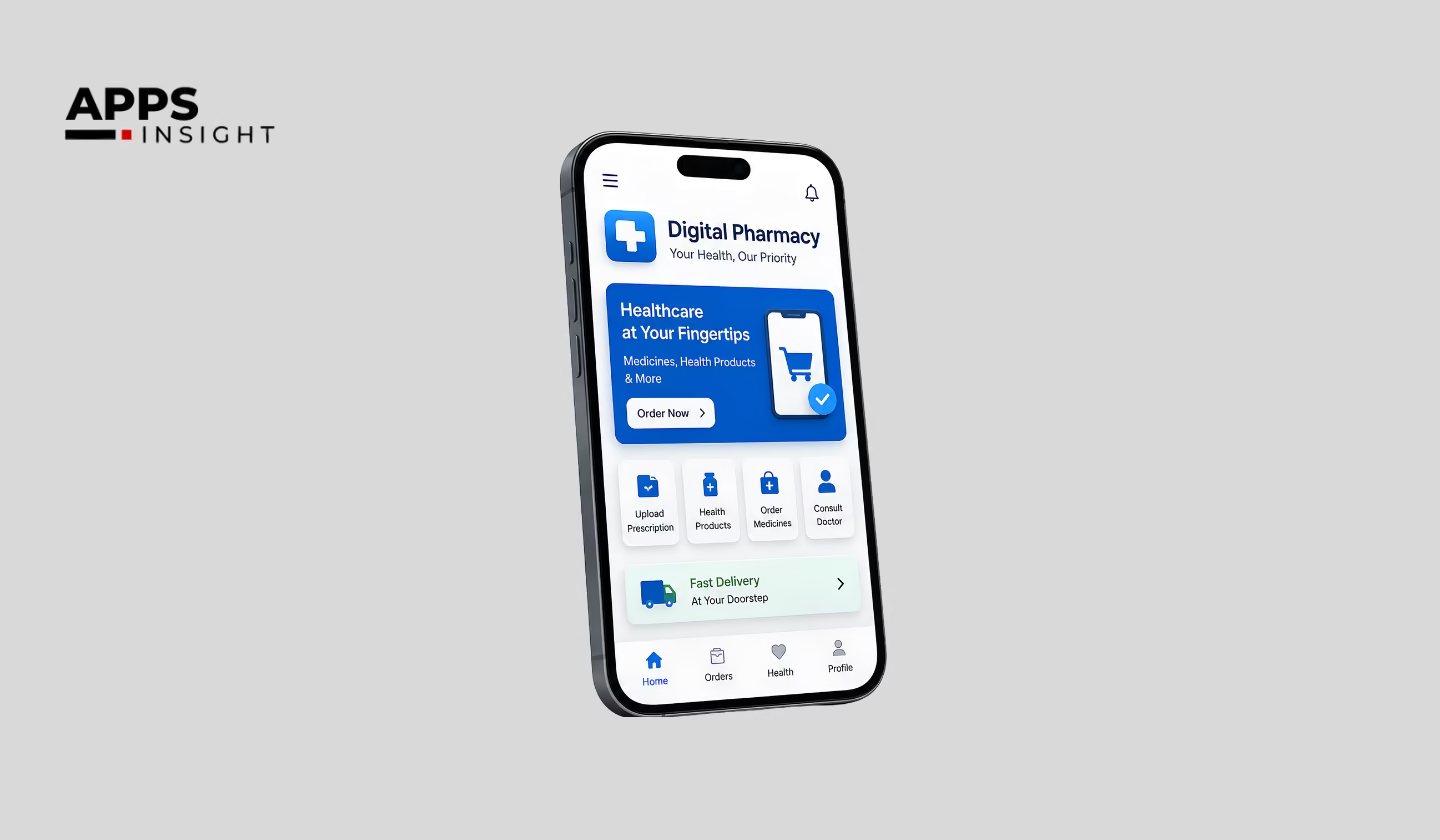
Healthcare services are becoming more digital, faster, and more connected than before. Patients now expect online consultations, digital prescriptions, medicine delivery, and easy communication with healthcare providers through mobile apps and web platforms. Because of this shift, healthcare startups are paying closer attention to Digital Pharmacy Market Trends to understand where the industry is moving and how they can meet changing patient expectations.
Digital pharmacies are no longer limited to online medicine ordering. They now include teleconsultation services, AI-supported medication management, remote patient monitoring, and digital therapeutic tools. These services are helping healthcare providers improve accessibility while also making healthcare processes more organized and efficient.
For startups entering this industry, understanding current market trends is important for long-term planning. Technology adoption in healthcare usually involves patient trust, data privacy, compliance requirements, and operational efficiency. Startups that follow industry developments early often find it easier to build systems that meet both business and patient needs.
This article explains ten important trends shaping the future of digital pharmacies and why healthcare startups should watch them carefully.
1. AI-Powered Personalization & Diagnostics
The global digital health and AI market was valued at USD 320.12 billion in 2025 and is projected to reach USD 2.3 trillion by 2035, growing at a CAGR of 21.8%.
Artificial intelligence is becoming more useful in pharmacy services because it can process large amounts of medical data quickly. Instead of only handling administrative tasks, AI systems are now helping healthcare providers analyze patient history, genetic information, and medication records.
One important application is predicting possible drug interactions. Patients with chronic conditions often take multiple medications at the same time. AI systems can identify risks faster by comparing prescription combinations against large medical databases.
Another growing area is personalized dosage recommendations. Different patients may react differently to the same medicine because of age, weight, medical history, or genetic factors. AI-supported tools can help healthcare providers make more informed dosage decisions based on patient-specific information.
Many startups are also investing in Healthcare AI solutions to improve patient support systems, automate prescription verification, and reduce medication errors. These systems are especially useful in pharmacies handling large prescription volumes daily.
AI diagnostics are also improving preventive healthcare. Early risk detection tools can help identify patterns linked to diabetes, cardiovascular conditions, or mental health concerns before symptoms become severe.
For healthcare startups, this trend shows the importance of building data-driven pharmacy platforms that support both operational efficiency and patient safety.
2. Telepharmacy Integration & Hybrid Models
The global telepharmacy market was valued at USD 10.50 billion in 2025 and is expected to reach USD 28.20 billion by 2034.
Telepharmacy allows pharmacists to provide services remotely through video calls, chat systems, and digital platforms. This model became more common after healthcare providers recognized the need for remote healthcare access.
Many pharmacies are now combining physical stores with digital consultation services. Patients may order medicines online while still receiving professional guidance from licensed pharmacists through virtual appointments.
Hybrid pharmacy models are especially useful for patients living in rural or underserved areas where physical healthcare access may be limited. Remote consultations can help patients understand dosage instructions, side effects, and medication schedules without traveling long distances.
Telepharmacy is also improving chronic disease management. Patients with diabetes, hypertension, or asthma often require regular medication monitoring. Digital pharmacy platforms can schedule follow-ups, send reminders, and provide counseling support remotely.
For startups launching a Digital Pharmacy App, telepharmacy integration is becoming an important feature because patients increasingly expect healthcare support beyond standard medicine delivery.
Healthcare providers also benefit from lower operational costs and improved patient engagement through remote services.
3. Hyper-Personalized Medication Management
Research shows that personalized medicine can improve treatment outcomes because patient-specific therapies reduce medication errors and improve adherence rates. Studies on telepharmacy implementation also reported a measurable decrease in medication errors.
Healthcare systems are moving toward more personalized treatment approaches. Instead of offering standardized medication plans for all patients, pharmacies are exploring customized therapies based on individual health conditions.
One emerging technology is 3D-printed medication. This process allows pharmacies to create pills that combine multiple medications into a single dose tailored for one patient. It can simplify medication schedules, especially for elderly patients who manage several prescriptions daily.
Hyper-personalized care also includes tracking patient adherence patterns. Digital pharmacy systems can monitor whether patients are taking medications regularly and provide reminders or follow-up support if needed.
Pharmacists can also adjust care recommendations based on lifestyle data, treatment responses, and ongoing health monitoring.
This trend reflects a broader shift toward patient-centered healthcare, where treatment plans are designed around individual needs rather than generalized solutions.
For startups, personalized medication management can improve patient retention because users often prefer services that feel more tailored and supportive.

4. AI-Driven Pharmacy Management Systems
The global telepharmacy market is estimated to grow at a 10.4% CAGR from 2024 to 2032, driven partly by automation, remote monitoring, and AI-supported pharmacy operations.
Pharmacy operations involve inventory tracking, supply chain coordination, billing, prescription management, and compliance reporting. Managing these processes manually can increase operational costs and errors.
AI-driven pharmacy management systems are helping pharmacies automate routine tasks and improve efficiency. These systems can predict medicine demand based on patient trends, seasonal illnesses, and historical sales patterns.
For example, pharmacies can use predictive analytics to stock essential medicines before demand increases during flu season. This reduces shortages and improves customer satisfaction.
AI systems are also helping reduce medication wastage by identifying slow-moving inventory and optimizing purchasing decisions.
Some pharmacies integrate these systems with Hospital Management Software to improve coordination between hospitals, clinics, and pharmacy departments. This creates smoother prescription workflows and reduces delays in patient care.
Automation also supports compliance management by maintaining digital records, prescription histories, and audit documentation more efficiently.
As digital pharmacy services grow, operational efficiency will become increasingly important for startups competing in crowded healthcare markets.
5. Expansion of Digital Therapeutics (DTx)
The global digital therapeutics market is expected to grow from USD 9.55 billion in 2025 to USD 32.52 billion by 2030, with a CAGR of 27.77%.
Digital therapeutics are software-based healthcare tools designed to help manage or treat medical conditions. Unlike general wellness apps, digital therapeutics often follow clinical guidelines and may be used alongside prescribed treatments.
These tools are becoming more common in mental health, diabetes management, sleep disorders, and chronic disease care.
For example, patients with anxiety or depression may use app-based cognitive behavioral therapy programs combined with prescribed medications. Diabetes patients may use digital coaching tools that monitor lifestyle habits and provide personalized recommendations.
Digital pharmacies are beginning to integrate these services into their platforms. Instead of only dispensing medicines, pharmacies can now support patients through digital treatment programs and ongoing monitoring.
This trend is important because healthcare systems are increasingly focused on long-term patient outcomes rather than only prescription fulfillment.
Healthcare startups entering this space need to understand how software-based treatment solutions can complement traditional pharmacy services.
Many companies involved in online pharmacy software development are already adding digital therapeutics support into modern pharmacy platforms to improve patient engagement and treatment adherence.
6. Direct-to-Consumer (DTC) & Same-Day Delivery
Consumer expectations around speed and convenience have changed significantly due to e-commerce growth. Patients now expect healthcare services to offer similar convenience levels, including fast delivery and easy online ordering.
Digital pharmacies are responding by offering same-day prescription delivery, app-based ordering systems, and subscription medication services.
Patients with chronic conditions often need recurring prescriptions every month. Automated refill systems and scheduled deliveries reduce the chances of missed medication doses.
Direct-to-consumer healthcare models are also making pharmacies more accessible for people with mobility challenges, busy work schedules, or transportation limitations.
Startups entering this market must focus not only on delivery speed but also on logistics accuracy, prescription verification, and regulatory compliance.
Efficient delivery systems also depend heavily on strong technology infrastructure. Many startups work with healthcare developers to build secure platforms capable of handling prescription management, delivery tracking, and patient communication.
As customer expectations continue to rise, delivery convenience will remain an important competitive factor in digital pharmacy services.
7. Blockchain for Supply Chain Integrity
The pharmaceutical supply chain involves manufacturers, distributors, pharmacies, healthcare providers, and regulatory agencies. Because medicines pass through multiple stages before reaching patients, tracking authenticity is very important.
Blockchain technology is gaining attention because it creates secure, transparent records that are difficult to alter. In digital pharmacy systems, blockchain can help track medications from manufacturing to final delivery.
This improves supply chain visibility and helps reduce the circulation of counterfeit medicines.
Blockchain records can also simplify product recalls by quickly identifying affected batches and distribution points.
Data security is another benefit. Since healthcare information is highly sensitive, secure record management is essential for maintaining patient trust and regulatory compliance.
Although blockchain adoption in healthcare is still developing, many experts believe it will play a larger role in future pharmacy operations, especially in international supply chains.
For startups, this trend highlights the growing importance of secure digital infrastructure and transparent healthcare operations.
8. Virtual Care & Retail Pharmacy Partnerships
Retail pharmacies and virtual healthcare providers are increasingly forming partnerships to create connected healthcare ecosystems.
In these models, patients can schedule online consultations, receive digital prescriptions, complete diagnostic tests, and order medicines through one integrated platform.
This approach simplifies healthcare access because patients do not need to use separate systems for consultations, prescriptions, and medication fulfillment.
Retail pharmacies benefit from expanded service offerings, while virtual care platforms gain access to established pharmacy networks and distribution systems.
These partnerships are also helping reduce pressure on hospitals and clinics by supporting routine healthcare needs through digital channels.
For healthcare startups, collaboration may become more valuable than operating independently. Many successful digital healthcare businesses focus on partnerships that combine technology, logistics, and clinical expertise.
Companies working with custom software development companies are also building integrated healthcare platforms that connect virtual care systems with pharmacy operations more effectively.
This trend reflects the broader healthcare shift toward connected patient experiences and coordinated care delivery.
9. IoT & Wearable Technology Integration
Wearable devices and Internet of Things (IoT) technologies are creating new opportunities for patient monitoring and preventive healthcare.
Smartwatches, glucose monitors, blood pressure devices, and connected inhalers can now collect health data continuously and send updates to digital healthcare platforms.
Digital pharmacies are starting to integrate wearable data into medication management systems. For example, a pharmacy platform may track whether a patient’s blood pressure improves after starting a new medication.
Medication adherence is another important area. Smart pill dispensers and connected reminder systems can help patients follow treatment schedules more consistently.
This real-time monitoring allows healthcare providers to identify problems earlier and adjust treatment plans when necessary.
Wearable integration also supports preventive healthcare strategies by helping providers monitor risk indicators before conditions become severe.
As patient-generated health data becomes more common, digital pharmacies will likely play a larger role in interpreting and supporting ongoing health management.
This is one of the Digital Pharmacy Market Trends that shows how pharmacy services are expanding beyond prescription fulfillment into continuous patient support.
10. The Rise of Pharmacy-as-a-Service Platforms
Pharmacy-as-a-Service platforms are allowing companies to integrate pharmacy capabilities into their own applications without building full pharmacy infrastructure from the beginning.
These platforms typically provide APIs, prescription processing systems, medication fulfillment support, compliance tools, and pharmacist services.
For example, a telemedicine app may integrate pharmacy services directly into its platform so patients can receive prescriptions and medicine delivery without switching applications.
This modular approach reduces development time and lowers operational complexity for startups.
It also supports faster scaling because businesses can expand pharmacy services without managing every operational component internally.
As healthcare ecosystems become more connected, Pharmacy-as-a-Service models are likely to become increasingly common among startups and healthcare providers.
Many businesses exploring Understanding Digital Pharmacies are recognizing the value of flexible infrastructure that supports integration across multiple healthcare services.
This trend also creates opportunities for startups offering specialized pharmacy APIs, logistics systems, patient communication tools, or compliance services.
Among the current Digital Pharmacy Market Trends, this model stands out because it supports both scalability and operational flexibility for emerging healthcare businesses.
Sum up
Digital pharmacies are becoming more advanced as healthcare technology continues to evolve. AI-driven systems, telepharmacy services, wearable integration, digital therapeutics, and faster delivery models are changing how patients access medications and healthcare support.
For healthcare startups, understanding these developments is important for building services that remain useful, compliant, and patient-focused in the coming years.
Success in digital pharmacy is not only about technology adoption. It also depends on patient trust, secure systems, operational efficiency, and healthcare accessibility.
Startups that follow Digital Pharmacy Market Trends closely can better prepare for changing patient expectations and industry requirements while identifying areas where innovation can improve healthcare delivery.
Businesses looking for more related insights on healthcare technology, pharmacy software, and digital transformation trends can also explore updates and resources from AppsInsight.