
Building an app like DoorDash has become one of the most attractive opportunities for entrepreneurs and enterprises aiming to enter the booming on-demand delivery ecosystem. As consumer behavior steadily shifts toward convenience-based digital services, food delivery apps have evolved from optional luxuries into essential daily utilities.
However, when businesses begin exploring this path, the most important question that arises is the cost to build an app like DoorDash. While it may seem simple, the answer is complex—because the final budget depends on technical decisions, feature complexity, platform selection, development approach, third-party integrations, and scalability requirements.
Understanding these factors early helps founders make smart decisions, avoid budget overruns, set achievable timelines, and align their financial planning with realistic development goals.
In addition to this, serious entrepreneurs must realize that food delivery is not just about connecting users with restaurants; it is a multi-layer operational structure involving consumers, delivery partners, restaurant owners, administrators, logistics engines, payment gateways, map tracking systems, and a robust backend that coordinates everything in real time.
As a result, the real on-demand delivery app cost varies widely based on whether you want a simple MVP, a mid-level feature-rich platform, or a high-performance enterprise-grade solution capable of scaling to millions of orders. The market today offers multiple approaches—custom app development, hybrid development, and even DoorDash clone app development, each coming with its own pricing, benefits, and limitations.
Regardless of your approach, the goal is to build an efficient, scalable ecosystem that delivers a smooth user experience and strong operational efficiency. And for that, understanding the true cost dynamics becomes the foundation of successful planning. With that clarity in mind, let’s begin breaking down each part of this development journey in detail.
What Is DoorDash and How Does It Work?
Understanding DoorDash and its operational flow is essential before estimating the cost to build an app like DoorDash. This is because the platform functions as a three-sided marketplace, where customers, restaurants, and delivery partners interact in real time.
Each side has its own set of features, system interactions, and workflow requirements, all of which directly influence development cost. DoorDash has built its reputation by simplifying the entire food delivery experience through efficient logistics, quick ordering processes, reliable tracking, and smooth communication between all parties involved.
When you analyze DoorDash’s system in detail, it becomes clear that its success is not just the result of app design, but a combination of intelligent backend logic, scalable architecture, and seamless integration of multiple technology components. For any business planning to build a similar platform, understanding this workflow becomes the first major step in designing a comparable app ecosystem.
DoorDash operates by connecting users to nearby restaurants, enabling them to browse menus, place orders, and track deliveries. Behind this simple interface lies complex coordination between order processing, inventory updates, restaurant management, driver assignment, and live delivery tracking. The app ensures real-time accuracy by syncing multiple data points across different devices and dashboards. When users place an order, the request is sent instantly to the restaurant dashboard, after which delivery partners are notified based on proximity and availability.
Meanwhile, the backend continually updates order status, location coordinates, estimated time of arrival, and payment details, ensuring the user stays informed throughout the process. For developers, recreating this system requires building a robust communication framework and integrating APIs for maps, payments, notifications, and route optimization. These requirements heavily influence the on-demand delivery app cost, making it crucial to understand each part of DoorDash’s mechanism thoroughly.
DoorDash’s Business Workflow Explained
The operational flow begins with users opening the app and searching for nearby restaurants. Once an order is placed, the restaurant receives instant notification through their dashboard. At the same time, the backend assigns a delivery partner based on distance, workload, and availability.
After confirmation, the driver navigates to the restaurant, picks up the order, and starts the delivery process while real-time GPS updates are shared with the user.
This workflow requires multiple systems working seamlessly together: database management, API handling, GPS tracking, push notifications, payment settlement, and order status automation.
Rebuilding this workflow influences the overall cost to build an app like DoorDash because each step demands precision, reliability, and speed.
Why DoorDash’s Model Is Ideal for Startups and Enterprises
DoorDash’s structure is scalable, adaptable, and ideal for businesses entering the food delivery or multi-category on-demand delivery space. It supports multiple revenue streams, such as delivery fees, restaurant commissions, subscription programs, and advertising opportunities.
This makes the model financially attractive for new startups and large enterprises alike. Additionally, the model can be replicated for other industries such as grocery delivery, medicine delivery, courier services, and more.
However, replicating this model with high performance requires strong investment planning, awareness of app like DoorDash pricing, and a clear understanding of which features should be prioritized. For businesses aiming to launch faster and avoid starting development from scratch, DoorDash clone app development also becomes a viable option.
We have listed! Cost Of AI-Powered Diet Planner App
Factors That Influence the Cost to Build an App Like DoorDash
Estimating the cost to build an app like DoorDash requires a deep understanding of all the elements that shape the final pricing. A food delivery platform is not a single app but a multi-system ecosystem involving a customer application, a delivery driver application, a restaurant panel, and an admin dashboard.
Each of these components demands separate design structures, backend logic, real-time functions, and integrations. As a result, the total development cost depends on the complexity and quality you expect from each part.
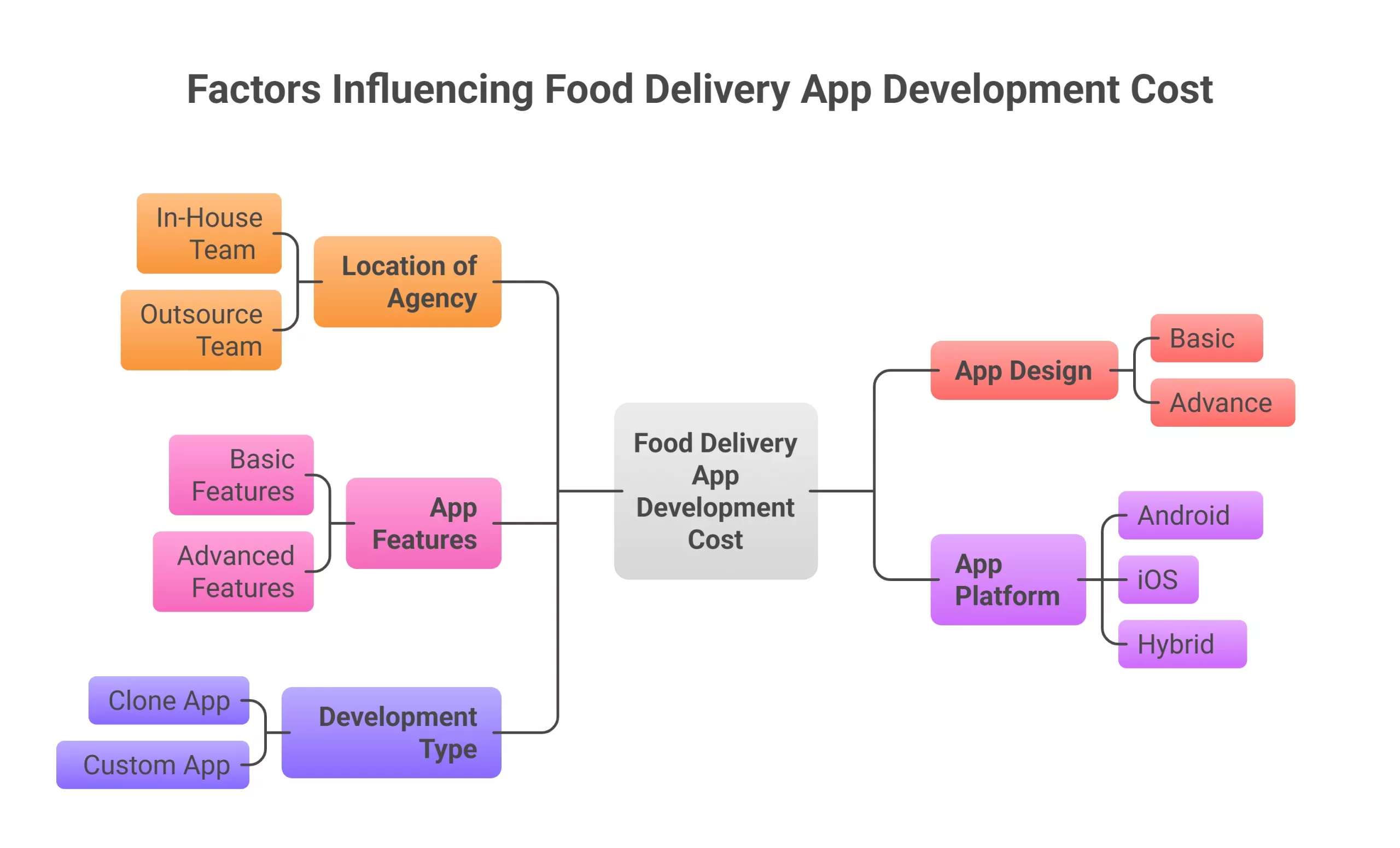
Whether you are developing a basic minimum viable product or a full-fledged enterprise platform, the pricing changes dramatically based on your choices in technology, features, team structure, and server infrastructure.
App Platform Selection (iOS, Android, Web)
One of the biggest cost influencers is the number of platforms you want to launch on. A typical DoorDash-style ecosystem requires three primary layers: a customer mobile app, a driver mobile app, and a restaurant web or mobile panel.
Developing separately for iOS and Android doubles the workload if you choose native development. A web dashboard is also essential for restaurants, which adds another set of development hours. Cross-platform frameworks reduce cost but may limit certain high-performance features.
Choosing the right approach impacts both cost and delivery timelines.
Feature Complexity and Customization
A simple delivery app with basic ordering, payment, and tracking costs significantly less compared to an app loaded with advanced features such as dynamic pricing, AI-powered recommendations, auto-routing for drivers, multi-language support, and detailed restaurant analytics.
Each additional feature increases design hours, backend logic, integration work, and testing cycles. Complex customizations, such as unique ordering flows or multi-country tax and fee structures, also raise the development cost.
UI/UX Design Requirements
High-quality UI/UX design is essential to delivering a smooth user experience. DoorDash is known for its clean interface, fast navigation, and easy ordering process. To match this standard, you need professional design work that includes wireframes, clickable prototypes, animations, micro-interactions, icon packs, color theory, and layout optimization.
A visually simple app may appear low-cost, but designing an intuitive interface that works flawlessly across different devices requires significant planning and execution.
Backend Infrastructure and APIs
The backend is the core of your delivery platform. It manages everything from user authentication and restaurant listings to order processing, driver assignment, notifications, and payment workflows.
Real-time operations such as tracking and driver coordination demand strong backend architecture, reliable servers, and optimized databases. The more scalable your backend needs to be, the higher the development cost.
Additionally, complex platforms require microservices, load balancers, event-driven architecture, and advanced data modeling.
Third-Party Service Integrations
No food delivery app is complete without essential integrations. You will require mapping APIs (Google Maps, Mapbox), payment gateways (Stripe, Razorpay, PayPal), SMS delivery services (Twilio), email verification tools, promotional engines, and analytics tools.
Each integration involves licensing fees, setup work, and continuous maintenance. The complexity of these integrations significantly shapes the total app development cost.
Security, Compliance and Data Protection
Because your app deals with sensitive customer data, restaurant information, and payment details, strong security measures are mandatory. Compliance with PCI DSS for payments, encryption for data protection, secure authentication, fraud prevention systems, and hack-proof server architecture contribute to higher development complexity. The more advanced your security layers, the higher your development budget.
Development Team Location and Expertise
Development cost varies widely depending on where your team is located. Teams in the United States and Western Europe charge premium rates, whereas teams in India, Southeast Asia, or Eastern Europe offer equally reliable work at more affordable prices.
Expertise also matters; an experienced team with strong delivery app knowledge may charge more initially but often reduces long-term costs due to fewer errors and faster delivery.
Project Management and QA Costs
Project managers guide the entire development and ensure timely delivery. Quality assurance engineers test every feature, device compatibility, speed, security, and data flow to prevent failures. Since food delivery apps handle real-time operations, the QA process is extensive and unavoidable.
Both project management and QA contribute to overall cost but ensure that the final product is stable, reliable, and user-friendly.
Looking for? Restaurant Business Ideas
Core MVP Features Required for a DoorDash-Style Food Delivery App
When estimating the cost to build an app like DoorDash, it becomes essential to understand the features that make such a platform function smoothly. A food delivery system requires three main applications working in harmony: the user app, the driver or delivery partner app, and the restaurant dashboard.
Additionally, an admin panel forms the backbone of operations, allowing the business owner to manageusers, restaurants, orders, payments, and analytics. The more features each of these components includes, the higher the development cost becomes.
A simple MVP with essential ordering features will cost significantly less than a complex multi-functional system powered by real-time automation, AI-driven recommendations, loyalty programs, and advanced restaurant analytics. This section outlines the necessary features and explains how each affects the time, development efforts, and budget.
User App Essential Features
A customer-facing application is the heart of your platform. Users need an experience that is smooth, intuitive, and fast. Core features include user registration, restaurant browsing, advanced search filters, menu viewing, cart options, order placement, delivery scheduling, live tracking, ratings, reviews, multiple payment gateways, and push notifications.
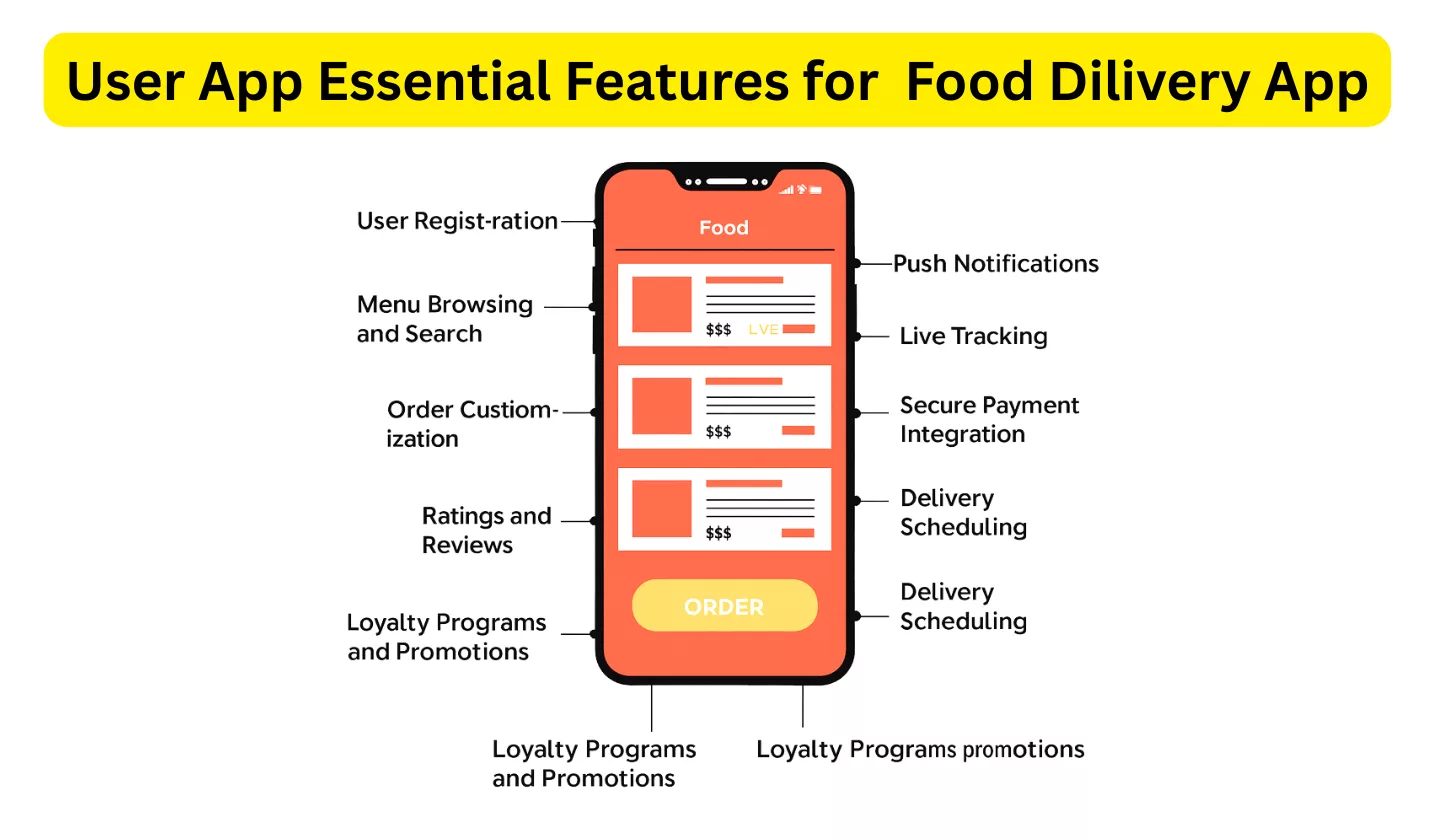
Additional features like loyalty programs, personalized suggestions, reorder options, and promotional deals can improve user engagement but also increase development effort. A user app must be highly optimized for performance because even a slight delay or glitch during ordering can cause users to abandon the app.
Looking for? Cost To Build A Restaurant Reservation App Like OpenTable
Driver or Dasher App Features
Delivery partners play a critical role in ensuring timely order fulfillment. The driver app must support delivery partner registration, document submission, availability management, incoming order requests, route navigation, delivery status updates, in-app calling or messaging, proof-of-delivery options, and earnings tracking.
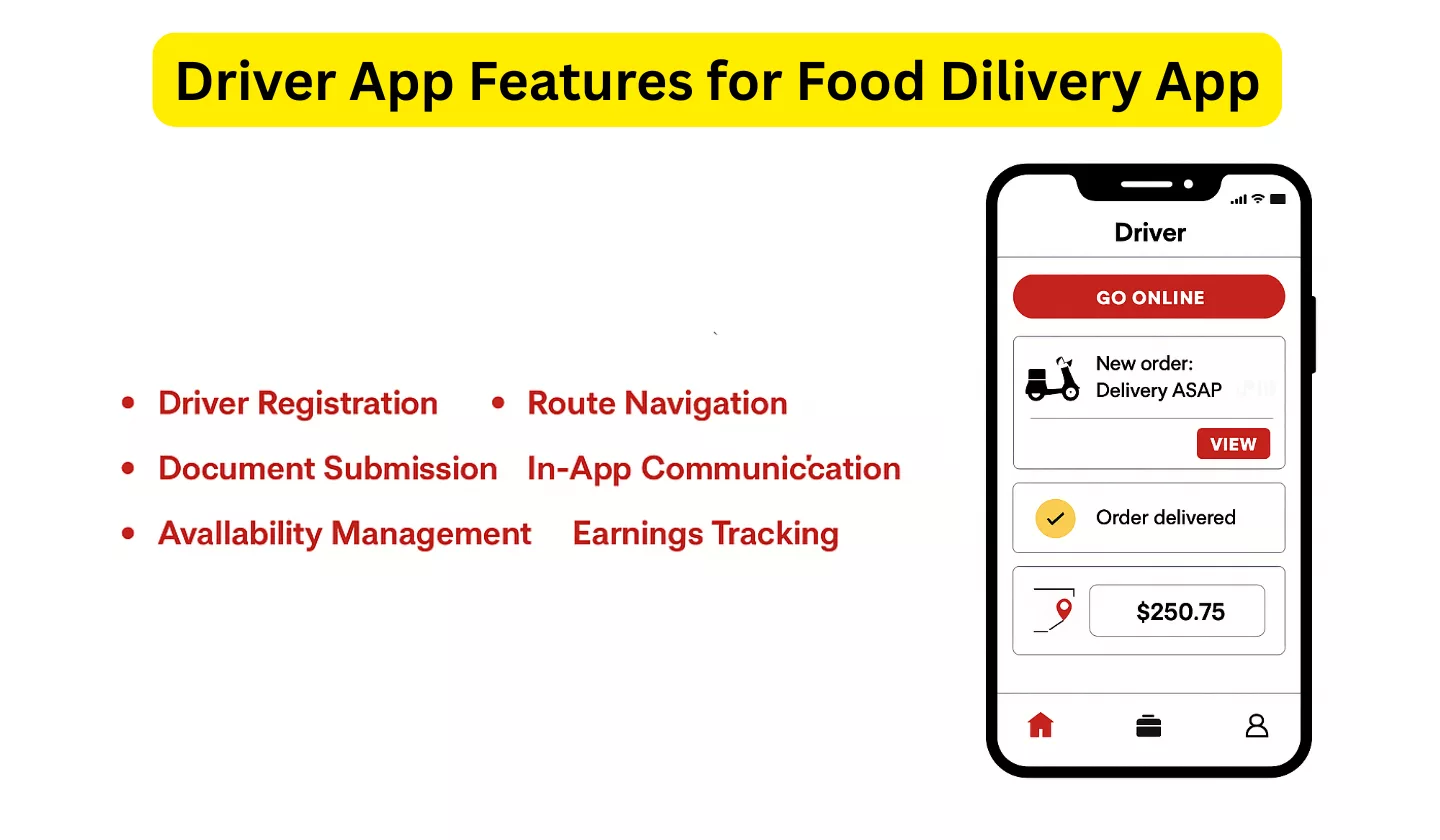
Route optimization, traffic-aware navigation, and incentive or bonus tracking features significantly enhance the driver experience but also add to the cost to build an app like DoorDash. A reliable driver app helps reduce delays, increase efficiency, and improve customer satisfaction.
Restaurant Dashboard Features
Restaurants need a separate interface to manage their daily operations. The restaurant dashboard typically includes restaurant profile management, menu setup, item editing, price adjustments, stock updates, order acceptance or rejection, order history, preparation time settings, special offers, and revenue reports.
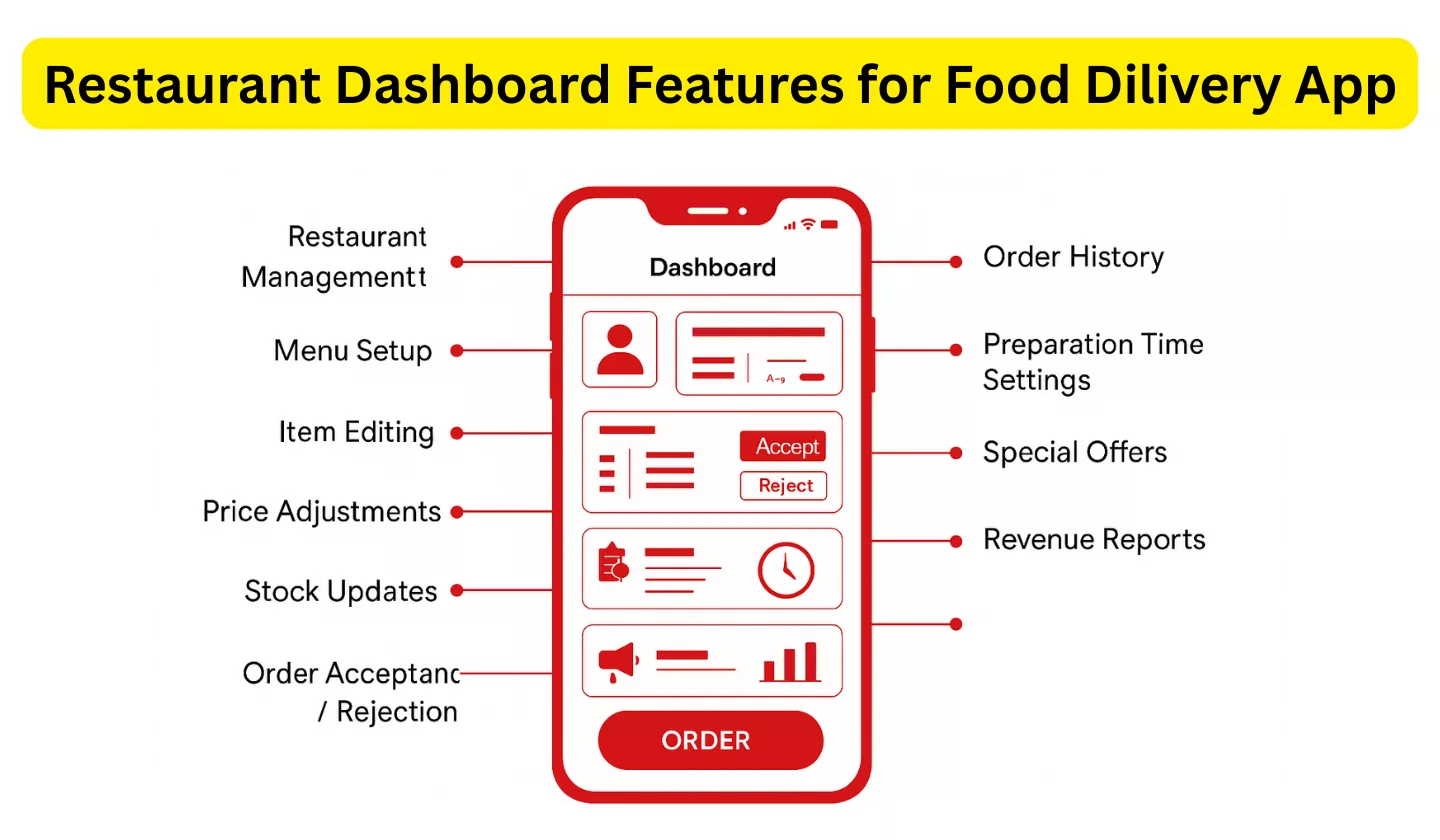
More advanced dashboards may include smart menu recommendations, automated pricing suggestions, and customer insights. To support high-volume restaurants, the dashboard should also be optimized to handle simultaneous orders without crashing or delaying updates.
Admin Panel Features
The admin panel is the command center of the entire system. It allows the platform owner to monitor and manage everything: users, restaurants, drivers, orders, commissions, payments, delivery zones, advertisements, and system configurations.
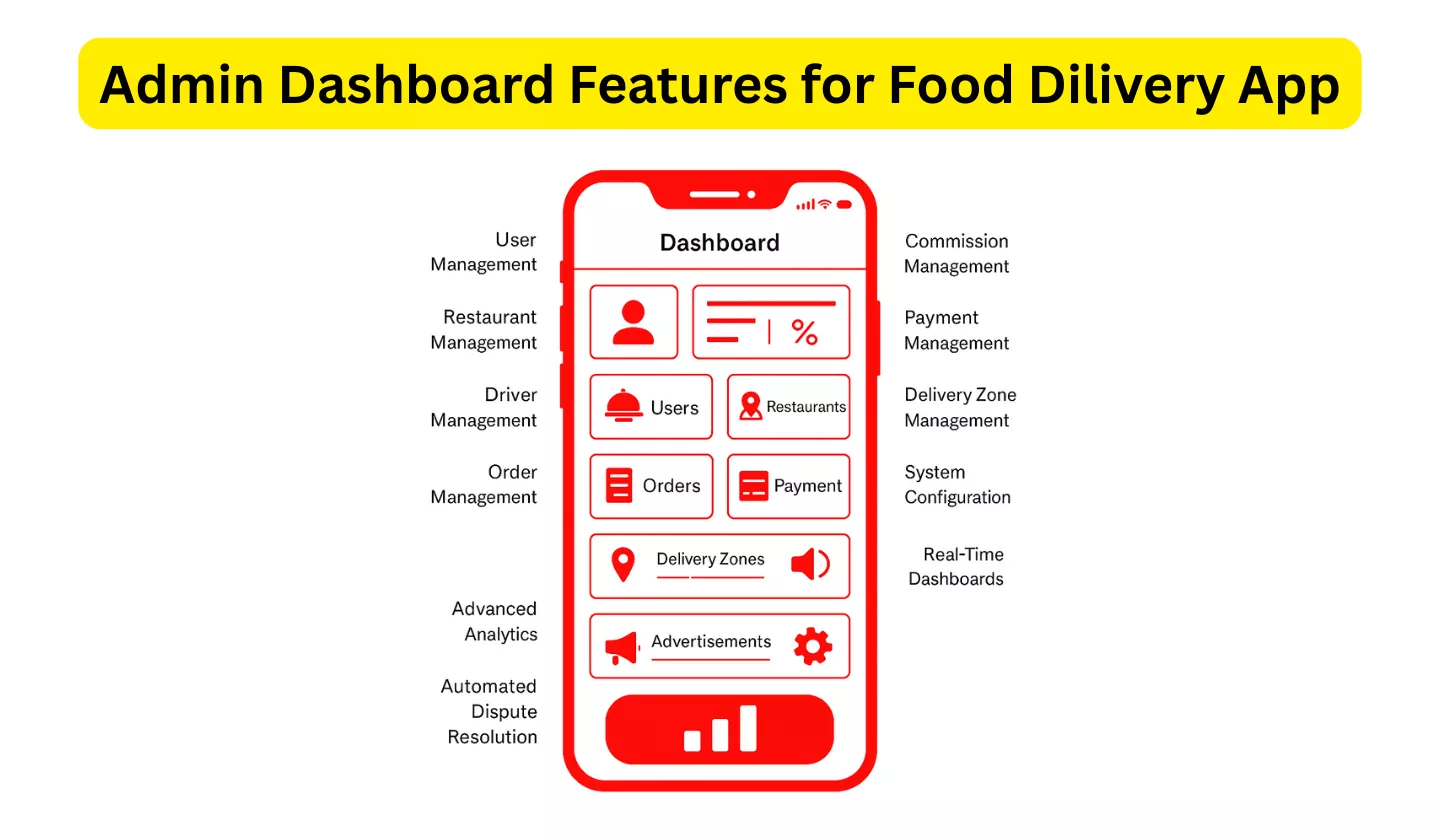
Features like advanced analytics, automated dispute resolution, real-time dashboards, marketing management, and performance monitoring improve operational control.
The admin panel is often one of the most complex components because it must integrate seamlessly with all other parts of the system. Its design and functionality significantly influence app like DoorDash pricing because it requires strong backend architecture and detailed data flow management.
Advanced Features for Competitive Edge
To compete with established players like DoorDash, you may consider integrating advanced features such as AI-based food recommendations, predictive surge pricing, dynamic delivery fees, real-time chat support, subscription programs, in-app wallets, and multi-vendor support for restaurants.
Features like delivery scheduling, group ordering, or table reservations can expand business opportunities. These advanced tools enhance customer engagement and increase your platform’s value but add time and cost to development. Deciding which advanced features to include during the launch phase depends heavily on budget and business strategy.
Key Features That Influence the Cost to Build an App Like DoorDash
Understanding the essential features that shape the cost to build an app like DoorDash is crucial before estimating any budget. These features not only determine the technical complexity but also influence the user experience, scalability, and long-term operational efficiency of the platform.
Since a food delivery marketplace connects customers, restaurants, and delivery providers, the feature set must be robust, secure, and smooth across all panels.
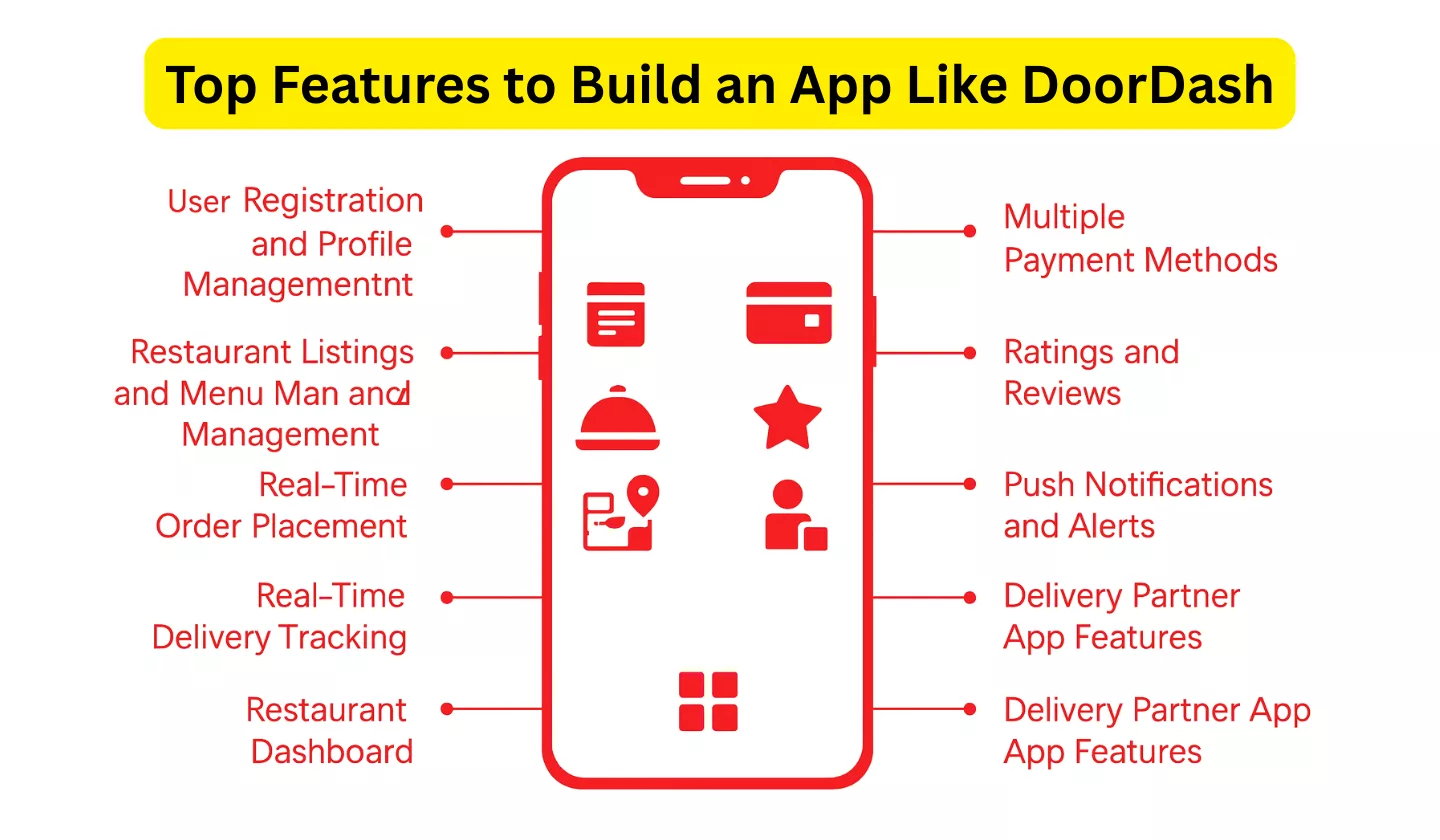
Each additional layer of functionality directly affects development hours, technology requirements, and integration efforts, making it important to recognize how these elements contribute to the final cost.
User Registration and Profile Management
This feature allows users to sign up through email, phone number, or social accounts. Advanced setups may include multi-factor authentication and profile customization options. Although this appears simple, integrating secure authentication frameworks and maintaining user data integrity increases development complexity.
Restaurant Listings and Menu Management
An app like DoorDash requires a dynamic listing module where restaurants can upload, edit, and update their menus. This system must handle diverse menu formats, pricing variations, add-ons, images, and availability updates in real time. The more flexible and customizable this module is, the higher the development effort.
Real-Time Order Placement
A seamless order placement flow is one of the foundations of the platform. It involves cart management, item customization, coupon application, price calculation, taxes, and delivery fee integration. Ensuring that users can place orders without disruptions requires meticulous backend coordination and scalability planning.
Real-Time Delivery Tracking
GPS-based live tracking is a core feature that heavily influences the overall on-demand delivery app cost. This includes integrating mapping APIs, enabling drivers to update statuses, and allowing users to track couriers in real time. More advanced tracking features such as route optimization, time prediction, and map overlays increase development hours significantly.
Multiple Payment Methods
Supporting payment gateways such as Stripe, PayPal, Apple Pay, Google Pay, UPI, credit cards, and wallet systems requires secure integration. Each payment option adds separate API structures and compliance requirements, affecting the overall effort needed for smooth transaction handling and financial reporting.
Ratings and Reviews
After a delivery is completed, customers need to provide reviews about the restaurant and the delivery provider. This module must include anti-spam systems, reporting mechanisms, moderation tools, and data storage structures to maintain fair and trustworthy feedback visibility.
Push Notifications and Alerts
Notifications play a major role in keeping users informed about order updates, delivery status, discounts, and restaurant offers. Integrating push services like Firebase or APNs requires backend workflows for triggers, segmentation, scheduling, and analytics.
Delivery Partner App Features
A separate delivery partner app must include availability toggles, route navigation, earnings tracking, delivery history, and verification functionalities. The driver app is a major portion of the cost because it requires real-time communication, map integrations, and secure document verification modules.
Restaurant Dashboard
Restaurants need a portal to accept or reject orders, manage inventory, view analytics, track earnings, and update delivery status. The complexity of this dashboard influences both development effort and backend architecture design.
Admin Panel
The admin panel is the operational heart of the platform. It usually includes order monitoring, user management, restaurant approvals, delivery partner onboarding, payment settlements, complaint handling, and analytical insights. A feature-rich admin panel increases the total app like DoorDash pricing because it requires secure role-based access, real-time data monitoring, and custom dashboard analytics.
Technology Stack Required to Build an App Like DoorDash
Choosing the right technology stack is one of the most critical decisions when estimating the cost to build an app like DoorDash. The stack determines the app’s performance, scalability, security standards, and development speed.
Since DoorDash functions as a real-time marketplace connecting users, restaurants, and delivery partners instantly, each component of the tech stack must be optimized for high-volume transactions, quick load times, and reliable data processing. The right stack not only enhances the user experience but also reduces long-term maintenance expenses and improves system stability.
Before selecting the stack, developers consider various factors such as platform type, feature complexity, integration requirements, preferred programming languages, database structure, server setup, and compatibility with third-party services. Every layer of this stack influences the DoorDash clone app development process, making it essential to evaluate the architecture carefully.
Mobile App Development Technologies
Apps like DoorDash can be built natively or using cross-platform frameworks. Native development with Swift for iOS and Kotlin for Android delivers high performance and access to device-specific features. Cross-platform tools like Flutter and React Native reduce development efforts while maintaining smooth UI/UX. The choice between these options significantly impacts both development time and cost.
Frontend Development Stack
The frontend is responsible for everything users interact with visually. Technologies like React.js, Vue.js, or Angular help build responsive, dynamic, and visually appealing interfaces for the web version of the platform. For delivery partner dashboards or restaurant portals, responsive frontends ensure smooth navigation and minimal load times.
Backend Development Stack
The backend manages system logic, user authentication, real-time data flow, and API communication. Developers often choose Node.js, Django, Ruby on Rails, Laravel, or Java-based frameworks depending on scalability needs. A strong backend ensures stable order processing, payment handling, and delivery assignment. Cloud environments like AWS, Google Cloud, or Azure support scalability during peak ordering hours.
Database Management
A reliable database is essential for managing user profiles, restaurant menus, order history, delivery status, and transactions. Popular choices include PostgreSQL, MySQL, MongoDB, and Firebase. Structured databases help ensure data accuracy, while NoSQL databases are used for fast, scalable storage of dynamic content.
Real-Time Tracking and Geo-Services
Location-based features require robust mapping and navigation APIs. Mobile app developers often integrate Google Maps API, Mapbox, or OpenStreetMap for real-time tracking, route optimization, and distance calculations. These services play a major role in determining on-demand delivery app cost because of their complexity and recurring usage charges.
Payment Gateway Integration
Integrating secure payment services requires compliance with PCI-DSS standards. Developers commonly use Stripe, PayPal, Braintree, Razorpay, and similar gateways depending on regional support. If the app supports digital wallets, UPI, or cashless settlements, additional APIs and financial workflows need to be incorporated.
Notifications and Communication Tools
Push notifications, SMS alerts, and email updates are facilitated through services like Firebase Cloud Messaging, Twilio, SendGrid, or OneSignal. These communication tools ensure users receive updates about orders, promotions, and delivery partner movement.
Cloud Infrastructure and DevOps Tools
To manage file storage, load balancing, and server scale-up, services like AWS S3, Kubernetes, Docker, EC2, and CloudFront are commonly used. Continuous deployment tools like Jenkins, GitHub Actions, and CircleCI help automate testing and updates for a smoother DoorDash clone app development process.
Security and Compliance Tools
Security is essential for handling financial data, personal information, and real-time location sharing. SSL certificates, OAuth 2.0, JWT tokens, encryption libraries, firewalls, and automated fraud detection tools ensure the platform remains safe from breaches. Additional compliance frameworks may be necessary depending on regional requirements.

Step-by-Step Development Process for an App Like DoorDash
The app development process directly impacts the overall cost to build an app like DoorDash because each stage requires time, expertise, and coordinated execution. Since the platform serves multiple user groups simultaneously customers, restaurants, and delivery partners, the workflow must be carefully planned to avoid redundancy and performance issues later.
A well-structured development cycle also minimizes future maintenance challenges and improves the quality of the final product.
Before development begins, businesses and development teams collaborate to outline the application goals, core features, market expectations, and technology requirements. A multi-stage approach ensures that the product evolves smoothly from idea to launch while maintaining a consistent user experience across mobile and web platforms.
1. Requirement Gathering and Market Research
This is the foundational stage where the development team identifies the objectives of the platform, target market, competitor offerings, and user expectations. Detailed discussions take place to understand the business model—whether it is a pure delivery marketplace, a hybrid, or a custom model.
Analysts evaluate user preferences, geographic operational capacity, and commercial goals. This stage ensures that the final product aligns with both user needs and business objectives.
2. Project Planning and Feature Documentation
Once the requirements are clear, the planning phase begins. Developers, designers, and project managers collaborate to prepare technical documentation and system architecture. A feature list is created, along with user roles, workflow diagrams, third-party integrations, and timelines.
This documentation eliminates confusion during development and provides a transparent roadmap for estimating the app like DoorDash pricing based on required functionalities.
3. UI/UX Research and Wireframing
Designers create low-fidelity wireframes to show the structural layout of the app. These wireframes represent the user journey, page flow, button placements, and functional behavior. Once approved, high-fidelity designs and interactive prototypes are created to reflect the final look and feel.
A clear UI/UX process ensures that customers, delivery partners, and restaurants can navigate the app effortlessly without technical barriers.
Read once! Importance of UI/UX Design in Mobile App Development
4. Backend and Frontend Development
After design approval, developers begin coding the platform. Backend engineers structure the server logic, database design, APIs, and authentication workflows. This ensures smooth order placement, menu loading, payment processing, and delivery updates.
Frontend developers build the user interface for mobile apps and web dashboards. Both teams work in parallel to ensure seamless communication between the user interface and backend data systems.
5. Integration of Third-Party Services
Features like real-time GPS tracking, payment gateways, SMS alerts, email notifications, and map navigation rely on third-party service integrations. Developers integrate these APIs to support essential workflows such as live delivery tracking, secure payments, and instant communication.
These integrations significantly influence the on-demand delivery app cost because they require testing, compliance checks, and long-term support.
6. Development of Customer, Restaurant, and Driver Panels
Since an app like DoorDash involves multiple user roles, each panel is developed with distinct features:
- The customer app focuses on browsing restaurants, placing orders, payments, and order tracking.
- The restaurant dashboard supports order management, menu edits, and data analytics.
- The delivery partner app handles navigation, availability status, and earnings tracking.
Building these panels involves parallel development and coordinated backend communication.
7. Quality Assurance and Testing
Testing is a mandatory process that ensures the system runs smoothly without errors. QA teams perform functional testing, usability testing, performance testing, and load testing to ensure the app handles thousands of users simultaneously. Real-time features require additional layers of testing to confirm accurate tracking, correct order status updates, and smooth communication among all app roles.
Want to know? AI-Powered Software Testing Tools
8. Deployment and Launch
Once the app passes all tests, it is prepared for deployment. Developers configure cloud servers, set up load balancers, and optimize database performance. The app is then published to the Google Play Store, Apple App Store, and web servers. Deployment also involves setting up security certificates, domain configurations, and analytics tools.
9. Post-Launch Support and Maintenance
After launch, the development team monitors performance, fixes bugs, handles security updates, and improves the system based on user feedback. Ongoing maintenance is essential for long-term success because new features, updated APIs, and market trends continuously evolve. This ongoing support is often included as a part of the DoorDash clone app development lifecycle.

Complete Cost Breakdown to Build an App Like DoorDash in 2026
A food delivery app also demands strong backend architecture, advanced ordering logic, secure payments, route optimization, and scalable infrastructure. With each added feature, development effort increases—making cost estimation a multi-layered process. Below is a complete breakdown of all development stages and their cost impact.
1) Design and Prototyping Cost
A strong UI/UX design ensures a smooth user journey. This includes wireframes, prototypes, and polished screens for all three panels (customer, restaurant, delivery). Modern animations, branding consistency, and user research add to the total cost.
What influences cost:
- Number of screens
- Complexity of user flows
- Animation and micro-interaction design
- Brand customization
2) Frontend Development Cost
Frontend developers convert the designs into functional interfaces. DoorDash-like apps require separate screens for all modules, making front-end development a large portion of the budget.
Cost depends on:
- Native or cross-platform
- Number of screens
- UI complexity
- Interactive elements
3) Backend Development and API Cost
The backend manages orders, payments, search, restaurant onboarding, delivery assignment, notifications, and real-time tracking. This is the most complex and costly part of the project.
Includes:
- Database design
- API development
- Real-time order updates
- Authentication & security
- Server architecture
4) Admin Panel Development Cost
The admin dashboard allows the business to manage users, restaurants, payouts, promotions, disputes, analytics, and more.
Advanced dashboards include:
- Automated reports
- Fraud detection
- Settlement management
- Heatmaps & analytics
5) Multi-Panel Development Cost
A DoorDash-style platform requires three separate apps/dashboards:
- Customer App
- Restaurant Dashboard
- Delivery Partner App
Each one has unique flows, permissions, and role-specific features.
6) Third-Party API Integration Cost
DoorDash relies heavily on integrations for:
- Payment gateways
- GPS/Maps
- SMS & email
- Push notifications
- Analytics
- Authentication (OTP, social login)
Each API introduces a subscription fee + additional development cost.
7) Real-Time Tracking and Geo-Location Cost
Real-time location updates require:
- GPS integration
- Route optimization
- Real-time databases
- Navigation interfaces
- Distance-based fare calculations
This is one of the highest-cost sections.
8) Testing and Quality Assurance Cost
QA engineers test performance, usability, security, and multi-role workflows to ensure the app works flawlessly.
Testing increases with:
- More features
- More platforms
- More user roles
9) Deployment, DevOps, and Cloud Setup Cost
Includes cloud server setup, CI/CD pipelines, monitoring, security configuration, and App Store/Play Store deployment.
10) Maintenance and Update Cost
After launch, continuous updates are required for new features, security patches, and OS version support.
Maintenance typically costs 15–25% of the initial development budget per year.
DoorDash App Development Cost Breakdown (2026)
| Category | Estimated Cost (USD) |
|---|---|
| Design & Prototyping | $5,000 – $15,000 |
| Frontend Development | $12,000 – $40,000 |
| Backend Development & APIs | $20,000 – $80,000 |
| Admin Panel Development | $8,000 – $25,000 |
| Multi-Panel Development (3 Apps) | $25,000 – $100,000 |
| Third-Party Integrations | $3,000 – $15,000 |
| Real-Time Tracking System | $10,000 – $40,000 |
| Testing & QA | $5,000 – $20,000 |
| Deployment & DevOps | $3,000 – $15,000 |
| Maintenance (Yearly) | 15–25% of total development cost |
| Total Estimated Cost Range | $60,000 – $300,000+ |
Platform-Based Development Cost
| Platform Choice | Estimated Cost (USD) |
|---|---|
| Single Platform (iOS or Android) | $18,000 – $40,000 |
| Dual Platform (iOS + Android) | $35,000 – $70,000 |
| Cross-Platform (Flutter/React Native) | $25,000 – $55,000 |
Feature-Based Cost Versions
| Version Type | What’s Included | Cost Range (USD) |
|---|---|---|
| MVP Version | Basic ordering, payments, simple tracking, dashboards | $30,000 – $50,000 |
| Mid-Level Version | Advanced tracking, loyalty, notifications, analytics | $60,000 – $120,000 |
| Full DoorDash-Style System | AI features, heatmaps, automation, deep analytics | $150,000 – $300,000+ |
Regional Development Cost Table
| Region | Hourly Rate (USD) | Full System Cost Estimate |
|---|---|---|
| North America / Western Europe | $80 – $180/hr | $200,000 – $500,000+ |
| Eastern Europe | $40 – $80/hr | $120,000 – $250,000 |
| Asia (India, Vietnam, Philippines) | $20 – $50/hr | $60,000 – $150,000 |
Additional Monthly Operational Costs
| Operational Component | Monthly Cost (USD) |
|---|---|
| Cloud Hosting | $300 – $2,000 |
| Third-Party APIs | $200 – $1,500 |
| Marketing Launch Budget | $5,000 – $50,000 |
Hidden Costs and Long-Term Considerations
- Scalability upgrades
- Additional API usage fees
- Data security & compliance
- App Store/Play Store updates
- Customer support tools
- New feature rollouts
Want to know? Cost of Pizza Delivery App Development Like Dominos
How Does DoorDash Make Money?
To better understand how a DoorDash-style app operates financially, let’s look at a simplified real-life example of how DoorDash generates revenue, handles costs, and monetizes different stakeholders.
| Revenue Resource | Description | Example / Figures |
|---|---|---|
| Restaurant Commissions | DoorDash charges restaurants a percentage per order for using the platform. | 20% commission on a $30 order = $6 revenue |
| Delivery Fees | Customers pay a delivery fee per order; varies by distance, peak hours, and demand. | Base delivery fee: $3, Peak hour surcharge: $2, Total: $5 revenue |
| Subscription (DashPass) | Customers subscribe for free delivery and perks. | Monthly subscription: $9.99, includes unlimited free deliveries on orders over $12 |
| Advertising & Promotions | Restaurants pay for sponsored listings, banner ads, or promotions. | Sponsored listing fee: $50–$200 per week depending on visibility |
| Dynamic Pricing / Surge | Delivery fees or commissions increase during high-demand periods. | High-demand lunch hour fee: $2–$5 extra per order |
| Driver Payments | DoorDash pays delivery partners per completed order, including base and tips. | Average driver payout: $7–$10 per delivery |
| Technology & Maintenance | App development, server hosting, API integrations, and updates. | Estimated annual cost: $1M+ for large-scale operations |
| Marketing | User acquisition campaigns, referral programs, and promotions. | Estimated monthly spend: $500K–$1M during peak growth periods |
| Customer Support | Handling complaints, refunds, order disputes, and inquiries. | 200+ support staff managing calls, emails, and chats |
| Profit Example (Per Order) | Revenue minus costs for a typical $30 order. | Revenue: $6 (commission) + $5 (delivery fee) = $11, Costs: $7 (driver) + $2 (platform share of operational cost) = $9, Profit: $2 per order |
Sum up
Building an app like DoorDash is a significant investment that involves careful planning, skilled development, and strategic monetization. From designing intuitive user interfaces and integrating real-time delivery tracking to developing separate panels for customers, restaurants, and delivery partners, every element contributes to the overall cost.
By carefully balancing cost, quality, and user experience, businesses can build a successful food delivery platform that mirrors the efficiency and reach of DoorDash while achieving sustainable growth.
Read once! Factors That Impact the Cost of Food Delivery App Development
FAQs
What is the average cost to build an app like DoorDash?
The cost to build an app like DoorDash varies depending on complexity, features, design, and development region. A basic MVP can cost between $30,000–$50,000, a mid-level app may range from $60,000–$120,000, and a fully advanced DoorDash-style platform can cost $150,000–$300,000 or more. Additional expenses like maintenance, server hosting, API usage, and marketing also influence the total budget.
How long does it take to develop a DoorDash clone app?
The development timeline depends on app complexity, features, and the team size. A basic app can take 16–22 weeks (4–5.5 months), a mid-level app 22–32 weeks (5.5–8 months), and a fully advanced platform 32–44 weeks (8–11 months). This includes discovery, design, development, testing, and deployment phases.
What factors affect the cost of a DoorDash-like app?
Key factors include the number and complexity of features, platform choice (iOS, Android, or cross-platform), UI/UX design, backend architecture, API integrations, security measures, team expertise, and regional development costs. Hidden costs such as server hosting, ongoing maintenance, marketing, and legal compliance also play a role.
Can I reduce the cost of developing a DoorDash clone?
Yes, costs can be reduced by starting with an MVP that includes only essential features, using cross-platform frameworks like Flutter or React Native, outsourcing development to regions with lower hourly rates, and leveraging ready-made solutions for certain modules. Gradually adding advanced features after launch helps optimize the budget.
What monetization strategies can a DoorDash-style app use?
A DoorDash clone can generate revenue through multiple streams: restaurant commissions, customer delivery fees, dynamic pricing, subscription programs, in-app promotions, sponsored listings, and analytics services for restaurants. Using a combination of these strategies ensures steady revenue while keeping all stakeholders engaged and satisfied.