
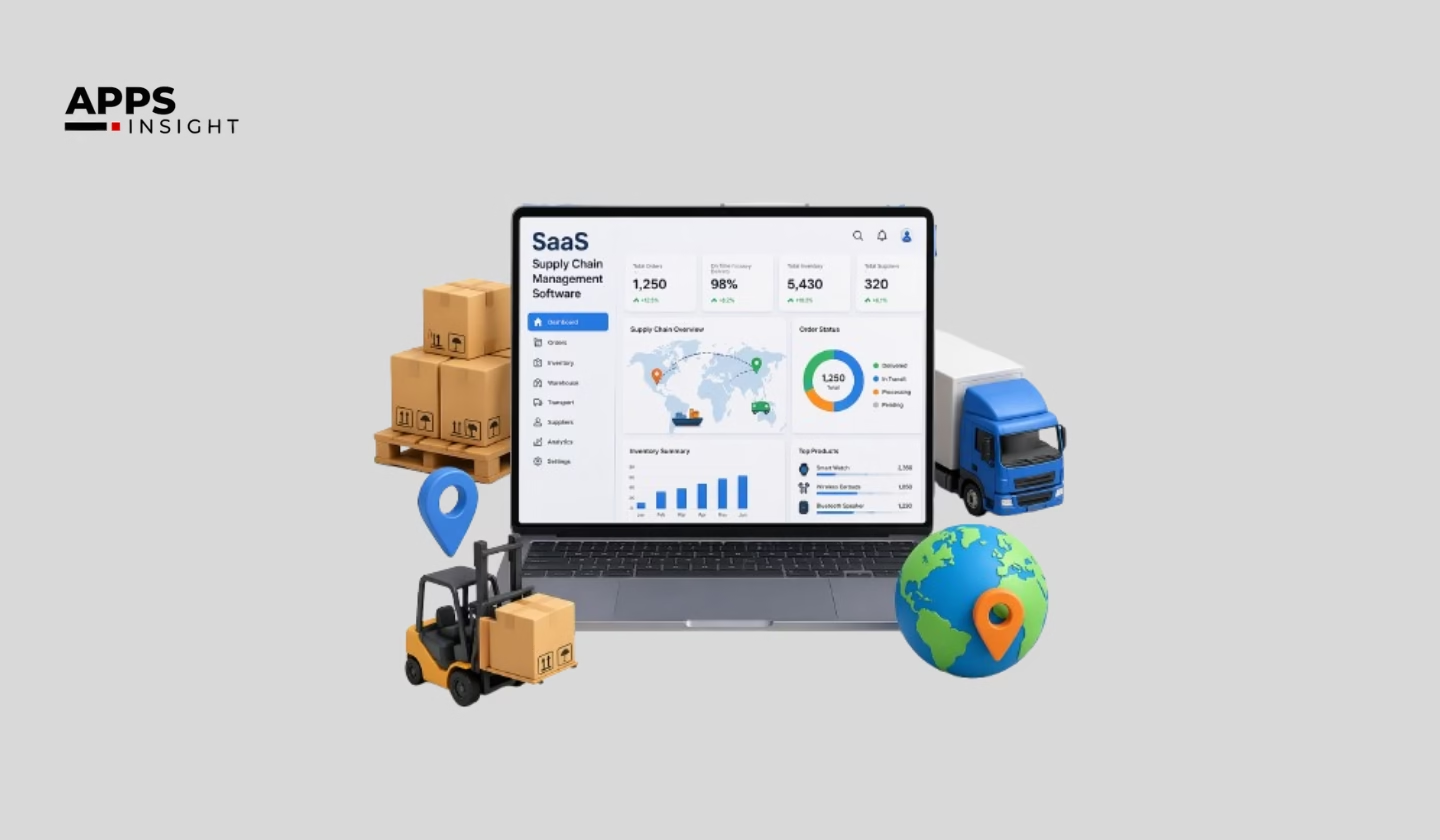
Supply chains are becoming smarter and more connected through cloud-based platforms. Businesses want faster delivery, better control, and lower costs. That is where SaaS Supply Chain Management Software plays a critical role. It helps companies manage inventory, track shipments, and make better decisions with real-time data. This article will break down the best platforms and explain how they improve efficiency and reduce risk.
The demand for cloud supply chain tools is rising fast. Reports show that over 78% of companies are investing in digital supply chain solutions to improve visibility and speed. Another study reveals that businesses using advanced supply chain systems can reduce operational costs by up to 20%.
Strong adoption trends show that SaaS Supply Chain Management Software is now a core part of modern business strategy. Companies that adopt these tools gain a clear advantage in speed, accuracy, and customer satisfaction.
FAQs
What is SaaS Supply Chain Management Software?
SaaS Supply Chain Management Software is a cloud-based solution that helps businesses manage inventory, logistics, and supplier operations in real time. It improves visibility, reduces costs, and enables faster decision-making through automation and data analytics.
What are the Best SaaS Supply Chain Management Software Platforms?
The best platforms include:
- Oracle SCM Cloud
- SAP Supply Chain Management (IBP)
- Blue Yonder Luminate Platform
- Kinaxis RapidResponse
- E2open
- Manhattan Active Supply Chain
- Coupa Supply Chain Design & Planning
- Infor Nexus
- o9 Solutions
- NetSuite SCM
How Does SaaS Supply Chain Software Reduce Costs?
SaaS supply chain software reduces costs by automating processes, improving demand forecasting, optimizing inventory levels, and enhancing logistics efficiency. It helps businesses minimize waste, reduce manual errors, and improve overall operational performance.
Why Do Businesses Use SaaS Supply Chain Solutions?
Businesses use SaaS supply chain solutions to gain real-time visibility, improve efficiency, reduce operational costs, and scale operations easily. These platforms also support better collaboration and faster decision-making.
Let’s explore how these solutions work and why they matter.
What is SaaS Supply Chain Management Software
SaaS Supply Chain Management Software is a cloud-based solution that helps businesses manage every part of their supply chain from one platform. It connects suppliers, warehouses, logistics, and customers in real time.
Instead of installing software on local systems, companies access these tools through the internet. This makes it easier to manage operations from anywhere. Teams can track inventory, monitor shipments, and analyze data without delays.
One major advantage is real-time visibility. Businesses can see what is happening across the entire supply chain at any moment. This helps them respond quickly to delays or disruptions.
Another benefit is scalability. Companies can expand or reduce their usage based on their needs. This flexibility is especially useful for growing businesses.
Security and updates are also handled by the provider. This means companies always use the latest version without worrying about maintenance.
As more companies shift to digital operations, SaaS Supply Chain Management Software is becoming essential. It improves efficiency, reduces manual work, and helps businesses make smarter decisions.
Looking for? Logistics Management Software
Why Businesses Are Moving to SaaS Supply Chain Solutions
Businesses are shifting to SaaS solutions because they want speed, flexibility, and better control over operations. Traditional systems often slow down processes and require heavy maintenance. Cloud-based platforms solve these problems with ease.
First, scalability is a major reason. Companies can adjust resources based on demand. This is useful during seasonal spikes or business expansion. They do not need to invest heavily in infrastructure.
Second, real-time data access improves decision-making. Teams can monitor inventory, shipments, and supplier performance instantly. This reduces delays and improves accuracy.
Cost efficiency is another key factor. SaaS platforms reduce upfront investment and maintenance expenses. Businesses only pay for what they use, which helps manage budgets better.
Integration also plays an important role. These platforms connect easily with other tools like ERP and CRM systems. This creates a smooth workflow across departments.
Modern Technology in Supply Chain Management is driving this shift even further. Advanced analytics, automation, and AI-powered insights are helping businesses stay competitive.
Recent data shows that companies using cloud supply chain solutions improve operational efficiency by up to 30%. Another report highlights that real-time visibility can reduce delivery delays by nearly 25%.
With all these advantages, it is clear why more companies are choosing SaaS Supply Chain Management Software to manage their operations.
Key Features to Look for in Supply Chain Software
Choosing the right software can directly impact efficiency, cost, and overall performance. Not all tools offer the same value. So, it is important to focus on features that truly support your business goals.
1. Real-Time Visibility
You should always look for software that provides real-time tracking. This helps you monitor inventory levels, shipments, and supplier activities instantly. It reduces delays and improves decision-making.
2. Demand Forecasting
Accurate forecasting helps businesses plan better. Advanced tools use data and analytics to predict demand trends. This reduces overstocking and prevents stockouts.
3. Inventory Management
A strong inventory system keeps stock levels balanced. It ensures that products are available when needed without wasting resources. This directly impacts profitability.
4. Order Management
Efficient order processing is essential. The software should manage orders from placement to delivery. This improves customer satisfaction and reduces errors.
5. Analytics and Reporting
Data-driven decisions are key to success. Good software provides detailed reports and insights. These insights help identify inefficiencies and improve performance.
6. Automation Capabilities
Automation reduces manual work and saves time. Tasks like order processing, alerts, and reporting can be automated. This improves accuracy and productivity.
7. Integration Support
The software should easily connect with other systems like ERP and CRM tools. Smooth integration creates a unified workflow across departments.
8. Security and Compliance
Data security is critical. Choose platforms that offer strong security features and comply with industry standards. This protects sensitive business information.
Modern businesses rely on these features to stay competitive. The right SaaS Supply Chain Management Software combines all these capabilities into one powerful platform.
We have listed! Warehouse Management Software
Top 10 Supply Chain Management SaaS Platforms
1. Oracle SCM Cloud
Oracle SCM Cloud is one of the most advanced platforms in the supply chain space. It offers a complete suite of tools that help businesses manage planning, procurement, logistics, and manufacturing from a single system. Large enterprises prefer it because of its strong performance and deep analytics capabilities.
The platform focuses on end-to-end visibility. It connects every stage of the supply chain and provides real-time insights. This helps businesses respond quickly to disruptions and improve efficiency. Its cloud-based structure also ensures smooth updates and high security.
Oracle has invested heavily in AI and automation. These features help predict demand, optimize inventory, and reduce operational risks. Companies that want a powerful and scalable solution often choose this platform.
Recent studies show that businesses using advanced supply chain platforms like Oracle can improve forecast accuracy by up to 35%. Another report highlights that AI-driven supply chains can reduce inventory costs by nearly 20%.
Oracle SCM Cloud stands out as one of the Best Supply Chain Management Software solutions available for enterprises that need strong control and performance.
Key Features
- End-to-end supply chain visibility
- Advanced demand forecasting
- AI-driven insights and automation
- Integrated procurement and logistics tools
- Scalable cloud infrastructure
Benefits
- Improves decision-making with real-time data
- Reduces operational costs through automation
- Enhances supply chain efficiency
- Supports global operations with ease
- Strengthens risk management capabilities
2. SAP Supply Chain Management (SCM/IBP)
SAP Supply Chain Management, especially its Integrated Business Planning (IBP) module, is a powerful solution designed for complex supply chain operations. It helps businesses plan, monitor, and optimize their supply chain with high accuracy and speed.
The platform focuses on real-time planning and strong data integration. It connects different business functions like sales, finance, and operations into one system. This unified approach improves coordination and reduces delays.
SAP IBP uses advanced analytics and machine learning to improve forecasting and demand planning. This allows companies to make faster and more accurate decisions. It is widely used by large enterprises that require detailed insights and strong control over operations.
Another major advantage is its ability to handle global supply chains. It supports multiple regions, currencies, and compliance requirements. This makes it ideal for multinational companies.
Reports show that companies using integrated planning systems can improve forecast accuracy by up to 30%. Another study suggests that better planning tools can reduce supply chain costs by nearly 15%.
SAP SCM stands as one of the most reliable platforms for businesses that need deep planning capabilities and enterprise-level performance.
Key Features
- Integrated business planning tools
- Real-time supply chain visibility
- Advanced demand forecasting
- Strong data analytics capabilities
- Global supply chain support
Benefits
- Improves planning accuracy and efficiency
- Enhances collaboration across departments
- Reduces operational costs
- Supports large-scale global operations
- Enables faster decision-making
3. Blue Yonder (Luminate Platform)
Blue Yonder, through its Luminate Platform, is a leading solution focused on AI-driven supply chain management. It helps businesses predict demand, manage inventory, and optimize logistics with high precision. Many companies choose it for its strong focus on automation and intelligent decision-making.
The platform uses machine learning to analyze large amounts of data. This allows businesses to identify patterns, predict disruptions, and respond quickly. It improves both planning and execution across the supply chain.
Blue Yonder also offers strong visibility tools. Companies can track operations in real time and make adjustments instantly. This reduces delays and improves customer satisfaction.
One of its biggest strengths is its ability to handle complex supply chains. It supports industries like retail, manufacturing, and logistics with advanced solutions tailored to their needs.
Recent data shows that AI-powered supply chain platforms can improve forecast accuracy by up to 40%. Another report highlights that intelligent automation can reduce supply chain errors by nearly 30%.
Blue Yonder stands out as a smart and future-ready platform for businesses that want to use data and AI to gain a competitive edge.
Key Features
- AI-driven demand forecasting
- Real-time supply chain visibility
- Intelligent automation tools
- Advanced analytics and insights
- Industry-specific solutions
Benefits
- Improves forecasting accuracy
- Reduces operational errors
- Enhances decision-making speed
- Optimizes inventory management
- Supports complex supply chain needs
4. Kinaxis RapidResponse
Kinaxis RapidResponse is a powerful supply chain planning platform designed for fast decision-making and real-time collaboration. It is widely used by companies that need quick responses to changing market conditions and supply chain disruptions.
The platform focuses on concurrent planning. This means all parts of the supply chain work together in one system. When one change happens, the entire plan updates instantly. This helps businesses stay agile and avoid delays.
Kinaxis is known for its strong scenario planning capabilities. Companies can test different strategies and see the impact before making decisions. This reduces risks and improves confidence in planning.
Another key strength is its user-friendly interface. Teams can easily access data and collaborate without technical barriers. This improves efficiency across departments.
Studies show that companies using real-time planning tools can reduce decision-making time by up to 50%. Another report highlights that agile supply chains can improve service levels by nearly 20%.
Kinaxis RapidResponse is a great choice for businesses that need speed, flexibility, and strong collaboration in their supply chain operations.
Key Features
- Real-time concurrent planning
- Scenario analysis and simulation
- End-to-end supply chain visibility
- Collaboration tools for teams
- Fast data processing and insights
Benefits
- Speeds up decision-making
- Improves supply chain agility
- Reduces operational risks
- Enhances team collaboration
- Supports better planning accuracy
5. E2open
E2open is a cloud-based supply chain platform that focuses on connecting every part of the global supply network. It brings together suppliers, manufacturers, logistics providers, and distributors into one unified system. This connected approach helps businesses gain full visibility across their operations.
The platform is known for its strong data network. It combines real-time data from multiple sources to provide accurate insights. This allows companies to track shipments, monitor supplier performance, and respond quickly to disruptions.
E2open also offers advanced planning and execution tools. Businesses can manage demand, supply, and logistics in one place. This improves coordination and reduces delays across the supply chain.
Another major strength is its global reach. The platform supports complex international operations and helps companies manage cross-border logistics with ease.
Reports show that connected supply chain platforms can improve on-time delivery rates by up to 25%. Another study highlights that better visibility can reduce supply chain disruptions by nearly 30%.
E2open stands out as a strong choice for businesses that need global connectivity and real-time insights.
Key Features
- End-to-end supply chain connectivity
- Real-time data and visibility
- Demand and supply planning tools
- Logistics and shipment tracking
- Global network integration
Benefits
- Improves supply chain visibility
- Enhances coordination across partners
- Reduces delays and disruptions
- Supports global operations
- Strengthens decision-making
6. Manhattan Active Supply Chain
Manhattan Active Supply Chain is a modern cloud-native platform built to manage complex supply chain operations with speed and accuracy. It focuses on unifying warehouse management, transportation, and order fulfillment into a single system. This unified approach helps businesses improve efficiency across all operations.
The platform is designed for real-time execution. It allows companies to track inventory, manage orders, and optimize logistics without delays. This level of visibility helps reduce errors and improve customer satisfaction.
One of its key strengths is scalability. Businesses can expand operations without worrying about system limitations. The platform adapts easily to changing demands and supports high transaction volumes.
Manhattan Active also uses advanced analytics to improve performance. It provides insights that help businesses identify bottlenecks and optimize workflows.
Recent data shows that companies using unified supply chain platforms can improve order accuracy by up to 35%. Another report highlights that better warehouse management can reduce fulfillment costs by nearly 20%.
Manhattan Active Supply Chain is a strong choice for businesses that need real-time execution and efficient logistics management.
Key Features
- Unified warehouse and transportation management
- Real-time inventory tracking
- Order fulfillment optimization
- Scalable cloud-native architecture
- Advanced analytics and reporting
Benefits
- Improves order accuracy
- Enhances operational efficiency
- Reduces fulfillment costs
- Supports business growth
- Provides real-time insights
7. Coupa Supply Chain Design & Planning
Coupa Supply Chain Design & Planning is a powerful platform focused on improving supply chain efficiency through smart planning and data-driven decisions. It helps businesses design better supply networks and optimize operations with advanced analytics.
The platform is known for its strong modeling capabilities. Companies can simulate different supply chain scenarios and choose the best strategy. This helps reduce risks and improve long-term planning.
Coupa also provides real-time insights into supply chain performance. Businesses can track costs, analyze trends, and identify areas for improvement. This level of visibility helps in making faster and more accurate decisions.
Another key strength is its focus on cost optimization. The platform helps companies reduce waste and improve resource utilization. This directly impacts profitability.
Recent studies show that companies using advanced planning tools can reduce logistics costs by up to 15%. Another report highlights that network optimization can improve supply chain efficiency by nearly 25%.
Coupa Supply Chain Design & Planning is a great choice for businesses that want to improve planning accuracy and reduce operational costs.
Key Features
- Supply chain network design tools
- Scenario modeling and simulation
- Real-time analytics and insights
- Cost optimization capabilities
- Data-driven decision support
Benefits
- Improves planning accuracy
- Reduces supply chain costs
- Enhances decision-making
- Optimizes resource utilization
- Minimizes operational risks
8. Infor Nexus
Infor Nexus is a cloud-based supply chain platform designed to improve visibility and collaboration across global networks. It connects businesses with suppliers, manufacturers, and logistics partners in one unified system. This connected approach helps companies manage complex supply chains more efficiently.
The platform focuses on real-time data sharing. It allows businesses to track shipments, monitor orders, and manage inventory across multiple regions. This level of transparency helps reduce delays and improve coordination.
Infor Nexus is especially strong in global trade management. It supports compliance, documentation, and cross-border operations. This makes it a preferred choice for companies with international supply chains.
Another key advantage is its collaboration tools. All stakeholders can access the same data and work together in real time. This improves communication and reduces errors.
Reports show that companies with connected supply chain networks can improve operational efficiency by up to 20%. Another study highlights that better collaboration can reduce supply chain delays by nearly 18%.
Infor Nexus stands out as a reliable platform for businesses that need global visibility and strong partner collaboration.
Key Features
- Global supply chain visibility
- Real-time shipment tracking
- Collaboration tools for partners
- Trade compliance management
- Multi-enterprise network integration
Benefits
- Improves transparency across operations
- Enhances collaboration with partners
- Reduces delays and disruptions
- Supports global trade operations
- Strengthens overall efficiency
9. o9 Solutions
o9 Solutions is a next-generation supply chain platform built to deliver intelligent planning and real-time decision-making. It combines advanced analytics, AI, and big data to help businesses manage complex supply chain operations with high precision.
The platform is known for its digital brain approach. It connects demand planning, supply planning, and financial planning into one system. This unified model helps businesses make faster and more accurate decisions.
o9 Solutions also focuses on end-to-end visibility. Companies can track every part of their supply chain in real time. This helps reduce delays and improve overall efficiency.
Another key strength is its predictive capabilities. The platform uses AI to forecast demand, identify risks, and suggest optimal actions. This makes it highly valuable for companies looking to stay ahead of disruptions.
Recent data shows that AI-driven planning platforms can improve forecast accuracy by up to 45%. Another report highlights that predictive analytics can reduce supply chain inefficiencies by nearly 25%.
o9 Solutions is a strong choice for businesses that want advanced intelligence and data-driven control over their supply chain.
Key Features
- AI-powered demand and supply planning
- Real-time end-to-end visibility
- Integrated financial and operational planning
- Advanced analytics and insights
- Predictive decision-making tools
Benefits
- Improves planning accuracy
- Enhances decision-making speed
- Reduces operational inefficiencies
- Provides deep supply chain insights
- Supports complex business needs
10. NetSuite SCM
NetSuite SCM is a cloud-based solution designed to help businesses manage supply chain operations with strong visibility and control. It is part of the NetSuite ecosystem, which makes it a great choice for companies already using NetSuite for ERP and financial management.
The platform focuses on streamlining processes like procurement, production, inventory, and order management. It provides real-time data that helps businesses make faster and more accurate decisions.
One of its biggest strengths is its seamless integration. Since it is built within the NetSuite system, all data flows smoothly across departments. This reduces manual work and improves efficiency.
NetSuite SCM also offers strong demand planning and inventory optimization tools. These features help businesses maintain the right stock levels and avoid unnecessary costs.
Recent reports show that integrated supply chain systems can improve inventory turnover by up to 25%. Another study highlights that real-time data access can reduce order processing time by nearly 30%.
NetSuite SCM is a reliable choice for businesses that want a fully integrated and easy-to-use supply chain solution.
Key Features
- End-to-end supply chain management
- Real-time inventory tracking
- Demand planning and forecasting
- Seamless ERP integration
- Order and procurement management
Benefits
- Improves operational efficiency
- Reduces manual processes
- Enhances inventory control
- Speeds up order processing
- Supports business growth
How SaaS Supply Chain Software Reduces Costs
Cost control is one of the biggest reasons companies invest in supply chain software. The right platform helps reduce waste, improve efficiency, and increase profit margins.
1. Automation Reduces Manual Work
Automation removes repetitive tasks like order processing, inventory updates, and reporting. This saves time and reduces human errors. Fewer errors mean fewer losses and better efficiency.
2. Better Demand Planning
Accurate forecasting helps businesses avoid overstocking and stock shortages. When inventory is well-managed, storage costs go down and product availability improves.
3. Improved Inventory Management
Real-time tracking ensures that stock levels stay balanced. Businesses do not need to hold excess inventory, which reduces storage and holding costs.
4. Optimized Logistics
Advanced routing and tracking features help reduce transportation costs. Companies can choose faster and more efficient delivery routes.
5. Data-Driven Decisions
With detailed analytics, businesses can identify inefficiencies and fix them quickly. This leads to better resource use and lower operational costs.
6. Reduced Waste
Better planning and tracking reduce product waste. This is especially important for industries dealing with perishable goods.
Many companies follow proven Tips to Reduce Your Supply Chain Costs by using automation, improving visibility, and optimizing operations through smart software solutions.
Recent data shows that companies using advanced supply chain tools can reduce operational costs by up to 20%. Another report highlights that automation alone can cut processing costs by nearly 30%.
By using SaaS Supply Chain Management Software, businesses gain better control over spending while improving overall performance.
Supply Chain Risks and How Software Solves Them
Supply chains face many risks that can impact operations and profits. Delays, demand changes, supplier issues, and global disruptions can create serious challenges. Without the right tools, managing these risks becomes difficult.
1. Demand Fluctuations
Customer demand can change quickly. If businesses cannot respond in time, it leads to lost sales or excess inventory. Modern software uses predictive analytics to forecast demand and adjust plans instantly.
2. Supplier Disruptions
Suppliers may face delays due to production issues or external factors. This can break the entire supply chain. Cloud platforms provide real-time updates and alternative sourcing options to reduce dependency on one supplier.
3. Lack of Visibility
Many companies struggle because they cannot see what is happening across their supply chain. This leads to poor decisions and delays. SaaS platforms provide end-to-end visibility, helping businesses track every stage in real time.
4. Logistics Delays
Transportation issues can increase delivery time and costs. Advanced systems use smart routing and tracking to improve delivery speed and accuracy.
5. Data Silos
When data is scattered across systems, teams cannot collaborate effectively. Integrated platforms bring all data into one place, improving communication and decision-making.
6. Risk Prediction and Prevention
Modern tools use AI to identify potential risks before they happen. This allows businesses to take action early and avoid major losses.
Many companies now follow strong Supply Chain Risk Management Strategies by using real-time monitoring, predictive insights, and automation to stay prepared for disruptions.
Reports show that businesses using advanced risk management tools can reduce supply chain disruptions by up to 35%. Another study highlights that real-time monitoring improves response time by nearly 40%.
With the help of SaaS Supply Chain Management Software, businesses can identify risks early, respond faster, and maintain smooth operations even during uncertainty.
Role of AI in Modern Supply Chain Platforms
Artificial intelligence is changing how supply chains operate. It helps businesses move faster, reduce errors, and make smarter decisions with less effort.
1. Predictive Demand Forecasting
AI analyzes past data and market trends to predict future demand. This helps businesses plan inventory more accurately and avoid losses caused by overstock or shortages.
2. Intelligent Automation
AI automates complex tasks like order processing, inventory updates, and supplier coordination. This reduces manual work and improves efficiency across operations.
3. Real-Time Decision Making
AI systems process large amounts of data instantly. This allows businesses to make quick decisions based on real-time insights. Faster decisions lead to better outcomes.
4. Risk Detection and Prevention
AI identifies potential risks before they happen. It can detect delays, supplier issues, or demand changes early. This helps businesses take action before problems grow.
5. Supply Chain Optimization
AI suggests the best routes, suppliers, and inventory levels. This improves performance and reduces operational costs.
6. Smart Collaboration
AI improves communication between different parts of the supply chain. It ensures that all teams work with the same data and stay aligned.
Many businesses are now exploring solutions from Supply Chain Agentic AI Companies to bring advanced intelligence into their operations. These solutions are helping companies move toward fully automated and self-optimizing supply chains.
Recent studies show that AI-driven supply chains can improve efficiency by up to 30%. Another report highlights that predictive analytics can reduce forecasting errors by nearly 50%.
With AI integrated into SaaS Supply Chain Management Software, businesses gain a powerful advantage. They can plan better, act faster, and stay ahead in a competitive market.
Choosing the Right Development Partner
Selecting the right development partner plays a critical role in building a successful supply chain solution. The right team helps you create a scalable, secure, and high-performing platform that fits your business needs.
1. Focus on Experience
You should always choose a partner with proven experience in supply chain solutions. Teams that understand logistics, inventory, and planning systems can build better and more reliable platforms.
2. Customization Capabilities
Every business has unique needs. A good development partner will offer customization options instead of a one-size-fits-all solution. This ensures the software aligns with your workflows.
3. Strong Technical Expertise
Look for teams that specialize in cloud platforms, AI integration, and modern architectures. These skills are essential for building advanced SaaS solutions.
4. Integration Support
Your supply chain software must connect with existing tools like ERP, CRM, and analytics systems. A skilled partner ensures smooth integration without data issues.
5. Security and Compliance
Data protection is critical in supply chain operations. The development team should follow strict security standards and ensure compliance with industry regulations.
6. Ongoing Support and Maintenance
Building the software is just the beginning. You need a partner that provides continuous support, updates, and improvements to keep the system running smoothly.
Many businesses rely on Top Supply Chain Software Development Companies to build tailored solutions that match their goals. Choosing the right team also ensures access to best software development practices, which improves performance and long-term success.
Sum up
SaaS solutions are transforming how supply chains operate and scale.
This article explored how SaaS Supply Chain Management Software improves visibility, reduces costs, and strengthens decision-making. You discovered the top platforms that offer powerful features for planning, execution, and optimization. You also learned how AI and automation are shaping smarter and faster supply chain systems.
The key takeaway is clear. Businesses that adopt modern supply chain tools gain better control, higher efficiency, and stronger resilience against disruptions. Choosing the right platform and the right development partner can create long-term value.
If you are planning to invest in a solution or build your own platform, take time to evaluate your needs and explore trusted providers. Platforms listed in this guide offer a strong starting point.
For businesses looking to connect with reliable solution providers, AppsInsight can help you discover the right partners and technologies for your supply chain goals.