

Mobile startups face immense pressure to deliver innovative solutions while managing limited resources and tight timelines. In such an environment, launching a fully-featured product without validating the market can be risky, expensive, and time-consuming. Many promising ideas fail not because of poor innovation, but because they do not meet real user needs. This is where the concept of a Minimum Viable Product (MVP) becomes crucial.
An MVP allows startups to introduce a basic, functional version of their app to test assumptions, gather user feedback, and make informed decisions before committing significant resources to full-scale development.
By adopting an MVP-first approach, startups can focus on solving core problems for their target audience while minimizing financial and operational risks. Instead of guessing which features users will value most, MVP app development provides actionable insights from real-world usage.
This iterative approach enables founders to refine their product, prioritize essential functionalities, and create a roadmap for future growth. In today’s fast-paced digital landscape, building an MVP first is not just strategic—it is often the difference between success and failure for emerging startups.
What is MVP App Development?
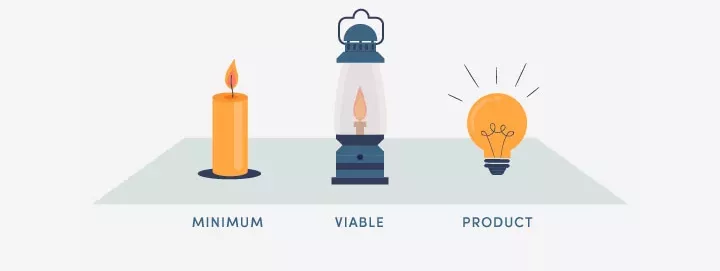
MVP app development is the process of creating a stripped-down version of an application that includes only the most essential features necessary to solve a problem for early users. This approach focuses on efficiency, rapid iteration, and validating the core idea without over-investing in unnecessary functionalities.
Startups leverage MVPs to test the market, identify user preferences, and make data-driven improvements before launching a full-scale product.
Definition and Core Principles
The core principle of an MVP is to deliver value with minimal effort. It is not about launching an incomplete or substandard product; rather, it is about focusing on the features that directly address the target problem. MVPs emphasize quick development cycles, early user engagement, and continuous feedback. By adhering to these principles, startups can reduce wasted resources, avoid feature bloat, and prioritize functionalities that truly matter.
Want to know? Benefits of Custom Mobile App Development for Your Business
How MVP Differs from a Full-Fledged Product
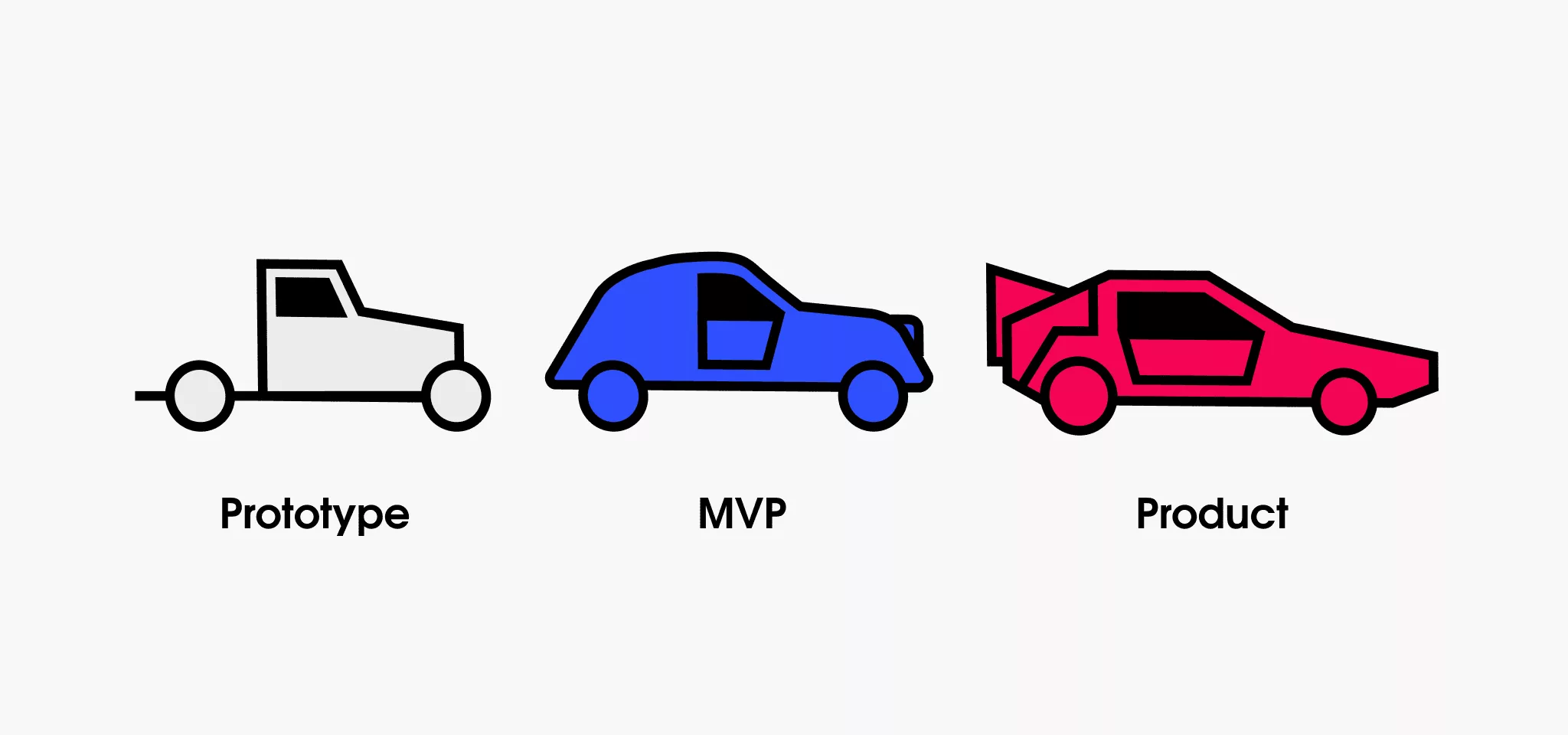
Unlike a fully-featured application, an MVP avoids complex integrations, advanced functionalities, and non-essential features. The purpose is not to impress with a complete design but to test hypotheses regarding user behavior, market demand, and feature relevance. A full-fledged product often comes with higher costs, longer development timelines, and increased risk, whereas an MVP enables learning and adaptation without significant investment.
Key Components of an MVP
An effective MVP typically includes a few critical components:
- Core feature set addressing the primary problem
- Intuitive and simple user interface
- Mechanisms for collecting user feedback
- Basic analytics to track engagement and performance
These components ensure that the MVP serves its purpose: validating ideas, attracting early adopters, and guiding future product development.
Why Startups Should Build an MVP First
Building an MVP is a strategic approach that allows startups to test their ideas in the real world while conserving time, money, and resources. Rather than investing heavily in a fully-featured product that may not meet market needs, startups can validate assumptions and understand user behavior through an MVP.
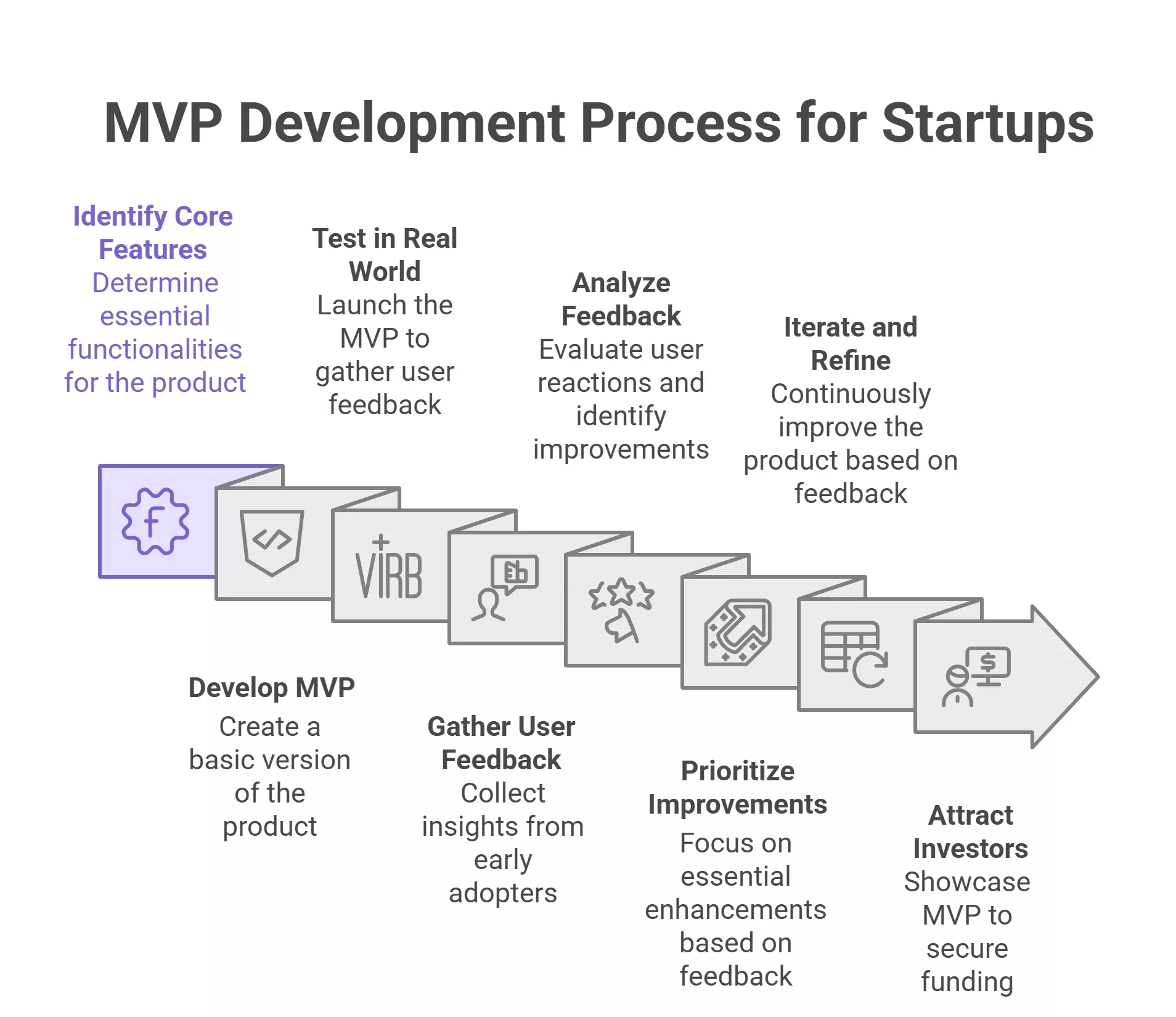
This approach enables founders to make informed decisions, pivot if necessary, and focus on delivering value that resonates with their target audience.
Reducing Financial Risks
Startups often operate with limited budgets, and developing a full-scale app without validation can lead to significant financial losses. MVP app development minimizes upfront costs by focusing only on essential features, reducing the risk of investing in functionalities that users may not need.
By validating the product concept early, startups can avoid unnecessary expenditures and allocate resources more efficiently toward features that drive engagement and growth.
Validating Business Ideas Quickly
Time is critical for startups in competitive markets. An MVP allows entrepreneurs to bring a product to market rapidly and assess user reactions in real time.
Quick validation helps determine whether there is demand for the solution, which features are most valued, and what improvements are necessary. This iterative approach ensures that the final product aligns with market expectations, increasing the likelihood of success.
Attracting Early Investors and Stakeholders
Investors are more likely to support a startup that can demonstrate a working concept and initial user engagement. An MVP acts as a tangible proof of concept, showing that the idea is feasible, that users are interested, and that the team can execute efficiently.
Early traction through an MVP increases credibility, making it easier to secure funding, strategic partnerships, and mentorship.
Learning from Real User Feedback
One of the biggest advantages of an MVP is the ability to gather actionable feedback from early adopters. Startups can identify pain points, understand user behavior, and make data-driven improvements.
This feedback loop ensures that the product evolves according to actual needs rather than assumptions, which is critical for building a product that users love and continue to use.
Prioritizing Core Features
Startups often face the temptation to include too many features in their first product release. MVP app development encourages prioritization by focusing only on the functionalities that solve the primary problem. This approach prevents feature overload, simplifies development, and ensures that the product remains user-friendly while delivering maximum value.
Must see! Why Startups Choose Custom Mobile Apps Instead of Templates
Benefits of Building an MVP First
Building an MVP first is a strategic decision that allows startups to test their ideas, optimize resources, and increase their chances of long-term success.
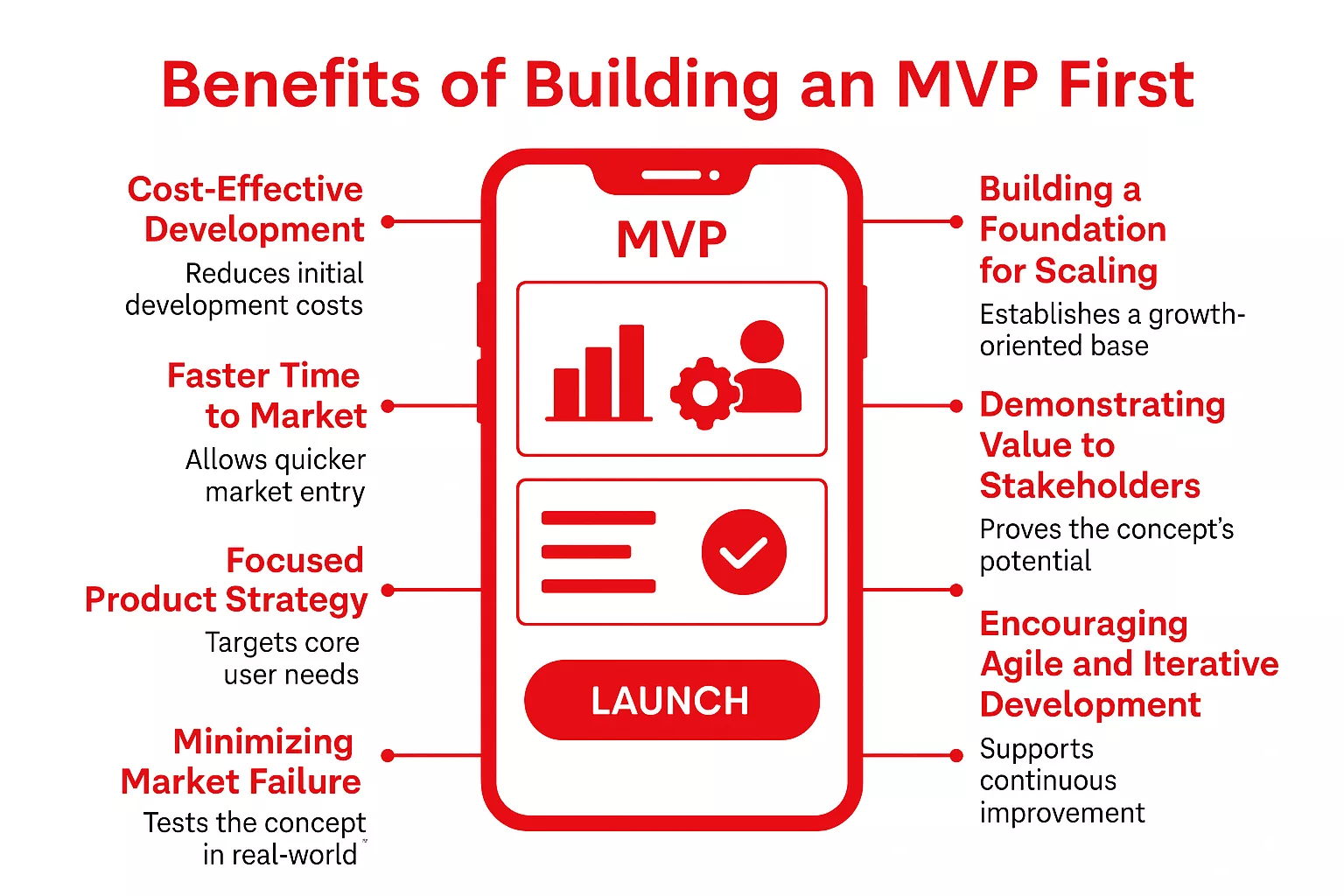
By developing a minimal but functional version of the product, startups can validate market demand, refine features, and avoid costly mistakes. The following benefits demonstrate why MVP app development is essential for emerging businesses.
Cost-Effective Development
Developing a full-featured application requires significant investment in design, coding, testing, and marketing. An MVP allows startups to launch a simplified version with only the core features, reducing initial development costs.
By focusing on essential functionalities, startups can validate their concept before committing additional resources, thereby minimizing financial risks and ensuring a more efficient use of funds.
Faster Time to Market
Speed is crucial in competitive markets, and an MVP enables startups to enter the market quickly. Early market entry allows startups to test assumptions, gather user insights, and establish a presence before competitors launch similar solutions.
By launching an MVP first, companies can adapt faster to market needs and reduce the time it takes to achieve product-market fit.
Focused Product Strategy
An MVP emphasizes solving the core problem for the target audience rather than offering a comprehensive set of features. This focus ensures that development efforts are aligned with user needs and business objectives.
By understanding what works and what doesn’t through real user feedback, startups can refine their product strategy and prioritize features that truly add value, ensuring the final product is both effective and efficient.
Minimizing Market Failure
Many startups fail because they launch products without validating the demand or understanding user preferences. An MVP allows startups to test the concept in a real-world setting and identify potential issues before a full-scale launch.
By addressing feedback and iterating early, the likelihood of product failure is significantly reduced. This approach ensures that the final product resonates with users and meets market expectations.
Building a Foundation for Scaling
While an MVP is minimal, it establishes a foundation for future growth. Early user feedback and data analytics guide subsequent development, helping startups scale the product effectively. The insights gained from an MVP inform design decisions, feature enhancements, and technology choices, ensuring that the full version of the app is scalable, robust, and well-received by users.
Demonstrating Value to Stakeholders
An MVP provides tangible proof of a startup’s vision, allowing stakeholders—including investors, partners, and early adopters—to see the concept in action. Demonstrating a working prototype builds confidence, attracts funding, and helps form strategic partnerships, all of which are critical for a startup’s growth and long-term success.
Encouraging Agile and Iterative Development
MVP app development promotes an iterative approach, where continuous improvements are made based on user feedback and analytics. This agile methodology allows startups to remain flexible, respond to changes in market trends, and make data-driven decisions. By continuously iterating, startups can enhance the user experience, optimize performance, and maintain relevance in a dynamic market environment.
Read once! How to Plan your App Project with a App Development Agency
Key Steps in MVP App Development
Developing a Minimum Viable Product requires a structured approach to ensure that the core concept is validated efficiently and effectively. Each step in MVP app development plays a critical role in reducing risk, optimizing resources, and gathering actionable insights from early users. By following these steps, startups can build a strong foundation for their full-fledged product.
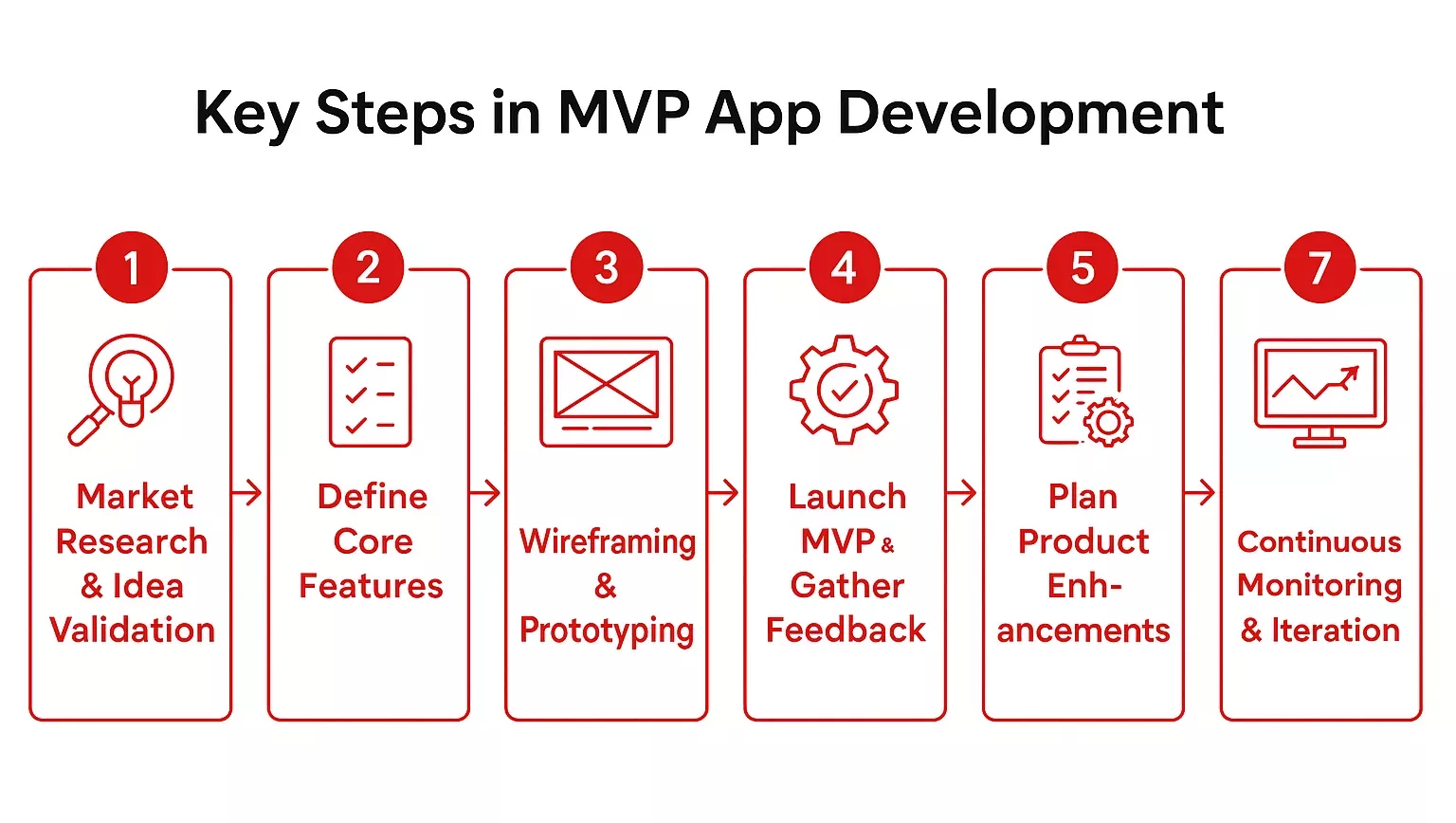
Conducting Market Research and Idea Validation
Before building an MVP, startups must conduct thorough market research to understand the target audience, identify competitors, and assess demand. This step involves analyzing customer pain points, studying existing solutions, and validating assumptions about the problem the app intends to solve.
Idea validation ensures that the MVP addresses a real need rather than a hypothetical problem, increasing the likelihood of early adoption and long-term success.
Defining Core Features and Functionality
An MVP should include only the essential features necessary to solve the primary problem for users. Startups must prioritize features based on user needs, business goals, and technical feasibility. Defining a focused feature set prevents feature overload, accelerates development, and ensures the product remains simple and intuitive. Prioritization also allows the development team to iterate quickly and incorporate user feedback efficiently.
Wireframing and Prototyping
Wireframing and prototyping help visualize the app’s structure, flow, and user experience before development begins. Wireframes outline the layout and navigation, while prototypes simulate interactions and basic functionality.
This step allows stakeholders and potential users to provide feedback early, identify usability issues, and refine the design. Prototyping saves time and resources by preventing costly changes during later stages of development.
Iterative Development and Testing
MVP app development relies on iterative development cycles where small increments of the product are built, tested, and improved continuously. This approach allows developers to address bugs, optimize performance, and enhance user experience step by step. Iterative testing ensures that each version of the MVP meets quality standards and aligns with user expectations, reducing the risk of major issues post-launch.
Launching the MVP and Gathering Feedback
Once the MVP is ready, it is released to a limited audience, often early adopters who can provide valuable insights. Feedback collected at this stage includes usability observations, feature requests, and satisfaction levels. Analyzing this feedback helps identify strengths, weaknesses, and areas for improvement.
Startups can then make data-driven decisions about which features to enhance, remove, or add in future versions.
Planning for Future Product Enhancements
The insights gained from MVP testing inform the roadmap for full-scale development. Startups can prioritize feature upgrades, technical improvements, and user experience enhancements based on real-world data.
This step ensures that the final product is scalable, aligned with market demand, and capable of delivering long-term value to users. A well-planned enhancement strategy also helps attract investors and build trust among early adopters.
Continuous Monitoring and Iteration
Even after the initial MVP launch, continuous monitoring is essential to track user engagement, performance metrics, and feature usage. Regular updates based on analytics and feedback allow startups to refine the product, address issues promptly, and maintain relevance in a competitive market. This cycle of monitoring, learning, and iterating is key to evolving the MVP into a successful full-scale application.
Read once! Why Hire a Custom Software Development Company
Common Mistakes Startups Make During MVP Development
Even with a clear strategy, startups frequently encounter challenges during MVP app development that can slow progress, waste resources, or result in a product that fails to resonate with users.
Understanding these mistakes in detail can help entrepreneurs avoid pitfalls and maximize the effectiveness of their MVP.
Overloading Features Too Early
One of the most common errors is trying to include too many features in the initial MVP. While founders may believe that adding extra functionalities will impress users, it often has the opposite effect. An overloaded MVP can confuse users, complicate navigation, increase development time, and delay the launch.
The goal of MVP app development is to focus on the core problem and deliver a simple, usable solution. Additional features should be added gradually based on validated user feedback to ensure they provide real value.
Ignoring Market Feedback
An MVP is fundamentally a tool for learning from early users. Ignoring feedback undermines this purpose. Startups sometimes assume they know what users want without actively collecting or analyzing data from the MVP.
This can result in a product that misses the mark, causing disengagement or negative perception. Successful MVPs leverage user feedback to refine features, identify pain points, and prioritize improvements, ensuring the final product aligns with real market needs.
Skipping Proper Testing and QA
Rushing to market without thorough testing is a frequent mistake. Even though an MVP is a minimal product, it must be reliable and functional. Bugs, crashes, or confusing workflows can quickly erode user trust and discourage adoption.
Proper QA involves usability testing, functional testing, performance monitoring, and ensuring the app works across devices and platforms. A smooth, error-free MVP fosters user confidence and encourages continued engagement.
Neglecting Scalability Considerations
While the focus of an MVP is on the core features, ignoring scalability can create significant problems as the product grows. Startups often build MVPs without considering infrastructure, code architecture, or potential integrations with other systems.
This oversight can make future expansions, feature additions, and increased user loads costly and complicated. Designing the MVP with a scalable architecture ensures that the app can evolve smoothly into a full-scale product without requiring a complete rebuild.
Failing to Set Clear Success Metrics
Many startups launch MVPs without defining what success looks like. Key performance indicators (KPIs) such as user engagement, retention rates, conversion rates, and feedback ratings are crucial for evaluating the MVP’s effectiveness. Without these metrics, it’s difficult to make informed decisions about feature prioritization, enhancements, or pivots. Establishing clear objectives ensures that the MVP delivers actionable insights and guides strategic growth.
Underestimating the Importance of Marketing and User Acquisition
Even the best MVP can fail if no one uses it. Some startups assume that building a product alone is enough to validate their idea. However, attracting early adopters through marketing, social media campaigns, email outreach, and onboarding strategies is essential. Effective promotion ensures sufficient usage for meaningful feedback, allowing the MVP to fulfill its purpose of validating the market and informing product decisions.
Lack of an Iterative Mindset
Finally, treating the MVP as a final product rather than a learning tool is a critical mistake. MVP app development is an iterative process, where continuous testing, feedback, and improvement drive the product forward.
Startups that fail to iterate often stagnate, missing opportunities to refine features, improve user experience, and scale effectively. Embracing an iterative mindset ensures the MVP evolves into a successful, market-ready product.
By understanding and avoiding these mistakes, startups can make the most of MVP app development, minimize risk, and create a strong foundation for a full-featured, successful application.
We have listed! Small Business App Ideas for Startups to Launch
Real-World Examples of Successful MVPs
Analyzing real-world MVPs provides valuable lessons for startups looking to validate their ideas efficiently. The table below highlights notable examples, their core MVP strategies, and the insights startups can gain from them. This approach illustrates how minimal, focused products can grow into successful full-scale applications.
| Company / Product | MVP Strategy | Outcome & Lessons Learned |
|---|---|---|
| Airbnb | Airbnb MVP started as a simple website connecting hosts and guests during a design conference. The MVP allowed users to book air mattresses in the founders’ apartment. | Validated demand for short-term rentals, showed the importance of user trust and feedback, and emphasized solving a specific problem before scaling. |
| Dropbox | Dropbox created a simple explainer video demonstrating cloud storage functionality before building the actual product. | The video generated significant user interest and email sign-ups, validating demand and saving development costs. Highlighted that MVPs don’t always require a working product; they can be used to test market interest. |
| Instagram’s MVP focused solely on photo-sharing with basic filters. Other social features were added later based on user feedback. | Early focus on a core feature allowed rapid growth, high user engagement, and iterative enhancements based on real usage data. | |
| Spotify | Spotify launched a minimal desktop version allowing streaming for a small user base. Advanced features like playlists, social sharing, and mobile integration were added later. | Demonstrated the value of testing core functionality first and iterating based on adoption patterns, helping the company optimize development priorities. |
| Uber | Uber’s MVP was a basic app connecting riders with drivers in San Francisco using a simple interface and limited geographic coverage. | Validated the concept of on-demand rides efficiently, collected real-time feedback, and allowed scalable expansion to other cities after proving the model. |
| Twitter initially launched as “twttr,” a platform for posting short status updates. Features like hashtags, retweets, and notifications were added later. | Proved the importance of starting with a single, compelling feature, validating user interest, and scaling features in response to engagement trends. | |
| Zappos | Zappos started as a simple website where the founder posted pictures of shoes from local stores and fulfilled orders manually. | Validated the market demand for online shoe sales without building inventory infrastructure, emphasizing cost-effective MVP development. |
Insights for Startups from These Examples:
- Start Small: Focus on a core problem rather than building a complete product from day one.
- Validate Demand: Test whether users want your product before committing significant resources.
- Iterate Based on Feedback: Use real user insights to guide development and prioritize features.
- Cost Efficiency: Avoid unnecessary spending by validating ideas early.
- Market Entry Timing: MVPs allow early market presence, giving startups a competitive advantage.
Here, we can say, successful MVPs share common principles: minimal functionality, rapid deployment, user-centric design, and iterative improvement based on feedback. Startups can apply these lessons to reduce risk, optimize resources, and enhance their chances of long-term success.

How MVP App Development Sets the Stage for Long-Term Growth
MVP app development is not just a tool for validating ideas—it is a strategic foundation for long-term growth and sustainability. By focusing on a minimal but functional product, startups gain insights, refine their approach, and build scalable systems that support expansion.
Data-Driven Decision Making
One of the biggest advantages of MVP app development is access to real user data from the earliest stages. Startups can track metrics such as user engagement, feature usage, retention rates, and feedback patterns.
This data provides evidence-based insights that inform strategic decisions, including which features to prioritize, how to improve user experience, and which market segments to target.
By making decisions based on actual usage rather than assumptions, startups reduce the risk of costly mistakes and increase the likelihood of product-market fit.
Enhancing User Experience Through Iteration
An MVP allows startups to release a product quickly and refine it through iterative cycles. Early users provide feedback on usability, design, and functionality, helping identify pain points that may not have been apparent during development.
Iterative improvements ensure that the product evolves in alignment with user expectations, fostering higher satisfaction and engagement. A better user experience also increases retention and word-of-mouth promotion, which are critical factors in achieving sustainable growth.
Building Investor Confidence
Investors are more likely to fund a startup that demonstrates traction, feasibility, and market demand. An MVP serves as tangible proof of concept, showing that the idea is viable and that users are willing to engage with it.
By presenting data on early adoption, retention rates, and user feedback, startups can build credibility and attract funding more effectively than with theoretical business plans alone. Investor confidence accelerates growth by providing resources for scaling, marketing, and technology enhancements.
Preparing for Scalable Product Versions
MVP app development lays the groundwork for scalable product architecture. By starting with core functionalities, startups can design systems that are modular, adaptable, and capable of integrating additional features over time.
This foresight ensures that when user demand grows, the product can scale without major redesigns or technical debt. Scalability is critical for long-term growth, allowing startups to expand into new markets, increase user capacity, and introduce advanced features without disrupting existing functionality.
Establishing a Loyal User Base Early
Releasing an MVP enables startups to engage with early adopters who are often more forgiving of minimal features and more willing to provide feedback. This group of users can become brand advocates, helping promote the product organically.
By nurturing relationships with early users and incorporating their feedback, startups can build loyalty and trust that carries into later product iterations. A loyal user base provides a strong foundation for growth, retention, and long-term profitability.
Informing Strategic Roadmaps
Insights gained from MVP testing inform the startup’s long-term roadmap. Startups can determine which features to scale, which to improve, and which to eliminate based on real-world performance. This prioritization ensures that resources are allocated effectively and that the product evolves in alignment with market needs.
A well-informed roadmap reduces wasted effort, accelerates development, and increases the chances of sustainable success.
Reducing Risk While Exploring New Opportunities
MVP app development allows startups to explore innovative features, market niches, or business models with minimal risk.
By testing ideas on a smaller scale, startups can experiment, learn, and pivot if necessary without significant financial or operational consequences. This approach fosters innovation while maintaining control over potential losses, enabling startups to seize growth opportunities confidently.
Strengthening Competitive Advantage
Launching an MVP quickly allows startups to establish a presence in the market ahead of competitors. Early engagement with users and rapid iteration based on feedback enable startups to refine their offerings faster than competitors who may be investing heavily in full-featured products.
This speed-to-market advantage, combined with continuous improvement, helps startups carve out a competitive edge in crowded industries.
MVP app development, therefore, is not merely a first step—it is a strategic foundation that informs product evolution, strengthens market positioning, and drives sustainable growth.
By leveraging real user insights, iterative development, and scalable architecture, startups can transform a minimal product into a robust, successful application that meets market demand and supports long-term business objectives.

Sum up
MVP app development is a critical strategy for startups seeking to validate ideas, minimize risks, and optimize resources. By launching a minimal but functional version of a product, startups can gather actionable feedback, engage early adopters, and make informed decisions that guide the full-scale development process.
This approach allows entrepreneurs to focus on solving core problems, prioritize features that add real value, and iterate quickly based on real-world insights. Startups that adopt an MVP-first strategy are better positioned to reduce financial and operational risks while ensuring their product aligns with market demand.
Beyond validation, MVP app development lays the groundwork for long-term growth. Insights from early users inform strategic roadmaps, guide feature enhancements, and help establish scalable systems capable of handling increased demand.
Early market presence, combined with iterative improvements and data-driven decision-making, builds user loyalty, attracts investor confidence, and creates a competitive advantage.
For startups navigating fast-paced and competitive markets, developing an MVP first is not just a prudent choice—it is an essential step toward sustainable success and a strong foundation for a thriving business.
FAQs
What is MVP app development, and why is it important for startups?
MVP app development refers to creating a minimal, functional version of an application that includes only the essential features necessary to solve a core problem. For startups, it is crucial because it allows them to validate their ideas in the real market, gather feedback, and make data-driven decisions before investing in a full-featured product.
This approach minimizes financial risk, accelerates time-to-market, and ensures that the final product aligns with user needs.
How does building an MVP first benefit startups?
Building an MVP first offers several advantages: it reduces initial development costs, enables rapid testing of product concepts, and allows startups to engage early adopters for feedback. Additionally, an MVP helps in prioritizing essential features, minimizing market failure, and refining the product strategy.
By starting small and iterating based on real user data, startups can create a product that meets market demand more effectively than launching a complete, untested solution.
What common mistakes should startups avoid during MVP development?
Startups often make mistakes like overloading features, ignoring user feedback, skipping proper testing, neglecting scalability, or failing to define success metrics.
Other pitfalls include underestimating marketing needs and treating the MVP as a final product rather than a learning tool. Avoiding these mistakes ensures that the MVP validates the concept efficiently, gathers meaningful insights, and provides a foundation for scalable growth.
How can an MVP attract investors and stakeholders?
An MVP acts as tangible proof of a startup’s vision, demonstrating feasibility, user interest, and execution capability. Investors are more likely to support startups that can show a working product, early traction, and real user engagement.
Data gathered from MVP usage, including retention rates, feedback, and adoption metrics, builds credibility and confidence among investors, increasing the likelihood of securing funding and strategic partnerships.
What role does user feedback play in MVP app development?
User feedback is the cornerstone of MVP app development. It helps startups identify pain points, assess usability, prioritize features, and improve the product iteratively.
By listening to early adopters, startups can make informed decisions about which functionalities to enhance, remove, or add in future versions. Continuous feedback ensures that the final product resonates with the target audience, increases adoption, and sets the stage for long-term success.