
Professional networking platforms have become an important part of modern business communication. If you are planning to create a networking platform for professionals, recruiters, businesses, or industry experts, the Cost to Build an App Like LinkedIn can range from $30,000 for a basic version to more than $300,000 for a feature-rich platform. The final cost depends on app complexity, features, development team size, technology stack, and maintenance requirements.
With millions of professionals using networking applications to connect, hire talent, and grow careers, the demand for professional networking solutions continues to increase. Understanding the development process and expenses can help businesses make informed decisions before investing in such a platform.
Related Queries
How much does it cost to build an app like LinkedIn?
The Cost to Build an App Like LinkedIn typically ranges from $30,000 to $300,000 or more. A basic networking app with user profiles, messaging, and connection requests may cost between $30,000 and $60,000. Advanced platforms with AI recommendations, job portals, premium subscriptions, analytics, and video features can exceed $300,000 depending on complexity and development requirements.
How long does it take to develop a professional networking app?
Developing a professional networking app usually takes between 3 and 18 months. A basic MVP can be completed within 3 to 5 months, while a medium-complexity platform may require 6 to 9 months. Large-scale networking applications with advanced features, integrations, and custom functionality often take 9 to 18 months to develop and test before launch.
What are the main features of a LinkedIn-like app?
The main features of a LinkedIn-like app include user registration, professional profiles, connection requests, messaging, content sharing, job posting, job applications, notifications, and advanced search filters. Many modern networking apps also include AI-powered recommendations, analytics dashboards, skill endorsements, and premium membership options to improve user engagement and networking opportunities.
What technology is used to build networking apps?
Networking apps are commonly built using technologies such as React Native or Flutter for mobile development, Node.js, Python, Java, or .NET for backend development, and PostgreSQL or MongoDB for database management. Cloud platforms such as AWS, Microsoft Azure, and Google Cloud are often used to support scalability, security, and high user traffic.
Can startups build a LinkedIn-like app with a limited budget?
Yes, startups can build a LinkedIn-like app on a limited budget by starting with a Minimum Viable Product (MVP). An MVP includes only essential features such as user profiles, networking connections, messaging, and search functionality. This approach reduces initial development costs, allows businesses to validate market demand, and provides opportunities to add advanced features as the platform grows.
What Is LinkedIn and Why Are Business Networking Apps Popular?

LinkedIn is a professional networking platform that allows users to create profiles, connect with professionals, search for jobs, recruit candidates, publish content, and build industry relationships.
Unlike traditional social media platforms, LinkedIn focuses on professional growth and business opportunities. Companies use it for hiring, marketing, brand awareness, and networking.
The growing popularity of digital networking has encouraged businesses to develop similar platforms tailored to specific industries, regions, or professional communities. Many organizations are now exploring opportunities to launch niche networking applications that provide specialized value to users.
Among the best Networking apps, professional platforms stand out because they combine networking, recruitment, content sharing, and business communication in one place.
Factors That Affect the Cost to Build an App Like LinkedIn
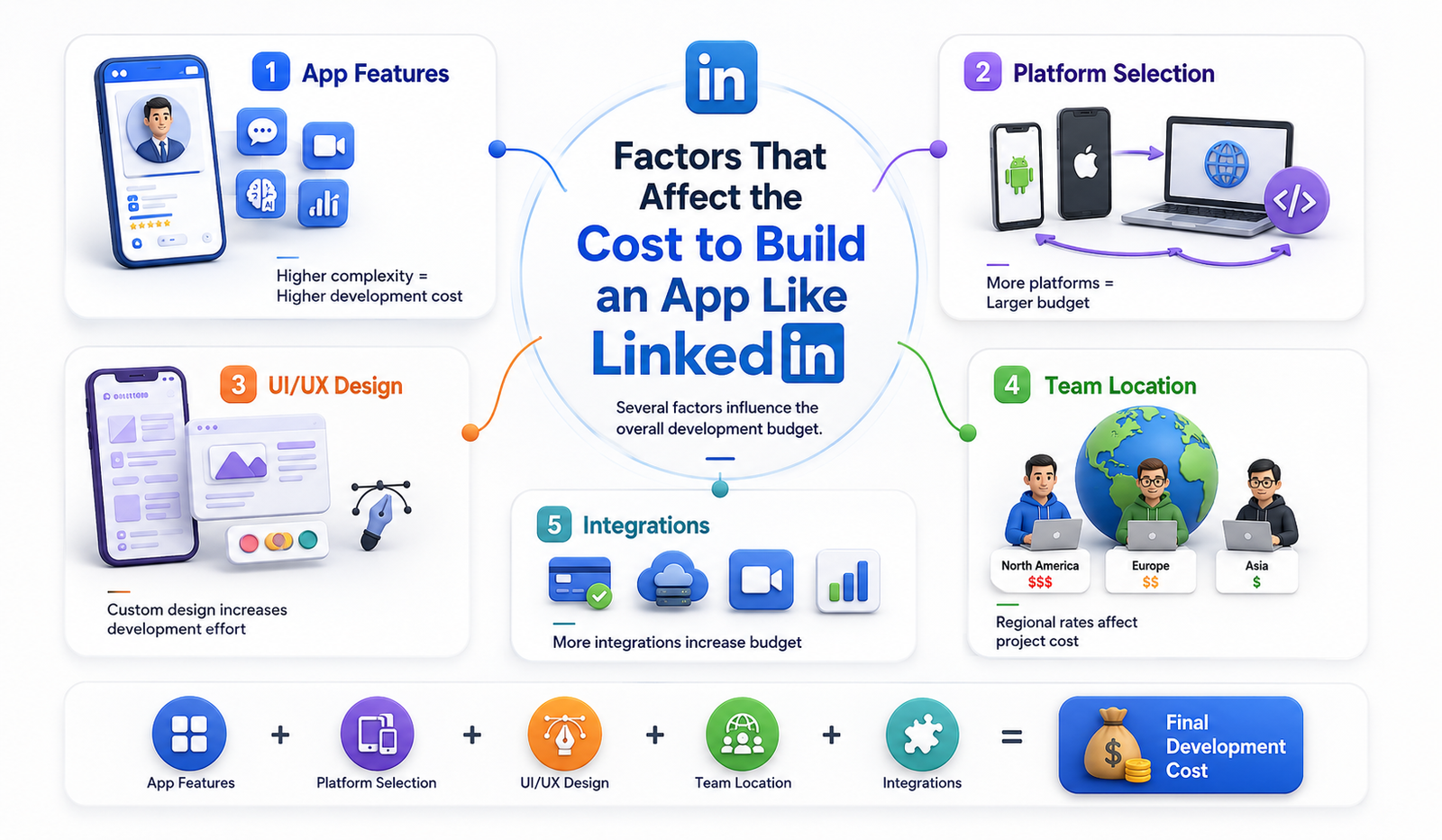
Several factors influence the overall development budget.
1) App Features
Features have the biggest impact on development cost. A simple application with user profiles and messaging requires fewer development hours than a platform with AI recommendations, video conferencing, and advanced analytics.
2) Platform Selection
You can build:
- Android app only
- iOS app only
- Cross-platform application
- Web platform with mobile apps
Supporting multiple platforms increases development costs but helps reach a larger audience.
3) Design Complexity
A professional networking app requires intuitive navigation, profile management, dashboards, and communication tools. Custom UI/UX design increases development effort but improves user experience.
4) Development Team Location
Development costs vary by region. Developers in North America generally charge more than teams in Asia or Eastern Europe.
5) Third-Party Integrations
Integrations with payment gateways, cloud services, email systems, video-calling tools, and analytics platforms add to the overall budget. These factors collectively determine the final Cost to build an App Like LinkedIn.
Core Features Required in a LinkedIn-Like App
A professional networking platform requires several essential features.
1) User Registration and Login
Users should be able to sign up using:
- Mobile number
- Google account
- Apple account
Secure authentication is necessary to protect user data.
2) User Profiles
Profiles are the foundation of networking apps.
Users can add:
- Personal details
- Education history
- Skills
- Certifications
- Work experience
- Portfolio links
3) Professional Connections
Users can send, accept, or reject connection requests. This feature helps build professional networks.
4) Search and Filters
Advanced search allows users to find:
- Professionals
- Companies
- Recruiters
- Jobs
- Industry experts
5) News Feed
A feed enables users to view updates, articles, job posts, and company announcements.
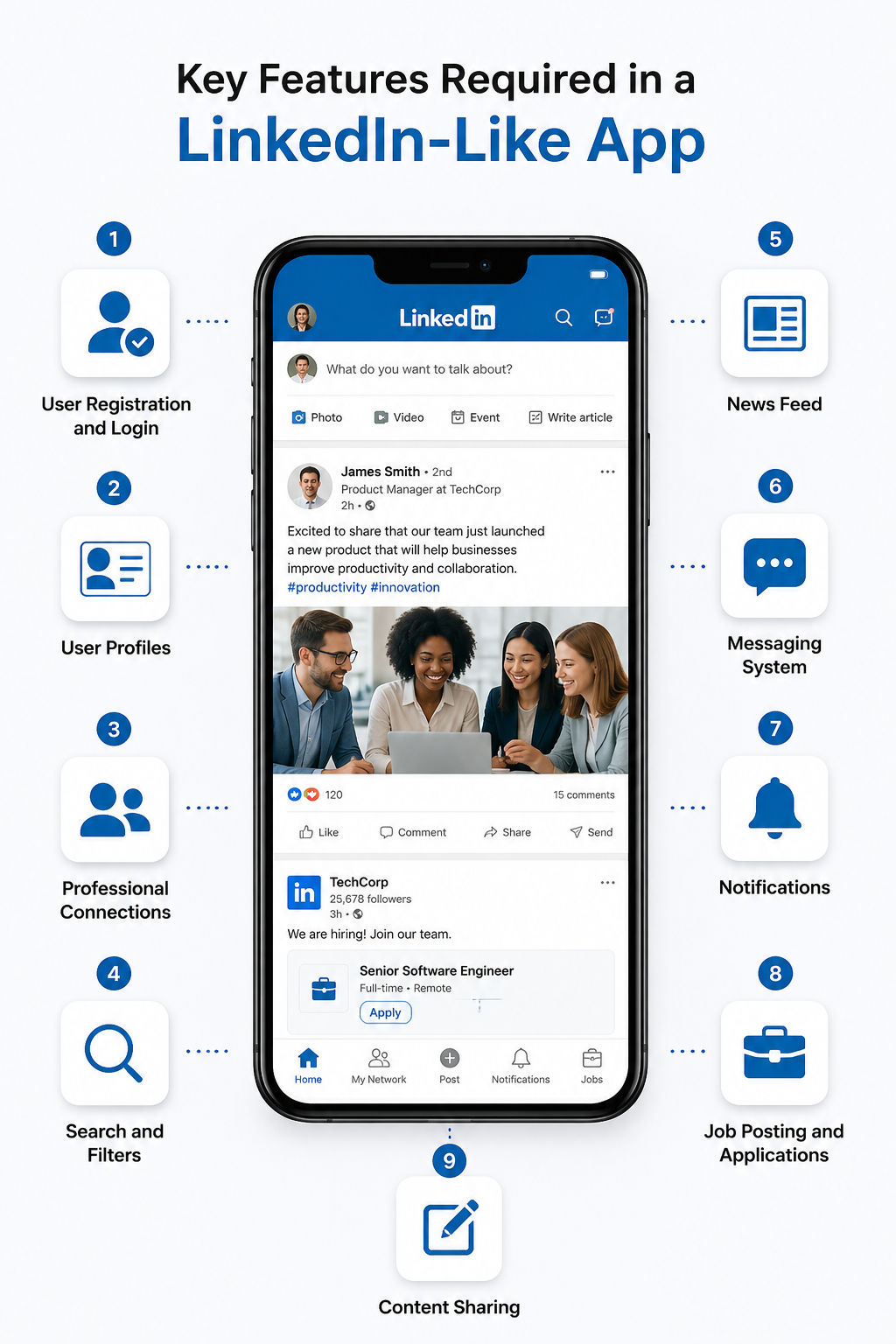
6) Messaging System
Real-time messaging supports professional communication between users.
7) Notifications
Push notifications keep users informed about:
- New connections
- Messages
- Profile views
- Job opportunities
8) Job Posting and Applications
Recruiters can publish vacancies while candidates can apply directly through the platform.
9) Content Sharing
Users can publish articles, updates, images, and professional achievements. These features form the minimum foundation of a professional networking application.
Advanced Features That Increase Development Costs
Many modern networking apps include advanced functionality.
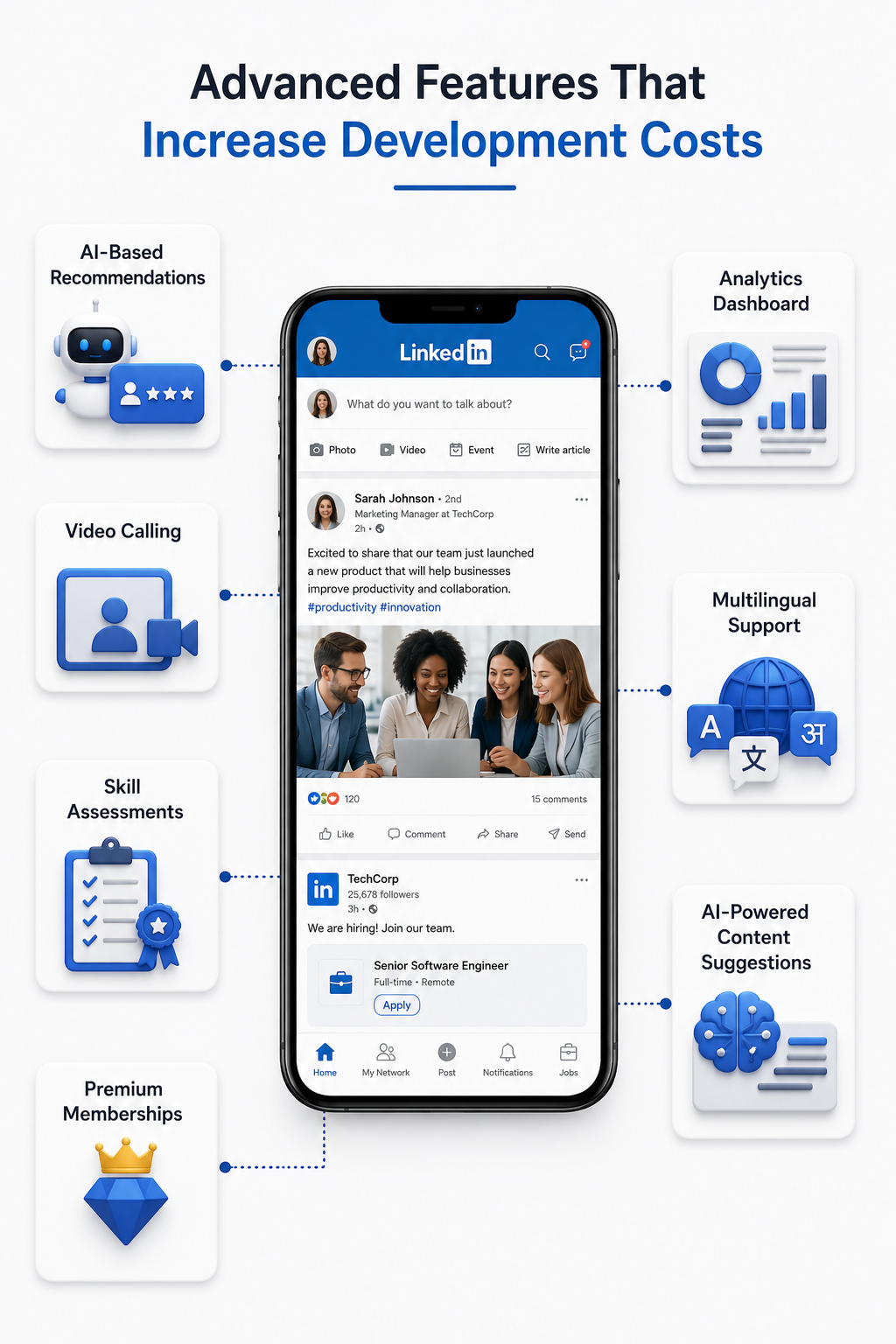
1) AI-Based Recommendations
Artificial intelligence can suggest:
- Relevant connections
- Jobs
- Content
- Industry groups
2) Video Calling
Built-in video meetings help professionals communicate without third-party tools.
3) Skill Assessments
Users can complete tests to validate professional skills.
4) Premium Memberships
Subscription-based features generate revenue and offer enhanced functionality.
4) Analytics Dashboard
Users and businesses can track profile performance, engagement, and audience insights.
5) Multilingual Support
Supporting multiple languages expands market reach.
6) AI-Powered Content Suggestions
Content recommendation systems help users engage with relevant professional information.
Adding such capabilities significantly increases the cost of building an App Like LinkedIn because they require additional development and infrastructure.
Technology Stack Needed for Development
The technology stack determines application performance, scalability, and security.
1) Front-End Development
Common technologies include:
- React Native
- Flutter
- Swift
- Kotlin
2) Back-End Development
Popular frameworks include:
- Node.js
- Python
- Java
- .NET
3) Database Solutions
Networking applications often use:
- PostgreSQL
- MongoDB
- MySQL
4) Cloud Infrastructure
Cloud services support scalability and storage requirements.
Common options include:
- AWS
- Google Cloud
- Microsoft Azure
A well-planned technology stack helps ensure long-term platform stability.
Development Team Required for Building Networking Apps like LinkedIn
Building a networking platform requires multiple specialists. Typical team members include:
- Project Manager
- UI/UX Designer
- Front-End Developer
- Back-End Developer
- Mobile Developer
- QA Engineer
- DevOps Engineer
Experienced mobile app developers help ensure smooth functionality across devices and operating systems. For larger projects, businesses may also hire dedicated product strategists and security specialists.
Estimated Cost Breakdown of Apps Like LinkedIn by Development Stage
The development budget can be divided into different phases.
1) Planning and Research
Estimated Cost: $3,000–$15,000
Activities include:
- Market research
- Requirement gathering
- Business analysis
2) UI/UX Design
Estimated Cost: $5,000–$25,000
This stage focuses on creating user-friendly designs and workflows.
3) Front-End Development
Estimated Cost: $10,000–$60,000
Developers create the interface users interact with daily.
4) Back-End Development
Estimated Cost: $15,000–$80,000
This stage includes servers, APIs, databases, and business logic.
5) Testing and Quality Assurance
Estimated Cost: $5,000–$20,000
Testing identifies bugs and ensures platform reliability.
6) Deployment and Launch
Estimated Cost: $2,000–$10,000
Deployment involves app store publishing and server configuration.
7) Maintenance
Annual maintenance generally costs 15% to 25% of the original development budget.
Cost Based on App Complexity of Networking App
The total investment varies according to project scope.
1) Basic Networking App
Features:
- User profiles
- Connections
- Messaging
- Search
Estimated Cost:
$30,000–$60,000
2) Medium Complexity App
Features:
- Job portal
- Content feed
- Notifications
- Premium subscriptions
Estimated Cost:
$60,000–$150,000
3) Advanced LinkedIn-Like Platform
Features:
- AI recommendations
- Analytics
- Video conferencing
- Advanced security
- Enterprise solutions
Estimated Cost:
$150,000–$300,000+
Businesses planning long-term growth should evaluate future scalability requirements before choosing a development scope.
Timeline to Build an App Like LinkedIn
Development timelines depend on complexity.
| App Type | Estimated Timeline |
|---|---|
| Basic App | 3–5 Months |
| Medium App | 6–9 Months |
| Advanced App | 9–18 Months |
Proper planning can reduce delays and improve resource utilization.
Listed here! Most Trending Apps In USA
What are the Ways to Reduce Networking App Development Costs: 12 Tips
Building a professional networking app can require a significant investment, especially when the platform includes features such as user profiles, messaging, job boards, content sharing, and AI-based recommendations. However, businesses can reduce development expenses without affecting the overall quality of the application. Careful planning and smart technology choices can help control costs throughout the project.
1) Start with a Minimum Viable Product (MVP)
One of the most effective ways to reduce development costs is to launch a Minimum Viable Product (MVP). Instead of building every feature at once, an MVP focuses only on the core functionalities users need.
For a networking app, the MVP may include:
- User registration and login
- Professional profiles
- Connection requests
- Messaging
- Basic search functionality
Launching with essential features allows businesses to test market demand, collect user feedback, and identify improvements before investing in advanced functionality. This approach reduces the risk of spending large amounts on features users may never use.
2) Prioritize Features Based on Business Goals
Many businesses increase development costs by adding unnecessary features during the early stages of development. Before starting the project, create a list of must-have and optional features.
For example:
Essential Features
- User profiles
- Connections
- Messaging
- Job posting
Optional Features
- Video conferencing
- AI recommendations
- Live streaming
- Advanced analytics
Focusing on business-critical features first helps control budgets while ensuring the application delivers value from day one.
3) Choose Cross-Platform Development
Developing separate applications for Android and iOS requires more resources, time, and money. Cross-platform frameworks allow developers to write a single codebase that works on multiple operating systems.
Popular frameworks include:
- Flutter
- React Native
Using a cross-platform approach can significantly reduce development hours while maintaining a consistent user experience across devices.
4) Use Ready-Made Solutions and APIs
Building every feature from scratch increases both cost and development time. Many networking app features can be integrated through existing APIs and third-party services.
Examples include:
- Authentication services
- Payment gateways
- Cloud storage
- Push notifications
- Video calling solutions
By using proven third-party tools, businesses can reduce coding requirements while improving reliability and security.
5) Adopt a Scalable Development Approach
Many startups build large infrastructures before they actually need them. Instead, businesses should create an application architecture that can scale gradually.
This means:
- Starting with basic server resources
- Expanding cloud infrastructure as users grow
- Adding advanced features after user validation
A scalable approach prevents overspending during the early stages of the project.
6) Outsource Development to Experienced Teams
Hiring an in-house team can involve recruitment costs, salaries, office expenses, and employee benefits. In many cases, outsourcing development to experienced professionals is more cost-effective.
Working with skilled developers can provide:
- Faster project delivery
- Access to specialized expertise
- Reduced hiring expenses
- Better resource management
The key is selecting a development partner with experience in networking and social platform projects.
7) Use Open-Source Technologies
Open-source frameworks and tools help reduce licensing expenses while providing strong development capabilities.
Common examples include:
- React Native
- Flutter
- Node.js
- PostgreSQL
- MongoDB
These technologies are widely used, supported by large developer communities, and suitable for building scalable networking applications.
8) Invest in Proper Planning Before Development
Poor planning often leads to feature changes, redesigns, and development delays, all of which increase project costs. Before development begins, businesses should clearly define:
- Project goals
- Target audience
- Feature requirements
- Revenue model
- Technical requirements
A detailed project roadmap helps reduce unexpected expenses and keeps development on schedule.
9) Automate Testing Processes
Manual testing can become expensive as the application grows. Automated testing tools help identify bugs early and reduce long-term quality assurance costs.
Benefits of automated testing include:
- Faster testing cycles
- Improved accuracy
- Reduced maintenance costs
- Better app stability
Early bug detection prevents expensive fixes after launch.
10) Launch Features in Phases
Instead of releasing a fully featured networking platform immediately, businesses can introduce new functionality gradually.
For example:
Phase 1
- Profiles
- Connections
- Messaging
Phase 2
- Job portal
- Content sharing
- Notifications
Phase 3
- AI recommendations
- Analytics
- Premium subscriptions
A phased release strategy spreads development costs over time and allows businesses to fund future updates through early revenue.
11) Monitor Development Progress Regularly
Frequent project reviews help identify issues before they become costly problems. Businesses should regularly track:
- Budget usage
- Development milestones
- Feature completion
- Quality assurance results
Regular monitoring ensures resources are used efficiently and prevents unnecessary spending.
12) Focus on User Feedback Before Adding Advanced Features
Many networking platforms invest heavily in advanced functionality before understanding user needs. Collecting feedback after launch helps businesses determine which features users actually want.
This prevents spending money on features that provide little value and allows future investments to be based on real user behavior.
Reducing networking app development costs is not about cutting quality. It is about making informed decisions throughout the development process. Starting with an MVP, prioritizing essential features, using cross-platform technologies, leveraging third-party integrations, and adopting a phased development strategy can significantly reduce expenses while creating a reliable and scalable networking platform. Businesses that focus on planning and user feedback are often able to achieve better results while maintaining control over their development budget.
We have listed! Best Friendship Apps To Make Friends
Future Trends in Professional Networking Apps
Professional networking platforms continue evolving.
Some emerging trends include:
- AI-driven networking suggestions
- Skill verification systems
- Virtual hiring events
- Video-first professional content
- Business community groups
- Advanced recruitment automation
As digital networking grows, these features may become standard expectations among users.
Many experts believe networking platforms will continue expanding alongside the rise of Growing Social Media Platforms In The USA, where professionals increasingly engage online for career development and business opportunities.
Businesses also use Best Social Media Automation Tools to manage content distribution and engagement across multiple platforms.
Marketing teams often rely on Free AI Tools For Creating Social Media Posts to create consistent content for professional audiences.
Organizations launching networking applications may work with experienced social media app developers to build engagement-focused features.
While development budgets vary across industries, the cost of dating app development is often compared with networking platforms because both require user profiles, messaging systems, and recommendation engines.
Companies increasingly utilize AI Brand Monitoring Tools to track online reputation and audience sentiment across digital channels.
When planning development, understanding overall Social Media App Development Cost trends can provide useful benchmarks.
Many businesses depend on specialized mobile app development services to create scalable networking applications.
Selecting experienced social media app development companies can help streamline the development process and improve long-term platform maintenance.
Some organizations also evaluate portfolios from custom software app developers before selecting a development partner.
Sum up
The cost to build an app like LinkedIn depends largely on feature requirements, technology choices, platform support, and development complexity. A basic networking application may cost between $30,000 and $60,000, while an enterprise-grade solution can exceed $300,000.
Businesses should begin with clear objectives, prioritize essential features, and consider launching an MVP before investing in advanced functionality. Careful planning helps reduce unnecessary expenses while creating a platform that delivers value to users.
For more technology, app development, and software industry insights, readers can explore related resources on AppsInsight.

FAQs
Is it cheaper to build a networking app for Android or iOS?
Building for a single platform is generally cheaper than developing for both Android and iOS simultaneously.
What is the biggest cost factor in app development?
Feature complexity is usually the largest contributor to development costs.
Does AI increase networking app development costs?
AI features require additional development, infrastructure, and testing resources.
Should businesses launch an MVP first?
An MVP helps validate demand and reduce initial investment risks.
How much should businesses budget for app maintenance?
Most businesses allocate 15% to 25% of the original development cost annually for maintenance and updates.