
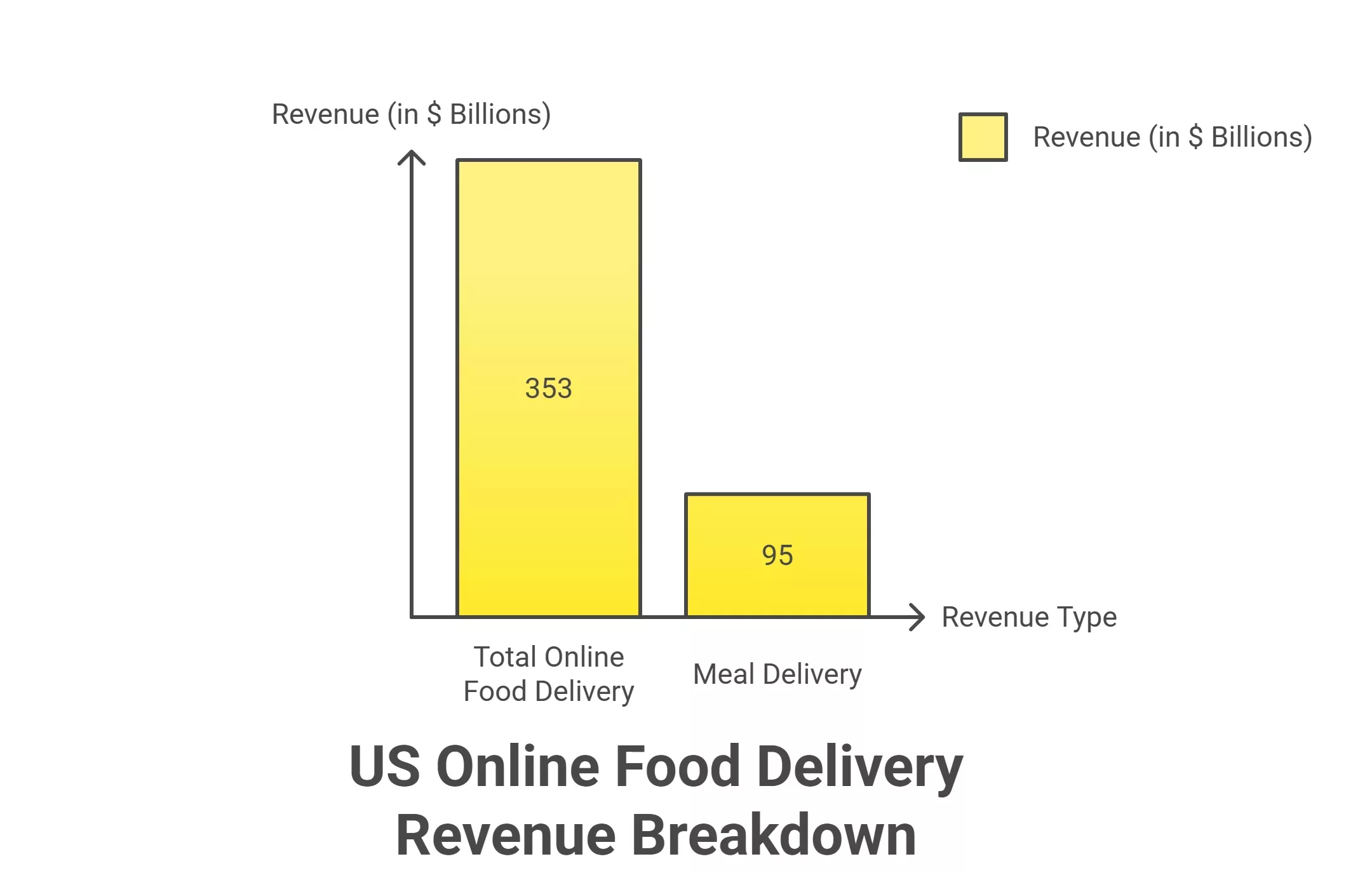
The food delivery industry has experienced unprecedented growth in recent years, driven by changing consumer habits, urbanization, and the convenience of on-demand services. According to Statista, Home to the second biggest online food delivery market after China, the United States alone generated an estimated 353 billion USD in revenues in 2024, with over 95 billion USD coming from the meal delivery segment. By 2029, the market is expected to surpass the 500-billion mark, with both online grocery and meal delivery services continuing their strong upward climb.
Apps like HungerStation have transformed the way people order food, offering seamless experiences for customers, restaurants, and delivery partners alike. This growing demand shows just how important fast, flexible, and tech-driven solutions have become for modern consumers.
In 2026, building a competitive food ordering app development solution requires careful planning, an understanding of market demands, and an investment in both technology and user experience. A well-designed app can streamline operations, boost customer engagement, and generate significant revenue, but the cost and complexity involved make strategic decision-making crucial.
Developing a food delivery app involves more than just replicating existing models; it requires integrating features that meet local market needs, ensuring high performance under heavy traffic, and providing a smooth, intuitive experience for all users.
HungerStation app development cost, for instance, reflects the investment in robust infrastructure, real-time tracking, payment integration, and loyalty programs. Businesses looking to enter this competitive space need to understand not only the initial development expenses but also ongoing maintenance, marketing, and scaling costs.
By evaluating these factors, companies can plan a cost-effective, high-quality food delivery app that stands out in the marketplace while optimizing food delivery app development pricing.
We have listed! Trending Food Ordering Apps In The USA
Key Food Delivery Market Statistics
- China remains the world’s largest food delivery market, projected to generate approximately $499.14 billion in revenue in 2025 and is expected to grow to $715.39 billion by 2030, making it the largest market globally, according to Statista.
- The global food delivery app industry is projected to reach between $715 billion and over $945 billion by 2034, depending on the source, with a compound annual growth rate (CAGR) of approximately 9.5% to 9.8%.
- Uber Eats is currently the most popular food delivery app worldwide, while Delivery Hero leads in total active users across its platforms.
- In the United States, DoorDash dominates the market with more than 65% market share, making it the top choice for American consumers.
- In China, Meituan is the leading food delivery app, followed by Ele.me as the second-most popular platform.
- In 2024, Uber Eats recorded the highest number of global app downloads, with Meituan following closely behind.
HungerStation Business Model Explained
HungerStation has emerged as one of the leading food delivery platforms in the Middle East, connecting customers, restaurants, and delivery partners through a seamless digital ecosystem. Its success is built on a robust business model that balances convenience, efficiency, and scalability.
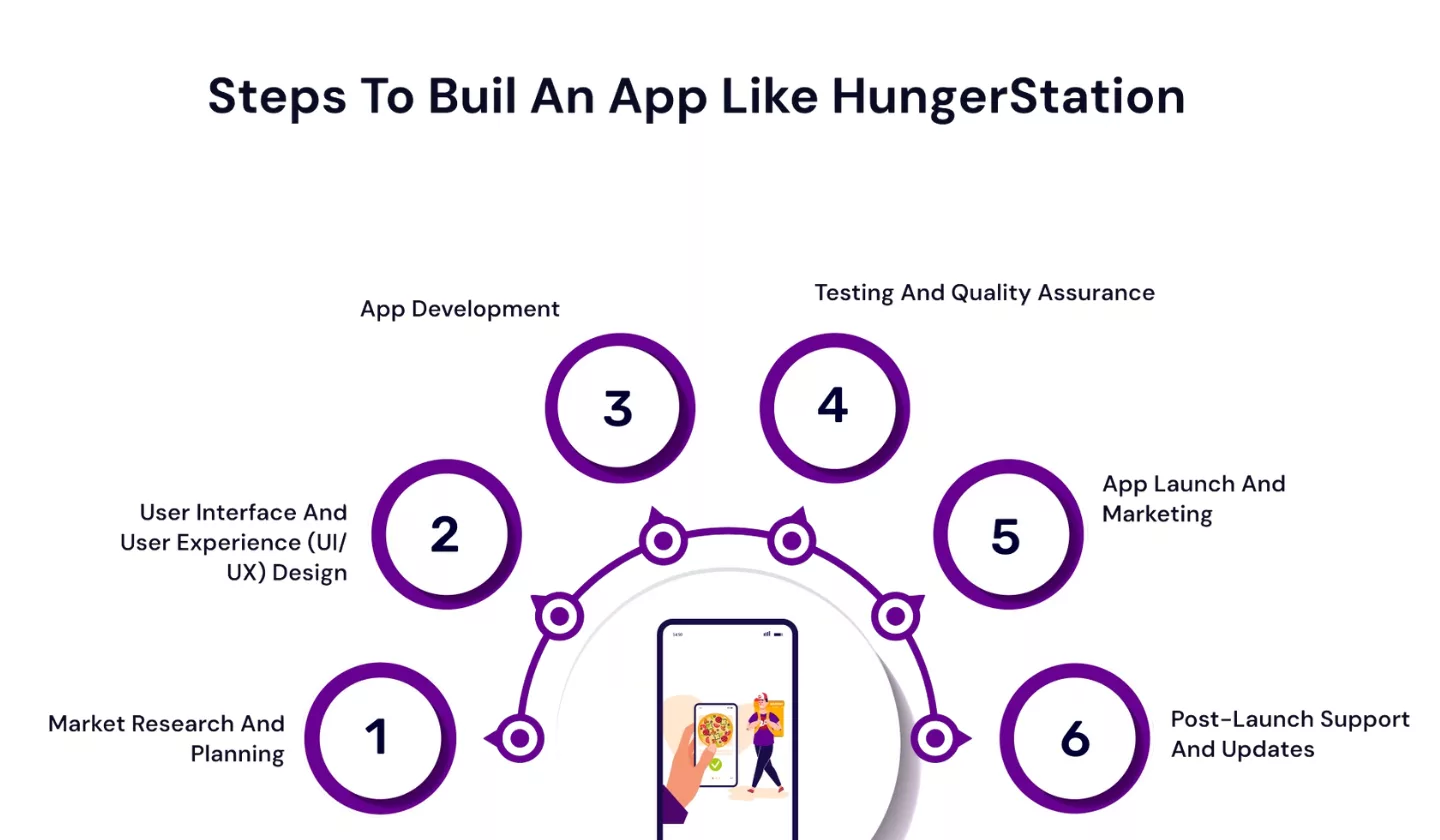
Understanding this model is crucial for businesses looking to create a competitive food ordering app development solution, as it provides insights into the features, operations, and revenue mechanisms that contribute to both user satisfaction and profitability.
HungerStation’s approach demonstrates how technology can streamline complex logistics, improve restaurant visibility, and provide customers with a reliable and engaging ordering experience.
At the core, HungerStation operates as a three-sided platform. For customers, it offers easy menu browsing, fast ordering, real-time tracking, and multiple payment options.
Restaurants benefit from digital order management, menu optimization, and analytics that improve efficiency and increase sales. Delivery partners are provided with optimized routes, timely notifications, and a straightforward interface to manage deliveries effectively.
The platform’s monetization strategy includes commission from restaurants, delivery fees, advertising options, and premium services. Analyzing these elements not only helps estimate the HungerStation app development cost but also guides businesses in planning the structure, features, and revenue streams of their own food delivery app.
Wants to know? Cost of Pizza Delivery App Development Like Dominos
Essential Features of a Food Delivery App
Creating a successful food delivery app like HungerStation requires a well-thought-out set of features that cater to three main user groups: customers, restaurants, and delivery partners.
Each group has unique needs, and the app must provide seamless interaction for all parties to ensure efficiency, engagement, and satisfaction.
The features you include will directly impact the complexity, development timeline, and overall food delivery app development pricing. Prioritizing core functionalities while planning for advanced features can help balance cost and quality effectively.
Customer App Features
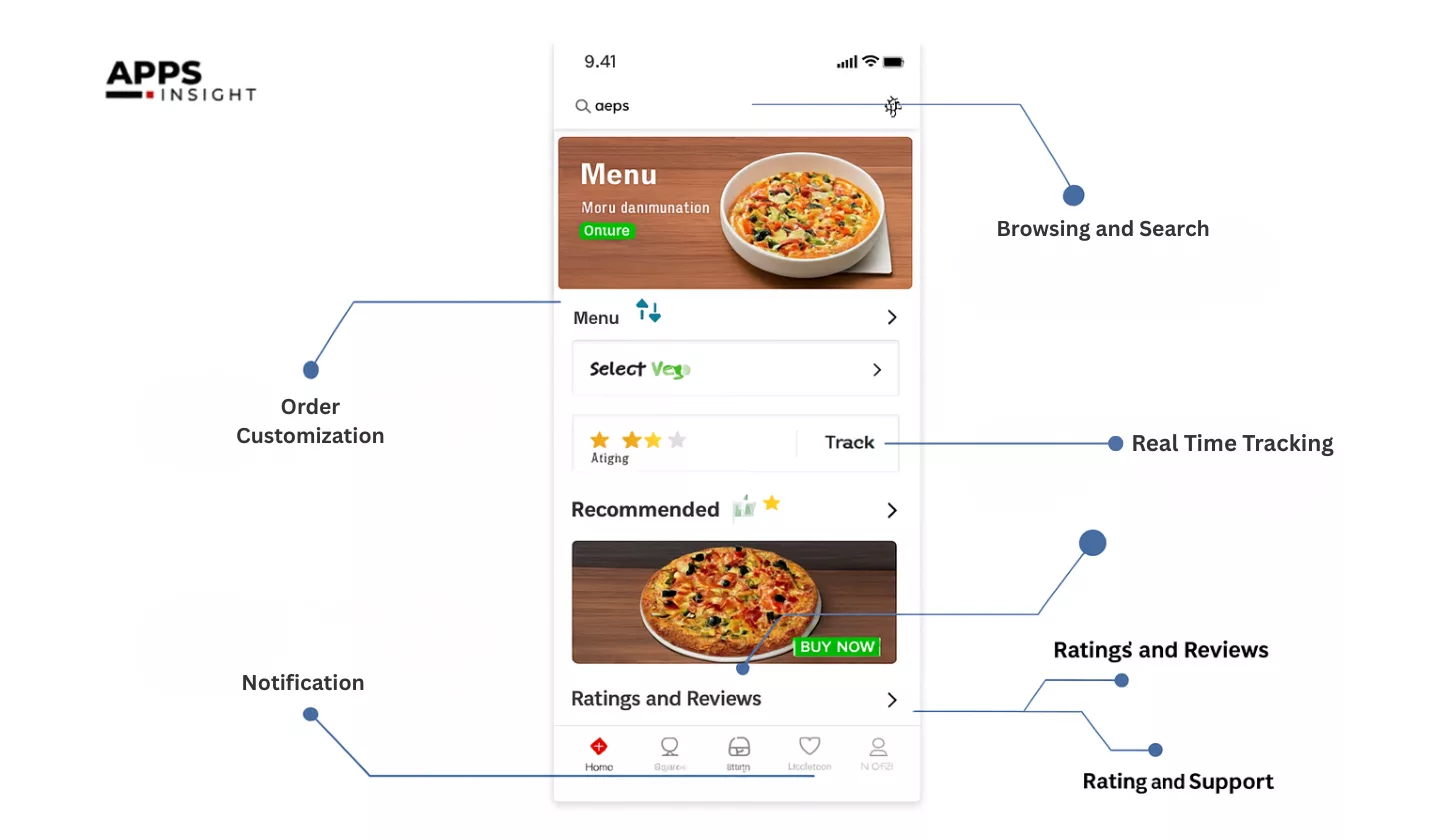
The customer-facing portion of the app is critical for driving engagement and repeat usage. Core features include:
- Menu Browsing and Search: Users should be able to easily search for restaurants, cuisines, or specific dishes. Filters for dietary preferences, ratings, and promotions enhance usability.
- Order Customization: Allowing customers to modify dishes, add special instructions, or select portion sizes adds flexibility and improves satisfaction.
- Secure Payment Integration: Supporting multiple payment methods, including credit/debit cards, digital wallets, and cash on delivery, ensures convenience and trust.
- Real-Time Order Tracking: Customers can follow their orders from preparation to delivery, reducing anxiety and increasing engagement.
- Ratings and Reviews: Customers can provide feedback, which helps restaurants improve services and fosters transparency.
Looking for? Custom Software Development Companies
Restaurant Partner Features
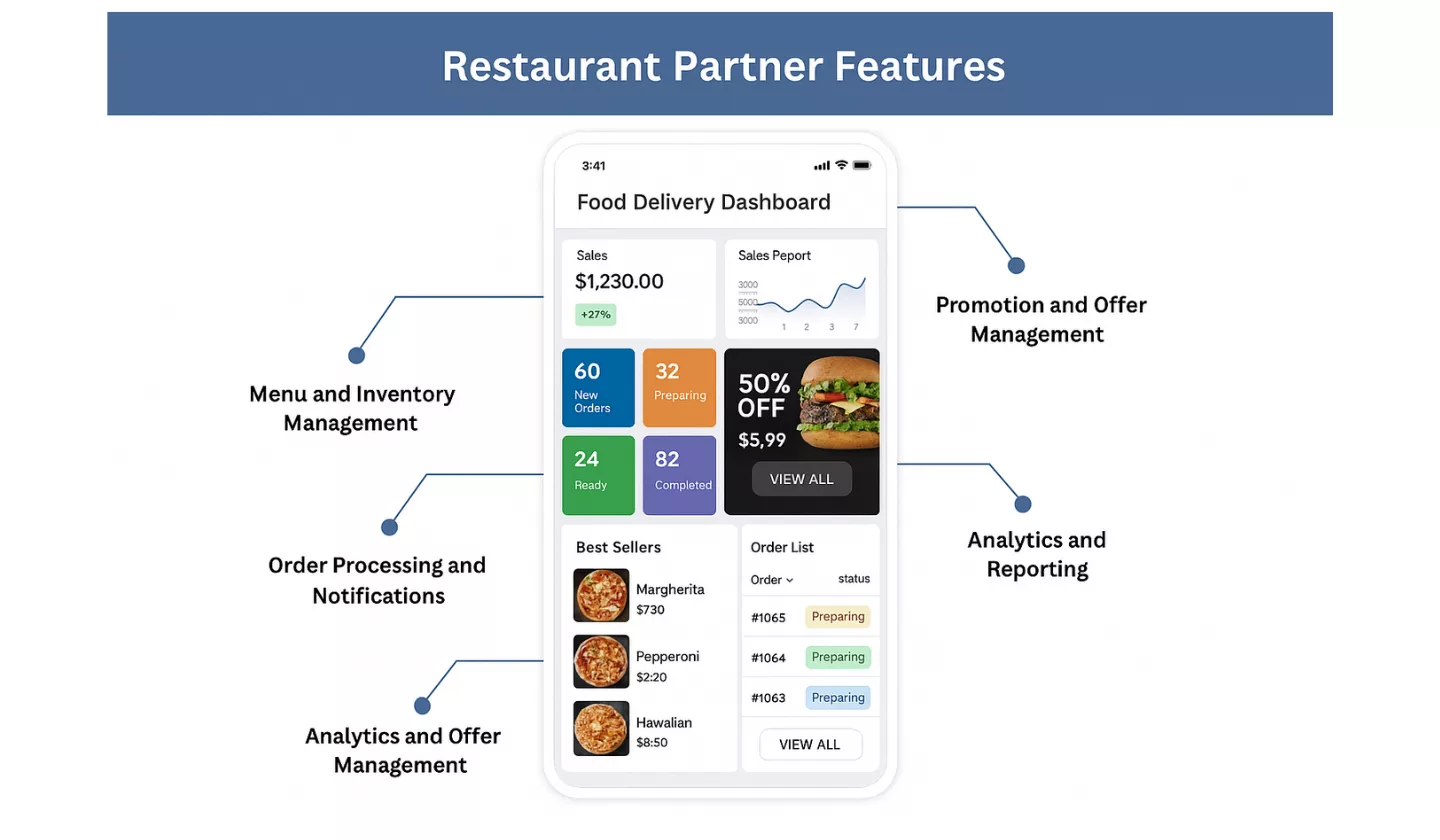
For restaurants, the app functions as a digital management platform. Key features include:
- Menu and Inventory Management: Restaurants can update menus, manage stock, and set pricing dynamically.
- Order Processing and Notifications: Efficiently receive and manage incoming orders with instant alerts.
- Analytics and Reporting: Insights into sales, peak times, and popular items help improve operations and marketing strategies.
- Promotion and Offer Management: Restaurants can create discounts, bundle deals, and special offers to attract more customers.
Read once! Why Startups Should Invest in Custom App Development
Delivery Partner Features
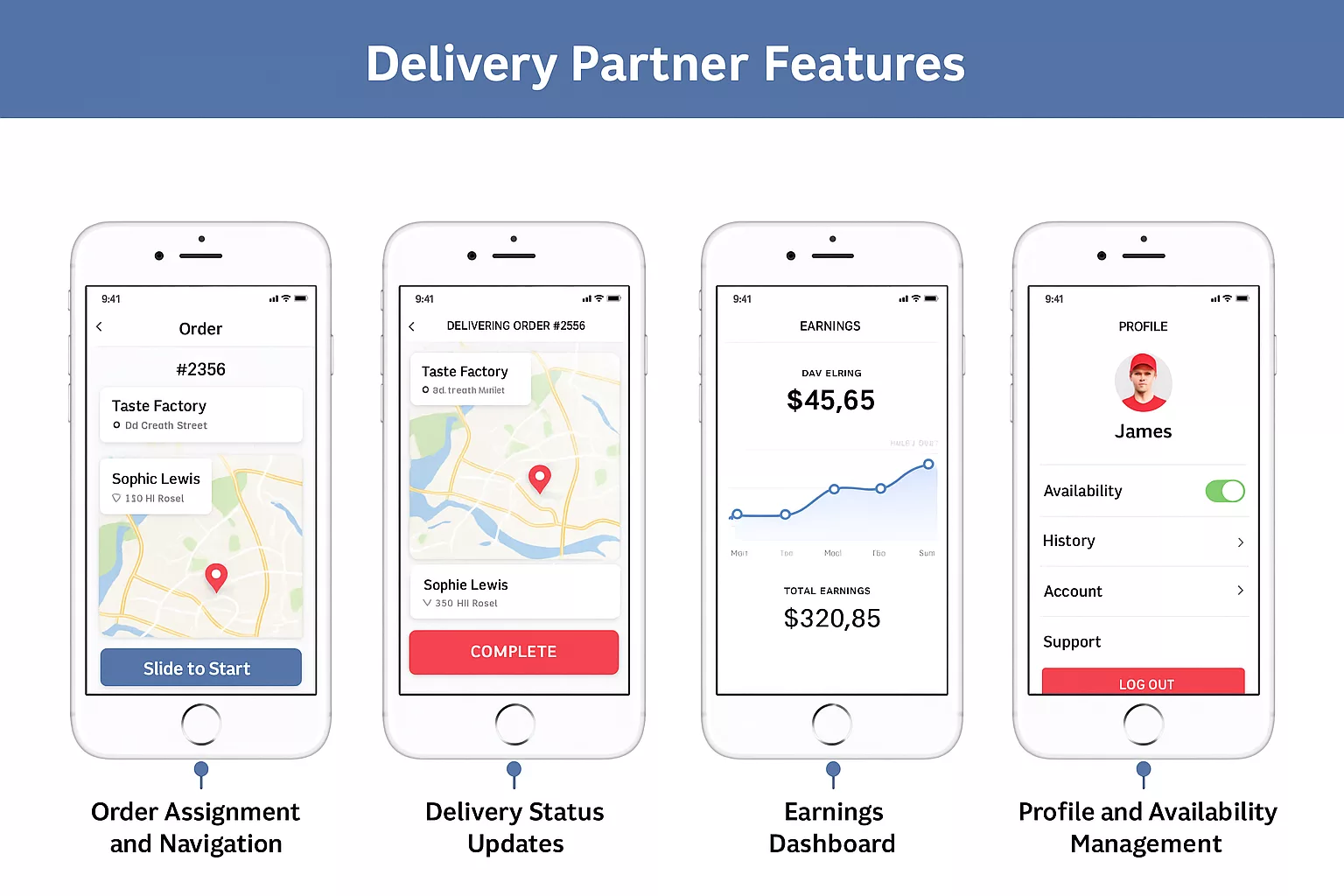
Delivery partners require an intuitive interface for timely and efficient service. Essential features include:
- Order Assignment and Navigation: Smart route optimization and real-time assignment reduce delays.
- Delivery Status Updates: Partners can update order status, communicate delays, or confirm deliveries.
- Earnings Dashboard: A simple interface to track earnings, bonuses, and completed deliveries.
- Profile and Availability Management: Delivery personnel can manage shifts, breaks, and work hours efficiently.
Looking for? Innovative Restaurant Business Ideas
Admin Panel and Backend Features
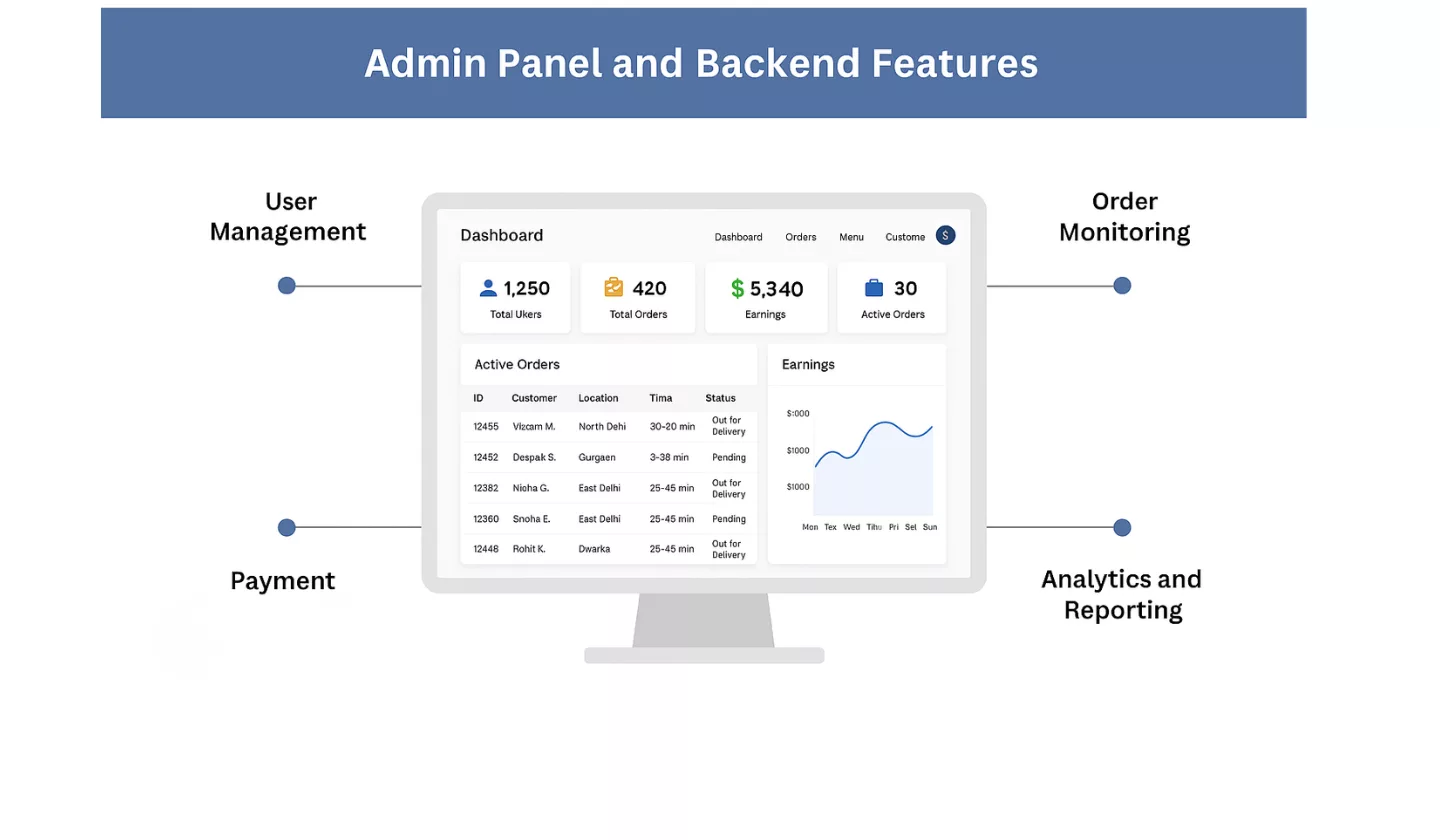
The admin dashboard is the backbone of the app, managing operations across all users. Critical components include:
- User Management: Admins can oversee customers, restaurants, and delivery partners.
- Order Monitoring: Track all orders, delivery statuses, and resolve disputes.
- Payment Reconciliation: Manage transactions, commissions, and payouts efficiently.
- Analytics and Reporting: Comprehensive data dashboards for business performance and growth planning.
These essential features collectively define the app’s functionality and performance. The more robust and complex these features are, the higher the HungerStation app development cost will be. A strategic approach involves launching an MVP with core functionalities first and gradually adding advanced features to optimize food delivery app development pricing.
Factors Affecting HungerStation App Development Cost
Building a food delivery app like HungerStation involves multiple variables that directly influence the overall cost. Understanding these factors is essential for businesses planning food ordering app development, as it allows for accurate budgeting, strategic feature prioritization, and efficient resource allocation.
Each decision, from platform choice to feature complexity, contributes to the HungerStation app development cost and determines the quality, scalability, and longevity of the app.
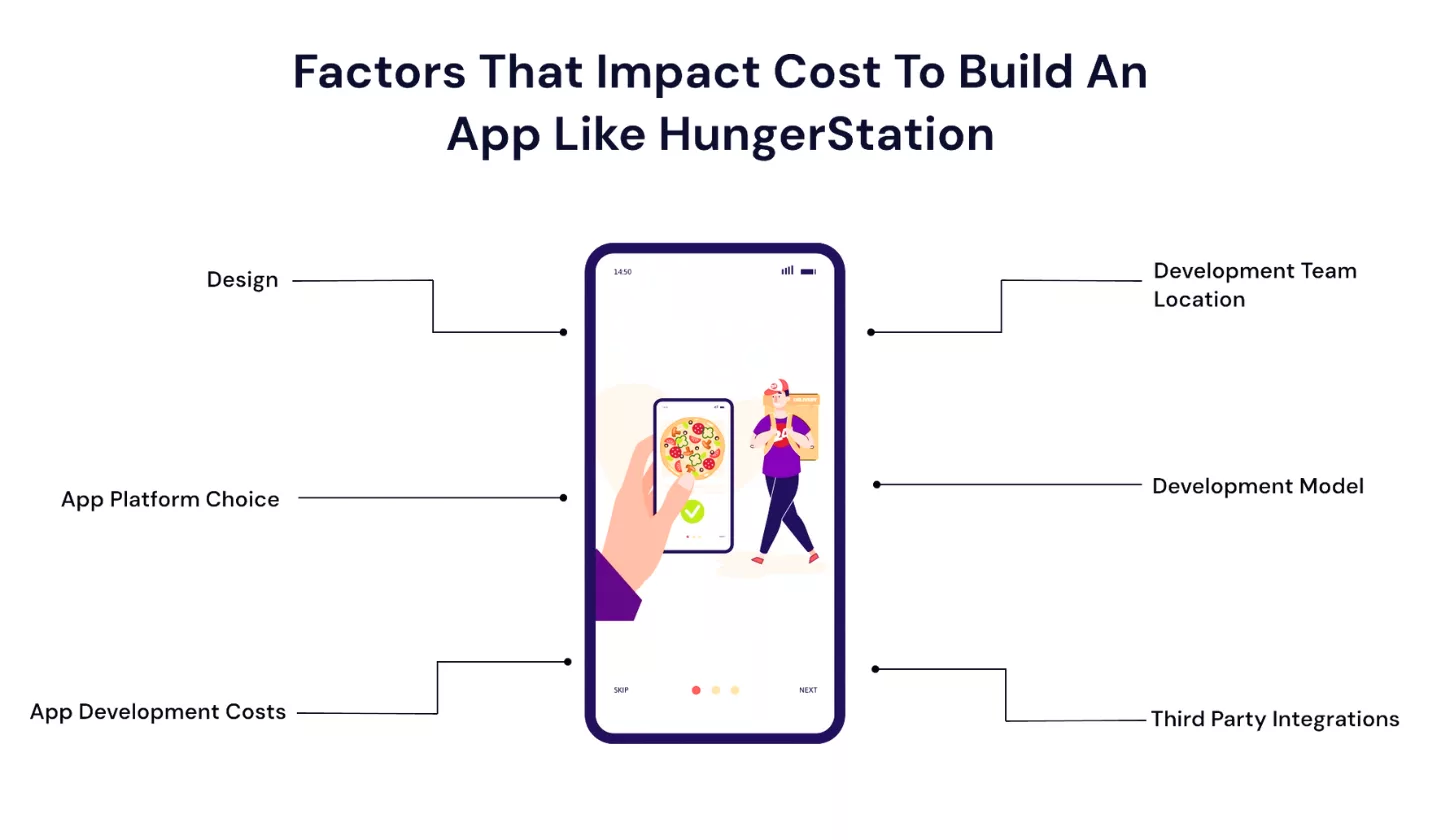
Several elements influence the cost structure. Core and advanced features, such as real-time tracking, AI recommendations, or loyalty programs, require significant development time and backend complexity. Design intricacy, including custom animations, multi-language support, and responsive interfaces, adds to the budget.
Choosing between native iOS and Android apps or cross-platform solutions affects both initial costs and future maintenance. Moreover, regional development rates and team structure—whether in-house, outsourced, or hybrid—play a crucial role in overall pricing. By carefully analyzing these factors, businesses can create a realistic roadmap for their food delivery app while optimizing food delivery app development pricing.
Scope of Features and Complexity
The number and sophistication of features have a direct impact on development cost. Core functionalities like menu browsing, ordering, and payment processing are standard, but advanced features such as predictive delivery routes, AI-based recommendations, loyalty programs, and in-app chat increase both development time and backend requirements.
More features mean more testing, debugging, and performance optimization, which cumulatively raise the HungerStation app development cost.
Design Quality and UI/UX Requirements
User experience is critical in retaining customers. High-quality UI/UX, including intuitive navigation, visually appealing layouts, and smooth animations, adds design and development hours. Custom dashboards for restaurants and delivery partners further increase complexity.
Investing in superior design enhances customer satisfaction and engagement, but it also influences the overall food ordering app development budget.
Platform Choice: iOS, Android, or Cross-Platform
The choice of platform significantly affects cost. Native apps for iOS and Android provide optimal performance but require separate codebases, effectively doubling development time and costs.
Cross-platform solutions, such as Flutter or React Native, allow a single codebase for multiple platforms, reducing initial development time and long-term maintenance. Strategic platform selection balances performance, user reach, and cost efficiency.
Regional Development Rates and Team Structure
Development costs vary based on geographic location and team composition. Hiring a local development team in regions with higher labor rates increases the budget, while outsourcing to experienced offshore developers can reduce costs without compromising quality.
Team structure—whether in-house, outsourced, or a hybrid model—also influences project management efficiency and the timeline, impacting the final HungerStation app development cost.
Backend Infrastructure and Cloud Services
The app’s backend architecture and hosting infrastructure contribute significantly to cost. Using scalable cloud services, load balancing, database management, and real-time servers for tracking adds to development and operational expenses.
Apps with higher concurrency or multi-city support require robust infrastructure, increasing both the initial and ongoing food delivery app development pricing.
Third-Party Integrations
Integrations with payment gateways, maps, notification services, and analytics platforms simplify development but come with licensing or subscription costs.
The more third-party services you use, the higher the HungerStation app development cost, though they reduce in-house development time and complexity.
Security and Compliance Requirements
Food delivery apps handle sensitive user data, including payment details and personal addresses. Implementing secure authentication, encryption, PCI compliance for payments, and regular security audits increases both development time and costs. Skipping these measures can save money initially but risks significant financial and reputational losses.
Maintenance and Scalability Considerations
Planning for long-term maintenance, future updates, and app scalability is critical. Apps designed without scalability in mind require expensive overhauls later.
Investing in a scalable architecture, modular design, and cloud resources upfront can increase initial HungerStation app development cost but reduces total long-term expenses.
Development Team Structure and Collaboration Models
Developing a food delivery app like HungerStation requires a skilled and well-coordinated team. The structure, experience, and collaboration model of the development team play a significant role in determining both the timeline and the HungerStation app development cost.
Efficient teams reduce delays, improve code quality, and ensure seamless integration of all features, while poorly managed teams can lead to higher costs, missed deadlines, and compromised app performance.
Choosing the right app development team composition and collaboration approach is critical to balancing quality, speed, and budget in food ordering app development.
Key Roles in a Food Delivery App Development Team
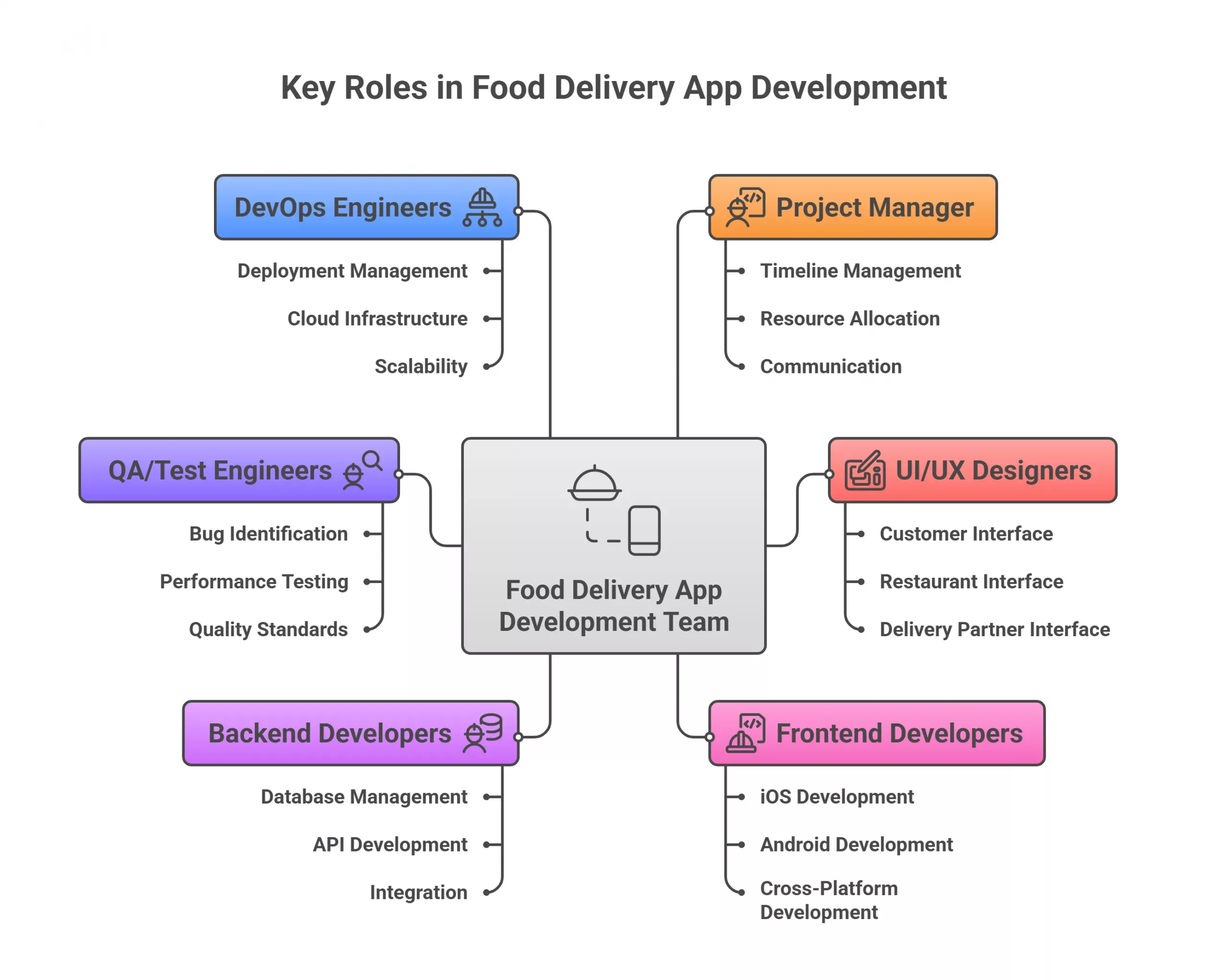
Building a high-quality food delivery app requires multiple specialized roles:
- Project Manager: Oversees the development process, manages timelines, allocates resources, and ensures communication between all stakeholders.
- UI/UX Designers: Create intuitive and visually appealing interfaces for customers, restaurants, and delivery partners.
- Frontend Developers: Implement app interfaces on mobile platforms (iOS, Android, or cross-platform).
- Backend Developers: Build server-side infrastructure, databases, APIs, and integrations to handle orders, payments, and tracking.
- QA/Test Engineers: Conduct rigorous testing to identify bugs, ensure smooth performance, and maintain high-quality standards.
- DevOps Engineers: Manage deployment, cloud infrastructure, and app scalability for high performance under heavy user loads.
Collaboration Models
The approach to team collaboration affects cost, efficiency, and project flexibility. Common models include:
- In-House Team: The company hires full-time employees for all roles. This ensures complete control over the development process and high-quality output but increases labor costs, particularly in regions with higher salaries.
- Outsourced Team: Partnering with an external development agency or freelance team can significantly reduce development costs. However, this requires careful selection to ensure quality and effective communication.
- Hybrid Model: Combines in-house strategic management with outsourced technical expertise. This model balances control and cost efficiency while maintaining high-quality standards.
Suggested Team Size for Different App Versions
- MVP (Minimum Viable Product): Small team of 5–7 people, focusing on essential features and core functionality.
- Mid-Level App: Medium-sized team of 10–12, capable of handling advanced features, multi-platform support, and analytics integration.
- Enterprise-Grade App: Large team of 15–20+, including specialists in AI, predictive tracking, and advanced backend systems for scalability.
Efficient Communication and Project Management Tools
Using modern collaboration and project management tools is critical for reducing delays and ensuring smooth development:
- Project Management: Jira, Trello, or Asana for task tracking and progress monitoring.
- Communication: Slack or Microsoft Teams for instant communication and updates.
- Version Control: GitHub or GitLab for source code management and collaboration.
- Prototyping and Design: Figma or Adobe XD for UI/UX design iterations and stakeholder approvals.
By carefully structuring the team and selecting an efficient collaboration model, businesses can optimize both the HungerStation app development cost and the overall quality of the app. Strategic team planning also ensures faster delivery, smoother integration of complex features, and better scalability for long-term growth.
Want to know? Cost to Build a Restaurant Reservation App
Tech Stack Strategy for Scalable Food Delivery Apps
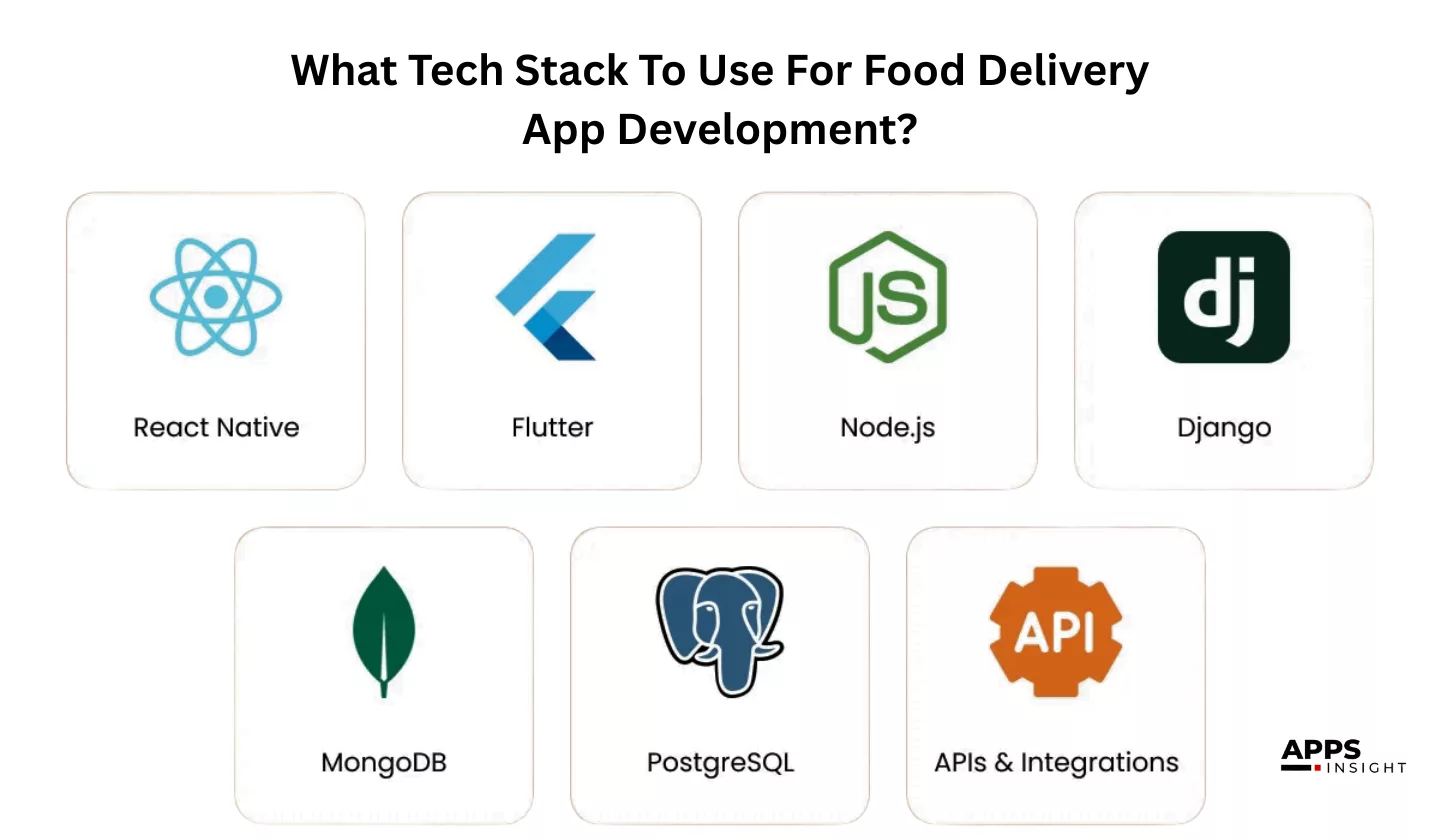
Choosing the right technology stack is a critical decision in developing a food delivery app like HungerStation. The tech stack determines the app’s performance, scalability, maintainability, and overall HungerStation app development cost.
Selecting the wrong technologies can lead to slow performance, higher maintenance costs, and difficulties in integrating advanced features. Therefore, a strategic approach to the frontend, backend, database, cloud infrastructure, and third-party integrations is essential for building a high-quality, scalable, and cost-effective food ordering app development solution.
Frontend Technologies
The frontend defines the user interface and experience for customers, restaurants, and delivery partners. The choice of frontend technology affects both development cost and performance:
- Native Development: Swift (iOS) and Kotlin (Android) offer optimal performance, smoother animations, and better integration with device features but require separate codebases, increasing development cost.
- Cross-Platform Development: Frameworks like Flutter and React Native allow a single codebase for both iOS and Android, reducing initial development and long-term maintenance costs.
- Web Interface: Progressive Web Apps (PWAs) can provide browser-based access without installation, lowering development and deployment costs while increasing accessibility.
Backend Technologies
The backend is the backbone of the app, handling order processing, payments, user data, and real-time tracking. Critical considerations include:
- Server-Side Frameworks: Node.js, Python (Django/Flask), Java (Spring Boot), or PHP (Laravel) are commonly used for scalable backend development.
- Microservices Architecture: Dividing the backend into microservices allows for better scalability, faster updates, and easier maintenance.
- API Development: Robust APIs enable seamless communication between frontend, backend, and third-party services like payment gateways and mapping services.
Database Solutions
Choosing the right database ensures smooth data storage, retrieval, and analytics capabilities:
- Relational Databases: MySQL or PostgreSQL are ideal for structured data like orders, menus, and transactions.
- NoSQL Databases: MongoDB or Firebase are suitable for unstructured or dynamic data such as customer preferences, reviews, or real-time tracking.
- Caching Solutions: Redis or Memcached improve performance by storing frequently accessed data temporarily.
Cloud Infrastructure and Hosting
Reliable cloud infrastructure ensures scalability, uptime, and performance:
- Cloud Providers: AWS, Google Cloud, or Microsoft Azure provide scalable resources, load balancing, and server management.
- Content Delivery Network (CDN): Using CDN ensures faster content delivery across geographies.
- Monitoring and Logging: Tools like New Relic or Datadog monitor performance, track errors, and optimize resource utilization.
Third-Party Integrations
Integrating third-party services reduces development time but adds subscription or licensing costs:
- Payment Gateways: Stripe, PayPal, or Adyen for secure transactions.
- Maps and Navigation: Google Maps or Mapbox for delivery route optimization.
- Push Notifications: Firebase or OneSignal for user engagement.
- Analytics: Google Analytics or Mixpanel to track user behavior and app performance.
Security and Compliance
Food delivery apps handle sensitive customer and payment data. Implementing security measures is essential:
- Data Encryption: SSL/TLS encryption for data in transit and AES encryption for data at rest.
- Secure Authentication: OAuth 2.0, two-factor authentication, and biometric login options.
- Compliance: PCI DSS compliance for payment processing and local regulatory adherence.
Listed! here! Most Trending Apps In USA
Design Principles for Maximum Engagement of a Food Delivery App
Design is a critical factor in the success of a food delivery app like HungerStation. An intuitive, visually appealing, and responsive design improves user satisfaction, boosts engagement, and directly impacts conversion rates.
Investing in thoughtful UI/UX design also influences the HungerStation app development cost, as high-quality interfaces require experienced designers, prototyping, and testing.
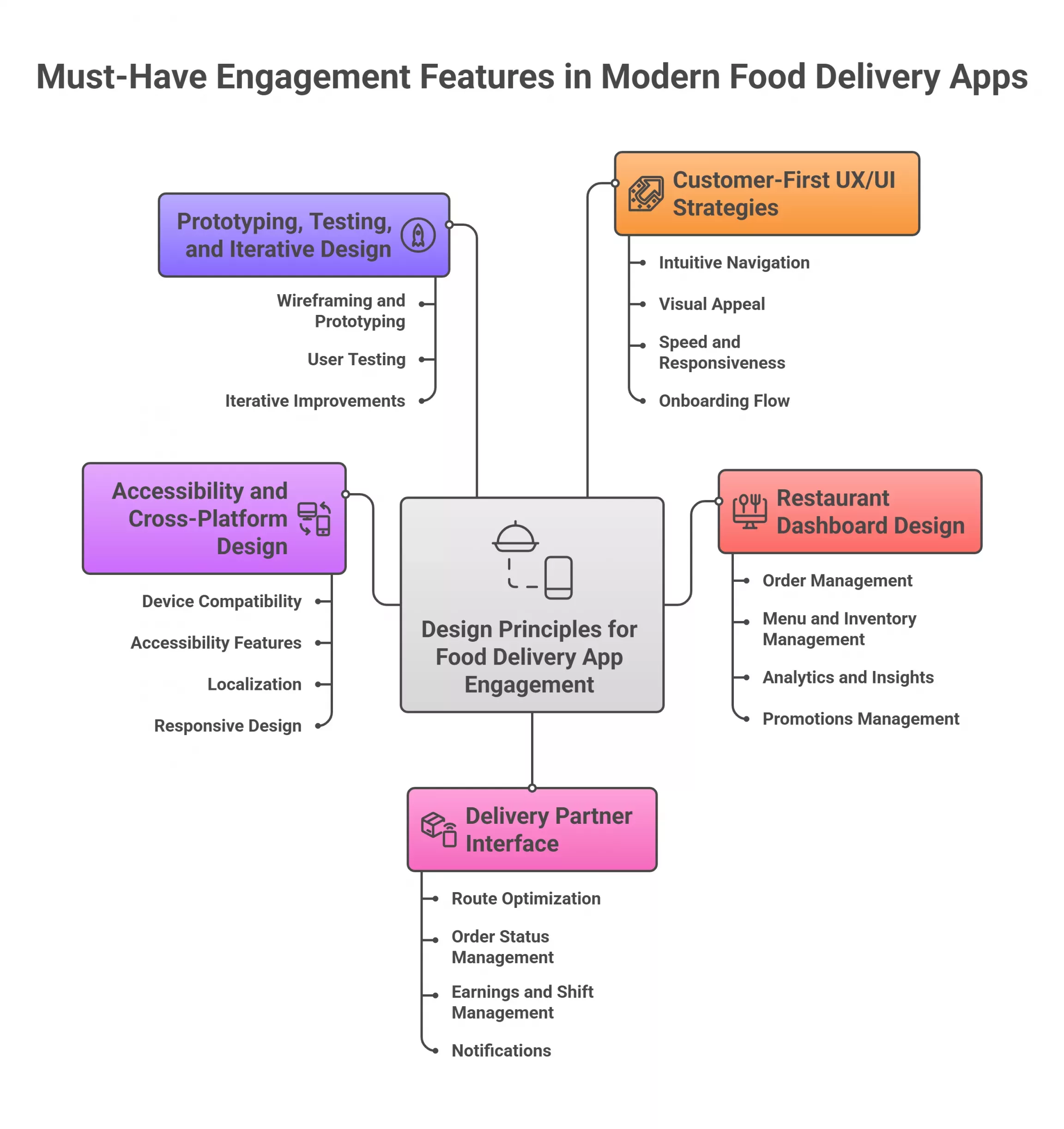
A user-centric design approach ensures that customers, restaurants, and delivery partners can navigate the app effortlessly, complete orders efficiently, and enjoy a seamless experience across devices.
Customer-First UX/UI Strategies
A well-designed customer interface increases app adoption and repeat usage:
- Intuitive Navigation: Clear menus, categories, and search functions reduce friction and make ordering faster.
- Visual Appeal: Attractive graphics, images of menu items, and consistent color schemes enhance engagement.
- Speed and Responsiveness: Optimized performance prevents delays in loading menus or placing orders, improving user satisfaction.
- Onboarding Flow: Simple registration, easy login options, and guided first-time experiences encourage continued use.
Restaurant Dashboard Design
Restaurants require efficient management tools to handle orders and track performance:
- Order Management: Real-time order alerts, preparation tracking, and status updates reduce errors and delays.
- Menu and Inventory Management: Easy updates, customizable pricing, and stock alerts improve operational efficiency.
- Analytics and Insights: Visual dashboards for sales trends, peak hours, and top-selling items help in strategic decision-making.
- Promotions Management: Simplified tools to create discounts, bundle offers, and campaigns enhance customer acquisition.
Delivery Partner Interface
Delivery personnel need a practical, easy-to-use interface for timely deliveries:
- Route Optimization: Integrated GPS and smart routing reduce delivery time and fuel costs.
- Order Status Management: Quick updates for pickup, in-transit, and delivered orders ensure transparency.
- Earnings and Shift Management: Clear display of completed deliveries, earnings, and availability increases motivation.
- Notifications: Alerts for new assignments, traffic updates, or cancellations improve efficiency.
Accessibility and Cross-Platform Design
Ensuring that the app is accessible and consistent across devices is essential:
- Device Compatibility: Optimized UI for smartphones, tablets, and web platforms.
- Accessibility Features: Voice commands, adjustable fonts, and color contrast for differently-abled users.
- Localization: Multi-language support to cater to diverse markets.
- Responsive Design: Adapts to different screen sizes and resolutions without compromising performance.
Prototyping, Testing, and Iterative Design
Continuous design iterations improve usability and reduce post-launch fixes:
- Wireframing and Prototyping: Early mockups help visualize user flows and identify bottlenecks.
- User Testing: Real users provide feedback on ease of navigation, order process, and overall experience.
- Iterative Improvements: Incorporating feedback in sprints ensures a polished, user-friendly final product.
By following these design principles, businesses can enhance user engagement, streamline operations for restaurants and delivery partners, and deliver a high-quality app experience. Investing in thoughtful design may slightly increase the initial HungerStation app development cost, but it pays off in higher retention rates, improved reviews, and stronger brand loyalty.
Marketing, Launch, and Customer Acquisition for a Food Delivery App
A successful food delivery app like HungerStation relies not only on robust features and design but also on effective marketing and launch strategies. Even a perfectly developed app can fail to attract users without proper visibility and customer acquisition tactics.
Understanding these aspects is crucial for businesses investing in food ordering app development, as marketing and launch efforts can represent a significant portion of the overall budget. A strategic approach ensures maximum reach, faster user adoption, and a higher return on investment.
Pre-Launch Campaigns and Lead Generation
Generating anticipation before the app launch helps create an initial user base:
- Landing Pages and Sign-Ups: Collect emails and pre-registrations to notify users when the app goes live.
- Teaser Campaigns: Use social media, email newsletters, and short video promotions to create excitement.
- Partnerships: Collaborate with popular restaurants or influencers to create buzz and early adoption.
App Store Optimization (ASO)
Visibility in app stores directly affects downloads and engagement:
- Optimized App Name and Description: Include primary keywords such as “food ordering app development” for better search visibility.
- High-Quality Screenshots and Videos: Showcase app features, menu browsing, and delivery tracking visually.
- Ratings and Reviews Management: Encourage early users to leave positive feedback to improve credibility.
Read once! Mobile Apps: Native App vs Hybrid App vs Web Apps?
Paid Advertising and Social Media Campaigns
Paid campaigns accelerate user acquisition, especially in competitive markets:
- Google and Social Media Ads: Targeted ads on platforms like Facebook, Instagram, and Google Search drive downloads.
- Influencer Marketing: Collaborations with local influencers or food bloggers increase brand awareness and trust.
- Retargeting Campaigns: Engage users who showed interest but didn’t complete downloads or orders.
Customer Retention and Loyalty Strategies
Acquiring users is only half the battle; retaining them ensures sustainable growth:
- Loyalty Programs: Reward repeat customers with points, discounts, or exclusive offers.
- Push Notifications and SMS Alerts: Send personalized updates on promotions, new restaurants, or order status.
- Referral Programs: Encourage existing users to bring in friends and family with incentives.
- In-App Engagement: Offer gamification features, seasonal promotions, or interactive experiences to keep users engaged.
Monitoring and Analytics
Continuous monitoring helps optimize marketing efforts and identify cost-efficient strategies:
- User Acquisition Metrics: Track downloads, installs, and active users to measure campaign effectiveness.
- Engagement Analysis: Measure session duration, retention rates, and order frequency to refine strategies.
- ROI Calculation: Evaluate marketing spend against revenue generated to ensure optimal food delivery app development pricing.
By combining pre-launch buzz, app store optimization, paid campaigns, and robust retention strategies, businesses can maximize the reach and success of their food delivery app. Investing in smart marketing not only improves initial downloads but also enhances long-term profitability, making the HungerStation app development cost a worthwhile investment for a competitive market.

How much does a Food Delivery App Development Cost?
Understanding the cost structure is crucial for businesses planning to develop a food delivery app like HungerStation. The HungerStation app development cost depends on multiple factors including feature set, platform choice, design complexity, team structure, and regional rates.
By breaking down costs into detailed segments, businesses can make informed decisions, optimize their budget, and ensure high-quality food ordering app development while maintaining competitive food delivery app development pricing.
MVP (Minimum Viable Product) Development Costs
Launching an MVP allows businesses to test the market with essential features while keeping costs under control:
- Core Features Included:
- Customer app: menu browsing, order placement, secure payments, basic tracking.
- Restaurant app: menu management, order notifications, basic analytics.
- Delivery partner app: delivery assignment, route guidance, order status updates.
- Admin panel: user management, order monitoring, and payment tracking.
- Estimated Cost Range: AUD 40,000 – 80,000
- Development Timeline: 4–5 months
- Cost Drivers:
- Number of supported platforms (iOS, Android, Web)
- Backend infrastructure for real-time order processing
- Basic UI/UX design complexity
Launching an MVP helps validate the business model and gather early user feedback, allowing businesses to invest wisely in advanced features later.
MVP Food Delivery App Development Cost Breakdown
| Category | Details |
|---|---|
| Core Features | Customer app (menu browsing, ordering, payments, tracking), Restaurant app (menu management, order alerts), Delivery app (assignment, route guidance), Admin panel (user & order management) |
| Estimated Cost | AUD 40,000 – 80,000 |
| Development Timeline | 4–5 months |
| Major Cost Drivers | Platform count (iOS/Android/Web), Real-time tracking backend, Basic UI/UX complexity |
Mid-Level App Development Costs
A mid-level app includes additional features aimed at enhancing user engagement, operational efficiency, and scalability:
- Advanced Features Included:
- Customer personalization and AI-based recommendations
- Real-time order tracking with route optimization
- Loyalty programs, in-app promotions, and subscription plans
- Push notifications, ratings and reviews, and in-app support
- Estimated Cost Range: AUD 120,000 – 300,000
- Development Timeline: 6–8 months
- Cost Drivers:
- Integration with multiple payment gateways
- Multi-location support and increased backend complexity
- Custom UI/UX for multiple user roles
- Analytics dashboards with deeper insights for restaurants and admin
Mid-level apps are suitable for startups aiming to compete with established platforms like HungerStation without immediately investing in a full enterprise solution.
Mid-Level Food Delivery App Development Cost Breakdown
| Category | Details |
|---|---|
| Advanced Features | AI recommendations, Route-optimized tracking, Loyalty programs, In-app promos, Push notifications, Ratings, Support chat |
| Estimated Cost | AUD 120,000 – 300,000 |
| Development Timeline | 6–8 months |
| Major Cost Drivers | Multiple payment gateways, Multi-location support, Custom UI/UX, Analytics dashboards |
Enterprise-Level App Development Costs
Enterprise-grade apps are fully-featured platforms capable of supporting thousands of simultaneous users, advanced analytics, and complex logistics:
- Features Included:
- AI-powered predictive delivery and demand forecasting
- Multi-vendor and multi-city support
- Gamification, AR menu experiences, and voice-based ordering
- Advanced security, compliance, and API integrations
- Estimated Cost Range: AUD 400,000 – 800,000+
- Development Timeline: 9–12 months
- Cost Drivers:
- Highly scalable backend architecture
- Cross-platform optimization with extensive testing
- Integration with third-party logistics, payment, and analytics services
- Custom design and interactive features for enhanced engagement
Enterprise apps are designed for market leaders who need robust, high-performance solutions that can handle complex operations efficiently.
Enterprise-Level Food Delivery App Development Cost Breakdown
| Category | Details |
|---|---|
| Enterprise Features | Predictive delivery (AI), Multi-city scalability, Gamification, AR menus, Voice ordering, Advanced security |
| Estimated Cost | AUD 400,000 – 800,000+ |
| Development Timeline | 9–12 months |
| Major Cost Drivers | Scalable backend, Extensive QA, Third-party logistics & payment integrations, Custom interactive designs |
Cost Segmentation by Feature Type
Breaking down costs by feature type provides a clearer view of budget allocation:
- Frontend Development: 25–30% of total cost (customer, restaurant, and delivery apps)
- Backend Development: 30–35% (order processing, real-time tracking, APIs)
- UI/UX Design: 15–20% (customer engagement, dashboards, interactive elements)
- Testing & QA: 10–15% (bug fixing, performance optimization)
- Project Management & Deployment: 5–10% (coordination, app store submission, deployment)
- Third-Party Integrations: 5–10% (payment gateways, maps, notifications, analytics)
Cost Segmentation by Feature Type
| Feature Type | Percentage of Total Cost |
|---|---|
| Frontend Development | 25–30% |
| Backend Development | 30–35% |
| UI/UX Design | 15–20% |
| Testing & QA | 10–15% |
| Project Management & Deployment | 5–10% |
| Third-Party Integrations | 5–10% |
Regional Variation in HungerStation App Development Cost
Development costs vary significantly depending on geographic location and labor rates:
- App Development firms Australia: High-quality development teams typically demand AUD 80–150/hour, resulting in higher costs.
- Middle East & Southeast Asia: Moderate rates allow cost savings without compromising quality.
- Offshore Outsourcing: Experienced offshore developers may charge lower rates (AUD 25–60/hour) while maintaining reasonable quality.
Regional Cost Variation for HungerStation-like App Development
| Region | Hourly Rate (Approx.) | Cost Impact |
|---|---|---|
| Australia | AUD 80–150/hour | Highest cost due to premium teams |
| Middle East & Southeast Asia | AUD 40–90/hour | Cost-effective with good quality |
| Offshore Developers (India, Eastern Europe) | AUD 25–60/hour | Most budget-friendly without major quality compromise |
Cost Optimization Strategies
- Feature Prioritization: Launch with core features first, add advanced features iteratively.
- Cross-Platform Development: Reduces the need for separate iOS and Android teams.
- Use of Third-Party APIs: Reduces custom development time and cost.
- Outsourcing and Hybrid Teams: Balances cost and control over quality.
What are Ongoing Maintenance Costs for Food Delivery Apps?
Developing a food delivery app is only the beginning; ongoing maintenance, scaling, and operational management represent a significant portion of the total cost over time. Proper planning for these expenses ensures that the app remains stable, secure, and capable of handling growth without compromising performance.
Businesses must consider infrastructure, updates, bug fixes, security, and customer support as recurring costs that directly influence the total HungerStation app development cost and long-term food delivery app development pricing.
Regular Updates and Bug Fixes
Frequent updates and bug fixes are essential to maintain app performance and user satisfaction:
- Operating System Updates: Mobile platforms frequently update iOS and Android, requiring app updates to maintain compatibility.
- Feature Enhancements: Introducing new features or improving existing ones keeps users engaged and competitive.
- Bug Resolution: Continuous monitoring and fixing of bugs prevent negative user experiences and bad reviews.
Neglecting updates can lead to crashes, performance issues, and user attrition, which ultimately increases indirect costs and damages brand reputation.
Cloud Infrastructure and Scaling
Food delivery apps require robust cloud infrastructure to manage real-time orders, multiple users, and delivery logistics:
- Server Scaling: Use of scalable cloud services (AWS, Google Cloud, Azure) to handle peak loads.
- Database Optimization: Efficient data handling and query optimization reduce latency during high traffic.
- Content Delivery Networks (CDNs): Ensure faster content delivery to users across regions.
- Load Balancing: Distribute incoming traffic across servers to maintain performance during high-demand periods.
Planning infrastructure from the beginning can minimize unexpected costs and ensure smooth scaling as the user base grows.
Security and Compliance Maintenance
Food delivery apps handle sensitive user information, including payment and location data:
- Data Security Updates: Regular security patches to prevent breaches or hacks.
- PCI DSS Compliance: Ongoing monitoring and updates to maintain secure payment processing standards.
- Privacy Regulations: Adhering to GDPR, CCPA, or local regulations to avoid legal penalties.
Investment in security maintenance ensures user trust and prevents costly breaches that could damage both finances and reputation.
Customer Support and Operational Management
Efficient support systems are vital for managing users, restaurants, and delivery partners:
- In-App Support: Chatbots, live chat, and automated FAQs to reduce response times.
- Email and Call Support: For complex issues that require human assistance.
- Operational Monitoring: Tracking app performance, delivery times, and user complaints to maintain service quality.
Operational efficiency directly impacts user retention and brand loyalty, which affects the app’s profitability over time.
Analytics and Performance Monitoring
Continuous monitoring of app performance helps in strategic decision-making:
- User Behavior Analytics: Track sessions, engagement, order frequency, and churn rates.
- Backend Performance Metrics: Monitor server load, response times, and error rates.
- Marketing ROI Analysis: Evaluate campaigns to optimize spending and customer acquisition costs.
These analytics help businesses make informed decisions for upgrades, feature prioritization, and cost management.
Estimated Ongoing Costs
- Monthly Maintenance: AUD 2,000 – 5,000 for minor updates and support
- Cloud Hosting & Servers: AUD 1,500 – 4,000 depending on traffic and locations
- Security & Compliance: AUD 500 – 1,500 for audits and updates
- Customer Support: AUD 1,000 – 3,000 depending on scale and staffing.
We have listed! Factors That Impact the Cost of Food Delivery App Development
Future Innovations Shaping Food Delivery App Costs
The food delivery industry is rapidly evolving, driven by technological innovations and changing consumer expectations. Developing a food delivery app like HungerStation today requires foresight to accommodate future trends.
These innovations not only enhance user experience and operational efficiency but also influence the HungerStation app development cost and long-term food delivery app development pricing.
Businesses that integrate forward-looking technologies can stay competitive and reduce the need for costly overhauls later.
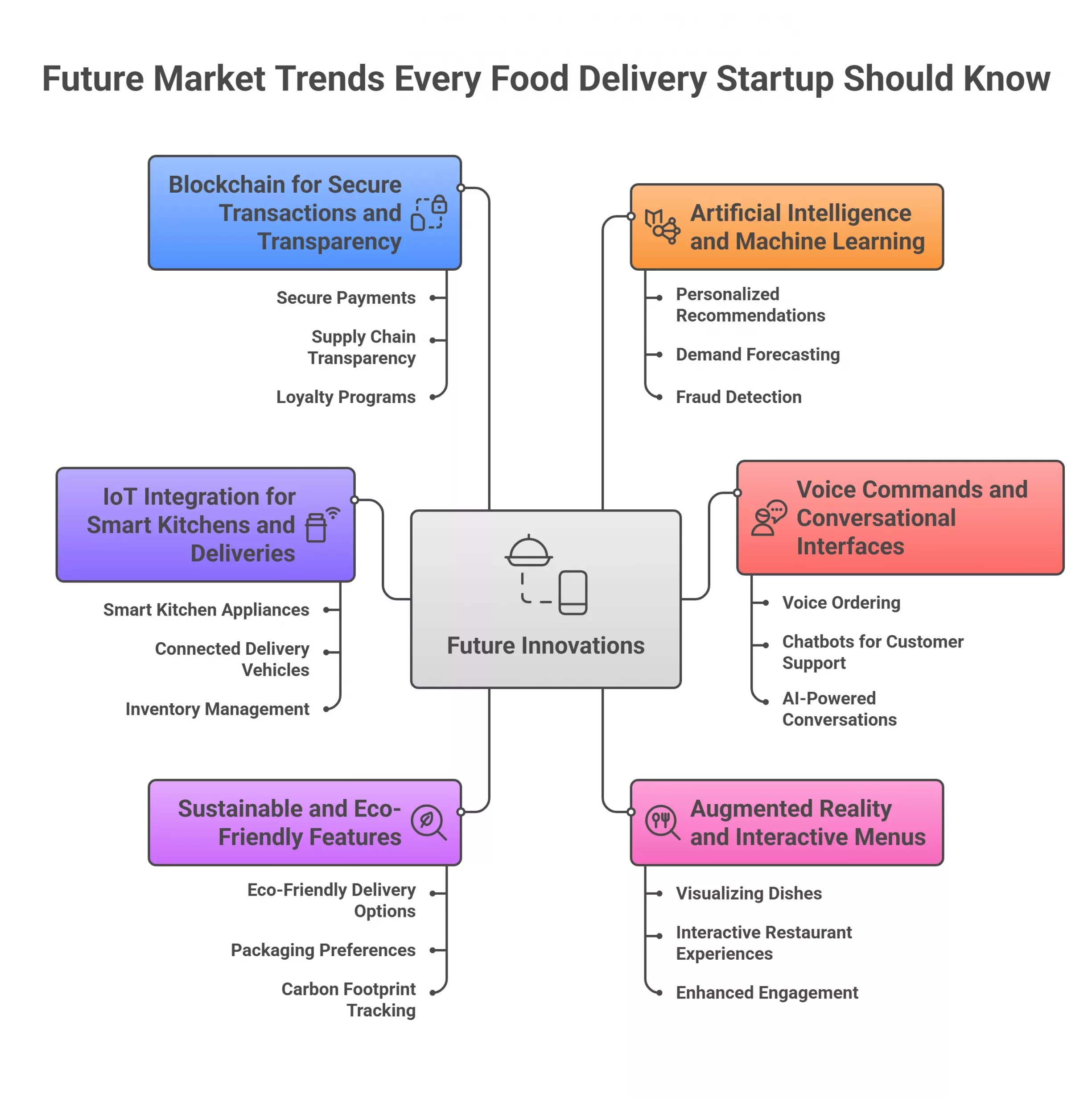
Artificial Intelligence and Machine Learning
AI and ML can transform how food delivery apps operate:
- Personalized Recommendations: Suggesting dishes or restaurants based on past orders and preferences increases customer engagement and revenue.
- Demand Forecasting: Predict peak ordering times to optimize delivery logistics and inventory for restaurants.
- Fraud Detection: AI can detect suspicious transactions or behavior, enhancing security.
Integrating AI and ML increases initial development costs but provides long-term efficiency and personalization advantages.
Voice Commands and Conversational Interfaces
Voice-enabled ordering and chatbot integration are gaining popularity:
- Voice Ordering: Enables users to place orders hands-free, improving convenience.
- Chatbots for Customer Support: Provide 24/7 assistance, answer queries, and resolve issues automatically.
- AI-Powered Conversations: Advanced chatbots can handle complex requests and upsell items.
These features enhance the user experience but add to both development time and HungerStation app development cost.
Augmented Reality (AR) and Interactive Menus
AR is transforming the way customers explore menus and restaurants:
- Visualizing Dishes: Customers can see a 3D view of meals before ordering.
- Interactive Restaurant Experiences: Engage users through AR promotions or gamified features.
- Enhanced Engagement: Increases time spent on the app and encourages higher order value.
AR integration requires advanced design, rendering engines, and testing, impacting both development and maintenance costs.
Sustainable and Eco-Friendly Features
Consumers increasingly value sustainability, influencing app features and costs:
- Eco-Friendly Delivery Options: Offering bike or electric vehicle deliveries.
- Packaging Preferences: Allow users to select minimal packaging or recyclable options.
- Carbon Footprint Tracking: Display the environmental impact of each order.
While these features may add to development costs, they enhance brand perception and can attract environmentally conscious users.
IoT Integration for Smart Kitchens and Deliveries
The Internet of Things (IoT) can improve operational efficiency:
- Smart Kitchen Appliances: Monitor cooking times and automate order preparation for faster service.
- Connected Delivery Vehicles: Track temperature-sensitive food and optimize routes.
- Inventory Management: IoT sensors track stock levels, reducing waste and delays.
IoT requires specialized IoT development and hardware integration, increasing food delivery app development pricing, but it provides significant operational savings and customer satisfaction.
Blockchain for Secure Transactions and Transparency
Blockchain app solution providers offers enhanced security and transparency for payments and order tracking:
- Secure Payments: Reduces fraud and ensures transparent transactions between customers, restaurants, and delivery partners.
- Supply Chain Transparency: Track food origin and delivery chain for quality assurance.
- Loyalty Programs: Smart contracts can automate reward points and redemption.
Although blockchain adds complexity and cost to the development process, it can differentiate the app in a competitive market and enhance trust.

Final Say
Developing a food delivery app like HungerStation in 2026 requires careful planning, strategic feature selection, and a clear understanding of costs. From the initial concept and team structure to advanced features, tech stack, design, and marketing, each element contributes to the overall HungerStation app development cost.
Businesses must balance quality, functionality, and budget while considering both immediate needs and future scalability. Investing in core features first, followed by iterative updates with advanced innovations, ensures a cost-effective approach to food ordering app development without compromising on user experience or operational efficiency.
Long-term success also depends on ongoing maintenance, robust infrastructure, and adaptation to emerging trends such as AI, AR, IoT, and blockchain. By carefully planning development, marketing, and operational strategies, businesses can optimize food delivery app development pricing while delivering a reliable, engaging, and scalable app.
Ultimately, understanding these cost factors and future innovations helps businesses make informed decisions, ensuring that their app remains competitive and profitable in the dynamic food delivery market.
FAQs
What is the average cost of developing a food delivery app like HungerStation?
The cost of developing a food delivery app depends on factors such as the complexity of features, platform choice, design quality, team structure, and regional development rates. For a basic MVP, the cost can range between AUD 40,000 and 80,000.
A mid-level app with advanced features like AI recommendations, loyalty programs, and real-time tracking may cost AUD 120,000 – 300,000. Enterprise-grade apps with multi-city support, predictive logistics, AR menus, and blockchain integration can exceed AUD 400,000 – 800,000. Strategic planning and phased development help manage costs effectively while ensuring a high-quality product.
How do features affect HungerStation app development cost?
Features directly influence the development timeline and cost. Core functionalities such as menu browsing, order placement, secure payments, and basic tracking form the foundation.
Advanced features like AI-based recommendations, real-time predictive delivery, loyalty programs, AR experiences, and voice ordering add complexity, require specialized development, and increase backend infrastructure needs.
The more sophisticated and interactive the features, the higher the HungerStation app development cost, but they also significantly enhance user engagement and retention.
How long does it take to develop a food delivery app?
The development timeline depends on the app’s complexity and team structure. An MVP typically takes 4–5 months to develop, focusing on core functionalities.
A mid-level app with additional features may require 6–8 months, while an enterprise-grade solution with advanced AI, multi-location support, and AR/IoT integration can take 9–12 months or more. Timelines can also be influenced by team size, experience, and the choice between in-house, outsourced, or hybrid development models.
Which technologies are best for building a scalable food delivery app?
Choosing the right tech stack is essential for scalability, performance, and long-term maintenance. Frontend options include native development with Swift (iOS) and Kotlin (Android) or cross-platform frameworks like Flutter and React Native.
Backend technologies such as Node.js, Python (Django/Flask), or Java (Spring Boot) support robust server-side operations. Databases like MySQL, PostgreSQL, or MongoDB ensure efficient data handling.
Cloud services from AWS, Google Cloud, or Azure provide scalability and reliability. Security measures, APIs for payments and maps, and analytics platforms complete the infrastructure required for a high-performance app.
How can businesses optimize food delivery app development pricing?
Businesses can optimize costs by prioritizing features for phased development, starting with an MVP and gradually adding advanced functionalities. Using cross-platform frameworks reduces development time and maintenance costs.
Leveraging third-party integrations for payments, maps, and notifications saves development effort. Strategic team composition, such as a hybrid of in-house and outsourced developers, balances cost and quality.
Additionally, designing scalable infrastructure and planning for future updates prevents expensive overhauls, ensuring the app remains competitive and cost-efficient in the long run.