


Finding the right image online is no longer difficult. Thanks to AI, reverse image search tools can now recognize faces, objects, locations, products, and even small visual details within seconds.
The demand for visual search technology is growing rapidly. According to Fortune Business Insights, the global image recognition market is expected to reach $68.46 billion in 2026 and continue growing strongly over the next decade. Meanwhile, MarketsandMarkets reports that the image recognition industry could reach $127.02 billion by 2031, showing how quickly businesses and users are adopting AI-powered visual search solutions.
Whether you want to verify photos, protect your online identity, find image sources, or perform advanced investigations, modern AI Apps for Image Search make the process faster and more accurate than ever before.
Let’s explore the top AI image search platforms that are transforming how people discover and analyze visual content online.
Related Queries
People Also Ask (PAA) Questions
What is the best AI app for reverse image search in 2026?
The best AI app depends on your needs. PimEyes and Yandex are excellent for face searches, TinEye is ideal for image source tracking, and Google Images provides a reliable all-purpose reverse image search experience.
How do AI image search apps identify faces and objects?
AI image search apps use computer vision and deep learning algorithms to analyze facial features, shapes, colors, and visual patterns. They then compare this data against large image databases to find matching or similar results.
Are AI-powered reverse image search tools safe to use?
Most reputable reverse image search tools are safe when used responsibly. However, users should always review privacy policies and avoid uploading sensitive images to platforms they do not trust.
Can reverse image search find fake social media profiles?
Yes. Reverse image search can help identify whether a profile photo appears elsewhere online, making it easier to detect fake accounts, catfishing attempts, and stolen profile pictures.
Which reverse image search tool is most accurate for facial recognition?
PimEyes and Yandex are widely considered among the most accurate facial recognition search tools available. They use advanced AI models to locate visually similar faces across publicly indexed websites.
About Reverse Image Search Tools
Reverse image search tools help you search the internet using an image instead of text. Rather than typing keywords into a search engine, you upload a photo, paste an image URL, or drag and drop a file. The tool then analyzes the image and looks for matching or visually similar results across its database.
In the past, reverse image search relied mainly on basic image matching techniques. However, modern AI technology has changed the process completely. Today’s platforms use computer vision, machine learning, and deep learning algorithms to understand visual content with much greater accuracy. As a result, they can identify faces, landmarks, products, logos, animals, and many other objects within seconds.
These tools are useful for many different purposes. For example, you can verify whether a photo is authentic, locate the original source of an image, identify people, monitor brand misuse, or discover where your content has been shared online. Many professionals also use reverse image search during research, journalism, cybersecurity investigations, and digital marketing campaigns.
Businesses benefit from these solutions as well. Companies use them to protect intellectual property, monitor competitors, and improve customer experiences through visual search features. In fact, many organizations invest in visual recognition technologies because AI Apps Improve Decision-Making with Data Insights generated from image analysis and user behavior patterns.
As AI continues to evolve, reverse image search tools are becoming smarter, faster, and more accessible for everyday users and professionals alike.
What’s The Need To Look for Reverse Image Search Tools
The internet contains billions of images, and new content is uploaded every second. While this creates endless opportunities for sharing information, it also increases the risk of misinformation, fake profiles, copyright violations, and online scams. This is why reverse image search tools have become more important than ever.
One of the biggest reasons people use these tools is image verification. If you come across a suspicious photo online, you can upload it to a reverse image search platform and quickly determine where it originally appeared. This helps you identify edited images, misleading posts, and recycled content.
Many users also rely on these tools to verify online identities. Before interacting with someone on a dating platform, social network, or marketplace, you can check whether their profile pictures appear elsewhere online. This extra step can help you avoid catfishing attempts and fraudulent accounts.
Content creators, photographers, and businesses use reverse image search to protect their intellectual property. By tracking where their images appear online, they can identify unauthorized use and take appropriate action when necessary.
Researchers and investigators also benefit from these technologies. Many digital investigators use image search platforms alongside OSINT Tools to gather publicly available information and verify online activity. In some cases, these systems can even help users Find Information On Anyone when combined with legitimate public records and research methods.
For everyday users, reverse image search provides an additional layer of online safety. Whether you want to verify a product image, check a social media profile, or confirm the authenticity of visual content, these tools make the process quick and reliable.
As visual content continues to dominate the web, the need for accurate reverse image search solutions will only continue to grow.
How AI Apps for Image Search Work
Modern AI Apps for Image Search use advanced artificial intelligence technologies to understand and analyze images much like humans do. Instead of simply comparing pixels, these systems examine patterns, shapes, colors, textures, facial features, and object relationships to deliver highly accurate results.
The process begins when you upload an image or provide an image URL. The AI system scans the image and extracts unique visual characteristics. These characteristics are then converted into mathematical data points, often called visual signatures or image vectors. The platform compares these signatures against millions or even billions of indexed images stored in its database.
Computer vision plays a major role in this process. It helps the system recognize objects, faces, logos, landmarks, products, and scenes within the image. Deep learning models continuously improve their accuracy by learning from vast collections of visual data.
Many advanced platforms also use facial recognition technology. For example, users looking for Yandex for Face Search often appreciate how AI can identify similar facial features across multiple online sources. Likewise, platforms offering functionality similar to sites like pimeyes focus heavily on facial matching capabilities.
Some tools go beyond visual analysis by examining metadata, image context, file properties, and surrounding web content. This additional information helps improve search relevance and ranking accuracy.
As AI technology advances, image search engines are becoming faster, smarter, and more precise. Today, they can identify subtle similarities that traditional search systems would often miss, making visual discovery easier for both individuals and businesses.
The growing popularity of AI apps for image search demonstrates how valuable AI-powered visual recognition has become across industries, research projects, security applications, and everyday online activities.
Key Features to Consider Before Choosing an AI Image Search App
Not all reverse image search tools offer the same capabilities. Some focus on facial recognition, while others specialize in object detection, copyright monitoring, stock image discovery, or visual product searches. Before selecting a platform, it is important to understand the features that will provide the most value for your specific needs.
Accuracy and Search Quality
Accuracy should always be your first consideration. A good tool should identify visually similar images even when photos have been cropped, resized, edited, or compressed. Advanced AI models generally deliver more reliable results than traditional image-matching systems.
Database Size
A larger database often leads to better search results. Platforms that index billions of images from websites, social networks, and public sources typically provide broader coverage and more useful matches.
Face Recognition Capabilities
If your goal is identity verification or facial matching, choose a platform with strong face recognition technology. Some users compare multiple services, including Social Catfish and other facial search platforms, to find the most accurate results for their requirements.
Speed and User Experience
Fast processing times improve productivity. The best tools deliver results within seconds and provide a simple interface that anyone can use without technical knowledge.
Privacy and Security
Image searches may involve personal photos or sensitive content. Always review a platform’s privacy policies before uploading images. Trusted providers clearly explain how they store, process, and protect user data.
Mobile Accessibility
Many users perform searches directly from smartphones. Mobile-friendly interfaces and dedicated apps make image searches more convenient when you are on the go.
Pricing and Subscription Options
Some platforms offer free searches, while others require subscriptions for advanced features. If you are comparing solutions, evaluate both the features and long-term costs before making a decision.
Specialized Investigation Features
Certain tools are designed for digital investigations and identity verification. Some users compare them with resources such as best background check sites or services that help verify online identities. However, image search tools work differently because they rely primarily on visual data rather than public records.
Choosing the right platform depends on your goals, budget, and privacy preferences. Once you understand these key features, selecting the best solution becomes much easier.
1. PimEyes

PimEyes is one of the most recognized AI-powered face search engines available in 2026. The platform specializes in facial recognition technology and helps users locate images of a person across publicly accessible websites. Unlike traditional reverse image search tools that focus on objects or general image matching, PimEyes is designed specifically to identify faces and find visually similar appearances online.
The platform works by analyzing facial features rather than relying solely on image metadata or file information. After you upload a photo, its AI algorithms examine unique facial characteristics and search a large database of indexed web images for potential matches. This process is fast and often produces highly accurate results.
Many professionals use PimEyes for reputation management, personal brand monitoring, copyright protection, and online identity verification. Individuals can also use it to check where their photos appear online and discover unauthorized uses of their images.
Because of its strong facial recognition capabilities, PimEyes is frequently compared with various TinEye Alternatives and other face-search platforms. Some users also evaluate it alongside services promoted as a Cheateye apps when looking for identity verification solutions. Others compare it with investigative platforms that claim to help users catch a cheater, although reverse image search should always be used responsibly and ethically.
For users who need advanced facial recognition, image monitoring, and online visibility tracking, PimEyes remains one of the most powerful tools available. Its AI-driven technology continues to set a high standard for face search accuracy and online image discovery.
Best For:
- Face recognition searches
- Personal image monitoring
- Online reputation management
- Identity verification
- Brand protection
- Tracking image appearances online
2. Yandex
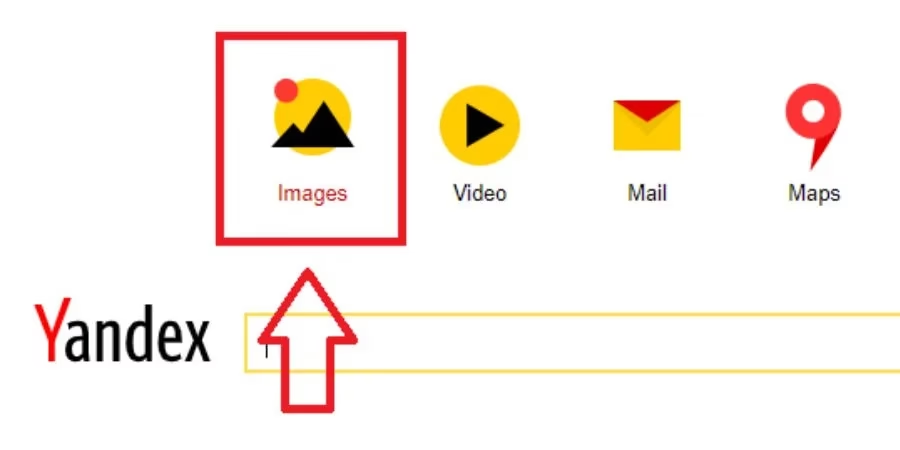
Yandex is one of the most powerful reverse image search platforms available today. Over the years, it has earned a strong reputation for delivering highly accurate visual search results, especially when it comes to facial recognition and image matching. Many users consider it one of the best alternatives to traditional image search engines because of its ability to identify visually similar photos that other platforms sometimes miss.
The platform uses advanced computer vision technology to analyze uploaded images and compare them against a massive index of online content. It can recognize faces, landmarks, products, locations, and objects with impressive accuracy. This makes it useful for researchers, journalists, marketers, and everyday users who need reliable image verification.
One reason for its popularity is its effectiveness in facial searches. People often search for image matches across websites, social platforms, blogs, and public sources. Because of this capability, many users specifically look for Yandex for Face Search when they need detailed facial matching results.
Yandex is also useful for identifying image origins, tracking image reuse, and discovering higher-resolution versions of pictures. The search interface is straightforward and allows users to upload images directly or search using image URLs.
For individuals investigating online profiles, verifying digital identities, or conducting visual research, Yandex remains one of the strongest image search solutions available in 2026. Its combination of speed, accuracy, and extensive image indexing continues to make it a preferred choice among professionals and casual users alike.
Best For:
- Facial recognition searches
- Finding visually similar images
- Image source verification
- Online identity research
- International image discovery
- Advanced reverse image searches
3. Eagle
Eagle is a powerful digital asset management and image organization platform designed for creative professionals who work with large collections of visual content. While it is not a traditional reverse image search engine, it uses AI-powered organization features that make image discovery much easier. Designers, photographers, marketers, and content creators often use Eagle to manage thousands of images efficiently.
One of Eagle’s biggest strengths is its ability to organize files automatically. The platform allows you to categorize images using tags, folders, smart filters, ratings, colors, and custom collections. This saves significant time when searching for specific visual assets.
The software supports a wide range of file formats, including images, videos, fonts, audio files, and design resources. Because of this flexibility, many creative teams use Eagle as a central hub for managing digital content. The search functionality is fast and intuitive, allowing users to locate files within seconds.
Another advantage is its clean and user-friendly interface. Even users with limited technical experience can quickly learn how to organize and retrieve images effectively. The platform also integrates well into modern creative workflows.
For businesses and professionals who frequently handle large image libraries, Eagle can improve productivity and reduce the frustration of manually sorting files. Although it focuses more on image management than online reverse searches, it remains a valuable visual search solution in 2026.
Best For:
- Large image collections
- Graphic designers
- Photographers
- Content creators
- Marketing teams
- Digital asset management
4. Tonfotos
Tonfotos is an AI-powered photo management platform that helps users organize, search, and explore large personal photo collections with ease. Unlike traditional reverse image search engines that focus on searching the web, Tonfotos specializes in helping users find and manage images stored on their own devices and archives.
The platform uses facial recognition and intelligent image analysis to automatically identify people across thousands of photos. This makes it especially useful for families, photographers, historians, and anyone maintaining extensive photo libraries. Instead of manually sorting through folders, users can quickly locate images based on faces, locations, dates, and visual content.
One of Tonfotos’ most valuable features is its ability to build connections between photos and people. The AI system groups similar faces together, making it easier to create organized family archives and personal collections. Users can also view relationships between people and events, which adds another layer of organization.
The interface is simple and easy to navigate. Even users with limited technical knowledge can quickly search through years of stored images. Since the software focuses on local image management, it also offers more control over privacy compared to some cloud-based services.
For individuals who need an efficient way to organize personal photo collections and discover forgotten memories, Tonfotos provides an excellent solution. Its combination of AI-powered recognition and user-friendly design makes it one of the best photo organization tools available in 2026.
Best For:
- Family photo collections
- Personal photo organization
- Face grouping and recognition
- Historical archives
- Genealogy projects
- Local image management
5. Pinterest Lens
Pinterest Lens is an AI-powered visual discovery tool that helps users find ideas, products, and inspiration by simply pointing their camera at an object or uploading an image. Instead of searching with text, users can perform visual searches and instantly discover related content from Pinterest’s vast collection of images and pins.
The platform uses advanced computer vision technology to recognize objects, styles, colors, patterns, and products within an image. Once the image is analyzed, Pinterest Lens displays visually similar content that matches the user’s interests. This creates a highly engaging and personalized discovery experience.
One of the biggest advantages of Pinterest Lens is its effectiveness in shopping and lifestyle searches. Users can identify fashion items, furniture, home décor, beauty products, recipes, and design ideas within seconds. This makes it particularly useful for consumers looking for inspiration before making purchasing decisions.
The tool is also valuable for content creators, marketers, and e-commerce businesses that want to understand visual trends and consumer preferences. As visual commerce continues to grow, platforms like Pinterest Lens play an increasingly important role in connecting users with relevant products and ideas.
Unlike investigative image search tools, Pinterest Lens focuses primarily on inspiration and product discovery. Its visual-first approach makes searching feel natural and intuitive, especially on mobile devices.
For users interested in creative exploration and visual shopping experiences, Pinterest Lens remains one of the most user-friendly and innovative AI-powered image search tools available in 2026.
Best For:
- Shopping inspiration
- Fashion discovery
- Home décor ideas
- Product identification
- Lifestyle content exploration
- Visual trend research
6. Google Images
Google Images remains one of the most widely used visual search platforms in the world. Over the years, Google has continuously improved its image recognition capabilities through artificial intelligence, machine learning, and computer vision technologies. As a result, it continues to be a trusted choice for both casual users and professionals.
Users can upload an image, paste an image URL, or use Google Lens to perform reverse image searches. The platform then scans billions of indexed images across the web to identify visually similar content, related websites, products, landmarks, and objects. This massive database gives Google a significant advantage in terms of search coverage.
One of the reasons Google Images remains popular is its simplicity. The interface is easy to use, and users can perform searches from both desktop and mobile devices within seconds. Whether you want to verify a photo, identify a location, find a product, or discover the original source of an image, Google Images often delivers relevant results quickly.
The platform is also helpful for content creators, students, researchers, and marketers who need reliable image information. Since Google continuously updates its search algorithms, the quality and relevance of results continue to improve.
Many users searching for AI Apps for Image Search begin with Google Images because it is free, accessible, and supported by one of the world’s largest search ecosystems. While specialized tools may offer deeper facial recognition features, Google Images remains an essential starting point for most image search tasks.
Best For:
- General reverse image searches
- Object recognition
- Product identification
- Finding image sources
- Educational research
- Everyday users
7. Social Mapper
Social Mapper is a specialized facial recognition and social media intelligence tool designed to help users identify and correlate online profiles across multiple platforms. Unlike traditional reverse image search engines, Social Mapper focuses on linking facial images to publicly available social media accounts and online identities.
The platform works by analyzing facial features from an uploaded image and then searching supported social networks for potential profile matches. This process can help researchers, cybersecurity professionals, and investigators discover publicly available online profiles associated with a specific individual. Because of these capabilities, Social Mapper is frequently discussed among professionals who work with digital investigations and online intelligence gathering.
One of the main reasons people use Social Mapper is to simplify social media research. Instead of manually searching across numerous platforms, users can automate parts of the process and save significant time. This can be valuable for brand protection, cybersecurity assessments, identity verification, and public information research.
The tool is often mentioned alongside resources such as a spy dialer app and various investigative services, although each serves a different purpose. Some users also compare it with tools marketed as cheatbuster apps when researching online identities and social profiles. However, ethical use and compliance with privacy laws are essential when conducting any form of online investigation.
Social Mapper is best suited for professionals who understand responsible data collection practices and need advanced social media mapping capabilities. Its ability to connect facial recognition with public social profiles makes it a unique solution within the reverse image search landscape.
Best For:
- Social media investigations
- Public profile discovery
- Cybersecurity research
- Identity verification
- Digital intelligence gathering
- Online reputation monitoring
8. TinEye
TinEye is one of the pioneers of reverse image search technology and continues to be a trusted platform for image tracking and verification in 2026. Unlike many modern tools that focus heavily on facial recognition, TinEye specializes in finding where an image appears online and identifying different versions of the same image.
The platform uses image recognition technology to create a unique digital fingerprint for every uploaded image. It then compares that fingerprint against billions of indexed images across the web. This allows users to locate copies, edited versions, resized images, and previously published instances of the same visual content.
One of TinEye’s greatest strengths is image source verification. Journalists, researchers, photographers, and businesses often use it to determine where an image first appeared online. This capability is particularly valuable when verifying news content, tracking image misuse, or protecting copyrighted material.
TinEye also offers advanced filtering options that allow users to sort results by oldest appearance, newest appearance, largest image size, or most modified version. These features make investigations more efficient and help users locate relevant information quickly.
For brands and content creators, TinEye serves as an excellent monitoring tool. It helps identify unauthorized use of images and supports intellectual property protection efforts. Because of its reliability and focus on image tracking rather than facial recognition, it remains a valuable addition to any visual research toolkit.
Best For:
- Image source tracking
- Copyright monitoring
- Duplicate image detection
- Brand protection
- Content verification
- Digital investigations
9. Bing Visual Search
Bing Visual Search is Microsoft’s AI-powered image search solution that allows users to search the web using images instead of text. The platform uses advanced computer vision and machine learning technologies to identify objects, products, landmarks, animals, plants, and many other visual elements within an image.
The process is simple and user-friendly. Users can upload a photo, paste an image URL, or select a specific area within an image to search. Bing then analyzes the visual content and delivers relevant results based on the detected objects and patterns. This targeted approach helps users find more precise information without relying solely on written keywords.
One of the strongest features of Bing Visual Search is product discovery. Users can identify clothing, electronics, furniture, and other items directly from images. This makes the platform especially useful for online shoppers who want to compare products, find similar items, or learn more about objects they encounter.
The platform also supports educational and research purposes. Students, marketers, and content creators can use it to gather information about images, verify visual content, and discover related resources online. Its seamless integration with Microsoft’s search ecosystem further enhances the user experience.
As visual search technology continues to evolve, Bing Visual Search remains a strong competitor in the market. It combines accessibility, speed, and accurate image recognition, making it a practical choice for both personal and professional use.
Best For:
- Product searches
- Shopping comparisons
- Object identification
- Educational research
- Visual content discovery
- Everyday image searches
10. Everypixel
Everypixel is an AI-powered image search engine that focuses on helping users find high-quality stock photos, illustrations, vectors, and creative assets from multiple stock image platforms. Instead of searching each stock website individually, users can search across numerous sources from a single interface, saving both time and effort.
The platform uses artificial intelligence to analyze image quality and relevance. One of its standout features is the AI aesthetic scoring system, which evaluates visual appeal based on machine learning models. This helps users identify professional-quality images more efficiently and avoid low-quality content.
Everypixel is particularly valuable for marketers, designers, bloggers, advertisers, and content creators who regularly need visual assets for campaigns and projects. Users can compare images from multiple stock providers, making it easier to find the right content at the best price.
The platform also supports advanced filtering options that help narrow search results based on orientation, color, style, licensing requirements, and image type. This improves workflow efficiency and reduces the time spent browsing through large image libraries.
Some users looking for image verification tools compare Everypixel with resources promoted as Snapchat Friend Finder Apps or platforms described as helpful for people using apps like OnlyFans, but Everypixel serves a completely different purpose. Its primary focus is creative asset discovery rather than identity searches or social investigations.
For professionals who need fast access to quality visual content, Everypixel remains one of the best AI-powered stock image search solutions available in 2026.
Best For:
- Stock photo searches
- Marketing campaigns
- Content creation
- Graphic design projects
- Advertising teams
- Creative professionals
Comparison: Best AI Apps for Image Search in 2026
| App | AI Features | Mobile Support | Free Plan | Best Use Case |
|---|---|---|---|---|
| Eagle | AI-powered image organization, tagging, smart filters | Yes | Trial Available | Digital asset management |
| Yandex | Advanced image recognition, visual matching | Yes | Yes | Facial matching and image discovery |
| PimEyes | Deep facial recognition technology | Yes | Limited | Online identity monitoring |
| Tonfotos | AI face grouping and photo organization | Yes | Limited | Personal photo management |
| Pinterest Lens | Visual object recognition and product discovery | Yes | Yes | Shopping and inspiration |
| Google Images | AI image recognition and reverse image search | Yes | Yes | General image searches |
| Social Mapper | Facial recognition and social profile mapping | Limited | No | Social media investigations |
| TinEye | Image fingerprinting and source tracking | Yes | Limited | Copyright and image verification |
| Bing Visual Search | Object recognition and product matching | Yes | Yes | Product discovery |
| Everypixel | AI image quality analysis and stock search | Yes | Yes | Stock photo discovery |
If you need the most accurate facial recognition, PimEyes and Yandex are often the strongest options. For image source verification, TinEye remains a trusted choice. Google Images offers excellent all-around performance for everyday users, while Pinterest Lens excels in product and lifestyle discovery.
Creative professionals managing large visual libraries may prefer Eagle or Everypixel. Meanwhile, researchers and investigators often choose Social Mapper when they need advanced social media intelligence capabilities.
The best choice depends on your goals, privacy requirements, and budget. Many professionals use multiple tools together to achieve the most comprehensive results.
Benefits of Using AI Apps for Image Search
Artificial intelligence has transformed the way people search for and analyze visual content online. Modern image search tools are faster, more accurate, and capable of delivering insights that were difficult to obtain just a few years ago. Whether you are a business owner, researcher, marketer, or everyday internet user, these platforms offer significant advantages.
Faster Image Discovery
Traditional searches often require users to describe an image using keywords. However, visual search removes this limitation. You can simply upload an image and receive relevant matches within seconds. This saves time and improves efficiency when searching for specific content.
Improved Search Accuracy
Advanced AI models can recognize visual patterns, objects, faces, logos, products, and landmarks with remarkable precision. As a result, users receive more relevant search results compared to traditional image-matching methods.
Better Online Security
Reverse image search tools can help users identify fake profiles, stolen images, and misleading content. By verifying image origins, people can make safer decisions when interacting online.
Stronger Copyright Protection
Photographers, artists, and businesses often use image search tools to track unauthorized image usage. This helps protect intellectual property and supports brand reputation management.
More Effective Research
Researchers, journalists, and investigators can verify information quickly using visual evidence. Some professionals even combine image search platforms with public record services and investigative resources when conducting detailed online research.
Enhanced Productivity
Many organizations rely on AI Apps for Image Search to streamline workflows, organize content, and locate visual assets more efficiently. This reduces manual effort and improves overall productivity.
Support for Business Growth
Businesses use visual search technologies for customer engagement, product discovery, brand monitoring, and market research. As image recognition technology becomes more advanced, companies can unlock new opportunities for innovation and customer satisfaction.
These benefits explain why AI-powered image search tools continue to gain popularity across industries and among everyday users worldwide.
Privacy and Ethical Considerations of Reverse Image Search
Reverse image search technology offers many benefits, but it also raises important privacy and ethical concerns. As AI-powered image recognition becomes more advanced, users must understand how to use these tools responsibly and legally.
Respect Personal Privacy
Images often contain personal information. Before uploading photos of other individuals, it is important to consider privacy rights and local regulations. Responsible use helps prevent misuse and protects personal data.
Understand Data Collection Practices
Different platforms handle uploaded images in different ways. Some services may temporarily store images for processing, while others may retain certain data for longer periods. Users should always review privacy policies before using any reverse image search platform.
Use Facial Recognition Responsibly
Facial recognition technology can be extremely powerful. While it can help verify identities and locate publicly available images, it should not be used to harass, stalk, or invade someone’s privacy. Ethical use is essential to maintaining trust in these technologies.
Verify Information Carefully
Reverse image search results should not be treated as absolute proof. Similar-looking individuals, edited images, and incomplete datasets can occasionally lead to inaccurate conclusions. Users should always verify findings through multiple reliable sources.
Follow Legal Requirements
Privacy laws vary across countries and regions. Businesses and professionals using facial recognition or image search technologies should ensure compliance with relevant regulations and industry standards.
As AI continues to evolve, image search platforms will become even more powerful. Users, businesses, and developers share a responsibility to ensure these tools are used fairly, transparently, and ethically.
By understanding these considerations, users can benefit from reverse image search technology while respecting privacy, protecting personal rights, and promoting responsible digital behavior.
Frequently Asked Questions
What is an AI-powered reverse image search tool?
An AI-powered reverse image search tool allows users to upload an image instead of entering text-based keywords. The system analyzes visual elements such as objects, faces, colors, shapes, and patterns to find matching or similar images across its database and the web.
Are reverse image search tools accurate?
Yes, modern reverse image search tools are highly accurate. Platforms that use artificial intelligence and computer vision can identify visual similarities, detect image modifications, and recognize objects or faces with impressive precision. However, results may vary depending on database size and image quality.
Which tool is best for face searches?
PimEyes and Yandex are often considered among the strongest facial recognition platforms available. Users frequently compare them with other services when evaluating face search accuracy and online identity monitoring capabilities.
Are free reverse image search tools reliable?
Many free tools provide excellent results for everyday searches. Google Images, Bing Visual Search, Pinterest Lens, and Yandex offer free options that are suitable for most users. Premium platforms may provide additional features such as advanced facial recognition, monitoring, and reporting.
Can businesses benefit from reverse image search technology?
Absolutely. Businesses use image search technology for copyright protection, brand monitoring, product discovery, marketing research, content management, and customer engagement. These capabilities help organizations improve efficiency and make better-informed decisions.
Can reverse image search help verify online identities?
Reverse image search can help identify where an image appears online and determine whether a profile photo has been reused elsewhere. While it can support identity verification efforts, users should always combine image search findings with other trustworthy sources before drawing conclusions.
Sum up
AI-powered reverse image search tools have become essential for verifying images, discovering visual content, protecting online identities, and conducting digital research. Throughout this guide, we explored how modern platforms use artificial intelligence to analyze images, identify visual patterns, and deliver highly accurate search results.
The most important takeaway is that different tools serve different purposes. Yandex and PimEyes excel in facial recognition, TinEye is outstanding for image source verification, and Google Images remains one of the most accessible solutions for everyday users. Meanwhile, platforms such as Eagle, Tonfotos, Pinterest Lens, Bing Visual Search, Social Mapper, and Everypixel offer specialized capabilities for creative professionals, researchers, marketers, and businesses.
As visual content continues to dominate the internet, the role of AI Apps for Image Search will only become more important. These technologies are helping users work faster, verify information more accurately, and make smarter decisions in an increasingly visual digital world.
If you are just getting started, begin by testing a few of the tools mentioned in this guide and compare their results based on your specific needs. Understanding how these platforms work today will prepare you for the next generation of AI-powered visual search innovations that are already shaping the future of online discovery.