
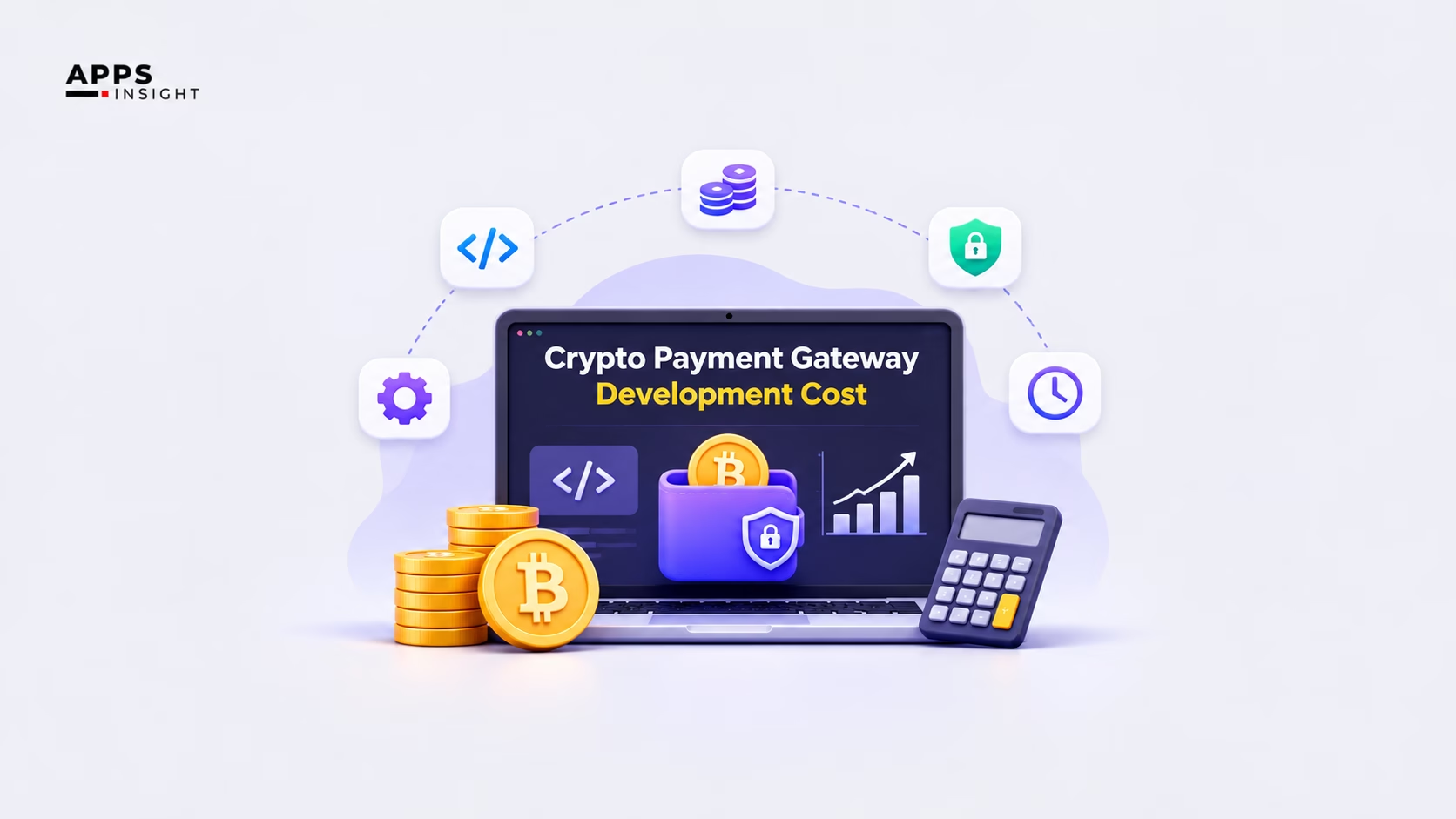
Accepting cryptocurrency payments can help businesses serve international customers, support alternative payment methods, and reduce dependence on traditional payment systems. However, building a secure crypto payment gateway requires more than connecting a digital wallet to a website. Businesses need payment processing infrastructure, blockchain integrations, transaction monitoring, security controls, and a reliable settlement system.
So, how much does crypto payment gateway development cost in 2027? The estimated development cost ranges from $30,000 to $60,000 for a basic solution, $60,000 to $150,000 for a mid-level platform, and $150,000 to $400,000 or more for an enterprise-grade payment gateway. The actual budget depends on supported cryptocurrencies, blockchain networks, security requirements, integrations, compliance needs, and development complexity.
For startups and business owners, understanding these expenses before starting development is important. A small payment gateway designed for a single business has different requirements from a payment processing platform serving thousands of merchants.
In this guide, we explain the estimated development costs for 2027, essential features, technology requirements, development timelines, and factors that influence the overall budget. The goal is to help businesses plan their investment and choose an appropriate development approach.
Quick Answers: Crypto Payment Gateway Development Cost in 2027
How much does it cost to develop a crypto payment gateway in 2027?
Development can cost between $30,000 and $400,000+, depending on the platform’s features, blockchain integrations, security requirements, and scalability.
How long does crypto payment gateway development take?
A basic solution may take 2–3 months, while a mid-level platform can require 4–6 months. Enterprise-grade platforms may take 6–12 months or longer.
What are the main features of a crypto payment gateway?
Common features include payment processing, wallet integration, transaction tracking, real-time notifications, automatic conversion, refunds, and merchant dashboards.
Which technologies are used to build a crypto payment gateway?
Developers commonly use Node.js, Python, React, PostgreSQL, blockchain APIs, smart contracts, and cloud infrastructure. The final stack depends on the supported networks and business requirements.
Is building a custom crypto payment gateway better than using an existing solution?
Custom development offers greater control over features, integrations, security architecture, and business operations. Existing platforms can be more affordable when businesses need basic payment acceptance without managing their own infrastructure.
Overview: What Determines the Development Budget?
The development budget depends on the type of platform a business wants to build. Before estimating expenses, it is important to understand that a crypto payment gateway is a combination of several technical components.
These include blockchain connectivity, payment processing, wallet management, merchant accounts, transaction verification, and administrative tools.
For example, a gateway supporting Bitcoin and Ethereum requires different blockchain integrations from a platform supporting ten cryptocurrencies across multiple networks. Similarly, adding automatic fiat conversion requires additional APIs and financial service integrations.
The following factors generally influence the budget:
- Number of supported cryptocurrencies.
- Number of blockchain networks.
- Wallet and exchange integrations.
- Payment confirmation and transaction monitoring.
- Merchant dashboard and reporting tools.
- Security and compliance requirements.
- Payment settlement and withdrawal options.
- Expected transaction volume and scalability.
According to Crypto.com’s January 2026 research, the estimated number of global cryptocurrency owners reached 741 million in 2025, compared with 659 million in 2024, representing 12.4% growth.
This growth provides useful context for businesses evaluating cryptocurrency payment infrastructure. However, the number of crypto owners does not directly indicate how many people use cryptocurrency for merchant payments.
We have listed! Best AI Crypto Trading Bots for Better Profits
What Is a Crypto Payment Gateway and How Does It Work?
A crypto payment gateway is a software platform that allows businesses to accept cryptocurrency payments from customers. It connects a merchant’s website, application, or checkout system with blockchain networks and digital wallets.
Instead of manually checking every transaction, the gateway automates payment requests, transaction verification, payment status updates, and settlement.
Here is how the process generally works:
- Customer selects cryptocurrency: At checkout, the customer chooses a supported cryptocurrency as the payment method.
- Payment request is generated: The gateway creates a payment request containing the amount, receiving address, supported network, and payment expiration time.
- Customer transfers funds: The customer scans a QR code or copies the wallet address to complete the transaction.
- Blockchain verification: The gateway monitors the relevant blockchain to identify the incoming transaction and verify its amount and status.
- Payment confirmation: Once the required confirmation conditions are met, the gateway updates the payment status.
- Merchant settlement: The merchant receives the cryptocurrency or its converted fiat equivalent, depending on the platform’s settlement configuration.
For example, imagine an online electronics store selling a laptop for $1,000. A customer chooses to pay using USDT. The gateway generates a payment request, monitors the transaction, verifies the payment, and notifies the merchant when the required confirmation conditions are satisfied.
This process makes cryptocurrency payments easier to manage without requiring merchants to monitor blockchain transactions manually.
Estimated Crypto Payment Gateway Development Cost in 2027
The estimated Crypto Payment Gateway Development Cost varies according to the platform’s complexity and operational requirements.
The following estimates are planning ranges for 2027, not fixed industry prices or published market averages. They assume custom software development and exclude business-specific licensing, liquidity reserves, and transaction fees.
| Development level | Estimated cost | Development time |
|---|---|---|
| Basic payment gateway | $30,000–$60,000 | 2–3 months |
| Mid-level payment gateway | $60,000–$150,000 | 4–6 months |
| Advanced payment gateway | $150,000–$250,000 | 6–9 months |
| Enterprise payment gateway | $250,000–$400,000+ | 9–12+ months |
1. Basic Crypto Payment Gateway: $30,000–$60,000
A basic gateway is suitable for startups, small businesses, and companies that want to introduce cryptocurrency payments without building a complex financial infrastructure.
It generally supports a limited number of cryptocurrencies and provides essential payment processing capabilities.
Common components include:
- Basic merchant dashboard.
- Bitcoin and Ethereum payment support.
- Wallet address generation.
- QR code payment functionality.
- Transaction monitoring.
- Payment notifications.
- Basic transaction history.
- Simple administrative controls.
For example, an online service provider accepting Bitcoin and Ethereum payments may not need advanced settlement options or extensive reporting tools.
A basic platform can meet these requirements with a relatively small development team and limited integrations.
2. Mid-Level Crypto Payment Gateway: $60,000–$150,000
A mid-level solution is appropriate for growing businesses, eCommerce platforms, and companies expecting regular cryptocurrency transactions.
Compared with a basic gateway, it includes more automation, additional payment options, and better administrative functionality.
Typical features include:
- Support for multiple cryptocurrencies.
- Multiple blockchain network integrations.
- Merchant account management.
- Automatic payment conversion.
- Refund management.
- Detailed transaction reports.
- API integration for third-party applications.
- Improved authentication and security controls.
For example, an eCommerce business operating in several countries may want to accept Bitcoin, Ethereum, USDT, and USDC while providing merchants with automated payment notifications.
These requirements increase development time because the platform needs additional APIs, payment workflows, and testing.
3. Advanced Crypto Payment Gateway: $150,000–$250,000
An advanced gateway is designed for businesses that need more control over payment operations, multiple merchant accounts, and complex transaction workflows.
It may support a broader range of blockchain networks and provide advanced monitoring and settlement capabilities.
The platform can include:
- Advanced merchant management.
- Automated reconciliation.
- Multi-currency settlement.
- Risk monitoring and fraud detection.
- Advanced analytics.
- Role-based access controls.
- High-volume transaction processing.
- Automated operational alerts.
These components require additional backend engineering, security testing, and infrastructure planning.
4. Enterprise Crypto Payment Gateway: $180,000–$300,000+
Enterprise platforms are built for payment service providers, financial technology companies, and businesses that want to process transactions for multiple merchants.
They require a more sophisticated architecture to support high transaction volumes, business integrations, and operational reliability.
Enterprise development may include:
- Multi-tenant merchant architecture.
- Advanced payment routing.
- Custom blockchain integrations.
- Institutional wallet infrastructure.
- Automated settlement workflows.
- Advanced compliance monitoring.
- High-availability infrastructure.
- Detailed audit logs.
- Custom APIs and enterprise integrations.
The cost can exceed $400,000 when the project involves extensive regulatory requirements, proprietary infrastructure, multiple jurisdictions, or complex financial integrations.
Crypto Payment Gateway Pricing by Development Path
| Development Approach | Estimated Cost | What’s Included |
|---|---|---|
| Existing Payment Provider Integration | $0–$15,000 + 0.5%–3% per transaction | API integration, checkout configuration, and connecting an existing payment infrastructure. |
| White-Label or Lightly Customized Solution | $15,000–$45,000 | Licensed payment infrastructure, custom branding, configuration, and limited feature customization. |
| Custom Crypto Payment Gateway Development | $40,000–$180,000 | Custom checkout system, wallet infrastructure, blockchain monitoring, transaction processing, and settlement logic. |
| Enterprise-Grade Multi-Currency Gateway | $180,000–$300,000+ | Fully customized infrastructure, multi-currency and multi-chain support, compliance tools, advanced security architecture, and enterprise integrations. |
Read once! Cryptos To Hold Become A Millionaire
Key Factors That Affect Development Costs
Understanding the cost to build a crypto payment gateway requires looking beyond the initial development estimate. Several technical and operational decisions influence the final budget.
1. Supported Cryptocurrencies and Blockchain Networks
The number of supported cryptocurrencies directly affects integration complexity. For example, Bitcoin, Ethereum, and Solana use different blockchain architectures and transaction mechanisms. Stablecoins such as USDT may also operate on several networks, including Ethereum and Tron.
Each additional network may require:
- Blockchain node or API connectivity.
- Transaction monitoring.
- Address and payment validation.
- Network-specific confirmation logic.
- Error handling and testing.
Businesses should identify which cryptocurrencies their target customers actually use rather than supporting every available digital asset.
2. Wallet Integration and Management
Wallet infrastructure is another important expense. A payment gateway needs a reliable method of generating receiving addresses, monitoring incoming funds, managing balances, and processing withdrawals.
Crypto wallet integration can involve custodial wallets, non-custodial wallets, or third-party wallet providers. Custodial systems require additional security controls because the platform manages private keys or access to customer funds. Non-custodial systems can reduce certain custody responsibilities but still require careful transaction and address management.
3. Security and Compliance Requirements
Security is essential because payment gateways handle financial transactions and sensitive information. Common security requirements include:
- Multi-factor authentication.
- Encryption of sensitive information.
- Secure private-key management.
- Role-based access permissions.
- Withdrawal approval mechanisms.
- Transaction monitoring.
- Regular security assessments.
- Backup and recovery procedures.
Businesses should also assess applicable financial regulations, anti-money laundering requirements, customer verification obligations, and data protection laws in their operating markets. The Financial Action Task Force (FATF) provides international guidance concerning virtual assets and virtual asset service providers.
Reference: https://www.fatf-gafi.org/en/topics/virtual-assets.html
Compliance obligations depend on the business model and jurisdiction. A payment software provider that never controls customer funds may have different obligations from a custodial payment service.
4. Payment Conversion and Settlement
Some businesses prefer receiving cryptocurrency directly, while others want to receive fiat currency such as USD or EUR. Automatic conversion requires integration with exchanges, liquidity providers, or other financial service providers. For example, a customer might pay $500 worth of USDT, while the merchant receives the equivalent amount in USD.
This functionality introduces additional costs for:
- Exchange API integration.
- Exchange rate monitoring.
- Conversion calculations.
- Liquidity management.
- Settlement processing.
- Reconciliation and reporting.
The availability of these services also depends on the provider and applicable regulations.
5. Development Team and Location
The development team’s experience, location, and technical expertise influence the total project budget. A project may require blockchain developers, backend engineers, frontend developers, QA specialists, security professionals, and project managers.
According to Upwork Insights, blockchain development consultants on its platform had a median listed rate of approximately $40 per hour as of November 1, 2026. The median listed rate for India was approximately $17 per hour.
These are marketplace profile rates, not guaranteed project rates or complete agency pricing. Experienced teams, specialist security work, and complex integrations can cost considerably more.
The location and experience level of your blockchain development team can significantly influence the overall project budget. Blockchain developers generally charge higher rates than traditional software developers because building secure payment infrastructure requires specialized knowledge of blockchain networks, smart contracts, cryptography, and financial systems.
The following table provides estimated hourly development rates across major outsourcing regions.
| Development Region | Junior Developer | Mid-Level Developer | Senior / Blockchain Specialist |
|---|---|---|---|
| North America | $60–$90/hr | $90–$140/hr | $120–$250/hr |
| Western Europe | $40–$70/hr | $70–$100/hr | $100–$150/hr |
| Eastern Europe | $25–$50/hr | $50–$80/hr | $70–$120/hr |
| India & South Asia | $15–$30/hr | $30–$60/hr | $50–$90/hr |
| Latin America | $20–$40/hr | $40–$70/hr | $60–$100/hr |
Note: These are indicative estimates, not fixed market rates. Actual pricing depends on technical expertise, project complexity, team structure, and engagement model.
Although hiring developers from lower-cost regions can reduce initial expenses, hourly rates should not be the only deciding factor. Experience with production payment systems, blockchain integrations, transaction security, and smart contract development matters considerably.
For a cryptocurrency payment gateway, an experienced senior team may deliver better security, fewer development issues, and lower long-term maintenance costs than a larger team with limited blockchain experience. Focus on the overall project value rather than simply choosing the lowest hourly rate.
6. Security Audits and Compliance Requirements
Security is one of the most important cost considerations when developing a cryptocurrency payment gateway. Since the platform handles digital assets, financial transactions, wallet integrations, and sensitive user information, strong security measures are essential.
Independent security audits can add a significant amount to the development budget. The estimated costs include:
| Security Service | Estimated Cost |
|---|---|
| Smart Contract Security Audit | $5,000–$50,000+ |
| Infrastructure Penetration Testing | Varies by system complexity |
| Wallet Security Assessment | Depends on wallet architecture |
| API Security Testing | Depends on API scope |
| Ongoing Security Monitoring | Depends on infrastructure and service requirements |
Smart contract audits are particularly important when your payment gateway relies on automated blockchain transactions. An independent audit helps identify vulnerabilities, logic errors, and potential security weaknesses before the platform goes live.
Cutting corners on security assessments can create much larger financial problems later. A vulnerability that goes undetected could lead to stolen funds, service disruptions, legal complications, and reputational damage.
Therefore, include security audits, penetration testing, and ongoing monitoring in your initial development budget rather than treating them as optional expenses.
Looking for? Blockchain Development Company
Essential Features to Include in a Crypto Payment Gateway
The crypto payment gateway features should be selected according to the platform’s target users, transaction volume, and business model.
Here are the most important capabilities to consider.
1. Multi-Currency Payment Support
The platform should support the cryptocurrencies relevant to its customers. Bitcoin, Ethereum, USDT, and USDC are common options to evaluate. Supporting more assets can expand payment choices, but every additional asset introduces integration and maintenance requirements.
2. Merchant Dashboard
A merchant dashboard allows businesses to manage payment activity from one location. It should display transaction details, payment statuses, settlement information, account balances, and transaction history.
3. Real-Time Transaction Monitoring
The gateway should monitor blockchain activity and update payment statuses automatically. It should distinguish between pending, confirmed, failed, expired, and underpaid transactions. This helps businesses avoid accepting payments that have not met their confirmation requirements.
4. Automatic Currency Conversion
Automatic conversion allows merchants to receive a preferred currency instead of holding the cryptocurrency used by customers.
The gateway can connect with supported exchange or liquidity APIs to process conversions.
5. API and eCommerce Integration
A well-designed API allows businesses to connect the payment gateway with websites, mobile applications, and eCommerce platforms. It can also support payment plugins and automated transaction notifications.
6. Refund and Settlement Management
Businesses need a clear process for refunds, withdrawals, and settlements. Since blockchain transactions are generally irreversible once confirmed, refunds usually require a separate transaction rather than reversing the original payment.
7. Administrative Controls
An administrator panel helps operators manage merchants, review transactions, monitor suspicious activities, and configure payment settings. These features reduce manual work and improve operational visibility.
How Long Does Crypto Payment Gateway Development Take?
The development process generally involves several stages. Each stage requires different technical resources and contributes to the overall budget.
| Development stage | Estimated time | Estimated cost |
|---|---|---|
| Requirement analysis and planning | 1–2 weeks | $2,000–$5,000 |
| UI/UX design | 2–3 weeks | $3,000–$7,000 |
| Backend development | 5–10 weeks | $10,000–$30,000 |
| Blockchain integration | 3–6 weeks | $6,000–$20,000 |
| Frontend development | 4–7 weeks | $6,000–$18,000 |
| Security and QA testing | 2–4 weeks | $4,000–$10,000 |
| Deployment and launch | 1–2 weeks | $2,000–$5,000 |
These are indicative planning allocations for a relatively focused custom project. The stages can overlap, and their combined costs should not be treated as a fixed quotation. More advanced projects will require additional engineering and testing.
Businesses should also budget for ongoing expenses after launch, including:
- Cloud hosting and infrastructure.
- Blockchain API subscriptions.
- Security audits.
- Software maintenance.
- Third-party service fees.
- Compliance operations.
- Customer support.
For example, a gateway may have a manageable initial development budget but require additional spending as its transaction volume and merchant base increase.
Looking for? Top Fintech Blockchain Development Firms
How to Reduce Development Costs Without Compromising Security
Reducing development expenses does not mean removing important security or payment functionality. It means making practical technical decisions before development begins.
Here are some useful approaches.
- Start with a focused MVP: Build essential payment processing functionality first. Add advanced analytics, multiple settlement currencies, and additional integrations when business requirements justify them.
- Select relevant cryptocurrencies: Avoid integrating every blockchain network at launch. Start with the assets and networks your target customers are most likely to use.
- Use established APIs: Existing blockchain infrastructure providers can reduce the time required to build and maintain node infrastructure.
- Prioritize security from the beginning: Security should be part of the architecture, not an additional feature added before launch. This can help prevent expensive redesigns and vulnerabilities.
- Plan integrations carefully: Identify wallet, exchange, payment, and compliance integrations before development starts. Changing providers midway through development can increase costs.
- Design for future expansion: Use a modular architecture so that additional networks and payment features can be introduced without rebuilding the entire platform.
Should You Build From Scratch or Use an Existing Solution?
This decision depends on the business’s technical requirements, available budget, and long-term objectives.
A custom platform offers greater control over the payment process, user experience, security architecture, and integrations. It is generally suitable for businesses that want to operate their own payment infrastructure or offer services to multiple merchants.
An existing platform can be more practical for businesses that simply want to accept cryptocurrency payments without managing a complete payment system.
For example, businesses researching a crypto payment gateway like BitPay can compare existing payment processing services with custom development.
The comparison should consider:
| Factor | Custom development | Existing solution |
|---|---|---|
| Initial investment | Higher | Usually lower |
| Customization | Extensive | Provider-dependent |
| Development time | Longer | Usually shorter |
| Infrastructure control | Greater | Limited |
| Maintenance | Business responsibility | Shared or provider-managed |
| Scalability | Architecture-dependent | Provider-dependent |
Before selecting either approach, businesses should compare transaction fees, supported currencies, settlement options, custody arrangements, security practices, API availability, and regulatory responsibilities.
Sum up
Building a cryptocurrency payment platform in 2027 requires careful planning around technology, security, blockchain integrations, and business requirements.
The estimated Crypto Payment Gateway Development Cost ranges from $30,000 for a basic platform to more than $400,000 for a complex enterprise solution. However, the final investment depends on the number of supported networks, payment features, wallet infrastructure, compliance requirements, and expected transaction volume.
For startups, beginning with an MVP can help validate demand before investing in advanced infrastructure. Growing businesses may need automated settlement, merchant management, and additional blockchain integrations. Enterprise platforms generally require stronger security architecture, operational monitoring, and scalable infrastructure.
Choosing an experienced crypto payment gateway development company can also help businesses evaluate technical requirements, estimate development expenses, and select an appropriate architecture.
Companies exploring cryptocurrency payment infrastructure can connect with AppsInsight to learn more about cryptocurrency payment gateway software development, technical planning, and custom software development requirements.
The most practical approach is to build according to actual business needs rather than adding features that increase development costs without providing clear operational value.
Frequently Asked Questions
What is the average cost of developing a crypto payment gateway in 2027?
A mid-level custom payment gateway may cost between $60,000 and $150,000. Basic platforms can start around $30,000, while enterprise-grade systems can exceed $400,000.
What is the biggest expense in crypto payment gateway development?
Backend engineering, blockchain integration, wallet infrastructure, and security implementation are major cost components. Their relative expenses depend on the platform’s architecture and supported payment networks.
Can a startup build a crypto payment gateway with a limited budget?
A startup can begin with an MVP supporting a small number of cryptocurrencies, basic merchant management, transaction monitoring, and essential payment APIs. Advanced functionality can be added as requirements grow.
How much does maintenance cost after launching a crypto payment gateway?
Maintenance expenses depend on infrastructure usage, transaction volume, security requirements, and third-party subscriptions. Businesses should prepare a separate recurring budget for hosting, monitoring, updates, testing, and technical support.
Is crypto payment gateway development profitable?
Profitability depends on transaction volume, merchant adoption, operating expenses, pricing, and regulatory requirements. Potential revenue models include transaction fees, merchant subscriptions, and enterprise integration fees. However, profitability is not guaranteed and requires a sustainable business model.