
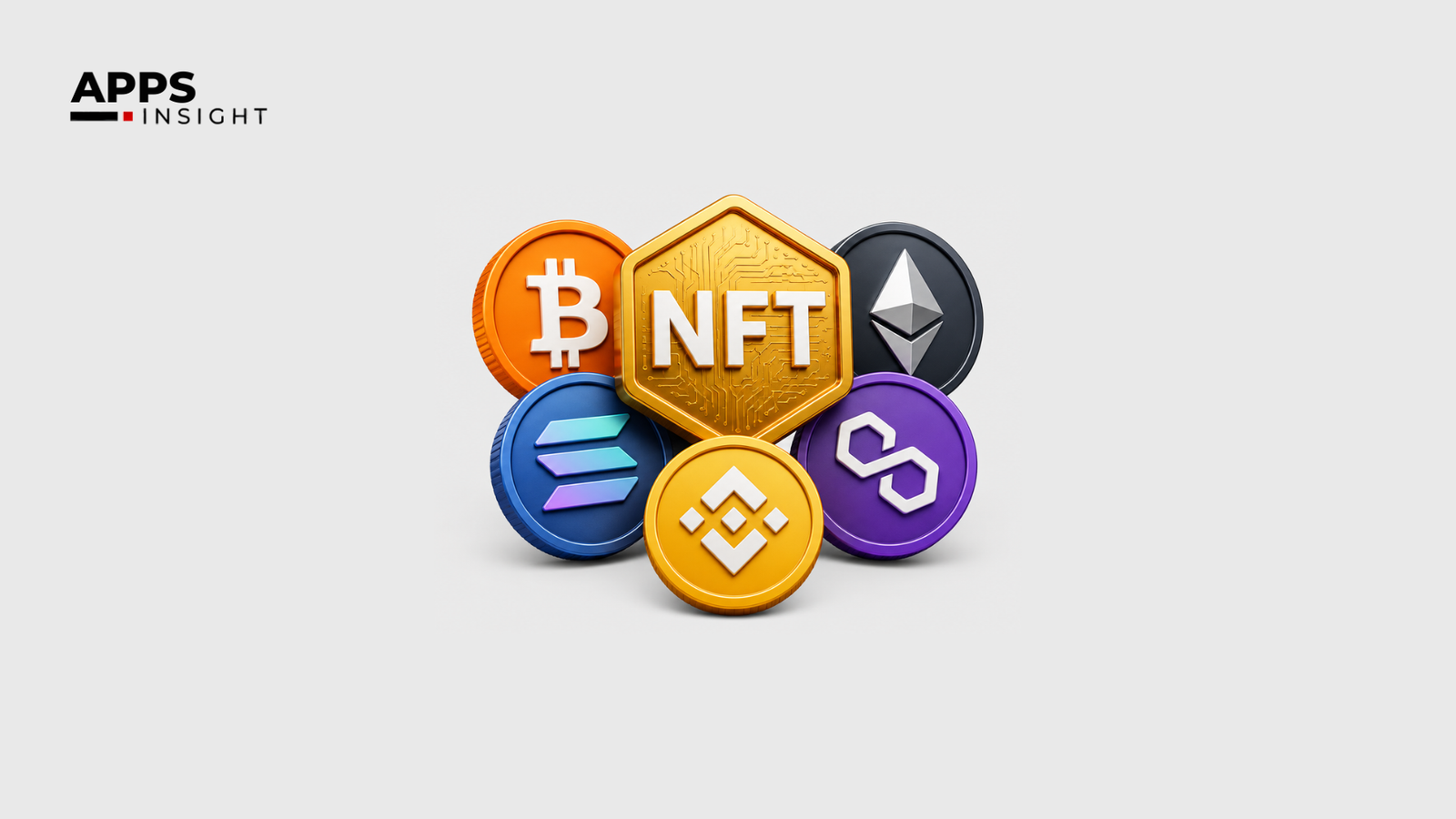
NFTs have evolved far beyond digital collectibles and have become an important part of the broader blockchain ecosystem. They now play a role in digital ownership, NFT marketplaces, blockchain gaming, creator platforms, virtual worlds, and metaverse applications. Alongside NFTs, a growing number of cryptocurrencies power the ecosystems where these digital assets are created, bought, sold, and traded.
This has led many investors and crypto enthusiasts to search for the best NFT crypto coins to add to their watchlists.
However, identifying promising NFT-related cryptocurrencies requires more than looking at which token is trending or has recently experienced a sharp price increase. A stronger evaluation considers factors such as real-world utility, market capitalization, trading volume, token supply, liquidity, ecosystem activity, adoption, and the development of the underlying project.
In this guide, we explore what NFT crypto coins are, the leading NFT crypto coins to know, how NFT coins differ from NFTs, how to evaluate NFT tokens, and which factors can influence NFT crypto coin prices. Whether you are researching the NFT market for the first time or expanding an existing crypto watchlist, understanding these fundamentals can help you make more informed comparisons.
Key Takeaways
- NFT crypto coins can power ecosystems involving NFT marketplaces, blockchain games, digital collectibles, creator platforms, and metaverse applications.
- NFTs and NFT coins are not the same thing. An NFT represents a unique digital asset, while an NFT coin or token is a cryptocurrency that can typically be traded on a crypto market.
- When comparing the top NFT tokens, look beyond price and consider utility, market capitalization, trading volume, liquidity, token supply, adoption, and ongoing project development.
- NFT-related cryptocurrencies can be highly volatile, with prices influenced by market sentiment, speculation, liquidity, ecosystem growth, and demand for the underlying platform.
- A strong NFT crypto project should ideally have a clear use case, active ecosystem, credible development, and sustainable demand rather than relying solely on market hype.
What Are NFT Crypto Coins?
NFT crypto coins are fungible cryptocurrencies or tokens that power and support ecosystems built around non-fungible tokens (NFTs). While an NFT represents a unique digital asset, such as digital artwork, in-game items, music, collectibles, or virtual real estate, an NFT crypto coin can serve as the financial and utility layer behind the platform.
Depending on the project, these tokens may be used to pay marketplace fees, access platform features, participate in governance, earn rewards, make transactions, or interact with NFT-based applications.
It is important to distinguish NFT coins from NFTs themselves. Each NFT is typically unique and can have a different value based on factors such as rarity, ownership history, creator reputation, and buyer demand. NFT crypto coins, on the other hand, are generally interchangeable with other tokens of the same type, and their market value can be affected by project utility, user adoption, trading activity, liquidity, token supply, ecosystem growth, and overall market sentiment.
Understanding this difference can help investors and users evaluate an NFT project from a broader perspective. Rather than looking only at the price or rarity of individual digital collectibles, they can also examine the utility and long-term potential of the cryptocurrency powering the NFT ecosystem.
Top 10 NFT Crypto Coins to Know
NFT-focused cryptocurrencies play an important role across the expanding digital-asset ecosystem. While some tokens are closely connected to NFT gaming and virtual worlds, others power NFT marketplaces, creator economies, digital collectibles, metaverse experiences, and blockchain infrastructure.
The NFT sector has evolved beyond simple digital collectibles. Today, NFT-related projects can support everything from in-game assets and virtual real estate to creator platforms and decentralized marketplaces. As a result, each NFT cryptocurrency has a different purpose, ecosystem, and potential use case.
Below is an overview of 10 notable NFT crypto coins, along with their ticker symbols, approximate market values, and the primary role they play within the NFT and Web3 ecosystem.
Note: Cryptocurrency prices and market capitalizations can change significantly within minutes or hours. The figures shown below are approximate reference values and should be independently verified before making any investment decision. This information is provided for educational purposes and does not constitute financial advice.
| NFT Crypto Coin | Symbol | Approx. Price | Approx. Market Cap | Primary Use Case |
|---|---|---|---|---|
| Axie Infinity | AXS | $1.03 | $179 million | NFT gaming and ecosystem governance |
| The Sandbox | SAND | $0.052 | $139 million | Metaverse land, gaming, and creator experiences |
| ApeCoin | APE | $0.136 | $136 million | NFT ecosystem, community, and governance |
| Decentraland | MANA | $0.070 | $135 million | Virtual worlds and digital real estate |
| GALA | GALA | $0.0024 | $116 million | Web3 gaming and digital entertainment |
| Immutable | IMX | $0.138 | $116 million | NFT and blockchain gaming infrastructure |
| Enjin Coin | ENJ | $0.031 | $61 million | Gaming NFTs and digital assets |
| Flow | FLOW | $0.028 | $47 million | NFT applications and consumer-focused blockchain |
| Blur | BLUR | $0.015 | $44 million | NFT marketplace and professional trading |
| Magic Eden | ME | $0.061 | $37 million | Multi-chain NFT marketplace ecosystem |
These projects represent different segments of the NFT economy. AXS and GALA are primarily associated with blockchain gaming, while SAND and MANA focus heavily on virtual worlds, metaverse experiences, and digital property.
IMX and FLOW provide blockchain infrastructure designed to support NFT applications and consumer-facing Web3 experiences. BLUR and ME, meanwhile, are closely associated with NFT marketplaces and trading activity. APE and ENJ provide additional exposure to NFT communities, digital assets, gaming, and broader Web3 ecosystems.
Investors researching NFT cryptocurrencies should look beyond the token price. Factors such as market capitalization, token supply, ecosystem adoption, developer activity, user growth, utility, partnerships, marketplace volume, and long-term project development can provide a more meaningful picture of a project’s position in the market.
Because the NFT market can be highly speculative and volatile, thorough research is essential before considering any cryptocurrency as part of an investment portfolio.
1. Axie Infinity (AXS)
Axie Infinity is a prominent blockchain gaming ecosystem that helped bring NFT-based gaming into the mainstream. The platform is built around digital creatures called Axies, which players can collect, trade, and use within the game’s ecosystem. Each Axie is represented as an NFT, giving it a distinct on-chain identity and ownership record.
The ecosystem is powered in part by AXS, its native governance token. AXS has historically been used for governance, staking-related activities, and participation in the broader Axie Infinity ecosystem. However, like many gaming and metaverse tokens, its performance is closely connected to user engagement, game activity, token economics, and broader crypto-market sentiment.
For investors, Axie Infinity can be an interesting project to research, but it should be considered a high-risk, highly volatile crypto asset rather than a guaranteed growth opportunity.
Key factors to consider before investing in AXS:
- NFT gaming exposure: AXS provides exposure to the blockchain gaming and NFT sector.
- Player-driven ecosystem: The project’s growth depends heavily on attracting and retaining active players.
- Changing reward models: In-game incentives and rewards can be modified, which may influence user participation and token demand.
- Tokenomics matter: Investors should monitor circulating supply, token unlock schedules, staking mechanisms, and future emissions.
- High volatility: AXS can experience significant price movements during both crypto bull and bear markets.
- Gaming competition: Axie Infinity competes with an expanding range of blockchain games and Web3 gaming platforms.
Bottom line: Axie Infinity remains an important name in blockchain gaming, but the long-term investment case for AXS depends on sustained player adoption, ecosystem development, effective tokenomics, and the broader growth of Web3 gaming.
2. The Sandbox (SAND)
The Sandbox is a blockchain-powered virtual world where users can create, own, monetize, and interact with digital experiences. Instead of being limited to simply exploring a virtual environment, participants can build games, design virtual spaces, create avatars, and develop digital assets within the ecosystem.
At the heart of The Sandbox ecosystem is SAND, its native utility token. SAND is used across various activities, including purchasing virtual land, interacting with creator tools, participating in the marketplace, and accessing different features within the platform. The ecosystem also incorporates NFTs, allowing users and creators to establish ownership of digital items and virtual real estate.
The long-term potential of SAND is closely tied to the growth of The Sandbox’s user base, creator economy, virtual experiences, and broader adoption of blockchain-based metaverse platforms.
Key things to know about The Sandbox:
- SAND powers the ecosystem: The token facilitates transactions and participation throughout The Sandbox.
- Virtual land plays a central role: Users can acquire and develop digital LAND to create interactive experiences and virtual destinations.
- Creators can monetize their work: Developers and artists can build games, experiences, and digital assets for the community.
- NFTs enable digital ownership: Virtual properties and in-game assets can be represented as blockchain-based NFTs.
- Adoption influences demand: Greater user engagement, creator activity, and marketplace participation could contribute to demand for SAND.
- Metaverse investments remain highly speculative: SAND’s price can be influenced by crypto-market cycles, investor sentiment, platform adoption, and changing interest in metaverse projects.
Why it matters: The Sandbox combines metaverse experiences, NFTs, virtual real estate, gaming, and creator monetization into one blockchain ecosystem, making SAND a cryptocurrency worth researching for investors interested in the intersection of Web3 and digital entertainment.
3. ApeCoin (APE)
ApeCoin (APE) is a cryptocurrency closely associated with the broader Ape ecosystem and the NFT community that helped popularize the brand. While ApeCoin is often discussed alongside NFTs, it is important to clarify that APE itself is a fungible cryptocurrency token, not an NFT.
The investment case for ApeCoin goes beyond its association with NFT culture. Its long-term value can be influenced by ecosystem development, token utility, community engagement, governance participation, liquidity, and overall sentiment toward NFTs and Web3 projects.
Because crypto markets can be heavily influenced by trends and community activity, ApeCoin’s visibility should not be mistaken for guaranteed long-term value. Investors should examine how the ecosystem is evolving and whether the token is developing meaningful utility over time.
Key Factors to Consider Before Investing in ApeCoin
- NFT and Web3 Connection: ApeCoin remains closely connected to the broader NFT and Web3 ecosystem.
- Governance Participation: APE can be used within the ecosystem for governance-related activities.
- Ecosystem Development: New initiatives, partnerships, and product developments can influence market sentiment.
- Community Influence: A strong and active community can contribute to awareness, adoption, and demand.
- Real-World Utility: Investors should regularly assess whether ApeCoin’s practical use cases are expanding.
- Market Sentiment: APE can be particularly sensitive to changing interest in NFTs, Web3, and speculative crypto assets.
Bottom line: ApeCoin offers exposure to the intersection of cryptocurrency, NFTs, and Web3 communities, but its future performance will depend on whether the ecosystem can translate community attention into sustained utility and adoption.
4. Decentraland (MANA)
Decentraland is a blockchain-powered virtual world that allows users to purchase, own, develop, and monetize virtual land. These digital land parcels are represented as NFTs, giving users ownership of unique spaces within the Decentraland ecosystem. People can use their virtual properties to build interactive experiences, organize events, create games, or develop social spaces.
The ecosystem uses MANA as its native cryptocurrency. MANA plays an important role in transactions involving virtual assets and participation in the Decentraland marketplace. Its long-term value is closely connected to user activity, virtual land demand, marketplace transactions, and broader interest in metaverse platforms.
Because the metaverse sector can experience rapid shifts in user interest and market sentiment, investors should look beyond short-term price movements and examine the actual growth and activity of the Decentraland ecosystem.
Key things to know:
- MANA powers Decentraland’s virtual economy and facilitates transactions within the platform.
- Virtual land is represented through NFTs, allowing users to own and develop unique digital properties.
- Platform adoption matters: More users, creators, and marketplace activity can strengthen the ecosystem’s relevance.
- Metaverse trends can be unpredictable, making MANA a relatively speculative crypto asset.
- Monitor ecosystem fundamentals, including user engagement, NFT activity, marketplace volume, development, and overall metaverse demand.
5. GALA
GALA is the native cryptocurrency associated with the Gala Games ecosystem, a Web3-focused platform built around blockchain gaming, digital ownership, and entertainment. The project aims to give players greater control over in-game assets while creating blockchain-based gaming experiences where digital items can have verifiable ownership.
GALA is commonly discussed alongside gaming and NFT-related cryptocurrencies because of its connection to blockchain games and digital collectibles. However, its long-term performance can depend heavily on how successfully Gala Games attracts players, launches new titles, expands its ecosystem, and creates practical demand for the GALA token.
As with many emerging gaming-focused crypto projects, GALA offers growth potential but also carries considerable risk. Game development is highly competitive, and strong token performance ultimately depends on sustained user engagement, useful token economics, and successful execution rather than hype alone.
Key things to know:
- Web3 gaming ecosystem: GALA is closely connected to Gala Games and its blockchain-based gaming platform.
- Digital asset ownership: The ecosystem focuses on giving users ownership of certain blockchain-based gaming assets.
- Player adoption matters: The number of active players and the success of Gala’s games can influence ecosystem demand.
- Tokenomics are important: Investors should examine GALA’s supply, distribution, utility, and overall token economics before making decisions.
- Development can affect sentiment: New game launches, platform upgrades, partnerships, and ecosystem developments may influence market interest in GALA.
- Higher-risk category: Gaming and metaverse tokens can be particularly sensitive to changing user trends, competition, and market sentiment.
Bottom line: GALA provides exposure to the intersection of cryptocurrency, blockchain gaming, NFTs, and digital ownership, but investors should evaluate the project’s actual adoption and development progress rather than relying solely on the popularity of Web3 gaming.
6. Immutable (IMX)
Immutable is a blockchain ecosystem built around NFTs, Web3 gaming, and digital asset infrastructure. Rather than being tied to a single game or application, Immutable provides technology designed to help developers create and scale blockchain-based games and NFT-powered experiences.
The IMX token is the native token associated with the Immutable ecosystem and plays a role in its broader network and marketplace infrastructure. Its long-term potential may depend on factors such as developer adoption, the success of blockchain games, NFT activity, ecosystem expansion, strategic partnerships, and overall network usage.
As the Web3 gaming sector continues to evolve, investors should look beyond hype and monitor whether Immutable is attracting real users, developers, and successful gaming projects.
Key things to know:
- IMX supports Web3 gaming and NFT infrastructure.
- Immutable is designed to help developers scale blockchain-based games and digital assets.
- The ecosystem extends beyond a single game or NFT project.
- IMX’s growth potential is closely connected to developer and user adoption.
- New game launches, partnerships, NFT activity, and ecosystem expansion are important metrics to watch.
- Investors should evaluate actual network activity and adoption rather than relying solely on gaming or NFT market hype.
7. Enjin Coin (ENJ)
Enjin Coin (ENJ) has established a presence in the blockchain gaming and NFT ecosystem, where it has been used to support the creation and management of digital assets. Rather than focusing solely on NFT marketplaces, Enjin has historically positioned its technology around gaming-related digital items, collectibles, and tokenized assets.
The project may be worth researching for investors interested in the intersection of Web3 gaming, NFTs, and digital asset infrastructure. However, its long-term relevance depends on factors such as ecosystem adoption, developer engagement, network activity, and market liquidity. As with any cryptocurrency, investors should evaluate current fundamentals and trading conditions rather than relying only on its historical reputation.
Key things to know:
- ENJ supports digital asset creation within blockchain-based ecosystems.
- Enjin has strong ties to Web3 gaming, particularly gaming-related digital assets.
- NFTs and tokenized game items are central to its broader ecosystem.
- Developer adoption and ecosystem activity can influence its long-term relevance.
- Market liquidity and trading volume should be reviewed before considering an investment.
- NFT and gaming trends can significantly influence interest in ENJ and similar projects.
Bottom line: Enjin Coin is primarily worth watching as a Web3 gaming and digital asset infrastructure project. Its future potential will depend on whether blockchain gaming and NFT-based digital economies continue to attract users, developers, and sustainable real-world demand.
8. Flow (FLOW)
Flow is a blockchain built with consumer-focused Web3 applications in mind, particularly those involving digital collectibles, NFTs, gaming, and mainstream user experiences. The network gained significant attention through NFT and digital collectible projects, positioning itself as a blockchain designed to make decentralized applications more accessible to everyday users.
FLOW is the native cryptocurrency of the Flow blockchain and plays a role within its broader network economy. The platform emphasizes scalability, user-friendly experiences, and applications designed for large consumer audiences. Its long-term potential will largely depend on whether developers continue building on Flow and whether its ecosystem can attract sustained users, transactions, and real-world applications.
Key things to know:
- FLOW is the native token that powers the Flow blockchain ecosystem.
- Flow is designed to support consumer-oriented Web3 applications, including NFTs and digital collectibles.
- The network focuses on scalability and user experience to make blockchain applications more accessible.
- NFTs, gaming, and digital collectibles remain important areas within the Flow ecosystem.
- Developer activity, user adoption, transaction growth, and ecosystem expansion can influence the long-term demand for FLOW.
- Investors should evaluate Flow based on its real-world adoption and ecosystem development, rather than NFT market hype alone.
9. Blur (BLUR)
Blur has established itself as a notable name in the NFT marketplace space, particularly among professional and high-frequency NFT traders. Unlike many crypto projects focused primarily on gaming or broader Web3 applications, Blur is closely connected to NFT buying, selling, and marketplace activity.
The BLUR token is associated with the platform’s ecosystem, including user participation, trading activity, and incentive mechanisms. As a result, its market performance can be influenced by NFT trading volumes, trader activity, platform incentives, and the overall health of the NFT market. During periods of strong NFT demand, interest in the ecosystem may increase, while weaker trading activity can put pressure on sentiment and token demand.
Key things to know:
- NFT marketplace focus: BLUR is closely associated with NFT trading and marketplace participation.
- Popular with active traders: The platform has attracted users who engage frequently in NFT transactions.
- Trading activity matters: Changes in NFT transaction volumes can influence market sentiment around BLUR.
- Incentives can drive activity: Rewards and other ecosystem incentives may affect short-term user participation and demand.
- NFT cycles create volatility: Because BLUR is connected to the NFT sector, its price can be sensitive to broader changes in NFT market activity.
10. Magic Eden (ME)
Magic Eden is another prominent project within the NFT marketplace ecosystem, with a focus on facilitating NFT trading across multiple blockchain networks. Its multi-chain approach has helped position the platform as a recognizable participant in the broader digital collectibles and Web3 marketplace landscape.
The ME token is connected to the Magic Eden ecosystem and its community and marketplace activities. However, the long-term outlook for the project can depend on several factors, including NFT trading volumes, user engagement, platform retention, supported blockchain networks, incentive programs, and the overall demand for digital collectibles.
Investors should therefore look beyond the token’s current price and evaluate the health and growth of the underlying marketplace ecosystem.
Key things to know:
- NFT ecosystem exposure: ME is closely connected to Magic Eden’s NFT marketplace and Web3 ecosystem.
- Multi-chain presence: Magic Eden supports NFT activity across multiple blockchain networks.
- Marketplace volume matters: Higher trading activity can strengthen ecosystem engagement and market interest.
- User incentives can influence demand: Rewards and ecosystem programs may affect participation and short-term token activity.
- Liquidity deserves attention: Investors should review current trading volume, liquidity, token distribution, and market conditions before making investment decisions.
How to Compare NFT Coins?
Choosing an NFT coin involves more than looking at its current price. A token with a low price is not automatically a better investment. Its potential depends on factors such as utility, market capitalization, trading activity, token supply, liquidity, ecosystem growth, and project development.
Before buying or trading an NFT-related cryptocurrency, evaluate the following factors to understand what may be driving its value and whether the underlying project has sustainable potential.
1. Evaluate the Token’s Utility
Start by understanding how the token is actually used within its ecosystem. NFT-related tokens may provide access to marketplaces, enable governance, offer staking rewards, pay transaction or platform fees, or support gaming features.
A token with meaningful utility may have stronger fundamentals than one whose demand is driven primarily by speculation and social-media hype. Look at whether the project has a genuine use case and whether users need the token to access important features.
2. Check Market Cap and Trading Volume
Market capitalization and trading volume can provide useful insight into an NFT coin’s size and market activity.
Market cap reflects the approximate total value of the tokens currently in circulation, while trading volume indicates how actively the asset is being bought and sold.
Instead of judging a token based solely on its price, compare its market cap with its trading volume and similar projects. A sudden price increase accompanied by very low trading activity may indicate limited market participation rather than sustainable demand.
3. Analyze Token Supply and Liquidity
Tokenomics can have a major influence on an NFT coin’s long-term performance. Review the circulating supply, maximum or total supply, token distribution, and scheduled unlocks before making a decision.
Large future token unlocks can increase the available supply and potentially create selling pressure.
Liquidity is equally important. A highly liquid market generally makes it easier to enter or exit a position, while low liquidity can lead to wider spreads and significant price movements when relatively large orders are placed.
4. Examine Project and Ecosystem Activity
The strength of an NFT coin is closely connected to the health of the project behind it. Look beyond the token and investigate whether the ecosystem is actually attracting users and building products.
Useful indicators include:
- Active users and community participation
- NFT marketplace trading activity
- New game or application launches
- Developer updates and product releases
- Partnerships and ecosystem integrations
- Ongoing roadmap progress
A project that continues to develop, attract users, and expand its ecosystem may have a stronger foundation than one relying entirely on past popularity.
5. Assess the Risks Before Investing
NFT coins can experience extreme price volatility, making risk assessment essential. Before trading, verify information through official project channels and carefully examine the token’s contract, supply, utility, and market data.
Avoid making decisions solely because an NFT coin is trending on social media or being promoted by influencers. Hype can disappear quickly, particularly in speculative markets.
Set a clear risk limit, understand how much capital you can afford to lose, and avoid putting money into an NFT coin simply because its price appears inexpensive.
Key Takeaway
The best way to compare NFT coins is to look beyond the price tag. Utility, market cap, trading volume, tokenomics, liquidity, project activity, and risk provide a much clearer picture of an NFT coin’s potential.
A low-priced token is not necessarily undervalued, and a popular NFT project is not automatically a strong investment. Thorough research can help you distinguish between genuine ecosystem growth and short-term market hype.
Sum up
NFT crypto coins deserve to be evaluated for more than short-term price movements. Before adding an NFT-related token to your investment watchlist, take a closer look at the project’s real-world utility, active user base, trading liquidity, development progress, and overall ecosystem activity. These factors can help you distinguish projects with genuine long-term potential from tokens driven primarily by market hype and speculation.
A smarter approach is to compare leading NFT tokens before making any decision. Examine key metrics such as use case, market capitalization, trading volume, token supply, community engagement, developer activity, and recent project updates. By looking beyond price alone, you can build a clearer picture of an NFT crypto project’s strengths, risks, and potential role within the broader digital asset market.
FAQs
What are some of the top NFT crypto coins?
Some of the widely recognized crypto tokens associated with the NFT and Web3 ecosystem include AXS, SAND, APE, MANA, IMX, FLOW, BLUR, ENJ, GALA, and ME. These tokens can be connected to NFT marketplaces, blockchain gaming, digital collectibles, virtual worlds, metaverse platforms, and creator-focused ecosystems.
However, the NFT crypto market can change rapidly. Before evaluating any token, check its current market capitalization, trading volume, liquidity, price movement, token supply, and project development activity rather than relying solely on a historical ranking.
Are NFT crypto coins the same thing as NFTs?
No. NFT crypto coins and NFTs are two different types of blockchain assets. NFT crypto coins are fungible tokens, meaning individual units of the same token are generally interchangeable. They may be used for governance, transactions, rewards, marketplace activity, or other functions within an NFT-related ecosystem.
NFTs, or non-fungible tokens, are unique digital assets that can represent ownership or access to items such as digital artwork, collectibles, in-game assets, virtual property, memberships, or other blockchain-based assets.
In simple terms, an NFT token can help power an ecosystem, while an NFT represents a unique asset within or outside that ecosystem.
Are NFT crypto coins a risky investment?
NFT-related cryptocurrencies can carry significant risk, particularly because the sector is closely connected to changing consumer demand, market sentiment, liquidity, and Web3 adoption.
Token prices can move sharply because of factors such as project announcements, changes in token supply, declining NFT activity, market-wide crypto volatility, or sudden shifts in investor interest. Some projects may also experience periods of intense speculation that are not supported by long-term utility.
Before considering any NFT crypto coin, research its use case, development progress, community activity, tokenomics, liquidity, and overall ecosystem health. Never assume that a popular NFT project will automatically translate into long-term token value.
How can I identify a good NFT crypto coin?
There is no single metric that can identify the “best” NFT crypto coin. Instead, evaluate several fundamentals together. Look at the token’s utility, market capitalization, trading volume, liquidity, circulating supply, tokenomics, development activity, partnerships, user adoption, and the strength of its underlying ecosystem.
It is also important to understand why the token exists. Does it provide governance? Is it used within a blockchain game? Does it support an NFT marketplace? Does it provide access to a metaverse ecosystem?
Comparing multiple NFT-related tokens can provide a better perspective than selecting a coin simply because it has a low price. A low token price does not necessarily mean a cryptocurrency is undervalued or has greater growth potential.
Can NFT crypto coins increase in value?
NFT crypto coins can increase in value when demand for the token and its underlying ecosystem grows, but appreciation is never guaranteed. Factors such as user adoption, NFT trading activity, gaming growth, marketplace usage, token utility, liquidity, and broader crypto-market conditions can influence prices.
Investors should evaluate the underlying project rather than assuming that rising NFT popularity will automatically cause its associated token to appreciate.
What factors affect the price of NFT crypto coins?
Several factors can influence NFT-related token prices, including market sentiment, NFT trading activity, project adoption, token supply, exchange liquidity, ecosystem growth, development updates, partnerships, and broader cryptocurrency market trends.
Macroeconomic conditions can also influence investor appetite for speculative assets. As a result, an NFT token can experience substantial price movements even when there has been no major change in the underlying project.
Should I choose an NFT coin based on its price?
Not necessarily. The price of one token does not tell you whether it is cheap or expensive. For example, a cryptocurrency priced at $0.10 could have a much larger market capitalization than another token priced at $100 if the first project has a significantly larger circulating supply.
Instead of focusing only on the token price, compare market capitalization, fully diluted valuation, circulating supply, maximum supply, liquidity, utility, and ecosystem adoption.
Are NFT crypto coins suitable for long-term holding?
Some NFT-related tokens may have long-term potential if their underlying ecosystems continue to attract users, developers, creators, gamers, and investors. However, the NFT sector can be highly cyclical, and projects that appear strong during one market phase may struggle during another.
Anyone considering a long-term position should regularly reassess the project’s utility, development activity, user adoption, token economics, competitive position, and financial health of the ecosystem rather than assuming past performance will continue.