For an online retailer, choosing a website partner is one of the most consequential decisions a business makes. Get it right, and the site becomes a genuine growth engine. Get it wrong, and you end up with a platform that quietly drags the business down for years.
An e-commerce website needs to be more than pretty. It must handle traffic spikes during sales without slowing down. It also needs to process payments without errors and update inventory in real time. A slow checkout page on a weak mobile signal costs sales the moment a shopper gets frustrated. This is a different job than running a simple brochure site with a handful of static pages.
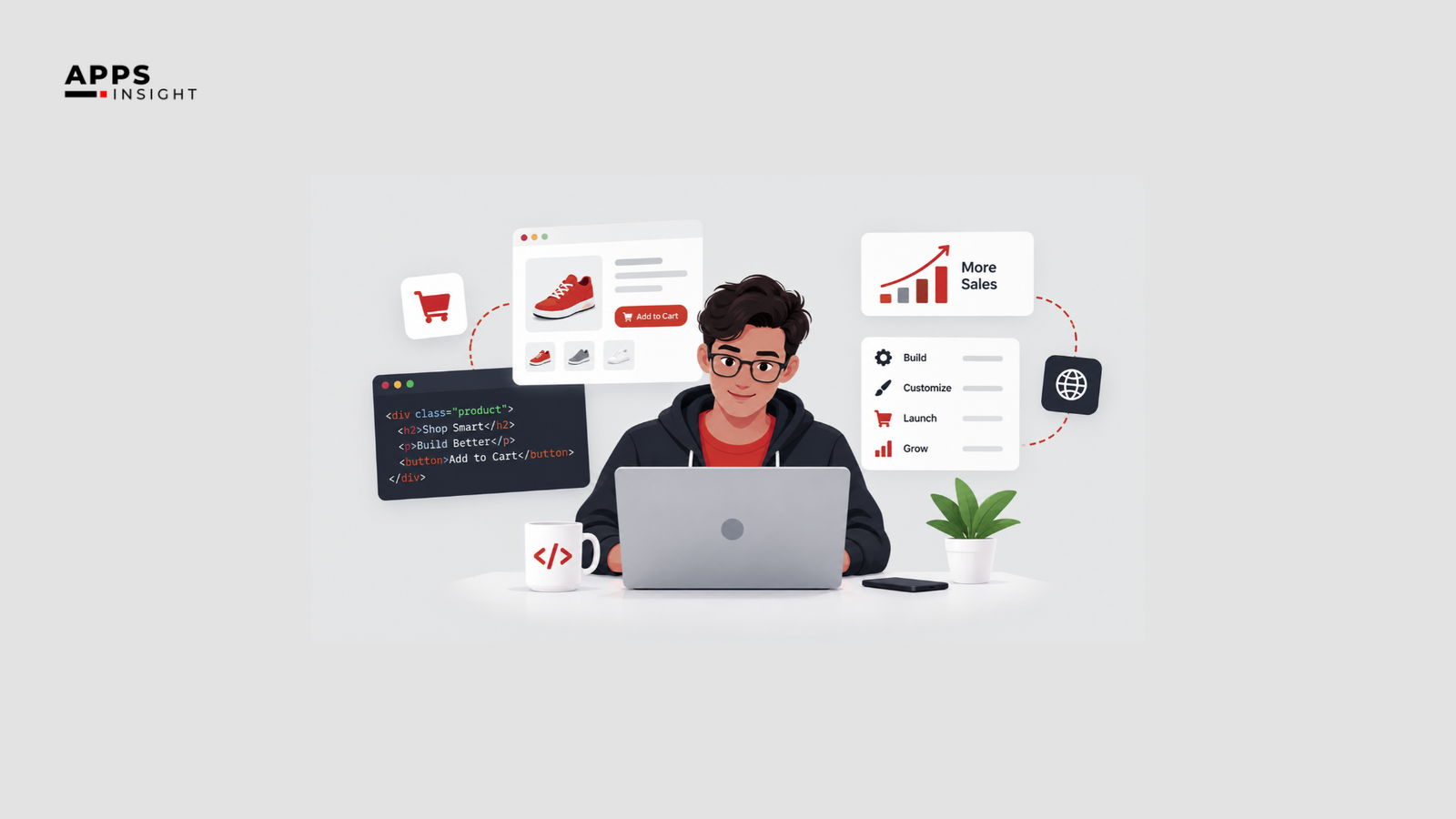
That difference is why more businesses are moving away from ready-made themes and generic plugins. They want a partner who builds around their specific catalogue, customers, and workflows, not around a template’s assumptions. Here is what to evaluate before signing a contract.
Understanding Your E-Commerce Requirements First
Before you talk to any agency, get clear on your own needs. An agency can only design around what you actually tell them. Vague requirements lead to vague proposals.
What to Have Ready Before the Discovery Call
Walking into a discovery call prepared saves time. It also produces sharper, more accurate proposals. Have answers ready for the following:
- Catalogue size, since 50 SKUs is a very different build than 50,000.
- Who your customers are and how they typically shop.
- Expected traffic, including seasonal or promotional spikes.
- Payment methods you need to support.
- Shipping and fulfillment logistics specific to your business.
- Third-party tools you already rely on day to day.
- How much of your current traffic comes from mobile devices.
- Where the business plans to be in two or three years.
Fewer surprises later in the project usually trace back to clearer answers at this early stage.
Technical Capabilities That Match E-Commerce, Not Just Websites
Building a corporate website and building an online store draw on different skills. A partner strong in one is not automatically strong in the other.
Relevant E-Commerce Development Experience
Not all web developers are experts in online retail. If a company primarily develops corporate websites, it may not have deep experience with cart abandonment flows, subscription billing, product filtering, inventory synchronization, or checkout-related issues.
Request a portfolio of previous e-commerce work, not just a general website portfolio. Review product pages, search, navigation, cart behavior, checkout, account areas, and mobile experiences on the sites they have built. A polished homepage does not necessarily indicate a deep understanding of the customer journey from browsing to purchase.
Ask what the partner actually contributed to those projects. Did they handle the architecture and integrations, or only the front-end design? What challenges did they solve? How were performance and security handled? Those questions reveal more about capability than screenshots alone.
It can also help to understand how different development arrangements work before choosing a partner. For example, comparing a dedicated WordPress developer with a freelancer can clarify differences in ongoing involvement, communication, and accountability when a project requires continued development rather than a one-time task.
Customization and Flexibility
A template gets a store online quickly. It also limits you to someone else’s choices about layout, checkout flow, and available functionality. Custom development reverses that relationship. The site gets built around your actual workflows instead of forcing your business into a template’s constraints.
This matters most when your business needs something templates were never built for. Examples include a loyalty program tied to purchase history or a wholesale portal alongside retail. A subscription model layered on top of one-time purchases is another common case. Templates tend to fight these requirements at every step, forcing awkward workarounds instead of a clean fit.
Performance and Website Speed
Slow pages lose sales. A shopper who taps a product page and waits will often simply leave. Ask potential partners directly how they approach page speed. This includes image compression, code efficiency, caching, and hosting choices.
Performance is not a one-time fix, either. It needs ongoing attention as catalogues grow and traffic patterns shift. A partner who treats speed as an ongoing concern is worth more than one who barely mentions it. Treating it as a launch-day checkbox is a warning sign in itself.
Want to know? Cost to Develop a WordPress Website
Integrations, Security, and SEO Foundations
A storefront rarely operates in isolation. It needs to work smoothly with the other systems your business already depends on. It also needs to be built securely from the start.
Working with a web development agency matters most in this part of the build. Generic plugins often create more problems than they solve when systems need to talk to each other.
A custom approach lets a developer design each connection around how your specific systems actually behave. This avoids forcing your workflow through a rigid, one-size-fits-all integration.
Mobile-First E-Commerce Experience
A large and growing share of online shopping now happens on phones. Mobile design cannot be an afterthought bolted onto a desktop layout. It needs to be the starting point.
Pay attention to how a partner handles product discovery on small screens. Thumb-friendly navigation and checkout forms that avoid constant zooming both matter here. If an agency’s own case studies look clumsy on mobile, treat that as a warning sign.
Integrations and Third-Party Systems
Your website usually needs to communicate with several other systems at once. Common examples include payment gateways, CRM software, ERP platforms, inventory tools, shipping platforms, marketing tools, and analytics services.
Every business runs a different combination of these tools. Ask specifically about the systems you already use by name. Do not accept a general assurance that the agency simply “handles integrations.” Ask them to walk through your specific stack by name instead.
Security and Data Protection
Visitors hand over payment details and personal information on your site constantly. Security here is not optional. A serious partner should treat it that way from the first conversation.
Ask directly about the partner’s approach to secure payment processing and data protection. Also ask about ongoing software maintenance, access controls, and backups. You are looking for a clear, specific answer, not vague reassurance.
SEO-Friendly Development
SEO works better when it gets built into the site from the start, rather than added after launch. Site structure, page speed, mobile usability, metadata, and clean URLs are all part of this. Each one is harder to fix once a backend is already built around ignoring it.
This is why it matters to work with a partner who understands these fundamentals from day one. Ask specifically how they structure a site for search engines before development even begins.
Planning for the Long Term
The site that fits your business today may not fit it in three years. A good partner plans for that from the outset, not as an afterthought once growth creates problems.
Scalability and Future Growth
Product ranges expand, traffic increases, and new integrations get added over time. A well-built platform absorbs that growth without needing a complete rebuild every couple of years.
Ask how a prospective partner handles scale in practice. Request examples of clients who grew substantially on the same platform without hitting a wall that forced a costly migration.
Communication and Project Management
Development projects tend to go sideways when communication is inconsistent. Before signing anything, get clarity on timelines, project scope, and how often you can expect updates from the team.
Look for clear pricing, measurable milestones, and documentation you can actually reference later. If a partner cannot offer specifics at this early stage, take note. That pattern is likely to continue once the project is underway.
Post-Launch Support and Maintenance
Launch day is not the finish line. Websites need continuous maintenance, including security patches, bug fixes, and performance tuning. Updates also come up as the business itself changes and grows.
Ask directly what happens after go-live. Some agencies disappear the moment the final invoice is paid. Others stay involved through ongoing updates and iterations. Know which type of partner you are hiring before you sign anything.
Looking for? Webflow Website Development Companies
How to Compare Potential Development Partners
Once you have spoken with a few agencies, compare them against the same fixed list of criteria. Avoid judging each one purely on its own separate pitch.
- Relevant e-commerce portfolio, not just general web design work.
- Technical capabilities that genuinely match your existing stack.
- Clear, specific communication throughout the sales process.
- Transparent, itemized pricing rather than a single vague number.
- A defined, documented development process.
- A real, specific answer on security practices.
- Concrete post-launch support options.
- Client references you can actually contact and speak with directly.
- Evidence the platform has scaled successfully for other clients.
A partner who scores well across all of these criteria is the one worth the investment. Scoring well on just one or two areas is not enough.
Conclusion
Choosing a web development partner is a strategic decision, not a one-off transaction to check off a list. The right team understands your catalogue and your customers. They also understand how your business will evolve over the coming years. That matters more than how the homepage looks on launch day.
Compare every partner against the same measures: experience, flexibility, performance, security, communication, and support after launch. Building a website for an online business works best as a genuine partnership. The right fit tends to show up clearly in the details, not in the pitch.