


Yandex is a decent option for reverse image searches, particularly Yandex.ru, the Russian version of the platform, which often delivers more extensive and accurate results compared to its global counterpart. It can be useful for finding visually similar images, websites, and general image sources across the web.
However, it’s important to understand that Yandex is not specifically designed for advanced face recognition. While it may occasionally detect similar faces, it lacks the precision and specialized algorithms needed to reliably identify individuals or trace their online presence.
If your goal is to identify a person, verify identities, or track image sources across social media and databases, it’s better to rely on dedicated face search tools. These platforms are built with AI-driven facial recognition technology and offer deeper, more accurate insights.
In the sections below, we’ve listed some of the best alternatives to Yandex that are specifically optimized for face search and people identification.
1) Eyematch.ai – Best Yandex Alternative for Face Search
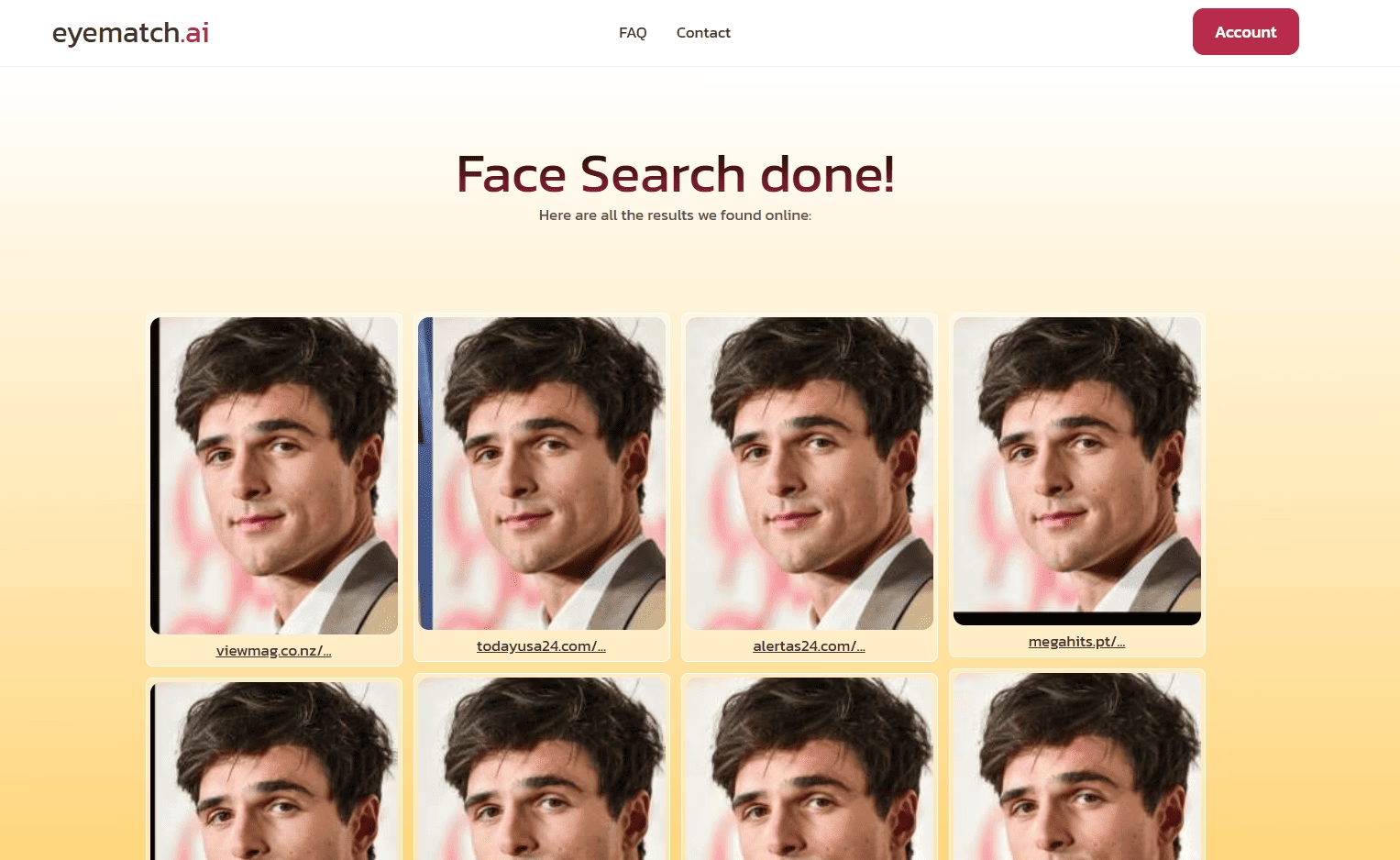
Eyematch.ai is quite new but a highly effective reverse face search tool. You can find exact matches to your photo and see where and whether they have been potentially misused. In seconds, you receive a full list of results with URL sources where the image was originally published. It has a huge index, so there is a high chance that you will find a match.
The Best Use Cases for Eyematch
- Find your photos online
- Find your leaked photos
- Check for a potential catfish
- Detect a scam
Why Use Eyematch.ai for Face Search?
- Highly accurate
- Growing face search index
- Finds exact matches
What can you expect from Eyematch.ai?
It probably does not have any fancy features, but it simply finds face matches and does the job perfectly.
Listed here! Best AI Apps for Image & Reverse Image Search
2) PimEyes – Great Face-Focused Results
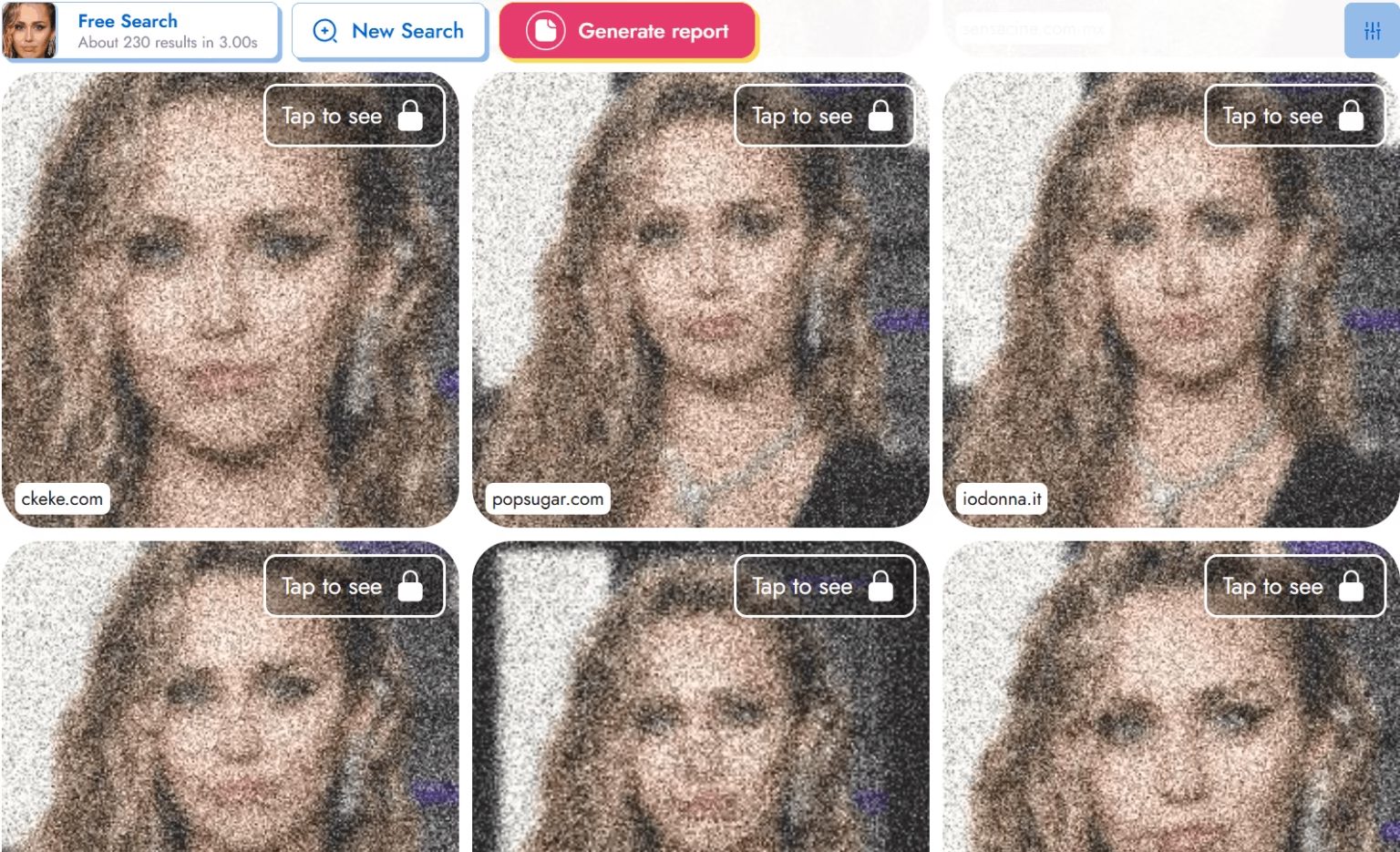
If you’re looking for a more advanced alternative to Yandex, PimEyes stands out as a specialized face search tool. Unlike basic reverse image search engines that rely on visual similarity, PimEyes uses facial recognition technology to analyze unique facial structures, proportions, and key features.
This approach allows it to identify multiple images of the same person, even if the photos differ in angle, lighting, or background. The results are usually well-structured, making it easier to find accurate matches rather than unrelated lookalikes.
PimEyes is particularly useful for tasks like:
- Verifying identities
- Finding duplicate or stolen images online
- Tracking where a person’s photo appears on the internet
However, this level of accuracy comes at a cost. Pricing typically ranges from $15 to $300, depending on the features and access level. While the basic search is limited, unlocking full results, including source links, requires a paid subscription.
Drawbacks of PimEyes
- Full access to results and source links is only available with a paid plan
- Like any AI-based tool, it may occasionally return false positives, especially with similar-looking individuals
- Privacy concerns may arise depending on how the tool is used
3) Bing – Best for Similar and Related Photos

Bing is a powerful and versatile image search engine that works well for finding visually similar images across the web. While it’s not specifically designed for identifying individuals, it excels at discovering related photos, duplicate images, and alternate versions of the same picture.
Similar to platforms like Yandex, Bing focuses on visual pattern recognition. It analyzes elements such as colors, shapes, and composition to match images, making it especially useful for exploring similar content rather than confirming someone’s identity.
Bing Visual Search performs particularly well with:
- Portrait and profile-style photos
- Lifestyle and social media images
- Travel and outdoor photography
- Product and fashion images
Why Use Bing for Image Search?
One of Bing’s key advantages is its clean interface and fast processing speed. The platform offers refined filtering options, allowing users to quickly narrow down results based on relevance, size, or type.
It’s also completely free and easy to use, making it a great alternative when Google or Yandex delivers repetitive or limited results. For broader visual exploration, Bing often provides fresh perspectives and additional sources.
What Can You Expect from Bing Images?
- Access to 100+ visually similar results in a single search
- Strong performance in identifying lookalike faces and similar compositions
- Limited accuracy when searching for unknown or less popular individuals
- Built-in text recognition (OCR) for extracting text from images
- Instant translation features for foreign text within images
- Quick links to original sources and websites
4) Google Lens – Great For Similar Photo Matches and Extra Info
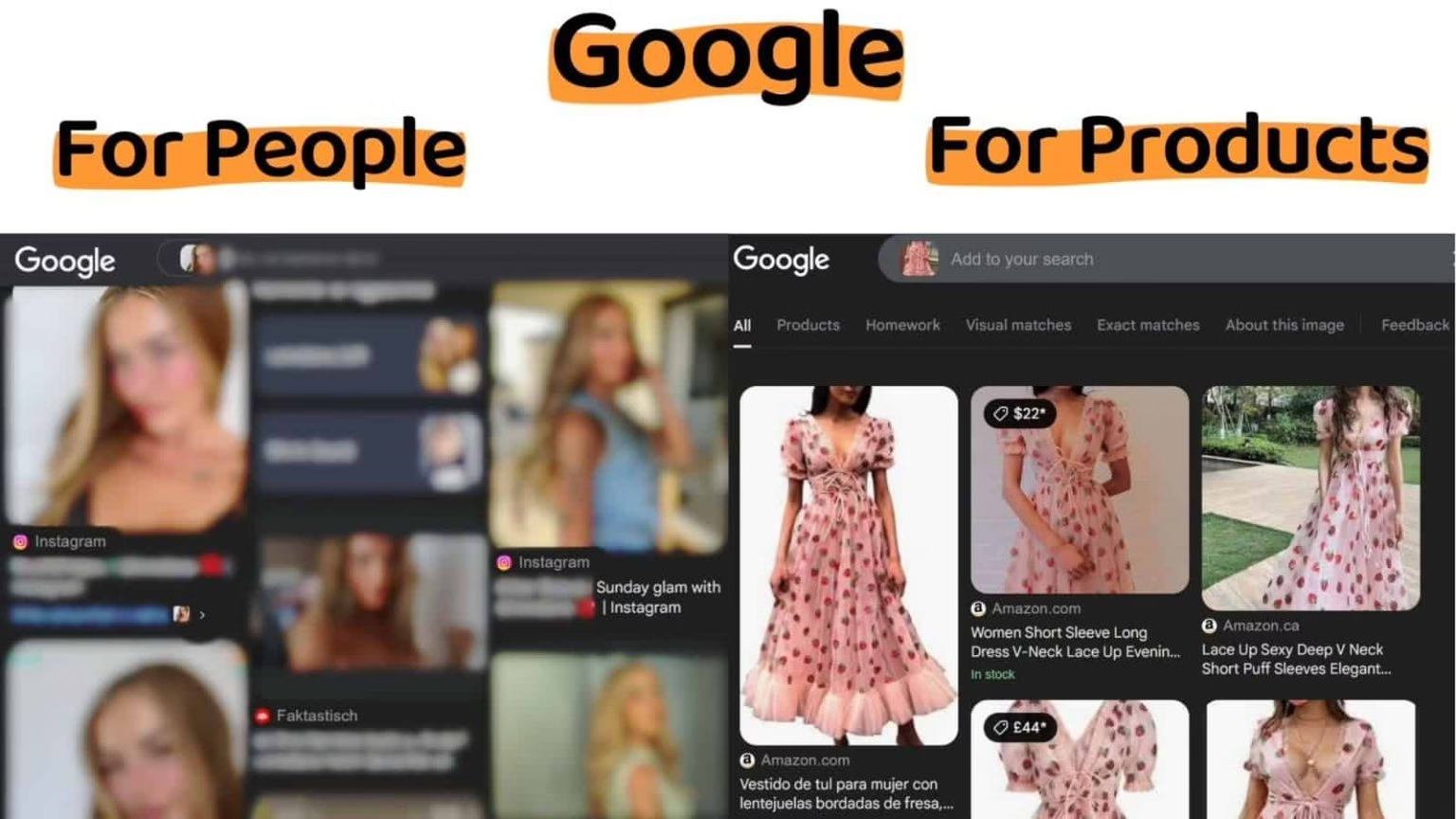
Google Images is not a dedicated face recognition tool, but it excels at identifying visually similar or duplicate images across the web. If a photo has been used on multiple platforms such as news websites, blogs, or social profiles, Google Images can help you trace its origin and discover where it first appeared.
One of its biggest advantages is the additional context it provides. Along with matching images, Google often displays page titles, captions, alt text, and surrounding content. This information can give valuable insights into who the person might be, where the image was taken, or why it was published.
Google Lens, while not highly accurate for identifying unknown individuals, remains a powerful tool for visual search. It is especially useful for verifying image sources, checking authenticity, and gathering background details. In many cases, it performs well when identifying objects, clothing, landmarks, or products within an image.
During testing, Google Images delivered over 50 relevant matches for a single photo, all clearly linked to their original sources. This makes it highly effective for tracking image usage and verifying content across the internet.
Another useful feature is its ability to connect images with related information. For example, searching a person’s name alongside an image can lead to detailed profiles or biography pages. Similarly, when tested with a clothing item, the tool returned accurate shopping and rental links, showing its strength in product recognition.
While it may not replace advanced face recognition platforms, Google Images remains one of the most accessible and practical tools for reverse image search, verification, and research.
We have listed! Best TinEye Alternatives (For Reverse Image & Face Search)
5) Lenso.ai – For Altered and Old Photo Lookups

Lenso.ai is designed to recognize faces even in challenging conditions, including edited, aged, or low-resolution images. It performs well with photos that have been altered using filters or enhancements, making it useful when dealing with imperfect or modified visuals.
Powered by advanced AI facial recognition technology, Lenso.ai analyzes key facial features to identify matches across different sources. This makes it especially helpful for tracking images over time or finding matches for older photos that may have changed in appearance. If you’re trying to locate similar images online or verify identities using past photos, Lenso.ai can be a reliable option.
Key Things to Know About Lenso.ai
- Strong AI capabilities: It can detect faces even in heavily edited or partially altered images.
- Useful for historical matching: Works well when comparing older and newer photos.
- Daily free usage: Offers up to 10 free searches per day.
- Subscription model: Access to detailed source links and full results requires a paid plan starting at around $16.
- Regional limitations: Some features may be restricted depending on your location.
In practical testing, Lenso.ai generated around 20 results per search, with a high level of accuracy. It performed well not only for well-known individuals but also for lesser-known or private profiles, making it a versatile tool for both casual and more advanced face search needs.
6) CopySeeker – Best For Exact Matches

Unlike platforms such as Yandex, which are designed to identify visually similar faces or lookalikes, CopySeeker takes a different approach. It specializes in locating exact matches and duplicate versions of an image across the internet.
Instead of relying on facial recognition or AI-based similarity detection, CopySeeker scans multiple sources to find where the same image has been uploaded, shared, or reused. This makes it particularly useful for tasks like tracking original sources, verifying image authenticity, or detecting content reuse and copyright issues.
If your priority is accuracy in finding the original or identical image, rather than discovering similar faces or variations, CopySeeker is a reliable and efficient choice. It’s especially valuable for journalists, researchers, and content creators who need precise image verification.
The platform offers both free and paid access. Its premium plans provide additional lookup credits, typically ranging from $3 to $15 for up to 200 searches, allowing users to perform more in-depth and frequent image checks.
Looking for? Most Trusted Best Background Check Sites for Accurate Results
How to Get Better Results from Yandex Alternatives
Even though many Yandex alternatives offer strong reverse image and face search capabilities, getting accurate results depends on how you use them. Simply uploading an image isn’t enough—you need a smart approach.
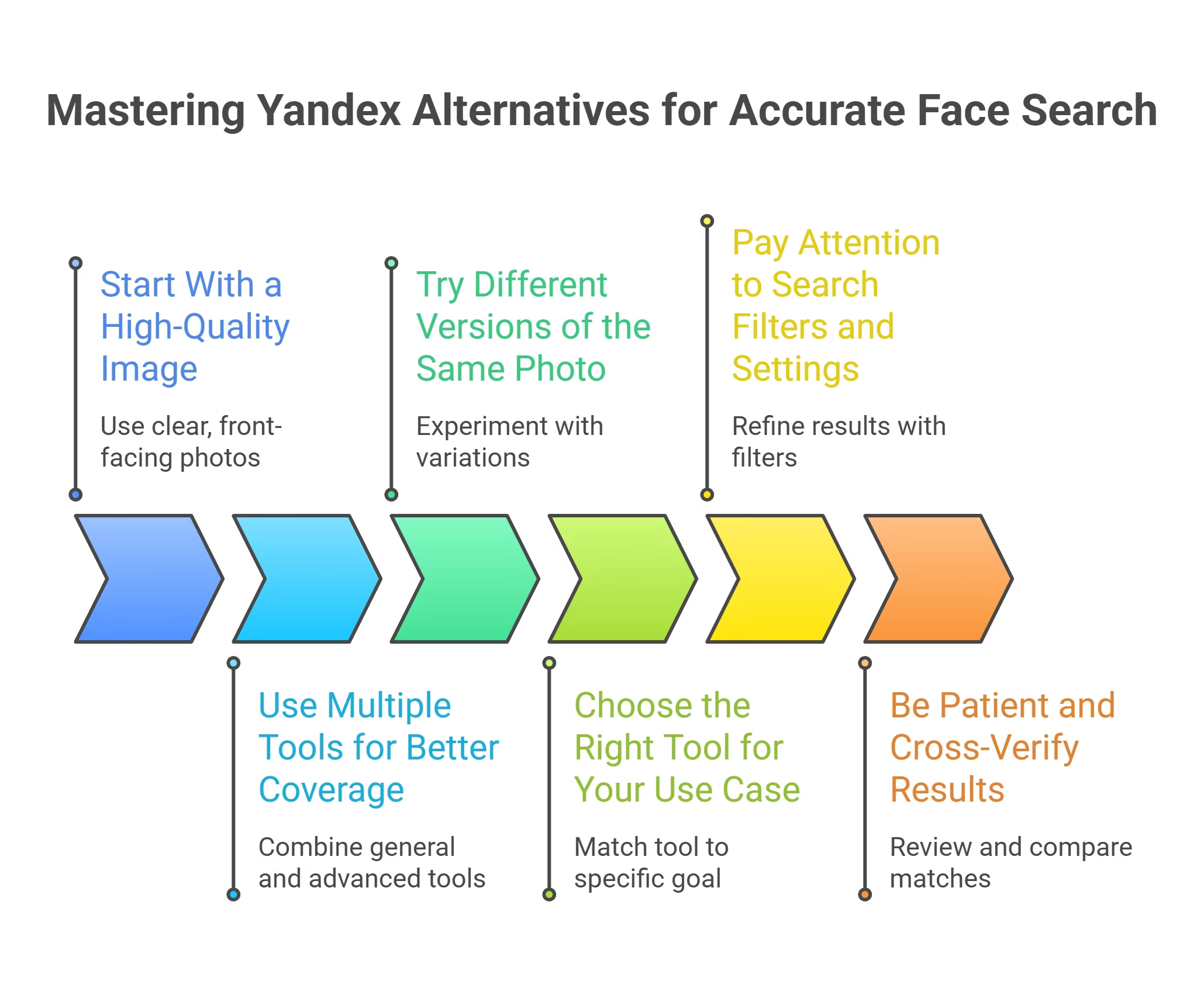
Follow these practical steps to improve performance and get more reliable matches:
1. Start With a High-Quality Image
The foundation of any successful face search is the image itself. Always use a clear, high-resolution photo where the face is easily visible.
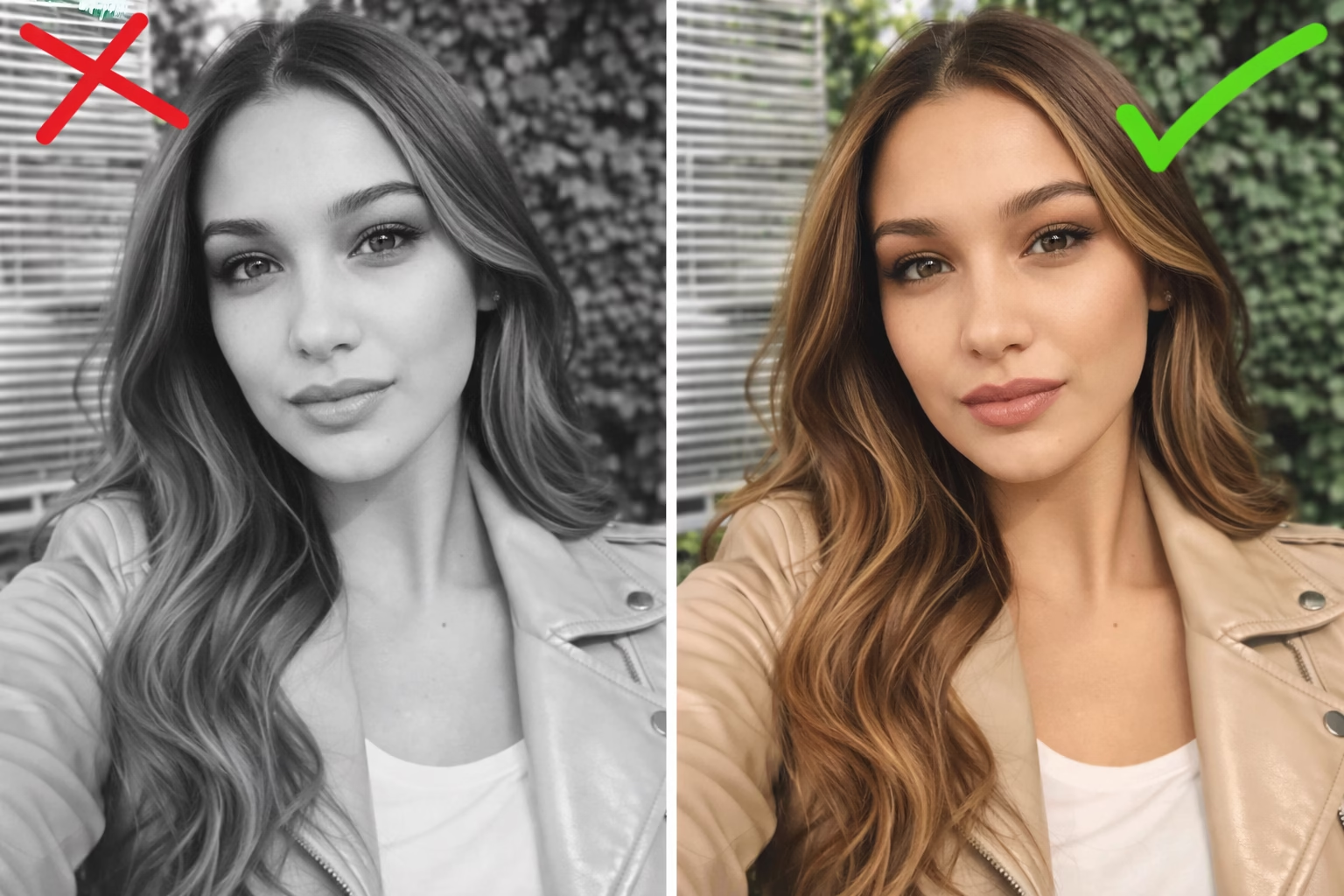
- Choose a front-facing image
- Avoid filters, sunglasses, or heavy shadows
- Ensure facial features are not covered
- Crop the image so the face is the main focus
Tip: If the background is cluttered, remove distractions or use editing tools to enhance clarity.
Remember, even the most advanced tools struggle with poor-quality images.
2. Use Multiple Tools for Better Coverage
No single platform can scan the entire internet. Each tool uses different algorithms and databases, so results may vary.
- Start with general tools like Google or Bing
- Move to advanced face search tools like ProFaceFinder or PimEyes
- Use duplicate detection tools like CopySeeker for confirmation
Combining tools increases your chances of finding accurate and complete results.
3. Try Different Versions of the Same Photo
Small changes can significantly impact search outcomes because algorithms respond differently to variations.
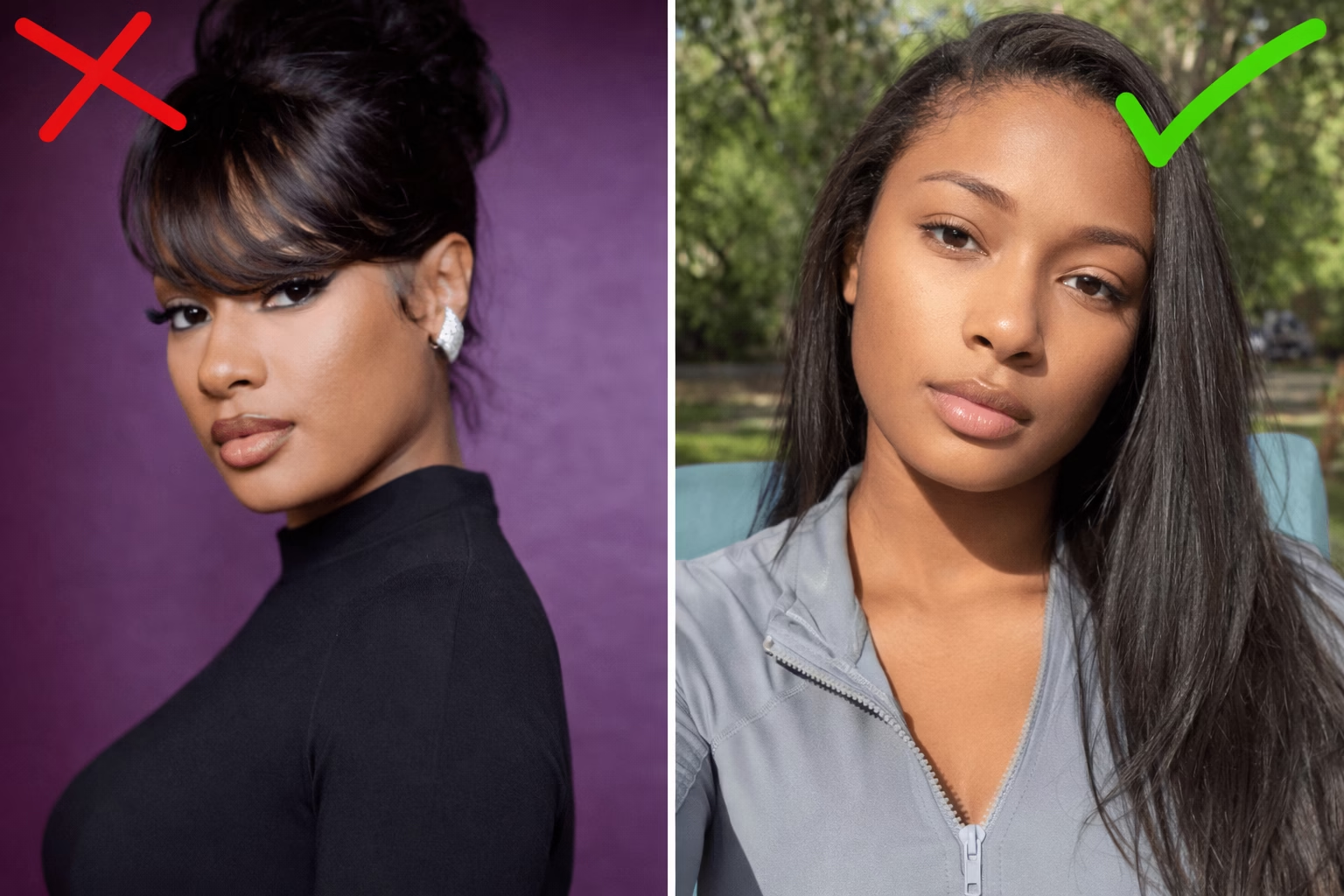
Experiment with:
- Cropped versions (zoomed face)
- Enhanced HD versions
- Images with adjusted brightness or contrast
- Removing background noise
Uploading multiple variations helps trigger better matches across different platforms.
4. Choose the Right Tool for Your Use Case
Different tools perform better depending on the context. Matching the tool to your specific goal improves accuracy.
- Dating or social profiles: Use tools like ProFaceFinder
- Professional or business profiles: Try PimEyes
- Old, edited, or unclear photos: Use AI-powered tools like Lenso.ai
Understanding each tool’s strength helps you avoid wasting time on irrelevant results.
5. Pay Attention to Search Filters and Settings
Many advanced tools offer filters that can refine your results.
- Use filters for similar vs exact matches
- Adjust search regions or sources
- Apply time-based filters for recent images
These options can significantly narrow down results and improve accuracy.
6. Be Patient and Cross-Verify Results
Face search is not always instant or perfect. Sometimes results require deeper analysis.
- Review multiple matches carefully
- Compare facial features manually
- Avoid jumping to conclusions based on one result
Cross-verification ensures more reliable and trustworthy outcomes.
Face search tools are powerful, but they must be used ethically.
- Use them for research, verification, or safety purposes
- Avoid misuse such as harassment, stalking, or privacy violations
- Respect legal and ethical boundaries
Responsible usage builds trust and ensures these tools remain helpful for everyone.
Final Thought
Getting the best results from Yandex alternatives isn’t about the tool alone—it’s about how you use it. By combining high-quality images, multiple tools, and smart search techniques, you can significantly improve accuracy and reliability.
FAQs
What are the best alternatives to Yandex image search for face search?
The best alternatives to Yandex for face search include Eyematch.ai, PimEyes, Lenso.ai, and Bing Visual Search. These tools use advanced AI and facial recognition to deliver more accurate results compared to general image search engines.
Why is Yandex not accurate for face search?
Yandex is designed for general image matching, not advanced facial recognition. It identifies visually similar images but lacks the AI precision needed to accurately recognize faces or verify identities.
Which tool is best for reverse face search online?
Tools like Eyematch.ai and PimEyes are among the best for reverse face search. They analyze facial features using AI and scan large databases to find exact or similar matches across the web.
Can I find someone using a photo online?
Yes, you can find someone using a photo with reverse face search tools. Platforms like PimEyes and Lenso.ai compare facial features with online databases to identify matching images and sources.
Are there free Yandex alternatives for image search?
Yes, free alternatives like Google Lens and Bing Visual Search allow users to find similar images and verify sources. However, advanced face recognition features are usually available in paid tools.
What is the difference between reverse image search and face search?
Reverse image search finds visually similar images based on patterns, colors, and objects, while face search uses AI to analyze facial features and identify the same person across different images.
How accurate are face search tools compared to Yandex?
Face search tools are generally more accurate than Yandex because they use AI-based facial recognition instead of simple visual matching. This allows them to detect the same person even in different conditions.
Which Yandex alternative works best for edited or old photos?
Lenso.ai works best for edited or older photos. It uses advanced AI to detect facial features even in altered or low-quality images, making it useful for historical or modified photo searches.
Can I track where my photos are used online?
Yes, tools like Eyematch.ai and CopySeeker help track where your images appear online. They scan multiple sources and provide links to websites where your photos are published.
How can I improve reverse image search results?
To improve results, use a high-quality image, try multiple tools, upload different versions of the photo, and use filters to refine results. Combining these steps increases accuracy and reliability.