
Lead generation is the backbone of sustainable business development in today’s hyper-competitive digital world. Companies spend billions of dollars each year on strategies to capture qualified prospects, yet most methods yield underwhelming outcomes that drain resources without generating the expected returns.
When performed manually, lead generation takes too long, and the success of each method is less than reliable from one market sector to another. Sales teams waste hours pursuing lost causes, marketing budgets get spent on campaigns that have little or no impact on business outcomes, and conversion rates stall while spending goes up.
Which is why today, we will discuss how AI marketing apps can help you with lead generation.
The AI Revolution in Lead Generation
AI marketing applications address these systemic inefficiencies because they smartly automate the process of identifying prospects, qualifying those prospects, and nurturing them. These sophisticated applications convert raw data on a target market into actionable intelligence that informs decisions at every step of the customer acquisition process.
AI for lead generation is a monumental change from a reactive marketing approach to predictive marketing that identifies opportune moments, even before competing organizations have recognized the opportunity.
Organizations enhance leads with an AI tool that analyzes behavioral patterns, demographic characteristics, and engagement histories to build hyper-targeted campaigns that speak to specific audience segments. Change will thrive once organizations organize SEO and AI to drive lead generation and make AI their lead generation engine instead of their sidekick.
Looking for? Best SAAS Marketing Companies
Why Lead Generation Needs AI?
Traditional lead generation has significant constraints that hinder high performance, regardless of the budget and experience of the team. In this case, manual prospecting leaves leads in poor quality because it is inconducive for analysts to evaluate the large set of data that may be needed to make an appropriately targeted decision based on accurate targeting intelligence.
The marketing teams also too frequently rely on outdated demographic assumptions rather than using real-time behavioral intelligence indicative of actual purchase intent signals.
Wasted ad spend is another key area of challenge because conventional targeting casts a wide net, hoping to identify relevant prospects in a broader audience pool.
Generic messaging allows individual marketers to connect the dots with their own pain points, but it builds high bounce rates and low levels of engagement, compounding the crappy bottom line of urgency inefficiencies.
Poor targeting accuracy is a function of limited data processing capabilities; thus, marketers are unable to recognize able to read the more subtle correlation patterns that are intertwined between customer characteristics and buying behaviors.
Manual segmentation-based methods ignore complex consumer psychology and aren’t able to recognize the nuanced triggers at play that are influencing decision-making processes.
- AI-enhanced marketing leverages browsing weaknesses into competitive advantages through intelligent systems of automation that are continuously adapting based on interaction data. Machine learning algorithms will recognize prospect quality indicators that analysts are blind to while creating qualification benchmarks that lead sales activities towards the most likely opportunity.
- AI-driven digital marketing enables predictive analysis capabilities before there is ever contact with customers by determining customer lifetime value trends before contact is initiated. Insights gained from predictive analysis lead to resource-allocation decisions in a manner that maximizes return on investment while minimizing acquisition costs throughout several channels at once.
- AI-enhanced lead generation tools personalize every touchpoint based on individual prospect profiles that take into account behavioral histories, communication preferences, and engagement patterns. This level of customization favors engagement rates that explode compared to generalized outreach campaigns that are one-size-fits-all and do not have a basis in recipient-specific needs.
- AI-driven lead generation systems perform relentlessly without breaks or management, sustaining engagement with prospects in a way that cannot be delivered through traditional means for extended periods of time. Automating the prospect conversion process eliminates leakage of qualified leads that result from communication gaps that occur between the marketing/sales handoff process.
We have listed! The Best Lead Generation Software for B2B and Startups
Top AI Marketing Apps for Lead Generation
AI lead generation tools are helping businesses move beyond manual prospecting into data-driven, automated, and highly personalized outreach. Below, we break down some of the best AI-powered platforms you can use to supercharge your pipeline.
1) Klenty: Best for Multichannel Outreach
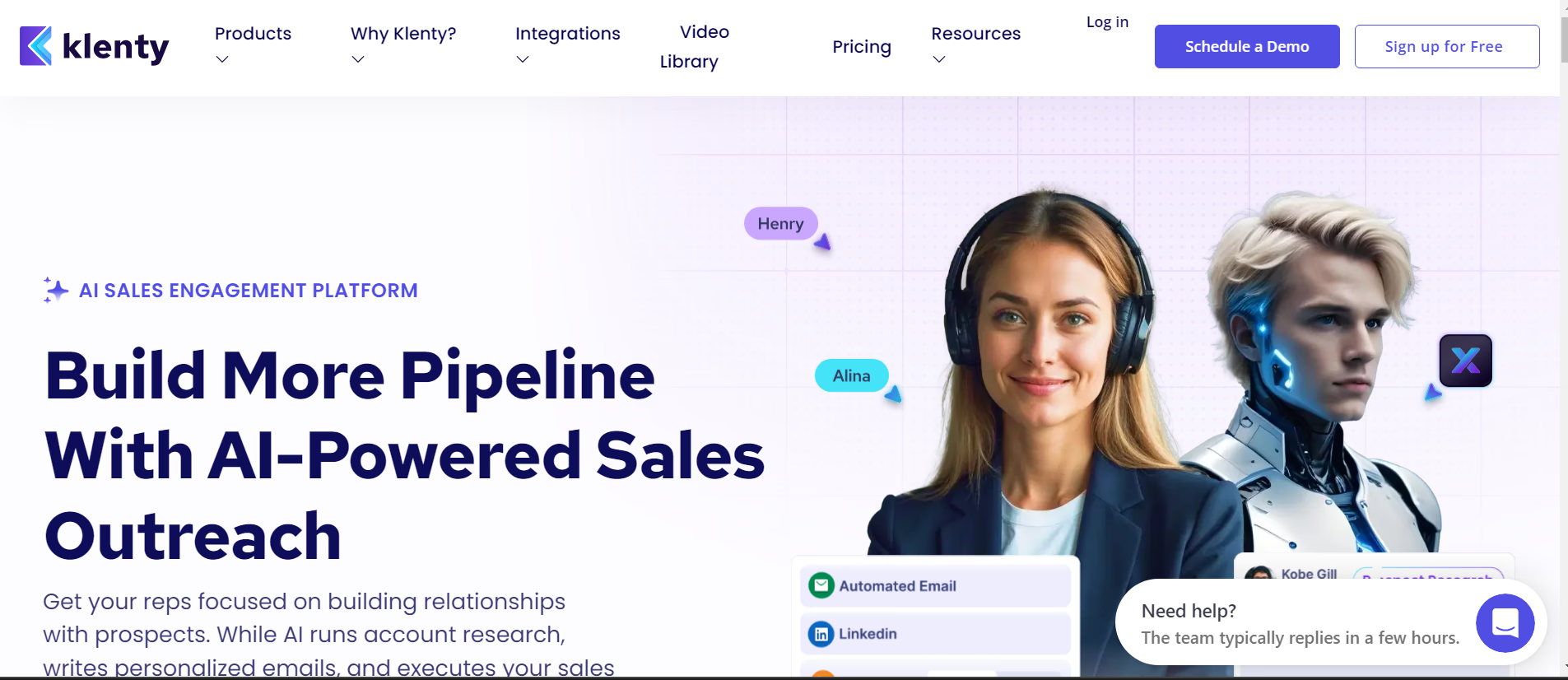
Klenty is a powerful AI-driven sales engagement platform that allows teams to automate outreach across multiple channels like email, LinkedIn, SMS, and calls. It focuses on personalization at scale, ensuring prospects feel like they’re getting one-on-one communication, even in automated campaigns. Its AI features optimize send times, craft tailored sequences, and prioritize high-intent leads.
Core Features
- Multichannel outreach (email, LinkedIn, calls, SMS)
- AI-powered personalization and send time optimization
- Automated workflows for follow-ups
- Advanced analytics and reporting
- CRM integrations with Salesforce, HubSpot, and more
Who is it for?
Sales teams and businesses looking to scale personalized outreach across multiple channels.
Pros and Cons of Klenty
| Pros | Cons |
|---|---|
| Supports multiple outreach channels | Slight learning curve for beginners |
| Strong CRM integrations | Higher-tier features cost more |
| Great for personalization at scale | Limited native AI copywriting support |
Pricing
Starts at $50/month per user, with higher tiers offering advanced features and integrations.
Looking for? Best SaaS Marketing Agencies In USA
2) Clay: For Finding High-Intent Leads
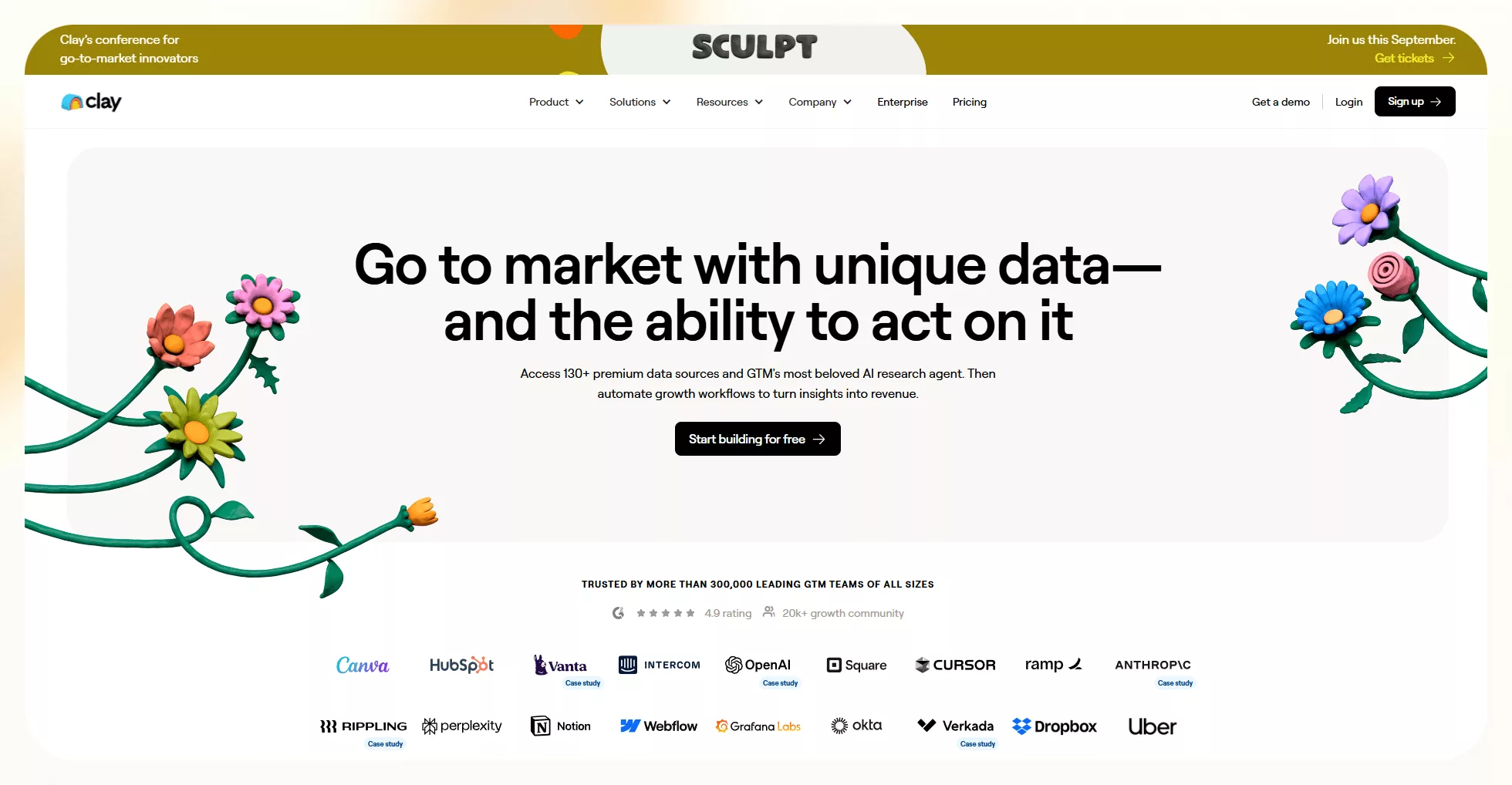
Clay is an AI-powered prospecting tool that helps identify and engage high-intent leads using data enrichment and advanced segmentation. With Clay, teams can automate workflows to filter out irrelevant contacts and focus only on prospects showing strong buying signals.
Core Features
- AI-based lead enrichment
- Smart filtering for high-intent signals
- Custom workflows for prospect qualification
- Integration with CRMs and outreach tools
- Real-time data updates
Who is it for?
Marketers and SDR teams focused on high-quality, intent-driven lead targeting.
Pros and Cons of Clay
| Pros | Cons |
|---|---|
| Excellent at filtering high-intent leads | Can feel complex to set up |
| Strong integrations | Pricing not ideal for small businesses |
| Real-time updates | Smaller dataset compared to global providers |
Pricing
Plans start around $149/month, scaling with team size and usage.
3) Seamless.AI: Great at Finding Fresh Data
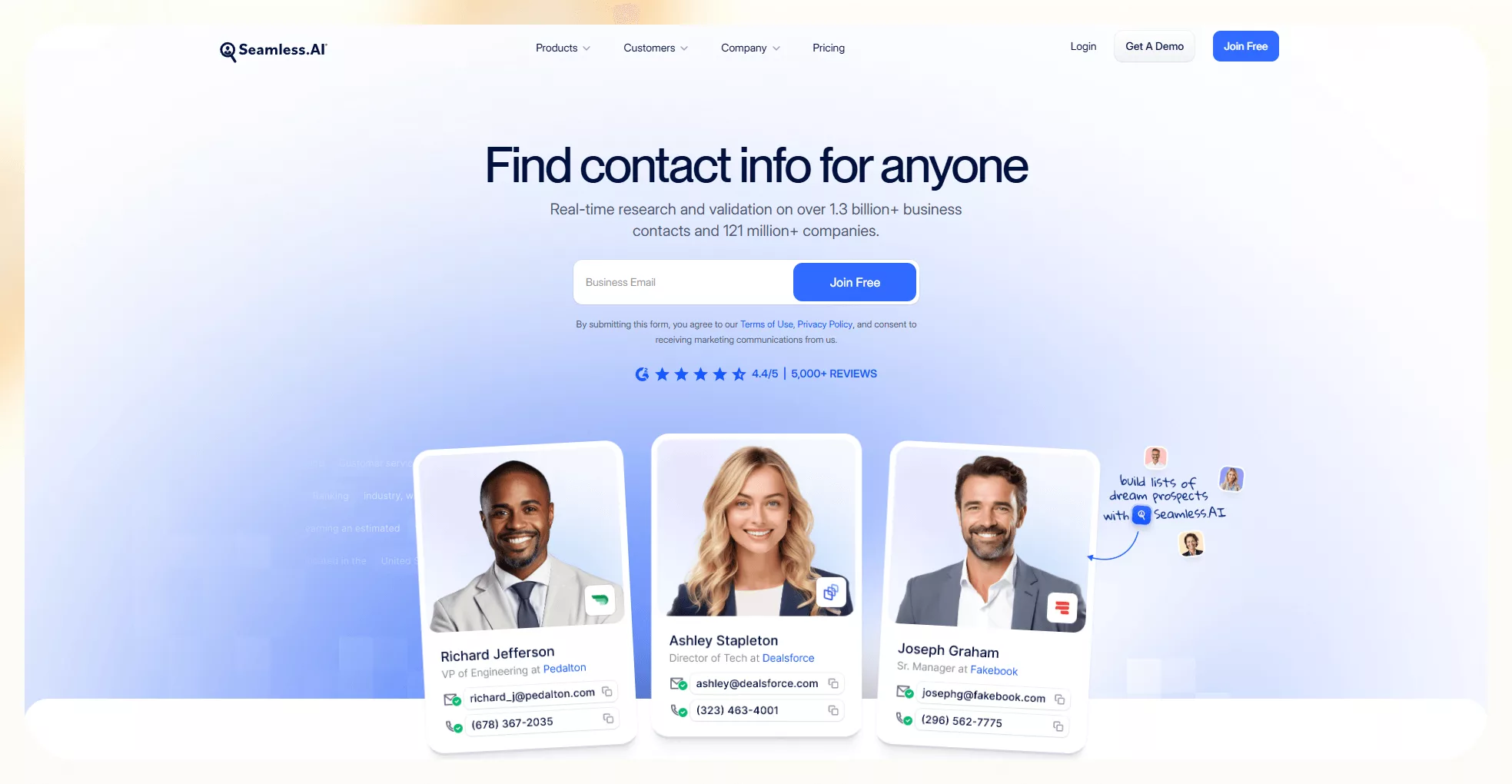
Seamless.AI is designed to provide businesses with real-time, verified contact data. Using AI, the platform updates databases continuously so you always have access to the freshest leads. It integrates seamlessly with sales workflows and is particularly useful for outreach campaigns requiring verified email and phone data.
Core Features
- AI-driven real-time data updates
- Verified phone numbers and email addresses
- Chrome extension for quick prospecting
- CRM integrations (Salesforce, HubSpot, Zoho, etc.)
- List-building automation
Who is it for?
Sales reps, SDRs, and businesses looking for the most up-to-date prospect data.
Pros and Cons of Seamless.AI
| Pros | Cons |
|---|---|
| Constantly refreshed data | Data accuracy can vary regionally |
| Integrates with major CRMs | Some features behind higher-tier plans |
| Easy Chrome extension | Customer support can be slow |
Pricing
Pricing starts at $147/month with enterprise options available.
4) Cognism: Good for Retrieving Compliant Data
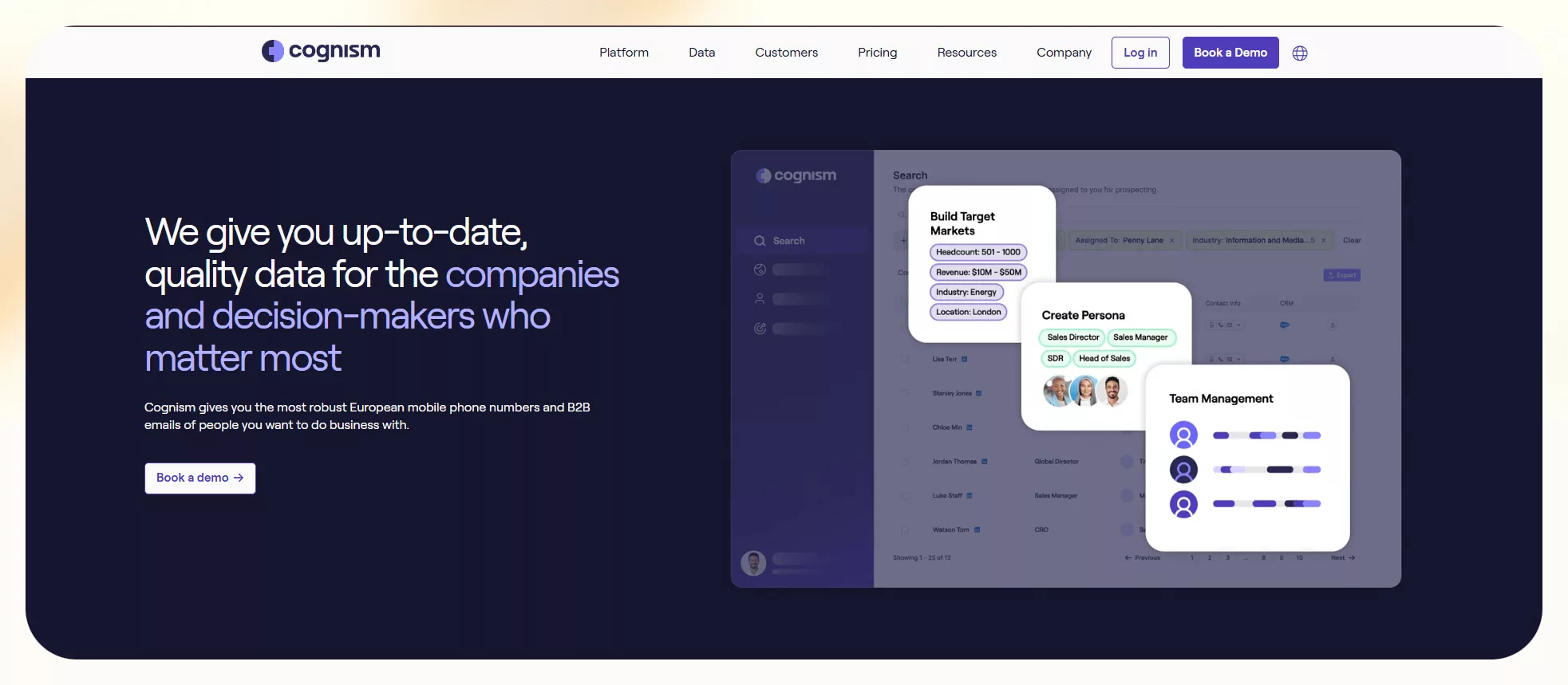
Cognism is a leading AI-powered data provider that emphasizes GDPR and compliance-first data sourcing. It specializes in global B2B contact data, making it a reliable choice for businesses that operate across multiple regions and require high data integrity. Its compliance standards ensure teams can scale outreach without legal risks.
Core Features
- GDPR and CCPA-compliant data sourcing
- Global B2B database with millions of contacts
- AI-driven intent data and sales triggers
- Chrome extension for prospecting
- CRM integrations with HubSpot, Salesforce, etc.
Who is it for?
Enterprises and sales teams that need compliant, large-scale lead data for outreach across regions.
Pros and Cons of Cognism
| Pros | Cons |
|---|---|
| Highly compliant data sourcing | Premium pricing |
| Global reach with accurate B2B data | Steeper learning curve |
| Advanced intent data | Smaller SMB focus |
Pricing
Custom pricing available upon request, generally enterprise-level.
5) ZoomInfo: Best for Larger Organizations
ZoomInfo is one of the most recognized platforms for enterprise lead generation, combining AI-powered data intelligence with advanced sales and marketing tools. It offers a massive, verified database of decision-makers and integrates with multiple enterprise systems.
Core Features
- Huge verified B2B database
- Intent signals and AI-driven insights
- Advanced company profiles and org charts
- Workflow automation and CRM sync
- Integrations with Salesforce, Marketo, HubSpot, etc.
Who is it for?
Large organizations and enterprises that need advanced data intelligence and global reach.
Pros and Cons of ZoomInfo
| Pros | Cons |
|---|---|
| One of the largest B2B databases | High cost for smaller businesses |
| Great enterprise integrations | Overwhelming features for new users |
| Strong intent data and AI insights | Data occasionally outdated |
Pricing
Enterprise pricing on request, generally premium-level.
Looking for? Top Digital Marketing Companies
6) Leadzen.ai: Great for Finding Leads Based in India
Leadzen.ai is a smart lead generation platform designed specifically for the Indian market. It offers region-specific targeting, enabling businesses to access high-quality local leads with AI-powered enrichment and filters.
Core Features
- AI-powered lead search and filters
- Accurate Indian business and consumer data
- Verified contact information
- Automated workflows
- Real-time updates and enrichment
Who is it for?
Businesses targeting Indian customers and companies, especially for localized campaigns.
Pros and Cons of Leadzen.ai
| Pros | Cons |
|---|---|
| Focused on Indian market | Limited global reach |
| Verified local data | Feature set less advanced than global tools |
| Affordable pricing | Smaller integrations list |
Pricing
Starts at around ₹3,000/month, depending on data and usage.
Do you know? How Much Does It Cost To Promote A Mobile App?
7) Outplay: Good for Sales Sequences
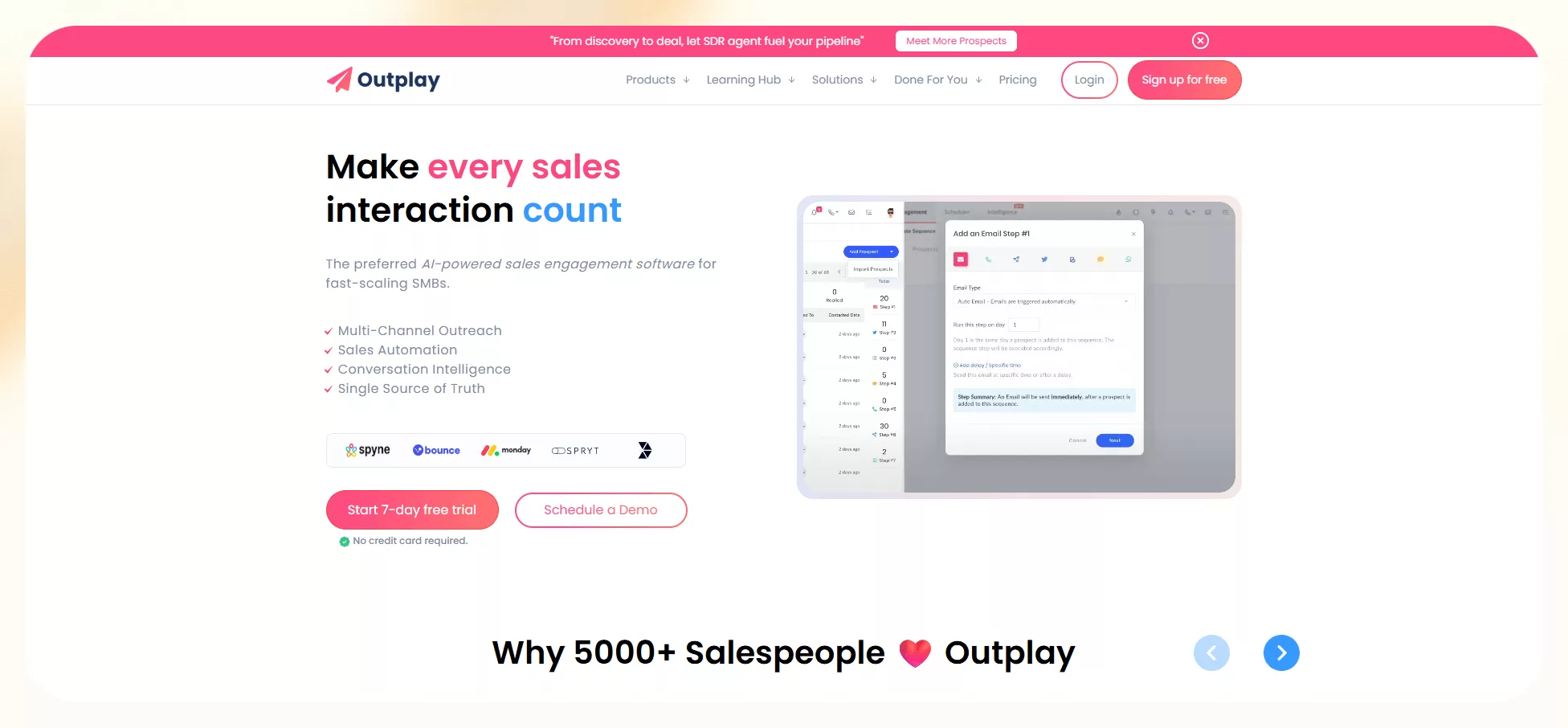
Outplay is an AI-powered sales engagement platform that specializes in multi-step outreach sequences. It allows sales reps to manage cadences across email, calls, and LinkedIn while tracking engagement in real time.
Core Features
- AI-driven multichannel sales cadences
- Email, calls, SMS, and LinkedIn outreach
- Real-time analytics and reporting
- Playbooks and templates for SDRs
- CRM integration with HubSpot, Salesforce, and Pipedrive
Who is it for?
Sales development teams that need to streamline and optimize multi-touch prospecting sequences.
Pros and Cons of Outplay
| Pros | Cons |
|---|---|
| Intuitive multi-touch cadences | Learning curve for new SDRs |
| Affordable compared to competitors | Limited AI personalization features |
| Great CRM integrations | Limited global database |
Pricing
Starts at $99/month per user.
8) Instantly.ai: For B2C Deliverability
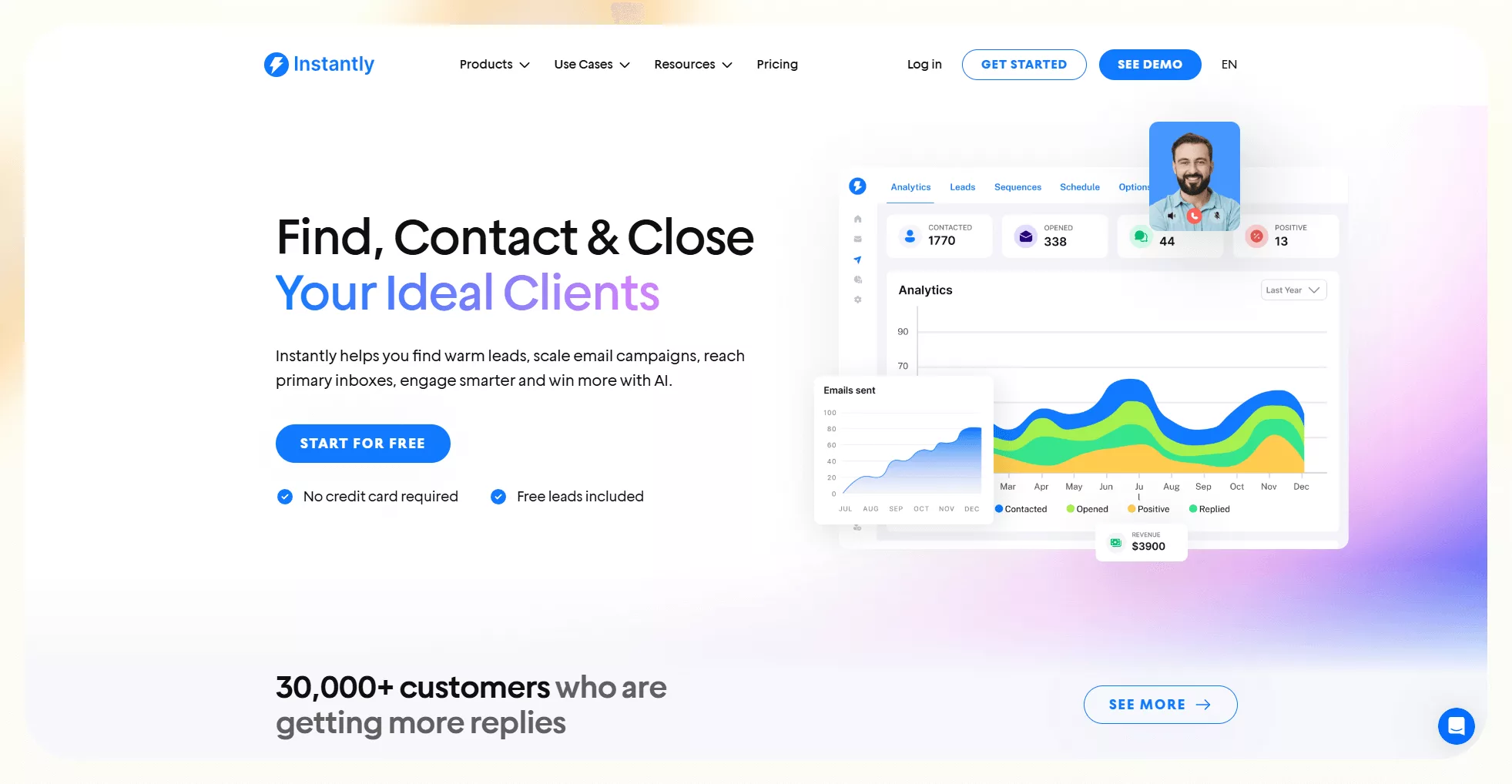
Instantly.ai focuses on cold email deliverability—making sure outreach emails land in inboxes, not spam folders. With AI-driven deliverability optimization and scaling features, it’s particularly strong for B2C and high-volume outreach campaigns.
Core Features
- AI-powered deliverability optimization
- Email warm-up automation
- Bulk outreach campaigns at scale
- Inbox rotation to avoid spam filters
- Real-time deliverability analytics
Who is it for?
B2C businesses, startups, and agencies running large-scale cold email campaigns.
Pros and Cons of Instantly.ai
| Pros | Cons |
|---|---|
| Excellent deliverability rates | Limited beyond email outreach |
| Affordable and scalable | Not ideal for B2B targeting |
| Easy-to-use dashboard | Fewer integrations than competitors |
Pricing
Starts at $37/month, scaling with volume.
Want to know? Growing Social Media Platforms In The US
9) RocketReach: Good for AI-Authenticated Business Intelligence
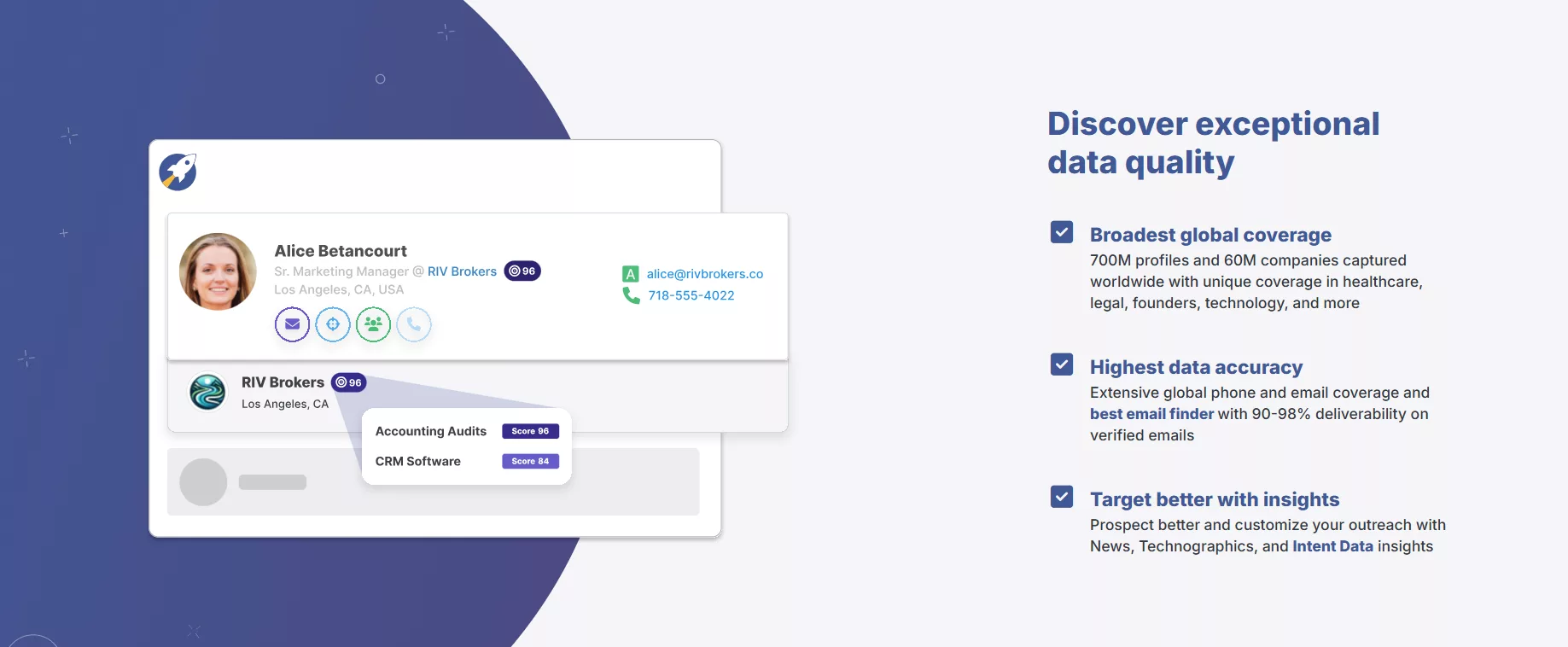
RocketReach combines AI-powered prospecting with verified business intelligence. It helps businesses find and authenticate emails, phone numbers, and social links with a high level of accuracy.
Core Features
- AI-verified contact data
- Business intelligence reports
- API access for data enrichment
- Chrome extension for quick prospecting
- Integrations with CRMs and ATS systems
Who is it for?
Recruiters, marketers, and sales teams needing highly verified business intelligence data.
Pros and Cons of RocketReach
| Pros | Cons |
|---|---|
| Highly accurate data | Can be expensive at scale |
| Easy integrations | Limited bulk enrichment |
| Trusted by recruiters and sales | UI can feel dated |
Pricing
Starts at $39/month, with higher-tier plans for teams.
10) UpLead: Great for Accurate Lead Data
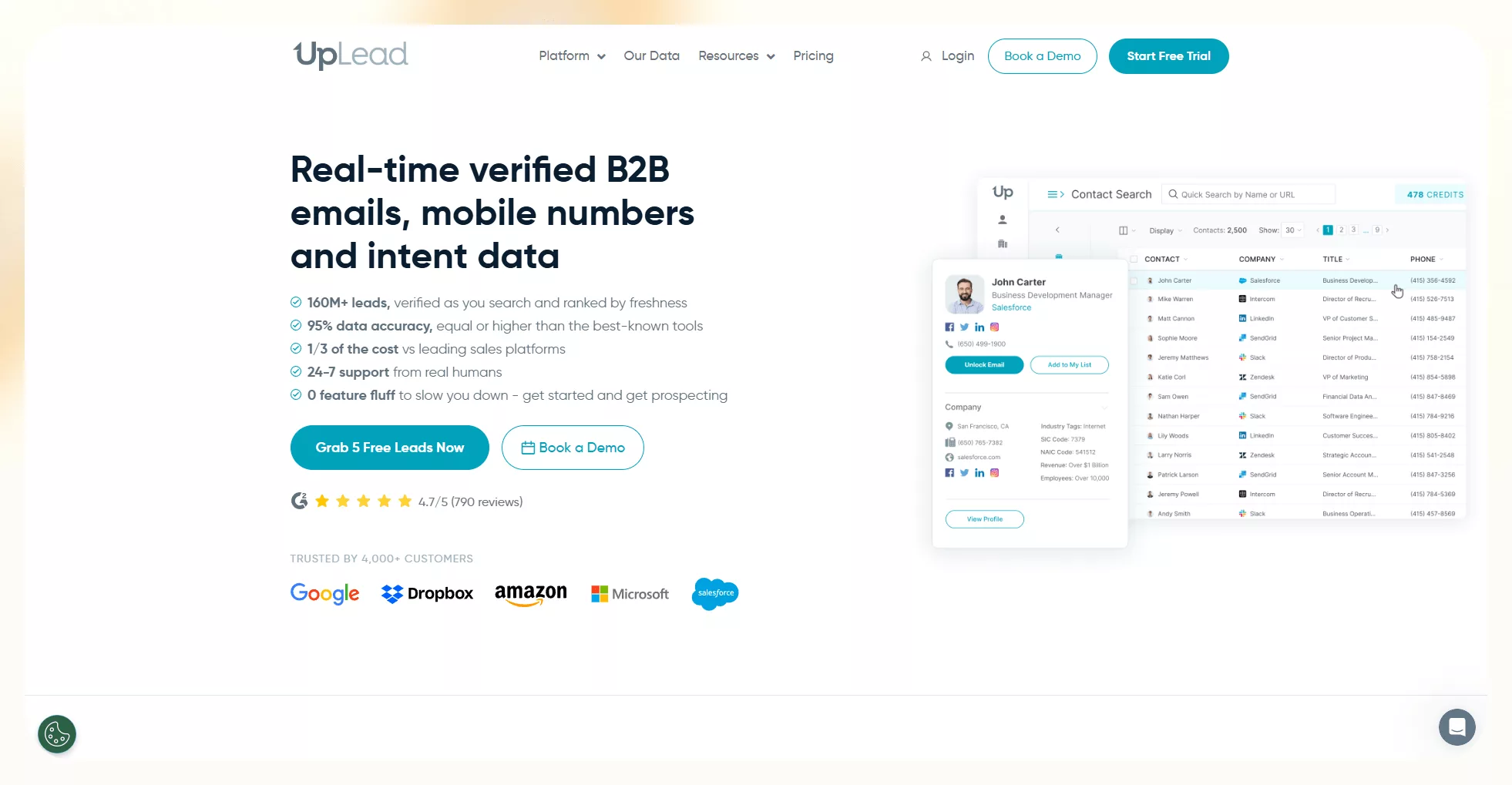
UpLead is a B2B lead generation tool that emphasizes data accuracy. It claims 95%+ verified data and allows businesses to filter leads by multiple attributes, making it ideal for precise targeting.
Core Features
- Verified B2B contact data
- 50+ filters for advanced prospecting
- Real-time email verification
- Chrome extension for LinkedIn prospecting
- CRM integrations with HubSpot, Salesforce, etc.
Who is it for?
Sales and marketing teams that value highly accurate, verified data for targeted outreach.
Pros and Cons of UpLead
| Pros | Cons |
|---|---|
| High data accuracy | Smaller database than ZoomInfo |
| Great filtering options | Pricing higher than some competitors |
| Strong CRM integrations | Limited intent data |
Pricing
Plans start at $99/month.
11) Reply: Good for Email Marketing
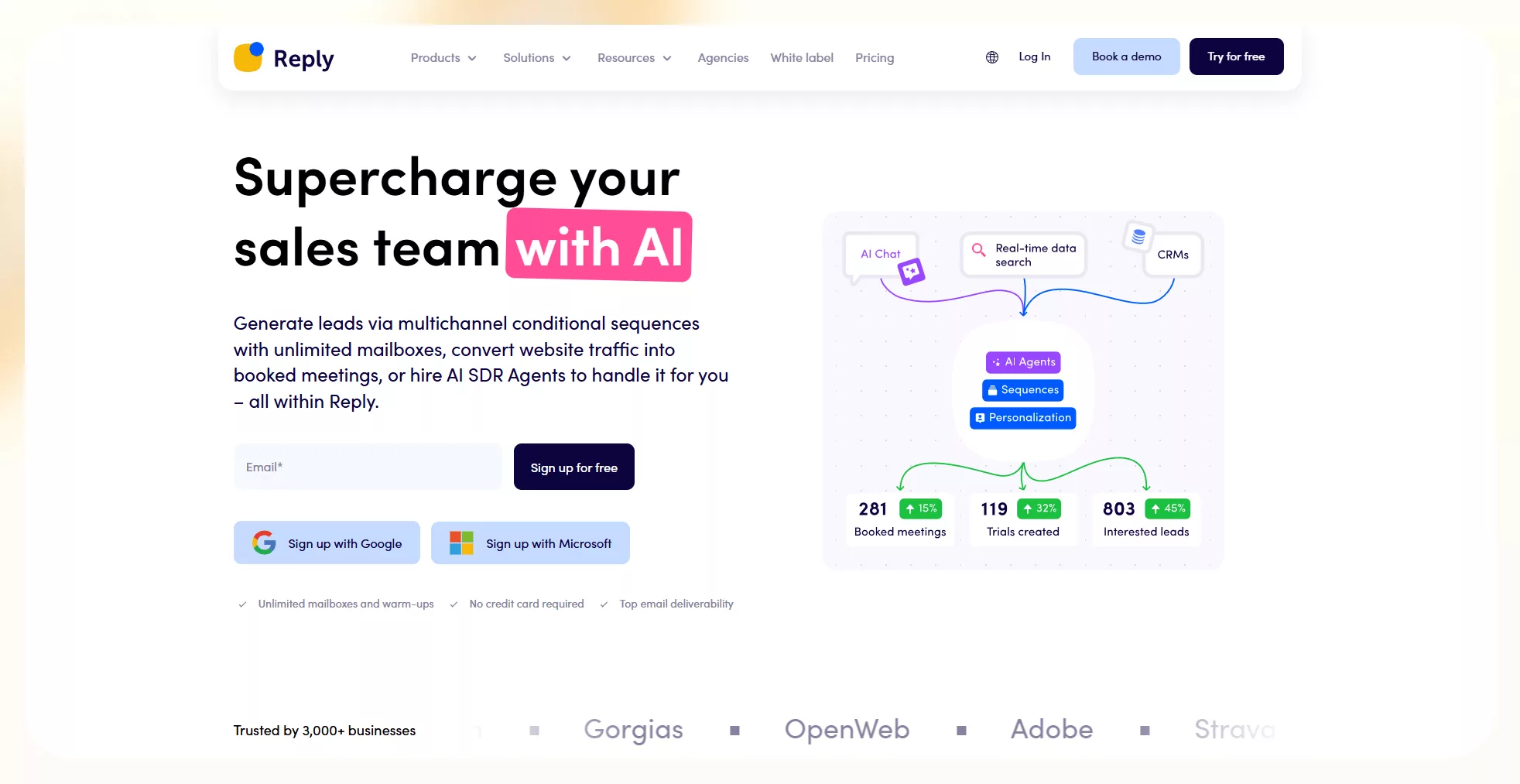
Reply is a sales engagement platform that uses AI to streamline email outreach and marketing automation. With AI-driven copy suggestions, personalization, and multichannel capabilities, Reply helps teams manage campaigns at scale.
Core Features
- AI-powered email personalization and suggestions
- Multichannel outreach (email, LinkedIn, calls)
- Automated sequences and workflows
- Performance tracking and A/B testing
- CRM and Zapier integrations
Who is it for?
Sales and marketing teams focused on personalized email campaigns and outbound prospecting.
Pros and Cons of Reply
| Pros | Cons |
|---|---|
| Strong email automation | Limited database access |
| AI-powered personalization | Higher learning curve for teams |
| Flexible workflows | Some advanced features in higher tiers |
Pricing
Starts at $60/month per user, with add-ons available.
Comparing the Best AI Lead Generation Tools
Choosing the right AI lead generation tool can feel overwhelming—especially when every platform promises better data, smarter outreach, and faster conversions. The truth is, not every tool is built for the same audience or business size. Some shine at multichannel outreach, while others specialize in data accuracy, deliverability, or compliance.
To help you cut through the noise, we’ve created a side-by-side comparison table of the top AI lead generation apps. This quick overview highlights each tool’s best use case, key features, pricing, and ideal users, so you can instantly spot which one fits your business needs.
| Tool | Best Use Case | Core Features (Highlights) | Pricing (Starting) | Ideal For |
|---|---|---|---|---|
| Klenty | Multichannel outreach | Email, LinkedIn, calls, SMS automation; CRM sync; analytics | $50/mo per user | Sales teams scaling outreach |
| Clay | Finding high-intent leads | AI-based enrichment; real-time filtering; workflows; CRM integration | $149/mo | SDRs and marketers targeting quality leads |
| Seamless.AI | Fresh, verified data | Real-time updates; verified emails & phone; Chrome extension | $147/mo | SDRs & sales reps needing updated data |
| Cognism | Compliant global data | GDPR/CCPA compliance; intent data; Chrome extension; CRM sync | Enterprise pricing | Enterprises needing compliant B2B data |
| ZoomInfo | Large organizations | Huge B2B database; org charts; AI intent signals; automation | Enterprise pricing | Large organizations & enterprises |
| Leadzen.ai | Leads in India | Local business/consumer data; AI-powered search; workflows | ₹3,000/mo (~$36) | Businesses targeting Indian market |
| Outplay | Sales sequences | Multichannel cadences; analytics; playbooks; CRM integrations | $99/mo per user | SDRs needing structured outreach |
| Instantly.ai | B2C deliverability | AI deliverability optimization; inbox rotation; email warm-up | $37/mo | B2C businesses & agencies running cold emails |
| RocketReach | AI-authenticated business intelligence | Verified contacts; BI reports; API enrichment; Chrome extension | $39/mo | Recruiters & sales teams needing verified BI |
| UpLead | Accurate lead data | 95% verified data; advanced filters; CRM sync; real-time verification | $99/mo | Sales teams needing precise targeting |
| Reply | Email marketing & automation | AI personalization; multichannel outreach; A/B testing; workflows | $60/mo per user | Sales & marketing teams running email campaigns |
Read once! App Marketing Strategies for a Successful Launch
Types of AI Marketing Applications for Smarter Lead Generation
Predictive Lead Scoring
AI lead scoring platforms assess prospect quality using proprietary algorithms to respond to hundreds of non-verbal behavioral indicators, such as clicks, mouse movements, or whether a prospect opened a marketing email. The platform uses historical performance data to assign a numerical value to a prospect based on their likelihood-to-convert probability – in other words, their likelihood to close based on the similar behaviors of people who had closed in the past.
Sales teams will receive priority mailings with prospects due to the AI scoring them on their chances to close, and so the team can maximize its efforts on the prospects with the highest potential of success.
Machine learning models continue to build upon the original scoring effectiveness, feeding off feedback from closed deals, and predicting which of the original signals correlate to the best chance to close. This evolutionary process means that they will always be better and better every day, rather than qualification criteria becoming obsolete quickly.
Predictive scoring all but removes the guesswork from the lead qualification process. It creates objective measurements that outpace gut reactions, and there is no more guesswork in terms of revenue forecasting. Now, I understand the statistical probability relating to each category prospect during the sales qualification process.
AI Chatbots & Virtual Assistants
AI chatbots for lead generation collect prospect information on first visits to your website while your representatives are unavailable. These smart systems interact with website visitors using a conversational interface that mimics a human experience as they collect information for qualification.
In addition, the chatbot’s ability to respond leads is scalable and online 24/7 – you can be confident that any prospect who is interested will not leave your website without providing their contact information.
Virtual assistants will perform the same function for routine inquiries. They will free your sales team’s time that would typically be spent at the earlier stages of qualification, so that their attention can be spent on high-value prospects. The chatbot conversation can also direct qualified leads to an appropriate team member if their interpretation deems human contact preferable.
The advanced chatbots use natural language processing, which harnesses the ability to understand the context of the inquiry and intent rather than just matching keywords and setting conditions for predetermined responses. This fine-tuning allows advanced chatbots to have human-like conversations that build rapport while using the opportunity to collect prospect intelligence.
The integration capabilities of chatbots allow this information to be automated into customer relationship management systems, where the lead information is pulled into existing workflows with no manual entry of data.
AI Email Marketing Tools
The use of AI in email marketing applications is now providing personalized drip campaigns by adjusting the message content based on the engagement history of the individual recipients. It also identifies temporal trends that create the best sending times for these specific prospects, based on when the industry observes higher interaction rates for email. The applications continue to test the subject line with algorithms identifying the greater open rates associated with certain wording language patterns.
- Dynamic Content insertion provides the growing leaps to personalizing email messages beyond just names (which are helpful), but with industry references, specifics referring to the geographical context, and specific behavioral triggers that genuinely demonstrate we understand the situation the recipient is in. The depth of personalization created will yield a much higher response when compared to the generic templates in place.
- The automated follow-up sequences allow for timing and messaging to be adjusted based on actions or inaction by the prospect, automatically nurturing a relationship but without overrunning the recipient. When lead scoring is integrated into the applications, the email systems can adjust the intensity of the campaigns depending on the level of qualification for a prospect, which can change over time.
- Deliverability optimization takes identifying reputation metrics, such as bounce rates, and ensuring content does not appear spammy, to develop sending patterns relevant to your email service provider/company to ensure optimal messages are received.
Social Media & Ads Optimization
AI advertising platforms drive performance through constant iterations of creative tests, audience segments, and bidding models. The systems shift budgets to higher-performing combinations, which will utilize automated processes to pause poorly performing elements.
With AI advertising for leads, you do not have to guess how to optimize campaigns/manually optimize your campaigns because it optimizes campaigns with ongoing data-driven actions that respond to campaign optimizations.
- Targeting audience precision will improve with machine learning algorithms that are able to find prospects exhibiting similar behaviour to your existing customers. Lookalike audiences can increase the target audience prospects while ensuring you reach customers who would not have been considered using traditional or narrow demographic targeting methods.
- Creative optimizations testing enables testing of headlines, images, call-to-action buttons, and landing page elements simultaneously. Statistical significance tests will be calculated to determine if performance improvements are valid to warrant changing.
- Campaigns can be coordinated across multiple platforms or channels to ensure the messaging is consistent, and improve budget allocation of advertising based on relative performance metrics like cost-per-acquisition.
Benefits: How AI Marketing Apps Skyrocket Your Leads
The best quality leads will be generated when the intelligent filtering systems disqualify leads before they enter the salesperson’s funnel. AI marketing applications will identify the signals of genuine purchase intent, which differentiates those who are serious from those who are merely window shopping.
When quota roles are qualified correctly, it will take less time and effort to pursue dead-end timelines, which ultimately improves closing rates through the overall sales funnel, as opposed to continually fumbling at each stage to close multi-touch sale processes.
AI marketing applications will better enable targeting to effectively deliver a focused message directly to the segmented audience, as opposed to messaging broadly and hoping it fits.
In terms of leveraging behavior intelligence, the AI-controlled telemetry will help you create accurate descriptions of pain points and motivational triggers that enable successful purchase decisions. By delivering combinations of messaging that specifically address their exact situational circumstances and associated concerns, real-time increases in conversions are multiply associated with audience signals.
The synergetic effects of fast response times for your qualified leads mean that when your opportunity surfaces, interest levels peak immediately. AI systems can push instant qualified lead generation by keeping engagement momentum maintained without relying on any human time availability.
Now, small businesses have escalating competitive advantages with scalable artificial intelligence that allows them to compete effectively against larger organizations with the advantages of engaging technologies once only available to enterprises.
Top AI tools for lead generation give small businesses sophisticated marketing use of technology that was once only held by the industry’s largest competitive players, delivering better value content through higher innovative levels that start leveling competitive platforms.
Enhanced cost efficiency arises from automated systems that run without proportional increases in manpower as lead volumes increase. Marketing budgets can stretch farther when intelligent algorithms optimize spending to balance among channels and campaigns based on actual performance rather than what we think they will produce.
Decision-making can become data-driven instead of instinct-led, and resource allocation can be sub-optimally planned. Robust analytics provides actionable insights to inform strategy and tactical planning and adjustment at every phase of lead generation campaigns.
How to Choose the Right AI Marketing App?
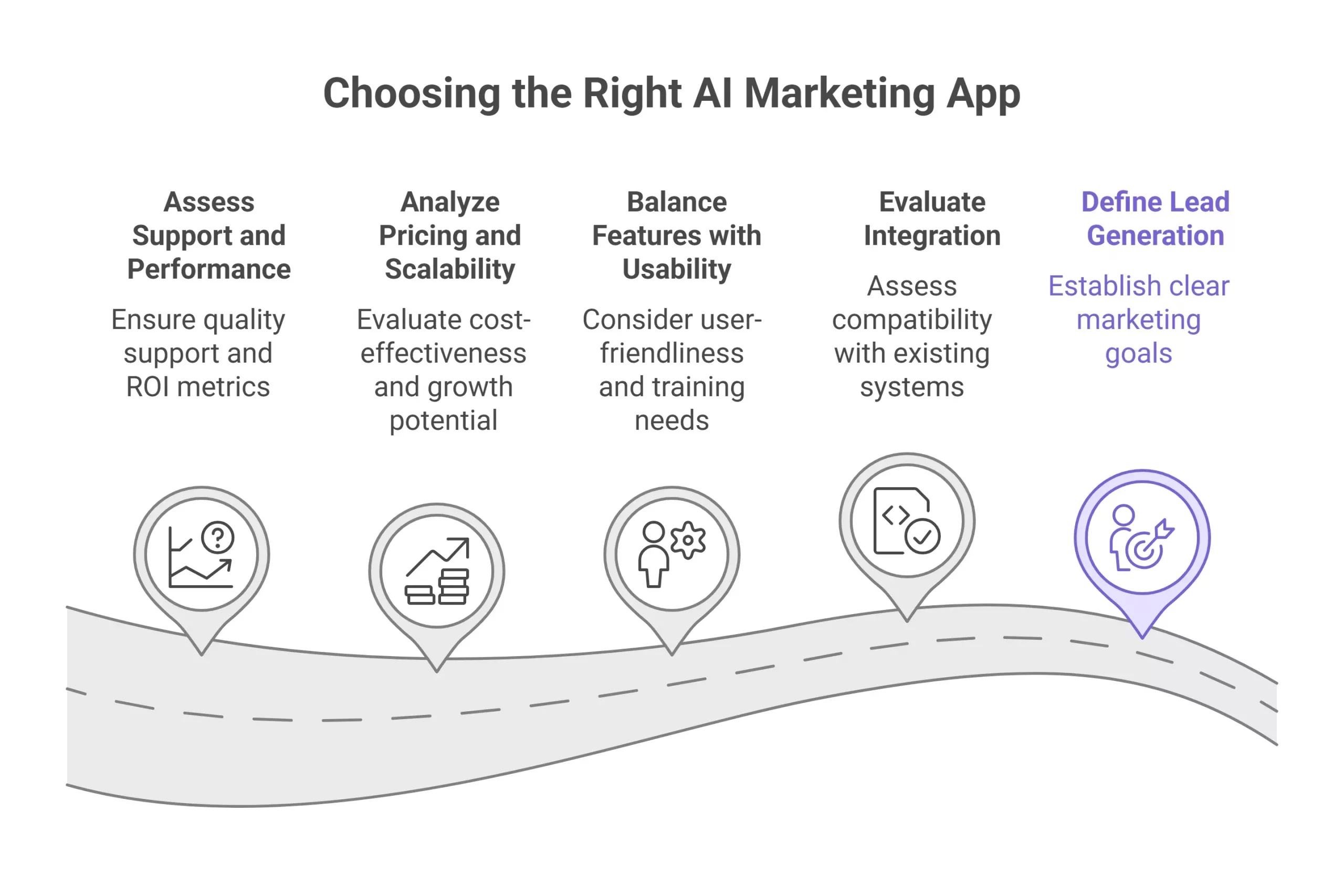
Phase 1: Define Your Lead Generation
It is essential to have a clear purpose before looking at available platforms, so that the tools you end up using map with your particular business. There are lead capture applications that help you identify prospect leads and capture their contact information.
There are nurturing systems that help you build and maintain relationships using a variety of automated communication sequences. Finally, there are conversion optimization applications, which focus on moving qualified prospects into the process of making final purchasing decisions.
Phase 2: Evaluate Integration and Technical Requirements
Evaluate popular AI tools for lead generation based upon how well each integrates with your existing business systems, which will keep your data flow between platforms intact and uninterrupted. Having different software systems also contributes to information black holes, detracting from your overall productivity. API access and pre-built equipment will indicate how easy or complicated the setup is and the ongoing maintenance.
Phase 3: Balance Features with Usability
When evaluating tools, the effectiveness of all the features must be weighed against the usability restrictions that may hamper your team’s adoption of the tools. More complicated systems deliver better results; however, inexperienced users may feel overwhelmed with a user-friendly system that includes advanced features that require more technical knowledge.
The kinds of training required and the long learning curves involved impact ‘time to value’ timelines that factor into where decisions are made regarding which platforms to use.
Phase 4: Analyze Pricing and Scalability
Low-cost AI-apps for marketers have most of the automated features required to scale marketing and sales operations without unnecessary complications that ultimately drive up costs w/o adding value.
Charting pricing structures against product lifecycle stages of growth helps to logically visualize the use of features as lead generation becomes more voluminous over time.
Phase 5: Assess Support and Performance Metrics
Assistance quality is important during implementation phases when businesses are faced with technical challenges. Responsiveness and know-how of the vendor will also influence adoption rates and satisfaction levels of the platform over the longer term.
AI solutions to automate the lead generation process should provide a visible return-on-investment (ROI) metric through reporting systems that provide a pathway to measure performance improvements against historical benchmarks. Metrics of success need to be aligned with business goals, rather than vanity metrics unrelated to revenue creation.
Sum up
AI marketing applications are not just support apps; they are lead generators that change the way businesses identify, qualify, and convert leads into customers. These digital automation platforms open all the doors for lead generation and remove all previous limits and creating a strategic competitive advantage that compounds over time when they use learning processes and optimization to refine their lead generation processes.
Businesses that wait to embrace artificial intelligence will forever fall behind their competitors who do not wait and use artificial intelligence, and execution leads needed to capture market share more efficiently through lead generation.
AI for lead generation is not just a better way of doing things; it is an evolution in doing business, not just an incremental change from traditional business methods.
To grow your leads with AI, you need to adopt platforms that best fit your business objectives and growth path. Being successful will require commitment to data-driven decision-making and a willingness to change traditional ways of working based on the insights about your business performance that artificial intelligence provides.
Any business that adopts the best AI tools for marketing will be able to build high levels of quality leads consistently and faster than businesses that rely on old manual methods. Start your transformation by understanding that artificial intelligence is not an option but a necessity to retain sustainable competitive positioning in a digital business world that increasingly relies on AI technology.
Frequently Asked Questions (FAQs)
Q: What should I expect to pay for AI marketing apps used for lead generation?
A: Entry-level AI lead generation tools are typically between $50-150 per month for small businesses, while full enterprise offerings can run from $1,000- 10,000+ per month. Most offer tiered pricing based on lead volume, features, integrations, and user experience. Typically, you can expect to see your ROI justify your investment within 3-6 months through better lead quality and closing rates.
Q: Can AI chatbots actually replace human sales reps?
A: AI chatbots are great for initial lead capturing, qualification, and basic inquiries. However, they work better as a supplement to a human sales rep rather than completely replacing them. Chatbots are great for repetitive tasks and qualification, while proactively engaging prospects allows sales departments to build the right relationships for high-value deals that require trust and negotiation skills only humans have.
Q: How long before I start to see results from an AI lead generation tool?
A: You will typically see some early improvements in the first 2-3 weeks as your AI systems will start optimizing your campaigns and discovering behavioral patterns. In all, you can expect to see an increase in lead quality, typically in the first 30-45 days, as your platform’s algorithm will be able to start accurately predicting lead behavior with sufficient data. The longer you optimize your behavioral data, the more efficient your apps can become, typically after 90-120 days of continual optimization.