

An App Landing Page is a dedicated promotional webpage designed to highlight the key features, benefits, and value of a mobile or web application. Its main purpose is to attract potential users and motivate them to download, install, or sign up for the app.
In simpler words, it’s the digital entry point where people learn what your app does and why it’s worth trying. Whether the goal is downloads, subscriptions, or product awareness — your app landing page serves as the first impression and conversion tool.
An app landing page is like your app’s home on the internet.
It’s where you explain to users:
- What your app does
- Why it’s helpful
- How it can solve their problems
- Where they can download it
Think of it as a sales pitch made visual — but instead of a salesperson, your design, copy, and visuals do the talking.
Purpose of an App Landing Page
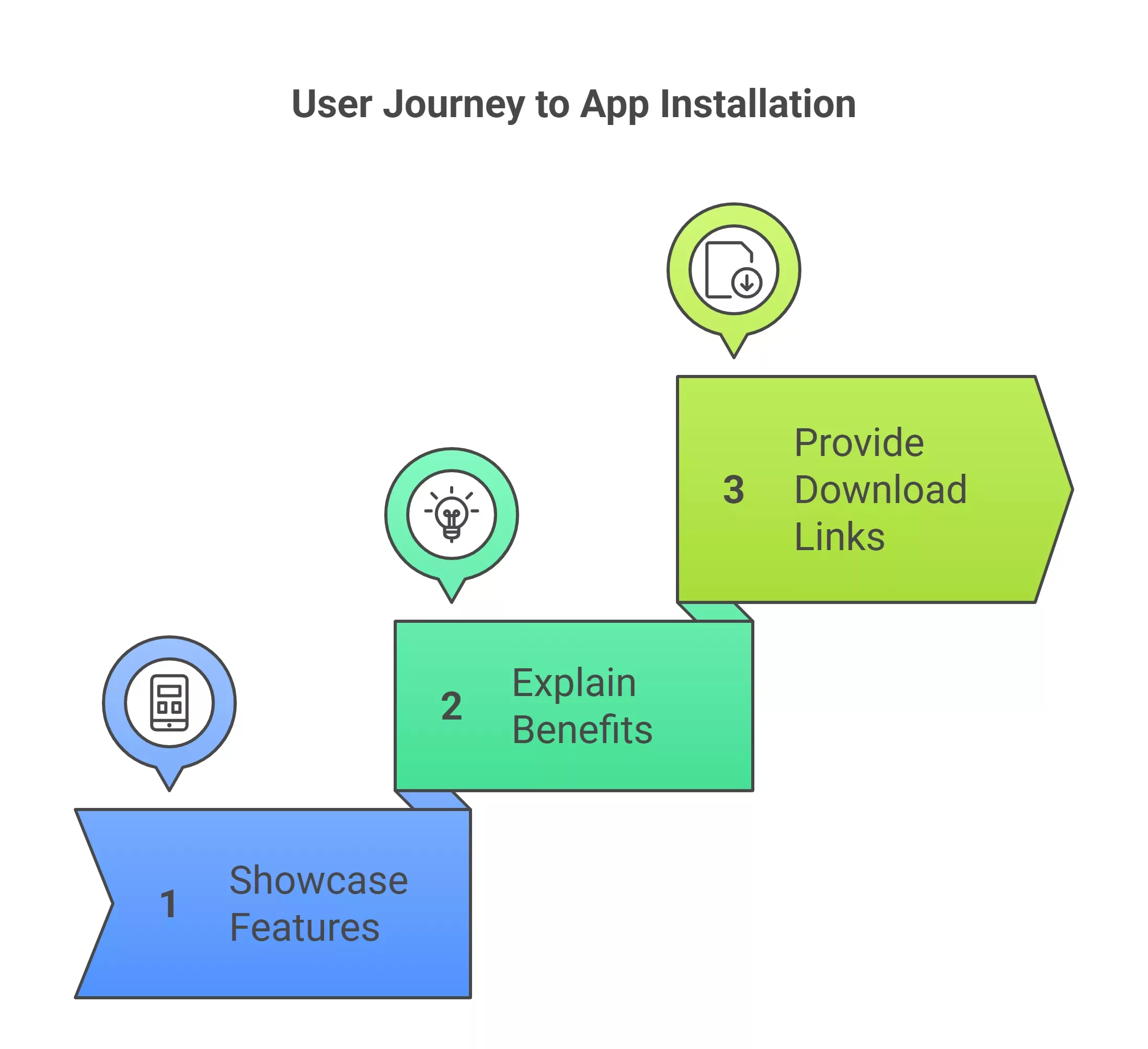
The core purpose of an app landing page is to convert visitors into users.
It achieves this by:
- Creating awareness about the app’s purpose and audience
- Building trust with screenshots, testimonials, and app store badges
- Providing a direct download link to App Store or Google Play
- Encouraging users to take one clear action — usually to download or try the app
Key Features and Elements of an App Landing Page
A well-designed app landing page usually includes the following components:
- Hero Section:
- The first part users see — includes app name, tagline, and visuals.
- Often features a smartphone mockup showing the app interface.
- Value Proposition:
- A clear statement explaining what the app does and what makes it different.
- Example: “Track your fitness goals effortlessly with our AI-powered app.”
- Call-to-Action (CTA):
- Buttons that encourage immediate action such as “Download Now”, “Try for Free”, or “Get Started.”
- Screenshots or Demo Video:
- Gives visitors a visual preview of how the app looks and feels.
- Short demo videos help increase user engagement and trust.
- App Store Links:
- Official download links for iOS and Android platforms.
- Features Section:
- Highlights the main features of the app, such as “Offline Access,” “Smart Notifications,” or “Personalized Dashboard.”
- Testimonials & Reviews:
- Builds credibility by showing real feedback from users or industry experts.
- Pricing or Plans (if applicable):
- For subscription-based apps, this section clarifies pricing tiers and benefits.
- Social Proof & Media Mentions:
- Mentions of the app in blogs, media outlets, or tech awards increase trust.
- FAQ Section:
- Answers common user questions before they hesitate or drop off.
Benefits of Having an App Landing Page
- Boosts Downloads: Gives users all the information they need before installation.
- Improves Conversion Rates: A targeted message and single CTA help users take action faster.
- Enhances SEO Visibility: Helps your app appear on Google searches beyond app stores.
- Supports Marketing Campaigns: Serves as a link destination for ads, social media, and influencer campaigns.
- Builds Brand Identity: Consistent colors, visuals, and tone strengthen brand recall.
- Collects User Data: Allows you to capture emails or feedback before app launch.
Example of an App Landing Page
Suppose you’ve developed an app called MindEase, a meditation and stress-relief app.
Your app landing page might include:
- A calming background image or animation.
- A headline: “Find Your Calm in Just 5 Minutes a Day.”
- A short video demo of the app interface.
- App Store and Google Play buttons.
- Testimonials from users who experienced reduced stress.
- A section describing features like guided meditation, mood tracking, and AI-based reminders.
This page becomes the central hub where users learn, connect, and take action — all in one place.
Best Practices for Designing an App Landing Page
- Keep the layout simple and mobile-friendly.
- Focus on one main call-to-action.
- Use real screenshots — not just mockups.
- Highlight benefits over features (e.g., “Save time” instead of “Automated reminders”).
- Add trust badges or reviews to increase credibility.
- Include analytics tracking to monitor user behavior and improve performance.
SEO and Marketing Relevance of an App Landing Page
From an SEO standpoint, an app landing page is a powerful asset. It allows your app to rank for keywords like:
- “Best productivity app for Android”
- “Free budget tracker app”
- “AI writing assistant for iPhone”
Optimizing the page with keywords, metadata, and structured data helps it appear in both Google Search and AI-powered search results (like ChatGPT or Perplexity).
An App Landing Page is not just a pretty webpage it’s a strategic marketing asset designed to convert curious visitors into loyal app users. It tells your story, builds trust, and simplifies the user’s journey from discovery to download.
Whether you’re an indie developer or a startup, investing in a well-crafted app landing page can make the difference between an app that’s seen and one that’s installed.