


ElevenLabs
AI voice platform for text to speech, voice cloning, dubbing, music and conversational voice agents, with…
Free planPaid from $0
- Web app
- iOS (iPhone & iPad)
- Android
- API / SDK

The second model in the Claude 5.5 family: 30%+ faster than Sonnet 5 at up to 30% lower cost per task.
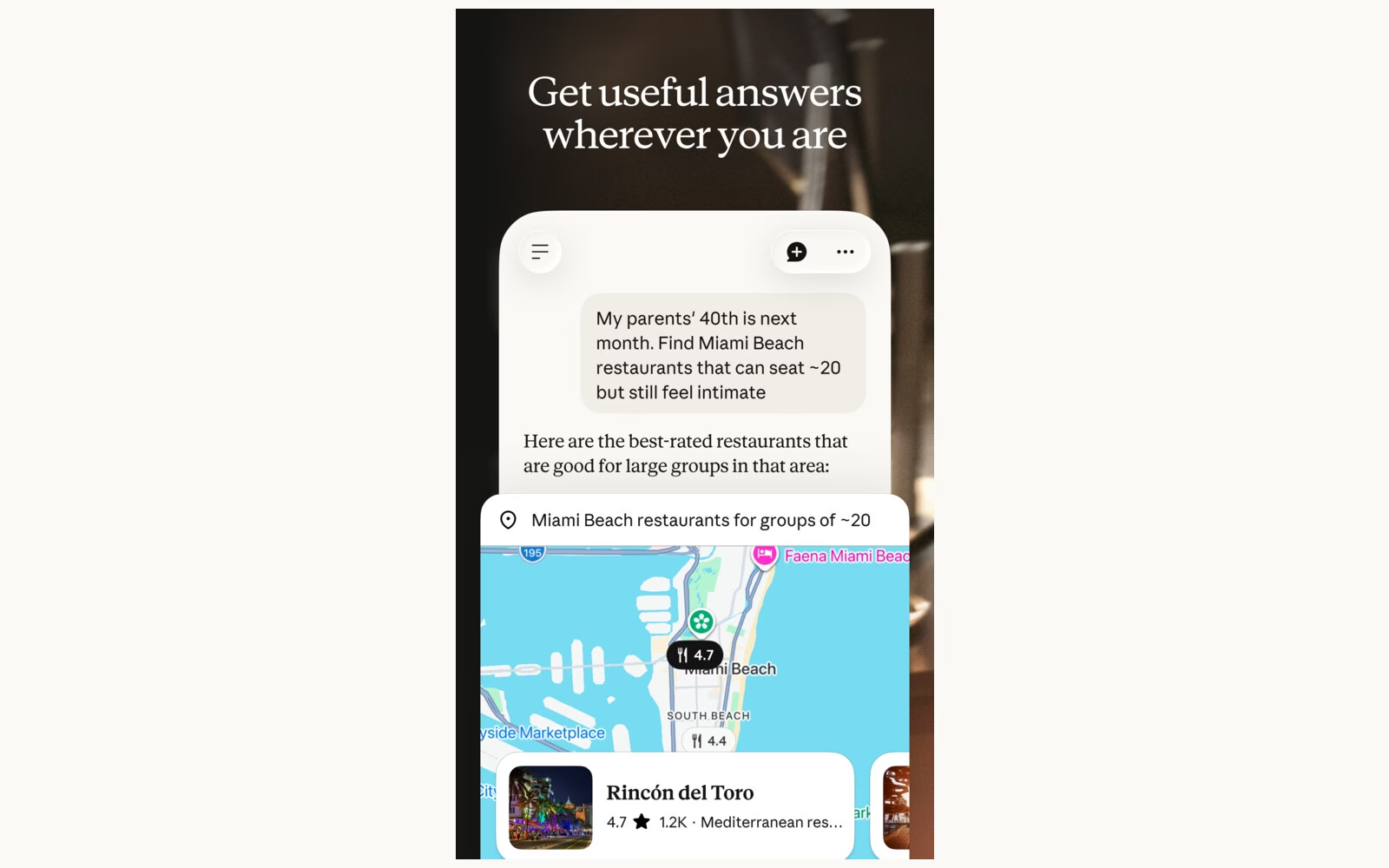
The second model in the Claude 5.5 family: 30%+ faster than Sonnet 5 at up to 30% lower cost per task. Claude Sonnet 5.5: the everyday half of the 5.5 family Claude Sonnet 5.5 is Anthropic’s second Claude 5.5 model, announced September 28, 2026.
Claude Sonnet 5.5 is Anthropic’s second Claude 5.5 model, announced September 28, 2026. Anthropic describes it as a clear upgrade over Sonnet 5: output 30%+ faster and up to 30% lower cost per task, at the same list price of USD 2 per million input and USD 10 per million output tokens. It complements Opus 5.5, which Anthropic still positions as the stronger choice for complex, judgment-heavy work.
The headline numbers are Anthropic’s own: 70.6% on Terminal-Bench 4.0 against Sonnet 5’s 10.3%, 55.5% on CursorBench 4.0, and 1844 on GDPval-AA v2.1, two points below Opus 5.5. Anthropic also cites strong long-horizon and image-understanding results, including a first for a Sonnet model: beating Pokemon Red from screenshots alone. Early tester quotes from Epic Games, SpaceXAI, Slack, Zendesk, Lovable, Atlassian and Unity describe fewer tool calls, faster
Claude Sonnet 5.5 is Anthropic’s second Claude 5.5 model, announced September 28, 2026. Anthropic describes it as a clear upgrade over Sonnet 5: output 30%+ faster and up to 30% lower cost per task, at the same list price of USD 2 per million input and USD 10 per million output tokens. It complements Opus 5.5, which Anthropic still positions as the stronger choice for complex, judgment-heavy work.
The headline numbers are Anthropic’s own: 70.6% on Terminal-Bench 4.0 against Sonnet 5’s 10.3%, 55.5% on CursorBench 4.0, and 1844 on GDPval-AA v2.1, two points below Opus 5.5. Anthropic also cites strong long-horizon and image-understanding results, including a first for a Sonnet model: beating Pokemon Red from screenshots alone. Early tester quotes from Epic Games, SpaceXAI, Slack, Zendesk, Lovable, Atlassian and Unity describe fewer tool calls, faster ticket handling and shorter build loops. These are vendor-run evaluations and selected testimonials; independent verification is still catching up.
List pricing matches Sonnet 5, with USD 0.20 cache reads and USD 2.50 cache writes per million tokens. Anthropic says Sonnet 5.5 needs far fewer tokens per task, which is where the claimed savings come from. Adjustable effort levels trade cost and speed against quality: Medium by default in the Claude apps and Claude Code, High on the Claude Platform. The model is available in the Claude apps on web, iOS, Android and desktop, on the Claude Platform as claude-sonnet-5-5, and on AWS, Google Cloud and Microsoft Azure, with zero data retention availability.
One breaking change matters: if you run Sonnet with thinking off, Anthropic requires the new between_tools setting before moving to Sonnet 5.5. On safety, Anthropic reports improved or matching alignment on its roughly 1,850-scenario behavioral audit, and Sonnet 5.5 is the first Sonnet to ship with cyber safeguards plus reasoning-extraction classifiers; biology safeguards match Sonnet 5. Claude Haiku 5.5 is announced for the coming weeks but not yet available.
On paper this is the new default Claude for most everyday work: much faster than Sonnet 5, cheaper per task by Anthropic’s accounting, and near Opus 5.5 on several knowledge-work measures. I would still treat the benchmarks as vendor-reported until third-party results accumulate, and keep Opus 5.5 for the hardest open-ended problems. Provisional desk-research score: 4.2/5.
Desk-research disclosure: Official announcement, pricing, documentation and legal pages reviewed September 30, 2026. No hands-on model testing, API calls or independent benchmarking. All performance and cost-per-task figures are Anthropic-reported. Founders, founding year, headquarters and team size remain blank.
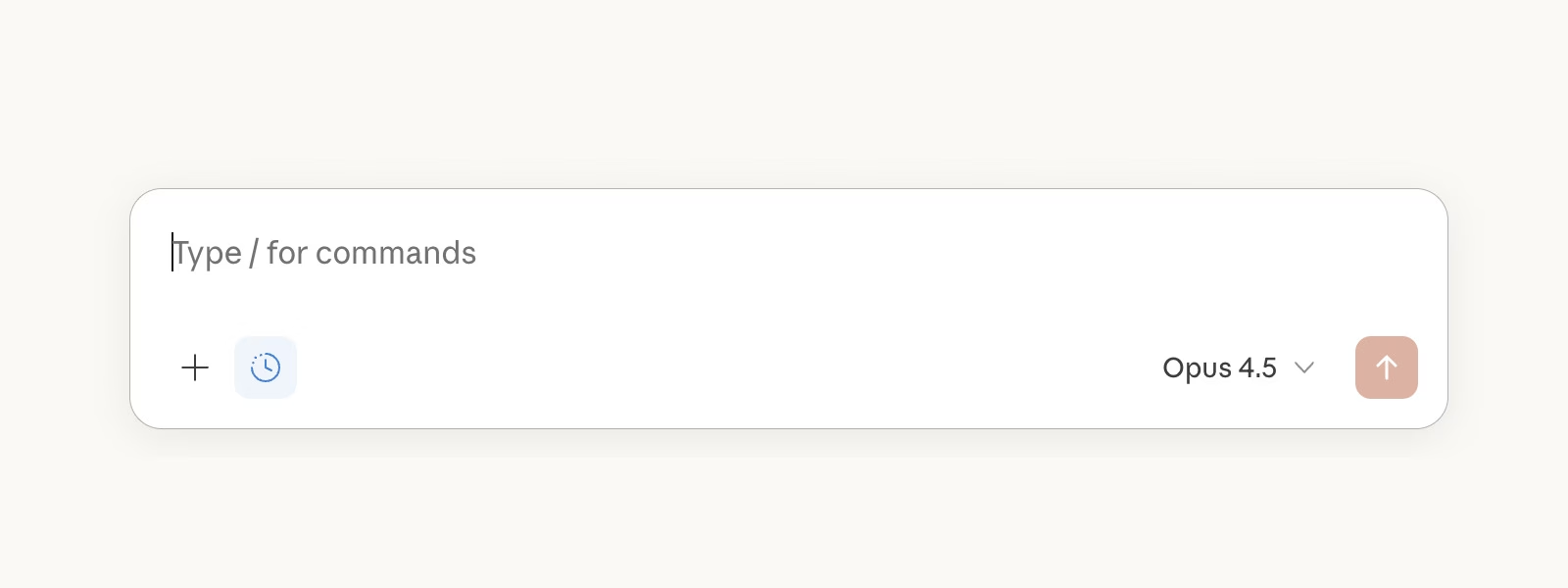
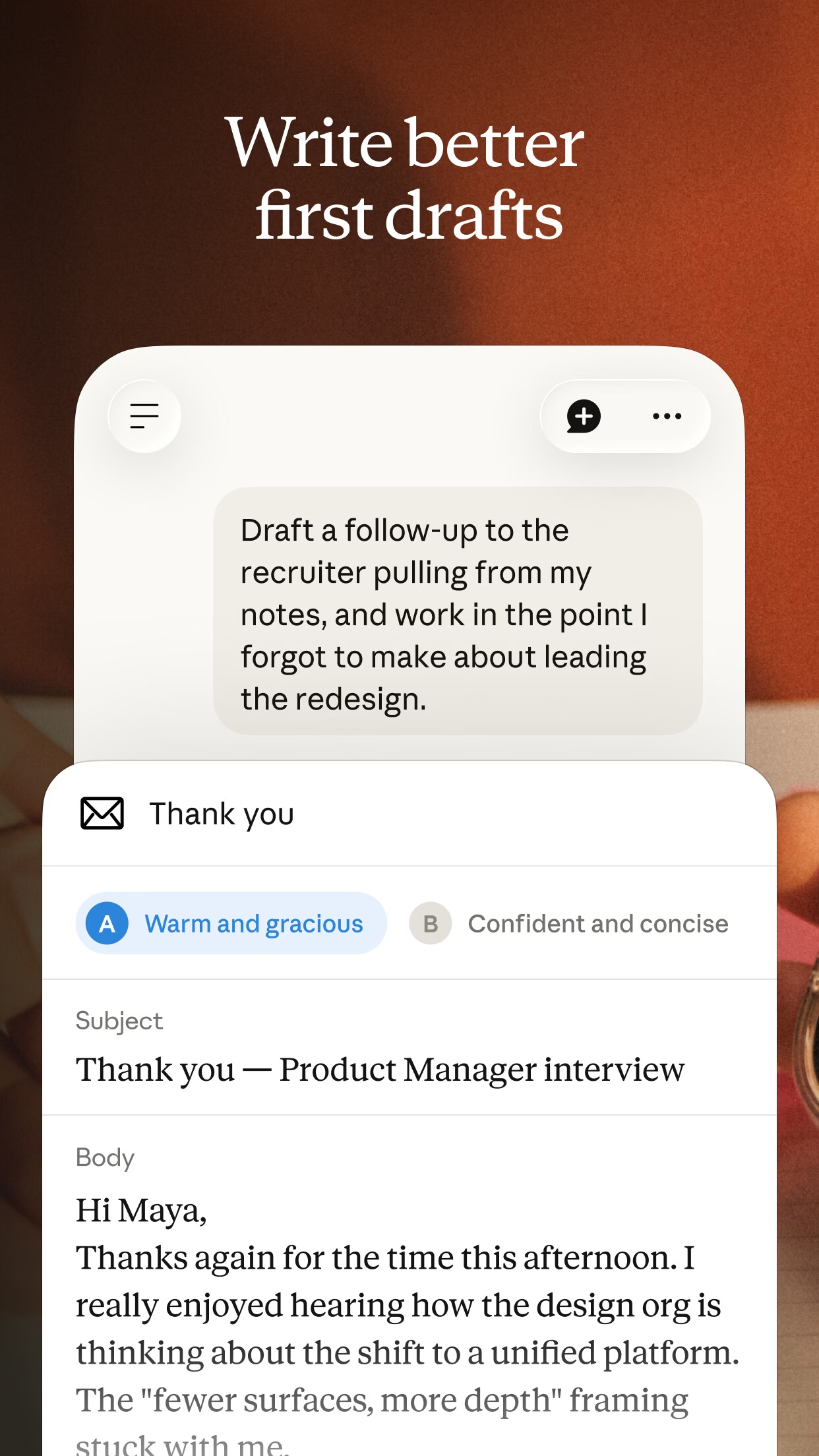
Ashley Richmond desk research September 30, 2026. Official announcement, pricing page, models documentation, system card reference and legal pages reviewed; no hands-on model testing, API calls or account benchmarking. All performance, speed, cost-per-task and alignment figures are vendor-reported from Anthropic pages and attributed as such; footnoted caveats (pre-release evaluation bug, unreleased Haiku 5.5) included. Company name Anthropic from the official site; founders, founding year, headquarters and team size left blank. Media: logo is the official Claude starburst rasterized at high resolution from the claude.com header SVG lockup, full extent with white padding (no screenshot crop). claude.ai requires sign-in, so no anonymous web chat UI was capturable; gallery mixes one official web UI still (composer box from support.claude.com help center) with official App Store vendor-submitted iOS app UI stills (hero and second gallery), disclosed here as iOS app UI, not web UI. Sources: https://www.anthropic.com/claude-sonnet-5-5 ; https://www.anthropic.com/pricing ; https://docs.anthropic.com/en/docs/about-claude/models ; https://www.anthropic.com/legal/privacy ; https://www.anthropic.com/legal/consumer-terms
| Pricing | Free+Paid |
|---|---|
| Free plan | Yes |
| Free trial | No |
| Pricing page | View pricing |
| Platforms | Web app, iOS (iPhone & iPad), Android, macOS, Windows, API / SDK |
| API | No |
| Company | Anthropic |
| Apps Insight Score | 45/100 |
| Implementation | Medium |
| Learning curve | Intermediate |
Editorial points are assigned by AppsInsight editors and cannot be purchased or influenced.
| Feature | Claude Sonnet 5.5 | ElevenLabs | Arsaze | reap |
|---|---|---|---|---|
| Rating | 4.2 / 5 | 4.6 / 5 | 4.2 / 5 | 4.0 / 5 |
| Pricing | Free+Paid | Free+Paid | Free+Paid | Free+Paid |
| Starting price | — | $0 | — | $9.99/mo billed annually |
| Free plan | Included | Included | Included | Included |
| Free trial | No | No | No | No |
| Platforms | Web app, iOS (iPhone & iPad), Android, macOS, Windows, API / SDK | Web app, iOS (iPhone & iPad), Android, API / SDK | Web app, Windows | Web app |
| Best for | Developers and teams who want a fast, lower-cost model for everyday coding, documents and agentic tasks across apps, API and major clouds. | Creators, video and podcast producers, developers building voice features, and companies that want voice agents or dubbing at scale. | Video creators and editors who want a real NLE their AI assistant can drive - text-based editing, grading, client review and generation on one timeline, with free local exports. | Podcasters and video creators turning long recordings into clips Global teams needing captions and dubbed versions Developers automating video repurposing through API or MCP Social teams publishing video-first content |
Claude Sonnet 5.5 vs ElevenLabs Claude Sonnet 5.5 vs Arsaze Claude Sonnet 5.5 vs reap
0 /mo
20 /mo
100 /mo
AI voice platform for text to speech, voice cloning, dubbing, music and conversational voice agents, with…

Let Claude, ChatGPT or Gemini edit your real timeline - an AI-native video editor for agents…

AI clipping, captions, dubbing, and social publishing for long-form video.
Build and publish real apps from Claude, ChatGPT or Cursor, with backend and hosting included

Agentic video platform that plans, records, edits and updates videos

AI video agent that plans, makes and revises a finished video from a chat

Browser AI voice generation with SSML and multi-speaker scripts

AI creative suite for generating and editing videos and images across multiple models and workflows.

Real-time world model that generates interactive video and audio as you give it input
Build and publish real apps from Claude, ChatGPT or Cursor, with backend and hosting included
No reviews yet. Be the first to review this app.
Already have an account? Log in to track your reviews.