
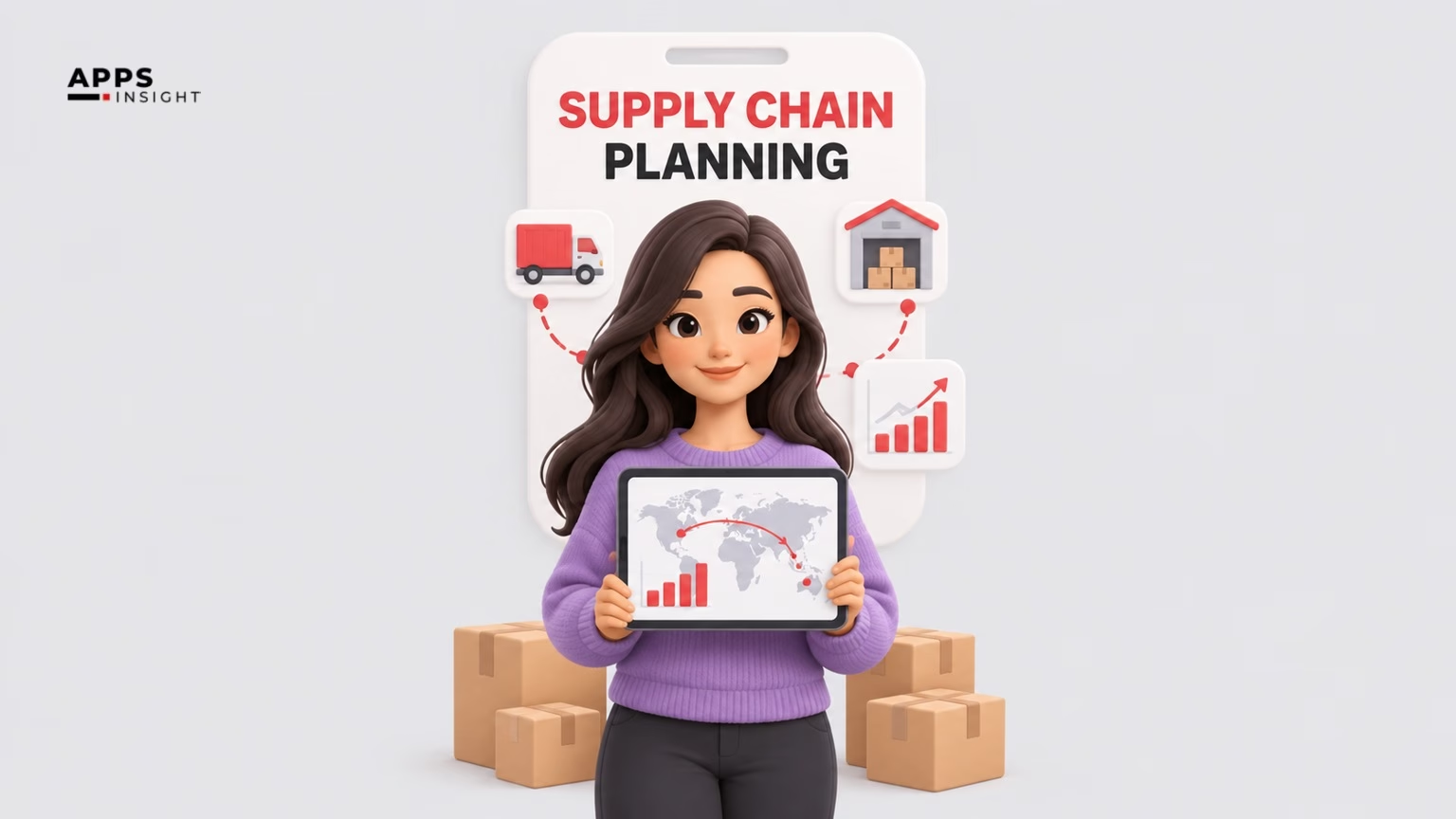
Supply chain planning (SCP) software decides how much to make, buy and move before anything ships. Pick the wrong tool and planners drift back to spreadsheets within a year. This guide covers the platforms that keep appearing on 2026 and 2027 shortlists, what each is known for, and a practical way to choose without sitting through ten demos first.
The short version: Kinaxis and o9 are usually described as the planning-led options. SAP IBP and Oracle make most sense when your ERP already runs on them. Blue Yonder spans planning and execution. RELEX is the retail-focused name. Pricing is quote-based for almost all of them, so treat any number you see online as a guess.
What supply chain planning software actually does
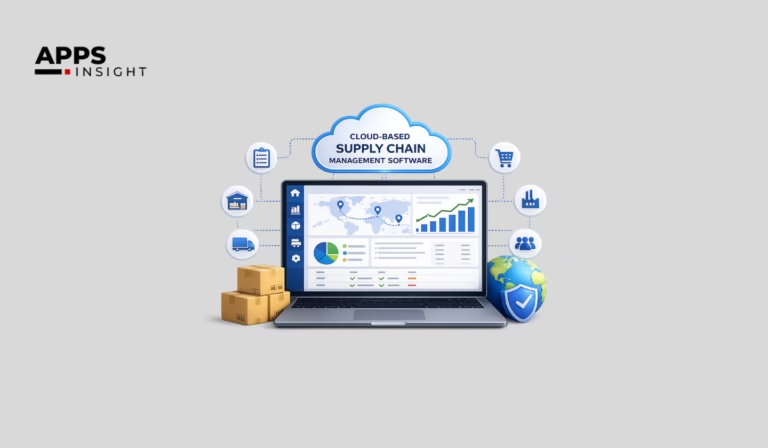
SCP tools sit on top of your ERP, warehouse and order data. They forecast demand, balance it against supply and capacity, set inventory targets, and let planners run “what if” scenarios when something breaks. That is different from execution software such as warehouse or transport systems, which move the goods. If you are still deciding between planning and execution, start with our guide to the best supply chain management software and come back once you know planning is the gap.

Most platforms cover the same five jobs:
- Demand planning and forecasting: turning sales history, promotions and market signals into a demand number per product and location.
- Supply and production planning: deciding what to buy or make, where, and when, given capacity and lead times.
- Inventory optimization: setting safety stock and reorder points so you hold enough without tying up cash.
- S&OP and integrated business planning (IBP): getting sales, operations and finance to agree on one plan.
- Scenario modeling and visibility: testing a port delay or supplier failure before it hits orders.
Match the tool to the planning horizon first
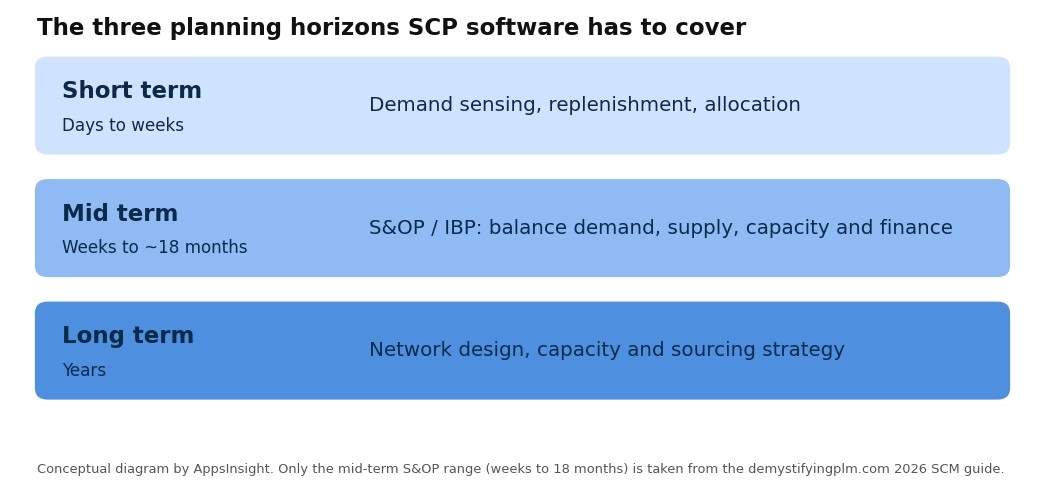
One framing from an independent 2026 SCM software guide is useful before any vendor talk: decide which planning horizon you need to fix first. Short-term demand sensing, mid-term S&OP and long-term network design are different problems, and no single platform wins all three. That guide describes S&OP as running from weeks out to roughly 18 months and calls it the most contested horizon because it needs commercial, operations and finance teams working from the same plan.
Who leads the market in 2026
For 2026, Gartner split its Magic Quadrant for Supply Chain Planning Solutions into a Discrete edition and a Process edition. According to the independent Supply Chain Research 2026 buyer’s guide, Kinaxis, o9, Blue Yonder, SAP, Oracle and OMP are named Leaders across both editions, and Kinaxis is a Leader for the eleventh time in a row. We have not read the Gartner report itself, and Gartner does not endorse any vendor, so use this as a starting shortlist and not a verdict. The same guide lists ToolsGroup and Slimstock in the Discrete edition and RELEX in the Process edition. Peer reviews for the category are on Gartner Peer Insights.

How the main SCP platforms compare
The table below summarises how independent comparisons (StackBriefly, BusinessCloud and the CIOPages buyer guide) position each vendor. These are third-party summaries, not our own testing, and vendors change fast, so confirm details in a demo.
| Platform | Typical best fit (per the cited comparisons) | Known for |
|---|---|---|
| Kinaxis Maestro | Manufacturers and complex supply chains, including high-tech, automotive and life sciences | Concurrent planning and fast scenario analysis |
| o9 Solutions | Large enterprises that want commercial and supply plans aligned | IBP depth and its Digital Brain knowledge-graph approach |
| Blue Yonder | Retailers, manufacturers and distributors | Planning suite tied to execution (warehouse, allocation, replenishment) |
| SAP IBP | Companies already on SAP S/4HANA | Close fit with SAP data and processes |
| Oracle Fusion Cloud SCP | Oracle ERP customers and large diversified enterprises | Unified ERP and supply chain data model |
| RELEX | Retailers, manufacturers and wholesalers | Forecasting, inventory and replenishment |
The main platforms in more detail
Kinaxis Maestro
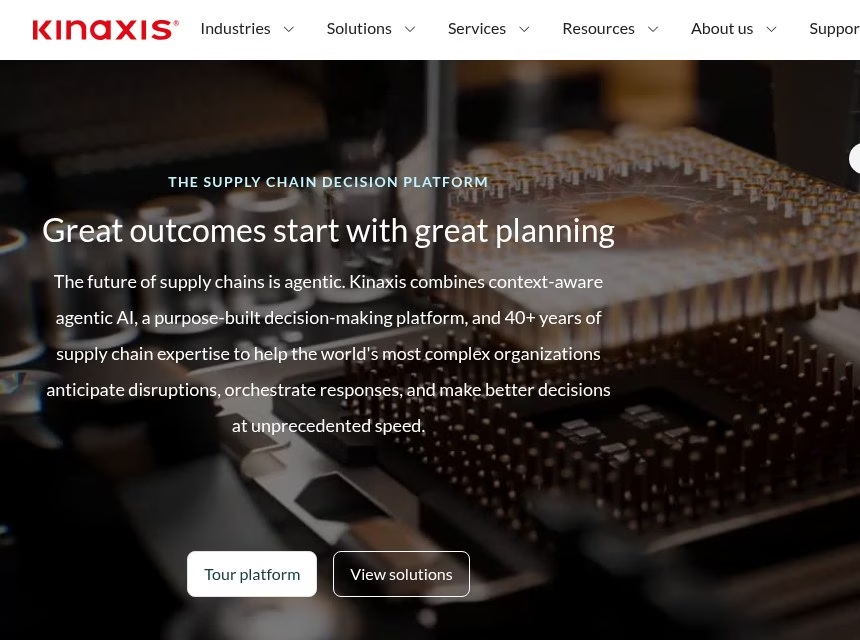
Kinaxis (the Maestro platform, formerly RapidResponse) is built around concurrent planning. Instead of running demand, supply and inventory plans one after another, it keeps them in one model so a change in one shows up everywhere. On its homepage Kinaxis describes combining agentic AI, a decision-making platform and more than 40 years of supply chain experience. That is vendor wording, so test it in a proof of concept using your own data.
o9 Solutions
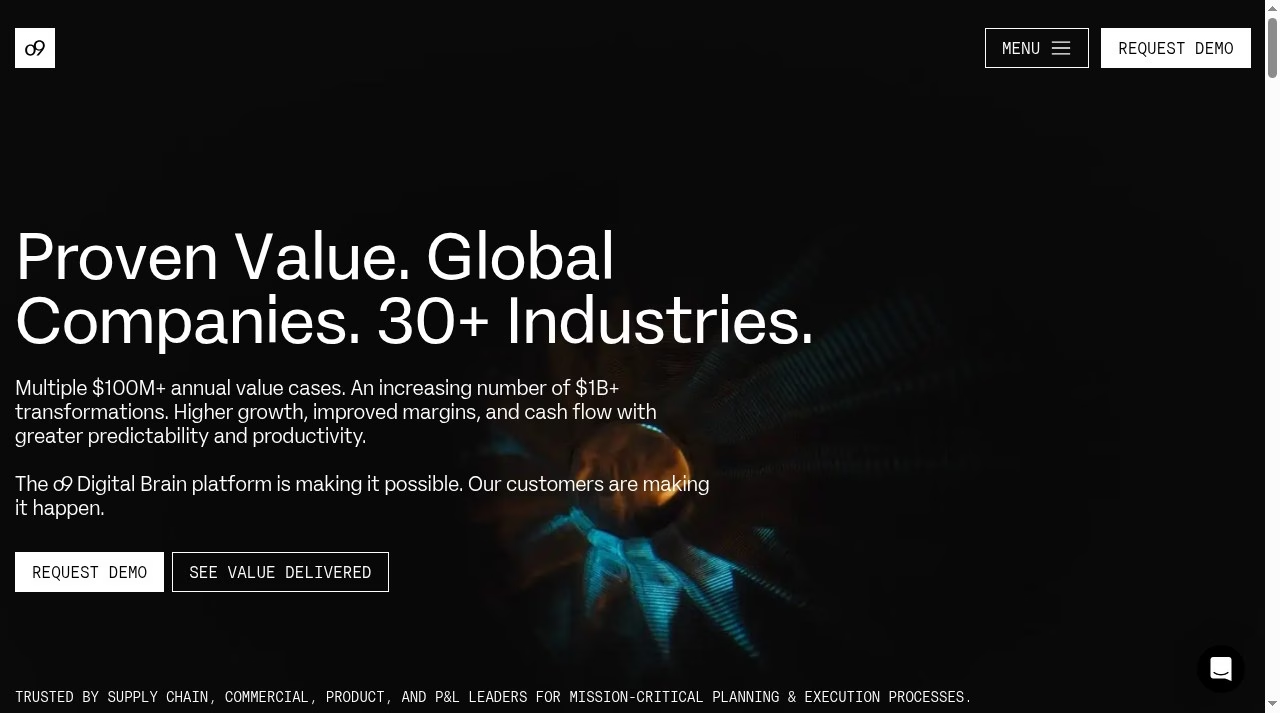
o9 positions its Digital Brain platform for supply chain, commercial, product and P&L teams. Its homepage says it serves “30+ industries” and cites multiple $100M+ annual value cases. We could not verify those figures independently. The platform makes most sense when finance and sales planning need to sit in the same system as supply planning.
Blue Yonder, SAP IBP and Oracle
These three suit buyers who prefer one vendor across planning and execution, or planning and ERP. Blue Yonder spans planning and execution. SAP IBP and Oracle Fusion Cloud SCP are strongest when the system of record already belongs to the same vendor. The cost of moving data between systems is usually what decides it, more than any feature gap.
RELEX and the mid-market names
RELEX is built for retail and wholesale planning, and its homepage cites 600+ customers (a vendor claim). ToolsGroup and Slimstock appear in Gartner’s 2026 Discrete edition according to the guide cited above. We have not compared their scope or pricing against the enterprise platforms, so check them in a demo if you are a smaller team. If you also run a cloud ERP, our notes on cloud-based supply chain management software show how planning fits around it.
How to choose SCP software in 2027
- Decide which planning horizon hurts most. Use the diagram above. Pick the horizon that costs you most today and shortlist for that.
- Start from your ERP. If you run SAP or Oracle, price their native planning first, so you know what any alternative has to beat.
- Be honest about size. A 200-person distributor and a global manufacturer should not shortlist the same five vendors.
- Test with your data. Ask every vendor to re-plan a real disruption from your last year, not a demo dataset.
- Ask for the full cost. Licence, implementation partner, data integration and ongoing admin. Quotes rarely show all four together.

Questions to ask in every demo
- How long did the last three customers of our size take to go live, and who did the integration?
- Which data sources need a custom connector for us, and who maintains it?
- Can you re-run last quarter’s biggest disruption on our data and show the planner’s steps?
- What does a planner still do in a spreadsheet after go-live?
- How are AI forecasts explained to a planner who disagrees with them?
- What is the three-year total cost, including implementation and support?

Common mistakes when buying planning software
Buying for the demo. Polished scenarios on clean data hide integration work. Insist on your own extract.
Ignoring data quality. Forecast engines amplify bad master data. Fix item, location and lead-time data before go-live, not after.
Skipping change management. Planners who do not trust the numbers keep their own spreadsheets, and then the new tool is a second system, not a replacement.
Choosing planning when execution is the problem. If shipments are late because of warehouse errors, a planning tool will not fix it. See the best warehouse management software list and our guide to the key features of warehouse management software.
Where to go next
If you need a delivery partner for integration work, browse our directory of top custom software development companies, or compare options in our top companies rankings. For subscription-style tools, read our SaaS supply chain management software article, and for a buyer’s checklist see how to choose the right supply chain software for your business.
Frequently asked questions
What is supply chain planning software?
It is software that forecasts demand, balances it against supply and capacity, sets inventory levels and lets planners test scenarios before committing. It plans the flow of goods. Warehouse and transport systems handle the physical movement, and the two usually exchange data through your ERP.

What is the difference between SCP and SCM software?
Supply chain management (SCM) is the broad category covering planning, sourcing, warehousing, transport and logistics. SCP is the planning slice of it. Some vendors sell only planning; others sell planning and execution under one suite.
Which SCP software is best for mid-size companies?
Mid-size teams often shortlist vendors such as ToolsGroup, Slimstock or RELEX alongside the enterprise platforms, because rollout effort can be lower. We have not benchmarked them, so confirm scope, cost and implementation time in a demo.
How much does supply chain planning software cost?
Most vendors in this list do not publish prices and quote by modules, users and data volume. Budget for licence, implementation and integration together, and ask for a three-year total before you compare vendors.
Do I need SAP IBP if I already run SAP?
Not necessarily. Native integration is a real advantage, but compare it against best-of-breed planning depth. Ask each vendor to show how much custom integration work sits behind the demo.
How long does an SCP implementation take?
It depends on scope, data quality and the number of systems involved. Vendors and partners give different ranges, so ask for reference customers of similar size and check their actual go-live dates.
Is AI changing supply chain planning in 2027?
Every major vendor now markets AI or agentic features. Treat these as claims to test: ask to see the forecast, the explanation and the planner override on your own data.