
Top Drone Manufacturing Companies in Poland
List of top companies Poland has emerged as a strategic hub for advanced drone and unmanned aerial vehicle (UAV) manufacturing, serving both commercial and defense markets across Europe and beyond. Businesses now rely on Polish drone makers for applications ranging from precision agriculture and infrastructure inspection to logistics, security, and battlefield support. This growing ecosystem combines established defense contractors, specialized UAV manufacturers, and innovative startups that focus on mission‑critical reliability and rapid deployment at competitive price points.
Choosing the right drone manufacturing partner in Poland is essential because projects often involve high‑value assets, strict aviation regulations, and demanding environments where system failure is not an option. The best providers offer robust engineering, certifications, training, and long‑term support, helping clients reduce operational risk and shorten payback periods from 12–36 months. A well‑selected partner can also customize payloads, integrate with existing IT systems, and support scaling fleets from a few platforms to hundreds of units.
Leading Polish drone manufacturers increasingly combine UAV platforms with software, AI, and data pipelines, turning raw aerial footage into actionable insights for business and government customers. As the market matures, they are also focusing on interoperability, cyber‑security, and counter‑UAS capabilities to meet stringent European and NATO standards. For buyers, this means they can access future‑ready drone solutions without building expensive in‑house R&D capabilities.
What Do Drone Manufacturing Companies in Poland Do?
Top drone manufacturing companies in Poland design, build, and support complete UAV ecosystems tailored to specific industries and mission profiles. They typically provide:
UAV platform design and production: Fixed‑wing, multirotor, and VTOL drones for surveillance, logistics, mapping, agriculture, and combat roles, with endurance ranging from 20 minutes to several hours.
Payloads and sensors: High‑resolution RGB, thermal, LiDAR, multispectral and specialized gimbals engineered for stable data capture in harsh environments.
Command, control, and communication systems: Ground control stations, secure data links, and mission‑planning software that comply with aviation and defense standards.
Integration and customization: Tailor‑made platforms, avionics, and software that fit into existing workflows, ERP systems, or defense C2 infrastructure.
Training, maintenance, and lifecycle support: Operator training, servicing, spare parts, and upgrade programs that extend fleet life and improve ROI over 5–10 years.


 Trusted by 18K+ users






WB Electronics (WB Group)


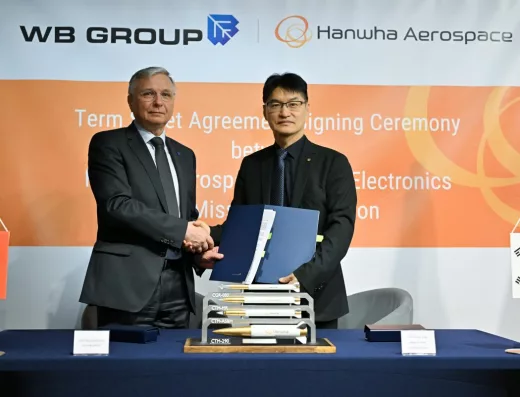
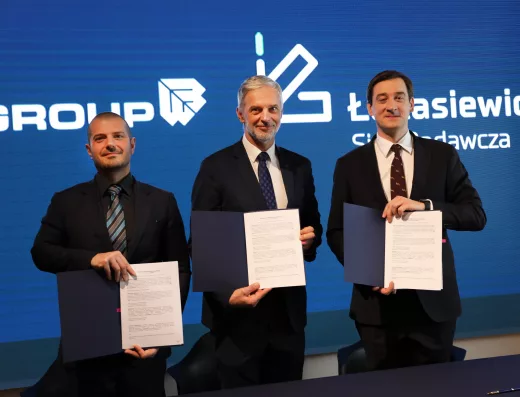
WB Electronics, part of WB Group, is a leading Polish defence technology company focused on advanced electronics and unmanned systems. It designs and delivers complete UAV solutions for reconnaissance, surveillance, and strike missions used by armed forces in Poland and many allied Read more about WB Electronics (WB Group)
Appearing In

Aerobits
Aerobits is a Polish technology company that specialises in miniaturised avionics and ADS‑B solutions for drones and manned aircraft. Its goal is to make airspace surveillance and identification hardware so small and light that it can fit even into compact UAVs without Read more about Aerobits
Appearing In

B-Technology
B-Technology is a Polish technology company that designs, tests, and produces modern drones, robots, and custom electronics. Its goal is to create new ways of movement on land and in the air, using smart engineering and strong in‑house production tools. The company Read more about B-Technology
Appearing In
Dronehub
Dronehub is a Polish technology company that builds autonomous “drone‑in‑a‑box” systems for industrial users. Its goal is to make drone flights fully automatic, so drones can take off, land, charge, and fly missions without people on site. The company focuses on long‑term Read more about Dronehub
Appearing In

FlyFocus
FlyFocus is a Polish drone company that designs and builds unmanned aerial systems for defense, security, and critical infrastructure users. The team focuses on safety and reliability in real missions, often working with armed forces and public agencies that need trusted UAV solutions. The Read more about FlyFocus
Appearing In
FlyTech Solutions
FlyTech Solutions is a Polish UAV company that designs and builds unmanned flying systems for professional users. Its goal is to give industry, survey, and agriculture teams simple drone tools that collect precise data from the air. The company creates complete UAV Read more about FlyTech Solutions
Appearing In
Kestrel Aeronautics
Kestrel Aeronautics (now operating as RB Defence Kestrel Division) is a Warsaw‑based aerospace company focused on unmanned systems and defence electronics. The company designs and produces drones and onboard systems that can work in both civil and military projects. Founded in 2020, Read more about Kestrel Aeronautics
Appearing In

REAKTO
REAKTO is a Kraków‑based Polish startup that builds autonomous drone systems for rapid security response. Its goal is simple: send a drone to an alarm within minutes, check what is happening, and help protect people and property. The company creates its own Read more about REAKTO
Appearing In
uAvionics Unmanned Systems
uAvionics Unmanned Systems is a Warsaw‑based company that designs and builds unmanned aircraft and drone electronics. Its goal is to give clients reliable small and medium UAV platforms plus key onboard systems in one place. The company offers drones under 7 kg Read more about uAvionics Unmanned Systems
Appearing In

Vertigo FPV (Vertigo Global – ISR Systems)
Vertigo Global is a Polish company that designs and produces advanced camera gimbals for drones and other unmanned platforms. Its goal is to give UAV operators stable, high‑quality video and thermal images for ISR and surveillance missions. Founded in 2016, Vertigo builds Read more about Vertigo FPV (Vertigo Global – ISR Systems)
Appearing In
Poland has emerged as a strategic hub for advanced drone and unmanned aerial vehicle (UAV) manufacturing, serving both commercial and defense markets across Europe and beyond. Businesses now rely on Polish drone makers for applications ranging from precision agriculture and infrastructure inspection to logistics, security, and battlefield support. This growing ecosystem combines established defense contractors, specialized UAV manufacturers, and innovative startups that focus on mission‑critical reliability and rapid deployment at competitive price points.
Choosing the right drone manufacturing partner in Poland is essential because projects often involve high‑value assets, strict aviation regulations, and demanding environments where system failure is not an option. The best providers offer robust engineering, certifications, training, and long‑term support, helping clients reduce operational risk and shorten payback periods from 12–36 months. A well‑selected partner can also customize payloads, integrate with existing IT systems, and support scaling fleets from a few platforms to hundreds of units.
Leading Polish drone manufacturers increasingly combine UAV platforms with software, AI, and data pipelines, turning raw aerial footage into actionable insights for business and government customers. As the market matures, they are also focusing on interoperability, cyber‑security, and counter‑UAS capabilities to meet stringent European and NATO standards. For buyers, this means they can access future‑ready drone solutions without building expensive in‑house R&D capabilities.
What Do Drone Manufacturing Companies in Poland Do?
Top drone manufacturing companies in Poland design, build, and support complete UAV ecosystems tailored to specific industries and mission profiles. They typically provide:
UAV platform design and production: Fixed‑wing, multirotor, and VTOL drones for surveillance, logistics, mapping, agriculture, and combat roles, with endurance ranging from 20 minutes to several hours.
Payloads and sensors: High‑resolution RGB, thermal, LiDAR, multispectral and specialized gimbals engineered for stable data capture in harsh environments.
Command, control, and communication systems: Ground control stations, secure data links, and mission‑planning software that comply with aviation and defense standards.
Integration and customization: Tailor‑made platforms, avionics, and software that fit into existing workflows, ERP systems, or defense C2 infrastructure.
Training, maintenance, and lifecycle support: Operator training, servicing, spare parts, and upgrade programs that extend fleet life and improve ROI over 5–10 years.
Trusted by 18K+ usersList Your Firm

Recent Posts





Advertise With Us

How to Choose the Right Top Drone Manufacturing Companies in Poland Partner
Define Your Mission and Technical Needs
Clarify your primary use cases (inspection, mapping, security, agriculture, defense) and translate them into concrete requirements like range, payload, flight time, and data quality. This makes it easier to shortlist only those Polish manufacturers whose platforms match your operational realities.
Check Industry Experience and Proven Use Cases
Prioritize companies that already serve your sector—such as utilities, public safety, or logistics—and can show real deployments and references in Poland and abroad. Established UAV manufacturers with documented success in similar conditions will reduce your project risk and time to value.
Compare Total Cost of Ownership, Not Just Price
Look beyond unit price and estimate full costs over 3–5 years, including hardware, software, training, certification support, maintenance, and potential upgrades. Ask for clear pricing ranges—for example, 15,000–150,000 EUR per platform for advanced systems—and verify how these map to capabilities you actually need.
Evaluate Compliance, Security, and Reliability
Confirm that the vendor understands EU and Polish aviation rules, can support required certifications, and follows robust safety processes. For security‑sensitive or defense projects, verify encryption, resilience to jamming, secure supply chains, and alignment with NATO or national standards where relevant.
Assess Support, Scalability, and Integration
Choose a partner that offers strong after‑sales support, local or regional training, and clear SLAs for maintenance and incident response. Ensure their drones and software integrate with your existing GIS, maintenance, or command systems and can scale from a pilot fleet to large deployments without locking you into closed, inflexible architectures.
Common Mistakes to Avoid When Choosing Top Drone Manufacturing Companies in Poland
Focusing Only on Specs and Price
Many buyers compare drones purely on range, payload, and unit price without linking these numbers to real missions. This often leads to over‑engineered systems that never reach full utilization or cheaper platforms that cannot meet operational demands in Polish and EU conditions.
Ignoring Regulations and Certification Requirements
Some organizations underestimate how Polish and EU aviation rules affect drone deployment, especially for BVLOS and sensitive airspace. Skipping early regulatory planning or choosing a vendor with weak compliance experience can delay projects by 3–9 months and even block certain missions altogether.
Overlooking Integration and Data Workflows
A common mistake is assuming any UAV will plug seamlessly into existing GIS, maintenance, or security systems. Selecting manufacturers that lack robust APIs, SDKs, or integration support can force costly custom work later and slow down your path from flights to usable insights.
Underestimating Training and Change Management
Organizations sometimes invest heavily in hardware but allocate minimal time and budget for pilot training and operational procedures. Without structured training programs from the vendor, it can take 6–12 extra months to reach reliable, repeatable missions and safe operations.
Forgetting About Scalability and Vendor Lock‑In
Buyers may choose closed, proprietary ecosystems that are hard to scale or mix with other platforms later. Failing to consider interoperability, modular payload options, and data portability can limit fleet growth and bargaining power as your drone operations expand in Poland and abroad.
What Is the Drone Manufacturing Landscape Like in Poland?
Poland now hosts dozens of specialized drone manufacturers, integrators, and service providers spanning both civilian and defense sectors. Established players such as WB GROUP and its UAV subsidiaries lead in military and long‑range systems, including loitering munitions and advanced combat drones. Alongside them, newer companies focus on commercial UAVs for inspection, mapping, security, and warehouse automation, often exporting to markets across Europe and beyond.
Industry associations and chambers, including the UAV Chamber in Poland, help coordinate standards, training, and joint R&D efforts. These networks connect manufacturers with universities, research institutes, and end‑users, accelerating innovation in areas like AI‑powered navigation, swarm operations, and counter‑UAS. As a result, buyers can choose from a broad spectrum of partners—from niche engineering studios to large, vertically integrated defense contractors—depending on their risk profile and mission needs.
What Is the Role of Anti‑Drone and Counter‑UAS Tech in Poland?
Counter‑UAS (C‑UAS) has become a strategic area within Poland’s drone ecosystem, driven by increased security threats and the proximity of active conflict zones in the region. Companies like AP‑FLYER (under the MADDOS brand) specialize in anti‑drone systems and also manufacture observation UAVs, supporting both detection and response capabilities. These solutions combine radio‑frequency detection, jamming, radar, and optical tracking to protect critical infrastructure, borders, and events from hostile drones.
For buyers, this means drone programs increasingly need to consider both offensive and defensive aspects of UAV technology. Public agencies and private operators may implement C‑UAS to protect their own fleets and facilities, while also ensuring their drones are resilient against interference and cyber threats. Partnering with manufacturers that understand both sides of the equation can reduce security risks and ensure compliance with evolving national‑security regulations.
Get Featured on AppsInsight
If your company is a drone or UAV manufacturer operating in or serving Poland, you can apply to be featured in upcoming AppsInsight listings.
To start, prepare a concise profile that covers your core services, flagship UAV platforms, target industries, deployment regions, and key differentiators such as certifications, R&D focus, or proprietary technologies. Include quantitative details where possible—fleet sizes supported, typical project budgets, and average deployment timelines—so our editorial team can benchmark you consistently against peers.
Next, visit the AppsInsight website and use the designated contact or submission form for vendors in the “Drone Manufacturing” or related categories, attaching your company deck, website URL, and recent case studies.
Our analysts typically review submissions within 2–4 weeks, validating information through public sources and customer references where available.
Shortlisted firms may receive follow‑up questions or interview requests to clarify capabilities and delivery models. Final selections are based on credibility, innovation, client impact, and market relevance.
Being listed helps you reach highly qualified buyers researching drone partners and strengthens your authority in this fast‑growing space.
Final Words
Top drone manufacturing companies in Poland play a critical role in reshaping how governments, utilities, logistics providers, and industrial firms collect data, secure assets, and run operations. By combining advanced UAV hardware with AI, analytics, and robust support, these partners help organizations reduce field risks, cut inspection costs by 20–50 percent, and unlock new mission profiles that were previously impossible.
However, achieving strong ROI depends on choosing the right manufacturer—one that understands your sector, aligns with EU and defense regulations, and can scale from pilot projects to large fleets without compromising safety or data quality.
Take the time to evaluate experience, integration capabilities, training, and long‑term support before committing. With a carefully selected Polish drone partner, you can future‑proof your aerial operations and turn UAVs into a durable competitive advantage rather than an experimental side project.
Related Queries
How much do drone systems from Polish manufacturers typically cost?
Drone systems from Polish manufacturers span a wide price spectrum depending on mission profile, certifications, and payload complexity.
Entry‑level commercial drones for basic inspection or mapping often start around 5,000–15,000 EUR per unit, including standard sensors and ground control. More advanced industrial or defense‑grade platforms—with encrypted communications, longer range, and custom payloads—commonly fall in the 30,000–150,000 EUR range per aircraft.
When budgeting, you should also add 20–40 percent on top of hardware costs for training, maintenance, insurance, and software over the first 2–3 years to get an accurate total cost of ownership.
Which industries do Polish drone manufacturers serve most?
Polish drone manufacturers support a broad mix of industries, with strong traction in defense, public safety, and border security due to the country’s strategic position and NATO commitments.
Civilian demand is also robust in energy and utilities (powerline and pipeline inspection), construction and infrastructure (progress monitoring and structural surveys), and agriculture (crop spraying, fertilization, and mapping).
Additional growth segments include logistics and warehousing, where drones handle inventory checks and last‑mile deliveries, as well as environmental monitoring and mining. Many manufacturers design modular platforms to switch between these use cases by swapping payloads and mission software rather than changing the entire airframe.
How long do drone implementation projects usually take?
Implementation timelines in Poland typically range from 8–12 weeks for a small proof‑of‑concept to 6–12 months for full‑scale rollouts across multiple sites. In the first phase, organizations usually focus on requirements analysis, vendor selection, and regulatory checks, which can take 4–8 weeks depending on airspace restrictions and BVLOS needs.
Hardware delivery, operator training, and test flights then add another 4–6 weeks. Large or regulated deployments—such as national infrastructure inspections or defense programs—often involve phased expansion and additional certifications, stretching timelines towards the upper end of the range.
What ROI can businesses expect from Polish drone projects?
When properly scoped and integrated, drone programs sourced from Polish manufacturers often achieve payback in 12–36 months. Typical ROI drivers include cutting manned inspection costs by 20–60 percent, reducing downtime by enabling more frequent and targeted maintenance, and improving safety by removing staff from hazardous environments.
Some sectors also see top‑line gains, such as higher yields in precision agriculture or faster project handovers in construction. To maximize ROI, organizations should track concrete KPIs—inspection throughput, incidents avoided, or maintenance savings—and work with vendors that help quantify these benefits through pilot projects and benchmarking.
Are Polish drone manufacturers suitable for global as well as local deployments?
Many leading Polish drone manufacturers already export their platforms and technologies to multiple regions, including other EU countries and global markets. Defense‑oriented firms work within NATO frameworks and design systems that comply with alliance interoperability and security standards.
Commercial vendors support multilingual interfaces, region‑specific mapping data, and flexible configurations tailored to different regulatory regimes. However, for non‑EU deployments you should confirm local certification paths, import regulations, and any export‑control restrictions on dual‑use or military‑grade technology.
How do Polish drones integrate with existing IT and OT systems?
Polish drone manufacturers increasingly emphasize open architectures, APIs, and SDKs to integrate UAV data into existing IT and OT landscapes. Common integration targets include GIS platforms, asset‑management and maintenance systems, SCADA dashboards, and security or command‑and‑control centers.
Many vendors also offer cloud or on‑premise data‑management solutions that automate ingestion, processing, and distribution of imagery, point clouds, or alerts.
For critical infrastructure and defense customers, manufacturers can support air‑gapped environments and custom protocols, though these bespoke integrations may add several weeks and 10–25 percent to project budgets.
How do Polish manufacturers address drone and data security?
Security is a key differentiator for Polish drone companies, particularly those serving defense and public‑safety clients. Measures often include encrypted communication links, hardened ground control stations, secure boot firmware, and strict access‑control policies for mission data.
Many platforms can operate in contested RF environments and are designed to resist jamming and spoofing, sometimes complemented by counter‑UAS capabilities for threat detection. Buyers should request details on certification schemes, update processes, and incident‑response procedures to ensure ongoing protection over the drone’s 5–10 year lifecycle.
Are these drone solutions viable for SMEs, not just large enterprises or governments?
Yes, a growing share of Polish drone offerings are designed with SMEs in mind, particularly in construction, agriculture, and local services. Some vendors offer starter packages in the 5,000–25,000 EUR range, including hardware, basic software, and training tailored to smaller teams.
SMEs can also leverage service‑based models—such as drone‑as‑a‑service or managed inspection programs—where they pay per flight, per hectare, or per asset inspected, rather than owning fleets outright. This reduces upfront capital requirements and lets smaller organizations scale usage gradually as they prove business value.
What engagement models do Polish drone manufacturers offer?
Engagement models typically span direct hardware sales, leasing, and service‑based offerings. Larger customers often purchase fleets plus training and maintenance contracts, locking in multi‑year support agreements that stabilize operating costs.
Others prefer leasing or subscription‑style models where hardware and software are bundled into monthly fees, commonly in the 1,000–7,000 EUR per system per month range depending on capabilities.
For organizations that want to avoid owning assets, drone‑as‑a‑service partners operate flights and deliver processed data or reports, charging per mission or per kilometer surveyed.
What trends are shaping Polish drone manufacturing in 2025 and beyond?
Several trends are driving the evolution of Poland’s drone sector, including deeper use of AI for autonomy, navigation, and automated data analysis.
Manufacturers are investing in swarm capabilities, BVLOS operations, and integration with 5G networks to support more complex missions over larger areas. Growth in defense and security demand is accelerating work on long‑range strike UAVs and advanced loitering munitions, as seen in platforms like Warmate.
At the same time, environmental, agricultural, and industrial applications continue to expand, pushing vendors to deliver more energy‑efficient, modular, and regulation‑ready systems at competitive price points.
Other Services
Explore every top-level category on the directory.