
Top Agricultural Drone Companies in Poland
List of top companies Agriculture in Poland is rapidly transforming as farmers adopt advanced unmanned aerial vehicles (UAVs) for crop monitoring, spraying, and data-driven decision-making. Top agricultural drone companies in Poland help producers increase yields, reduce input waste, and meet strict environmental and regulatory standards across diverse regions and farm sizes. From precision mapping to targeted spraying, these firms are becoming strategic partners for both small family farms and large agribusinesses.
As the local market for agri-drone services already exceeds USD 150 million and continues to grow, choosing the right technology and service provider directly impacts profitability and sustainability. Leading Polish UAV providers combine hardware, software, and analytics to deliver actionable insights instead of just raw images. This helps farmers optimize fertilizers, crop protection products, and irrigation while complying with safety and aviation regulations.
For buyers, the landscape can feel crowded, with a mix of local specialists and international vendors offering drones, analytics platforms, and turnkey spraying services. A curated list of the top agricultural drone companies in Poland gives you a reliable starting point, highlights proven partners, and reduces the risk of costly trial-and-error deployments. It ensures you focus on providers with a strong track record in Polish fields and familiarity with local rules and subsidies.
What Do Top Agricultural Drone Companies in Poland Do?
Top agricultural drone companies in Poland offer integrated solutions that cover hardware, data, and ongoing advisory services for farms and agribusinesses.
High-resolution crop monitoring and mapping using multispectral and RGB sensors to detect stress, disease, and nutrient issues early.
Precision spraying and spreading services (fertilizers, seed, pesticides) using UAV sprayers to treat only affected zones and reduce chemical use by 20–30%.
Drone-based soil and field analysis, including elevation and variability mapping that supports variable-rate applications and drainage planning.
Yield prediction, biomass estimation, and field performance reporting using AI and analytics engines tailored to Polish crops and climate conditions.
Training, certification support, and maintenance for farm teams adopting their own UAV fleets, including assistance with Polish remote pilot regulations.
Integration of drone data into existing farm management systems and precision agriculture platforms to enable seamless, end-to-end workflows.
These services help farmers move from intuition-based decisions to quantified, data-backed agronomy at scale.


 Trusted by 18K+ users





Bimdrone


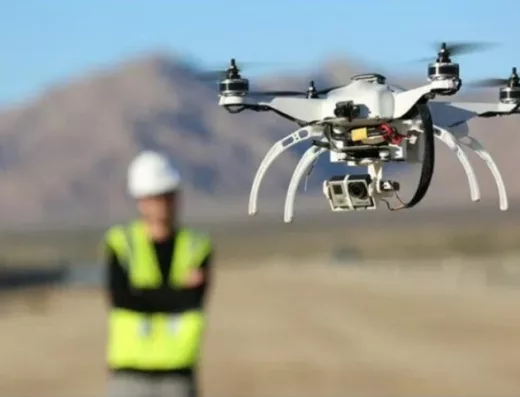
Bimdrone (often written as BIMdrone) is a Polish engineering company that mixes BIM technology with drone-based measurements. Based in Gliwice, it brings together designers, surveyors, BIM coordinators, and certified drone pilots under one brand. The team’s mission is to turn real‑world sites into Read more about Bimdrone
Appearing In
Agrotechnology
Agrotechnology is a precision agriculture service company based in Łobez, Poland that helps farmers understand their fields in detail. It works mostly with modern tools like soil scanners and data platforms to show how soil and crops change across a farm. The Read more about Agrotechnology
Appearing In
Cropler
Cropler is a young agri-tech company from Warsaw, Poland that builds smart cameras and software to watch crops in real time. Founded in 2022, it aims to give farmers clear “ground truth” data from the field, not just satellite images or manual Read more about Cropler
Appearing In
FlyFocus
FlyFocus is a Polish drone company that designs and builds unmanned aerial systems for defense, security, and critical infrastructure users. The team focuses on safety and reliability in real missions, often working with armed forces and public agencies that need trusted UAV solutions. The Read more about FlyFocus
Appearing In
Kestrel Aeronautics
Kestrel Aeronautics (now operating as RB Defence Kestrel Division) is a Warsaw‑based aerospace company focused on unmanned systems and defence electronics. The company designs and produces drones and onboard systems that can work in both civil and military projects. Founded in 2020, Read more about Kestrel Aeronautics
Appearing In
Locon Sky Project
Locon Sky Project is a drone services company from Warsaw, Poland that focuses on professional inspections and measurements using unmanned aerial vehicles (UAVs). Founded in 2016, it works with clients in energy, industry, construction, and infrastructure who need safe access to hard-to-reach Read more about Locon Sky Project
Appearing In

SatAgro
SatAgro is a Polish agri-tech company based in Warsaw that helps farmers use satellite data to manage their fields in a precise and sustainable way. It started as a Polish start-up around 2015 and now supports hundreds of farms in Poland and Read more about SatAgro
Appearing In

SkySnap
SkySnap is a Polish drone technology company that provides precise aerial data and digital tools for many sectors, including agriculture, construction, and mining. Founded in 2015 and based in Warsaw, it focuses on turning drone flights into clear maps, 3D models, and Read more about SkySnap
Appearing In
Agriculture in Poland is rapidly transforming as farmers adopt advanced unmanned aerial vehicles (UAVs) for crop monitoring, spraying, and data-driven decision-making. Top agricultural drone companies in Poland help producers increase yields, reduce input waste, and meet strict environmental and regulatory standards across diverse regions and farm sizes. From precision mapping to targeted spraying, these firms are becoming strategic partners for both small family farms and large agribusinesses.
As the local market for agri-drone services already exceeds USD 150 million and continues to grow, choosing the right technology and service provider directly impacts profitability and sustainability. Leading Polish UAV providers combine hardware, software, and analytics to deliver actionable insights instead of just raw images. This helps farmers optimize fertilizers, crop protection products, and irrigation while complying with safety and aviation regulations.
For buyers, the landscape can feel crowded, with a mix of local specialists and international vendors offering drones, analytics platforms, and turnkey spraying services. A curated list of the top agricultural drone companies in Poland gives you a reliable starting point, highlights proven partners, and reduces the risk of costly trial-and-error deployments. It ensures you focus on providers with a strong track record in Polish fields and familiarity with local rules and subsidies.
What Do Top Agricultural Drone Companies in Poland Do?
Top agricultural drone companies in Poland offer integrated solutions that cover hardware, data, and ongoing advisory services for farms and agribusinesses.
High-resolution crop monitoring and mapping using multispectral and RGB sensors to detect stress, disease, and nutrient issues early.
Precision spraying and spreading services (fertilizers, seed, pesticides) using UAV sprayers to treat only affected zones and reduce chemical use by 20–30%.
Drone-based soil and field analysis, including elevation and variability mapping that supports variable-rate applications and drainage planning.
Yield prediction, biomass estimation, and field performance reporting using AI and analytics engines tailored to Polish crops and climate conditions.
Training, certification support, and maintenance for farm teams adopting their own UAV fleets, including assistance with Polish remote pilot regulations.
Integration of drone data into existing farm management systems and precision agriculture platforms to enable seamless, end-to-end workflows.
These services help farmers move from intuition-based decisions to quantified, data-backed agronomy at scale.
Trusted by 18K+ usersList Your Firm

Recent Posts





Advertise With Us

How to Choose the Right Top Agricultural Drone Companies in Poland Partner
Define your agronomic and business goals
Start by aligning drone investments with clear agronomic, financial, and compliance objectives. Decide whether your primary focus is yield improvement (for example 10–20% uplift), input cost reduction, sustainability certification, or labor savings on spraying and scouting. This clarity will narrow the list of providers to those with relevant references in cereals, rapeseed, potatoes, orchards, or livestock pasture monitoring.
Evaluate service portfolio and specialization
Not all agricultural drone companies in Poland offer the same mix of hardware, spraying, and analytics services. Some specialize in DJI Agras-based spraying and seeding, others in high-end mapping and AI analytics, and a few provide end-to-end solutions including consulting and integration. Review whether the provider covers aerial mapping, prescription map generation, UAV spraying, soil analysis, and advisory in-house, or depends heavily on third parties.
Check technology stack and data capabilities
Assess the drones, sensors, and software platforms the company uses, as these directly affect accuracy, flight time, and insight quality. Look for multi-rotor and fixed-wing options, multispectral and thermal sensors, and software that can produce NDVI, NDRE, and other vegetation indices relevant to your crops. Ask for sample maps, dashboards, and integration options with your farm management or ERP tools to confirm the fit with your current stack.
Validate local expertise, compliance, and support
Poland has specific rules for agricultural UAV operations, including pilot certification, drone registration, and safe spraying practices. Choose partners who already operate under Polish Civil Aviation Authority approvals and understand local environmental and crop-protection regulations. Evaluate their response times, on-site support availability in your voivodeship, and language capabilities for your field teams.
Compare pricing models, ROI, and scalability
Project budgets for UAV-based mapping and spraying in Poland typically range from 8,000–30,000 PLN per season for service contracts, or 40,000–150,000 PLN for owning and operating hardware plus software licenses. Ask providers to estimate ROI based on your acreage, crop type, and historical input spend, targeting payback periods of 1–3 seasons. Finally, check whether their model scales from pilot projects on 50–100 hectares up to multi-thousand-hectare operations without performance or support bottlenecks.
Common Mistakes to Avoid when Top Agricultural Drone Companies in Poland
Focusing only on drone hardware, not outcomes
Many buyers prioritize drone specs such as flight time and payload while overlooking agronomic outcomes and data workflows. This leads to underused hardware and minimal productivity gains because no one is turning images into precise recommendations and actions. Work with companies that emphasize analytics, decision support, and measurable KPIs like yield per hectare and input savings.
Ignoring regulatory and safety requirements
Operating agricultural UAVs without full awareness of Polish regulations and safety guidelines can cause project delays, fines, or grounded fleets. A common mistake is assuming consumer-drone rules apply to heavy spraying platforms, which actually need stricter approvals and pilot training. Always verify your provider’s compliance track record and their ability to guide you through certificates, insurance, and safe operating procedures.
Underestimating integration and data management
Drone projects often fail when imagery and maps remain siloed, disconnected from farm management systems and agronomy workflows. If you cannot easily combine drone data with machinery logs, soil tests, and weather records, you lose much of the value of precision analytics. Avoid providers who cannot export data into your existing tools or who lack APIs and connectors for popular agritech platforms.
Treating drone projects as one-off experiments
Some farms run a single demo season with drones without planning long-term adoption, training, and scaling. As a result, they see inconsistent results and cannot build comparable data sets across years and crop cycles. Choose partners ready to build multi-year roadmaps, including expanding coverage, adding new crops, and enriching analytics with each season.
Overlooking total cost of ownership and support
Focusing only on purchase price while ignoring maintenance, battery replacement, insurance, and software subscriptions is another frequent mistake. Over 3–5 years, these factors can easily double the initial hardware cost, especially for large spraying drones. Ensure that your chosen provider is transparent about lifetime costs, offers clear SLAs, and can support hardware upgrades as technology advances.
What is the typical cost of agricultural drone services in Poland?
Agricultural drone services in Poland are usually priced per hectare, per flight, or per project, depending on the scope and sophistication of analytics required. For basic mapping and crop monitoring, you can expect rates from 15–40 PLN per hectare for large areas (over 200 hectares) and 30–70 PLN per hectare for smaller farms due to mobilization overhead.
Precision spraying services with specialized UAV sprayers and licensed pilots often fall in the range of 60–150 PLN per hectare, reflecting higher fuel, chemical-handling, and regulatory compliance costs.
End-to-end seasonal packages that combine mapping, prescription-map generation, and multiple spraying passes may range from 8,000–30,000 PLN per season for medium-sized farms, with discounts for multi-season engagements.
If you decide to own equipment, entry-level agricultural drone setups can start near 40,000 PLN and climb above 150,000 PLN for advanced fleets including backup units, batteries, and analytics software.
What industries and farm types benefit most from agricultural drones in Poland?
The primary beneficiaries are crop farmers managing cereals, maize, rapeseed, sugar beet, and potatoes, where field sizes and input costs justify precision interventions. Drone analytics and spraying also bring strong value to orchards, vineyards, and horticulture producers, where canopy health and disease pressure demand frequent, targeted monitoring.
Livestock farmers increasingly use drones to monitor pasture condition, water sources, and fencing, particularly across large grazing areas. Agribusinesses such as grain elevators, cooperatives, and input suppliers employ UAV services for regional crop assessments, trial-plot analysis, and marketing insights.
Agri-insurance providers and financial institutions also tap drone data to document losses and assess risk, enabling more accurate underwriting and faster claims processing.
How long do agricultural drone projects and deployments usually take?
A simple one-time mapping or spraying mission can be planned, approved, and executed within 3–10 days, depending on weather and airspace constraints.
More comprehensive projects—covering multiple fields, multi-spectral mapping, and analytics delivery—often roll out over 3–6 weeks from initial scoping to final reports. For farms building their own drone capabilities, procurement, training, and regulatory approvals may take 1–3 months before full operational readiness.
Multi-season partnerships involving yield benchmarking and continuous optimization typically span 2–3 years to realize the full benefits of year-over-year data. Many providers offer phased roadmaps, beginning with a 4–6 week pilot before scaling to full-farm coverage in subsequent seasons.
What ROI can Polish farms expect from agricultural drone adoption?
Studies of precision agriculture in Poland indicate potential productivity increases of 15–20% when technologies such as variable-rate application and precise scouting are applied consistently. In practice, many farms see 5–15% yield improvements combined with 10–25% reductions in fertilizer, pesticide, and fuel usage, depending on crop type and baseline practices.
Typical payback periods for drone service contracts are 1–2 seasons, while hardware ownership may pay back in 2–4 years for larger operations with more than 500 hectares. Additional ROI comes from reduced replanting, earlier detection of disease and pest outbreaks, and fewer manual scouting hours across large fields.
As AI-based analytics become more accurate and localized to Polish conditions, the upside for long-term ROI continues to grow.
Should I choose a local Polish provider or a global agricultural drone vendor?
Local Polish providers typically offer stronger knowledge of national regulations, local crop varieties, language, and regional weather patterns.
They may also have closer relationships with local agronomists, cooperatives, and universities, which supports applied research and fine-tuned recommendations. Global vendors, meanwhile, bring broader experience, large R&D budgets, and access to advanced hardware that might not yet be widely distributed in Poland. Many farms opt for hybrid arrangements where local partners deliver field operations and support, while global OEMs supply UAV platforms and analytics engines.
When evaluating options, compare the depth of local references, ability to support your region, and how well global tools are adapted to Polish language, regulations, and cropping systems.
How do agricultural drone solutions integrate with existing farm systems?
Modern agricultural drone companies in Poland increasingly provide APIs, data export formats, and pre-built connectors for common farm management and ERP platforms. Drone imagery is converted into georeferenced maps and layers (for example GeoTIFF, shapefiles) that can be imported into precision application equipment or agronomy software.
Some providers maintain cloud dashboards where growers can overlay drone data with soil tests, satellite imagery, and machine logs, enabling unified decision-making. Integration projects can take from a few days for simple data exports to several weeks for automated bidirectional workflows and custom reporting.
When assessing vendors, request demonstrations of live integrations and confirm ongoing support for your specific tractor, sprayer, and farm software brands.
What about security, data privacy, and regulatory compliance?
Drone operations in Polish agriculture are governed by national regulations that enforce pilot certification, drone registration, and safe airspace management. Reputable providers comply with these rules and follow strict protocols for storing flight logs, image data, and AI-generated insights.
Data is typically stored on secure, access-controlled cloud platforms or on-premise systems, depending on client requirements and sensitivity. Contracts often specify data ownership, retention periods, and sharing rules to protect farm and field-level information.
For large agribusinesses, vendors may support additional audits, ISO-style security certifications, and integration with existing identity and access management systems.
Are agricultural drones suitable for SMEs and smallholder farms in Poland?
Yes, small and medium-sized farms can benefit significantly from drone-based services without owning hardware. Many providers offer pay-per-hectare or subscription models that make advanced mapping and analytics cost-effective even for 30–100 hectare operations.
Cooperative models, where several farmers share service contracts or a UAV fleet, help distribute costs and improve ROI. Entry-level packages may start around 3,000–8,000 PLN per season, focusing on key fields or high-value crops. As technology matures and competition increases, pricing for SME-friendly offerings is expected to continue falling while functionality improves.
What engagement models do agricultural drone companies in Poland offer?
Engagement models range from fully managed services to hybrid and in-house ownership. In fully managed models, providers handle everything—planning, flying, analytics, and reporting—charging per hectare or per season.
Hybrid models combine leased drones with training, allowing your staff to perform flights while the provider processes data and maintains hardware. Full ownership models involve purchasing hardware and software, with optional support contracts and periodic expert audits.
Contract durations typically run from single projects through 1–3 year framework agreements, with volume discounts and seasonal pre-booking incentives.
What are the key agricultural drone trends in Poland for 2025?
Key trends include deeper integration of drones with AI-driven analytics for disease detection, yield forecasting, and automated prescription map generation. Multi-rotor drones dominate for flexibility, but fixed-wing and hybrid designs are gaining traction for large-scale farms seeking longer flight endurance.
There is growing emphasis on environmentally friendly practices, using drones to minimize chemical use and support sustainable certification schemes. Regulatory frameworks are evolving to streamline approvals while maintaining safety, including clearer guidance on heavy spraying platforms.
Finally, more collaborations are emerging between local UAV companies, agritech software providers, and research institutions to localize solutions and train the next generation of drone agronomists.
Get Featured on AppsInsight

If your organization is one of the leading agricultural drone companies in Poland, you can submit your details to AppsInsight for consideration in upcoming listings and in-depth buyer guides. Start by preparing a concise company profile that highlights your core services, agricultural focus areas, flagship projects, and verifiable client outcomes in terms of yield, input savings, and ROI. Include information about your technology stack, such as drone models, sensor types, analytics platforms, and integration capabilities with popular farm management systems.
Be sure to specify your coverage regions within Poland, supported crops and industries, pricing models, and any certifications or approvals from local aviation and agricultural authorities. AppsInsight editorial teams review submissions based on credibility, innovation, customer satisfaction, and market relevance, often prioritizing providers with strong case studies and transparent methodologies.
Shortlisted companies may be contacted for additional interviews, client references, or product demos to validate claims. To maximize your chances, keep your data up to date, share recent success metrics, and clearly explain how your solutions help Polish farms achieve sustainable, profitable growth.
Final Words
Top agricultural drone companies in Poland are reshaping how fields are monitored, sprayed, and managed, turning aerial data into a practical lever for yield and profitability.
By combining advanced UAV hardware, AI-powered analytics, and agronomic expertise, these providers help farmers cut waste, improve crop health, and comply with tightening environmental regulations.
Choosing the right partner is critical, because the difference between a basic mapping vendor and a strategic agritech ally can translate into millions of PLN in returns over just a few seasons. As drone technology matures and integrates more tightly with farm information systems, Polish farms that move early and select partners carefully will be better positioned to compete in both domestic and export markets.
Use this guide as a starting point to evaluate providers, clarify your objectives, and secure long-term ROI from precision agriculture investments.
Other Services
Explore every top-level category on the directory.