
Top Autonomous Drone Companies in Poland
List of top companies Poland has rapidly become a strategic hub for autonomous drone innovation, combining strong engineering talent with supportive regulations for beyond visual line of sight (BVLOS) operations. From defense and public safety to agriculture, logistics, and infrastructure, local companies are building intelligent unmanned systems that reduce risk, cut costs, and unlock real-time data at scale.
For enterprises, choosing the right partner among the top autonomous drone companies in Poland can determine how quickly they move from pilots to production deployments and measurable ROI.
These providers do far more than sell hardware; they design, integrate, and operate complete UAV ecosystems, often including AI-powered analytics and secure data pipelines. Many are deeply involved in European R&D initiatives and leverage EASA-aligned rules that allow certain BVLOS operations in non‑segregated airspace, speeding up real-world implementations.
As drone fleets scale from a handful of devices to hundreds of units, working with experienced Polish vendors helps organizations manage safety, compliance, and performance without overloading internal teams.
At the same time, the market includes everything from niche startups to large defense groups, each with different strengths, pricing, and sector expertise. A structured selection process—considering certifications, flight hours, and industry references—ensures you partner with a company that can design reliable mission profiles, obtain necessary approvals, and support long-term operations.
This guide outlines what these companies do, how to select the right partner, pitfalls to avoid, and how to get your business listed on AppsInsight.
What Do Top Autonomous Drone Companies in Poland Do?
Leading autonomous drone providers in Poland typically offer end‑to‑end UAV solutions, from platform design to ongoing managed services.
System design and manufacturing: Custom fixed‑wing, multirotor, and hybrid drones for surveillance, mapping, agriculture, and defense missions.
Mission software and autonomy: Navigation, obstacle avoidance, AI vision, and route planning, often optimized for BVLOS and swarm scenarios.
Data capture and analytics: Photogrammetry, LiDAR, thermal imaging, and AI-based data processing to turn raw imagery into actionable insights.
Regulatory compliance and training: Support for EASA-compliant operations, BVLOS approvals, pilot training, and safety documentation.
Operations and maintenance: Fleet management, repair services, and long‑term SLAs to keep mission-critical drones flight‑ready.
Many Polish firms also integrate drones with existing IT and OT systems—SCADA, GIS, ERP, and cloud platforms—so organizations can trigger workflows automatically from aerial data. This combination of hardware, autonomy, and analytics is what enables practical, scalable drone programs rather than isolated experiments.


 Trusted by 18K+ users






WB Electronics (WB Group)


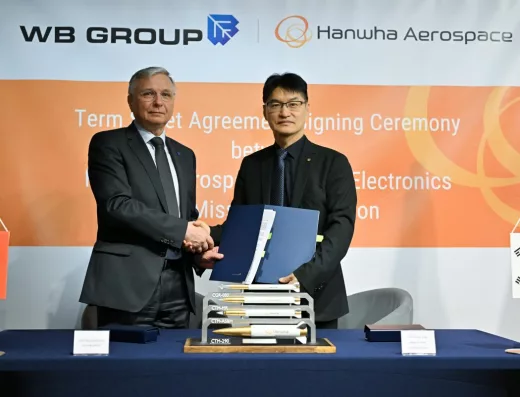
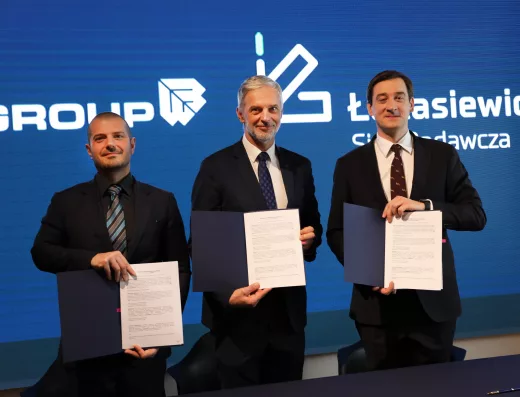
WB Electronics, part of WB Group, is a leading Polish defence technology company focused on advanced electronics and unmanned systems. It designs and delivers complete UAV solutions for reconnaissance, surveillance, and strike missions used by armed forces in Poland and many allied Read more about WB Electronics (WB Group)
Appearing In
Aerobits
Aerobits is a Polish technology company that specialises in miniaturised avionics and ADS‑B solutions for drones and manned aircraft. Its goal is to make airspace surveillance and identification hardware so small and light that it can fit even into compact UAVs without Read more about Aerobits
Appearing In

B-Technology
B-Technology is a Polish technology company that designs, tests, and produces modern drones, robots, and custom electronics. Its goal is to create new ways of movement on land and in the air, using smart engineering and strong in‑house production tools. The company Read more about B-Technology
Appearing In
Dronehub
Dronehub is a Polish technology company that builds autonomous “drone‑in‑a‑box” systems for industrial users. Its goal is to make drone flights fully automatic, so drones can take off, land, charge, and fly missions without people on site. The company focuses on long‑term Read more about Dronehub
Appearing In

FlyFocus
FlyFocus is a Polish drone company that designs and builds unmanned aerial systems for defense, security, and critical infrastructure users. The team focuses on safety and reliability in real missions, often working with armed forces and public agencies that need trusted UAV solutions. The Read more about FlyFocus
Appearing In
FlyTech Solutions
FlyTech Solutions is a Polish UAV company that designs and builds unmanned flying systems for professional users. Its goal is to give industry, survey, and agriculture teams simple drone tools that collect precise data from the air. The company creates complete UAV Read more about FlyTech Solutions
Appearing In
Kestrel Aeronautics
Kestrel Aeronautics (now operating as RB Defence Kestrel Division) is a Warsaw‑based aerospace company focused on unmanned systems and defence electronics. The company designs and produces drones and onboard systems that can work in both civil and military projects. Founded in 2020, Read more about Kestrel Aeronautics
Appearing In
REAKTO
REAKTO is a Kraków‑based Polish startup that builds autonomous drone systems for rapid security response. Its goal is simple: send a drone to an alarm within minutes, check what is happening, and help protect people and property. The company creates its own Read more about REAKTO
Appearing In
uAvionics Unmanned Systems
uAvionics Unmanned Systems is a Warsaw‑based company that designs and builds unmanned aircraft and drone electronics. Its goal is to give clients reliable small and medium UAV platforms plus key onboard systems in one place. The company offers drones under 7 kg Read more about uAvionics Unmanned Systems
Appearing In

Vertigo FPV (Vertigo Global – ISR Systems)
Vertigo Global is a Polish company that designs and produces advanced camera gimbals for drones and other unmanned platforms. Its goal is to give UAV operators stable, high‑quality video and thermal images for ISR and surveillance missions. Founded in 2016, Vertigo builds Read more about Vertigo FPV (Vertigo Global – ISR Systems)
Appearing In
Poland has rapidly become a strategic hub for autonomous drone innovation, combining strong engineering talent with supportive regulations for beyond visual line of sight (BVLOS) operations. From defense and public safety to agriculture, logistics, and infrastructure, local companies are building intelligent unmanned systems that reduce risk, cut costs, and unlock real-time data at scale.
For enterprises, choosing the right partner among the top autonomous drone companies in Poland can determine how quickly they move from pilots to production deployments and measurable ROI.
These providers do far more than sell hardware; they design, integrate, and operate complete UAV ecosystems, often including AI-powered analytics and secure data pipelines. Many are deeply involved in European R&D initiatives and leverage EASA-aligned rules that allow certain BVLOS operations in non‑segregated airspace, speeding up real-world implementations.
As drone fleets scale from a handful of devices to hundreds of units, working with experienced Polish vendors helps organizations manage safety, compliance, and performance without overloading internal teams.
At the same time, the market includes everything from niche startups to large defense groups, each with different strengths, pricing, and sector expertise. A structured selection process—considering certifications, flight hours, and industry references—ensures you partner with a company that can design reliable mission profiles, obtain necessary approvals, and support long-term operations.
This guide outlines what these companies do, how to select the right partner, pitfalls to avoid, and how to get your business listed on AppsInsight.
What Do Top Autonomous Drone Companies in Poland Do?
Leading autonomous drone providers in Poland typically offer end‑to‑end UAV solutions, from platform design to ongoing managed services.
System design and manufacturing: Custom fixed‑wing, multirotor, and hybrid drones for surveillance, mapping, agriculture, and defense missions.
Mission software and autonomy: Navigation, obstacle avoidance, AI vision, and route planning, often optimized for BVLOS and swarm scenarios.
Data capture and analytics: Photogrammetry, LiDAR, thermal imaging, and AI-based data processing to turn raw imagery into actionable insights.
Regulatory compliance and training: Support for EASA-compliant operations, BVLOS approvals, pilot training, and safety documentation.
Operations and maintenance: Fleet management, repair services, and long‑term SLAs to keep mission-critical drones flight‑ready.
Many Polish firms also integrate drones with existing IT and OT systems—SCADA, GIS, ERP, and cloud platforms—so organizations can trigger workflows automatically from aerial data. This combination of hardware, autonomy, and analytics is what enables practical, scalable drone programs rather than isolated experiments.
Trusted by 18K+ usersList Your Firm

Recent Posts





Advertise With Us

How to Choose the Right Top Autonomous Drone Companies in Poland Partner
Selecting the right partner starts with clarifying your operational goals and regulatory constraints, then matching those needs with a vendor’s domain expertise.
For example, a utility seeking automated line inspections needs very different capabilities compared with a logistics operator planning urban delivery corridors.
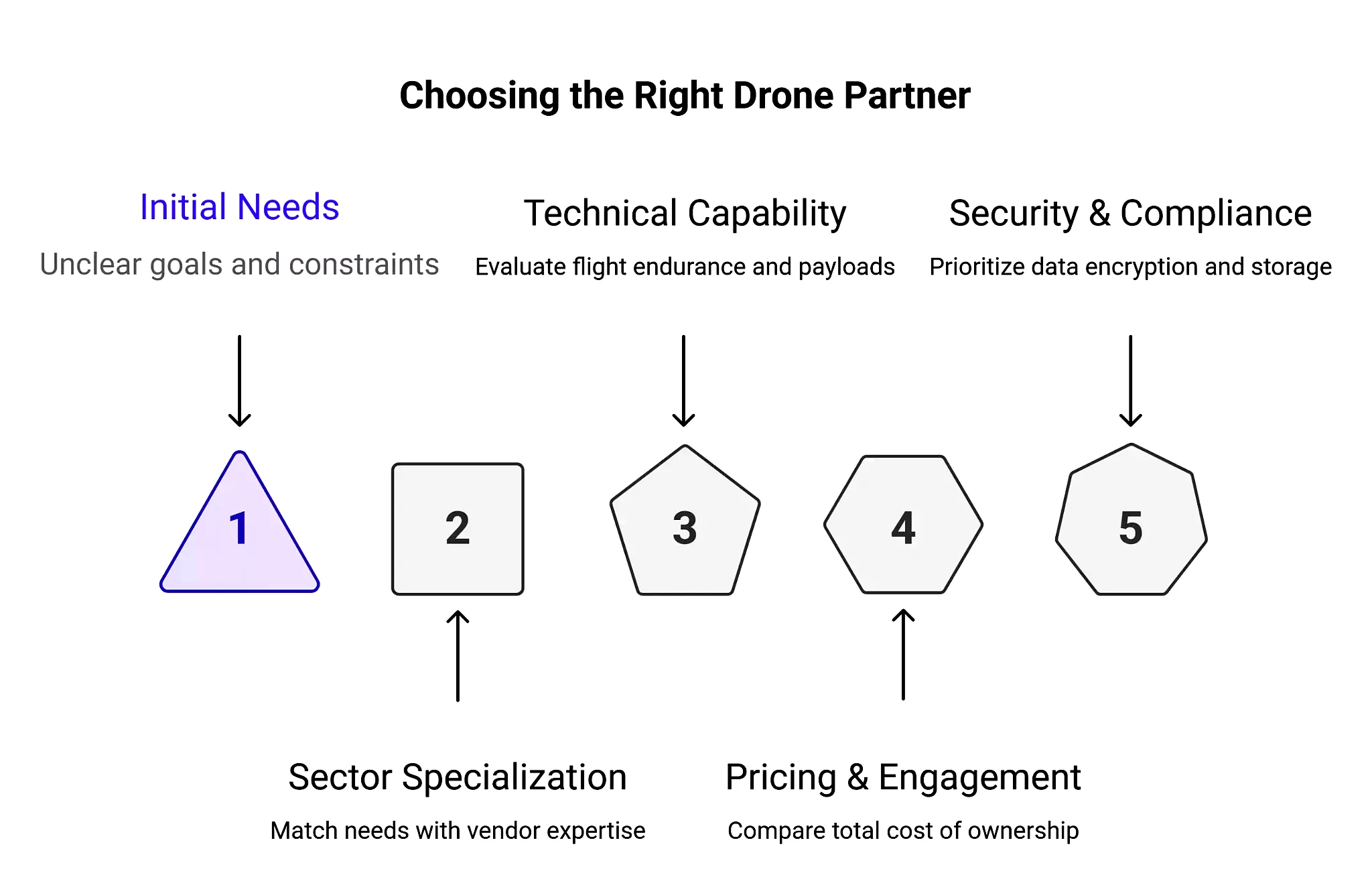
Look first at sector specialization. Some Polish providers focus on defense and critical infrastructure, offering rugged hardware and secure communications, while others design systems optimized for agriculture, construction, or environmental monitoring. Ask for case studies that closely resemble your intended use cases, with details on terrain, weather, flight duration, payload type, and data outputs.
Technical capability comes next. Evaluate flight endurance (often 30–90 minutes per mission for multirotors, 2–5 hours for fixed‑wing platforms), supported payload weights, and whether the vendor has experience with BVLOS operations within your intended airspace class. Confirm which autonomy features are available out of the box, such as dynamic rerouting, automated takeoff/landing, and fail‑safe behaviors in GNSS‑denied environments.
Pricing and engagement models vary widely, typically ranging from 20,000–80,000 EUR for an enterprise‑grade drone plus ground systems, or 3,000–15,000 EUR per month for a “drones‑as‑a‑service” subscription covering equipment, pilots, permits, and analytics. Clarify what’s included—hardware, software licenses, cloud storage, training, support—and compare multi‑year total cost of ownership instead of headline unit prices alone.
Security and compliance should be treated as core selection criteria rather than afterthoughts. Ask how flight logs, sensor data, and video streams are encrypted in transit and at rest, and where data is stored (local data centers in the EU vs. global cloud regions). For sensitive applications, prioritize providers offering on‑premise or virtual private cloud deployment options, role‑based access control, and audit trails.
Finally, assess their ability to scale with you. Leading Polish drone vendors often support gradual rollouts, starting with a 3–6 month pilot, then expanding to multi‑site programs over 12–24 months with standardized playbooks and training. A strong partner will proactively recommend process changes, KPIs, and governance structures so your drone program keeps delivering value as it grows.
Common Mistakes to Avoid When Working With Top Autonomous Drone Companies in Poland
One common mistake is underestimating regulatory complexity and assuming the vendor will “handle everything” without your involvement. While top providers can guide BVLOS approvals and risk assessments, your organization still needs internal stakeholders for legal, safety, and data protection to sign off on procedures. Skipping this alignment can delay projects by 3–9 months when approvals or documentation are challenged.
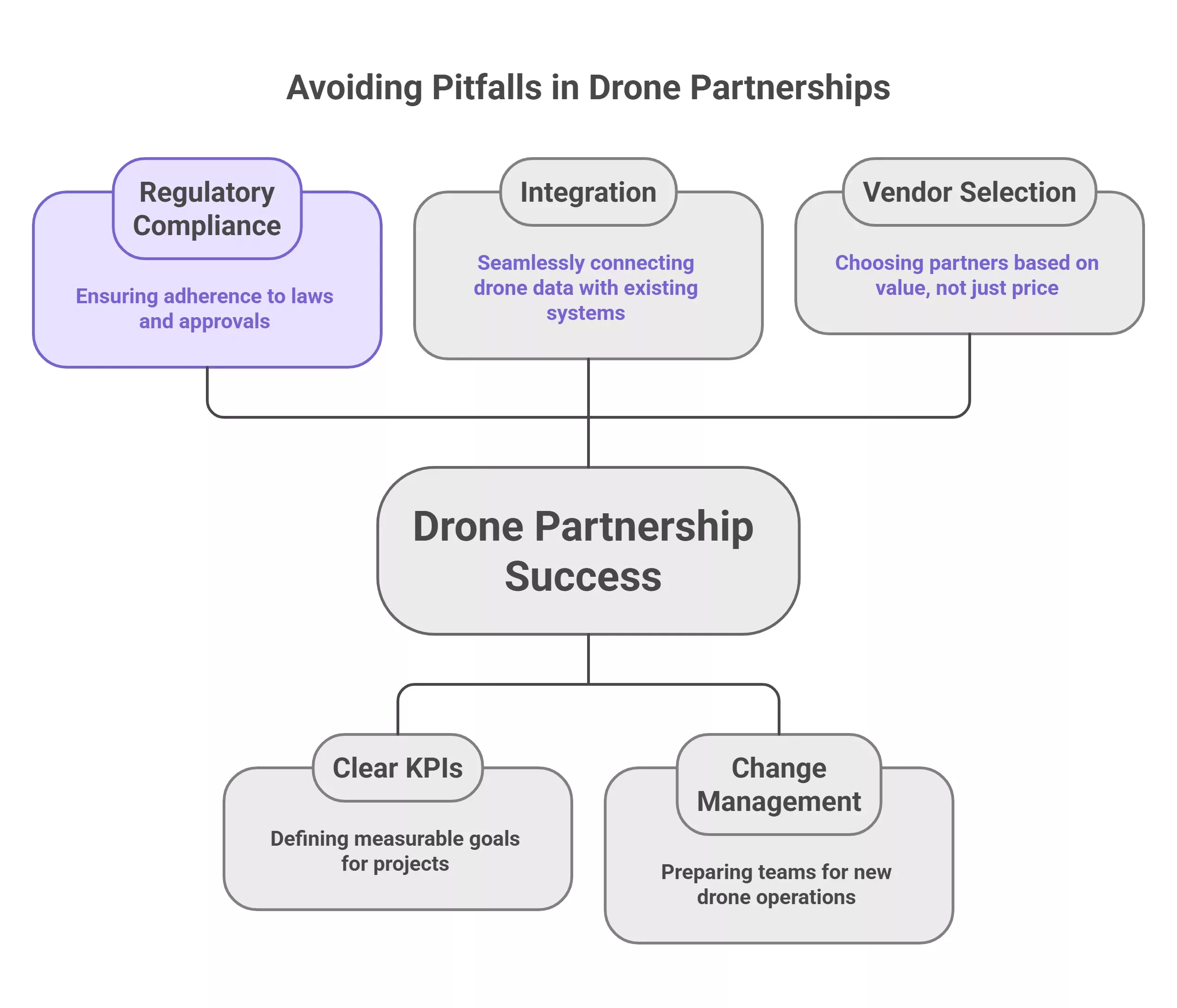
Another pitfall is running proof‑of‑concept projects without clear business KPIs. Companies may fly hundreds of test missions but fail to define measurable targets—such as reducing inspection time by 40–60%, cutting manual work hours by 30–50%, or improving anomaly detection rates by 20–35%—making it difficult to justify further investment. Before contracting, agree with your vendor on specific metrics, baseline data collection, and reporting cadence.
Organizations also tend to focus heavily on hardware specifications while overlooking integration and data workflows. Without tight integration to GIS, BIM, asset‑management or maintenance platforms, drone data stays siloed in PDFs and static reports, which limits ROI. Ask vendors to demonstrate end‑to‑end workflows, from mission planning to automatic ticket creation or work‑order updates in your existing systems.
A fourth mistake is neglecting change management and internal training. Even when drone operations are outsourced, your teams must understand how to request missions, interpret outputs, and embed new insights into daily decision‑making. Budget at least 20–40 hours of training per relevant employee during rollout and allocate 5–10% of project costs to documentation and internal enablement.
Lastly, some buyers choose vendors purely on lowest price, ignoring track record, support quality, and long‑term roadmap. Cheaper providers may lack experience in complex Polish or EU airspace, have limited local support, or rely on proprietary components that become expensive to maintain after 2–3 years. It is usually wiser to pay 10–25% more for a partner with proven stability, strong references, and a transparent innovation roadmap.
What Is the Typical Cost of Working With Top Autonomous Drone Companies in Poland?
Costs depend heavily on whether you purchase systems outright or adopt a service-based model. For hardware‑centric projects, enterprise-grade autonomous drone packages in Poland often range from 20,000–80,000 EUR per unit, including ground control stations, basic software, and limited training. Complex fixed‑wing or VTOL platforms with long endurance and multiple payloads can exceed 100,000 EUR, particularly in defense and high‑risk applications.
Service-based engagements usually start at 3,000–6,000 EUR per month for limited regional operations, scaling up to 10,000–25,000 EUR per month for nationwide deployments with multiple aircraft, pilots, and analytics services. These packages typically cover mission planning, flight execution, regulatory compliance, and data processing, which can be attractive for organizations that want predictable operating expenses instead of capital expenditure.
Implementation timelines range from 6–12 weeks for simple inspection use cases to 9–18 months for large multi‑site deployments with BVLOS operations and deep IT/OT integration. Many Polish vendors offer phased projects with a 3–6 month pilot (often 30,000–150,000 EUR), followed by scale‑out phases funded from demonstrated savings or new revenue generated. Over a 3–5 year horizon, well‑designed drone programs typically aim for ROI improvements of 150–300%, driven by reduced manual inspections, less downtime, and better asset insights.
What Is Driving Adoption of Autonomous Drone Companies in Poland?
Several structural factors are accelerating adoption of autonomous drones in Poland. First, the country has a strong aerospace and defense ecosystem, including companies that design and manufacture UAV systems and payloads domestically, which shortens supply chains and support cycles for local customers. Second, regulatory frameworks now allow certain BVLOS operations outside segregated airspace for drones up to 25 kg, provided safety requirements are met, enabling more practical large‑area missions.
Industries such as energy, utilities, construction, agriculture, and logistics increasingly rely on high‑frequency aerial data for monitoring and planning. Instead of traditional manned inspections or sporadic satellite imagery, autonomous drones can fly daily or even multiple times per day at costs that are 30–70% lower than legacy methods, especially when fleets scale beyond 10–20 units. This frequency enables near‑real‑time digital twins of infrastructure and land assets.
Polish startups are also leveraging AI, computer vision, and edge computing to automate anomaly detection, object tracking, and situational awareness. This reduces the need for manual image review and allows organizations to handle large datasets with small teams, often improving detection rates and response times by 20–50%. As cloud and edge platforms mature, more processing can be pushed onto the drone itself, further enabling fully autonomous missions with minimal human oversight.
From a strategic perspective, enterprises see autonomous drones as part of broader digital transformation and Industry 4.0 initiatives. They are integrating drone data into predictive maintenance, precision agriculture, inventory management, and public safety systems to support data‑driven decision‑making at scale. This combination of local manufacturing, favorable regulations, and strong AI capability is why Poland’s drone ecosystem is increasingly relevant for regional and global buyers.
Get Featured on AppsInsight
If your company provides autonomous drone solutions in Poland and you want to be considered for upcoming AppsInsight listings, start by preparing a concise but comprehensive profile. Include your core services (design, manufacturing, operations, analytics), primary industries served, and examples of recent projects—ideally with numeric outcomes such as inspection time reductions, coverage area per flight, or ROI improvements.

Highlight certifications, BVLOS approvals, safety records, and any EASA-compliant procedures you follow, as these factors are critical for enterprise buyers.
Next, share details about your engagement models (project-based, drones‑as‑a‑service, licensing) and typical budget ranges so prospects can quickly qualify fit. Make sure your website has clear contact information, case studies, and up-to-date technical specifications, as AppsInsight analysts often validate claims against public material.
Then, submit your company information via the AppsInsight contact or listing submission form, including links to your website, LinkedIn, and any product pages relevant to autonomous drones.
Providing references or testimonials from clients in Poland or the wider EU can further strengthen your evaluation. Our editorial team reviews submissions on dimensions like innovation, customer satisfaction, depth of expertise, and market traction. Shortlisted companies may be contacted for additional information, demos, or interviews before final inclusion.
By maintaining accurate, transparent, and metrics-driven information, you increase your chances of getting featured in future editions focused on top autonomous drone companies in Poland.
Final Words
Autonomous drone companies in Poland are reshaping how organizations inspect assets, monitor environments, and respond to critical events, offering a powerful mix of local engineering, regulatory experience, and AI-driven autonomy.
For businesses under pressure to improve safety, reduce operational costs, and access timely data, partnering with the right provider can unlock double‑digit efficiency gains and strong ROI over just a few years.
However, realizing this potential requires careful selection, clear KPIs, and a long‑term roadmap that spans hardware, software, and processes.
As you evaluate top Polish vendors, look beyond marketing claims to understand their track record in your specific industry, their approach to security and compliance, and how well they integrate into your existing technology stack.
Whether you are piloting your first UAV initiative or scaling a mature program across multiple sites, a thoughtfully chosen partner will help you navigate regulations, de‑risk deployments, and continuously adapt as technology and airspace rules evolve.
By investing the time upfront to select carefully, you position your organization to benefit from autonomous drones as a strategic capability rather than a short‑term experiment.
FAQs
How much do autonomous drone projects with top companies in Poland usually cost?
Most enterprise projects with leading Polish drone providers fall into three bands: pilot projects, initial deployments, and large‑scale rollouts. Pilot phases typically cost 30,000–150,000 EUR over 3–6 months, covering hardware rental or limited purchase, flight operations, and basic analytics.
Initial deployments for a single region or facility often require 150,000–500,000 EUR over 6–12 months, including 3–10 drones, software licensing, integration, and training. National or multi‑country programs with larger fleets and advanced AI can exceed 1 million EUR over 12–24 months, though many vendors spread costs via monthly drones‑as‑a‑service models.
Buyers should compare 3–5 year total cost of ownership and potential savings against these ranges to judge value.
Which industries in Poland benefit most from autonomous drone companies?
In Poland, the most active adopters include energy and utilities, construction and infrastructure, agriculture, logistics, and public safety. Power grid operators and pipeline owners use drones for line patrols, corrosion checks, and vegetation management, reducing manual inspection hours by 30–60% and cutting outage risks.
Construction and infrastructure firms deploy UAVs for progress tracking, volumetric measurements, and digital twin updates across roads, rail, and industrial sites. Farmers and agritech companies leverage multispectral drones for crop health monitoring, variable‑rate applications, and yield prediction.
Police, fire services, and emergency responders apply autonomous drones for situational awareness, search and rescue, and disaster assessment, where speed and safety are crucial.
How long do autonomous drone implementations usually take with leading Polish vendors?
Implementation timelines depend on complexity, but most organizations move through three phases: discovery, pilot, and scale‑up. Discovery and design typically take 4–8 weeks, covering requirements gathering, airspace analysis, and high‑level solution architecture.
Pilot projects—usually limited to one or two sites—run for 3–6 months with 20–100 missions, giving enough data to compare against baseline KPIs. If successful, scale‑up across additional regions can take another 6–18 months, especially when BVLOS approvals, IT/OT integration, and change management are involved.
Overall, many Polish enterprises move from first workshop to production‑grade operations in 9–18 months, with low‑complexity cases on the shorter end of that range.
What kind of ROI can businesses expect from working with top autonomous drone companies in Poland?
ROI varies by industry, but many organizations target payback periods of 12–36 months. Savings typically come from reduced manual inspection costs, fewer site visits, better asset performance, and lower incident rates.
For example, replacing manned helicopter inspections with autonomous drones can cut per‑kilometer inspection costs by 40–70%, while improving defect detection accuracy. In agriculture, precision spraying and targeted treatment can reduce input usage by 15–30% while stabilizing or enhancing yields.
When these benefits are aggregated over large asset bases or land areas, 150–300% ROI over 3–5 years is achievable, especially when drone programs are tightly integrated with maintenance and planning workflows.
Should I work with local Polish autonomous drone vendors or global providers?
Local Polish vendors offer strong advantages for operations within Poland and nearby EU markets. They typically understand national and European regulations in detail, have established relationships with local authorities, and can respond quickly with on‑site support.
Global vendors, on the other hand, may provide broader product portfolios and experience across multiple geographies, which is helpful for multinational deployments. Many enterprises choose a hybrid approach: leveraging local Polish partners for operations, customization, and support, while integrating global platforms or hardware where appropriate.
The best choice depends on your footprint, standardization requirements, and how critical local response times are for your use cases.
How do top autonomous drone companies in Poland integrate with existing IT and OT systems?
Leading providers emphasize integration as a core capability, not an add‑on. They typically offer APIs, SDKs, and connectors to GIS tools, asset‑management systems, ERP platforms, and cloud data lakes.
For example, inspection results can automatically generate maintenance tickets in CMMS tools, update digital twins, or trigger alerts in existing SCADA dashboards.
Many vendors also support exporting processed data in standard formats like GeoTIFF, LAS, and IFC for use in BIM and engineering environments. During vendor selection, ask for live demonstrations of end‑to‑end workflows to validate how well integrations fit your current architecture.
How do Polish autonomous drone providers handle safety and security?
Safety and security are central in Polish UAV operations due to EASA regulations and national aviation rules. Top vendors adhere to structured risk assessment methodologies, implement geofencing, fail‑safe procedures, and emergency return‑to‑home protocols.
On the cybersecurity side, enterprise providers normally encrypt flight data and video streams, use authenticated command links, and enforce role‑based access control for mission and data portals. Many support EU data residency requirements, storing information in EU‑based data centers or on‑premise infrastructure for sensitive projects.
When evaluating candidates, ask for documentation of their safety management systems and security certifications or audits.
Are top autonomous drone companies in Poland suitable for SMEs, or only for large enterprises?
Small and mid‑sized enterprises are an important segment for many Polish drone companies. Drones‑as‑a‑service models allow SMEs to access professional hardware, pilots, and analytics without large upfront capital expenditure, starting from a few thousand euros per month.
Typical SME use cases include roof inspections, stockpile measurements, farm monitoring, and small‑scale infrastructure surveys. Vendors may offer pre‑packaged services with standardized deliverables and timelines so smaller clients can get value quickly without custom development.
As needs grow, SMEs can transition to owning hardware or expanding service scopes, often over 12–24 months.
What engagement models do leading autonomous drone firms in Poland offer?
Most providers support multiple engagement models to fit different maturity levels and budgets. Common options include project‑based services (fixed‑scope inspections or surveys), retainer-based operations (e.g., monthly site monitoring), and full drones‑as‑a‑service where the vendor supplies hardware, pilots, software, and analytics.
Some vendors also license their autonomy and analytics platforms separately for customers who already own drones but need smarter software. Contract lengths range from one‑off engagements to multi‑year agreements, with pricing adjusted based on mission frequency, flight hours, and data volumes.
Clarifying which responsibilities sit with you versus the vendor is essential to avoid gaps in compliance or maintenance.
What trends are shaping autonomous drone companies in Poland?
Several trends are reshaping the Polish autonomous drone landscape. There is a clear shift toward higher levels of autonomy, including automated docking stations, remote operations centers, and AI-driven decision support to reduce manual piloting. Edge computing is becoming more important, with more processing done onboard drones to enable real‑time detection and response.
Integration with other robotics and IoT systems—such as ground robots and fixed sensors—is also growing, creating more holistic situational awareness. Finally, new business models like “inspection‑as‑a‑service” and subscription-based analytics are making advanced UAV capabilities accessible to a broader range of organizations.
Other Services
Explore every top-level category on the directory.