
Artificial Intelligence (AI) has transitioned from a futuristic concept to a mainstream technology that drives innovation across industries. From smart assistants like Siri and Alexa to advanced recommendation engines on e-commerce platforms, AI is increasingly becoming the backbone of intelligent applications. As we approach 2026, the demand for AI-powered apps is skyrocketing, and businesses are keen to leverage AI to gain a competitive edge.
However, one question frequently arises among entrepreneurs, startups, and established companies alike: how much does it cost to develop an AI app in 2026? Understanding the expenses involved is crucial because AI app development is not just about coding, it encompasses designing complex algorithms, training machine learning models, integrating intelligent APIs, and ensuring robust performance across platforms.
With AI technologies evolving rapidly, the AI app development cost in 2026 can vary widely depending on several factors, including the app’s complexity, the type of AI functionality, the development team’s expertise, and the infrastructure required to support intelligent features. From chatbots and virtual assistants to predictive analytics and computer vision applications, each solution carries its unique development demands and associated costs.
This comprehensive guide aims to demystify the cost to develop an AI app, providing insights into the factors influencing pricing, a step-by-step breakdown of the development process, and a practical AI app development pricing guide.
By the end of this article, you will have a clear understanding of what it takes to plan, budget, and execute a successful AI app project in 2026, helping you make informed decisions and optimize your investment.
Why AI App Development is Gaining Momentum?

Artificial Intelligence is no longer a niche technology; it has become a critical driver of business innovation. In 2026, AI app development is poised to grow even faster due to advancements in machine learning algorithms, cloud computing, and data processing capabilities. Companies across industries healthcare, finance, e-commerce, logistics, and entertainment, are actively integrating AI into their products and services to stay competitive.
One key reason for this surge is the increasing demand for intelligent and personalized user experiences. AI apps can analyze user behavior, predict preferences, and automate repetitive tasks, offering a level of convenience and engagement that traditional apps cannot match. For example, recommendation engines on e-commerce platforms or predictive maintenance systems in manufacturing showcase the tangible benefits AI apps deliver.
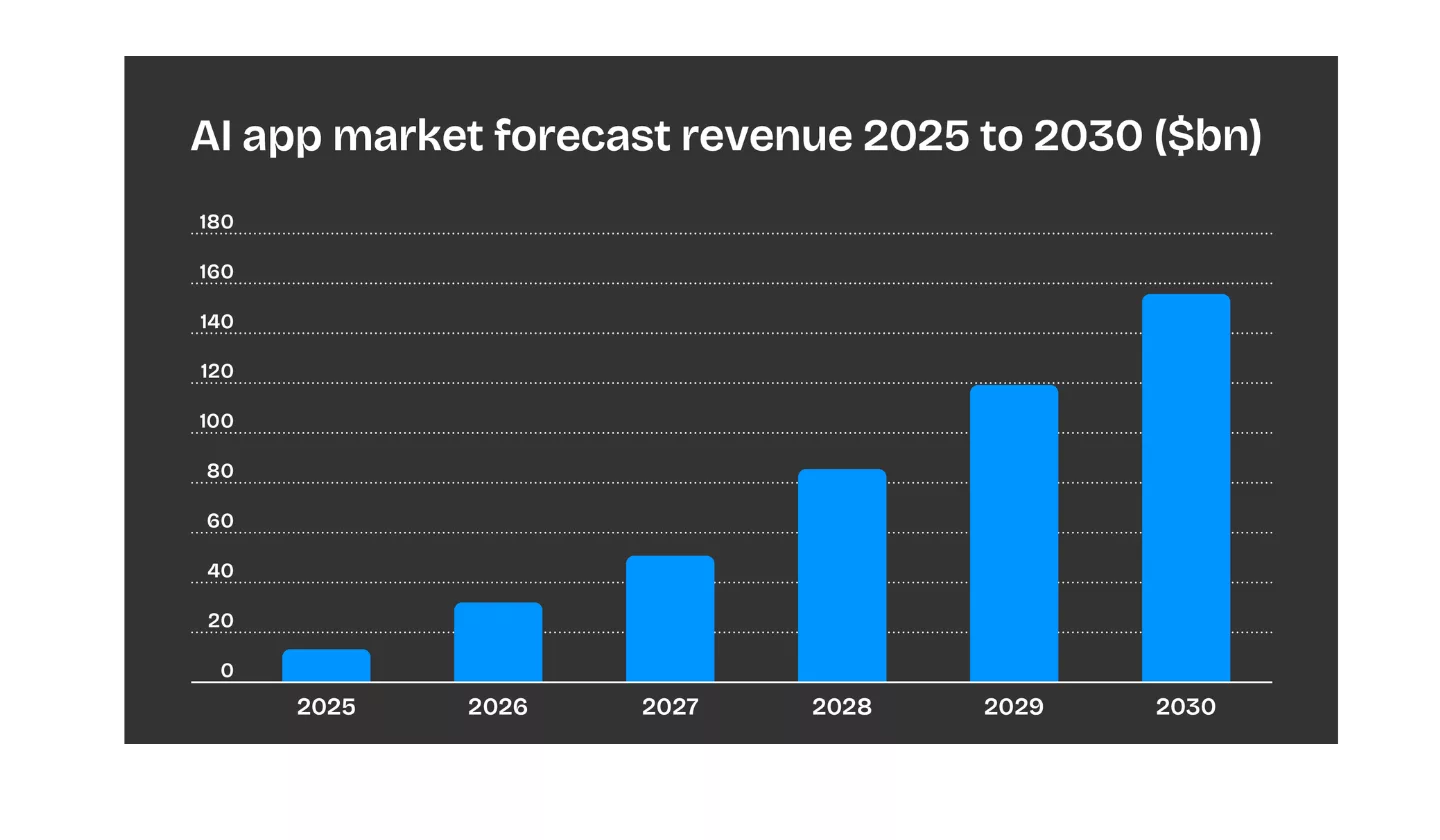
From a market perspective, investors and businesses recognize the high return on investment (ROI) associated with AI applications. As AI tools become more sophisticated and accessible, companies are better equipped to develop apps that provide actionable insights, optimize operations, and enhance customer satisfaction. This trend directly impacts AI app development cost, as the demand for skilled developers, advanced AI models, and robust infrastructure grows.
Moreover, regulatory frameworks and ethical AI practices are becoming more defined, giving businesses the confidence to invest in AI technologies. Startups and enterprises alike are seizing this opportunity, creating a competitive landscape where innovative AI apps can capture significant market share.
In summary, the momentum behind AI app development is fueled by technological advancements, market potential, and the growing necessity for intelligent, data-driven applications. Understanding this context is essential when estimating the AI app development cost, as businesses must plan for not just development but also long-term scalability and maintenance.
Factors Affecting AI App Development Cost in 2026
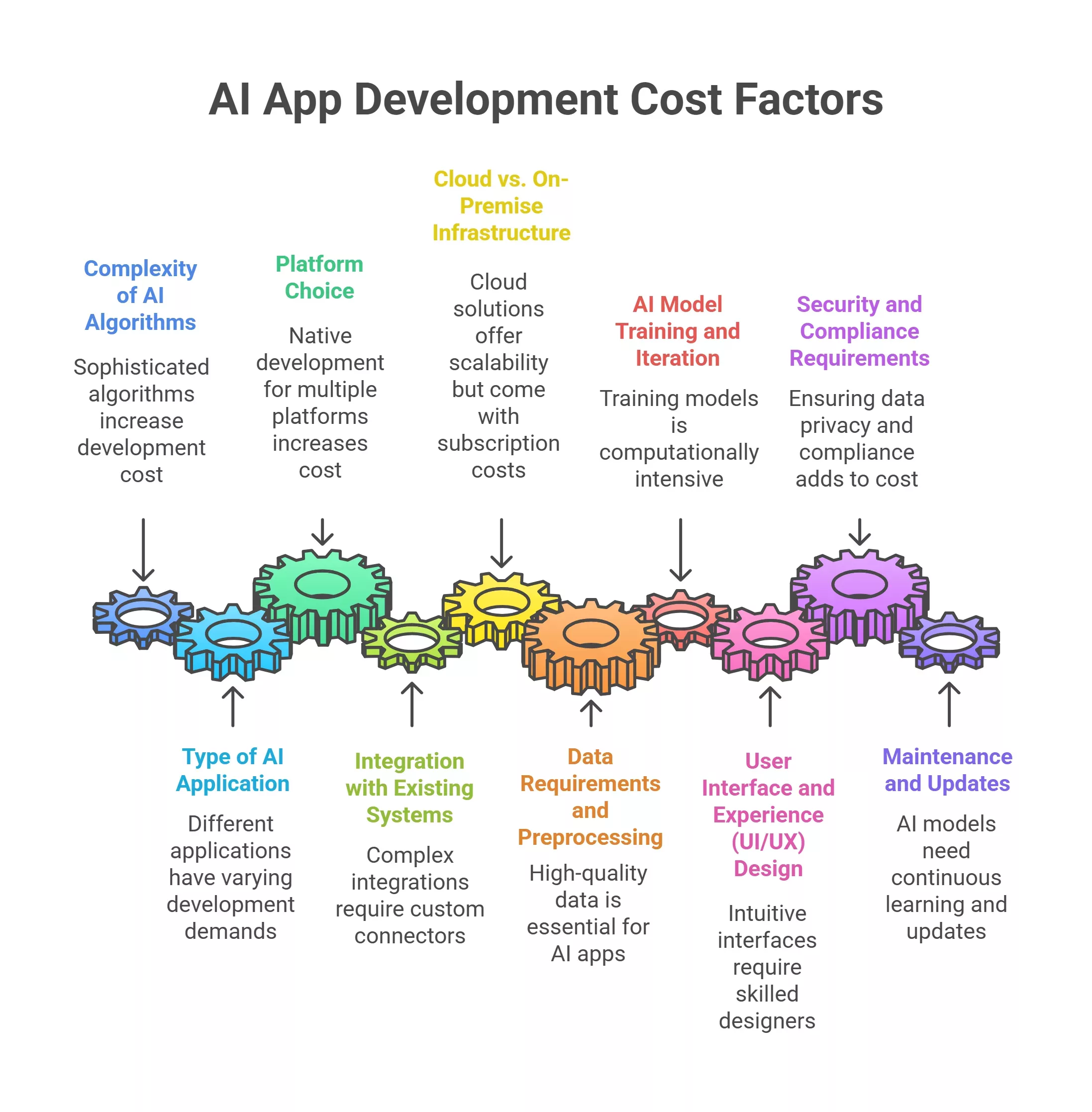
The AI app development cost depends on a variety of factors. Understanding these elements will help you plan your budget effectively and avoid unexpected expenses. Below are the top 10 factors that influence AI app development costs:
1. Complexity of AI Algorithms
The sophistication of the AI algorithms you integrate directly impacts development cost. Simple rule-based AI systems, like basic chatbots, are less expensive, while advanced machine learning, deep learning, or natural language processing (NLP) models require more expertise, longer training periods, and higher computational power.
2. Type of AI Application
Different AI applications have varying development demands. For instance:
- Chatbots and virtual assistants require NLP models.
- Image and video recognition apps rely on computer vision algorithms.
- Predictive analytics apps need robust data modeling and forecasting capabilities.
More complex AI functions increase both development time and cost.
3. Platform Choice
The platforms you target, iOS, Android, web, or cross-platform, affect cost. Developing natively for multiple platforms may increase expenses, while cross-platform solutions may save development time but require additional optimization for AI performance.
4. Integration with Existing Systems
AI apps often need to interact with databases, third-party APIs, or enterprise systems. The complexity of these integrations influences development time and cost, as seamless communication between systems may require custom connectors or middleware.
5. Cloud vs. On-Premise Infrastructure
AI apps require significant computing power for model training and processing. Cloud-based solutions (AWS, Azure, Google Cloud) offer scalability but come with subscription costs, whereas on-premise solutions require higher initial investment in servers and maintenance.
6. Data Requirements and Preprocessing
High-quality data is the backbone of AI apps. Collecting, cleaning, labeling, and preprocessing datasets takes time and resources. Large datasets or complex data structures increase the cost to build an AI app substantially, especially for apps relying on real-time or predictive analytics.
7. AI Model Training and Iteration
Training machine learning models is computationally intensive. The more iterations needed to achieve accuracy, the higher the cost. Factors such as dataset size, algorithm complexity, and required precision all impact training time and computational expenses.
8. User Interface and Experience (UI/UX) Design
AI apps must present complex functionality in a simple and user-friendly manner. Designing intuitive interfaces for AI features—like recommendation engines or voice assistants—requires skilled designers, adding to development costs.
9. Security and Compliance Requirements
AI apps often handle sensitive data, especially in sectors like healthcare and finance. Ensuring data privacy, encryption, compliance with regulations like GDPR or HIPAA, and secure model deployment adds to both development time and cost.
10. Maintenance and Updates
AI models need continuous learning and updates to remain effective. Maintenance costs include retraining models, fixing bugs, updating APIs, and scaling infrastructure as user demand grows. These recurring costs must be considered in your AI app development pricing guide.
We have listed! Top AI Software Development Company For Intelligent Apps
Step-by-Step Breakdown of AI App Development Process
Developing an AI app is a multi-layered process that goes far beyond traditional app development. Each step requires careful planning, technical expertise, and iterative testing. Understanding this process helps businesses estimate AI app development cost more accurately and ensures the final product delivers value. Below is a comprehensive breakdown:
1. Ideation and Requirement Analysis
The development process starts with defining the app’s objectives and target audience. Businesses must decide what problem the AI app will solve and which AI capabilities are needed. This stage includes:
- Conducting market research
- Understanding user needs
- Identifying competitors and differentiators
- Defining functional and non-functional requirements
A clear and detailed requirement analysis prevents scope creep and unexpected costs later. A poorly defined idea can lead to wasted resources and extended development timelines.
2. Designing User Experience (UI/UX) for AI Apps
AI apps often deal with complex data and predictions. A well-designed UI/UX ensures users can interact with the app intuitively. Designers create wireframes, prototypes, and interactive mockups that visualize AI features like recommendation engines, dashboards, or voice interactions. Investing in high-quality UI/UX design improves user engagement but adds to upfront development costs.
3. AI Model Selection and Training
Choosing the right AI model is one of the most critical steps. Depending on the app’s purpose, developers may select:
- Pre-trained models for NLP, computer vision, or recommendation engines
- Custom machine learning models tailored to specific datasets
Once chosen, models need training using high-quality datasets. The training phase is computationally intensive and may require multiple iterations to optimize accuracy, significantly impacting the cost to develop an AI app.
4. Backend Development
The backend is the backbone of an AI app, handling data processing, storage, and integration with AI models. Key tasks include:
- Building scalable server architecture
- Setting up databases and data pipelines
- Implementing security protocols for data privacy
- Integrating cloud or on-premise infrastructure for AI computation
Complex backend requirements, especially for real-time AI processing, increase both development time and cost.
5. Frontend Development
Frontend development ensures the app interface is responsive, user-friendly, and capable of displaying AI-generated insights. Frontend developers implement dashboards, interactive visualizations, chat interfaces, or mobile screens that connect seamlessly with backend systems. Optimizing the frontend for AI performance is crucial and can be resource-intensive.
6. API Integration and Third-Party Services
Many AI apps rely on third-party APIs or SDKs for features like speech recognition, translation, or advanced analytics. Integrating these services involves:
- Understanding API limitations and pricing
- Handling data exchange securely
- Ensuring seamless performance
While leveraging third-party tools can reduce development time, subscription fees and integration complexity add to overall costs.
7. Testing and Quality Assurance
Testing an AI app differs from traditional app testing. Developers need to:
- Validate AI model accuracy and predictions
- Test app performance under real-world scenarios
- Check for bugs, latency issues, and security vulnerabilities
- Perform user acceptance testing (UAT) for UX validation
Comprehensive testing ensures reliability but requires time, specialized tools, and skilled QA professionals, all contributing to the AI app development cost in 2026.
8. Deployment
Once the app passes testing, it is deployed on relevant platforms. Deployment includes:
- Setting up production servers or cloud environments
- Optimizing AI model performance in live conditions
- Configuring monitoring tools for app performance and errors
Proper deployment is essential to avoid downtime or performance bottlenecks, and errors at this stage can be costly to fix later.
9. Post-Launch Monitoring and Maintenance
AI apps are dynamic and require continuous updates. Post-launch activities include:
- Monitoring model performance and retraining if accuracy drops
- Updating features based on user feedback
- Scaling infrastructure to handle growing user base
- Addressing security and compliance updates
Ongoing maintenance is often an underestimated cost but is vital for sustained app performance and ROI.
10. Iterative Improvement
AI app development is rarely a one-time process. Iterative improvements, based on user behavior and new AI advancements, ensure the app remains competitive. This iterative cycle of retraining models, enhancing features, and refining UI/UX ensures long-term value but also adds recurring costs.
Estimating AI App Development Cost in 2026
| Component | Description | Team/Resources Required | Estimated Cost (USD) | Impact on Overall AI App Development Cost |
|---|---|---|---|---|
| Requirement Analysis & Planning | Market research, competitor analysis, app scope, functional & non-functional requirements | Business analyst, project manager | $2,000 – $5,000 | Low; sets project foundation; poor planning increases later costs |
| UI/UX Design | Wireframes, prototypes, interactive mockups, AI-specific UX | UI/UX designers | $5,000 – $12,000 | Medium; better UX improves adoption and retention |
| AI Model Selection & Training | Pre-trained or custom models, dataset preparation, model training | Data scientists, ML engineers | $10,000 – $50,000+ | High; most significant cost driver depending on AI complexity |
| Backend Development | Server setup, databases, APIs, cloud/on-prem infrastructure | Backend developers, DevOps engineers | $8,000 – $25,000 | Medium to High; supports AI computations and app scalability |
| Frontend Development | Dashboard, visualization of AI outputs, mobile/web UI | Frontend developers | $6,000 – $20,000 | Medium; must align with backend and display AI results effectively |
| API & Third-Party Integration | Integration of AI APIs (speech, vision, NLP), analytics, payment gateways | Developers | $3,000 – $10,000 | Low to Medium; reduces development time but adds subscription costs |
| Testing & QA | Functional testing, AI model validation, performance, security | QA engineers, testers | $5,000 – $15,000 | Medium; essential to ensure AI accuracy and app reliability |
| Deployment | Production server setup, cloud optimization, monitoring tools | DevOps engineers | $2,000 – $6,000 | Low to Medium; critical for smooth launch |
| Maintenance & Updates | Model retraining, feature updates, security patches | Developers, data scientists | $3,000 – $10,000/month | Medium to High (recurring); ensures long-term AI app performance |
| Miscellaneous Costs | Licensing, data acquisition, cloud storage, unforeseen expenses | Varies | $2,000 – $8,000 | Low to Medium; often overlooked but can impact total budget |
AI App Development Pricing Guide for 2026
Creating a clear AI app development pricing guide helps businesses plan budgets and understand where costs are allocated. Pricing varies depending on app complexity, AI features, team expertise, and infrastructure requirements. Below is a detailed breakdown of cost considerations and budget ranges.
1. Budget Ranges by App Complexity
a) Simple AI Apps
- Examples: Basic chatbots, simple recommendation engines
- Features: Limited AI functionality, single platform support, minimal integrations
- Estimated Cost: $30,000 – $50,000
- Considerations: Best for startups or MVPs to test AI concepts without heavy investment
b) Medium Complexity AI Apps
- Examples: Personalized recommendation engines, NLP-powered assistants, moderate computer vision apps
- Features: Multiple AI models, cloud integrations, multi-platform support
- Estimated Cost: $50,000 – $120,000
- Considerations: Suitable for small to medium businesses aiming for a polished AI product with moderate feature depth
c) Advanced AI Apps
- Examples: Real-time predictive analytics, advanced computer vision, multi-feature enterprise AI platforms
- Features: Real-time processing, large-scale datasets, high-end security, multiple integrations
- Estimated Cost: $120,000 – $300,000+
- Considerations: Typically for enterprises; requires high computational resources and specialized development teams
2. Cost by Key Features
Some features significantly affect the AI app development cost in 2026:
- Real-Time Analytics: Requires high processing power and optimized backend; increases cost
- Personalization Engines: Involves data collection, model training, and continuous updates
- Voice or NLP Integration: Additional model licensing or API usage may be required
- Computer Vision: Heavy computational resources and large labeled datasets drive up expenses
- Multi-Platform Support: Developing natively for iOS, Android, and web adds cost; cross-platform can reduce expenses but may require optimization
3. Hidden Costs to Consider
Even after planning for development, several hidden costs can impact the budget:
- Data Acquisition & Cleaning: High-quality datasets can be expensive
- Cloud Services & Storage: AI models require ongoing computational power and storage
- Third-Party API Licensing: Subscriptions for AI APIs or specialized SDKs
- Maintenance & Updates: Continuous retraining, feature updates, and security patches
- Compliance & Security Measures: Especially for healthcare, finance, or data-sensitive industries
4. Team Composition & Their Cost Impact
The development team also drives pricing:
- Project Manager: $50–$150/hr – oversees development, timelines, and budget
- Data Scientists / ML Engineers: $60–$200/hr – build and train AI models
- Backend Developers: $40–$120/hr – manage server, databases, and AI computation pipelines
- Frontend Developers: $35–$100/hr – implement UI/UX interfaces for AI insights
- QA Engineers: $30–$80/hr – ensure AI models are accurate and app is stable
Balancing team experience and cost is key. Highly experienced teams reduce errors but increase upfront development costs.
5. Practical Tips for Cost Optimization
- Start with an MVP to test AI functionalities before full-scale development
- Use pre-trained models or APIs to reduce development time
- Optimize data collection and preprocessing to save costs
- Evaluate cloud vs on-premise infrastructure depending on scale and budget
Cost Comparison by Type of AI App
Not all AI apps are created equal. The AI app development cost varies significantly depending on the type of AI solution, its complexity, required infrastructure, and the data it needs to function effectively. Below is a detailed breakdown of different AI app types, their features, and associated cost ranges.
1. Chatbots and Virtual Assistants
Chatbots and virtual assistants are AI apps designed to interact with users via text or voice. They use Natural Language Processing (NLP) to understand user inputs and provide relevant responses.
Features:
- Text or voice interaction
- Integration with customer service systems
- Basic predictive responses or advanced intent recognition
- Multi-language support in some cases
Cost Range: $30,000 – $80,000
Factors Driving Cost:
- Complexity of NLP models (simple rule-based vs. advanced AI)
- Multi-platform deployment (web, iOS, Android)
- Integration with CRM or backend systems
- Maintenance and AI model updates
Considerations:
- Chatbots are among the least expensive AI apps to develop if the functionality is basic.
- Costs increase significantly for AI-driven assistants with advanced conversational abilities or contextual understanding.
2. Image and Video Recognition Apps
These image recognition apps use computer vision algorithms to analyze and interpret images or video content. Applications include facial recognition, object detection, medical imaging, and automated quality control in manufacturing.
Features:
- Image/video classification and detection
- Real-time recognition for live camera input
- Integration with databases or analytics dashboards
- Optional AI-driven enhancements (e.g., filters, automated suggestions)
Cost Range: $50,000 – $150,000+
Factors Driving Cost:
- Size and quality of datasets needed for training models
- Real-time processing vs. offline analysis
- Accuracy and precision requirements
- GPU/cloud computing resources for training and deployment
Considerations:
- High computational costs make these apps more expensive than text-based AI apps.
- Optimized code and efficient model selection can reduce infrastructure costs.
Looking for?
3. Predictive Analytics Apps
Predictive analytics AI apps analyze historical data to forecast trends, user behavior, or operational outcomes. Common in finance, marketing, logistics, and healthcare.
Features:
- Data aggregation and cleaning
- Statistical modeling and machine learning predictions
- Interactive dashboards for insights
- Alerts and recommendations based on predictions
Cost Range: $60,000 – $180,000
Factors Driving Cost:
- Volume and complexity of historical datasets
- Accuracy requirements for predictive models
- Integration with multiple data sources and cloud services
- Continuous retraining of models for updated predictions
Considerations:
- Predictive analytics apps can become expensive if they require real-time forecasting and frequent model retraining.
- Cloud infrastructure can help scale processing efficiently but adds recurring costs.
4. Recommendation Engine Apps
These apps provide personalized suggestions to users based on behavior, preferences, or previous interactions. Common in e-commerce, entertainment (video/music platforms), and content platforms.
Features:
- User behavior tracking and data analysis
- Personalized content or product recommendations
- Integration with existing platforms and databases
- Continuous learning to refine suggestions
Cost Range: $50,000 – $130,000
Factors Driving Cost:
- Complexity of recommendation algorithms (collaborative filtering, content-based, hybrid models)
- Real-time vs batch recommendations
- Integration with multiple platforms or services
Considerations:
- The better the personalization and prediction accuracy, the higher the cost.
- Pre-built recommendation models can reduce development time and cost.
5. Healthcare AI Apps
Healthcare AI apps provide diagnostic support, patient monitoring, or predictive health insights. These require high accuracy and strict regulatory compliance.
Features:
- Predictive health analytics
- AI-powered diagnostics (e.g., image analysis for X-rays, MRI scans)
- Patient data management with secure storage
- Integration with wearable devices or EHR systems
Cost Range: $80,000 – $250,000+
Factors Driving Cost:
- Regulatory compliance (HIPAA, GDPR, medical certifications)
- Accuracy and reliability requirements
- Integration with existing healthcare systems
- Continuous model retraining with new medical data
Considerations:
- Healthcare apps are some of the most expensive AI apps due to stringent compliance and critical accuracy requirements.
- Choosing pre-validated AI models can help reduce development risk and cost.
6. Fintech AI Apps
Fintech AI apps help in fraud detection, credit scoring, risk analysis, and personalized financial recommendations.
Features:
- Predictive risk modeling
- Fraud detection with anomaly detection AI
- Personalized financial advice
- Secure integration with banking systems
Cost Range: $70,000 – $200,000+
Factors Driving Cost:
- High security and encryption standards
- Accuracy of financial predictions
- Integration with multiple banking and payment APIs
- Continuous monitoring and model updates
Considerations:
- Security and compliance requirements make fintech AI apps costlier than general AI apps.
- Model accuracy is critical to prevent financial loss and maintain user trust.
Sum up
Developing an AI app in 2026 involves careful planning, investment, and a clear understanding of the factors driving cost. The AI app development cost varies widely depending on the app type, AI complexity, platform choice, data requirements, and team expertise. From simple chatbots to advanced healthcare or predictive analytics apps, each solution carries its unique development and maintenance demands.
Key takeaways include:
- AI app complexity is the main cost driver. Advanced AI models, large datasets, and real-time processing significantly increase expenses.
- Team composition matters. Experienced AI engineers, data scientists, and skilled developers contribute to higher upfront costs but reduce errors and ensure quality.
- Maintenance and iterative improvement are recurring costs. AI apps require continuous model retraining, updates, and monitoring to remain accurate and competitive.
- Planning and requirement analysis save money. Investing in thorough planning, well-defined features, and realistic timelines prevents costly mistakes and delays.
A structured approach, realistic budgeting, and informed decisions about AI model selection, infrastructure, and features will help businesses maximize ROI while controlling costs. By understanding the cost drivers and planning strategically, organizations can successfully develop AI apps that deliver value, scalability, and a competitive edge in 2026.

FAQs
How much does it cost to develop an AI app in 2026?
The cost of developing an AI app in 2026 varies widely based on complexity, features, and the AI model used. Simple AI apps like basic chatbots can cost $30,000 – $50,000, medium complexity apps such as recommendation engines or predictive analytics may range from $50,000 – $120,000, and advanced AI apps like real-time analytics, healthcare, or fintech solutions can exceed $120,000 – $300,000. Additional recurring costs include model retraining, maintenance, and cloud infrastructure.
What factors increase AI app development cost?
Several factors can drive up costs:
- Complexity of AI algorithms and models
- Size and quality of datasets
- Real-time processing and advanced analytics
- Multi-platform support (iOS, Android, web)
- Integrations with third-party APIs or enterprise systems
- Compliance and security requirements in sensitive industries
Understanding these factors helps in planning budgets and avoiding unexpected expenses.
Is AI app development worth the investment?
Yes, AI apps can provide significant ROI by improving user engagement, automating repetitive tasks, enhancing decision-making, and creating personalized experiences. While upfront costs can be high, especially for advanced AI apps, the long-term benefits in efficiency, scalability, and competitive advantage often outweigh the initial investment.
Can I reduce costs using pre-trained AI models?
Leveraging pre-trained models or AI APIs (like NLP, image recognition, or recommendation engines) can significantly reduce development time, computational resources, and overall cost. However, custom models may still be needed for specialized or highly accurate solutions, which can increase expenses.
How often should AI apps be updated for optimal performance?
AI apps require continuous updates to maintain accuracy and effectiveness. Models may need retraining whenever new data becomes available or when user behavior changes. Typically, updates occur quarterly or biannually, but apps with real-time analytics or dynamic datasets may require more frequent updates. Maintenance also includes bug fixes, feature enhancements, and security improvements.