

What social media trends should businesses watch in 2027? Businesses should pay close attention to AI-assisted content creation, social search, short-form video, social commerce, creator-led content, private communities, customer service through messaging, and the growth of smaller social platforms. The main change is not simply that people will use more social networks. It is that social platforms are increasingly becoming places where people discover products, research companies, communicate with businesses, and make purchases.
For founders and business leaders, this means social media planning in 2027 will need to connect content with broader business goals. Instead of measuring success only through followers or likes, companies will need to understand how social activity contributes to discovery, engagement, customer support, leads, sales, and brand trust.
This direction is already visible. DataReportal reported 5.79 billion social media user identities worldwide in April 2026, representing more than two-thirds of the world’s population.
The research also found that the global number increased by 294 million identities over the previous year. DataReportal notes that these figures represent user identities rather than necessarily unique individuals, so they should not be treated as an exact count of people.
The scale is important, but the more useful question for businesses is what people will do on these platforms next.
Why Businesses Need to Prepare for Social Media Trends in 2027
Social platforms are no longer used only for publishing promotional messages. They are part of the wider customer journey. A potential customer might first see a short video, search the company’s name on a social platform, read comments from other customers, watch a creator review the product, send the business a direct message, and eventually make a purchase.
| Key statistic | What it means for businesses |
|---|---|
| 5.79B social media user identities worldwide | Businesses have access to a large global audience |
| 2h 21m/day average time spent on social media | Brands have limited time to capture attention |
| 90% use social media to keep up with trends | Staying relevant requires active social listening |
| 64% of Gen Z discovered a product through social media | Social platforms are important discovery channels |
| 73% expect brands to respond within 24 hours | Social media increasingly affects customer service |
This creates both an opportunity and a measurement challenge.
According to Sprout Social’s 2025 research, 90% of consumers surveyed use social media to keep up with trends, while 93% said it is important for brands to keep up with online culture.
The research surveyed more than 4,000 consumers, 900 social practitioners, and 300 marketing leaders across the United States, United Kingdom, Canada, and Australia.
At the same time, social usage should not be interpreted as unlimited attention. DataReportal’s 2025 global report found that the typical internet user spent about 2 hours and 21 minutes per day on social media, with average time having declined compared with two years earlier. This suggests an important lesson for 2027: businesses will compete not only for reach but also for relevance.
We have listed! Best Social Media Tools
Key Social Media Trends Businesses Should Watch in 2027
1. AI will become part of the everyday social workflow
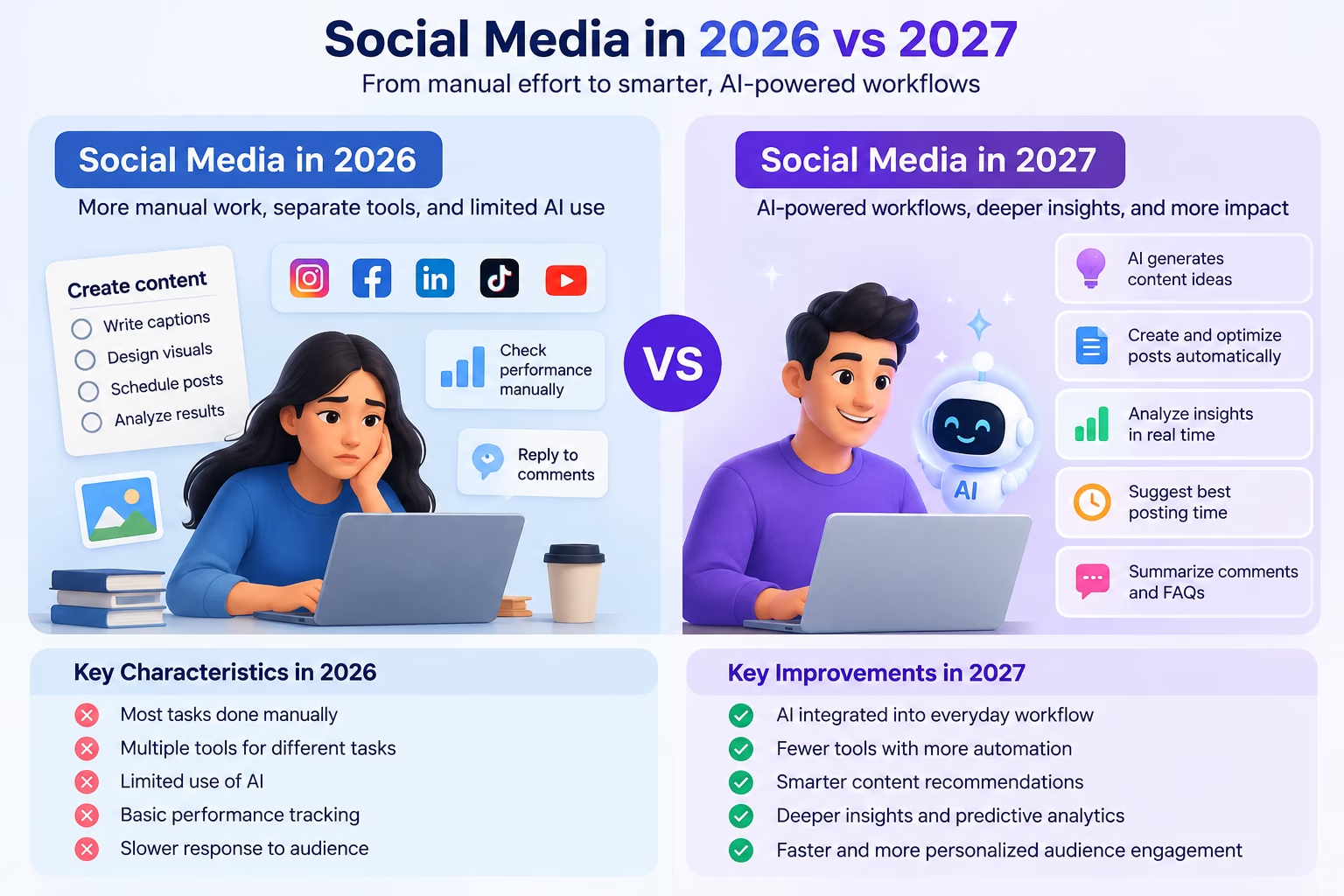
AI is likely to become less of a separate experiment and more of a normal part of social media operations. Businesses can already use AI to generate content ideas, summarize customer comments, identify frequently asked questions, create variations of a post, analyze performance, and assist with scheduling. By 2027, these functions are likely to become more integrated into social management systems. The important distinction is between AI-assisted work and fully automated communication.
For example, a B2B company could use AI to analyze hundreds of comments and identify that prospects repeatedly ask about integration, pricing, or implementation time. A social manager can then use those findings to create useful content.
The technology handles repetitive analysis. A human decides what the company should say. This approach is particularly relevant because marketers are already using AI to deal with content workloads. Sprout Social’s 2025 Index describes AI proficiency as an important capability for social teams, while its research also emphasizes the need for stronger measurement and business context.
For 2027, businesses should therefore establish clear rules for AI-generated content, including human review, brand guidelines, fact checking, disclosure where appropriate, and protection of confidential information.
2. Social search will become more important
People increasingly use social platforms as discovery tools. Someone looking for a restaurant, software product, fashion item, business service, or travel recommendation may search directly on a social network rather than starting with a traditional search engine. This makes searchable social content increasingly important. Businesses should consider:
- Clear descriptions and titles
- Keywords that match customer questions
- Captions that explain the subject of a video
- Accurate profiles and business information
- Helpful demonstrations and tutorials
- Customer reviews and testimonials
- Consistent information across platforms
This is especially relevant for companies targeting younger audiences. HubSpot’s research found that social media was a preferred product discovery channel for Gen Z and Millennials, with 64% of Gen Z and 59% of Millennials surveyed reporting that they had discovered a product through social media during the previous three months.
Social search does not mean abandoning websites or traditional SEO. Instead, businesses should treat social platforms as additional discovery environments.
3. Short-form video will remain important, but originality will matter more
Short-form video is expected to remain a major content format in 2027. The reason is practical. Video can demonstrate a product, explain a complicated idea, show how something works, introduce employees, or answer a customer question in a short amount of time.
HubSpot’s 2025 research found that short-form video was among the formats marketers planned to invest in, with 29% identifying it among their leading content formats and 17% planning to increase investment in it.
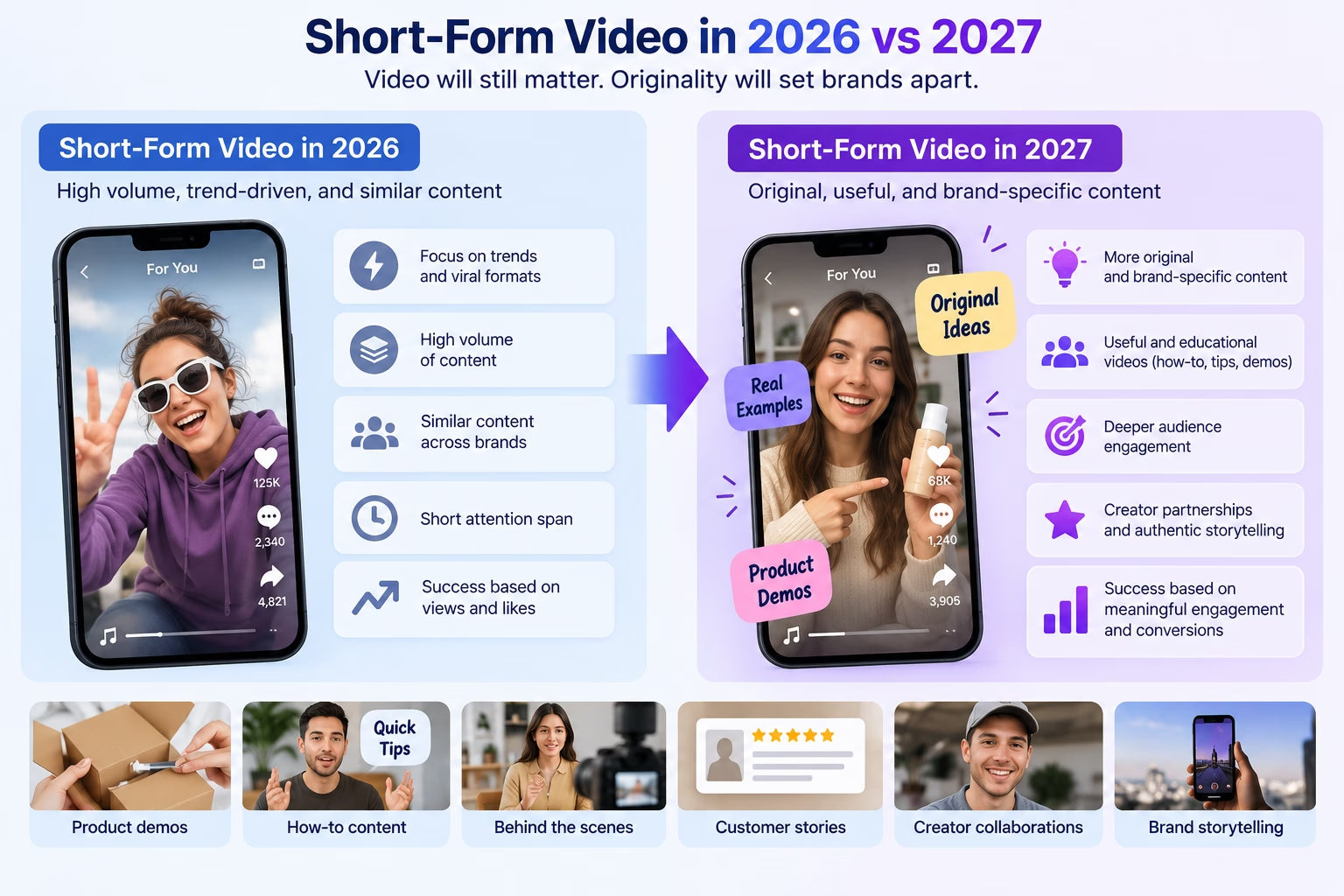
However, more video does not automatically mean better performance. Businesses should focus on useful video rather than simply increasing publishing volume. A software company might create a 30-second product demonstration. A professional services firm could answer one common customer question. A retailer could show how a product is used. The key is to give the viewer a reason to continue watching.
Sprout Social’s research also indicates that audiences value original content and that simply copying viral trends can be ineffective. Its 2025 research found that 57% of surveyed social users considered original recurring content series important for brands.
That points toward a practical strategy for 2027: develop repeatable content formats that audiences recognize instead of trying to imitate every viral trend.
4. Social commerce will connect discovery with purchasing
The distance between seeing a product and buying it is becoming shorter. Social commerce allows businesses to combine product discovery, demonstrations, creator recommendations, conversations, and purchasing within connected digital experiences.
HubSpot’s research found that 17% of surveyed social media users had purchased a product in-app during the previous three months, while 25% said they had bought something based on an influencer recommendation.
For businesses, this means social content should increasingly answer commercial questions.
A product post might explain:
- What the product does
- Who it is for
- How much it costs
- How it compares with alternatives
- How to use it
- Where to buy it
- What existing customers think about it
For service businesses, the same principle applies differently. Instead of an immediate transaction, social content may encourage a consultation, demo request, newsletter signup, or direct conversation.
The future social media trends for brands will therefore be closely connected to how well they reduce friction between discovery and action.
5. Smaller and emerging platforms deserve controlled testing
Businesses should not assume that the largest platform will always be the most useful platform for every audience. Growing Social Media Platforms can attract specific communities, professional groups, creators, or interest-based audiences. Threads, Bluesky, Reddit, Mastodon, and other community-oriented platforms illustrate how audiences can be distributed across different digital environments.
Sprout Social reported in 2025 that 36% of marketers said their audience was starting to spend more time on emerging platforms such as Threads, Bluesky, Lemon8, and Mastodon. It also reported that 51% of global social users surveyed planned to spend more time on community-driven platforms such as Reddit over the following six months.
The practical approach is not to create accounts on every new platform. Instead, businesses can run small experiments:
- Identify where the target audience is active.
- Publish a limited set of useful content.
- Measure engagement and qualified traffic.
- Compare results with existing channels.
- Continue only when there is a clear business reason.
This keeps experimentation manageable.
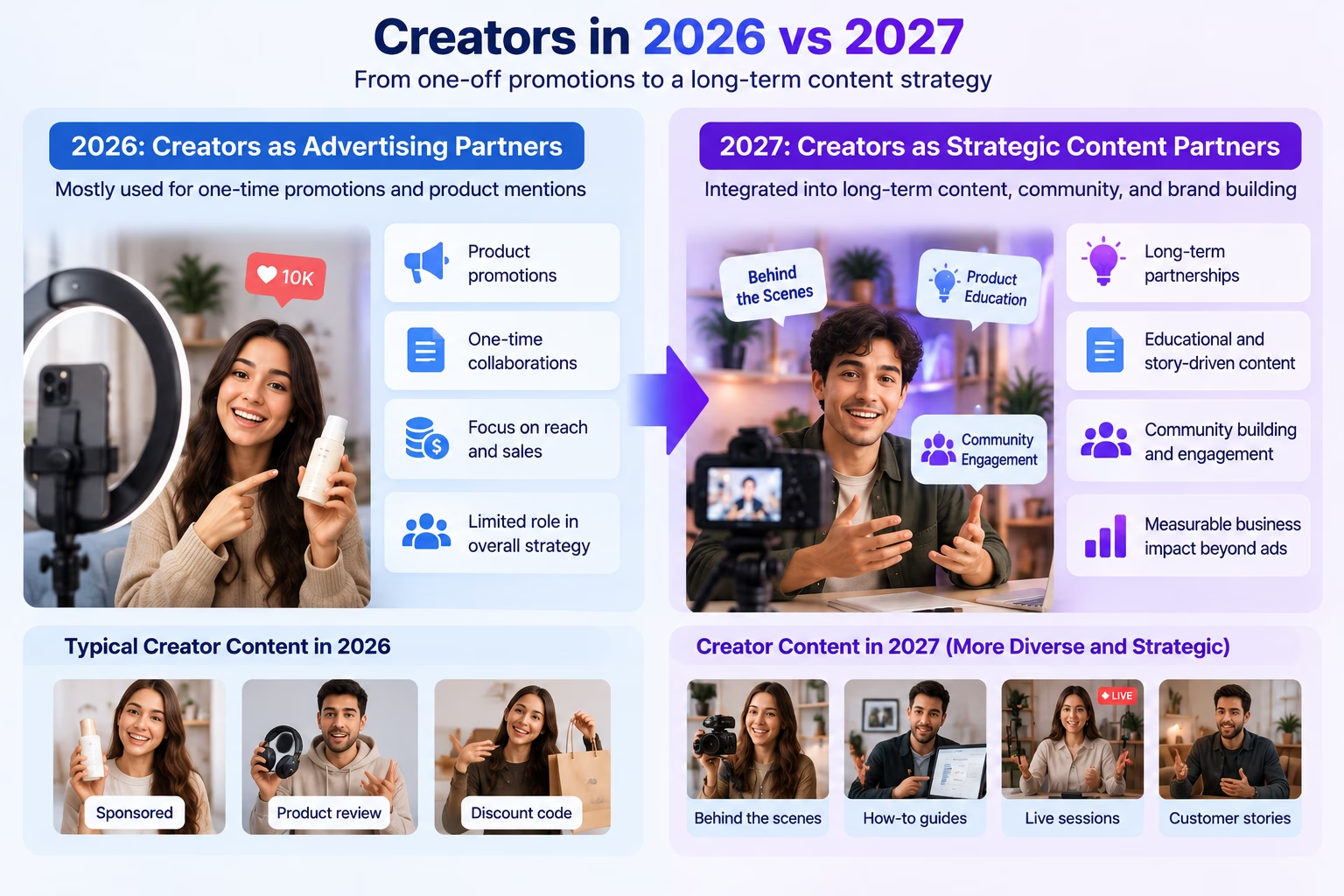
6. Creators will become part of content strategy, not just advertising
Creator partnerships are becoming more structured. Businesses can work with creators for product demonstrations, educational content, reviews, tutorials, events, and community engagement. The most useful partnerships are usually based on audience relevance rather than follower count alone.
Sprout Social reported that 90% of marketers surveyed in its Q1 2025 Pulse Survey said sponsored influencer content performed better in engagement than organic content published on their own brand accounts.
That does not mean every business should use influencers. It means creator content should be evaluated as a separate content channel.
Businesses should examine:
- Audience relevance
- Engagement quality
- Content quality
- Brand fit
- Previous partnerships
- Disclosure practices
- Traffic or conversion data
For B2B companies, creators may include industry experts, analysts, engineers, consultants, or niche educators rather than traditional influencers.
7. Customer service will move further into social and messaging
A customer’s social experience does not stop when they comment on a post. They may ask about pricing, delivery, refunds, product availability, technical problems, or account issues through comments or private messages.
Sprout Social reported that 73% of surveyed social users expected brands to respond on social media within 24 hours.
Businesses should therefore treat social customer service as an operational function rather than only a marketing task.
A practical system could include:
- Response-time targets
- Frequently asked question libraries
- Escalation procedures
- Customer service integrations
- Trained social support staff
- Clear rules for moving sensitive conversations into private channels
This is particularly important for growing companies. A social account that attracts customers but does not answer them can create an experience gap.
8. Privacy and trust will influence how businesses use social data
Businesses have access to large amounts of social information, but access does not mean everything should be collected or used. Customers increasingly care about how companies handle their information.
Sprout Social’s 2025 research reported that 52% of social media users surveyed were concerned about brands mishandling their personal data. The same research found that 93% of consumers believed brands needed to do more to combat misinformation.
For 2027, businesses should review:
- What customer data they collect
- Why they collect it
- Where it is stored
- Who can access it
- How long it is retained
- How social data connects with CRM systems
- How AI tools process customer information
Trust is particularly important when automation is involved. Businesses should avoid feeding sensitive customer information into tools without understanding how that information is processed.
What These Changes Mean for Business Strategy
The main change for businesses is that social media should become more closely connected to other departments. Marketing may own the social accounts, but social insights can also help sales, product, customer service, recruitment, and leadership teams.
For example, repeated customer questions can reveal a product documentation problem. Negative comments can identify a service issue. Frequently shared content can indicate a strong customer interest. Questions from prospects can provide ideas for sales enablement materials.
This is where Best Social Media Tools can help, but the tool itself is not the strategy. Businesses should first define what they need to accomplish and then select software that supports those processes. The measurement model should also change.
Instead of focusing only on:
- Followers
- Likes
- Impressions
Businesses can track:
- Qualified website visits
- Leads
- Demo requests
- Sales-assisted conversions
- Customer response time
- Customer sentiment
- Content completion rates
- Community growth
- Cost per qualified action
Sprout Social’s 2025 Impact of Social Media report found that 56% of marketing leaders surveyed said social media drives revenue for their businesses. The same research highlighted the need for stronger measurement systems that connect social activity with wider business outcomes.
That is an important consideration for founders because social spending becomes easier to evaluate when teams can explain what business result an activity is supporting.
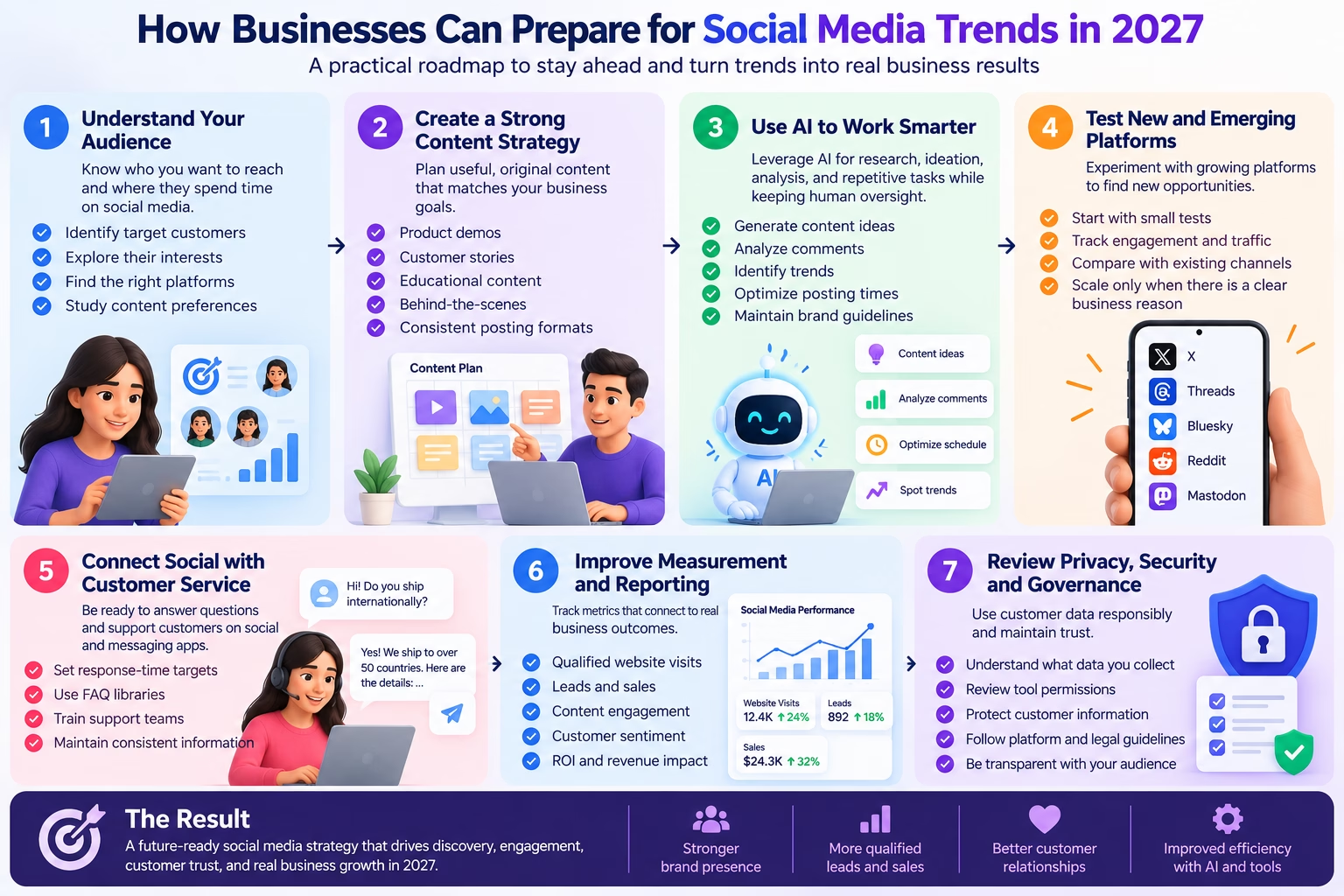
How Businesses Can Prepare for Social Media Trends in 2027
Preparation does not require businesses to predict every new platform or technology. A better approach is to build a flexible operating model.
First, define the audience. Know which customers the business wants to reach and where they spend time online.
Second, create content systems. Build repeatable formats such as product demonstrations, customer stories, educational videos, founder commentary, FAQs, and industry explainers.
Third, introduce AI carefully. Use it for research, analysis, ideation, editing, and repetitive tasks while keeping human oversight for important communications.
Fourth, test new channels. Allocate a small amount of time and budget to emerging platforms instead of making large commitments immediately.
Fifth, connect social with customer service. Decide who responds to questions and how issues are escalated.
Sixth, improve measurement. Connect social metrics with website analytics, CRM data, sales activity, and customer support information where appropriate.
Seventh, review privacy and governance. Make sure employees understand what information can be shared with third-party tools and AI systems.
Businesses building social products or investing in platform development should also pay attention to changing user expectations around personalization, video, messaging, communities, privacy, and AI. Teams researching social media app developers should consider these features at the product-planning stage rather than adding them after launch.
For technology buyers, AppsInsight is another resource for researching app development providers and technology companies. Its platform publishes research and listings intended to help businesses compare technology services providers.
Do you know? Why Dating Platforms Continue To Invest In Social Media App
Final Takeaway
The next stage of social media will be less about simply publishing more posts and more about building useful connections between content, customers, products, and business operations.
The most important social media trends for 2027 are likely to involve AI-assisted workflows, social search, video, commerce, creators, communities, customer service, and responsible data use. Current research already shows the foundations of these changes: billions of people use social platforms globally, consumers use them for discovery and trends, and businesses increasingly connect social activity with revenue and customer relationships.
For founders and business leaders, the practical response is not to chase every new feature. It is to understand the audience, test relevant channels, produce useful content, measure meaningful outcomes, and build systems that can adapt as platforms change.
That approach gives businesses a clearer way to enter 2027 without depending on predictions that may become outdated as quickly as the platforms themselves.
Frequently Asked Questions
What will be the biggest social media change for businesses in 2027?
AI-assisted workflows, social search, short-form video, social commerce, creator content, and private messaging are among the areas businesses should monitor. The relative importance will vary by industry and audience.
Should every business join new social platforms?
No. Businesses should first identify whether their target customers are active on a platform. A small test with measurable objectives is usually more practical than opening accounts everywhere.
Will AI replace social media teams?
AI can automate or assist with repetitive activities such as content ideation, analysis, scheduling, and customer-query classification. It does not remove the need for human judgment, brand oversight, customer understanding, and strategic decision-making.
What should businesses measure on social media in 2027?
Businesses should connect social metrics to their objectives. Depending on the business model, this can include qualified traffic, leads, sales, customer service response time, engagement quality, retention, and assisted conversions.
Why is social search important?
Users increasingly search social platforms for product information, recommendations, reviews, tutorials, and experiences. Businesses can support discovery by creating clear, useful, searchable content rather than relying only on promotional posts.