

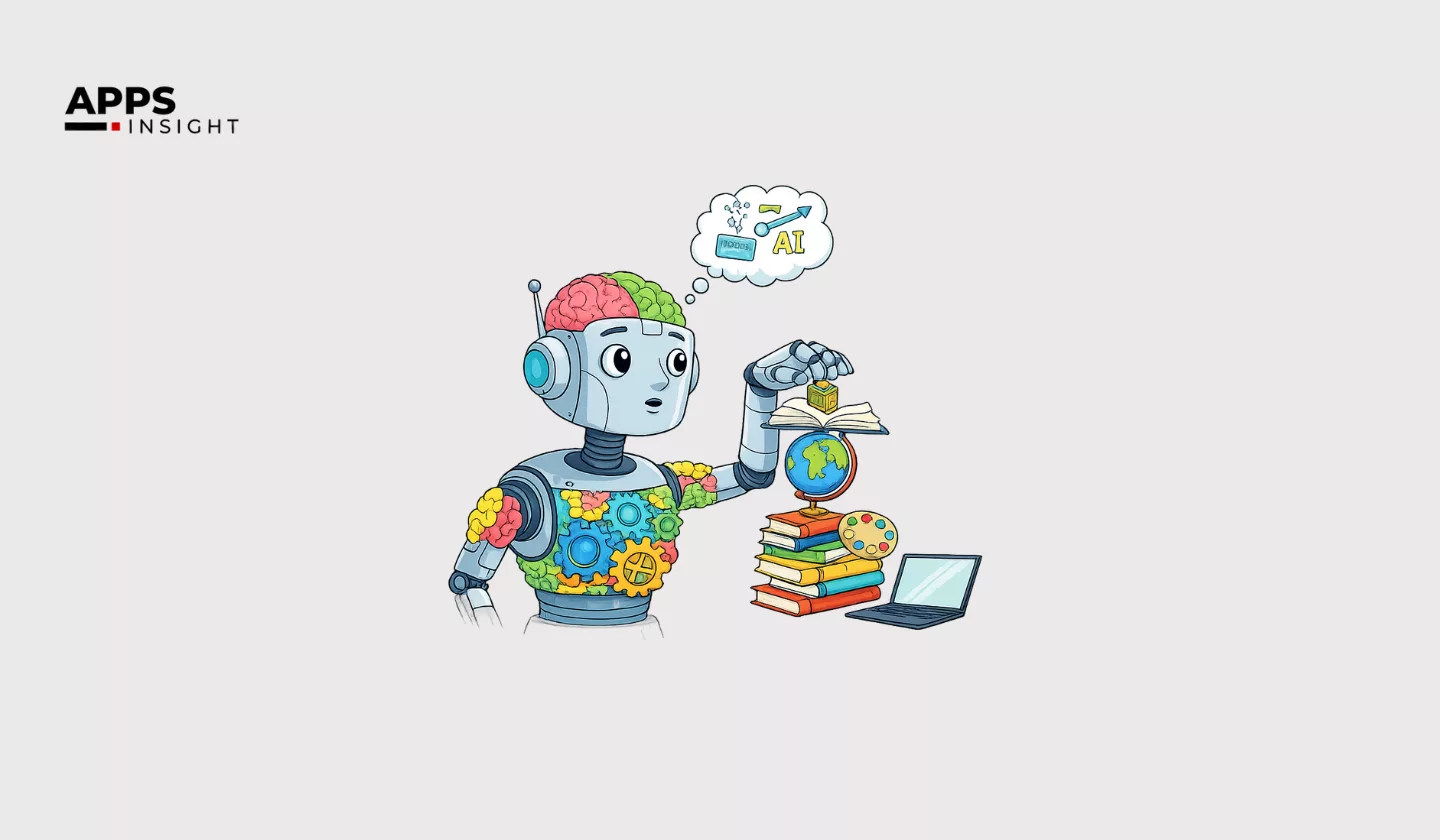
Online education has entered a phase where learning platforms are no longer passive systems that simply deliver recorded lessons and multiple choice tests. They are evolving into intelligent environments that can plan actions, make decisions, and continuously optimize the learning journey for every individual. This shift is powered by Agentic AI in education, a model that introduces goal driven digital agents capable of acting independently to improve academic outcomes.
Agentic AI operates with a clear objective. It observes how a learner studies. It identifies weak areas. It selects the next best learning activity. It even adjusts the pace and format of content without waiting for manual instructions. This level of autonomy transforms the role of technology from a support tool into an active academic strategist.
The importance of this transformation becomes clear when we look at the scale of digital learning. More than 220 million learners worldwide are now enrolled in online education platforms, and institutions are under pressure to deliver personalized learning at scale. Traditional systems cannot meet this demand because they follow fixed workflows. Agentic systems create adaptive ecosystems where every learner receives a unique academic path.
Another major reason this model matters is the measurable impact on performance and engagement. Studies show that intelligent learning environments powered by advanced AI capabilities can increase course completion rates by up to 35 percent. This is a direct response to one of the biggest challenges in online education which is student dropout.
Agentic AI in education also supports outcome based learning. Instead of focusing only on content delivery it focuses on skill mastery. The system tracks whether a learner can apply knowledge in real scenarios. If not it redesigns the learning flow automatically. This ensures that education moves from information consumption to capability development.
For educational institutions this technology creates a scalable structure. A single intelligent platform can deliver personalized mentoring to thousands of students simultaneously. For learners, it creates an experience that feels guided structured and responsive.
This is why the adoption of agent driven learning systems is accelerating across universities corporate training platforms and skill based learning apps. They are not only improving academic performance but also redefining how knowledge is delivered measured and applied in the digital era.
Looking for? Top AI-Powered App Features Every Business Will Use in 2026
Key Differences Between Agentic AI and Traditional AI in Online Education
The shift from conventional automation to autonomous academic systems represents a structural change in how digital learning platforms operate. Traditional AI improved efficiency through recommendations and basic analytics. Agentic AI in education introduces independent decision making, long term planning, and continuous optimization of the learning journey.
Instead of waiting for user input these intelligent agents observe patterns, identify gaps, and take proactive steps that improve outcomes. The result is a learning environment that behaves like a dedicated mentor rather than a passive tool.
Core Functional Evolution
Traditional AI follows predefined rules and produces outputs based on historical data. Agentic systems operate with goals. They evaluate the present learning state, predict future performance, and redesign the academic path in real time.
This transformation affects personalization, assessment models, engagement strategies, and institutional scalability.
Comparison Between Traditional AI and Agentic AI in Online Education
| Aspect | Traditional AI in Online Education | Agentic AI in Education |
|---|---|---|
| Decision Making | Works on predefined rules and user prompts | Acts autonomously with goal driven academic planning |
| Learning Path | Fixed or semi adaptive course flow | Fully dynamic and continuously evolving learning journeys |
| Student Interaction | Responds when a learner asks for help | Initiates guidance based on performance signals |
| Assessment Model | Periodic tests with delayed feedback | Continuous evaluation with real time improvement strategies |
| Personalization Level | Content recommendation based on past activity | Deep personalization based on behavior, goals, and skill gaps |
| Engagement Strategy | Tracks completion and quiz scores | Predicts disengagement and takes corrective action instantly |
| Curriculum Updates | Manual and time consuming | Automatically optimized using learner interaction data |
| Teacher Role | High involvement in grading and monitoring | Focus on mentoring and advanced teaching activities |
| Scalability | Requires proportional increase in human resources | Supports large scale global learning with automated workflows |
| Outcome Focus | Course completion | Skill mastery and career readiness |
Impact on Learner Experience
In traditional systems two students who enroll in the same course often follow the same structure regardless of their knowledge level. Agent driven platforms create unique academic journeys for each learner. The system accelerates progress for advanced students and provides additional support for those who need more time.
This adaptive structure increases confidence and reduces dropout rates. Research across intelligent learning platforms shows that proactive AI driven engagement models can increase learner activity by more than 40 percent.
Institutional and Business Advantages
For education providers the difference is equally significant. Traditional AI improves operational efficiency but still requires manual academic supervision. Agentic systems automate performance tracking, curriculum optimization, and learner support.
This allows institutions to expand their programs globally without increasing administrative complexity while maintaining high quality personalized education.
From Reactive Support to Proactive Academic Strategy
The most important distinction is the shift in approach. Traditional AI reacts to commands. Agentic AI in education plans academic success. It ensures that every action inside the platform moves the learner closer to defined skill and career outcomes.
This is not a feature upgrade. It is a complete redesign of the digital learning architecture.
Looking for? Best AI Tools for Students
How Agentic AI Enables Personalized Learning Paths for Every Student
The promise of online education has always been personalization. The reality for many learners has been a fixed sequence of videos, assignments, and tests that treats every student in the same way. Agentic AI in education changes this structure completely. It builds a living learning path that evolves with the learner’s progress, behavior, and goals.
An agent driven system begins with deep observation. It studies how long a learner spends on each concept. It tracks response accuracy. It measures attention patterns. It identifies whether a student learns faster through video, text, simulation, or practice. Using this continuous stream of signals the system creates a learning journey that is unique for every individual.
This is not limited to content recommendation. The sequence of topics changes based on comprehension level. If a learner struggles with a foundational concept the system pauses advanced modules and introduces micro lessons, real world examples, and targeted exercises. When progress improves the path accelerates automatically. This creates a balance between challenge and confidence which is essential for long term engagement.
Time optimization is another powerful advantage. Many learners drop out because they feel overwhelmed or lost. Agentic systems calculate the ideal study duration for each session. They schedule revision at scientifically proven intervals to strengthen memory retention. Research in adaptive learning environments shows that spaced AI driven revision can improve knowledge retention by up to 60 percent compared to traditional linear study models.
Career alignment also becomes part of the personalization process. The system analyzes the learner’s target role, current skill level, and industry demand. It then recommends projects, certifications, and assessments that move the learner closer to real employment outcomes. This transforms education from a content consumption experience into a structured skill development journey.
Another major shift is emotional and motivational support. When the system detects declining activity or repeated errors it introduces lighter modules, interactive formats, or quick achievement milestones. These small interventions keep learners engaged and reduce fatigue.
For institutions this level of personalization was once impossible at scale. Delivering one to one mentorship to thousands of students required massive human resources. With Agentic AI in education a single platform can provide customized academic guidance to every learner simultaneously while maintaining consistent quality.
The result is a learning environment where no student feels left behind and no advanced learner feels restricted. Each individual moves at the right pace with the right content and the right level of challenge. This is the foundation of outcome driven digital education.
We have listed! Best Campus Management Systems
Role of Autonomous AI Tutors in Real Time Student Support
One of the most powerful outcomes of Agentic AI in education is the emergence of autonomous AI tutors that function as always available academic mentors. These tutors are not limited to answering direct questions. They observe learning patterns, detect confusion at the right moment, and step in with meaningful guidance before a student feels stuck or disengaged.
In a traditional online classroom a learner watches a lecture, attempts an assignment, and waits for feedback. The delay often breaks momentum. Autonomous tutors remove this gap. When a student makes repeated errors or spends too much time on a problem the system immediately offers a simplified explanation, an alternative method, or a short practice activity designed to rebuild confidence.
These AI tutors also adapt their teaching style. If a learner responds better to visual formats the tutor generates diagrams or interactive simulations. If conceptual understanding is stronger through real world examples the system reshapes the explanation into practical scenarios. This creates a highly responsive environment that mirrors one to one human tutoring at scale.
Another key capability is contextual learning support. Instead of providing generic answers the tutor understands where the learner is in the course journey. It connects current questions to previously studied concepts and future modules. This structured guidance strengthens knowledge continuity and improves long term retention.
Autonomous tutors also play a major role in assessment readiness. They generate personalized practice tests based on performance history. They highlight frequently made mistakes. They design quick revision sessions before exams. This continuous preparation model reduces anxiety and improves success rates.
Data from intelligent tutoring systems shows that students receiving real time AI guided support can improve problem solving speed by up to 45 percent compared to learners using static learning resources. This directly impacts course completion and skill mastery.
Motivation is another area where these tutors create measurable value. They recognize small achievements and recommend achievable next steps. They send intelligent reminders when study activity declines. They create a sense of progress which is critical in self paced digital learning environments.
For educators this technology reduces repetitive academic workload. Instead of answering the same conceptual questions multiple times teachers can focus on advanced mentoring, research, and curriculum innovation. Institutions gain the ability to deliver high quality academic support to a global student base without increasing faculty size.
Through autonomous academic guidance Agentic AI in education transforms online platforms into interactive learning ecosystems where support is instant, personalized, and continuous. The student is never studying alone. The system becomes an active learning partner that guides every step toward mastery.

Smart Course Creation Using Agentic AI for Dynamic Curriculum Development
Course creation in traditional online education follows a long and rigid cycle. Content is planned months in advance. It is recorded, uploaded, and used for years with only minor updates. This static model struggles to keep pace with fast changing industry demands. Agentic AI in education introduces a dynamic curriculum engine that continuously designs, refines, and aligns learning material with real world needs.
An agent driven system begins with deep analysis of skill trends, learner performance data, and employment market signals. It identifies which topics are becoming more relevant and which modules are losing value. Based on this insight it updates lessons, adds new case studies, and restructures learning sequences without disrupting the overall course flow.
This approach dramatically reduces content production time. EdTech platforms using intelligent curriculum generation have reported a reduction of nearly 40 percent in course development cycles. Institutions can launch new programs faster and keep their offerings aligned with current professional standards.
Another major transformation is modular course design. Instead of long fixed programs the system creates micro learning units that can be rearranged based on learner goals. A student preparing for a specific job role receives a different sequence compared to someone studying for academic knowledge. The same content base serves multiple learning paths through intelligent orchestration.
Agentic systems also enhance content quality. They analyze how students interact with each lesson. If a large number of learners pause, replay, or exit at a specific point the AI identifies the issue and recommends improvements. It may replace a long theoretical explanation with an interactive simulation or break complex topics into smaller segments. This continuous optimization keeps the curriculum effective and engaging.
Multiformat content generation is another key capability. The system can create text summaries, visual explainers, practice questions, and project based assignments from the same core concept. This ensures that different learning styles are supported without requiring separate manual production workflows.
For instructors this does not remove creative control. It enhances it. Educators receive intelligent suggestions about what to update, where learners struggle, and which new skills should be introduced. This allows them to focus on academic depth and innovation rather than repetitive content management.
Institutions also benefit from scalability. A single intelligent framework can support multiple courses across different disciplines while maintaining consistent quality and learning outcomes. This makes global expansion of digital programs more efficient and cost effective.
Through continuous evolution of learning material Agentic AI in education turns curriculum into a living system that grows with industry, adapts to student needs, and delivers relevant knowledge at the right time.
Also Read! Why Partnering with Top Agentic AI Companies Can Accelerate Innovation and Business Growth?
Automated Grading and Instant Feedback Systems in Digital Classrooms
Assessment is no longer a final checkpoint at the end of a module. In intelligent learning environments it becomes a continuous growth mechanism. Agentic AI in education transforms grading into a real time academic guidance system that evaluates performance, detects learning gaps, and delivers immediate improvement strategies.
Traditional evaluation methods create long feedback cycles. Students complete an assignment and wait for results. During this delay the learning momentum slows and mistakes become habits. Agentic systems remove this gap completely. The moment a learner submits an answer the system analyzes conceptual accuracy, problem solving approach, and time taken to respond. It then provides precise feedback that explains not only what is incorrect but why the error occurred.
This instant response strengthens memory retention and encourages active learning. Studies show that learners who receive immediate AI driven feedback improve their performance by over 30 percent compared to delayed evaluation models. The reason is simple. Corrections happen at the moment of cognitive engagement when the concept is still fresh.
Another powerful capability is adaptive assessment. Instead of giving the same test to every learner the system generates questions based on individual proficiency. If a student demonstrates strong understanding the difficulty level increases. If performance drops the system introduces foundational questions and guided practice. This creates a balanced challenge that supports both advanced and struggling learners.
Agentic grading also evaluates more than final answers. It analyzes the method used to reach a solution. In subjects such as mathematics, programming, and science this allows the system to identify whether the learner understands the logic or is guessing. The feedback then focuses on improving the thinking process rather than simply marking responses as right or wrong.
For project based learning the system provides structured improvement suggestions. It reviews the work against defined skill benchmarks. It highlights strengths. It recommends specific areas for refinement. This creates a mentorship style evaluation that was previously possible only in small classroom settings.
Educators gain significant productivity benefits. Manual grading consumes a large portion of academic time. Intelligent evaluation systems handle routine assessments, generate performance reports, and identify students who need personal attention. Teachers can then focus on high value mentoring and advanced discussions.
Institutions also benefit from consistent and unbiased assessment standards. Every learner is evaluated using the same performance logic which improves academic transparency and credibility.
Through continuous measurement and real time academic guidance Agentic AI in education converts assessment into an active learning engine. Instead of being a stressful end point it becomes a daily tool for progress, confidence building, and mastery development.
Using Predictive Analytics to Improve Student Performance and Retention
One of the most strategic capabilities of Agentic AI solutions in education lies in its power to see patterns before they turn into problems. Online learning platforms generate massive volumes of behavioral data. Every login, pause, quiz attempt, discussion activity, and assignment submission becomes a signal. Agentic systems convert these signals into actionable academic intelligence.
Predictive analytics begins with continuous performance tracking. The system studies how often a learner accesses the platform, how much time is spent on each concept, how accuracy changes across assessments, and how engagement fluctuates over time. These indicators help the AI forecast future outcomes with remarkable precision.
When the system detects early signs of disengagement it does not wait for the student to drop out. It initiates corrective actions. It may redesign the study plan, introduce shorter learning sessions, recommend revision content, or activate motivational prompts. This early intervention model has helped digital learning platforms improve retention rates by up to 25 percent.
Another important application is performance forecasting. The system can predict the probability of a learner successfully completing a course or mastering a specific skill. Based on this forecast it creates targeted improvement strategies. Students who are progressing well receive advanced challenges. Those at risk receive additional practice and guided support.
Predictive intelligence also helps in goal alignment. If a learner aims for a specific career role the system compares current performance with required industry competencies. It identifies missing skills and automatically integrates relevant modules into the learning path. This transforms online education into a structured career preparation ecosystem.
For educators and institutions this data driven visibility is invaluable. Instead of reacting to failure after final assessments they gain a real time academic dashboard that highlights:
- Students who need immediate attention
- Topics that create the most difficulty
- Content that requires redesign
This allows academic teams to take timely and informed decisions that improve overall learning outcomes.
Another dimension of predictive systems is resource optimization. Institutions can forecast enrollment trends, course demand, and completion timelines. This helps in better faculty planning and infrastructure management while maintaining a high quality learning experience.
Through intelligent forecasting and proactive intervention, Agentic AI in education shifts the focus from measuring past performance to shaping future success. It ensures that learners stay on track, institutions reduce dropout rates, and digital education platforms deliver consistent and measurable results.
24/7 Virtual AI Assistants for Seamless Learning Experiences
Personalized Academic Planning for Every Learner
Continuous guidance is essential for success in digital education. Intelligent assistants powered through Agentic AI in education act as personal academic planners that design and manage daily study schedules. They analyze course progress, identify pending modules, and recommend the most effective learning sequence. When a learner misses a session the system restructures the timetable in a balanced way so momentum is never lost.
This dynamic planning removes confusion and gives students a clear path to follow which directly improves consistency and course completion.
Instant Doubt Resolution Without Waiting Time
One of the biggest barriers in self paced learning is delayed support. Virtual assistants provide immediate contextual answers. They understand the exact lesson, the learner’s performance level, and the objective of the course before generating an explanation. This creates precise and relevant academic help at any hour of the day.
Real time clarification keeps the learner in a state of active focus and prevents small misunderstandings from turning into major learning gaps.
Intelligent Time Management and Study Optimization
Online learners often struggle to balance multiple responsibilities. AI driven assistants study behavioral patterns and suggest the most productive learning hours. They divide complex topics into short sessions and schedule revision at scientifically effective intervals.
This structured rhythm reduces cognitive overload and helps learners maintain steady progress without feeling overwhelmed.
Smart Learning Resource Recommendations
Virtual assistants go beyond reminders and notifications. They recommend practice exercises, live projects, collaborative activities, and revision modules based on individual goals. If a learner is preparing for a specific career role the assistant aligns the study material with required skills.
This transforms the platform into a goal oriented learning ecosystem rather than a simple content library.
Multilingual and Inclusive Learning Support
Accessibility becomes stronger with intelligent assistants. They can simplify difficult topics, present explanations in different formats, and adjust the depth of content based on the learner’s understanding. This allows students from different academic backgrounds to learn at their own pace without feeling left behind.
Such inclusivity expands the global reach of online education platforms.
Reduced Administrative Workload for Institutions
A large portion of academic support involves repetitive queries related to schedules, assessments, and navigation. Virtual assistants handle these interactions automatically. Faculty and support teams gain more time for mentoring and curriculum innovation.
Operational efficiency increases while maintaining high quality learner support.
Continuous Motivation and Engagement
Learning alone can reduce motivation over time. Intelligent assistants track progress and recognize small achievements. They send reminders when activity declines and suggest short breaks when fatigue is detected. This human centered interaction builds confidence and keeps learners connected to their academic journey.
Through structured planning, instant academic help, and adaptive engagement Agentic AI in education creates a seamless environment where learning continues without interruption and support is always available.

How Agentic AI Improves Teacher Productivity and Institutional Efficiency
Reducing Repetitive Academic Work for Educators
Teaching in digital environments involves a large volume of repetitive responsibilities. Grading assignments, answering common questions, tracking attendance, and preparing performance reports consume a significant portion of academic time. Agentic AI in education automates these structured workflows and allows educators to focus on high value teaching activities.
The system evaluates assessments, generates detailed feedback, and prepares progress summaries without manual intervention. Teachers receive ready insights that highlight which learners need personal mentoring and which topics require deeper explanation. This shift transforms the role of educators from administrative managers to academic strategists.
Intelligent Performance Dashboards for Data Driven Decisions
Institutional success depends on real time academic visibility. Agentic platforms create live dashboards that show learner engagement, course effectiveness, and skill development patterns. Instead of analyzing spreadsheets faculty members can view clear performance indicators and take immediate action.
These dashboards help identify:
- Students at risk of dropping out
- Modules with low comprehension rates
- High performing learners ready for advanced challenges
This structured intelligence improves academic planning and ensures timely intervention.
Automated Content Management and Course Optimization
Updating digital course material is a continuous process. Agentic systems analyze how learners interact with each lesson and recommend improvements. If a module shows low engagement the AI suggests format changes, additional practice content, or a redesigned explanation.
This reduces the time required for manual curriculum reviews and ensures that every course remains relevant and effective. Institutions can scale their program offerings without increasing operational complexity.
Streamlined Student Support and Communication
Handling thousands of learner queries across different time zones is a major operational challenge. Intelligent academic agents manage routine communication related to deadlines, assessments, and course navigation. This ensures consistent and accurate responses while reducing the workload on support teams.
Educators can then invest their time in meaningful discussions, live mentoring sessions, and research driven teaching methods.
Efficient Resource Planning for Institutions
Academic institutions need accurate forecasting for enrollment, course demand, and faculty allocation. Agentic systems analyze historical and real time data to predict these trends. This helps in better infrastructure utilization and budget planning.
Efficient resource management leads to lower operational costs and higher return on investment for digital education platforms.
Consistent Evaluation and Academic Transparency
Manual evaluation methods may vary across different instructors and departments. Automated assessment frameworks maintain uniform grading standards for every learner. This improves credibility and ensures fairness in performance measurement.
Consistent evaluation also strengthens institutional reputation in global education markets.
Enabling Scalable Global Education Models
With intelligent automation in place institutions can expand their programs to international learners without increasing administrative overhead. A single unified platform can manage thousands of students while maintaining personalized learning experiences.
Through workflow automation, real time insights, and optimized resource utilization Agentic AI in education creates a highly productive academic environment where educators focus on innovation and institutions achieve scalable growth.
Real World Use Cases of Agentic AI in Online Education Platforms
Agent Driven Learning in Corporate Upskilling Programs
Modern enterprises require continuous workforce transformation. Static training modules fail to match the speed of changing skill demands. Platforms powered with Agentic AI in education create adaptive corporate learning ecosystems that map employee capabilities, identify skill gaps, and design personalized training journeys.
The system assigns learning paths based on job role, performance data, and future business goals. It schedules assessments, recommends micro learning sessions, and tracks practical skill application in real work scenarios. Organizations using intelligent learning platforms have reported productivity improvement of over 20 percent after implementing AI driven upskilling models.
Autonomous AI Mentors in Competitive Exam Preparation
Exam preparation platforms are using agent based systems to provide structured and strategic study plans. The AI monitors accuracy, speed, and concept mastery across thousands of practice questions. It predicts the probability of success in specific exam sections and redesigns the preparation strategy accordingly.
Students receive daily targets, personalized revision cycles, and real time performance analysis. This approach replaces generic study schedules with precision driven preparation which significantly improves results.
Intelligent Language Learning Applications
Language learning requires continuous practice, contextual understanding, and real time correction. Agentic systems create immersive environments where learners engage in simulated conversations, receive pronunciation feedback, and get grammar corrections instantly.
The platform identifies weak vocabulary areas and introduces them in future conversations. It also adjusts the difficulty level based on fluency progression. This creates a natural and interactive learning experience similar to human tutoring.
Adaptive STEM Learning and Simulation Based Education
Science, technology, engineering, and mathematics require conceptual clarity and hands on practice. Agent driven platforms generate interactive simulations that change complexity based on learner performance. If a student struggles with a concept the system simplifies the experiment and introduces guided steps.
This practical approach improves deep understanding and reduces fear of complex subjects. It also enables remote learners to access lab like environments without physical infrastructure.
Personalized Degree Programs in Digital Universities
Digital universities are moving toward flexible degree structures where learners choose skill based modules instead of fixed semester systems. Agentic platforms analyze career goals, prior knowledge, and learning speed to assemble a customized academic pathway.
The system ensures that all required competencies are achieved while allowing freedom in course selection. This creates a learner centered higher education model.
Continuous Professional Certification Platforms
Professional certification requires consistent updating of knowledge. Agentic AI tracks industry changes and automatically recommends new learning units for certified professionals. It schedules renewal assessments and provides targeted preparation material.
This keeps professionals relevant in fast evolving sectors such as technology, healthcare, and finance.
Scalable EdTech Product Development and Deployment
To build such intelligent ecosystems many organizations collaborate with Best Education & EdTech Agentic AI Developers who specialize in autonomous learning architectures. These solutions are often delivered through partnerships with experienced Education App Development Companies that understand scalable cloud infrastructure, learning analytics, and secure data frameworks.
These real world implementations show that Agentic AI in education is not a theoretical concept. It is actively reshaping how knowledge is delivered, measured, and applied across academic and professional learning environments.
How to Choose the Right Development Partner for Agentic AI in Education
Expertise in Autonomous AI Architecture
Building intelligent learning ecosystems requires more than basic AI integration. The development partner must understand goal driven agents, adaptive workflows, learning analytics, and real time decision systems. Strong experience in autonomous architecture ensures that the platform can design personalized learning paths, automate assessments, and deliver predictive academic insights with accuracy.
Deep Understanding of Education Domain Requirements
Education technology has unique structural needs such as curriculum mapping, accreditation standards, learner lifecycle management, and outcome based evaluation. A capable partner should demonstrate proven work in digital learning environments and understand how academic frameworks operate across schools, universities, and corporate training platforms.
Scalable and Secure Cloud Infrastructure
Agent driven platforms process continuous streams of learner data. This requires a cloud environment that supports high performance computing, real time analytics, and strong data protection. Security compliance, encrypted data flow, and reliable uptime are essential for maintaining institutional trust and global accessibility.
Integration With Existing Learning Management Systems
Most institutions already use LMS platforms for course delivery and student management. The right development partner should be able to integrate agent based intelligence into existing systems without disrupting academic operations. Seamless integration reduces implementation time and improves adoption across faculty and learners.
Advanced Learning Analytics and Reporting Capabilities
Data driven education depends on clear and actionable insights. The platform should offer performance dashboards, engagement metrics, skill progression tracking, and predictive retention models. These analytics help institutions take timely academic decisions and improve program effectiveness.
Customization for Different Learning Models
Each institution follows a different teaching methodology. Some focus on self paced learning while others deliver instructor led programs. A strong development partner will design flexible frameworks that adapt to multiple learning structures and support future expansion.
Long Term Innovation and Support
Agentic platforms evolve continuously. New learning models, industry skill requirements, and AI capabilities require regular upgrades. Choosing a partner with a long term product vision ensures that the platform remains relevant and competitive.
Institutions that plan to deploy intelligent learning ecosystems often evaluate multiple solution providers before finalizing the right collaboration model. The success of Agentic AI in education implementation depends heavily on this strategic technology partnership.
Sum up
Digital learning is moving toward a structure where platforms do more than deliver content. They guide, evaluate, adapt, and predict academic success with precision. Agentic AI in education is creating environments where every learner receives personalized mentorship, every educator gains time for innovation, and every institution operates with data driven intelligence.
This transformation improves engagement, increases completion rates, and aligns education directly with real