
Real-world assets worth about $24 billion now live on blockchains—a 380 percent jump since 2022, according to market tracker RWA.xyz, as reported by Coindesk. That surge means boards have stopped asking whether tokenization matters and are now asking which enterprise blockchain can satisfy compliance, operations, and security all at once. In this guide, we compare six leading platforms—pinpointing where each excels on regulation, integration, and scale—so you can build a confident shortlist.
What enterprise tokenization actually means
Imagine a fund’s cap table or a bond’s T+2 settlement ledger living on a blockchain. Ownership updates in seconds, transfer rules sit in code, and auditors pull a complete history with one click. That is enterprise tokenization: regulated assets packaged as programmable digital tokens.
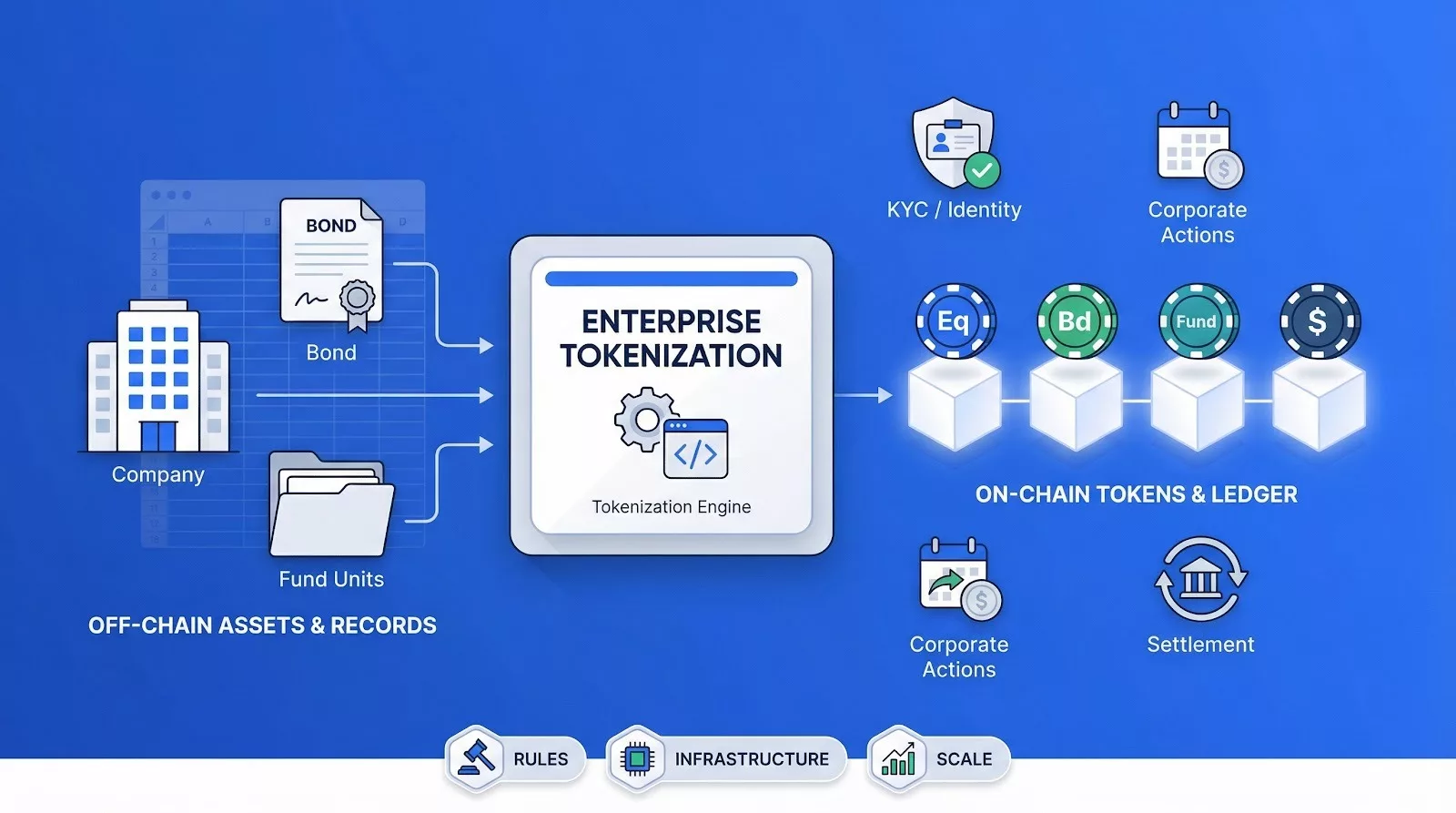
Enterprise tokenization converts cap tables and bond ledgers into programmable, compliant on-chain tokens.
These tokens can represent equity, debt, fund units, or deposits. Whether they run on a permissioned network or a public chain wrapped in compliance controls, they still follow the securities laws your legal team already knows. The upside is automation: KYC, corporate actions, and settlement move from spreadsheets to smart-contract logic.
Budgets are opening because three forces have converged:
- Clear rulebooks. According to Cointelegraph, the EU Markets in Crypto-Assets (MiCA) regime started on 30 December 2024 and becomes fully active on 1 July 2026. Singapore’s central bank, the MAS, has licensed exchanges such as ADDX as Recognised Market Operators, and U.S. regulators are piloting sandbox exemptions for tokenized securities.
- Production-ready infrastructure. Purpose-built chains like Polymesh bake identity into the protocol, while full-stack platforms such as Securitize plug straight into broker-dealer rails, so you do not have to stitch together experimental code.
- Live scale. A March 2025 BlackRock press release noted that its USD Institutional Digital Liquidity Fund (BUIDL) topped $1 billion in on-chain assets, and Hamilton Lane sells tokenized fund shares through both Securitize and ADDX. When blue-chip managers move nine-figure sums on-chain and settle subscriptions the same day, CFOs pay attention.
1. Compliance comes first
Regulators examine infrastructure before they look at block time. If a platform cannot keep issuers inside securities law, every other feature is noise.
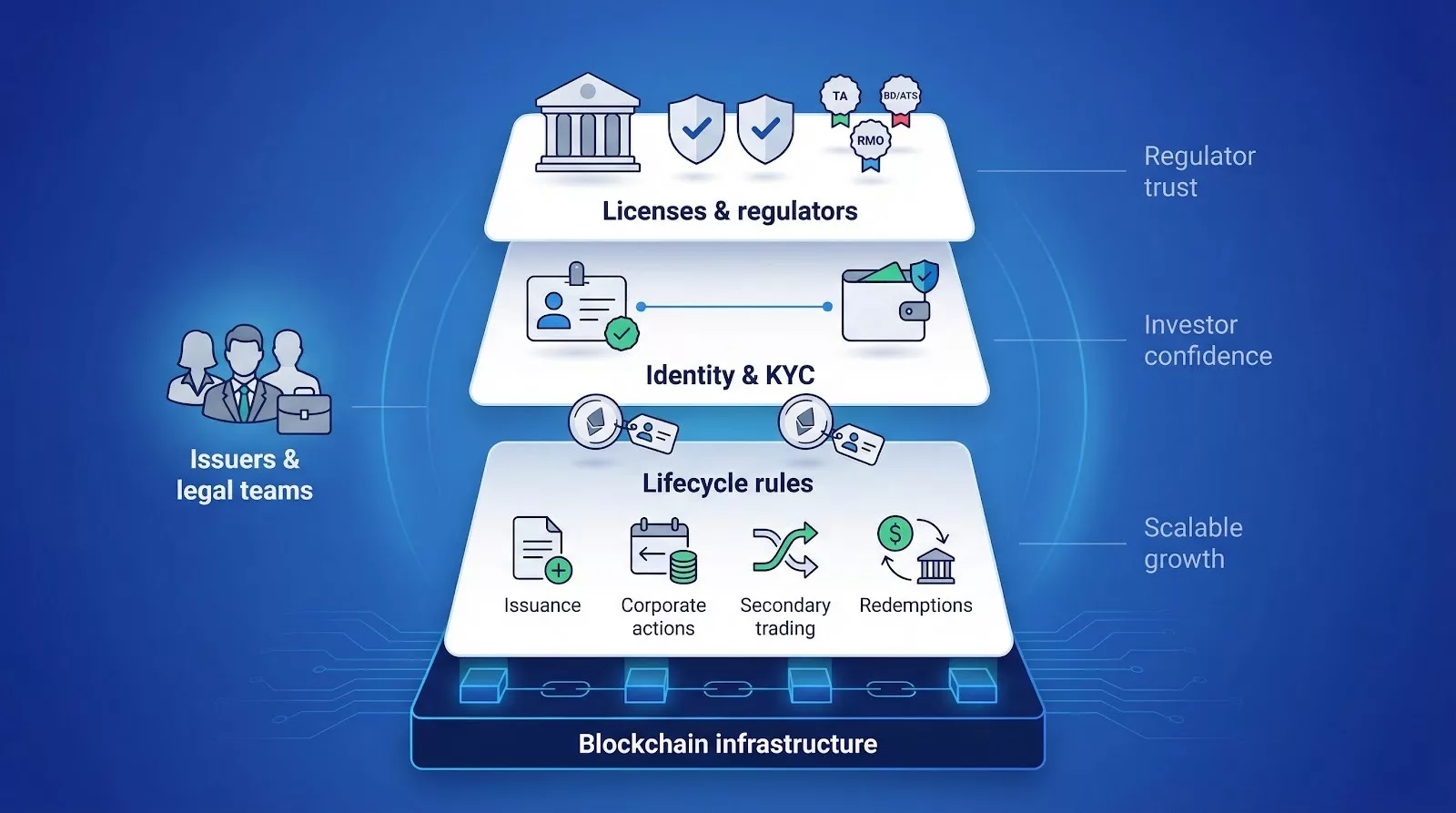
Enterprise tokenization platforms need layered compliance—from licenses and KYC to lifecycle rules on regulated blockchain rails.
Start with verifiable paperwork. As of October 2025, the U.S. SEC has approved fewer than a dozen digital-asset transfer agents; Securitize is on that list and also holds FINRA broker-dealer and ATS licenses, according to SEC filings. In Europe, MiCA requires investment-firm authorisation for secondary trading, while Singapore’s MAS lists exchanges such as ADDX as Recognised Market Operators. Those certificates tell legal teams the rails are permissioned, not just password-protected.
Next, track how identity travels with the token. Public-chain issuers often hard-code an allow list in the contract. Permissioned networks enforce customer due diligence at the wallet level before any transfer occurs. According to documentation for the Polymesh public-permissioned blockchain for regulated assets, every identity and asset-related transaction must be associated with an on-chain identity that holds a valid Customer Due Diligence (CDD) claim from a permissioned KYC provider, so unverified keys never make it onto the cap table in the first place. If a risk committee insists an unverified investor never lands on the cap table, mandatory on-chain identity wins over after-the-fact gating.
Finally, confirm the rulebook spans the full life cycle: issuance, corporate actions, secondary trades, and redemptions. Platforms that automate lockups, dividend distribution, and voting lift the compliance burden instead of kicking it back to spreadsheets once tokens leave treasury.
Get compliance right and you gain three assets: regulator trust, investor confidence, and the freedom to scale without waking up to a cease-and-desist.
2. Security is not optional
A token is only as safe as the private key controlling it; lose that key and the asset disappears.
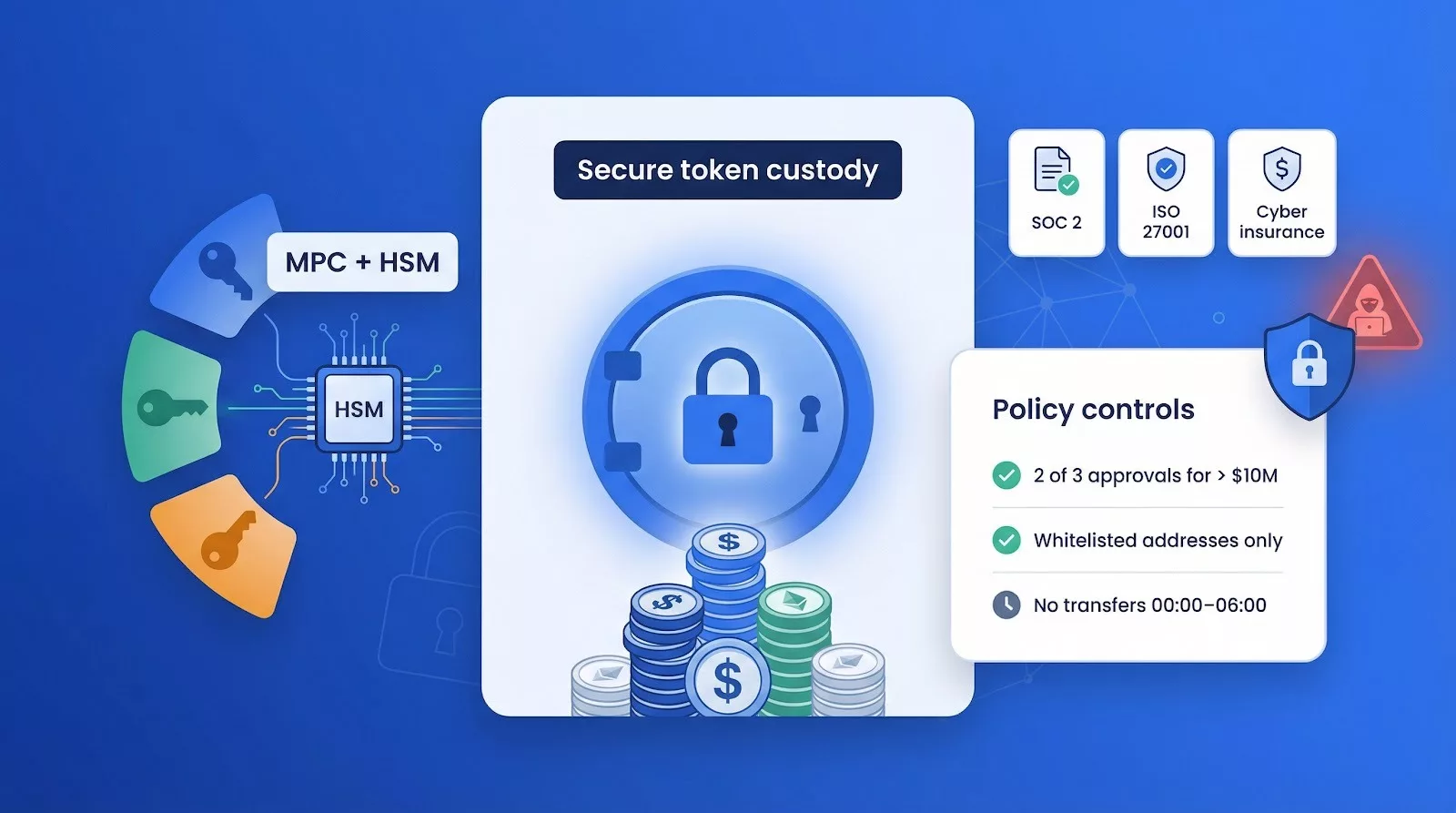
Robust MPC custody, strict policy controls, and independent audits are essential to secure enterprise tokenization programs.
Custody architecture is the first control surface. Leading providers rely on multi-party computation (MPC) or hardware security modules so no single person or device ever holds a complete key. Fireblocks secures more than 2,400 institutions and has processed over $10 trillion in token transfers without a reported key-theft incident.
Operational policy sits on top. Teams should enforce role-based approvals (“two officers for any mint above $10 million”) and time-of-day or address whitelists that stop a rogue trader from sending assets to an unvetted wallet at 2 a.m.
Independent evidence closes the loop. Vendors should provide SOC 2 Type II reports, ISO 27001 certificates, and cyber-insurance limits. Reputable firms share redacted penetration-test summaries under NDA; if they refuse, note that as a finding.
Why stay strict? Chainalysis estimates that hackers stole $2.2 billion from crypto platforms in 2024, and 44 percent of that loss stemmed from compromised private keys. Robust custody plus auditable controls shrink that attack surface and give boards the confidence to move tokenization from proof of concept to production.
3. Asset flexibility drives real adoption
A platform built for one asset class becomes technical debt the moment a roadmap widens. Issuers need rails that handle equity, debt, funds, and newer instruments such as tokenized Treasuries, plus every corporate action that follows each asset.
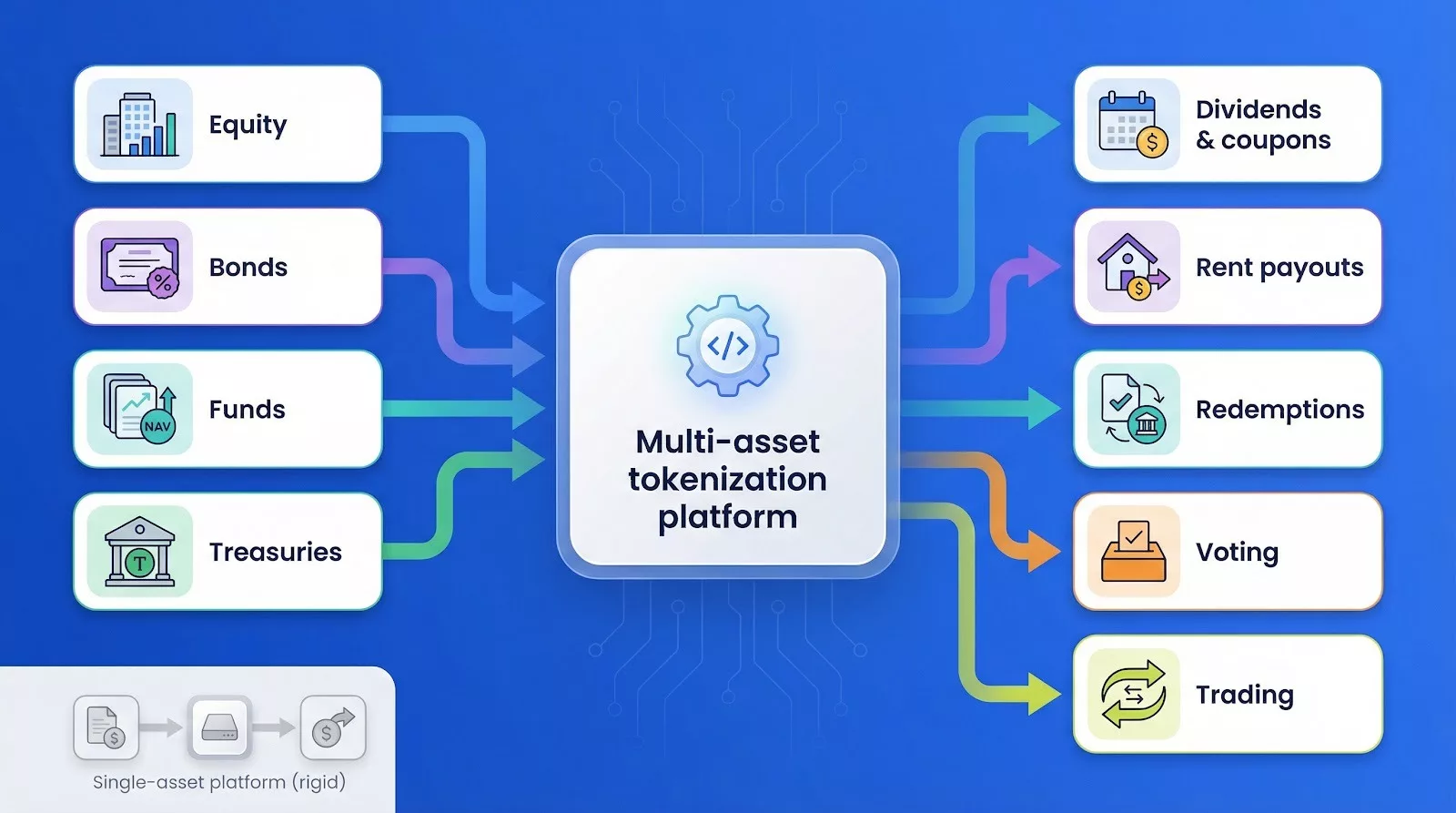
A flexible tokenization platform supports many asset classes and automates key lifecycle events like payouts and redemptions.
Start with token standards. Look for native support for multi-class equity, coupon-bearing bonds, revenue-sharing notes, and fund units that publish daily NAV. If a vendor offers only a vanilla ERC-20, keep searching.
Next, inspect life-cycle modules. Fractionalising a warehouse helps only if the system also automates quarterly rent payouts. When a bond matures, the contract should repay principal without manual work. Richer modules mean fewer side spreadsheets for the team.
Proof points matter:
- Securitize has issued more than $1 billion in private-equity and credit funds on-chain, complete with automated dividend flows.
- Tokeny reports €3 billion in compliant token operations across more than 120 issuances ranging from real estate to short-term debt.
- ADDX cut Hamilton Lane’s Global Private Assets Fund minimum from US$125,000 to US$10,000 while still processing quarterly redemptions.
Choosing a platform that flexes with the product roadmap today avoids a costly re-platform later.
4. Performance has to match your volume
Trading desks run 24/7, so the settlement layer must keep pace with order flow.
Start with base-layer speed. Permissioned chains such as Polymesh reach deterministic finality in about three seconds. On the public side, Polygon’s December 2025 Madhugiri upgrade lifted throughput to roughly 1,400 TPS, and Avalanche benchmarks above 4,500 TPS with sub-second finality on its subnets. Vendors should specify which networks they support and what fallback they provide if the primary chain slows down.
Demand real numbers, not adjectives. A marketplace clearing 50 trades a day needs different headroom from an ATS processing tens of thousands. Request benchmark data: peak TPS, median confirmation time, and the gap between trade execution and irrevocable settlement. If a provider will not share those figures, treat that silence as data in itself.
Plan for tomorrow’s load. Many tokenization programs begin with quarterly fund subscriptions, then add secondary trading and, later, collateral or DeFi pools. Confirm that throughput scales linearly; platforms that rely on single-threaded contracts or tiny validator sets can choke once volumes climb.
Bottom line: choose infrastructure that clears today’s tickets without capping tomorrow’s growth curve.
5. Integration decides total cost of ownership
Tokenization delivers real value only when the rails connect to the systems enterprises already trust.
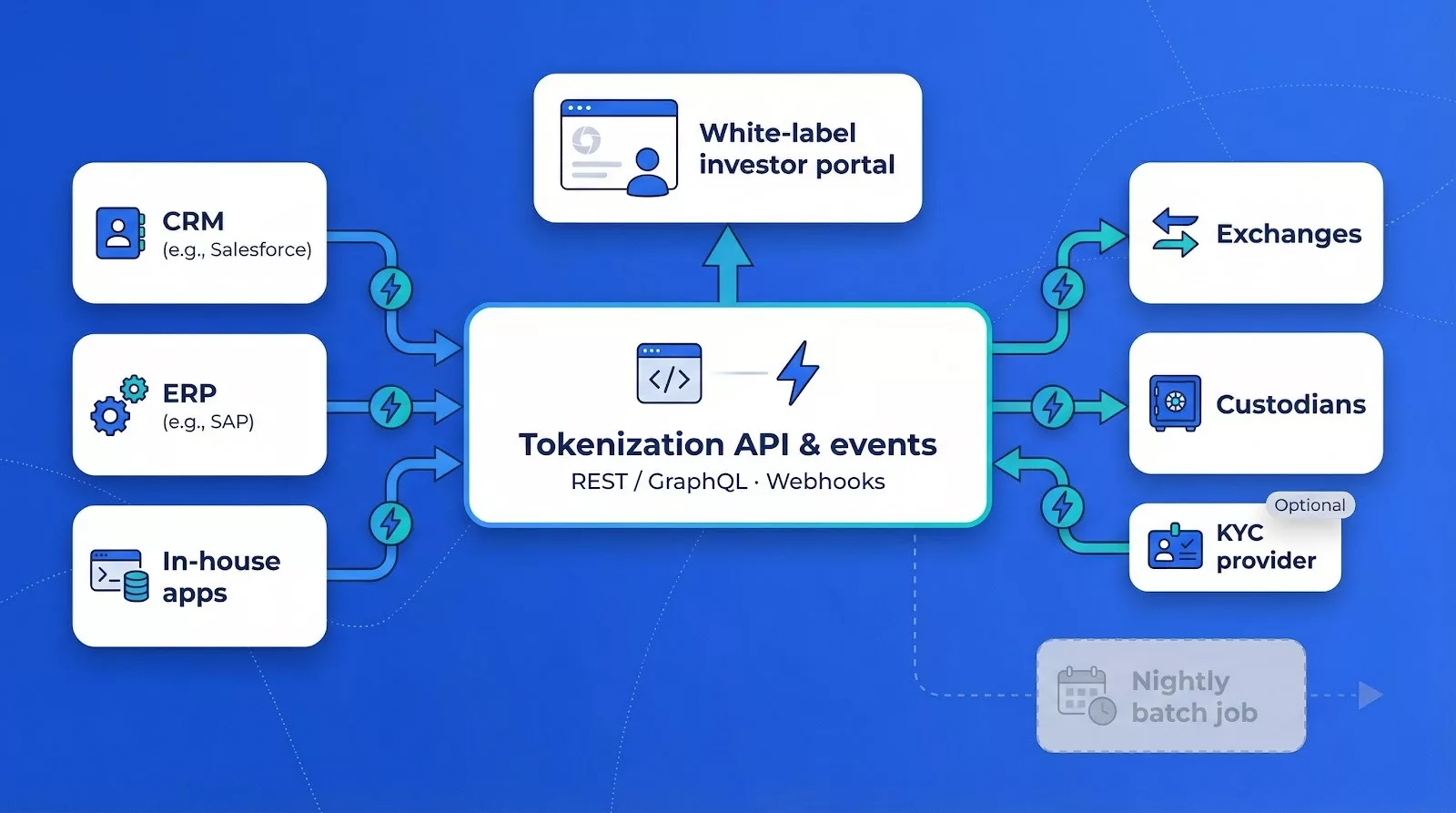
Modern tokenization platforms act as integration hubs, connecting enterprise systems and custodians through APIs and real-time webhooks.
Check the plumbing first. Mature platforms expose REST or GraphQL APIs plus webhook callbacks so developers can automate issuance, transfers, and cap-table updates directly from Salesforce, SAP, or in-house apps. Tokensoft, for example, offers a full CRUD API that teams can deploy in under a day, and its white-label widgets slot into an existing portal with minimal CSS.
Look for event streaming, not nightly batch jobs. Webhooks that fire on “token redeemed” or “dividend distributed” shrink reconciliation from hours to seconds.
Count the pre-built connectors. The Fireblocks Network links to more than 30 licensed exchanges and custodians across 11 jurisdictions, while Securitize ships native integrations to Anchorage Digital and Coinbase Prime. Each connector removes an integration project from the backlog.
UI matters, too. Tokeny and Tokensoft both provide white-label portals so investors see the issuer’s logo and URL, not a third-party brand. Familiar branding limits retraining and preserves client trust.
Bottom line: integration scope is the hidden line item that swells project budgets. Choose the stack that plugs into today’s workflows and scales with tomorrow’s ambitions—without six months of middleware.
6. Track record is the ultimate due-diligence shortcut
Slide decks make promises; live deployments provide proof. A platform that has already cleared regulator audits, market swings, and real money on-chain cuts a chunk of execution risk.
Regulatory milestones
- Securitize is one of fewer than a dozen SEC-registered digital transfer agents and now brokers BlackRock’s USD Institutional Digital Liquidity Fund, which passed $1 billion AUM in March 2025.
- Tokeny secured a €5 million investment from Euronext in 2019 and reports €3 billion in compliant token operations across more than 120 issuances.
Client diversity
- Fireblocks protects wallets for BNY Mellon, BNP Paribas, ANZ Bank, and the Tel Aviv Stock Exchange, showing that its controls fit banks, exchanges, and market-infrastructure pilots.
- ADDX holds a Monetary Authority of Singapore Recognised Market Operator licence and has completed 26 tokenized deals since 2020, ranging from private-equity funds to structured notes.
Investor signals
BlackRock’s seat on Securitize’s cap table and Temasek’s Heliconia stake in ADDX bring layers of due diligence others can borrow.
Follow these public breadcrumbs. They shorten a vendor-selection timeline and let executives tell the board, “We chose the platform already trusted with billion-dollar assets under live regulatory oversight.”
Platform #1: Polymesh — a Layer-1 built for regulated assets
Polymesh is not a smart contract bolted onto Ethereum; it is a public-permissioned blockchain built for regulated assets. By embedding identity, compliance, and settlement into the base layer, it simplifies asset tokenization for institutions that want to issue equity, debt, or fund shares directly on-chain. Because every wallet passes customer due diligence before receiving tokens, KYC enforcement lives inside the protocol rather than in fragile off-chain allow lists.
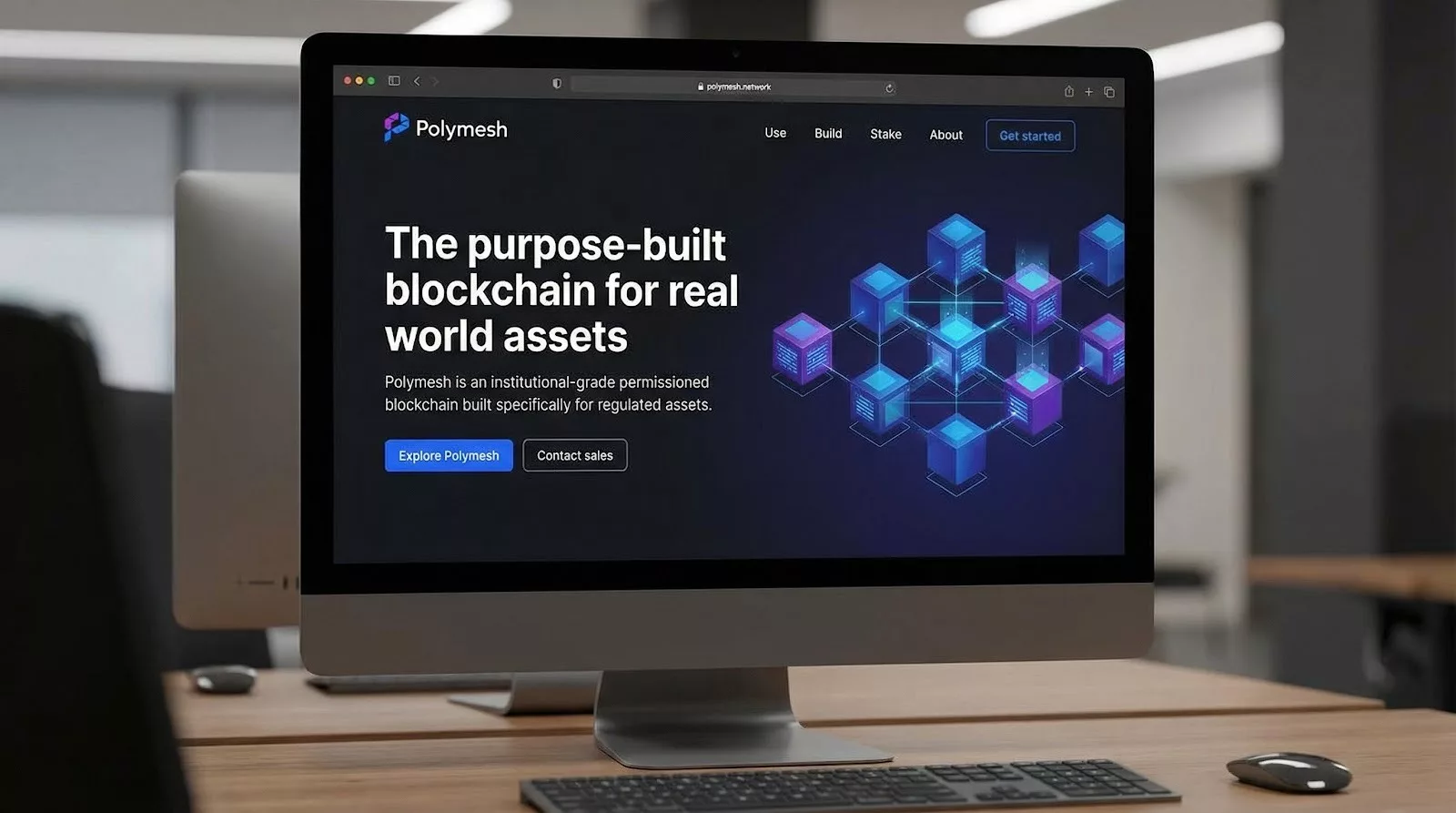
Polymesh positions itself as a public-permissioned Layer-1 blockchain purpose-built for regulated real-world assets.
Why you may care
- Deterministic finality in about six seconds. Block time matches custodial settlement systems.
- Regulated node operators only. As of July 2025 the network has 17 licensed financial entities— including Republic, Paysafe, and Binance—running validators.
- Built-in asset modules. Corporate-action checkpoints, confidential transfers, and delivery-versus-payment live at the base layer, so issuers configure rather than code.
Recent traction
Republic’s integration exposes Polymesh to three million users in 150 countries and more than $2.6 billion in tokenized investments. Paysafe joined as a validator in June 2025, adding a global payments brand to the network.
Best fit
- Market infrastructures such as exchanges, CSDs, and broker-dealers that need on-chain settlement without giving up regulatory control.
- Banks piloting tokenized deposits or bonds where mandatory identity is non-negotiable.
- Issuers that value predictable fees and fast finality over immediate DeFi access.
Trade-off
Polymesh offers fortress-level control but less Ethereum-style composability today. For many risk committees, that is a feature, not a flaw.
Platform #2: Securitize — the compliance-first turnkey stack
Securitize works like a regulated investment bank in code. It onboards investors, issues tokens, keeps the cap table, and runs an SEC-registered alternative trading system behind one login.
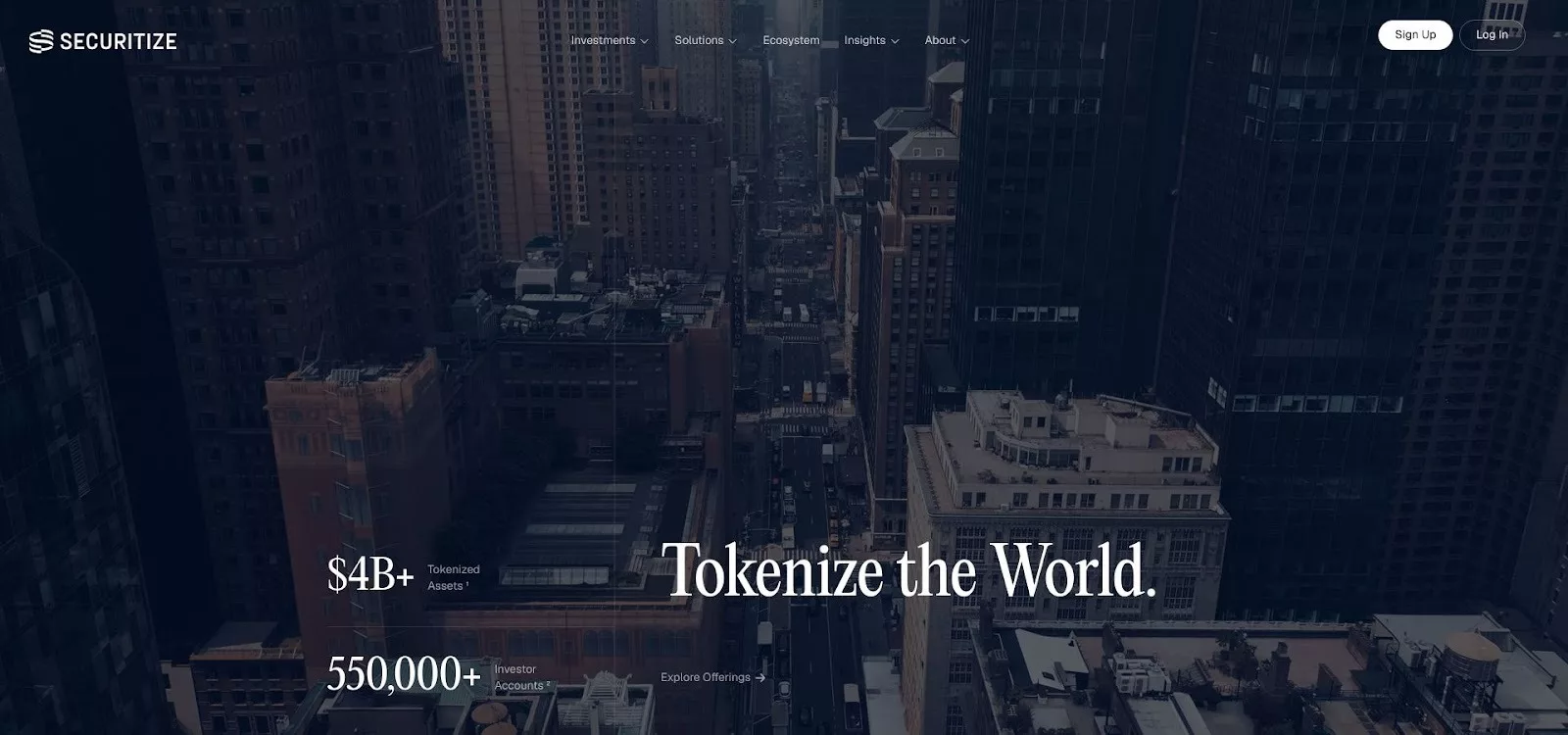
Securitize presents itself as a regulated, turnkey platform for issuing and trading tokenized real-world assets.
Regulatory muscle
- SEC-registered transfer agent since 2019 and FINRA broker-dealer/ATS operator.
- Serves 1.2 million investor accounts and 3,000 corporate clients after acquiring Pacific Stock Transfer.
Scale in production
- Tokenized assets issued on-chain exceed $3.3 billion across 715 funds following the 2025 MG Stover acquisition.
- BlackRock’s USD Institutional Digital Liquidity Fund (BUIDL) surpassed $1 billion AUM on 13 March 2025.
Technology breadth
Securitize mints tokens on Ethereum, Polygon, Avalanche, and, since March 2025, Solana. A Wormhole bridge lets issuers migrate share classes across chains without burning and re-issuing.
Who chooses Securitize
- Asset managers that want to lower minimum tickets on flagship funds.
- Mid-market firms raising capital without building licences in-house.
- Institutions that insist on a regulated ATS for secondary trading.
Trade-off
Users operate inside Securitize’s gated ecosystem and pay for the convenience, yet many compliance teams see that containment as a plus.
Platform #3: Tokeny — Europe’s plug-and-play compliance engine
Luxembourg-based Tokeny turns public EVM chains into permissioned rails by embedding compliance logic inside every token. The ERC-3643 standard, originally Tokeny’s T-REX protocol, links each token to an on-chain identity NFT and an off-chain rule server, so transfer restrictions travel with the asset instead of the venue.
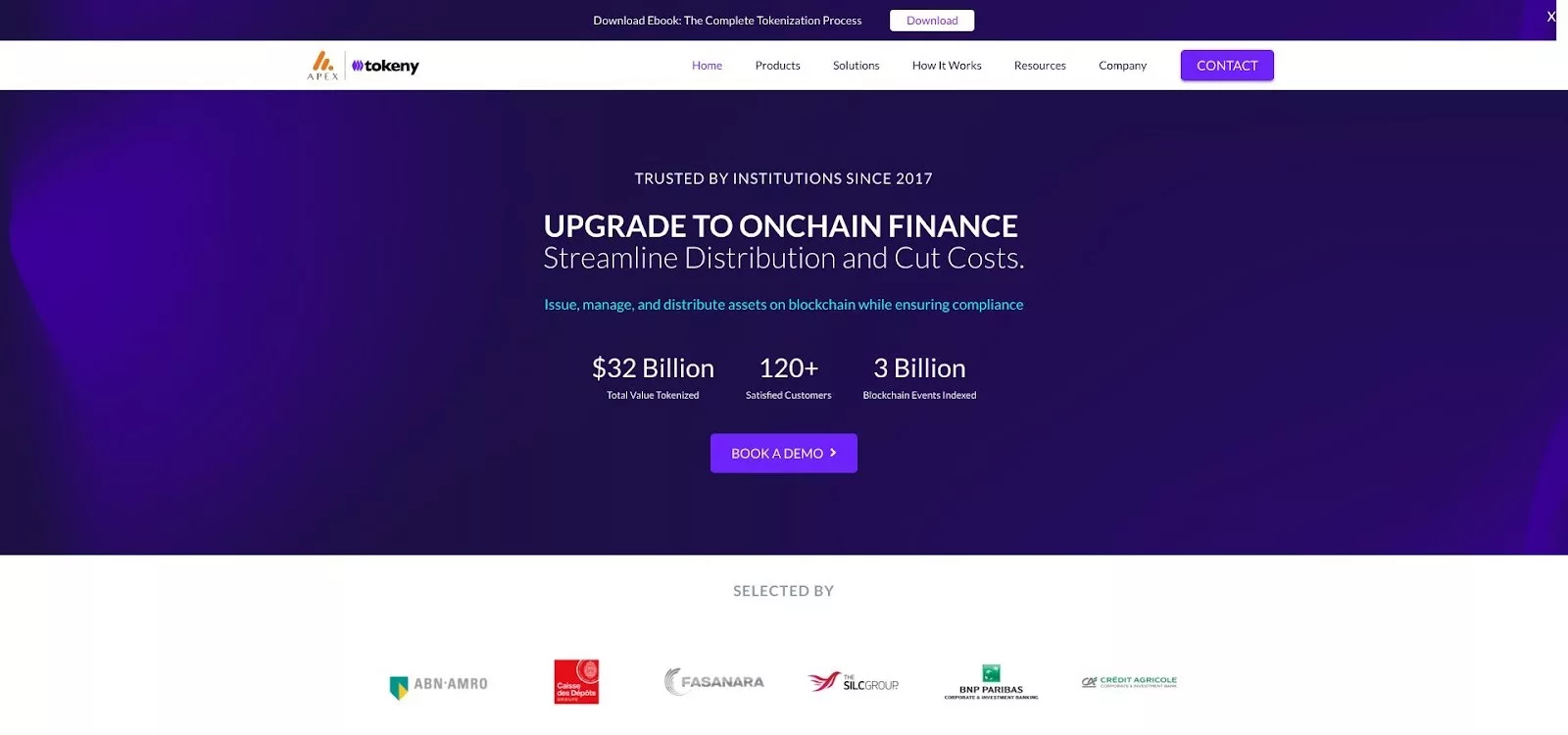
Tokeny positions itself as an onchain finance operating system, with billions in assets tokenized and over 120 institutional customers.
Why you may choose it
- Proven scale. Tokeny reports €3.2 billion in tokenized value across 125 issuances as of May 2025.
- Exchange-ready. A September 2024 deal lets ERC-3643 tokens list on 21X’s ESMA-regulated DLT venue and more than 50 other platforms via the DINO network.
- White-label UX. Banks can launch a branded portal, plug in existing KYC vendors, and connect to custodians like Fireblocks without writing a front end.
Trust signals
Euronext bought a minority stake in Tokeny in 2019, and the company is registered with Luxembourg’s CSSF as a virtual-asset service provider.
Best fit
- EU asset managers navigating MiFID II, GDPR, and soon MiCA.
- Issuers that want public-chain reach plus portable compliance across multiple exchanges.
- Projects planning secondary or DeFi liquidity where on-chain rule enforcement is mandatory.
Trade-off
Tokeny relies on external blockchains for finality and gas, so teams must watch network fees or shift to a cheaper EVM sidechain during congestion.
Platform #4: Fireblocks — security infrastructure you can build on
Fireblocks is less a marketplace than a fortified backbone. More than 2,400 institutions—including BNY Mellon, Revolut, and the Tel Aviv Stock Exchange—move assets across its MPC wallet network, which has processed over $10 trillion since launch.
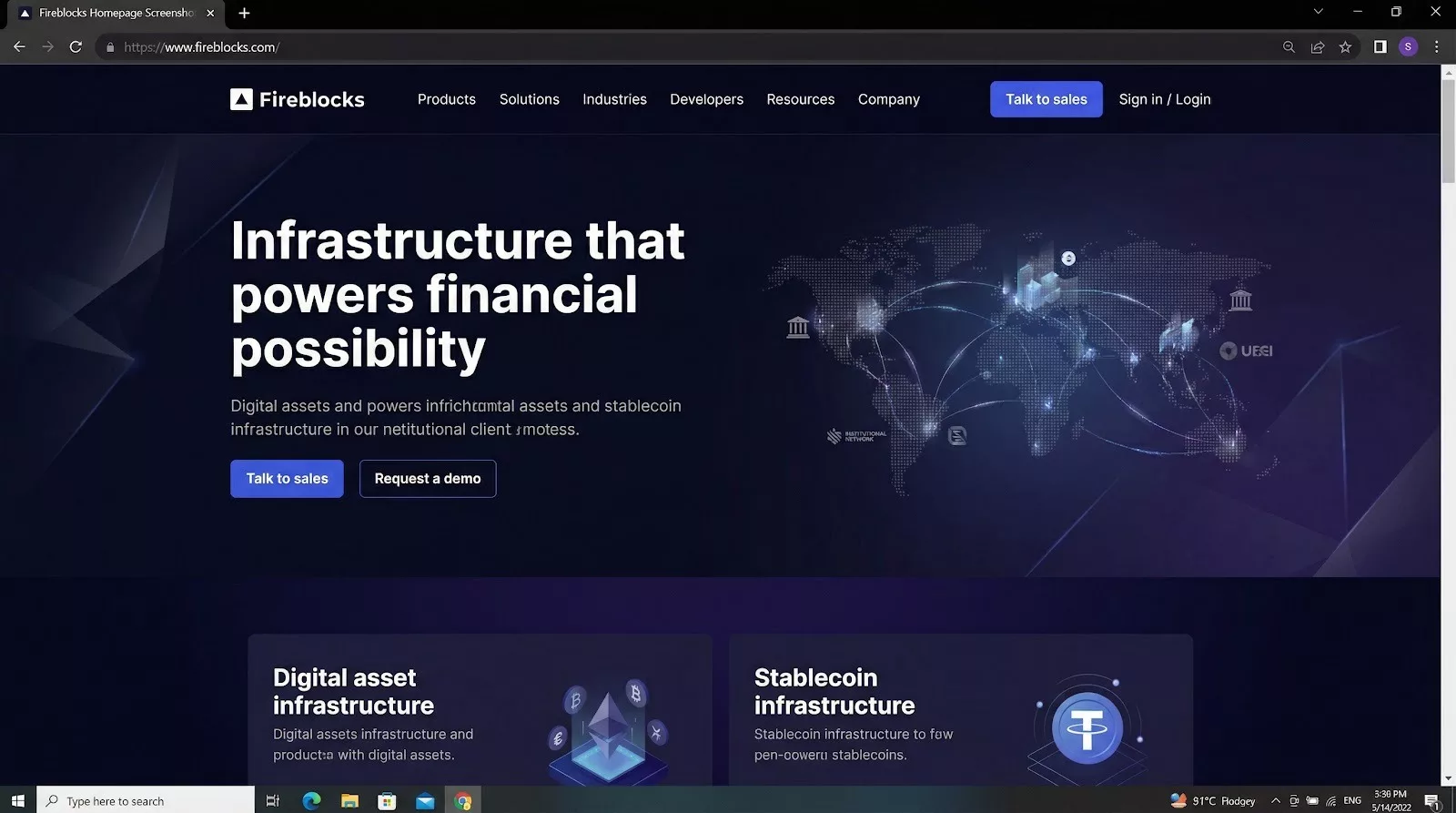
Fireblocks markets itself as digital asset and stablecoin infrastructure for banks, fintechs and trading firms, not as a retail exchange.
Why security teams trust it
- MPC + HSM custody. Private-key shards generate and co-sign inside hardware enclaves, so no single device ever holds the full key.
- Policy engine. Role-based approvals, address allow lists, and time-of-day limits stop a rogue transfer before it hits the chain.
- Audit trail. SOC 2 Type II and ISO 27001 reports are available under NDA, and Fireblocks carries a specialty cyber-insurance policy.
Tokenization toolkit
The 2023 Tokenization Engine ships audited templates for ERC-20, ERC-1400 security tokens, and stablecoins. It supports Ethereum, Solana, Polygon, and permissioned Quorum networks through one API.
Proof in production
- ANZ Bank issued the AUD-backed A$DC stablecoin and settled a carbon-credit trade fully on-chain.
- BNP Paribas completed a near-real-time bond-settlement pilot.
- In 2025 Fireblocks launched a payments network linking stablecoin rails in more than 100 countries and 60 currencies.
Best fit
- Banks and fintechs that want to own the customer experience while outsourcing none of the key security.
- Exchanges adding on-chain settlement without building a custody stack from scratch.
- Corporates planning recurring issuances that need a battle-tested vault and policy layer.
Trade-off
Fireblocks supplies the irreducible security layer, but users still bring the licences, UI, and distribution.
Platform #5: ADDX — tokenization with a built-in exchange
ADDX is a Monetary Authority of Singapore-licensed Recognised Market Operator, so issuance, custody, and secondary trading live on one permissioned ledger.
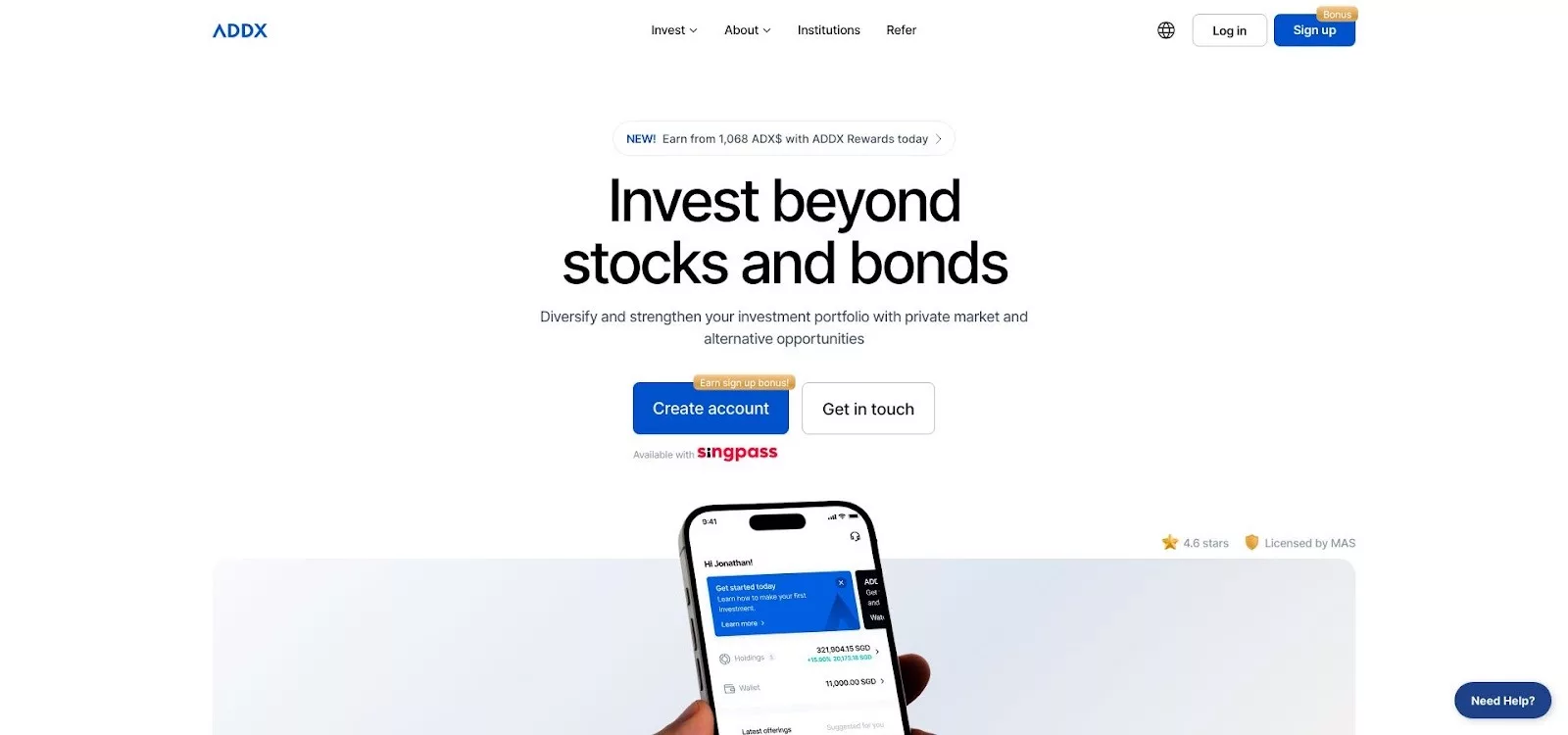
ADDX operates as a MAS-licensed private-markets exchange, combining tokenized issuance, custody and secondary trading on one platform.
Why it matters
- Regulated liquidity. Every investor completes KYC and AML once, then trades inside a closed order book that settles T+0 in Singapore dollars.
- Fractional access. Hamilton Lane’s Global Private Assets Fund cut its minimum from US$125,000 to US$10,000 when it listed on ADDX in 2023.
- Diverse asset shelf. By April 2025 ADDX had tokenised 34 offerings—including a S$50 million UBS senior bond and an HSBC-custodied commercial-real-estate fund—bringing cumulative issuance past US$600 million.
Operational highlights
- Same-day cash settlement via MAS-regulated trust accounts.
- A corporate-action engine that automates coupon payments and redemptions.
- An upcoming cross-listing link with Osaka Digital Exchange, announced January 2025, to widen secondary liquidity in Asia.
Best fit
- Fund managers seeking Asia-Pacific capital without opening a local office.
- Private companies running accredited-only rounds that need guaranteed secondary trading.
- Investors who prefer a curated marketplace over chasing tokens across fragmented venues.
Trade-off
Tokens cannot leave the network without burn-and-reissue, and retail investors remain off-limits—features that keep regulators comfortable but limit global reach.
Platform #6: Tokensoft — the white-label toolbox for DIY issuers
Tokensoft is the build-it-yourself option. Since 2017 its SaaS stack has helped about 100 projects raise more than $1 billion across public and private token sales.
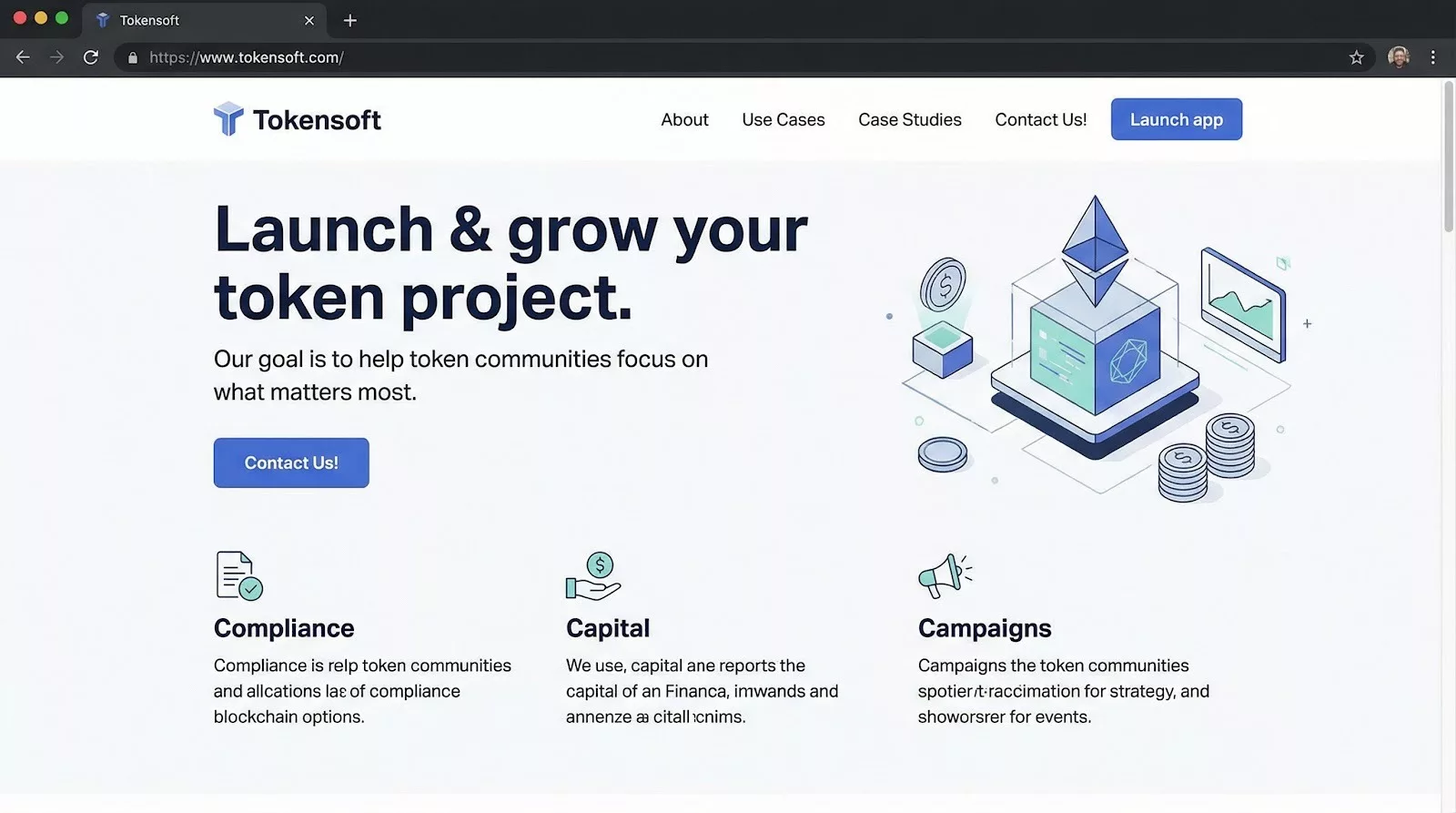
Tokensoft provides a chain-agnostic, white-label toolkit for token sales, vesting, airdrops, entities, and compliance.
What sets it apart
- Developer focus. REST and GraphQL APIs let teams embed KYC flows, cap-table updates, and vesting schedules inside existing apps.
- Chain-agnostic. Tokensoft V2 supports Ethereum, Avalanche, and Polygon, with plans for 10 chains by year-end 2025.
- Compliance templates. Pre-audited contracts such as ERC-1404 enforce Reg D, Reg S, and Reg A+ rules on-chain.
Proof points
- Avalanche raised $42 million in four hours through Tokensoft’s queuing and KYC system in July 2020.
- Arca’s U.S. Treasury Fund became the first 1940-Act fund to tokenize shares on Ethereum in 2020 using Tokensoft’s stack.
- INX closed an SEC-registered token IPO with $85 million in proceeds in 2021, using Tokensoft as transfer agent.
Best fit
- Fintechs and exchanges that want to own the full customer journey.
- Corporates running recurring issuances where licence costs amortise over time.
- Banks that already hold the necessary licences and need only the tech spine.
Trade-off
Tokensoft will not run a secondary market or marketing campaign. Users bring the licences and UX; Tokensoft supplies the compliance-ready plumbing.
How to match these platforms to your roadmap
The six providers sit on a spectrum from fully regulated exchanges to do-it-yourself security stacks. Use the grid below to align a regulatory posture, engineering capacity, and liquidity goals.
| Platform | Base network | Compliance anchor | Live tokenized AUM* | Ideal user |
| Polymesh | Permissioned L1 | On-chain KYC; vetted validators | ≈ US$2.6 B | CSDs, broker-dealers needing deterministic finality |
| Securitize | Multi-chain (EVM) | SEC TA + BD + ATS | US$3.3 B across 715 funds | Asset managers seeking turnkey issuance & trading |
| Tokeny | Public EVM | ERC-3643 identity tokens | €3.2 B across 125 issuances | EU issuers wanting portable compliance |
| Fireblocks | Any (API-select) | MPC custody + policy engine | > US$10 T transferred | Banks or fintechs building custom front ends |
| ADDX | Permissioned exchange | MAS RMO licence | US$600 M across 34 offers | APAC raises needing built-in liquidity |
| Tokensoft | Chain-agnostic | Reg D/S/A+ templates, ERC-1404 | ≈ US$1 B raised | Brands that want white-label control |
*Latest public disclosures as of July 2025.
Plain-English cheat sheet
- Need regulated secondary liquidity today → ADDX or Securitize
- Want a dedicated, identity-gated chain → Polymesh
- Require public-chain reach with on-chain rules → Tokeny
- Already hold licences and developer muscle, just need secure APIs → Fireblocks or Tokensoft
Pick the platform that removes the highest-cost bottleneck—regulation, security, or integration—while leaving room for the products planned two years from now.
Conclusion
Enterprise tokenization is no longer a question of if but of how. By mapping compliance, security, flexibility, performance, integration, and track record to project goals, organizations can narrow the field to the platform that best mitigates risk and accelerates time to market.