
What if your business could predict customer needs before they’re voiced, cut operational costs in half, and make smarter decisions faster than ever, all without expanding your team?
This isn’t a future fantasy anymore. It’s what’s happening right now with the rise of AI agents in business processes. Across industries, companies are quietly reengineering how work gets done by letting intelligent digital systems handle the repetitive, analytical, and time-intensive parts of daily operations. These AI-driven agents don’t just automate tasks, they think through them, learning patterns, anticipating needs, and improving results over time.
Picture this: a logistics company where deliveries reroute themselves in real time to avoid traffic delays. A finance team that spots fraudulent transactions the moment they happen. A customer service department that never sleeps, answering questions instantly and accurately, 24/7. These aren’t prototypes or experimental trials. They’re practical, measurable outcomes businesses are seeing today through the integration of AI agents.
The impact is profound. By handling operational complexity with speed and precision, leading Agentic AI firms are driving a new wave of business transformation. Their advanced AI agents are changing how organizations allocate time, talent, and resources. Employees are freed from monotonous data tasks and empowered to focus on strategy, creativity, and customer relationships — the areas where human insight matters most.
Simply put, AI agents in business processes are not replacing people — they’re enabling them to do their best work. This evolution represents a fundamental shift in how businesses operate, compete, and grow in the digital era.
Today, we’ll explore ten of the most significant ways AI agents are streamlining traditional business functions, from automating everyday workflows to revolutionizing decision-making and innovation.
What Are AI Agents in Business Processes?
AI agents in business processes are intelligent systems that can perform tasks, make decisions, and adapt to changing business needs—all without constant human supervision. These agents are designed to handle everything from routine administrative duties to complex analytics-driven operations.
In simple terms, they act like digital employees—learning, evolving, and taking action in real time.
This matters because businesses are under increasing pressure to move faster and do more with fewer resources. By integrating AI business automation, companies can minimize errors, speed up decision-making, and improve customer satisfaction.
Real-life examples:
- Customer service: Chatbots that resolve queries instantly, freeing human agents for complex tasks.
- Finance: AI systems that detect fraud or automate invoice processing.
- Marketing: Intelligent algorithms that personalize user experiences and campaigns.
These examples of AI agents in business process automation demonstrate that AI is not just replacing manual work—it’s redefining it.
10 Ways AI Agents Are Disrupting Traditional Business Processes
AI agents are increasingly being integrated into everyday business operations, providing efficiency, accuracy, and real-time decision-making support. They operate autonomously using data inputs, algorithms, and feedback loops to complete or assist with complex business tasks.
Below, we’ll explore ten specific areas where their impact is most significant—explaining how they work and what value they add.
1) Automating Repetitive Tasks
Automation is one of the most common and impactful applications of AI agents in business processes. In many organizations, repetitive activities such as data entry, document classification, invoice processing, scheduling, and routine reporting can consume significant employee time. AI agents can handle these tasks continuously, helping improve efficiency while reducing errors caused by manual work, fatigue, or oversight.
This automation can also support enterprise performance management by streamlining routine data and reporting processes, giving teams more time to focus on planning, analysis, strategy, creativity, and customer relationships. Enterprise performance management increasingly combines data, automation, analytics, and AI to help organizations plan, forecast, and improve business performance.
The result is a more streamlined workflow with greater consistency. AI agents can perform repetitive operations according to predefined rules and workflows, while organizations can use human oversight for decisions that require business judgment. Over time, these systems can adapt to changing processes and improve how routine work is handled. As businesses continue digitizing their operations, AI-powered automation is becoming increasingly relevant across industries such as banking, logistics, retail, healthcare, and finance.
How it works
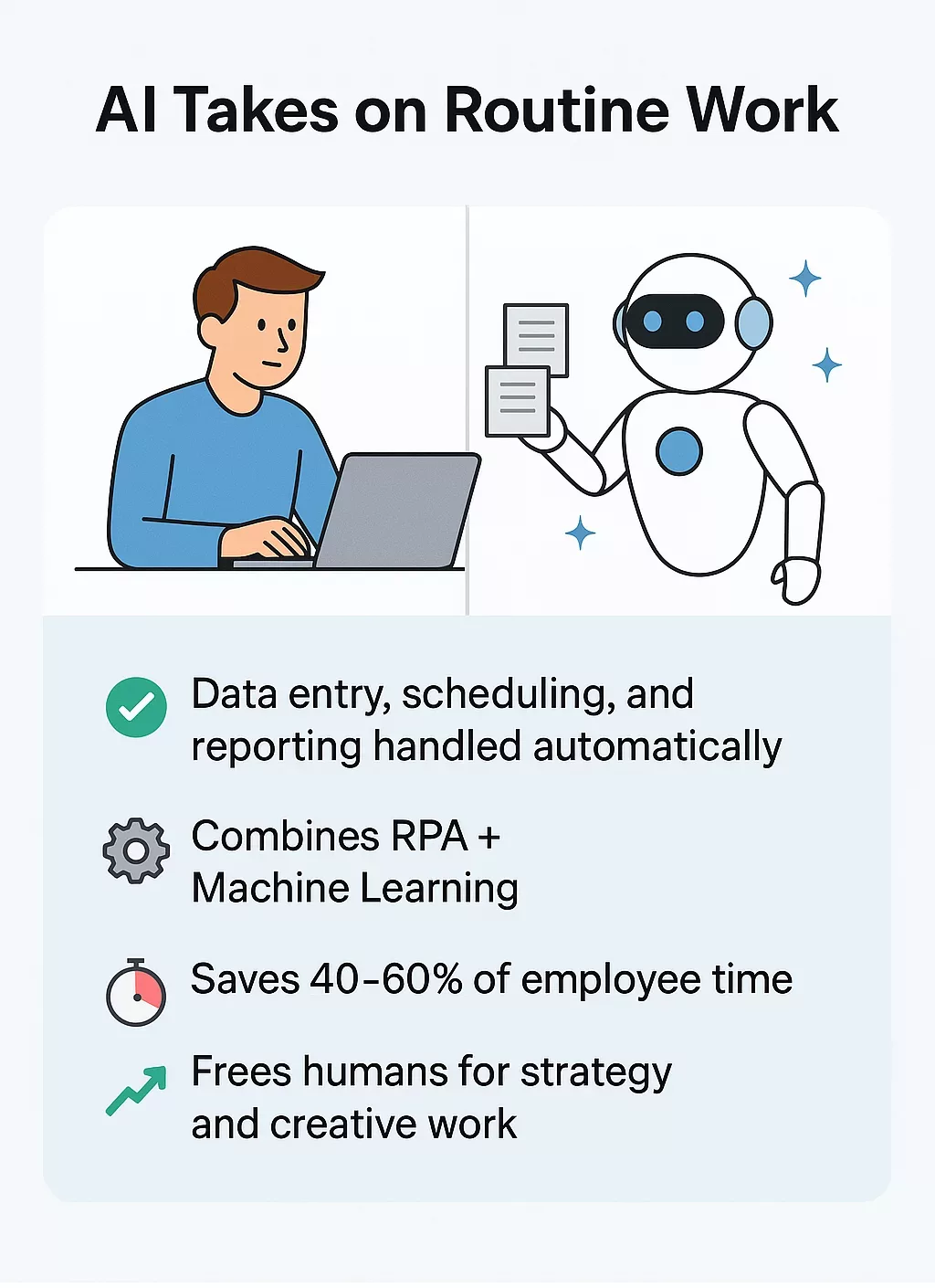
AI automation combines Robotic Process Automation (RPA) and machine learning. RPA executes structured, rule-based tasks—like copying data between systems—while machine learning helps the system improve through experience. AI agents are trained on datasets that show correct and incorrect outcomes.
They monitor incoming data, execute pre-defined tasks, and flag exceptions for human review. Integration with enterprise systems like ERPs or CRMs allows seamless end-to-end automation. Over time, these agents can adapt to variations in data or process patterns using predictive learning models.
Example
For instance, a financial institution may deploy an AI agent to automate expense report processing. Employees submit scanned receipts, and the agent uses optical character recognition (OCR) to read and extract information such as vendor, amount, and date.
It then cross-references the data against policy rules and flags discrepancies for manual review. This reduces approval time from days to minutes and minimizes errors due to manual data entry.
Companies like UiPath and Automation Anywhere offer platforms that use such intelligent automation at scale, improving speed and accuracy in administrative functions.
Limitations
Automation through AI is highly effective for repetitive and structured tasks, but its performance drops when facing unstructured or ambiguous data. For example, if a document is poorly formatted or handwritten, the AI might misinterpret it. Additionally, implementing automation requires a clear understanding of workflows, data integration, and change management.
Over-automation can lead to job displacement concerns and employee resistance. Another limitation is the cost of the initial setup, especially for small businesses. Partnering with Agentic AI solution providers can help reduce these challenges by ensuring smoother implementation, customized workflows, and better human-AI collaboration. Regular updates and monitoring are still essential to prevent the system from making errors as business rules evolve over time.
2) Enhancing Decision-Making
AI agents assist organizations by turning raw data into actionable insights. Decision-making traditionally depends on human experience and limited datasets, which can introduce bias and inconsistency.
AI agents, however, can analyze large quantities of data from diverse sources—like customer feedback, market trends, and internal metrics—to uncover patterns and correlations that inform better decisions. These systems help businesses predict market shifts, optimize resource allocation, and improve strategic planning.
By using AI-assisted analytics, organizations can make faster and more evidence-based decisions. Industries such as finance, healthcare, and retail use these agents for forecasting demand, assessing risk, and identifying growth opportunities.
How it works
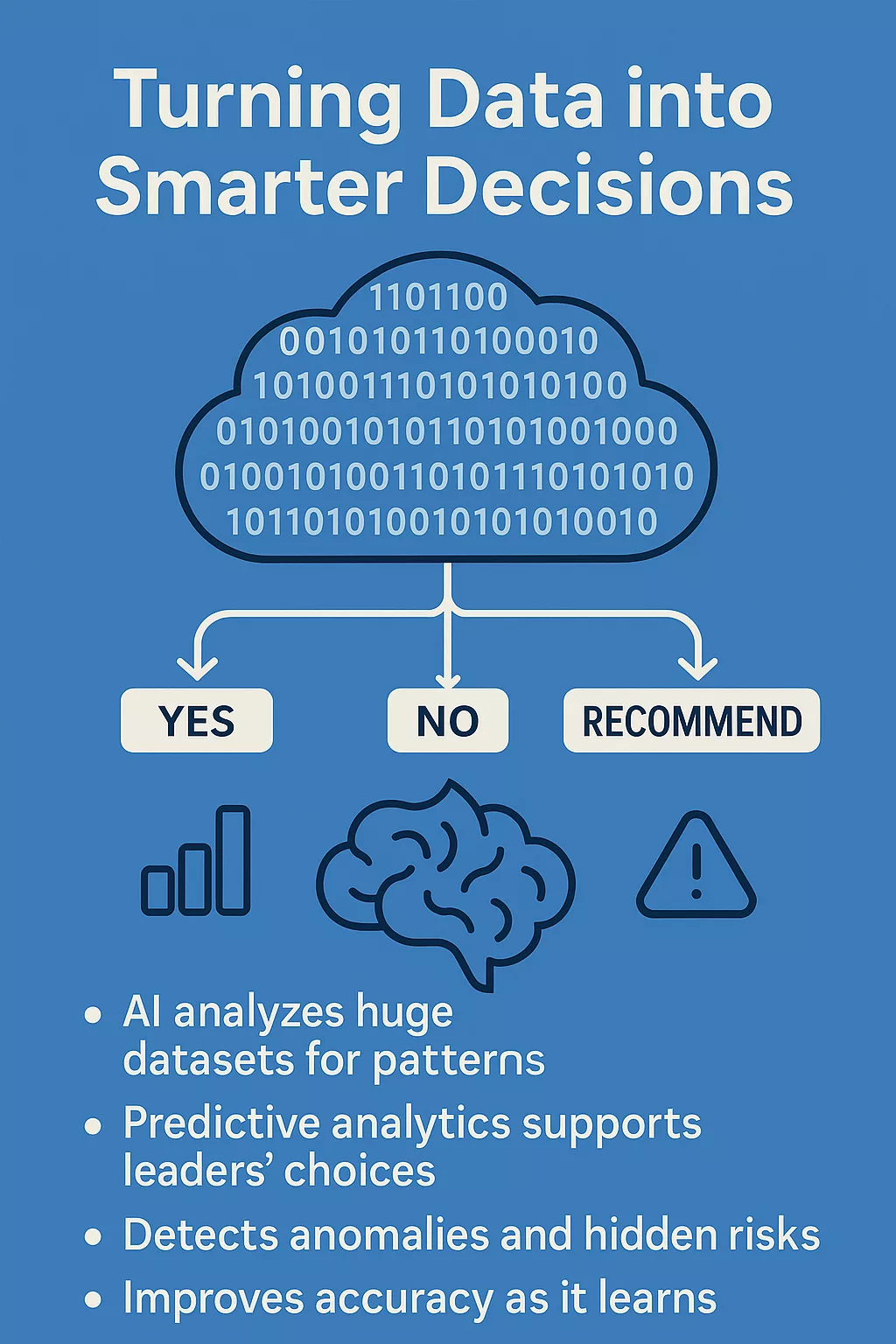
AI decision-support agents use predictive modeling, data mining, and machine learning algorithms to process and interpret structured and unstructured data. They aggregate information from multiple systems, clean and normalize it, then identify trends or anomalies.
Decision-support dashboards present insights through visualizations, while some systems suggest specific actions using reinforcement learning. These agents continuously refine their accuracy by learning from feedback loops—comparing outcomes with predictions and adjusting algorithms accordingly.
Example
Retail chains like Walmart use AI agents to predict product demand across locations by analyzing weather data, holidays, and historical sales. When the system detects a likely increase in demand, it automatically recommends adjustments to inventory levels and shipment schedules. This proactive decision-making minimizes overstocking and lost sales.
In financial services, similar models predict credit risk by analyzing thousands of variables, from income to transaction behavior. The goal is not to replace human judgment but to enhance it through objective, data-driven insights.
Limitations
AI-driven decision-making is only as accurate as the data it relies on. Poor-quality, biased, or incomplete data can produce misleading outcomes. Additionally, AI systems lack contextual awareness—they can detect correlations but not always understand causation.
Overreliance on algorithmic outputs may discourage human critical thinking or lead to “automation bias.” Regulatory and ethical concerns also arise when AI is used in sensitive areas such as lending or hiring. Finally, decision-making agents require constant data monitoring, model retraining, and validation to remain accurate as market conditions change.
3) Improving Customer Experience
Customer experience is a key competitive factor in nearly every industry, and AI agents play a central role in enhancing it. They enable businesses to offer faster responses, personalized recommendations, and 24/7 support.
Traditionally, customer service depended on human representatives handling inquiries in real-time, which limited response speed and scalability. AI agents can now manage high volumes of requests simultaneously while maintaining accuracy and consistency.
Using natural language understanding, these systems can interpret questions, identify user intent, and provide relevant solutions instantly. Beyond support, AI agents help tailor experiences—such as personalized emails, product suggestions, and content recommendations—based on past behavior and preferences. This personalization builds stronger customer relationships, increases satisfaction, and boosts long-term loyalty.
How it works
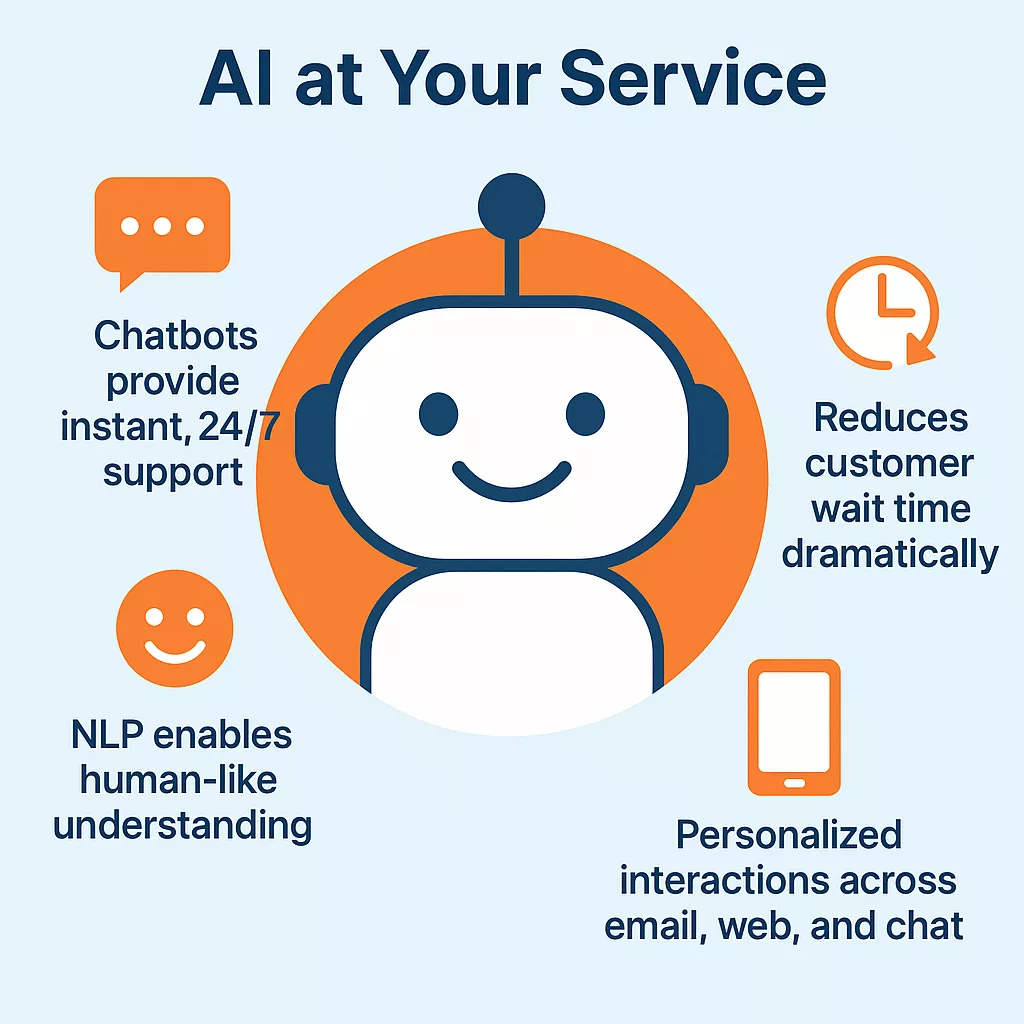
AI-powered customer service agents rely on Natural Language Processing (NLP) and sentiment analysis to understand user input. They analyze text or voice queries, extract intent, and search a knowledge base for appropriate responses. Machine learning enables them to improve accuracy over time by learning from past interactions.
Some advanced systems use contextual memory, allowing them to remember past conversations and maintain continuity. Integration with CRM systems ensures personalized responses based on a customer’s profile, history, and preferences.
Example
Telecom companies use AI chatbots to handle customer inquiries across digital channels. These agents answer billing questions, troubleshoot connectivity issues, and schedule technician visits without human intervention.
AI-based tools also monitor customer sentiment on social media, identifying frustrated users and alerting human agents to intervene. Similarly, e-commerce platforms like Amazon use AI-driven personalization to recommend products based on browsing and purchase history, leading to higher conversion rates.
Limitations
While AI agents provide efficiency, they still lack empathy and emotional intelligence. They may misinterpret tone or fail to respond appropriately to nuanced situations. Customers often become frustrated when AI chatbots cannot resolve complex problems and offer no easy path to a human representative.
Additionally, personalization efforts depend heavily on access to customer data, which raises privacy concerns and must comply with data protection laws. Maintaining these systems requires ongoing updates to their knowledge bases to reflect new policies, products, or services. Over-reliance on automation can also depersonalize interactions if not balanced with human oversight.
4) Streamlining Supply Chain Management
AI agents are significantly improving supply chain operations by enhancing visibility, efficiency, and predictability. Traditional supply chain management relies on manual coordination among multiple stakeholders—suppliers, transporters, and distributors—which often leads to delays and inefficiencies.
AI agents can analyze real-time data from logistics networks, warehouses, and external sources to forecast demand, optimize routes, and balance inventory levels. These systems help businesses reduce waste, prevent stockouts, and respond quickly to disruptions.
By analyzing supply chain data holistically, AI agents identify patterns and bottlenecks that humans might miss. This leads to better planning, faster delivery, and lower operational costs. The impact is particularly strong in industries with complex, global supply networks such as retail, manufacturing, and pharmaceuticals.
How it works
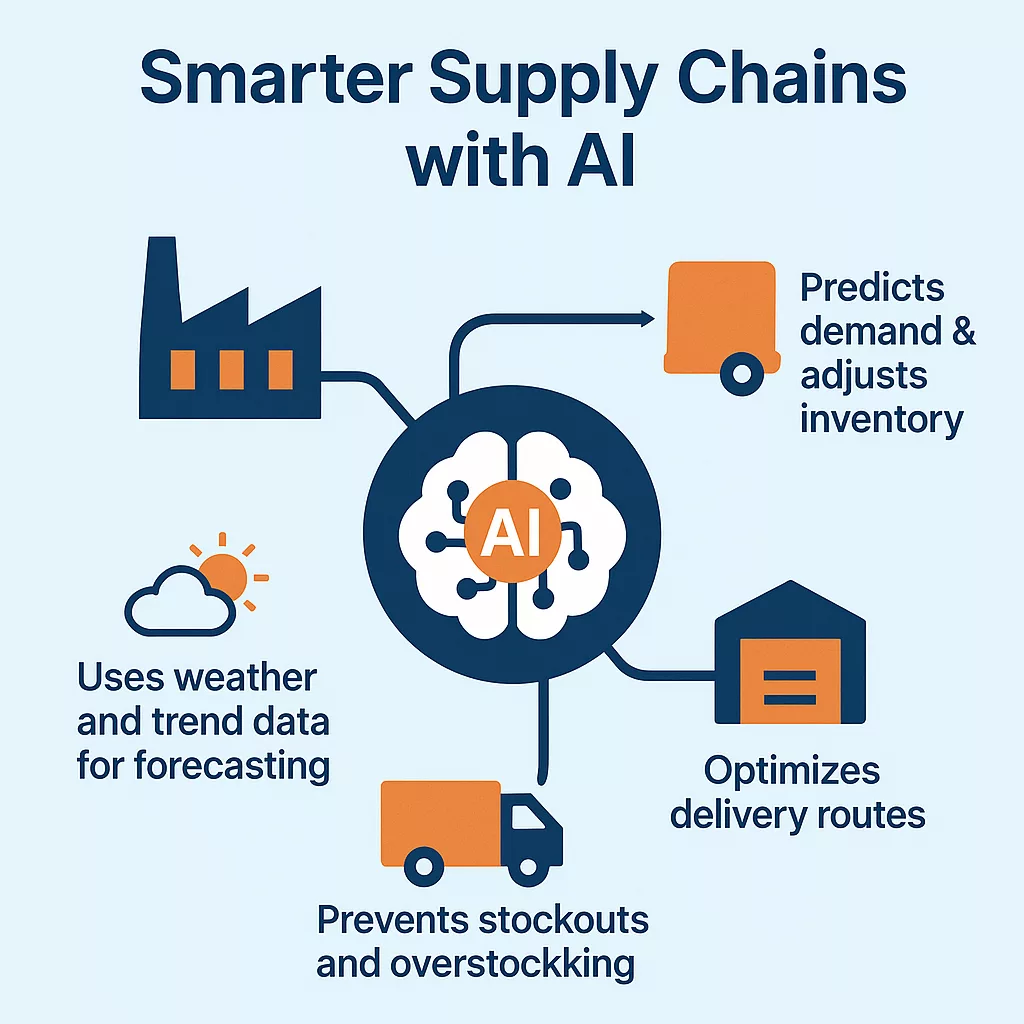
AI supply chain agents use predictive analytics, optimization algorithms, and real-time tracking. They gather data from IoT sensors, GPS devices, and ERP systems to monitor product movement and environmental conditions. Machine learning models predict demand based on factors such as seasonality, historical sales, and external variables like weather or promotions.
These agents automatically suggest procurement adjustments, reroute shipments, or reorder materials when inventory levels drop below thresholds.
Example
Amazon integrates AI into its logistics system to manage inventory across hundreds of warehouses. Its algorithms predict demand by region and direct stock to fulfillment centers closest to likely buyers. This reduces delivery times and costs. Similarly, DHL uses AI-based route optimization to analyze traffic and weather data, dynamically adjusting delivery schedules for efficiency. These applications minimize idle time, reduce fuel consumption, and improve reliability across the supply chain.
Limitations
AI-driven supply chains depend on accurate, timely data. Disruptions caused by unpredictable events—like pandemics or political instability—can still derail even the best predictive models. Implementing AI requires integrating multiple systems and data sources, which can be technically complex and costly. Some organizations lack the digital infrastructure or clean data necessary for effective automation.
Additionally, AI models may overfit past patterns and fail to adapt quickly to new conditions. Human judgment remains essential for interpreting model outputs and managing exceptions, especially when ethical or regulatory decisions are involved in supply chain management.
5) Driving Predictive Maintenance
Predictive maintenance is one of the most practical and cost-saving applications of AI agents in industrial settings. Traditional maintenance operates on a fixed schedule or after equipment failure, which can result in unnecessary downtime or expensive repairs.
AI agents analyze real-time sensor data from machines to detect patterns indicating potential issues before they lead to breakdowns. This proactive approach helps businesses plan maintenance activities more efficiently, extend equipment lifespan, and reduce operational disruptions.
Industries such as manufacturing, transportation, energy, and utilities have widely adopted predictive maintenance. It’s especially valuable in large-scale operations where machinery failure can cause substantial losses or safety risks.
How it works
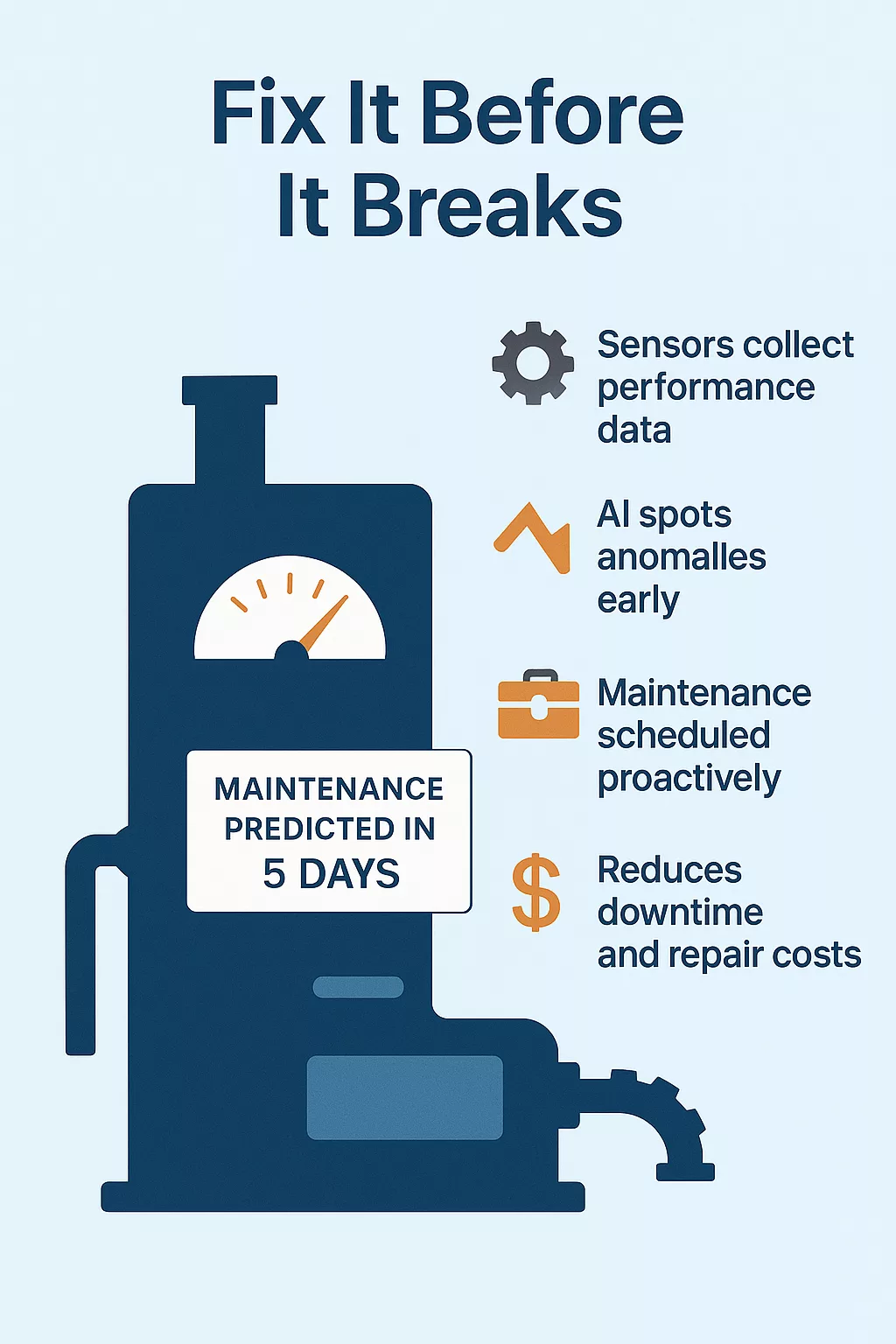
AI agents collect and analyze data from sensors measuring variables like vibration, temperature, pressure, or sound. Using anomaly detection and predictive modeling, they identify early warning signs of wear or malfunction.
The agent compares real-time readings to baseline performance and historical data to forecast when maintenance will be needed. Integration with maintenance management systems then triggers alerts or automatically schedules service tasks.
Example
General Electric (GE) employs AI-based predictive maintenance in its aviation and power divisions. Sensors on engines and turbines continuously collect performance data, which AI agents analyze to predict potential failures. This allows engineers to perform maintenance only when necessary, reducing downtime and costs.
In public transportation, Siemens Mobility uses similar AI models to monitor train systems and prevent mechanical failures that could disrupt service. These predictive systems have proven highly effective at minimizing unexpected breakdowns.
Limitations
Predictive maintenance depends heavily on sensor quality and data availability. Poor calibration or incomplete datasets can reduce the accuracy of predictions. Implementation can be costly, especially when retrofitting older equipment with modern sensors. The models also require periodic retraining as equipment ages or operational conditions change.
Over-reliance on AI predictions without human verification could lead to unnecessary maintenance if false positives occur. Finally, organizations need skilled personnel to interpret data and act on AI recommendations, as incorrect maintenance decisions can still lead to operational risks or safety issues.
6. Boosting Marketing and Sales
Marketing and sales teams increasingly rely on AI agents to improve targeting, lead generation, and campaign effectiveness. Traditional marketing often depends on manual data analysis and generalized messaging, but AI enables precision at scale.
AI agents analyze customer behavior, preferences, and interactions across multiple channels to segment audiences and deliver tailored content. This approach increases engagement, conversion rates, and return on investment. In sales, AI assists with lead scoring, pipeline forecasting, and customer retention analysis. It helps identify which prospects are most likely to purchase and what factors drive their decisions.
The use of AI agents also allows real-time adjustments to campaigns—optimizing ad spend based on performance data. These systems have become widely adopted in e-commerce, SaaS, and digital marketing agencies due to their measurable impact on results.
How it works
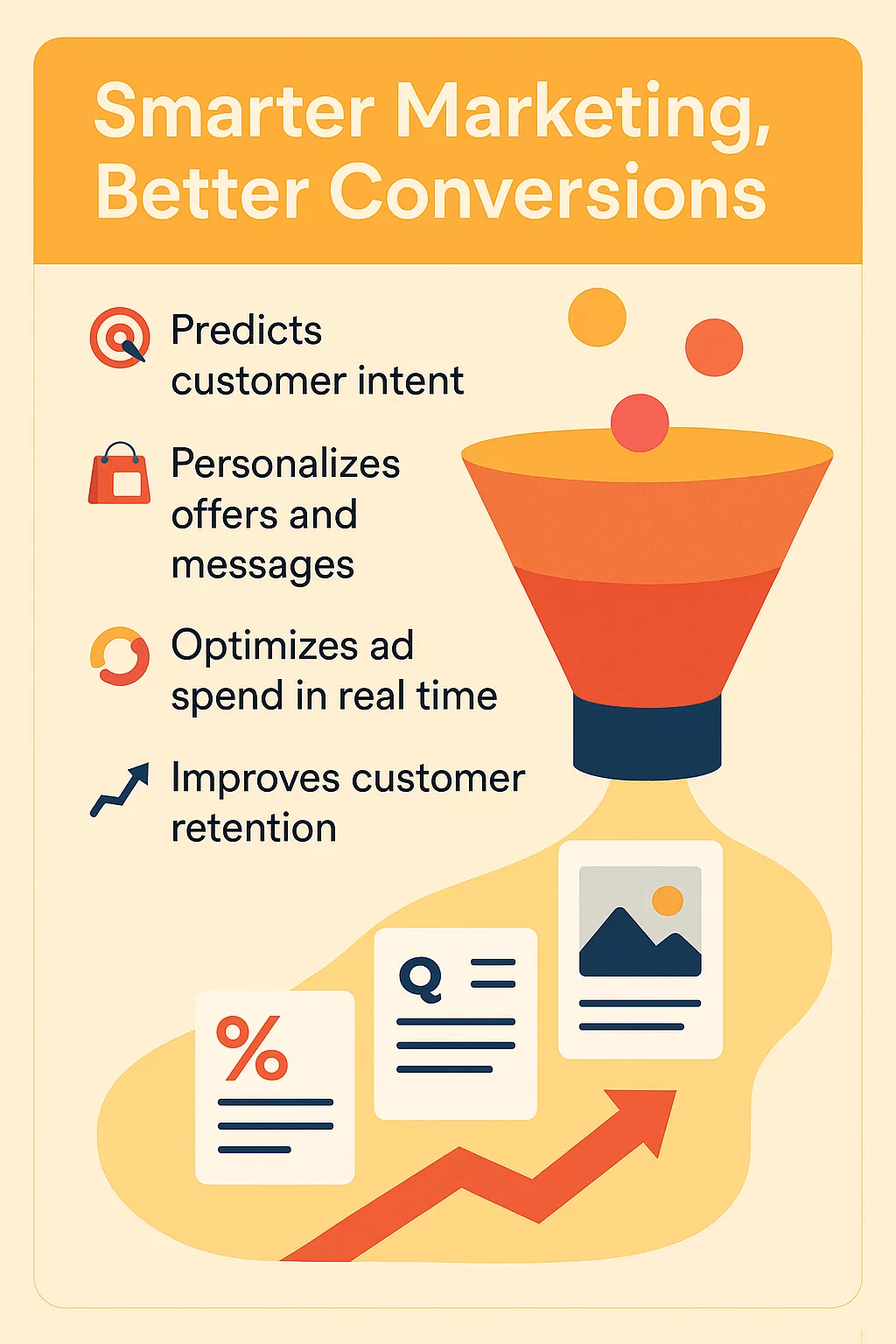
AI agents for marketing use predictive analytics, recommendation systems, and natural language processing (NLP). They process behavioral data—such as browsing history, clicks, and purchase records—to predict customer intent. Algorithms segment users into micro-groups and deliver personalized content automatically.
In sales, AI tools rank leads based on engagement scores and likelihood to convert. Integration with Customer Relationship Management (CRM) systems allows these agents to update records, send automated follow-ups, and provide sales insights in real time.
Example
Netflix is a leading example of personalized marketing through AI. Its recommendation system analyzes viewing history, user ratings, and time spent on different genres to suggest relevant shows or movies. Similarly, Amazon uses AI-driven product recommendations that account for browsing behavior and purchase patterns. These systems significantly improve customer retention and satisfaction.
In sales, HubSpot’s AI tools assist teams by identifying high-quality leads and automating email sequences, improving overall productivity.
Limitations
AI marketing systems depend on access to large amounts of customer data, raising privacy and compliance concerns under regulations like GDPR and CCPA. Overpersonalization can also feel intrusive to customers, leading to trust issues.
Algorithms may misinterpret data or reinforce existing biases, resulting in irrelevant or inaccurate recommendations. Additionally, smaller businesses may lack the data volume or infrastructure needed for effective implementation. While AI can optimize campaigns, it cannot replace human creativity and intuition in message design or brand storytelling, both of which remain critical for long-term marketing success.
7) Optimizing Human Resource Management
AI agents have transformed how organizations manage recruitment, employee engagement, and workforce planning. Traditional HR processes are time-consuming—reviewing resumes, scheduling interviews, and analyzing performance data often require substantial manual effort. AI simplifies these tasks through automation and data-driven insights.
For recruitment, AI agents scan applications, match candidates to job descriptions, and even assess personality traits or cultural fit through video analysis. In employee management, AI tracks performance metrics, predicts turnover risks, and suggests personalized training programs.
These agents help HR professionals make fairer, evidence-based decisions by reducing subjective bias in hiring and evaluation. AI also supports workforce planning by forecasting future skill requirements based on company goals.
How it works
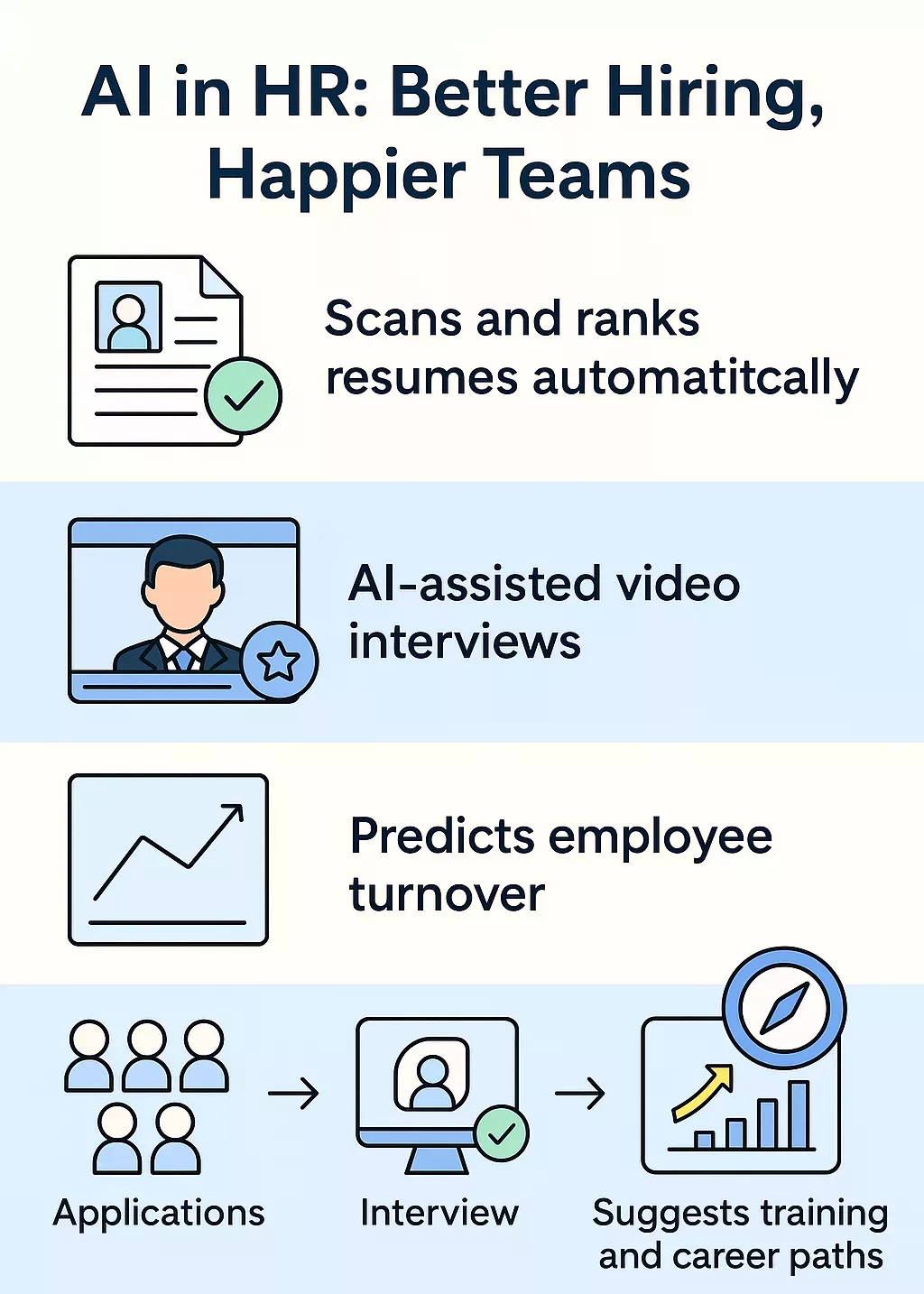
AI HR agents use natural language processing (NLP) to read resumes and extract key skills, qualifications, and experience. Machine learning models compare this data against job requirements to rank candidates. In performance management, AI collects data from project outcomes, peer reviews, and productivity tools to generate insights.
Some platforms use predictive analytics to identify employees likely to leave, allowing early intervention. Integration with HR software automates scheduling, onboarding, and benefits management.
Example
Unilever uses AI for recruitment to streamline the first stages of candidate evaluation. Applicants play gamified assessments analyzed by AI to measure cognitive and emotional traits. Those who pass proceed to video interviews, where AI evaluates responses based on language and facial cues.
This has reduced hiring time and improved consistency in candidate assessment. Other firms like IBM use AI to personalize employee learning paths, aligning skill development with business goals.
Limitations
AI in HR presents ethical and legal challenges. If training data reflects historical bias, AI models may unintentionally discriminate against certain groups. Transparency is also limited—AI decisions can be difficult to explain, making accountability a concern. Privacy issues arise when analyzing employee behavior or emotions.
Additionally, algorithms may overlook non-quantifiable factors like adaptability or creativity. While AI can assist HR processes, human oversight is crucial to ensure fairness, context, and empathy. Effective implementation requires diverse data, regular audits, and a strong ethical framework.
8) Transforming Financial Operations
AI agents are increasingly used to manage financial operations with greater accuracy, speed, and compliance. In traditional finance departments, activities such as invoice matching, expense auditing, and fraud detection involve extensive manual work.
AI automates these processes, reducing operational costs and human error. Agents can analyze transactions in real time, flagging anomalies or risks based on historical patterns. In accounting, AI performs reconciliations, identifies duplicate payments, and assists with financial forecasting. AI also helps compliance teams by scanning documents for regulatory adherence.
These capabilities make financial operations more transparent and efficient, freeing accountants and auditors to focus on strategic financial planning.
How it works
AI financial agents employ machine learning and anomaly detection algorithms. They analyze vast sets of transactional data to identify irregularities that might indicate fraud or accounting errors. Some systems use optical character recognition (OCR) to digitize invoices and receipts, automatically extracting relevant data.
AI-driven forecasting tools integrate market data, seasonal patterns, and historical records to predict revenue or cash flow. These agents also monitor compliance rules and alert teams to deviations.
Example
JPMorgan Chase uses an AI system called COIN (Contract Intelligence) to analyze commercial loan agreements. The platform reviews thousands of documents in seconds, a task that previously required hundreds of human hours.
Similarly, KPMG uses AI-driven auditing tools that automatically test large datasets for irregularities, improving accuracy and speed. Startups like AppZen offer AI-based expense auditing that identifies policy violations in real time, reducing corporate fraud risk.
Limitations
Financial AI systems require large amounts of high-quality data and must comply with strict regulatory standards. Errors in data can produce inaccurate risk assessments or compliance reports. These tools are effective at flagging anomalies but still require human interpretation for final decisions. Implementation costs and integration with legacy accounting systems can also be significant.
Moreover, transparency remains a challenge—many machine learning models operate as “black boxes,” making it hard to explain why certain transactions were flagged. Regular auditing of the AI system itself is essential to maintain accuracy and compliance.
9) Supporting Data Security and Compliance
AI agents are playing an increasingly important role in data security and compliance management. As organizations store more information digitally, the volume of potential threats and regulatory requirements has grown significantly. Traditional security systems rely on predefined rules that often fail to detect new or evolving attacks.
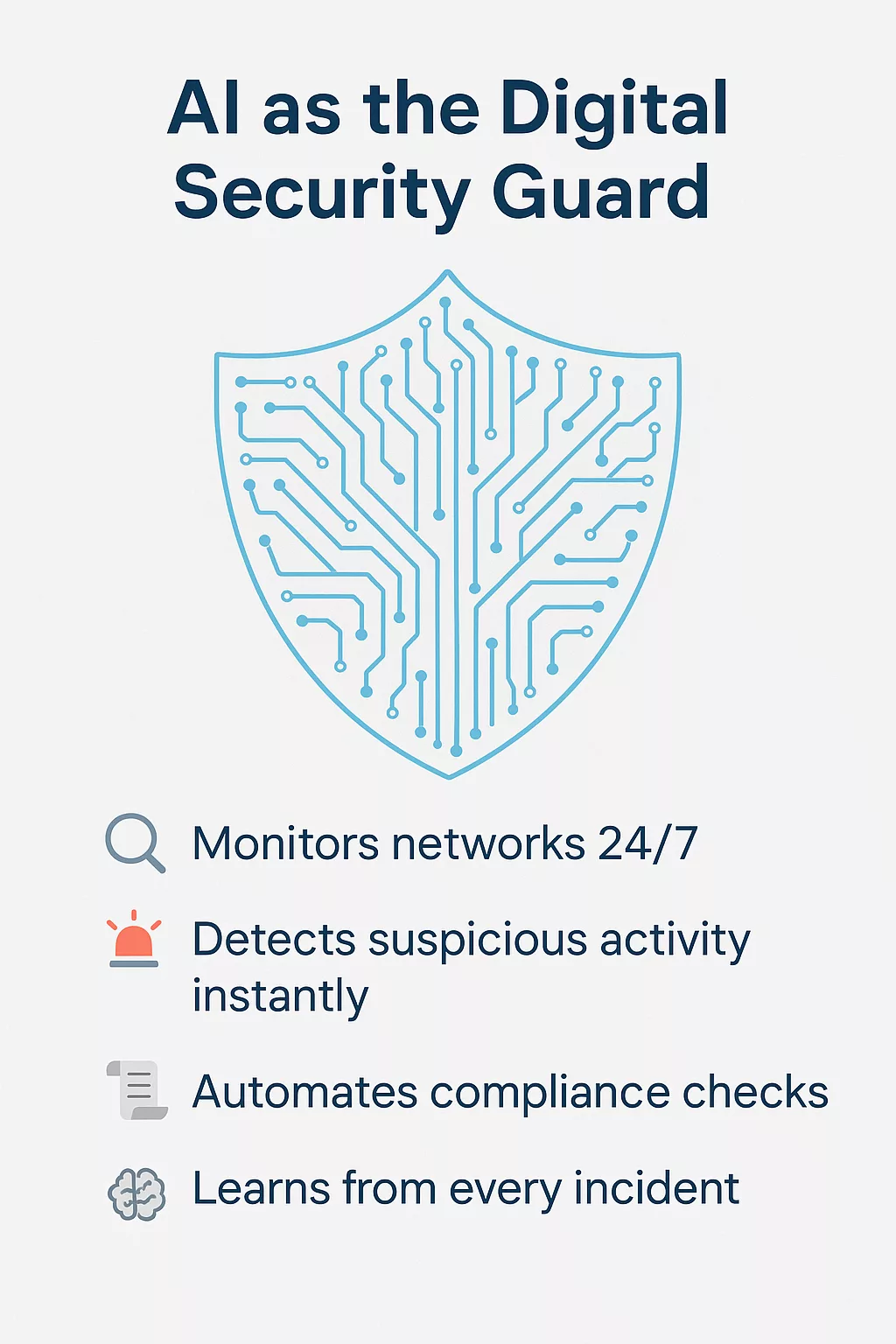
AI agents, by contrast, can identify unusual behavior or anomalies in real time. They continuously learn from new data, helping security teams respond faster to potential breaches. In compliance, AI agents automate the monitoring of internal policies and legal requirements, reducing the burden on human auditors.
They can scan documents, check for regulatory adherence, and alert teams to violations. This improves efficiency and consistency across industries such as banking, healthcare, and e-commerce—where data protection laws like GDPR and HIPAA demand strict oversight.
How it works
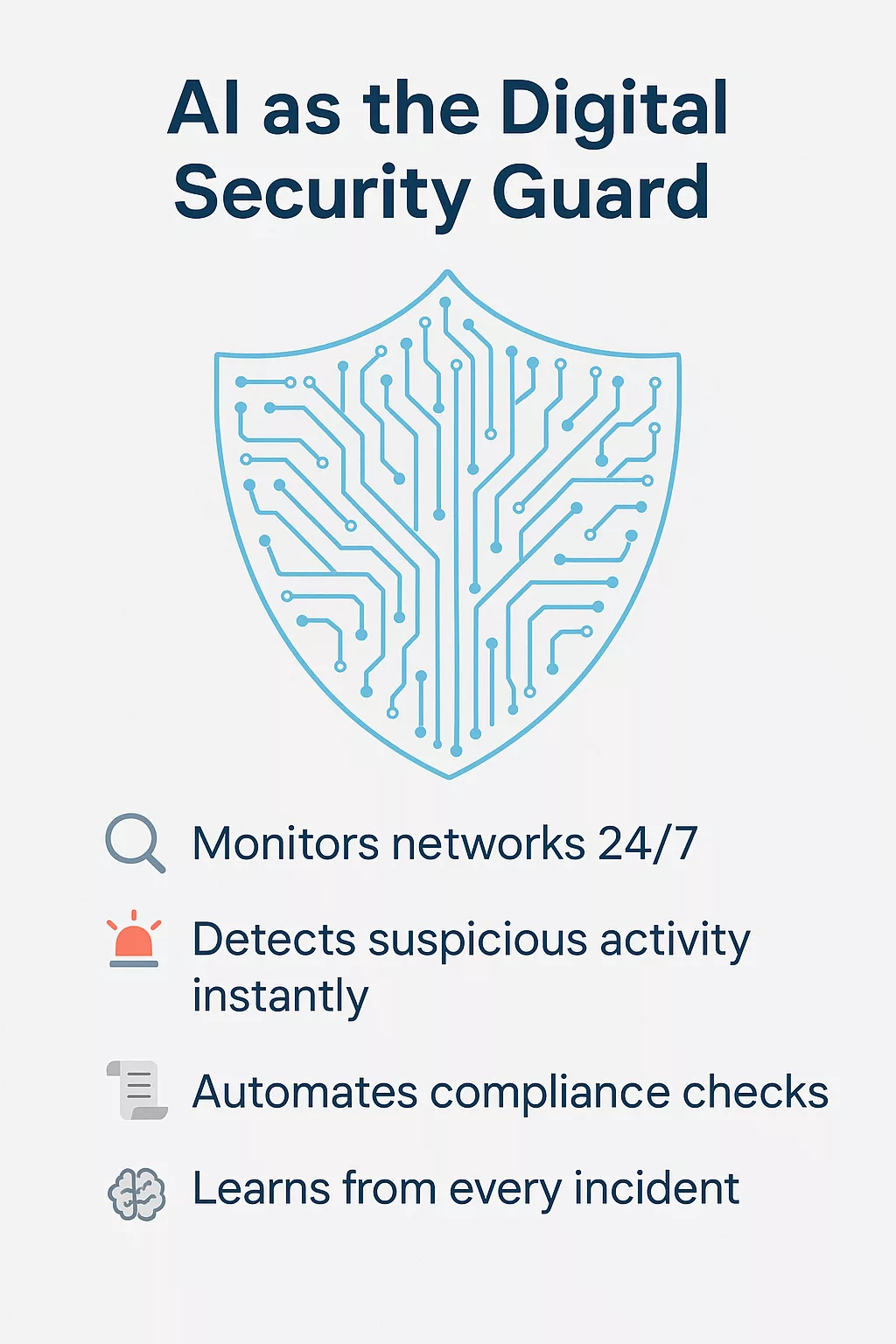
AI security agents use behavioral analytics, machine learning, and pattern recognition to detect anomalies. They monitor network activity, user logins, and data transfers to establish a baseline of normal behavior. When deviations occur—such as unusual login times or abnormal file downloads—the agent generates an alert.
For compliance, Natural Language Processing (NLP) models scan emails, contracts, and reports for specific terms or patterns that indicate policy violations. These agents often integrate with Security Information and Event Management (SIEM) systems to provide real-time monitoring and automated response.
Example
Microsoft Azure Security Center and IBM QRadar are widely used platforms that employ AI to detect and mitigate cybersecurity threats. They continuously analyze millions of logs and data points to identify suspicious activity. For example, if an employee’s account suddenly accesses sensitive files from a foreign IP address, the system flags it for investigation or blocks access.
In compliance, financial institutions use AI to scan transactions for anti-money laundering (AML) risks or regulatory breaches. This has helped banks reduce false positives and improve detection accuracy.
Limitations
While AI agents enhance security, they are not foolproof. False positives—when legitimate behavior is flagged as suspicious—can overwhelm analysts with unnecessary alerts. AI systems can also be vulnerable to adversarial attacks, where hackers manipulate input data to trick algorithms. Maintaining AI security systems requires constant retraining as threats evolve.
Additionally, using AI for surveillance raises privacy concerns, especially if monitoring extends to employee behavior. These systems are effective in identifying risks, but human oversight remains essential for accurate threat assessment and ethical decision-making in sensitive cases.
10. Accelerating Innovation
AI agents contribute to innovation by handling repetitive data analysis, simulation, and testing tasks that would otherwise consume significant human effort. In research and development, they process large datasets to identify trends, optimize designs, and generate prototypes. This allows organizations to innovate faster and make evidence-based decisions.
For example, AI helps pharmaceutical companies analyze chemical interactions for drug discovery or supports manufacturers in improving product designs through simulation. In business strategy, AI agents analyze market trends and customer insights to uncover new opportunities.
By automating complex data-driven processes, AI frees human professionals to focus on creative problem-solving, strategic thinking, and experimentation—areas where human intelligence remains critical. This synergy between human creativity and machine efficiency is driving significant progress across industries.
How it works
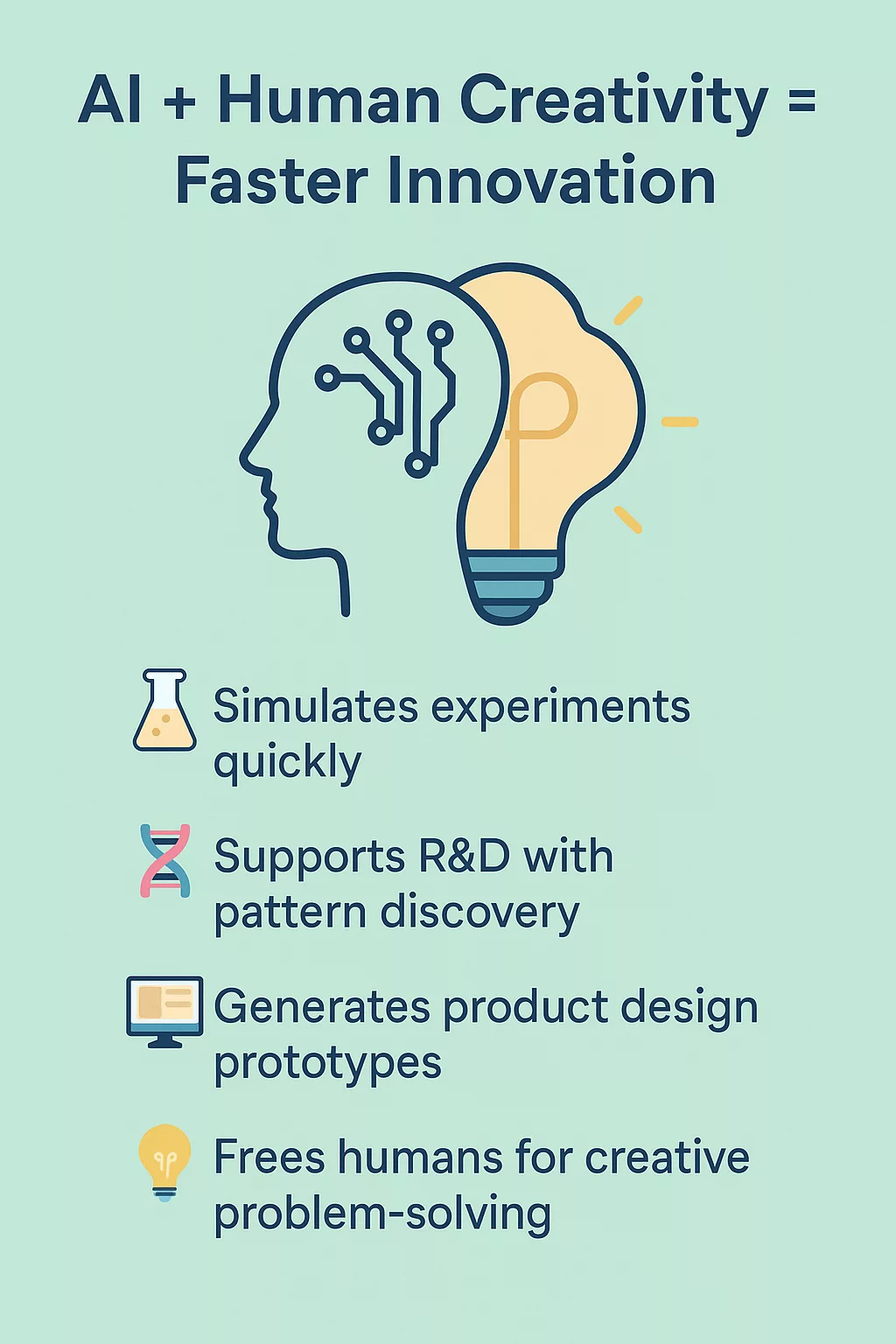
AI innovation agents combine machine learning, data modeling, and generative algorithms. They analyze structured and unstructured data to identify patterns and predict outcomes. In product design, generative AI creates multiple design variations based on input parameters and constraints. In research, AI models simulate experiments to test hypotheses quickly.
These agents integrate with data management systems, enabling iterative learning—where each test or design cycle improves the next one.
Example
Pharmaceutical firms like Pfizer and Moderna used AI models to accelerate vaccine research during the COVID-19 pandemic. AI agents analyzed genetic data and simulated protein interactions, drastically reducing the time needed for lab testing.
In automotive design, BMW uses generative design tools to create optimized vehicle parts that balance strength and weight. Similarly, Procter & Gamble employs AI to predict consumer product performance before physical testing, saving months of development time.
Limitations
AI accelerates data processing and modeling but cannot replace human creativity or ethical judgment. Its output depends heavily on the quality and scope of input data. In innovation, this can lead to “narrow” solutions that overlook novel but unconventional ideas.
Generative systems also raise intellectual property and originality questions—especially when trained on existing designs or publications. Furthermore, high computational costs and technical expertise requirements may limit accessibility for smaller organizations.
The most effective innovation strategies pair AI-driven insights with human intuition and critical thinking, ensuring balanced, responsible progress.
Final Thoughts
AI agents are becoming essential to modern business operations, not just as automation tools but as intelligent collaborators that enhance decision-making, productivity, and innovation. Across these ten areas—from customer service to financial management—AI agents help businesses operate with greater efficiency, accuracy, and foresight.
If you found this article insightful, share your thoughts or experiences in the comments below.
For more in-depth insights on AI agents in business processes and digital transformation strategies, visit appsinsight.co and connect with top industry experts for tailored guidance.