

Healthcare systems today operate under immense pressure doctors, nurses, and administrators all face mounting challenges such as long patient queues, fragmented communication, and endless administrative documentation. These inefficiencies don’t just consume valuable hours; they also dilute the quality of patient engagement and care delivery. Every manual task , from appointment coordination to data entry- pulls medical professionals away from what truly matters: personalized, proactive healthcare.
Enter agentic AI, a transformative force redefining how modern healthcare functions. Unlike traditional automation, agentic AI doesn’t just follow commands — it reasons, learns, and acts independently to optimize outcomes.
Hospitals and clinics are deploying it to automate scheduling, triage patients intelligently, manage medical records, and even personalize treatment plans based on real-time health data. For instance, AI-driven chatbots now assist patients 24/7, while predictive analytics identify at-risk individuals before conditions worsen.
The result? Faster operations, fewer bottlenecks, and more meaningful doctor-patient interactions. As healthcare continues to digitize, agentic AI is no longer a futuristic add-on — it’s becoming the operational backbone of efficient, patient-centered medicine.
In this article, we’ll examine how this technology is reshaping the healthcare ecosystem and why it’s now indispensable for improving both clinical outcomes and organizational performance
Read once! Build an Agentic AI Personal Assistant with the OpenAI API
Understanding Agentic AI in Healthcare
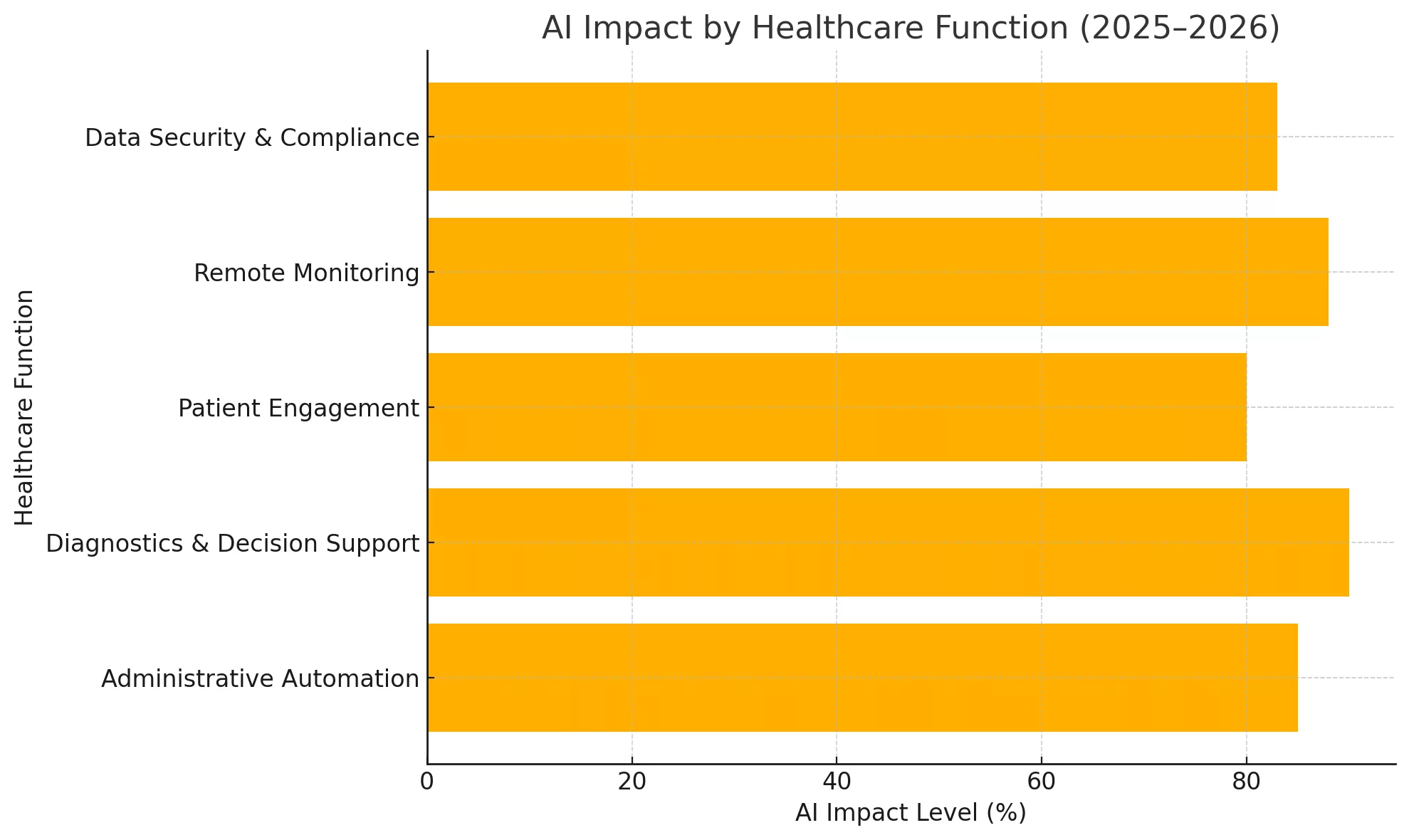
Agentic AI in healthcare represents a major shift from passive analytics to active, decision-making intelligence. Unlike conventional AI systems that simply process data and offer recommendations, agentic AI can take autonomous actions — intelligently and safely — based on real-time information. This means it doesn’t just inform clinicians; it works alongside them as a proactive digital colleague.
In practical terms, agentic AI assists healthcare providers by:
- Scheduling appointments dynamically according to physician availability and patient urgency
- Recommending or adjusting treatments using continuously updated clinical data
- Monitoring patient health remotely through wearable sensors and electronic health records, alerting teams to anomalies before they escalate
The defining feature of agentic AI is its autonomy. It uses real-time data streams, predictive modeling, and reinforcement learning to make context-aware decisions with minimal human supervision. This allows hospitals and clinics to operate more efficiently while maintaining or even enhancing care quality.
According to recent market research, the global agentic AI in healthcare market was valued at USD 538.51 million in 2024 and is projected to expand at a compound annual growth rate (CAGR) of 45.56% between 2025 and 2030. This rapid growth reflects a growing confidence in AI systems that can not only analyze but also act.
Below is a clear comparison between traditional AI and agentic AI in the healthcare context:
| Aspect | Traditional AI | Agentic AI |
|---|---|---|
| Key Function | Provides insights and recommendations | Acts autonomously to perform tasks |
| Human Interaction | Requires human judgment for decisions | Operates independently with minimal oversight |
| Example | Analyzing medical images or suggesting diagnoses | Automating appointment scheduling, patient follow-ups, or remote monitoring |
Must Know! AI Agents Are Disrupting Traditional Business Processes
Top 7 Ways Agentic AI Is Reshaping Healthcare and Patient Engagement
The healthcare industry is standing on the brink of a profound transformation, and agentic AI is one of the driving forces behind it. With hospitals increasingly adopting AI-driven systems, the global smart hospital market powered by AI, IoT, and robotics is projected to soar to $148 billion by 2029. This shift is not just about automation; it’s about redefining how healthcare providers deliver personalized, proactive, and efficient patient care.
Here are 7 practical and high-impact ways agentic AI is transforming patient engagement, optimizing operations, and setting a new standard for modern healthcare delivery.
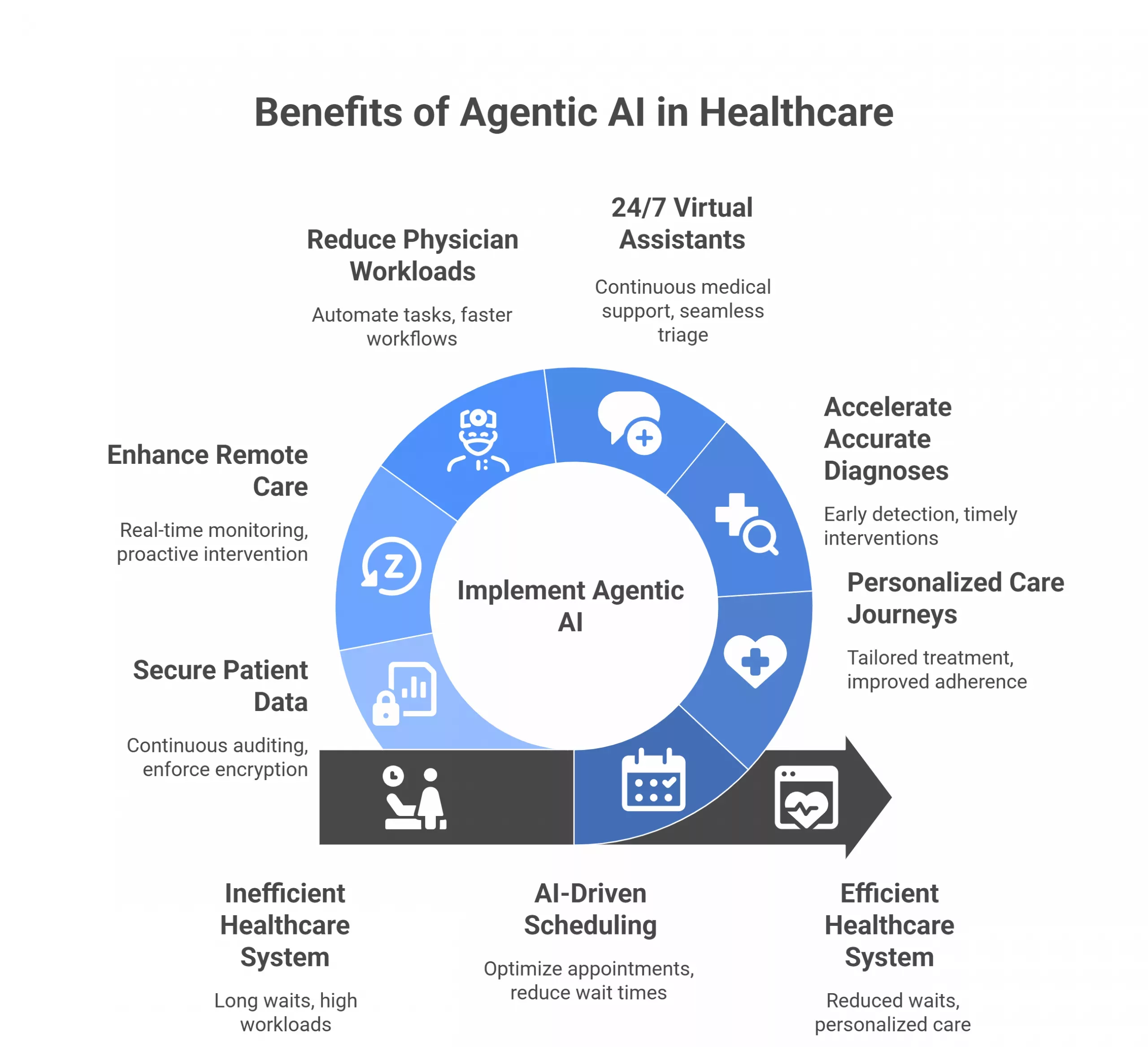
1. Reducing Patient Wait Times with AI-Driven Scheduling
Few frustrations match sitting in a waiting room longer than expected. Agentic AI addresses this by analyzing real-time data — such as appointment trends, cancellations, and provider availability — to automatically optimize scheduling. It dynamically reprioritizes urgent cases, fills in cancellations, and adjusts appointment slots to keep clinics running at peak efficiency.
Hospitals using AI-powered queue and appointment management systems have reported up to a 30% reduction in wait times and a 25% boost in resource utilization efficiency. By minimizing idle time and improving patient flow, healthcare providers not only enhance patient satisfaction but also increase their capacity to serve more people each day.
2. Creating Personalized Patient Care Journeys Through AI Agents
Every patient’s health journey is unique, and agentic AI helps ensure care reflects that individuality. By drawing from data across medical records, wearable devices, and patient feedback, AI agents craft personalized treatment pathways that evolve with real-time inputs.
For instance, patients with chronic conditions like diabetes can benefit from AI chatbots that monitor glucose levels, remind them about medications, and offer dietary guidance. This tailored support improves treatment adherence, reduces complications, and helps patients stay actively involved in their care — 24/7.
3. Accelerating Accurate Diagnoses with Intelligent AI
Diagnostic accuracy is the foundation of effective treatment — and AI’s pattern recognition capabilities are pushing those limits further. Agentic AI can process massive datasets of symptoms, test results, and medical histories in seconds, flagging patterns that might escape even expert clinicians.
By identifying early indicators of disease, spotting rare conditions, and recommending evidence-based treatment options, these systems shorten the diagnostic cycle and reduce errors. Integrating AI-assisted diagnostic tools into daily workflows has been shown to improve early detection and lead to more timely interventions — especially for complex or uncommon disorders.
4. Enabling 24/7 Patient Engagement with AI-Driven Virtual Health Assistants
Patient engagement doesn’t stop after clinic hours. AI-powered virtual health assistants are redefining telehealth by offering continuous medical support — answering general queries, helping patients understand prescriptions, and assessing symptoms through natural-language chatbots.
According to the National Library of Medicine, AI chatbots can now conduct initial assessments, collecting symptom data and medical history before routing patients to the right level of care. This seamless triage system reduces administrative load while ensuring patients receive appropriate attention without delay.
5. Reducing Physician Workloads Through AI-Driven Administration
Administrative overload remains one of the leading causes of physician burnout. Agentic AI streamlines this by automating repetitive tasks such as documentation, appointment scheduling, billing, and report generation.
These systems can listen, transcribe, and summarize consultations in real time using AI-based voice recognition — allowing doctors to focus entirely on patient interaction instead of paperwork. The result: reduced stress, faster workflows, and more face-to-face time with patients, all without compromising accuracy or compliance.
6. Enhancing Remote Care with AI-Powered Monitoring & Predictive Analytics
The rise of wearable devices and connected sensors has unlocked real-time health monitoring at scale. Agentic AI interprets data from these devices, tracking heart rate, blood pressure, oxygen levels, or glucose trends, and detects potential issues before they escalate.
For example, an AI system monitoring a cardiac patient’s rhythm can instantly flag irregularities and notify both patient and provider, prompting early intervention. This proactive care model not only reduces hospital readmissions but also empowers patients to take charge of their health from home.
7. Securing Patient Data with AI-Driven Compliance Systems
Data security remains a top concern as healthcare digitizes. Agentic AI enhances compliance by continuously auditing data access, enforcing encryption, and detecting anomalies in real time. It automatically verifies adherence to regulations such as HIPAA and GDPR, flagging any irregularities before they turn into full-blown breaches.
These intelligent systems can identify unauthorized access attempts, monitor audit trails, and even predict potential security vulnerabilities — helping organizations maintain trust and meet strict privacy standards.
Challenges in Adopting Agentic AI in Healthcare
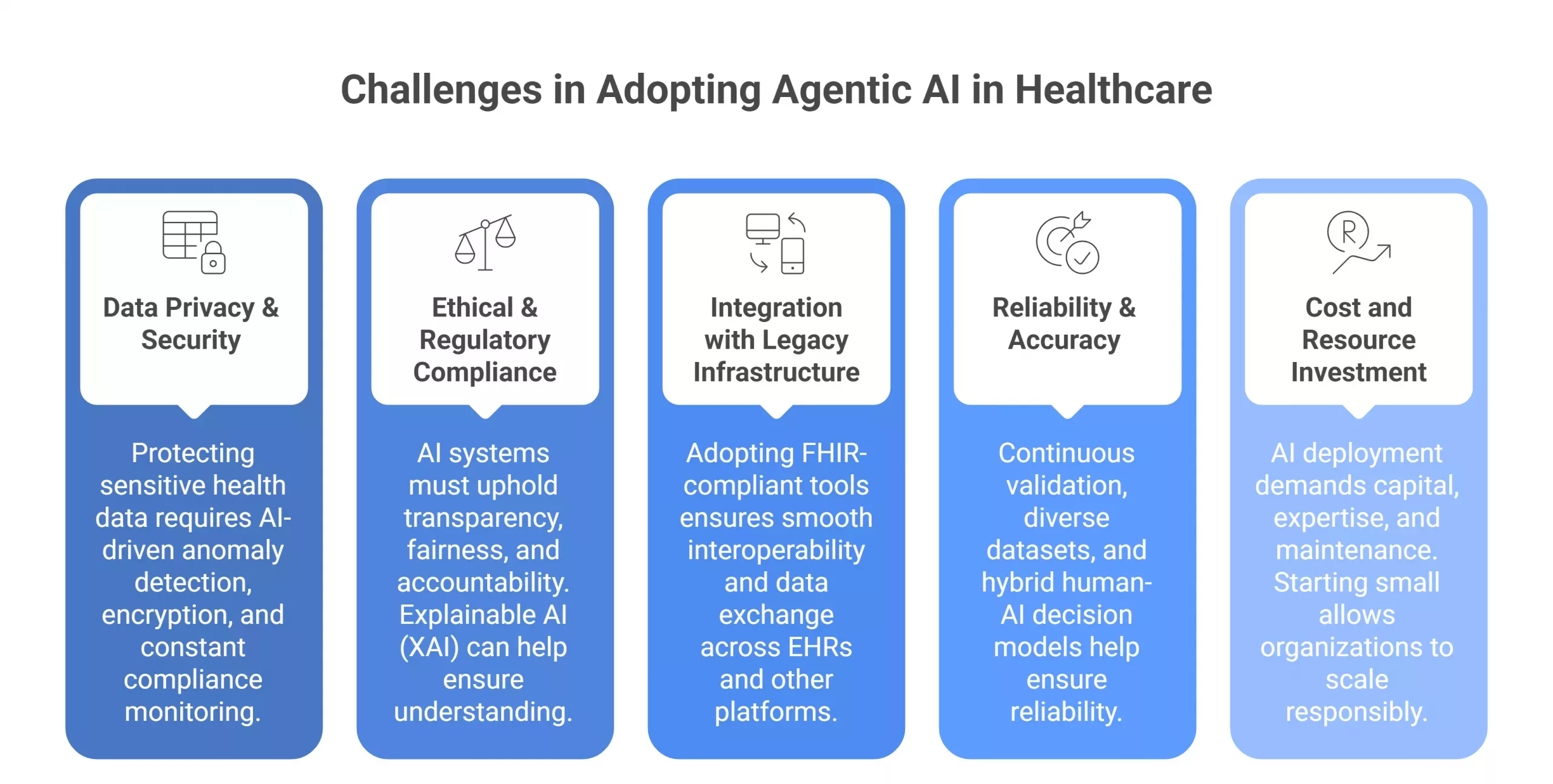
Despite its promise, agentic AI adoption comes with hurdles — from data privacy and ethical concerns to technical integration challenges. Healthcare organizations must approach implementation with clear strategies for risk mitigation, compliance, and interoperability.
1. Data Privacy & Security
Healthcare breaches cost an average of $10.93 million per incident (IBM, Cost of a Data Breach Report). Protecting sensitive health data requires AI-driven anomaly detection, encryption, and constant compliance monitoring.
2. Ethical & Regulatory Compliance
AI systems must uphold transparency, fairness, and accountability. Explainable AI (XAI) can help ensure that doctors and patients understand how algorithms reach conclusions.
3. Integration with Legacy Infrastructure
Nearly 60% of healthcare executives report difficulties integrating AI with existing systems (Deloitte). Adopting FHIR-compliant tools ensures smooth interoperability and data exchange across EHRs and other platforms.
4. Reliability & Accuracy in Decision-Making
Even advanced AI models can make errors. Continuous validation, diverse datasets, and hybrid human-AI decision models help ensure reliability.
5. Cost and Resource Investment
AI deployment demands capital, expertise, and maintenance. Starting small — such as automating scheduling or billing — allows organizations to scale responsibly while demonstrating ROI.
Agentic AI is rearchitecting it. From automating administrative tasks to enabling predictive, patient-centered care, these intelligent systems are redefining the balance between technology and human touch.
As healthcare moves deeper into 2026, success will depend on how effectively organizations combine AI’s precision with clinicians’ empathy, creating a model where innovation and compassion work hand in hand.
Want to knwo? Agentic AI vs Autonomous AI: Key Differences
The Role of Healthcare AI Agent Developers in Building the Future of Smart Care
As the healthcare industry transitions toward smarter, AI-driven systems, healthcare AI agent developers are emerging as some of the most crucial architects of this transformation. These professionals design, train, and deploy the agentic AI systems that are now reshaping patient care, streamlining hospital operations, and enabling precision medicine at scale. Their role extends far beyond coding — it combines medical insight, ethical responsibility, and data intelligence to create truly “smart” healthcare ecosystems.
At the core of their work, developers build autonomous AI agents capable of understanding complex medical contexts, making decisions, and taking actions — from triaging patients to recommending personalized treatments. This requires integrating multiple disciplines: data science, machine learning, natural language processing (NLP), and clinical workflow design.
1. Designing Human-Centric AI for Real-World Healthcare
AI agent developers must ensure that every algorithm aligns with the human experience of care. They work closely with clinicians to understand workflows, communication styles, and decision points. The goal is to design AI that complements, rather than replaces, medical professionals. For instance, an AI scheduling agent must understand physician availability and patient priorities, while a diagnostic agent should provide explainable insights that doctors can verify and trust.
2. Integrating Ethical and Regulatory Standards
Healthcare AI operates in one of the most regulated and ethically sensitive sectors. Developers must embed compliance mechanisms for standards like HIPAA, GDPR, and FDA regulations directly into their systems. Moreover, they must ensure algorithmic fairness — preventing bias in datasets that could lead to unequal treatment outcomes across different patient groups. The use of Explainable AI (XAI) models helps physicians and regulators understand why a certain decision was made, building transparency and trust.
3. Leveraging Real-Time Data and Predictive Intelligence
Smart healthcare depends on the ability to make data-driven decisions in real time. Developers use sensor data, EHRs (Electronic Health Records), and IoT devices to build AI models that can predict and respond proactively. For example, an AI agent might monitor vital signs via a wearable device and automatically alert medical staff if early signs of cardiac distress are detected. This requires robust data pipelines, cloud integration, and secure interoperability across systems.
4. Collaborating Across Disciplines
Building effective healthcare AI isn’t a solo effort — it’s a collaboration between data engineers, clinicians, UX designers, and ethicists. Developers often act as the bridge between technical feasibility and clinical utility. They must translate medical language into machine-readable formats and ensure that system outputs are intuitive for end users, including non-technical healthcare workers.
5. Shaping the Future of Smart Hospitals
Healthcare AI developers are at the forefront of the smart hospital movement — facilities that integrate AI, IoT, and robotics for seamless care delivery. Their work underpins systems that manage everything from patient flow and predictive maintenance to autonomous disinfection robots. By embedding intelligence into every operational layer, they help hospitals evolve into self-optimizing environments that improve safety, efficiency, and outcomes simultaneously.
6. Continuous Learning and Model Evolution
Unlike static systems, AI in healthcare must continuously learn from new data and adapt to emerging diseases, treatments, and technologies. Developers are responsible for model retraining and validation, ensuring that AI agents remain accurate, ethical, and aligned with the latest medical standards. This ongoing evolution is vital to maintaining trust and long-term clinical relevance.
7. Driving Global Accessibility and Affordability
Perhaps the most inspiring role of healthcare AI agent developers is making advanced care accessible to all. By designing scalable, cloud-based solutions, they enable rural clinics, telehealth services, and resource-limited healthcare systems to benefit from AI capabilities once reserved for major hospitals. Through affordable automation and remote diagnostics, they’re helping democratize healthcare on a global scale.
AI agent developers are what make agentic AI safe, effective, and human-centered. As we move toward 2026 and beyond, their role will expand even further, bridging technology and compassion to power the future of smart, connected, and patient-driven healthcare.
Final Thoughts
The rise of agentic healthcare marks a turning point in how medicine is delivered, experienced, and sustained. What was once a field defined by manual workflows and reactive care is now rapidly evolving into a system powered by intelligent automation, real-time decision-making, and continuous patient engagement. Agentic AI doesn’t replace human expertise — it amplifies it. By reducing administrative friction, accelerating diagnoses, and enabling personalized care at scale, it gives healthcare professionals more time to focus on empathy, connection, and clinical judgment — the human core of medicine.
From AI-driven scheduling that eliminates long waits to predictive analytics that detect health risks before symptoms appear, agentic AI is redefining what “patient-centered care” truly means. Patients are no longer passive recipients but active participants in their health journeys, supported by intelligent systems that learn, adapt, and act.
As we look ahead to 2026, the challenge for healthcare organizations will be less about whether to adopt AI and more about how to do it responsibly, ensuring transparency, trust, and security at every level. When implemented thoughtfully, agentic healthcare has the potential to achieve what modern medicine has long pursued: a seamless blend of efficiency, accuracy, and compassion that delivers better outcomes for every patient, everywhere.