

Digital note-taking tools have evolved far beyond simple apps for writing reminders or storing ideas. Today, they are becoming central parts of modern productivity ecosystems, helping users organize information, collaborate with teams, and manage workflows more efficiently.
Modern users expect note-taking apps to do much more than save text. They want seamless synchronization across smartphones, tablets, laptops, and web platforms, allowing them to access their notes anytime and anywhere. Integration with calendars, task managers, cloud storage, and collaborative workspaces has also become essential, turning these apps into all-in-one productivity companions rather than standalone tools.
The growing demand for remote work solutions, digital collaboration, and AI-powered productivity has accelerated the adoption of note-taking platforms across both personal and professional environments. Businesses now rely on these tools for meeting documentation, project management, knowledge sharing, and workflow organization, while students and individual users use them for studying, planning, and content organization.
The market is expanding rapidly as a result. According to industry research, the global note-taking app market was valued at approximately USD $7.91 billion in 2024 and is projected to grow significantly by 2032. This growth is driven by increasing digital transformation, the rise of hybrid work environments, and the growing need for smarter information management solutions.
In this article, you will learn how the note-taking app industry is expected to evolve through 2026. We will explore the key market trends shaping demand, the most important features users now expect, and how businesses, students, creators, and professionals are adopting these tools to improve productivity and collaboration.
What Is Driving the Note-Taking App Market in 2026?
The note-taking app market is growing rapidly in 2026 as both individuals and businesses increasingly rely on digital productivity tools to manage information, tasks, and collaboration in one place. Modern users are no longer looking for simple note storage apps. They now expect smarter platforms that can capture ideas instantly, organize content efficiently, sync across devices, and support seamless teamwork.
As remote work, hybrid offices, online learning, and AI-powered workflows continue to expand, the demand for advanced note-taking solutions is reaching new levels. Users want applications that help them work faster, stay organized, and access information anytime without complexity.
Market trends and industry forecasts indicate strong growth throughout 2026, driven by rising adoption among enterprises, students, creators, startups, and distributed teams. Businesses are also investing more in integrated work ecosystems where note-taking apps connect with calendars, project management tools, cloud storage, communication platforms, and AI assistants.
Another major factor shaping the market is the growing focus on:
- Real-time collaboration
- Data privacy and secure cloud storage
- AI-generated summaries and automation
- Cross-platform accessibility
- Personalized productivity experiences
App Developers are now competing to build platforms that combine simplicity, speed, intelligence, and collaboration within a single workspace.
Below are the key factors driving the adoption and evolution of note-taking apps in 2026.
1. Hybrid and Remote Work
The rise of hybrid and remote work has completely changed how teams manage information and collaborate. Note-taking is no longer just a personal productivity habit. It has become an essential operational tool for meetings, project planning, team coordination, and asynchronous communication.
With employees working across different locations, time zones, and devices, businesses now depend heavily on shared notes and centralized documentation to maintain clarity and continuity. Teams need quick access to meeting discussions, decisions, action items, and project updates without relying on real-time conversations alone.
Industry reports show that more than half of the recent growth in note-taking app usage comes from hybrid and remote work environments. This highlights how digital note-taking tools have evolved into critical workplace infrastructure rather than simple organizational apps.
As a result, software providers are rapidly enhancing their platforms with collaboration-focused capabilities such as:
- Shared workspaces
- Real-time collaborative editing
- AI-powered meeting summaries
- Automated action-item extraction
- Cross-device synchronization
- Smart search and organization tools
These features help distributed teams stay aligned, improve productivity, and reduce communication gaps. In modern workplaces, effective note-taking systems are becoming just as important as email, messaging platforms, and video conferencing tools.
2. Cloud Infrastructure and API Integrations
Modern note-taking platforms are increasingly built around a cloud-first architecture. Instead of storing information on a single device, cloud infrastructure allows users to access their notes, documents, and workflows seamlessly from anywhere and on any device. This has become essential for both individuals and businesses that rely on flexibility and real-time collaboration.
Cloud-based systems provide several major advantages, including:
- Real-time syncing across devices and operating systems
- Secure encrypted storage for sensitive information
- Faster and more accurate search through indexed databases
- Easy onboarding and account setup for new users
- Automatic backups and reduced risk of data loss
Beyond storage and syncing, API integrations have become one of the most important features of modern productivity platforms. APIs allow note-taking apps to communicate with other tools such as:
- Email platforms
- Calendars
- CRMs
- Task management software
- Team collaboration tools
Most platforms now rely on secure authentication frameworks like OAuth 2.0, which enables users to connect third-party applications safely without exposing sensitive credentials. This creates a more connected digital workspace where information flows smoothly between systems.
For enterprise users, this level of integration is no longer optional. Businesses increasingly prefer tools that fit into their existing productivity ecosystem rather than applications that operate in isolation. A disconnected platform creates workflow bottlenecks, duplicate data entry, and inefficiencies across teams.
By combining scalable cloud infrastructure with strong API ecosystems, modern note-taking platforms are evolving from simple documentation tools into fully integrated productivity hubs that support collaboration, automation, and smarter decision-making.
Looking for? Top Shared Calendar Apps
3. Multi-Device Accessibility and Real-Time Sync Reliability
Modern users constantly move between smartphones, tablets, laptops, desktops, and web browsers during their daily workflow. A productivity platform must deliver a seamless experience across all these devices without creating delays, duplicate edits, or data conflicts.
To make this possible, advanced note-taking and productivity apps rely on sophisticated backend synchronization technologies such as:
- CRDTs (Conflict-free Replicated Data Types)
- Operational Transformation (OT)
These technologies allow users to edit files simultaneously, even while offline, and safely merge all changes once the device reconnects to the internet. This ensures that updates remain accurate across multiple devices and prevents important information from being overwritten or lost.
From a technical perspective, solving synchronization challenges is one of the most complex aspects of building modern productivity software. The system must preserve user intent, maintain version consistency, and handle distributed updates in real time without interrupting the user experience.
Although users rarely notice the infrastructure working behind the scenes, it plays a major role in customer satisfaction and retention. People expect their notes, tasks, and documents to appear instantly and accurately on every device they use. Even small sync issues can reduce trust and push users toward competing platforms.
In today’s fast-moving digital environment, reliable multi-device syncing is no longer a premium feature — it has become a core expectation for any successful productivity application.
4. Growing Demand from Education and Knowledge-Based Work
Educational institutions and modern workplaces are rapidly increasing their reliance on digital note-taking and knowledge management tools. Schools, universities, and online training platforms now integrate note-taking software directly into both classroom learning and remote education environments.
Students use these platforms to:
- Capture lecture notes
- Organize research materials
- Prepare for exams
- Collaborate on assignments
- Store learning resources in one place
As hybrid and online learning continue to expand, the need for flexible and accessible note-taking solutions is becoming even more important.
At the same time, professionals and knowledge workers are adopting these tools to improve productivity and information management. Teams use note-taking platforms to:
- Document meetings and client discussions
- Summarize calls and research
- Organize projects and workflows
- Build personal knowledge systems
- Collaborate across departments and remote teams
Modern workplaces generate large amounts of information every day, and digital note-taking apps help professionals keep everything structured, searchable, and easy to access.
One of the biggest growth drivers in this market is the strong connection between education and professional adoption. Students who become comfortable using note-taking software during their academic years often continue using similar tools in their careers. This creates a long-term “pipeline effect,” where adoption in education naturally fuels demand in business and enterprise environments.
As digital learning and remote work continue to evolve, note-taking and knowledge management platforms are becoming essential productivity tools across both education and professional industries.
5. Subscription Models and Enterprise Licensing Are Driving Revenue Growth
The note-taking app market has evolved far beyond simple one-time purchases. Today, most successful platforms rely on modern monetization strategies designed to attract both individual users and large organizations.
Many apps now follow a freemium model, where users can start with basic features for free and later upgrade to premium plans for advanced capabilities. This approach lowers the entry barrier while encouraging long-term engagement. At the same time, enterprise-focused licensing models are becoming a major revenue driver as businesses increasingly adopt digital collaboration and knowledge management tools.
Looking for? Education App Development Companies
Modern organizations expect software solutions that go beyond personal productivity. Enterprise customers often look for features such as:
- Advanced identity and access management
- Team-level admin controls
- Secure data export and governance tools
- Security and compliance configurations
- Usage analytics and reporting dashboards
- Audit logging and long-term data retention policies
These enterprise-ready capabilities transform note-taking apps from simple personal tools into scalable business platforms that support large teams, remote workforces, and cross-department collaboration.
As companies continue investing in digital workplace solutions, enterprise licensing is expected to play an even bigger role in the growth of the note-taking software industry.
Do you know? How Learning Apps Are Transforming Modern Education
Leading Note Taking Companies in the Market and Their Pricing Models
The note taking app market is dominated by several major platforms, while many niche and regional tools continue to serve specialized user needs. Industry reports frequently highlight companies such as Microsoft, Apple, Google, Notion, Evernote, Dropbox, and GoodNotes among the key players shaping the market.
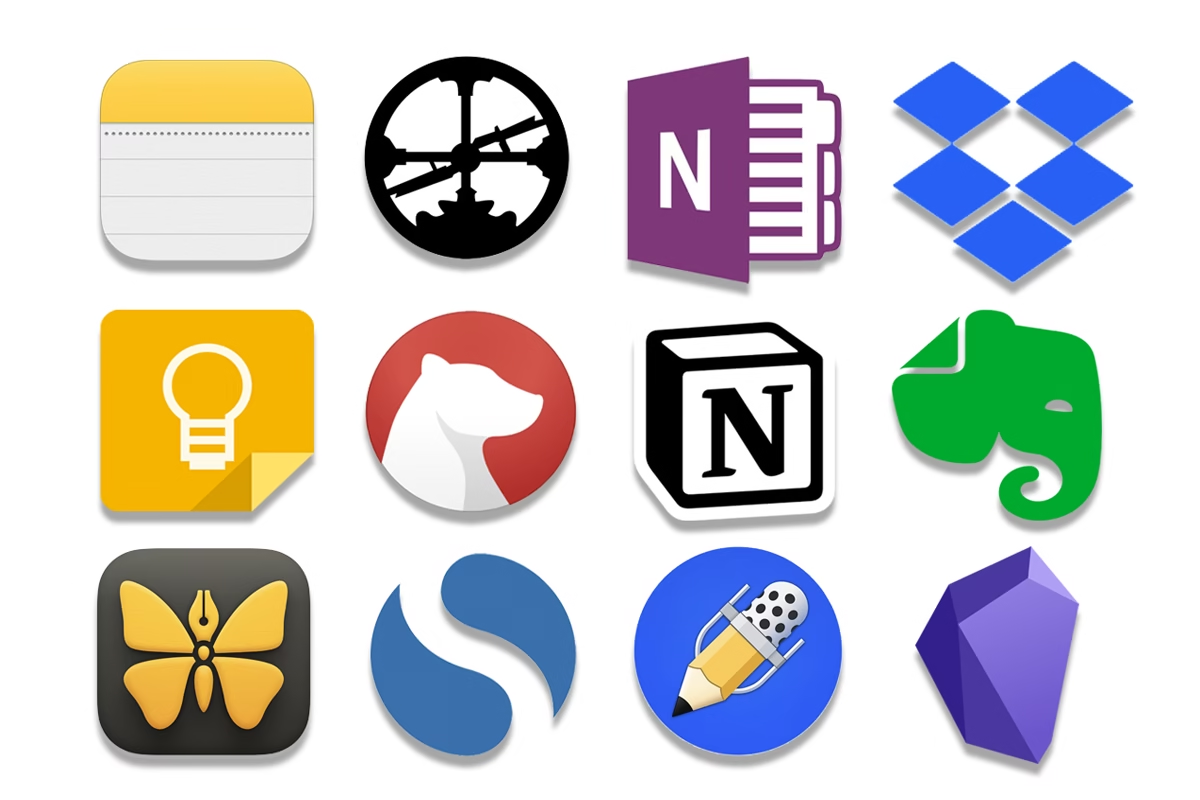
Pricing structures differ depending on factors such as available features, cloud storage capacity, collaboration tools, AI capabilities, and enterprise-level controls.
Instead of fixed prices, which often change over time, the table below highlights the overall market positioning and common pricing approaches used by these platforms.
| Segment | Popular Apps | Common Pricing Structure |
|---|---|---|
| Personal and collaborative cross-platform note-taking | Evernote, Notion, Obsidian | Most platforms offer free plans, while premium subscriptions generally range from $5 to $20 per user each month based on storage limits, collaboration tools, and AI capabilities. |
| Ecosystem-integrated note apps | Microsoft OneNote, Apple Notes, Google Keep | These apps are typically bundled with services like Microsoft 365, iCloud, or Google Workspace, allowing users to access core features without paying a separate fee. |
| Student-focused and tablet-oriented apps | GoodNotes, Notability, Turbo AI | Many apps are available through one-time purchases between $5 and $15, while advanced AI tools and premium add-ons may cost around $3 to $10 monthly depending on the features offered. |
What Features and Capabilities Are Shaping Market Trends?
The most successful platforms today combine advanced AI intelligence with strong technical architecture to deliver faster, smarter, and more efficient user experiences. Modern tools are no longer limited to simple automation. They are evolving into intelligent systems capable of understanding context, improving accuracy, and supporting complex workflows with minimal user effort.
As businesses and users demand more productivity and personalization, software companies are rapidly integrating AI-powered capabilities into their products. These innovations are transforming how people search, organize, analyze, and interact with information.
Recent product launches clearly show how the market is shifting toward more intelligent and context-aware experiences. A strong example is Evernote, which introduced a major update in 2025 featuring a conversational AI assistant powered by large language models. The assistant can search through a user’s notes, generate summaries, answer questions, and even pull information from the web without requiring users to switch applications.
The platform also launched semantic search functionality that understands natural language instead of relying only on exact keywords. This allows users to find information more naturally and efficiently, reflecting a larger industry trend toward AI-driven interactions that feel more human and intuitive.
Across the market, companies are increasingly focusing on tools that:
- Reduce manual effort
- Improve decision-making speed
- Deliver personalized experiences
- Understand user intent more accurately
- Handle multi-step workflows intelligently
These capabilities are becoming major differentiators in 2026, especially as businesses prioritize productivity, automation, and smarter digital experiences.
Also Read: AI-Powered App Features Every Business Will Use
Below are the key technical capabilities and features defining market trends in 2026:
1. Cross-Device Synchronization and Conflict Management
Modern enterprise applications have evolved far beyond basic cloud syncing. Today, many advanced platforms use technologies like Conflict-free Replicated Data Types (CRDTs) to ensure smooth real-time synchronization across multiple devices without data corruption or editing conflicts.
CRDT-based systems allow several users or devices to edit the same document, note, or workspace simultaneously while maintaining strong consistency across all connected platforms. Instead of locking files or overwriting changes, these protocols intelligently merge updates in the background, creating a seamless collaborative experience.
This technology is especially valuable for businesses and productivity applications where users constantly switch between smartphones, tablets, laptops, and desktops throughout the day.
Key Problems Solved by CRDT-Based Synchronization
- Smooth offline editing across multiple devices
- Reliable syncing during unstable internet connections
- Faster data reconciliation without server lock mechanisms
- Reduced risk of lost updates or duplicated changes
- Better collaboration for remote and distributed teams
As modern work environments become increasingly mobile and collaborative, CRDT-powered synchronization helps ensure users always access the latest version of their content without interruptions or frustrating merge conflicts.
2. Advanced Search and Semantic Understanding
Search functionality in modern enterprise applications has become significantly more intelligent. Traditional keyword-based search systems are now being replaced by semantic search technologies powered by machine learning and contextual indexing.
Instead of simply matching exact words, modern search engines understand the meaning, intent, and context behind a query. Applications like Evernote use semantic search models that recognize relationships between phrases, synonyms, topics, and user behavior patterns.
For example, a user searching for:
“Notes from last week about project launch”
can instantly retrieve grouped and contextually related documents, even if the exact phrase was never written inside the notes.
This creates a more natural and human-like search experience that saves time and improves productivity.
Benefits of Semantic Search in Enterprise Applications
- Faster information discovery
- More accurate and relevant search results
- Understanding of user intent and natural language
- Better organization of related documents and notes
- Improved productivity for teams handling large data volumes
As enterprise data continues to grow rapidly, semantic understanding is becoming a core feature in modern productivity and knowledge-management platforms. It allows users to interact with software more naturally while reducing the time spent searching for important information.
3. Real-Time Collaboration and Editing Infrastructure
Modern enterprise environments require far more than simple note-sharing capabilities. Teams today work across multiple departments, locations, and devices, which makes seamless real-time collaboration essential for productivity and operational efficiency.
To support this demand, advanced note-taking and documentation platforms rely on powerful collaboration frameworks that allow multiple users to edit content simultaneously without conflicts or data loss.
Some of the core technologies powering these systems include:
- Operational Transformation (OT) for synchronized real-time editing
- CRDT (Conflict-Free Replicated Data Types) for distributed collaboration without overwriting changes
- Role-Based Access Control (RBAC) to manage permissions and secure sensitive information
These technologies ensure that every edit, comment, and update is accurately tracked while preserving version history and author context. Teams can collaborate in real time without worrying about duplicated files, overwritten content, or disconnected workflows.
In enterprise settings, this level of collaboration is especially important for:
- Project documentation
- Meeting notes
- Product planning
- Knowledge management
- Cross-functional communication
By eliminating information silos and enabling synchronized workflows, real-time editing frameworks help organizations improve transparency, speed, and team coordination.
4. AI-Powered Content and Productivity Features
AI is rapidly transforming modern note-taking platforms from simple documentation tools into intelligent productivity systems. Instead of only storing information, AI-enhanced tools now help users organize, expand, analyze, and summarize content automatically.
These capabilities significantly reduce manual work and allow professionals to focus more on strategic thinking and decision-making rather than repetitive documentation tasks.
Some of the most impactful AI-powered features include:
Automatic Transcription
AI can convert voice recordings, meetings, interviews, and discussions into structured text in real time. This helps teams capture conversations accurately without needing manual note-taking.
Intelligent Summarization
Long meeting transcripts or detailed notes can be automatically condensed into:
- Key takeaways
- Action items
- Bullet-point summaries
- Task recommendations
This improves clarity and saves time for busy teams and executives.
Context Expansion Using Large Language Models (LLMs)
Advanced tools such as NoTeeline use large language models to transform minimal user input into comprehensive, well-structured notes while preserving the original meaning and intent.
For example, a short rough idea or fragmented sentence can be expanded into:
- Detailed meeting documentation
- Structured reports
- Organized research notes
- Workflow summaries
Smart Workflow Assistance
AI-powered systems can also:
- Suggest content improvements
- Organize notes automatically
- Detect priorities and deadlines
- Recommend follow-up actions
These intelligent capabilities turn note-taking platforms into active workflow assistants rather than passive storage systems.
As AI continues to evolve, enterprise note-taking tools are becoming more adaptive, collaborative, and context-aware—helping organizations improve productivity, reduce operational friction, and streamline communication across teams.
5. Handwriting Recognition and Multimodal Input Processing
Modern AI-powered note-taking applications are becoming far more advanced than simple text editors. Technologies such as handwriting recognition and multimodal AI allow these platforms to understand handwritten notes, diagrams, sketches, mathematical equations, and mixed visual content with impressive accuracy.
Advanced models like InkFM are designed to interpret handwritten content across different writing styles, layouts, and languages. Whether users are writing with a stylus on a tablet, sketching ideas during brainstorming sessions, or solving mathematical problems, the system can intelligently organize and process the information into structured digital content.
These capabilities make note-taking applications more flexible and useful for students, professionals, researchers, designers, and enterprise teams.
Key Features Enabled by This Technology
- Automatic page and section segmentation
- Recognition of shapes, diagrams, and sketches
- Extraction of mixed content, including drawings and handwritten text
- Mathematical formula and equation detection
- Support for stylus-based input across devices
- Improved searchability of handwritten notes
- Smart categorization and organization of visual content
As AI continues to evolve, multimodal processing is helping note-taking apps move closer to real human understanding, where systems can interpret both visual and textual information together instead of treating them separately.
6. Security, Privacy, and Compliance
As note-taking applications increasingly handle sensitive personal and business information, security and privacy have become critical priorities for both users and enterprises.
Modern enterprise-grade note-taking platforms go far beyond basic password protection. Businesses now expect robust security frameworks that protect confidential data, maintain compliance, and ensure secure collaboration across teams and devices.
To support enterprise adoption, many advanced applications now include features such as:
- End-to-end encryption for secure data transmission and storage
- Data residency and regional storage controls
- Detailed audit trails and activity monitoring
- Compliance certifications such as GDPR, HIPAA, and SOC 2
- Role-based access controls for secure content sharing
- Multi-factor authentication (MFA) for stronger account protection
- Secure cloud synchronization across devices
These features are especially important for industries like healthcare, finance, legal services, and education, where protecting user information is both a business and regulatory requirement.
Today, strong privacy and compliance standards are no longer optional features. They have become a core expectation in high-quality note-taking and productivity applications. Businesses and users alike want assurance that their data remains protected while still allowing seamless collaboration and accessibility across platforms.
Which User Segments and Use Cases Are Growing in 2026?
The note-taking app industry has evolved far beyond a simple productivity category. In 2026, different user groups are shaping app development in very different ways, forcing companies to create more specialized and feature-rich experiences.
Current market trends indicate that students and individual users continue to represent the largest portion of the audience. Their adoption is mainly driven by the need for better study tools, improved personal organization, and smarter ways to capture and manage information.
Meanwhile, businesses and professional teams are increasingly adopting note-taking platforms to improve collaboration, workflow management, and knowledge sharing in hybrid and remote work environments.
1. Students and Educational Users
Students and educators remain one of the most active and rapidly expanding user groups in the note-taking app market.
Major Trends Among Students
- Extensive use during classroom lectures, virtual learning sessions, and online courses for recording and organizing information.
- Rising preference for mobile-friendly apps with stylus and handwriting support, particularly among STEM students.
- Strong demand for AI-powered tools that can transform lectures into concise summaries, flashcards, quizzes, and structured study materials instead of simple transcripts.
A strong example of this trend is Turbo AI, an AI-powered note-taking platform designed specifically for students. The app reportedly grew from 1 million to 5.7 million users within six months, gaining nearly 20,000 new users daily while reaching impressive recurring revenue growth.
Its popularity comes from features focused entirely on student workflows, including automatic lecture recording, AI-generated notes, and personalized study content.
Industry reports also predict continued expansion in student-focused note-taking solutions through 2033, fueled by increasing digital adoption in education and continuous
2. Personal “Second Brain” Users
Professionals, entrepreneurs, researchers, and creators often rely on note-taking platforms as digital “second brains” to organize information and manage ideas efficiently.
Common Usage Patterns:
- Creating structured knowledge hubs for work tasks, learning materials, and personal projects.
- Connecting ideas through backlinks, tags, and visual graph views to build long-term knowledge relationships.
- Preferring features like Markdown support, local storage flexibility, and plugin ecosystems similar to Obsidian for deeper customization.
- Looking for advanced search capabilities, graph-based navigation, and reliable export or backup options to maintain full control over their knowledge systems.
These users typically value flexibility, organization, and the ability to create a highly personalized workflow.
3. Teams and Professionals Focused on Operations and Knowledge Management
This category includes consultants, analysts, product managers, and project teams that rely on structured, repeatable, and trackable workflows to manage daily operations efficiently.
Common Use Cases
- Creating meeting notes that automatically connect to tasks, tickets, or action items.
- Organizing research findings, discovery documents, and client communication updates in a structured format.
- Managing important business documents such as PRDs, operational runbooks, and postmortem reports that combine text, tables, media embeds, and collaborative comments.
To succeed in this segment, platforms need to offer more than simple note storage. They must integrate seamlessly with tools like CRMs, project management systems, issue trackers, and collaboration platforms to support complete operational workflows.
4. Industry-Specific and Vertical Use Cases
Specialized note-taking and productivity platforms are also gaining traction across different industries and professional environments.
Education
Apps like Turbo AI, GoodNotes, and Notability help students by combining lecture recording, smart note-taking, and AI-powered learning assistance.
Legal Industry
Legal teams use dedicated solutions for matter-based document organization, secure collaboration, and reusable template management.
Healthcare
Healthcare professionals rely on secure documentation tools to manage patient visit summaries, clinical notes, and staff handoff communication while maintaining compliance and privacy.
Sales Teams
Sales organizations connect meeting and call notes directly with CRM systems, helping teams track opportunity stages and improve follow-up processes.
As the market continues to expand, understanding the leading platforms and their pricing models becomes increasingly important for businesses and professionals evaluating the right solution.
Emerging Trends Shaping the Market Beyond 2026
The trends below extend beyond the short-term 2026 roadmap and highlight how note-taking platforms may evolve closer to 2030.
Unlike current trends focused on syncing, collaboration, and AI summaries, these developments point toward deeper technical advancements and long-term platform evolution.
1. Long-Context AI Assistants Integrated With Notes
New improvements in tools such as Google NotebookLM demonstrate the future of long-context AI support. NotebookLM can now process context windows of up to one million tokens, enabling it to analyze full books, large meeting archives, and extensive project data while maintaining privacy controls and customizable assistant goals.
For note-taking platforms, this could lead to:
- AI assistants that understand complete project histories rather than individual notes
- Cross-note analysis for timelines, decisions, and trade-offs
- Multi-step workflows where assistants generate plans, draft follow-ups, and maintain ongoing project memory
Technical impact: Companies will increasingly invest in retrieval-augmented generation (RAG) systems optimized for note structures, using smarter chunking methods, metadata-based indexing, and permission layers that control notebook access.
2. Industry-Specific AI Note Ecosystems
Instead of relying on general-purpose AI assistants, the market will shift toward specialized AI note solutions designed for specific industries.
- Education: AI models trained on lectures, syllabi, and exam patterns, including adaptive quizzes and student-focused guidance. Market reports already predict strong growth in this segment through 2033.
- Sales and Customer Success: Deep CRM integrations, call analysis, objection tracking, and outcome forecasting.
- Legal and Compliance: AI systems focused on contracts, case entities, clauses, and audit-ready documentation.
- Healthcare: Clinical visit summaries aligned with healthcare documentation standards and privacy-aware data handling.
Technical impact: These platforms will require industry-specific datasets, templates, ontologies, and evaluation systems instead of depending solely on generic large language models.
3. Knowledge Graphs and Intelligent Note Systems
Traditional notebooks are being replaced by structured knowledge systems that organize notes, tasks, entities, and relationships using graph-based models.
In the future, platforms will increasingly:
- Organize topics, people, projects, and decisions as interconnected nodes and relationships.
- Allow users to ask questions like “what changed in compliance during Q2” instead of manually searching for file names.
- Link notes with structured information such as metrics, CRM data, and support tickets, enabling assistants to navigate both structured and unstructured content seamlessly.
Technical impact: Companies will increasingly rely on graph databases, entity extraction workflows, and scalable schema management systems to handle growing volumes of user-generated data.
5. Privacy-First and On-Device Intelligence
As AI systems handle more sensitive information, privacy and data control are becoming major competitive advantages.
Emerging Trends:
- On-device summarization and embedding generation are increasing, particularly on mobile devices and desktops equipped with advanced NPUs.
- Businesses now expect flexible options for data residency and model hosting, including customer-managed VPCs or vendor-hosted cloud environments.
- Industry reports continue to highlight privacy and security improvements as important growth factors through 2029.
Technical implication: Vendors are expected to divide workloads between edge devices and cloud systems, introduce encryption-focused indexing, and develop administrative dashboards for managing AI usage and governance.
6. Mixed Reality and Spatial Notes
Future market trends point toward augmented reality and handwriting recognition becoming key drivers in note-taking technologies.
As AR and spatial computing evolve, we may see:
- Notes attached to physical locations, objects, or whiteboards.
- Spatial workspaces combining 3D content, sketches, and text with ongoing contextual awareness.
- “Over-the-shoulder” meeting memory, where headsets recreate previous discussions and room annotations.
Technical implication: Vendors will increasingly rely on XR SDKs, spatial anchors, and multimodal interaction systems such as voice, gestures, and pen input integrated with existing text and file processing pipelines.
Sum up
The note-taking industry is moving into a new stage where the true value comes from how effectively a platform understands context, supports action-oriented workflows, and integrates into everyday work environments.
The leading products in this space will be those that treat notes as active knowledge instead of static documents. This includes better search capabilities, more flexible input options, intelligent assistants, and intuitive designs that align with how people think, organize, and collaborate.