
Are slow response times, high subscription costs, weak translation accuracy, and limited language options affecting your daily business operations?
You are not alone. Many businesses and individuals encounter these challenges regularly. This is where AI-powered translation apps like DeepL are gaining strong attention as a practical and forward-thinking solution. Let’s explore this further.
By using advanced deep learning models, DeepL provides context-aware and highly accurate translations that have set a new standard in the industry. Looking at recent trends, projections suggest that by the end of 2025, nearly 70% of businesses offering global services are expected to adopt AI translation tools. This shift benefits both service providers and users.
If you are an entrepreneur or business owner planning to develop an AI translation app similar to DeepL, your first question is likely: How much does it cost to build an AI translation app? The development cost for an AI translation app like DeepL typically ranges between $30,000 and $300,000. The final amount depends on features, integrations, AI sophistication, platform scope, and several other factors, which we will examine in detail later.
Before allocating your budget, defining essential features, or planning your competitive strategy, it is important to understand the full cost structure of developing an AI translation app like DeepL and the key technical components involved.
In this guide, we will break down development costs, factors that influence pricing, reasons to invest in building a DeepL-like app, must-have features, monetization strategies, development steps, and practical ways to overcome potential challenges during the process.
Why Invest in Developing an App Like DeepL?
In today’s global economy, clear communication across languages is essential. Many businesses still struggle with slow translation speeds, limited language coverage, and inconsistent accuracy. These challenges often slow down international expansion, reduce collaboration efficiency, and create operational friction.
Investing in the development of an AI-powered translation app similar to DeepL helps address these gaps. Such platforms deliver faster processing, improved translation accuracy, and scalable language solutions that support global operations.
Demand for intelligent translation services continues to rise. The numbers reflect strong market momentum:
- The global AI language translation market is expected to reach $13.5 billion by 2033, growing at a CAGR of approximately 22.3%, up from $1.8 billion in 2023.
- The voice cloning market is projected to reach $1 billion by 2025, expanding at a compound annual growth rate of 42%.
- By 2025, voice cloning with emotion retention is expected to be integrated into multimedia localization projects.
- The global translation technology market is forecasted to grow to $5.73 billion by 2028, with a CAGR of 25.1%.
- A Forrester study reported that implementing a solution similar to DeepL resulted in a 345% return on investment (ROI), reduced translation time by nearly 90%, and lowered workload by 50%.
DeepL has emerged as a major force in this space, demonstrating measurable advantages for organizations. By late 2025, nearly half of U.S. state agencies and city councils are expected to adopt AI-driven translation tools, driven by public demand and regulatory requirements.
Building an AI translation app comparable to DeepL positions businesses at the forefront of this expanding market. In 2024, around 82% of language service providers leveraged DeepL technology, outperforming platforms like Google and Microsoft in specific translation use cases. This adoption rate highlights the strong market confidence in AI-driven translation systems.
These data points clearly show the opportunity in developing a similar AI translation application. Companies can overcome language barriers, enhance operational efficiency, stay aligned with market growth, and achieve meaningful cost reductions. Strategic investment in this space enables businesses to grow within an increasingly connected global environment.
Next, let’s explore AI translation app development costs so you can better understand the essentials before starting the process of building an AI translation app like DeepL.
Understanding DeepL and Its Market Size
DeepL has emerged as a strong competitor to Google Translate, quickly positioning itself as a major player in the language translation app market. As global communication continues to evolve, the need for precise, context-aware translations across industries has driven the rapid expansion of this technology.
A key factor behind DeepL’s growth is its careful and technology-driven approach to translation. The platform relies on advanced algorithms and neural network models to improve accuracy and contextual understanding.
Operating in more than 35 countries, DeepL is recognized for its ability to interpret multiple languages effectively and deliver reliable translations. Its clean interface and emphasis on linguistic depth have helped it build a strong presence, particularly within the European market, where diverse language needs are significant.
Market research indicates that the global language translation software market was valued at $9.3 billion in 2021 and is projected to reach $44.8 billion by 2031. This growth reflects a compound annual growth rate of 17.3% from 2022 to 2031. As a result, businesses worldwide increasingly see value in adopting translation platforms to support global expansion, improve cross-border collaboration, enhance customer experience, and strengthen overall returns.
Understanding the Cost to Develop an App Like DeepL
To provide a general estimate, developing an app similar to DeepL can cost anywhere between $50,000 and $300,000. The final budget depends on multiple factors, including the app’s overall complexity, the development timeline, the geographic location of the development team, and the specific features and integrations included in the app.
| App Complexity Level | Estimated Cost | Time Frame |
|---|---|---|
| Basic | $50,000 to $120,000 | 3 to 6 months |
| Medium | $150,000 to $200,000 | 6 to 10 months |
| High | $240,000 to $350,000 | 10+ months |
It is important to note that the final cost is defined through in-depth discussions and a thorough project evaluation with a professional app development team. This collaborative process provides a more precise estimate by taking into account your specific business needs, goals, and the unique complexities involved in the project.
Now, let’s move forward and explore the various factors that influence the cost of developing an app similar to DeepL.

Key Factors That Impact the Cost of Building an AI Translation App Like DeepL
Creating an AI translation app similar to DeepL requires substantial investment. When setting a budget for AI translation app development, it is important to understand the main factors that influence overall costs.
Elements such as AI model training, security compliance requirements, cloud infrastructure, data processing, and system scalability all contribute directly to the total development expense. Each component plays a critical role in shaping the final budget.
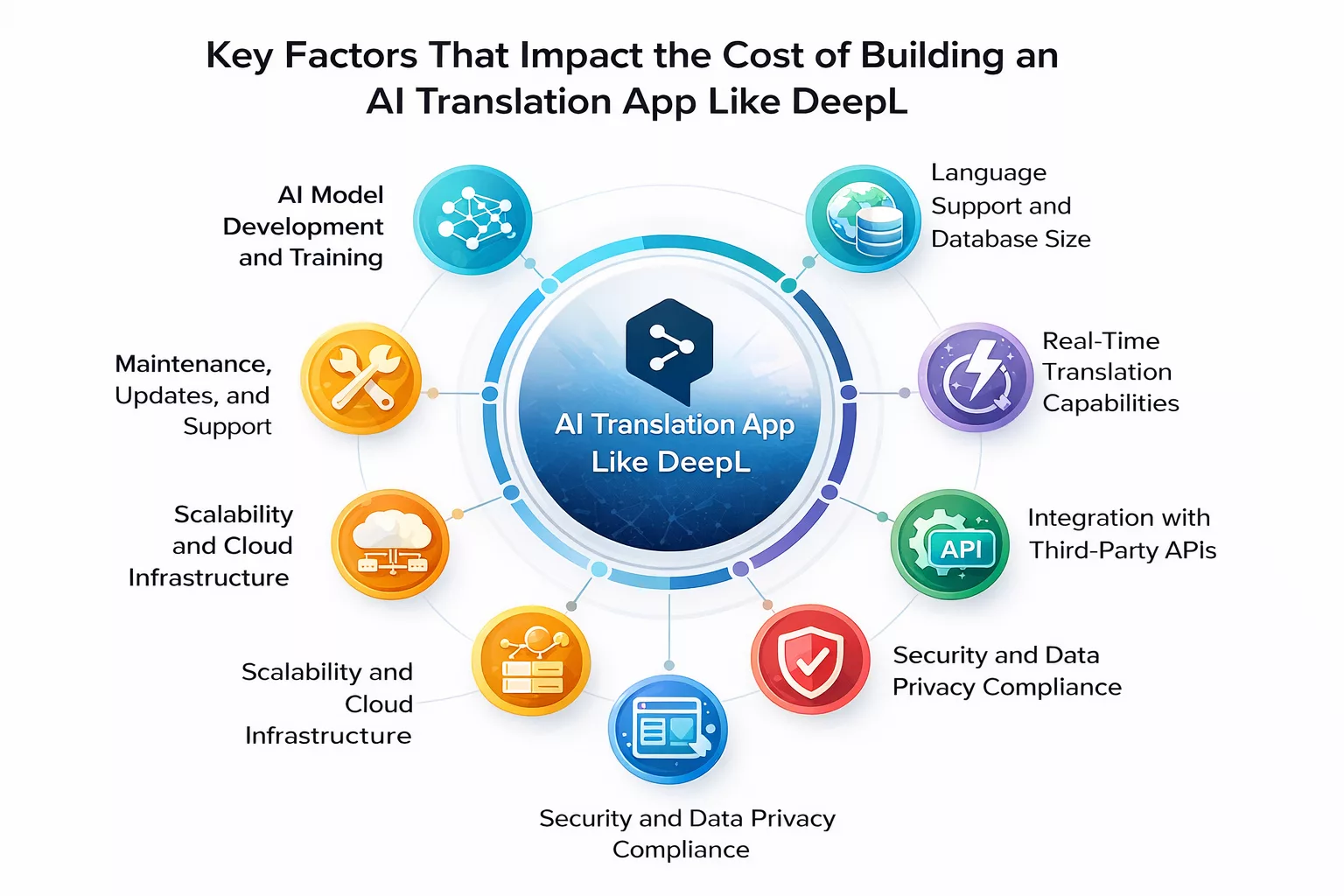
By clearly identifying and evaluating these cost drivers, you can make well-informed decisions, allocate resources efficiently, and build an app that meets user expectations while maintaining financial control.
1. AI Model Development and Training
The neural machine translation model forms the core of any AI translation app. Building a custom model requires large datasets, detailed fine-tuning, and powerful GPU infrastructure to achieve strong accuracy. This stage often represents a significant portion of the overall budget. Training expenses vary depending on computing power, continuous learning capabilities, and the quality and volume of the data used. The more advanced and refined the model, the greater the investment required for development and optimization.
2. Language Support and Database Size
Expanding language coverage allows the app to reach a broader audience, but it also increases development complexity. Each language requires careful handling of grammar, context, and linguistic nuances, supported by large datasets to ensure accurate translations. Adding more languages and regional dialects raises database requirements, testing efforts, and storage capacity. As language diversity grows, development costs increase due to the need for extensive validation and quality assurance processes.
3. Real-Time Translation Capabilities
Delivering instant text and speech translation requires high-speed AI processing and low-latency cloud infrastructure. Implementing technologies such as speech recognition, text-to-speech systems, and advanced natural language processing adds to overall development expenses. Faster processing speeds and seamless real-time performance demand stronger computational resources and continuous server management, which increases operational and infrastructure costs.
4. Integration with Third-Party APIs
Using third-party APIs like Microsoft Translator, Google Translate, or DeepL can accelerate development timelines. However, API usage typically involves licensing fees and ongoing service costs. Building a proprietary AI model offers greater customization and control, but it requires a larger upfront investment. The decision between external APIs and in-house AI development directly influences long-term operational expenses and total project pricing.
5. User Interface and Experience (UI/UX) Design
An effective UI/UX design ensures the translation experience feels smooth and intuitive. Developing accessible features and custom interface elements requires skilled designers and developers, which impacts the overall budget. Creating a visually appealing, user-friendly app with adaptive elements such as multilingual interfaces and dark mode support adds to development efforts. Investing in thoughtful design improves usability but also increases total costs.
6. Security and Data Privacy Compliance
Translation applications often handle sensitive user information, making strong security measures essential. Implementing end-to-end encryption, secure authentication systems, and encrypted databases contributes to development expenses. Compliance with global regulations such as GDPR, CCPA, or HIPAA is particularly important for enterprise adoption. Meeting these standards requires both technical implementation and legal oversight, which adds to overall costs.
7. Scalability and Cloud Infrastructure
A scalable translation app must handle increasing user traffic and translation requests efficiently. This typically requires cloud hosting services such as AWS, Google Cloud, or Azure. Features like automatic scaling, load balancing, and high-performance computing contribute to infrastructure costs. Advanced setups, including edge computing or serverless architecture, can enhance performance but often involve higher initial investments.
8. Maintenance, Updates, and Support
Ongoing maintenance plays a key role in long-term success. Regular updates, bug fixes, security improvements, and AI model refinements require continuous investment. Customer support services and server upkeep also add to recurring expenses. While subscription-based revenue models can help offset these costs, businesses must plan carefully for continuous improvements to remain competitive in the AI translation market.
Understanding these cost-driving factors allows businesses to create a realistic budget when developing an AI translation app similar to DeepL. Elements such as AI training, infrastructure, security, and real-time processing significantly influence total investment. Companies should carefully balance functionality and financial planning to build a scalable, high-quality translation solution that meets evolving market expectations.
Now, let’s explore the key features that can help an AI translation app stand out and drive revenue growth.
Essential Features for Building an AI Translation App Like DeepL
When developing a real-time AI translation app, it should go beyond basic word-for-word conversion. The goal is to deliver accurate, context-aware translations instantly and across multiple content formats. DeepL has set strong standards in AI-driven translation, so creating a competitive solution requires advanced capabilities that position your app at a high level in the market.
From instant text and voice translation to OCR-powered image translation and enterprise-ready APIs, below is a detailed overview of the core features your AI translation app should include.
| Feature | Description |
|---|---|
| Text Translation | Translates written text from one language to another with strong accuracy. |
| Speech-to-Text Translation | Converts spoken words into written text to enable instant translation. |
| Text-to-Speech Output | Vocalizes translated content using AI-driven voice generation technology. |
| Multi-Language Support | Supports multiple languages and regional dialects to broaden accessibility. |
| Real-Time Translation | Delivers immediate translation for both text and speech without noticeable delay. |
| Document Translation (PDF, Word, etc.) | Enables users to upload and translate documents through AI-based processing. |
| Offline Translation Mode | Allows translations without internet access using pre-installed language packs. |
| AI-Powered Contextual Understanding | Applies natural language processing and machine learning to interpret context for accurate results. |
| Neural Machine Translation (NMT) Integration | Uses deep learning models to produce more fluent and natural translations. |
| Custom Glossary for Consistent Terminology | Lets users and organizations define specific terms to maintain translation consistency. |
| API Access for Businesses | Provides an API that allows developers to integrate translation capabilities into their applications. |
| Website Translation Plugin | Supplies a plugin that enables automatic website translation without manual effort. |
| Handwriting Recognition for Translation | Detects and translates handwritten text using artificial intelligence. |
| OCR (Optical Character Recognition) for Image Translation | Extracts and translates text from images, scanned files, and screenshots. |
| Collaboration Tools for Teams | Supports shared workflows for businesses and content teams. |
| Personalized Translation Suggestions | Learns user behavior to offer tailored translation recommendations. |
| Secure and Encrypted Translations | Uses encryption protocols to protect sensitive translation data. |
| User Authentication and Profile Management | Allows users to manage profiles, save preferences, and track translation history. |
| Multi-Platform Support (Web, Mobile, Desktop) | Ensures availability across different devices and operating systems. |
| Analytics and Usage Reports | Provides insights into usage patterns and translation performance metrics. |
Developing an AI-powered translation platform similar to DeepL requires the integration of advanced features that enhance usability, accuracy, and scalability. Capabilities such as OCR-based image translation, neural machine translation integration, cross-platform compatibility, and encrypted data protection play a key role in building a strong and reliable translation solution.
Investing in these features supports global reach, improves user engagement, and delivers high-quality translation outcomes for both individuals and enterprise users.
How Do You Develop a Translation App Like DeepL?
The DeepL app development journey involves several structured stages that guide the product from initial idea to final release. Below is a detailed breakdown of each phase:
Market Research and Analysis
The process starts with thorough market research and analysis. This includes evaluating existing language translation apps, understanding user expectations, and studying current industry trends. This early research phase helps identify unique features and opportunities that can differentiate your app in a competitive market.
Defining Objectives and Requirements
After gathering market insights, the next step is to clearly define the app’s objectives and requirements. Work with stakeholders to determine core goals, target users, and essential features expected in apps similar to DeepL. These defined requirements act as a roadmap for development and also help estimate the overall cost of building a comparable application.
Hiring an App Development Firm
With clear goals and requirements in place, the next stage involves selecting a reliable app development firm. It is important to choose a team experienced in machine learning, natural language processing, and multilingual application development. A skilled development partner ensures smooth collaboration and technical guidance throughout the project.
Planning and Technical Architecture
In collaboration with the development team, outline the app’s technical architecture. For a translation app like DeepL, this includes decisions about neural network integration, real-time translation processing, and multilingual system design. Careful planning at this stage establishes the app’s technical framework and long-term scalability.
User Interface Design
At the same time, focus on creating a clean, intuitive, and user-friendly interface. Work closely with designers and developers to ensure the layout is visually appealing and functionally efficient. A strong interface design enhances usability and supports a smooth user experience.
Development and Continuous Testing
Once planning and design are finalized, the development team begins coding the application. Testing takes place alongside development to identify and resolve bugs at every stage. This ongoing evaluation helps ensure the app performs reliably and delivers a stable user experience.
Neural Network Integration
During development, key decisions are made about integrating advanced technologies such as neural networks, multilingual processing, and contextual language analysis. These integrations shape the app’s core translation capabilities and overall performance quality.
Optimization and Real-Time Translation Integration
In this phase, developers refine algorithms and system performance to deliver fast and accurate real-time translations. Fine-tuning ensures the app meets high standards for speed, responsiveness, and precision in language processing.
Ongoing Maintenance and Updates
After launch, collaboration with the development team continues. Regular maintenance, performance monitoring, and updates help keep the app secure, technologically current, and aligned with user feedback. Continuous improvement ensures the application remains relevant and competitive over time.

How Translation Apps Like DeepL Generate Revenue
Translation platforms such as DeepL use several structured revenue streams to maintain their services and support ongoing development and improvement.
Freemium Model
Many translation apps operate on a freemium structure. This means users can access core translation features at no cost, making the service widely available while encouraging broader adoption.
Premium Subscription Plans
For advanced capabilities, apps introduce paid subscription tiers. Services like DeepL Pro provide extended benefits, including unlimited text translations and document translation features, available to users who subscribe to a paid plan.
Partnerships and Licensing Agreements
Revenue also comes from collaborations with companies, educational institutions, and language service providers. Through licensing agreements, these organizations gain customized access to the platform’s translation technology for professional or enterprise use.
API Access for Developers
Another income source is API integration. By offering API access, translation apps allow businesses and developers to embed translation services directly into their own platforms, generating revenue through usage-based or contractual arrangements.
Final Words
Building an AI translation app like DeepL requires careful planning, strong technical expertise, and a clear understanding of long-term operational costs. From AI model training and cloud infrastructure to API development and ongoing updates, the investment can vary widely depending on features, scalability, and performance goals. Advanced capabilities such as real-time translation, document processing, multilingual support, and enterprise-grade security naturally increase development costs.
At the same time, building such a platform is not only about technology. It also involves data management, compliance standards, continuous model improvement, and user experience design. Companies must evaluate their target audience, required accuracy levels, and integration needs before finalizing a development roadmap. Starting with a focused feature set and scaling gradually often leads to better cost control and sustainable growth.
This is where AppsInsight can add real value.
AppsInsight helps businesses and entrepreneurs identify trusted AI development companies with proven expertise in building AI-powered translation platforms. Through detailed research, verified listings, and structured insights, we make it easier to connect with experienced developers who understand machine learning, natural language processing, and scalable infrastructure requirements.
Instead of navigating technical decisions alone, businesses can use AppsInsight to compare solution providers, evaluate capabilities, and choose partners aligned with their goals and budget.
AI translation technology holds significant potential across industries, from global communication to enterprise automation. With the right development strategy and the right technology partner, businesses can build reliable and future-ready translation solutions. AppsInsight is here to support that journey with clarity and confidence.