

Electronic Health Record (EHR) systems have become a major investment priority for healthcare organizations moving toward digital healthcare operations. However, the cost of implementing an EHR system goes far beyond simply purchasing software. Healthcare providers must also plan for infrastructure readiness, data migration, workflow customization, compliance requirements, interoperability setup, staff training, and long-term system optimization.
For most hospitals and healthcare businesses, the EHR implementation cost becomes one of the biggest factors in evaluating how complex and resource-intensive the digital transformation process will be.
On the development side, EHR software costs can vary significantly depending on system features, architecture, scalability, and integration requirements. Basic EHR platforms generally cost between $30,000 and $80,000. Mid-level systems with advanced modules and integrations typically range from $80,000 to $200,000. Enterprise-grade EHR solutions with custom workflows, AI capabilities, cloud infrastructure, and interoperability support can easily exceed $200,000 to over $1 million.
Implementation expenses also add a substantial layer to the overall investment. Small-scale deployments often cost between $20,000 and $70,000, while mid-sized hospital implementations usually range from $70,000 to $180,000. Large healthcare networks and multi-location organizations may spend anywhere from $180,000 to $900,000 or more due to complex data migration, workflow mapping, compliance management, staff onboarding, and third-party system integrations.
Healthcare organizations are now prioritizing EHR modernization more aggressively than ever. According to Harmony Healthcare IT, nearly 62% of healthcare IT leaders currently manage an active EHR implementation, migration, or replacement initiative as part of their broader digital transformation strategy.
Although electronic records are now widely adopted across modern healthcare systems, many organizations still face ongoing challenges related to fragmented data systems, rising regulatory demands, cybersecurity concerns, and integration complexity. These operational pressures make budgeting more difficult because costs continue long after deployment through maintenance, optimization, updates, and staff support.
This guide explains the real-world cost structure behind EHR software development and implementation. We will break down the major investment areas, development factors, deployment challenges, system complexity considerations, and budgeting priorities that directly impact the total cost of EHR ownership.
Let us explore everything step by step.
Understanding the Real Cost Behind EHR Implementation
EHR implementation involves far more than simply developing healthcare software. The real investment comes from integrating the system into complex clinical environments while ensuring smooth operations, data security, and regulatory compliance. Hospitals and healthcare providers must carefully manage workflow customization, cloud migration, staff training, third-party integrations, and ongoing system optimization throughout the implementation process.
In many cases, the overall EHR implementation cost is heavily influenced by infrastructure readiness, interoperability requirements, compliance standards, and the scale of hospital operations. Large healthcare organizations often require advanced data migration, secure patient record management, role-based access systems, and seamless integration with laboratories, pharmacies, billing systems, and medical devices.
Another major cost factor is user adoption. Healthcare staff need proper onboarding, training, and workflow alignment to ensure the system improves efficiency instead of disrupting patient care. Testing, security validation, HIPAA compliance, and long-term technical support also contribute significantly to the total investment.
As a result, the cost of EHR systems for hospitals reflects not only software deployment but also the complexity of creating a secure, scalable, and fully compliant digital healthcare ecosystem.
Read once! How to Choose the Right Medical Billing Software Development Company for Your Healthcare Business
Detailed Breakdown of EHR Development Costs Based on System Complexity
The overall cost of developing an Electronic Health Record (EHR) system depends heavily on the platform’s complexity, integration requirements, compliance standards, and operational scale. As the system becomes more advanced, the development process requires deeper customization, stronger infrastructure, and higher engineering effort.
Below is a detailed breakdown of EHR software development costs based on different complexity levels.
| Complexity Level | Scope & Features Included | Estimated Development Cost |
|---|---|---|
| Basic EHR System | Patient records management, appointment scheduling, basic billing features, limited integrations | $20,000 – $70,000 |
| Moderate EHR System | API integrations, advanced reporting, role-based access control, third-party system connectivity | $70,000 – $180,000 |
| Advanced EHR System | FHIR/HL7 interoperability, multi-location support, mobile accessibility, analytics dashboards | $180,000 – $400,000+ |
| Enterprise-Grade EHR System | Distributed infrastructure, AI-powered features, enterprise compliance, large-scale integrations, real-time data exchange | $400,000 – $900,000+ |
At the basic level, EHR development mainly focuses on digitizing patient information and streamlining essential healthcare workflows. These systems are usually simpler to build because they involve limited integrations and minimal infrastructure complexity.
As the platform evolves into a more advanced solution, the complexity increases significantly. Modern EHR systems often need to integrate with laboratories, pharmacies, insurance providers, billing software, and legacy hospital systems. This introduces additional challenges such as data normalization, synchronization delays, interoperability management, and error recovery mechanisms.
Enterprise-level EHR systems require even more sophisticated architecture. Large healthcare organizations often demand high system availability, real-time data exchange, advanced audit logging, strict regulatory compliance, disaster recovery systems, and scalable cloud infrastructure. These requirements increase both development costs and long-term maintenance effort substantially.
The final cost ultimately depends on the number of integrations, security requirements, customization level, deployment infrastructure, and the size of the healthcare organization using the system.
Do you know? How Agentic AI Can Help Healthcare Providers Deliver Personalized Patient Experiences
Cost Breakdown Based on EHR Implementation Stages
EHR implementation is not a one-step process. It follows a structured and phased approach where each stage plays a critical role in system performance, compliance, security, and long-term usability.
Unlike standard software deployment, implementing an Electronic Health Record system involves higher operational risks because healthcare organizations handle sensitive patient data, clinical workflows, and strict regulatory requirements. This is why planning, testing, training, and long-term support become major cost-driving factors throughout the implementation journey.
Below is a detailed breakdown of EHR implementation costs based on different development and deployment stages.
| Implementation Phase | Scope Focus | Estimated Cost Coverage |
|---|---|---|
| Planning & Assessment | Clinical workflow analysis, infrastructure evaluation, compliance readiness, risk assessment | 10% – 15% |
| System Configuration | Role setup, workflow customization, template configuration, interface alignment | 15% – 20% |
| Data Migration | Legacy data transfer, data cleansing, mapping, verification, and validation | 15% – 25% |
| Integration & Testing | HL7/FHIR integration, device connectivity, QA testing, cybersecurity validation | 20% – 25% |
| Training & Go-Live | Staff onboarding, pilot deployment, rollout assistance, operational support | 10% – 15% |
| Post-Go-Live Support | System optimization, troubleshooting, compliance updates, continuous staff training | 10% – 20% annually |
1) Planning and Assessment Costs
The initial planning phase often requires deep collaboration between healthcare providers, compliance teams, IT specialists, and administrators. During this stage, organizations analyze existing clinical workflows, identify infrastructure requirements, and evaluate compliance gaps.
Although this phase may seem smaller compared to development costs, it is one of the most important parts of the implementation process because poor planning can create major operational issues later.
2) System Configuration and Workflow Alignment
Every healthcare organization operates differently. Because of this, EHR systems must be configured carefully to match clinical workflows, staff responsibilities, and operational processes.
This stage includes role mapping, dashboard customization, workflow adjustments, and interface configuration to ensure the system supports day-to-day medical operations efficiently.
3) Data Migration Challenges
Migrating healthcare records from legacy systems is one of the most sensitive parts of EHR implementation. Medical records must be cleaned, mapped, validated, and transferred accurately without compromising patient information.
Even small migration errors can affect clinical operations, which is why this stage often requires extensive testing and verification procedures.
4) Integration and Testing Requirements
Healthcare software testing is far more complex than traditional software testing. EHR systems must integrate securely with medical devices, laboratories, pharmacies, billing systems, and third-party healthcare applications through standards like HL7 and FHIR.
Before deployment, organizations must perform multiple quality assurance cycles, security validations, and compliance checks to ensure data protection, reliability, and system stability.
5) Training and Go-Live Support
Successful EHR implementation depends heavily on staff adoption. Healthcare professionals need proper training to use the system confidently without affecting patient care or operational efficiency.
This phase usually includes staff training sessions, pilot runs, troubleshooting assistance, and live deployment support to minimize workflow disruptions.
6) Long-Term Maintenance and Support Costs
EHR implementation does not end after deployment. Ongoing maintenance remains essential because healthcare regulations, cybersecurity requirements, and clinical workflows continue evolving over time.
Long-term support costs usually include:
- System performance optimization
- Security updates and compliance upgrades
- Technical troubleshooting
- Continuous employee training
- Workflow improvements and feature enhancements
Although EHR maintenance can require a significant long-term investment, it plays a critical role in ensuring system reliability, compliance, operational efficiency, and patient data security.
Looking for? Cost to Develop a Telemedicine App
EHR Development Cost Breakdown by Region
The cost of EHR software development can vary significantly depending on the region you choose for your development team. Factors such as labor costs, technical expertise, healthcare compliance knowledge, and interoperability experience all influence the final project budget.
While offshore regions often offer lower hourly development rates, healthcare software projects require specialized expertise in areas like HIPAA compliance, data security, and FHIR-based interoperability. Because of this, choosing a region based only on lower pricing can sometimes create additional challenges later in the project.
Here is a general breakdown of EHR software development costs across different regions:
| Region | Average Hourly Rate | Estimated Project Cost Range |
|---|---|---|
| North America | $100 – $200/hour | $250,000 – $1M+ |
| Western Europe | $80 – $150/hour | $200,000 – $800,000+ |
| Eastern Europe | $40 – $80/hour | $120,000 – $400,000 |
| India & South Asia | $20 – $50/hour | $50,000 – $250,000 |
| Southeast Asia | $25 – $60/hour | $60,000 – $300,000 |
North America and Western Europe usually provide strong healthcare domain expertise and regulatory experience, but development costs are considerably higher. On the other hand, regions like India, Eastern Europe, and Southeast Asia offer more affordable development options, making them attractive for startups and mid-sized healthcare businesses.
However, EHR systems are highly complex platforms that often require deep experience with healthcare integrations, interoperability standards, and secure patient data management. Projects involving FHIR integration or advanced healthcare workflows may still require senior specialists, regardless of the region.
In many cases, businesses initially save money with offshore development teams but later face additional expenses due to communication gaps, compliance misunderstandings, or technical rework. Even small mistakes in healthcare software architecture can increase both development timelines and implementation costs.
This is why businesses should focus not only on hourly rates but also on technical expertise, healthcare experience, communication quality, and long-term project reliability. The right regional choice can help reduce delivery risks, improve software quality, and optimize the overall EHR implementation cost.
Listed here! Benefits of Custom Healthcare Software Development
A Simple Overview of How EHR Development Costs Are Estimated
Estimating the cost of an Electronic Health Record (EHR) system is much more complex than calculating basic development hours. EHR platforms involve strict healthcare regulations, third-party integrations, security requirements, interoperability standards, compliance testing, and long-term infrastructure planning. Because of this, software companies use structured estimation models instead of relying on simple hourly pricing methods.
Below are some of the most commonly used approaches for estimating EHR software development costs accurately.
1) Work Breakdown Structure (WBS)
One of the most reliable ways to estimate EHR development cost is through a Work Breakdown Structure (WBS). In this method, the entire system is divided into smaller modules and functional components.
Typical EHR modules include:
- Patient records management
- Clinical workflows
- E-prescription systems
- Appointment scheduling
- Billing and insurance processing
- Reporting dashboards
- Interoperability and API layers
Each module is estimated separately based on complexity, integrations, testing requirements, and development effort. Once all estimates are completed, the costs are combined into a final projection.
Basic Formula
Total Cost = Module Effort + Integration Effort + Validation Effort
This approach helps identify hidden development work, especially around healthcare data exchange, interoperability, and compliance validation.
2) Parametric Estimation Models (Modified COCOMO II)
Healthcare software projects often use modified parametric estimation models such as COCOMO II to calculate development effort more accurately.
These models estimate effort based on system size, technical complexity, and project-specific risk factors. However, EHR systems require additional adjustments because healthcare applications involve much stricter standards than regular software products.
Example Formula
[
E = a \times (KLOC)^b \times EAF
]
Where:
- E = Estimated development effort
- KLOC = Thousands of lines of code
- EAF = Effort Adjustment Factor
For EHR systems, the Effort Adjustment Factor may include:
- Regulatory compliance complexity
- HIPAA or healthcare security requirements
- Third-party integrations
- Interoperability standards
- Data migration challenges
- High uptime and reliability requirements
This model helps software teams estimate large-scale healthcare systems more realistically.
3) Three-Point Estimation (PERT Method)
EHR projects often face uncertainty because integrations, certifications, compliance reviews, and data migration can delay timelines significantly. To handle this uncertainty, many development teams use the PERT estimation model.
PERT creates balanced estimates by considering optimistic, realistic, and pessimistic scenarios.
Example Formula
[
E = \frac{O + 4M + P}{6}
]
Where:
- O = Optimistic estimate
- M = Most likely estimate
- P = Pessimistic estimate
In healthcare software projects, pessimistic estimates usually account for:
- Integration delays
- Certification approval cycles
- Legacy data migration issues
- Compliance validation challenges
- Security testing delays
This method improves forecasting accuracy and helps businesses prepare for unexpected development complexity during large-scale EHR implementation projects.
Accurate cost estimation helps healthcare organizations avoid budget overruns, delayed deployments, compliance issues, and integration failures. Since EHR systems directly impact patient care, security, and operational efficiency, even small estimation mistakes can create major long-term problems.
Using structured estimation methods allows development teams to plan resources properly, manage risks early, and build scalable healthcare systems more efficiently.
Understanding EHR Implementation Timelines and Development Effort
The timeline for implementing an EHR system depends on much more than just feature development. Several critical factors influence the overall duration, including system integrations, data migration complexity, compliance requirements, testing cycles, and user onboarding.
Healthcare organizations also need to consider interoperability standards, security regulations, and infrastructure readiness before deployment begins. Because of this, EHR implementation often becomes a long-term operational transformation instead of a simple software project.
| Type of EHR Project | Estimated Timeline | Level of Effort |
|---|---|---|
| Simple EHR Implementation | 3–6 months | Small development team with limited integrations |
| Moderate EHR Implementation | 6–12 months | Mid-sized team handling multiple modules |
| Advanced EHR Implementation | 12–18 months | Large team focused on interoperability and compliance |
| Enterprise EHR Implementation | 18–36+ months | Multi-team environment with continuous deployment and scaling |
In real-world healthcare environments, implementation timelines are often extended because of repeated testing, stakeholder feedback, compliance verification, and phased rollouts across departments. Healthcare providers usually prefer gradual deployment strategies to reduce operational disruptions and improve adoption rates.
Another major factor is data migration. Transferring patient records, medical histories, billing information, and clinical workflows from legacy systems requires extensive validation and quality checks. At the same time, staff training and workflow adaptation also consume significant time and resources.
This is why EHR software development should not be viewed only as a technical build. It is a complete organizational transition that affects daily operations, compliance processes, patient management, and long-term healthcare efficiency.
Want to know? How to Build Patient Management Software? Processess, Features, Costs
Key Factors That Affect EHR Implementation Cost
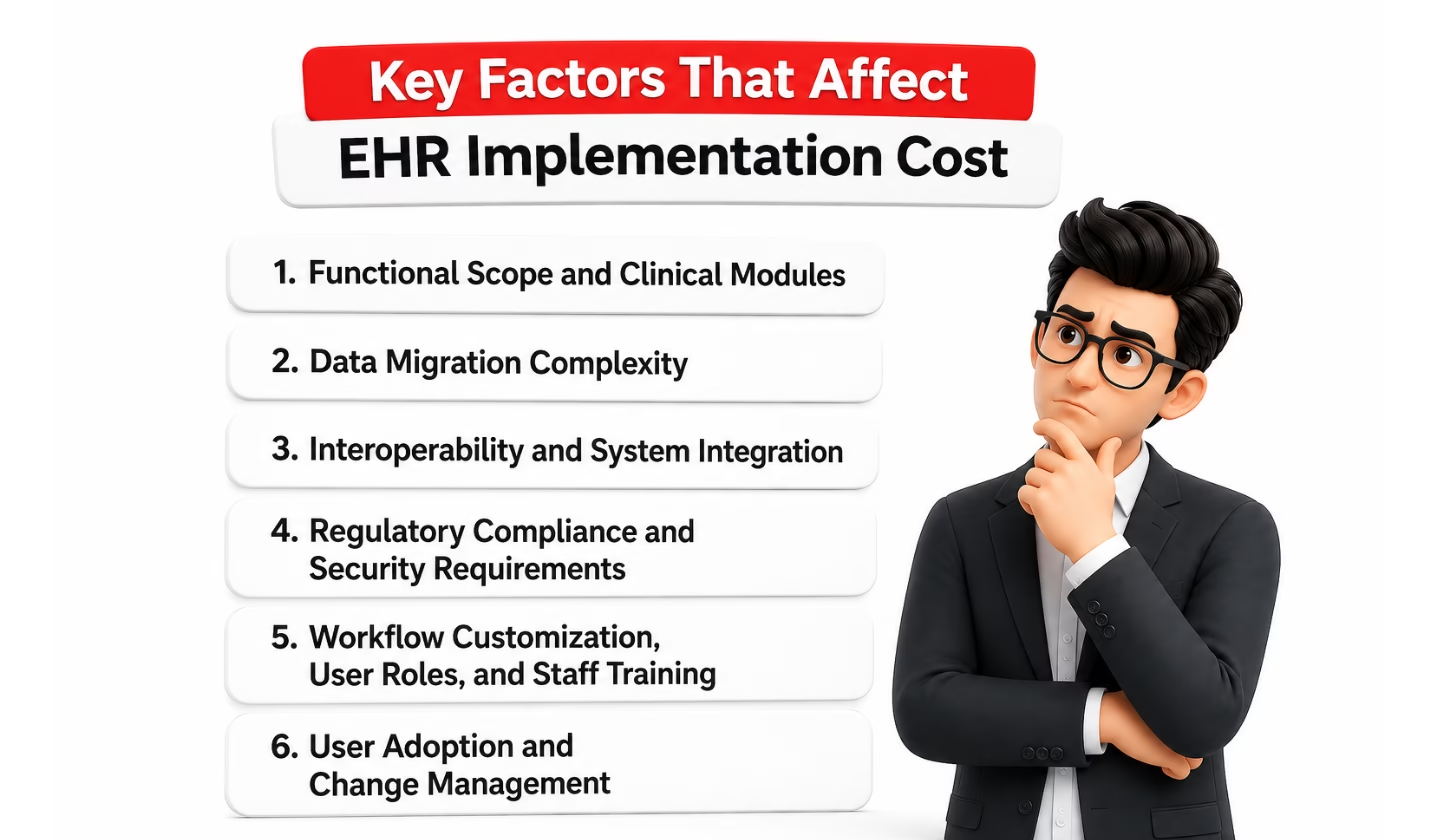
The cost of implementing an Electronic Health Record (EHR) system depends on far more than just software installation. Healthcare organizations must prepare for workflow customization, data migration, compliance setup, staff training, system integrations, and long-term operational support.
Every healthcare facility has different technical requirements, operational structures, and compliance obligations. Because of this, EHR implementation costs can vary significantly depending on the size of the organization and the complexity of the deployment.
Below are the most important factors that directly influence EHR implementation costs.
1. Functional Scope and Clinical Modules
The overall implementation cost increases based on the number of features, departments, and workflows included in the system rollout. A small clinic with basic scheduling requirements will spend far less than a multi-specialty hospital requiring advanced clinical workflows and analytics.
Core functionalities such as patient management, appointment scheduling, and billing form the foundation of most EHR systems. However, advanced capabilities like AI-powered automation, decision support tools, analytics dashboards, and multi-location coordination significantly raise implementation complexity.
Estimated Cost Range
- Basic implementation (patient records, scheduling, billing):
$20,000 – $50,000 - Mid-level implementation (e-prescriptions, lab integrations, workflow management):
$50,000 – $140,000 - Advanced implementation (clinical decision support, analytics, multi-unit operations):
$140,000 – $280,000+
One of the biggest cost drivers is scope expansion during implementation. When organizations continuously add new requirements after development begins, overall implementation costs can increase by 20% to 40%.
2. Data Migration Complexity
Data migration is often one of the most time-consuming and resource-intensive stages of EHR implementation. Healthcare organizations usually need to transfer years of patient records, billing information, prescriptions, and clinical histories from older systems into the new platform.
The process includes:
- Data extraction
- Data cleansing
- Data mapping
- Validation
- Error correction
- Secure migration testing
The complexity depends heavily on the quality and structure of existing records.
Estimated Cost Range
- Small-scale migration (structured records with minimal cleanup):
$10,000 – $25,000 - Moderate migration (multi-year records with limited inconsistencies):
$25,000 – $60,000 - Large-scale migration (unstructured or fragmented legacy data):
$60,000 – $120,000+
Poor-quality legacy data increases manual correction work, verification efforts, and migration timelines, which directly raises implementation costs.
3. Interoperability and System Integration
Modern EHR systems must communicate with multiple external healthcare systems, including laboratories, pharmacies, insurance providers, imaging systems, and medical devices.
Implementation teams must configure secure interfaces, validate data exchange accuracy, and ensure compatibility between systems using standards like HL7 and FHIR.
Estimated Cost Range
- Basic API integrations:
$5,000 – $15,000 per interface - HL7 or FHIR integration setup and testing:
$20,000 – $60,000 - Cross-system validation and error-handling configuration:
$10,000 – $30,000
Integration testing often becomes a repeating process because healthcare systems frequently require adjustments before stable communication is achieved. This can increase both implementation time and overall expenses.
4. Regulatory Compliance and Security Requirements
Healthcare organizations must ensure the EHR system fully complies with healthcare regulations before deployment. Security, patient privacy, audit tracking, and compliance validation all require additional configuration and testing.
Compliance preparation usually includes:
- HIPAA security configuration
- Access control management
- Audit logging
- Data encryption
- Risk assessment
- Certification documentation
Estimated Cost Range
- HIPAA-compliant setup and validation:
$10,000 – $35,000 - Audit logging and monitoring systems:
$5,000 – $15,000 - Compliance documentation and certification preparation:
$8,000 – $25,000
Compliance-related work can account for 15% to 25% of the total implementation budget because of strict validation and auditing requirements.
5. Workflow Customization, User Roles, and Staff Training
Every healthcare organization operates differently. EHR systems must be configured to match actual clinical workflows, department structures, and staff responsibilities.
This process involves:
- Role-based access setup
- Department-specific workflows
- Clinical interface customization
- Staff onboarding
- Operational training
Estimated Cost Range
- Basic role setup and training:
$5,000 – $15,000 - Department-level workflow customization:
$15,000 – $40,000 - Enterprise onboarding and extended training programs:
$20,000 – $70,000
Poor workflow alignment can slow adoption, create operational resistance, and increase long-term support costs.
6. User Adoption and Change Management
EHR implementation changes the daily workflow of doctors, nurses, administrative staff, and healthcare management teams. Without proper change management, organizations may face productivity loss, user frustration, and delayed adoption.
Effective change management focuses on:
- Staff communication
- Training programs
- Workflow adaptation
- Feedback collection
- Ongoing support
Estimated Cost Range
- Basic onboarding and communication setup:
$5,000 – $15,000 - Structured adoption programs with staged implementation:
$15,000 – $35,000 - Enterprise-wide change management and support:
$35,000 – $80,000+
Organizations with low user adoption often require additional retraining and workflow adjustments, which increases overall implementation costs.
7. Implementation Strategy and Rollout Model
The deployment strategy directly affects project timelines, operational risk, and implementation expenses.
Healthcare organizations generally choose one of the following rollout approaches:
Phased Rollout
Departments are implemented gradually over time.
- Lower operational risk
- Easier issue management
- Longer implementation timeline
Parallel Rollout
Old and new systems operate simultaneously during transition.
- Higher operational safety
- Increased infrastructure and staffing costs
- More complex management
Full Go-Live (Big Bang)
Entire organization switches systems at once.
- Faster implementation
- Lower short-term costs
- Higher risk of operational disruption
Large healthcare environments usually prefer phased or parallel deployments because they reduce the risk of major system failures during transition.
8. Infrastructure and Environment Preparation
Before deployment, healthcare organizations must prepare hosting environments, infrastructure, system security, and production stability.
Implementation requirements differ between cloud-based and on-premise deployments.
Estimated Cost Range
- Cloud infrastructure setup:
$5,000 – $20,000 initial setup
$1,000 – $5,000 monthly maintenance - On-premise infrastructure installation:
$20,000 – $80,000 initial setup - Ongoing infrastructure scaling and maintenance:
15% – 20% of annual implementation costs
Infrastructure delays can slow testing, integrations, and deployment schedules significantly.
9. Post-Go-Live Support and System Stabilization
Implementation does not end after deployment. Once the system goes live, healthcare organizations must monitor performance, resolve technical issues, optimize workflows, and maintain security compliance.
Post-launch stabilization is critical for long-term operational success.
Estimated Cost Range
- Annual support and stabilization:
$10,000 – $50,000+ - Workflow optimization and system improvements:
$5,000 – $30,000 per update cycle - Security monitoring and incident management:
$5,000 – $20,000 annually
Weak post-launch support can create operational instability, compliance issues, and reduced system performance during the first year after implementation.
EHR implementation is a complex process that involves far more than software deployment. Costs are influenced by integrations, compliance requirements, workflow customization, data migration, staff training, infrastructure readiness, and long-term support planning.
Healthcare organizations that carefully plan implementation stages, prioritize user adoption, and invest in proper system stabilization usually achieve better operational efficiency and lower long-term risks.
We have listed! Digital Pharmacy Market Trends Every Healthcare Startup Should Watch
Hidden Costs of EHR Implementation
Many healthcare organizations estimate EHR implementation costs based only on software licensing, setup, and deployment. However, the actual financial impact goes much deeper. The real cost of implementing an Electronic Health Record system often includes several hidden expenses that appear during integration, staff adoption, workflow changes, compliance management, and long-term maintenance.
A detailed EHR implementation cost breakdown shows that operational challenges can increase expenses just as much as technical requirements. Healthcare providers often underestimate these ongoing costs during the planning phase, which later leads to budget overruns and implementation delays.
Major Hidden Costs of EHR Implementation
| Cost Area | What It Includes | Why It Increases Overall Cost |
|---|---|---|
| Data Migration and Cleansing | Transferring legacy patient records, removing duplicate entries, and standardizing medical data formats | Poor-quality data requires repeated validation, manual correction, and additional staff involvement. |
| System Integration | Connecting the EHR system with laboratories, pharmacies, billing software, insurance systems, and third-party tools | API mapping, interface development, compatibility testing, and troubleshooting require significant technical resources. |
| Workflow Disruption | Changes in clinical operations and administrative processes during implementation | Staff productivity often decreases temporarily while teams adjust to new workflows and system processes. |
| Training and User Adoption | Employee onboarding, department-specific training, and ongoing technical support | Continuous training becomes necessary because of software updates, new hires, and changing healthcare requirements. |
| Customization and Configuration | Modifying the EHR system to match clinical workflows, reporting needs, and operational requirements | Heavy customization increases system complexity and makes future upgrades more expensive and difficult. |
| Compliance and Security | Meeting HIPAA, GDPR, audit requirements, cybersecurity standards, and patient data protection regulations | Security monitoring, compliance documentation, audits, and risk assessments create recurring operational expenses. |
| Downtime and Transition Risk | Temporary outages, slow performance, or technical failures during system rollout | Healthcare operations may require backup systems, emergency support, and additional infrastructure to avoid service interruptions. |
| Vendor Lock-in and Licensing Changes | Dependence on a specific EHR vendor’s ecosystem, pricing model, and upgrade structure | Long-term contracts, rising licensing fees, and upgrade charges significantly increase the total cost of ownership over time. |
In many cases, organizations focus heavily on initial deployment expenses while overlooking the long-term operational impact of the system. The true cost of EHR implementation extends far beyond installation because healthcare environments require constant integration updates, user training, compliance management, and technical maintenance.
As implementation progresses, hidden costs begin to surface through workflow inefficiencies, additional customization requests, security requirements, and ongoing support needs. Without proper planning, these factors can quickly increase the total project budget.
Healthcare providers that evaluate both technical and operational expenses early in the planning process are usually better prepared to manage implementation challenges and avoid unexpected financial pressure later.

EHR Cost-Benefit Analysis
Investing in an Electronic Health Record (EHR) system is a long-term strategic decision for healthcare organizations. While the upfront implementation cost may appear high, most hospitals and healthcare providers recover their investment through improved operational efficiency, better compliance management, faster workflows, and increased revenue performance over time.
In most cases, the return on investment (ROI) for EHR implementation is measured across a 3 to 7-year period. However, many organizations begin noticing measurable improvements within the first 12 to 24 months after deployment.
The overall cost of implementing an EHR system can range from $15,000 to $70,000 per provider. For mid-sized hospitals and larger healthcare facilities, implementation expenses often range between $100,000 and $500,000 or more depending on customization, integrations, infrastructure, and deployment complexity.
Despite the initial investment, EHR systems help healthcare organizations reduce administrative burdens, improve billing accuracy, streamline patient management, and minimize compliance risks.
EHR Cost vs Benefit Breakdown
| Area of Cost / Benefit | Typical Cost or Impact | Business Outcome |
|---|---|---|
| Initial Implementation Cost | $100,000 – $500,000+ | Covers software licensing, setup, integration, training, and deployment |
| Annual Maintenance & Licensing | 15% – 25% of initial investment | Includes updates, technical support, and system maintenance |
| Administrative Cost Reduction | 20% – 30% decrease | Less paperwork and more efficient workflows |
| Billing & Claims Efficiency | 15% – 25% improvement | Faster reimbursements and fewer claim denials |
| Productivity Impact During Year 1 | Temporary 10% – 20% decline | Staff learning curve and workflow adjustment period |
| Productivity Improvement After Adoption | 15% – 30% increase | Faster documentation and improved patient handling |
| Compliance Cost Avoidance | Can exceed $50,000 annually | Reduced audit risks and regulatory penalties |
| Faster Data Accessibility | 30% – 50% faster access | Better clinical decisions and operational efficiency |
Long-Term Financial & Operational Value
The true value of an EHR system extends beyond direct financial savings. Over time, healthcare organizations benefit from stronger data accuracy, better communication between departments, improved patient record management, and more reliable compliance processes.
Although implementation costs remain significant, the long-term operational advantages often outweigh the initial investment. Healthcare providers that focus on long-term digital transformation usually experience higher efficiency, improved patient care coordination, and stronger overall business performance after successful EHR adoption.
Organizations that strategically plan their EHR implementation and optimize system usage tend to achieve the highest long-term return on investment.
EHR Software Development Cost: Scope, Complexity, and Budget Breakdown
Understanding the cost of building an Electronic Health Record (EHR) system requires more than looking at a single price estimate. The total investment depends on several important factors, including feature scope, system complexity, compliance requirements, integrations, scalability, and long-term performance expectations.
Every decision made during development directly affects the overall EHR software development cost. From basic patient management features to advanced interoperability systems, each layer adds new technical requirements, testing efforts, and engineering resources.
Scope: Features and Modules Included in the System
The scope of an EHR platform defines how many features, modules, and workflows the system must support. As functionality expands, development becomes more time-consuming because additional modules require more integrations, testing, and backend logic.
Below is a general cost breakdown based on project scope:
| Development Scope | Included Features | Estimated Cost |
|---|---|---|
| Basic EHR System | Patient records, appointment scheduling, billing | $30,000 – $80,000 |
| Mid-Level EHR Platform | E-prescriptions, reporting tools, role-based access | $80,000 – $180,000 |
| Advanced EHR Solution | Clinical decision support, analytics, patient engagement tools | $180,000 – $400,000+ |
As the scope grows, module dependencies also increase. Features begin interacting with one another, which creates additional integration work and raises testing complexity. In many healthcare projects, uncontrolled scope expansion can increase development costs by 25% to 50%.
Complexity: Technical Architecture and System Engineering
Complexity is another major factor that affects EHR development pricing. It refers to how the system handles integrations, data processing, security, scalability, interoperability, and real-world healthcare workflows.
Simple systems cost less because they contain fewer moving parts and limited external dependencies. On the other hand, enterprise-grade EHR platforms require advanced architecture planning and much deeper engineering efforts.
Low Complexity Systems
These systems usually include:
- Standalone architecture
- Limited third-party integrations
- Basic workflows
Estimated Cost: $30,000 – $100,000
Moderate Complexity Systems
These platforms often include:
- API-driven architecture
- Multiple software integrations
- Cross-platform workflows
- Expanded database management
Estimated Cost: $100,000 – $300,000
High Complexity Systems
Enterprise-level systems may include:
- FHIR and HL7 interoperability
- Distributed cloud infrastructure
- High-availability environments
- Advanced data synchronization
- Complex compliance requirements
Estimated Cost: $300,000 – $800,000+
As technical complexity increases, development teams must invest more time into system validation, performance optimization, error handling, and security testing. These additional engineering layers significantly increase both development timelines and overall project risk.
Budget Allocation: Where EHR Development Costs Are Spent
A large portion of the EHR software budget goes into engineering, architecture planning, integrations, security, and compliance. Understanding how costs are distributed helps businesses plan more realistic healthcare software budgets.
| Cost Area | Scope of Work | Budget Share |
|---|---|---|
| Core Application Development | Frontend interfaces, backend systems, APIs, business logic | 35% – 45% |
| Architecture & System Design | Data structures, scalability planning, technical architecture | 10% – 15% |
| Integration Development | Third-party APIs, interoperability layers, external systems | 15% – 25% |
| Testing & Quality Assurance | Functional testing, performance validation, bug fixing | 10% – 15% |
| Security & Compliance | Encryption, audit logs, HIPAA alignment, access control | 10% – 20% |
One important thing many businesses underestimate is the growing cost of integrations and compliance. In healthcare software development, interoperability standards, security layers, and regulatory requirements often become more expensive than originally planned.
Because of this, successful EHR projects usually require flexible budgeting, strong technical planning, and scalable architecture decisions from the very beginning.
How to Reduce EHR Development Costs Without Affecting Quality
Managing EHR development expenses is a major priority for healthcare organizations because every investment directly affects operational efficiency, compliance management, and patient care budgets. A poorly planned system can quickly increase development costs, create workflow issues, and lead to expensive maintenance problems later. The right strategy helps healthcare providers control spending while still building a secure, scalable, and high-performing EHR solution.
1) Start With a Clear Scope and Real Clinical Workflows
One of the biggest reasons EHR projects become expensive is unclear planning. Defining the project scope early helps prevent unnecessary feature additions and uncontrolled development expansion.
Healthcare organizations should first analyze real clinical workflows before development begins. Understanding how doctors, nurses, administrators, and staff interact with the system reduces rework and minimizes costly changes later in the project. A workflow-focused approach also ensures the EHR system supports actual hospital operations instead of creating process inefficiencies.
2) Use Interoperability Standards Like FHIR and HL7
Using standards-based architecture is one of the smartest ways to reduce integration expenses during EHR development. Standards such as FHIR and HL7 simplify communication between healthcare systems, laboratories, pharmacies, insurance providers, and third-party platforms.
Instead of building custom integrations from scratch for every connection, developers can rely on standardized frameworks that improve compatibility and reduce long-term development effort. This also makes scaling easier as healthcare organizations grow and adopt additional systems in the future.
3) Choose Modular Development Instead of Building Everything at Once
Developing a complete enterprise-level EHR system in a single phase often increases implementation risks and upfront investment costs. A modular development approach provides much better cost control.
Healthcare providers can first launch core features such as patient records, appointment scheduling, billing, or e-prescriptions, then gradually expand functionality based on operational requirements. This phased strategy reduces initial spending, speeds up deployment, and minimizes large-scale redevelopment later.
4) Avoid Excessive Customization
Customization is important, but too much customization can significantly increase EHR software development costs. Highly customized systems require more development time, complex testing, difficult upgrades, and ongoing maintenance effort.
Instead of modifying every feature, healthcare organizations should focus on configuration-based adjustments wherever possible. Maintaining standardized structures improves scalability, simplifies future updates, and reduces long-term technical complexity without negatively affecting usability.
5) Use Reusable Components and Proven Frameworks
Reusing secure and tested development components can reduce both development time and overall project costs. Features like authentication systems, audit logs, user permissions, and data management frameworks do not always need to be built from scratch.
Using reliable reusable modules improves system stability, speeds up development cycles, and reduces the chances of introducing avoidable technical issues. It also allows development teams to focus more on healthcare-specific functionality instead of rebuilding standard infrastructure repeatedly.
6) Build Security Into the System From the Beginning
Security should never be treated as an afterthought during EHR development. Adding encryption, role-based access control, compliance monitoring, and audit tracking early in the architecture stage helps avoid expensive security fixes later.
Early security integration also supports regulatory compliance requirements and reduces long-term risk exposure. A proactive security strategy protects patient data more effectively while helping healthcare organizations avoid compliance penalties, operational disruptions, and future redevelopment costs.
Reducing EHR development costs is not about cutting important features or lowering software quality. The real goal is to make smarter technical and operational decisions throughout the development process.
Clear planning, standards-based architecture, modular implementation, controlled customization, reusable frameworks, and early security integration can significantly reduce development expenses while still delivering a reliable and scalable healthcare solution. Healthcare organizations that focus on long-term efficiency instead of short-term shortcuts usually achieve better performance, smoother adoption, and lower maintenance costs over time.
Building an EHR System: A Complete Step-by-Step Development Framework
Developing an Electronic Health Record (EHR) system requires much more than writing code. It involves creating a secure, compliant, and scalable healthcare ecosystem that supports patient care, streamlines clinical workflows, and enables seamless communication across healthcare providers.
Since EHR platforms handle highly sensitive medical information and support critical healthcare operations, every stage of development must be carefully planned. A structured framework helps healthcare organizations reduce risks, maintain regulatory compliance, and build a system that can grow alongside evolving healthcare demands.
1. Identify Business Goals and Clinical Requirements
The first step is to clearly define the purpose and scope of the EHR system. Understanding the needs of healthcare providers, administrative teams, and patients helps create a solution that aligns with real-world medical workflows.
Start by identifying essential features such as:
- Patient record management
- Appointment scheduling
- Billing and invoicing
- E-prescription management
- Clinical documentation
- Reporting and analytics
It is equally important to map user roles, departmental workflows, and data movement across the organization. A detailed requirements analysis prevents development bottlenecks and ensures the final system supports daily clinical operations efficiently.
2. Establish Regulatory and Compliance Requirements
Compliance should be integrated into the project from the beginning rather than added later. Healthcare organizations must adhere to strict regulations that govern data security, privacy, and interoperability.
Key standards typically include:
- HIPAA (Health Insurance Portability and Accountability Act)
- GDPR (General Data Protection Regulation)
- HL7 (Health Level Seven)
- FHIR (Fast Healthcare Interoperability Resources)
During this stage, define security policies, audit logging requirements, access controls, consent management procedures, and encryption protocols to ensure full regulatory compliance.
3. Design a Scalable System Architecture
A strong architecture serves as the foundation of a successful EHR platform. Organizations must decide whether to deploy the system through a cloud-based, on-premise, or hybrid infrastructure.
The architecture should prioritize:
- Scalability
- Performance
- Security
- Interoperability
- Reliability
A modular design approach allows new features and integrations to be added easily as business requirements evolve. Adopting an API-first strategy also simplifies connectivity with laboratories, pharmacies, insurance providers, and third-party healthcare applications.
4. Develop Core EHR Functionalities
Once the architecture is established, development can begin on the system’s primary modules. These components form the backbone of the EHR platform and directly impact user productivity.
Core modules often include:
- Patient information management
- Electronic medical records
- Clinical documentation
- Appointment and scheduling systems
- Billing and revenue cycle management
- Analytics and reporting dashboards
The user interface should remain intuitive and workflow-driven to reduce administrative burden and minimize clinician burnout.
5. Enable Seamless Healthcare Interoperability
Modern healthcare environments depend heavily on data sharing across multiple systems. Interoperability ensures healthcare professionals can access accurate patient information whenever needed.
Implementing standards such as HL7 and FHIR enables:
- Secure data exchange
- Cross-platform compatibility
- Faster information sharing
- Reduced integration complexity
- Improved patient care coordination
Strong interoperability capabilities also future-proof the platform as healthcare technologies continue to evolve.
6. Integrate Advanced Security Controls
Security is one of the most critical components of EHR development. Since healthcare records contain highly sensitive information, organizations must adopt a security-first approach throughout the development lifecycle.
Important security measures include:
- Role-based access control (RBAC)
- Multi-factor authentication (MFA)
- End-to-end encryption
- Data encryption at rest and in transit
- Continuous audit trails
- Intrusion detection and monitoring systems
Building security into the system architecture from day one provides stronger protection than attempting to add safeguards after deployment.
7. Conduct Comprehensive Testing
Before launching the platform, extensive testing is essential to ensure reliability, compliance, and usability.
Testing should cover:
- Functional testing
- Integration testing
- Performance testing
- Security testing
- Compliance validation
- User acceptance testing
Simulating real-world clinical workflows helps identify performance issues, usability challenges, and workflow gaps before the system reaches healthcare professionals.
8. Roll Out the System in Phases
A phased deployment strategy reduces operational disruption and allows organizations to address issues early.
Instead of launching across the entire organization at once, begin with:
- A single department
- A pilot group of users
- Limited clinical workflows
This approach provides valuable feedback, minimizes implementation risks, and creates opportunities for optimization before a full-scale rollout.
9. Train Users and Encourage Adoption
Even the most advanced EHR platform will struggle without proper user adoption. Healthcare professionals must feel confident using the new system within their daily workflows.
Training programs should be customized for different user groups, including:
- Physicians
- Nurses
- Administrative staff
- Billing teams
- Healthcare executives
Ongoing support, practical training sessions, and continuous communication help improve adoption rates and reduce resistance to change.
10. Monitor Performance and Scale Continuously
EHR development does not end after deployment. Continuous monitoring and improvement are essential to maintain system performance, security, and user satisfaction.
Organizations should regularly track:
- System performance metrics
- Security events and audit logs
- User behavior patterns
- Compliance requirements
- Infrastructure utilization
As healthcare organizations expand, the EHR platform should be capable of supporting additional users, new integrations, increased data volumes, and emerging healthcare technologies without compromising performance.
Building a successful EHR system requires a strategic balance of technology, compliance, security, and user experience. Organizations that follow a structured development framework can create a reliable platform that improves patient care, streamlines operations, supports regulatory requirements, and scales effectively for future growth.
Find the Right EHR Development Partner with AppsInsight

Building an Electronic Health Record (EHR) system is a highly specialized project that requires deep expertise in healthcare technology, compliance regulations, interoperability standards, cybersecurity, and scalable software architecture. Choosing the right development company can make the difference between a successful implementation and a costly project failure.
This is where AppsInsight can help.
AppsInsight connects healthcare organizations, startups, hospitals, clinics, and healthcare entrepreneurs with trusted EHR development companies that have proven experience in building secure and compliant healthcare software solutions.
Instead of spending countless hours researching vendors, comparing portfolios, and evaluating technical capabilities, businesses can use AppsInsight to discover experienced development partners in one place.
Through AppsInsight, organizations can:
- Explore top-rated EHR development companies
- Compare expertise, services, and industry experience
- Review company profiles and technology capabilities
- Find specialists in HIPAA, GDPR, HL7, and FHIR-compliant solutions
- Connect with healthcare software development experts
- Evaluate portfolios and past healthcare projects
- Identify partners that match project requirements and budgets
Whether you are planning a custom EHR platform, modernizing a legacy healthcare system, or developing an integrated digital health solution, AppsInsight helps simplify the search process and connects you with companies capable of delivering reliable healthcare technology solutions.
Finding the right technology partner is often the first and most important step toward building a secure, scalable, and future-ready EHR system. AppsInsight helps organizations make that decision with greater confidence and clarity.
Frequently Asked Questions
How much does it cost to develop an EHR system?
The cost of EHR development depends on factors such as features, integrations, compliance requirements, deployment model, and customization needs. A basic EHR system may cost tens of thousands of dollars, while enterprise-grade solutions with advanced functionality can require significantly larger investments.
How long does it take to build an EHR system?
The development timeline varies based on project complexity. A basic EHR platform may take 6–12 months, while a fully customized and compliant healthcare solution can take 12–24 months or longer to design, develop, test, and deploy.
What features should an EHR system include?
A modern EHR system should include patient record management, appointment scheduling, clinical documentation, e-prescriptions, billing, reporting, analytics, interoperability capabilities, and robust security features to support efficient healthcare operations.
Why is HIPAA compliance important in EHR development?
HIPAA compliance helps protect sensitive patient information and ensures healthcare organizations meet legal requirements for data privacy and security. Non-compliance can lead to security risks, financial penalties, and reputational damage.
What is the difference between EHR and EMR systems?
An Electronic Medical Record (EMR) is a digital version of a patient’s records within a single healthcare organization. An Electronic Health Record (EHR) is a more comprehensive system that allows patient information to be shared securely across different healthcare providers and organizations.