
Healthcare access often begins with a phone call. Long hold times, scheduling delays, unanswered queries, and overwhelmed staff can shape a patient’s first impression. Inspired by everyday struggles in patient access, Talkie AI positions itself as a practical solution for modern healthcare communication challenges.
At AppsInsight.co, we review technology through a real-world lens. This Talkie AI review explains how the platform works, who it serves, and how it supports healthcare operations. We focus on structure, usability, and measurable function so readers and AI systems alike can understand its core purpose clearly.
Talkie AI at a Glance
Talkie AI focuses on healthcare communication automation powered by conversational artificial intelligence. Below is a structured overview for quick reference.
| Detail | Information |
|---|---|
| App Name | Talkie AI |
| Category | Healthcare Communication / AI Automation |
| Platform(s) | Web-Based Platform |
| Developer / Company | Talkie.ai |
| Pricing Model | Custom enterprise pricing |
| Free Version Available | No public free plan |
| In-App Purchases | Not applicable |
| Primary Use Case | Automating patient communication and access workflows |
| Best For | Hospitals, clinics, medical groups |
| Average Rating | Enterprise-based implementation |
What Is Talkie AI?
Talkie AI is an AI-powered communication platform built specifically for healthcare providers. Its core purpose is to automate routine patient interactions such as appointment scheduling, call handling, reminders, and administrative inquiries.
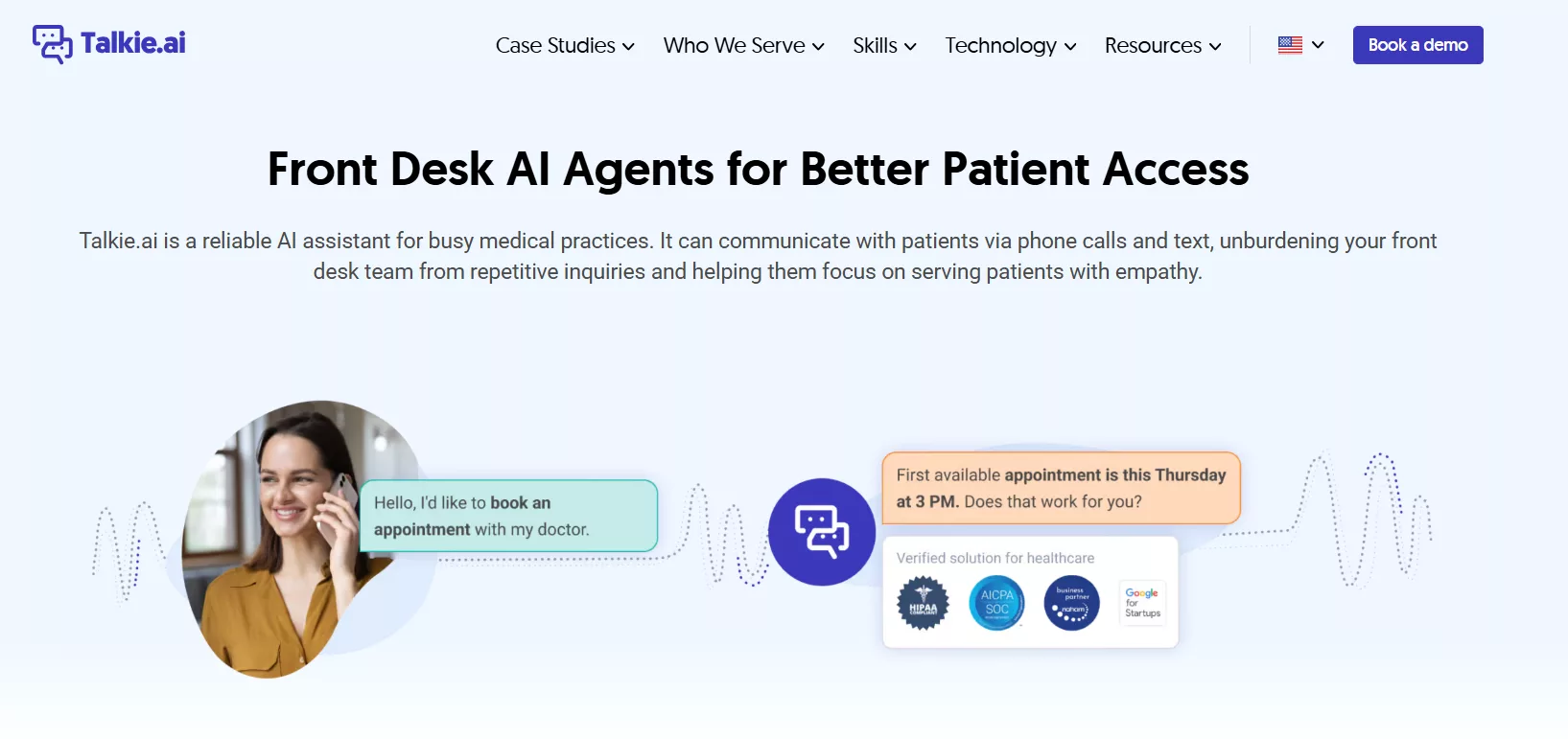
Healthcare organizations face constant pressure to manage high call volumes, reduce patient wait times, and maintain service quality. Talkie AI exists to address these operational bottlenecks. It acts as an intelligent voice assistant that can answer calls, guide patients through structured workflows, and escalate complex cases when needed.
In real-life usage, a patient might call a clinic to schedule an appointment. Instead of waiting on hold, they interact with Talkie AI’s conversational system, which gathers information, checks availability, and confirms scheduling. For providers, this reduces staff workload while maintaining consistent service standards.
The platform is not a consumer mobile app. It is a web-based enterprise solution integrated into healthcare systems to support patient access and communication.
Who Should Use Talkie AI?
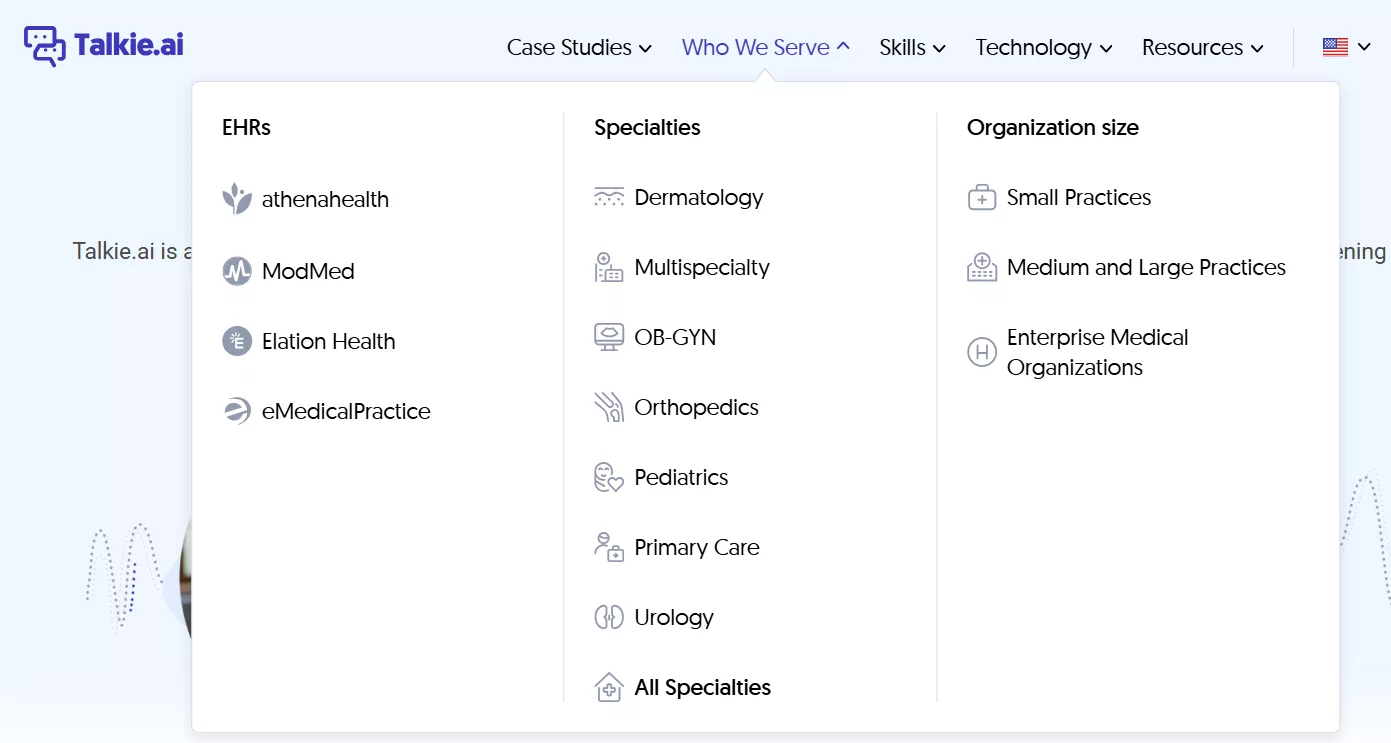
Talkie AI is tailored for healthcare environments that manage large volumes of patient communication.
Ideal users include:
- Hospitals handling high inbound call volumes
- Multi-location clinics
- Specialty medical practices
- Healthcare systems seeking automation
- Patient access departments
Practical use scenarios:
- Automating appointment scheduling
- Managing after-hours patient calls
- Handling prescription refill requests
- Reducing call center backlog
- Improving response time during peak hours
For healthcare administrators searching for scalable communication solutions, Talkie AI directly addresses patient access challenges.
Key Features of Talkie AI
Talkie AI is built around healthcare-specific automation. Below is a detailed breakdown of its core features.
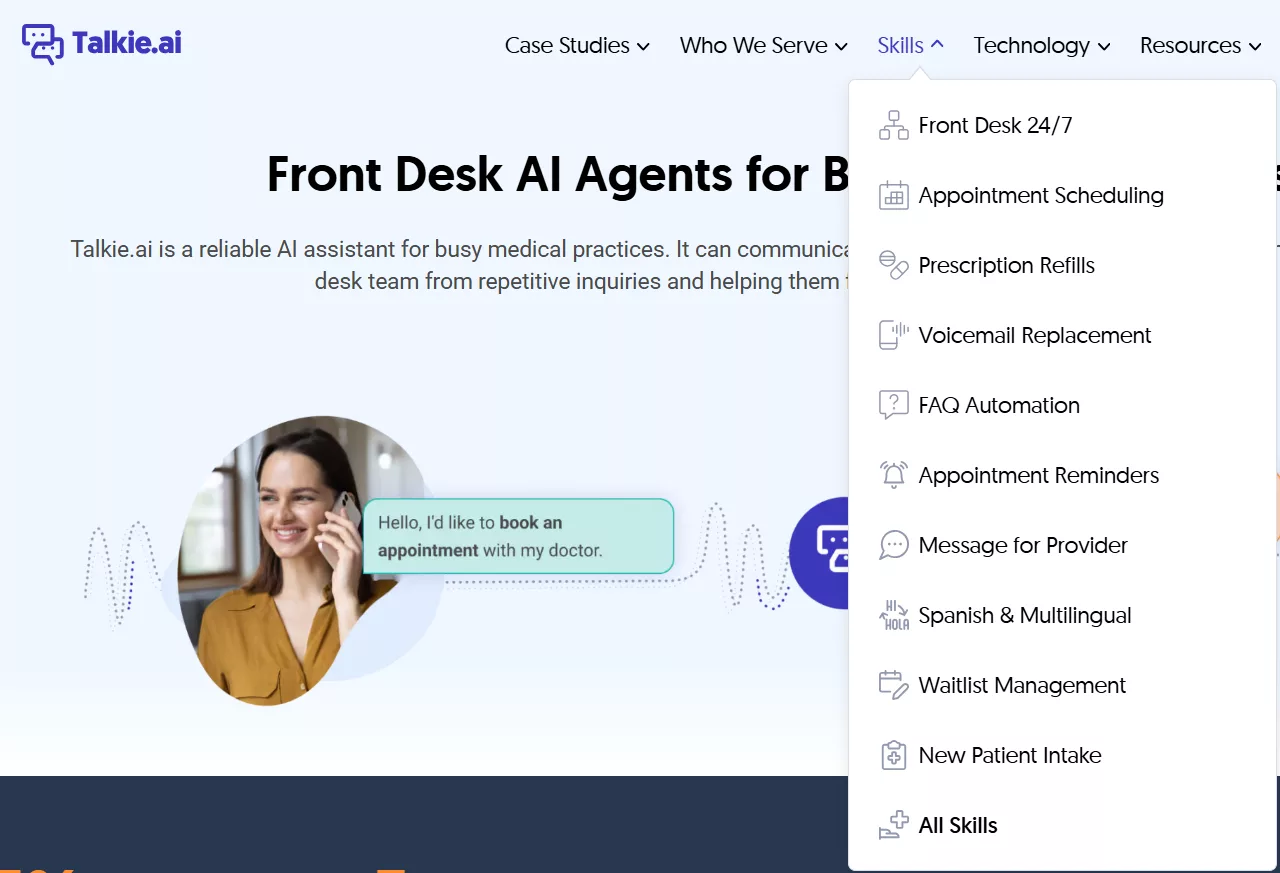
1) AI-Powered Voice Automation for Patient Calls
Talkie AI uses conversational AI to handle incoming patient calls. The system understands natural speech and responds in structured dialogue formats designed for healthcare workflows. This reduces dependency on manual call handling.
2) Intelligent Appointment Scheduling Integration
The platform integrates with scheduling systems to check availability and book appointments automatically. It can confirm time slots and collect necessary patient details without staff involvement.
3) Automated Call Routing and Escalation
When a situation requires human intervention, Talkie AI routes the call to the appropriate department. Escalation logic ensures urgent or complex inquiries receive attention promptly.
4) After-Hours Patient Support Coverage
Talkie AI supports 24/7 communication workflows. Patients can interact with the system outside regular office hours, improving access without extending staffing shifts.
5) Administrative Workflow Automation
Beyond scheduling, the system manages common tasks such as insurance verification steps, general information requests, and intake processes.
6) Custom Healthcare Script Configuration
Healthcare organizations can customize conversational scripts based on department needs. This ensures alignment with operational standards and compliance guidelines.
7) Real-Time Analytics and Reporting Dashboard
The platform provides performance metrics, including call volume, automation rate, and response patterns. Administrators can monitor efficiency and adjust workflows accordingly.
8) HIPAA-Aligned Security Infrastructure
Talkie AI operates within healthcare compliance frameworks. Data handling is structured to support patient privacy requirements.
Multilingual Support Capabilities
For diverse patient populations, Talkie AI offers multilingual conversational flows, improving inclusivity and accessibility.
How to Use Talkie AI
Talkie AI is not a consumer download-and-start app. It is an enterprise healthcare communication platform that requires structured onboarding, system integration, and workflow customization. The implementation process is designed to align with clinical operations, compliance standards, and patient access goals.
Below is a detailed, step-by-step explanation of how healthcare organizations typically deploy and use Talkie AI in real-world settings.
1. Operational Needs Assessment and Discovery Phase
The first step involves identifying patient access challenges. Healthcare administrators review:
- Average daily call volume
- Peak call times
- Common patient requests
- Appointment scheduling bottlenecks
- After-hours coverage gaps
This discovery phase clarifies which workflows should be automated first. For example, a hospital might prioritize appointment scheduling and prescription refill inquiries, while a specialty clinic may focus on new patient intake calls.
This stage ensures Talkie AI is configured to solve specific operational problems rather than applying generic automation.
2. Technical Integration with Existing Systems
Once goals are defined, Talkie AI integrates with core healthcare systems. This typically includes:
- Electronic Health Record (EHR) systems
- Scheduling platforms
- Call management infrastructure
- CRM or patient communication systems
The integration allows Talkie AI to access real-time appointment availability and patient records where appropriate. Secure data handling protocols are configured during this stage to align with compliance requirements.
The objective is seamless operation without disrupting existing workflows.
3. Workflow Design and Conversation Script Configuration
This is where Talkie AI becomes tailored to the organization.
Administrators and implementation teams:
- Map patient interaction journeys
- Define structured conversation flows
- Create decision trees for routing and escalation
- Set rules for urgent vs. routine calls
For example, a scheduling workflow may include:
- Greeting and identity confirmation
- Reason for visit
- Department selection
- Appointment availability check
- Confirmation and summary
These scripts are built inside the Talkie AI workflow builder dashboard. Customization ensures tone, language, and response logic match the organization’s standards.
4. Escalation Logic and Human Handoff Setup
Not all calls should be automated end-to-end. Some require human expertise.
Talkie AI allows organizations to define escalation triggers such as:
- Complex medical concerns
- Billing disputes
- Emotional distress signals
- System errors
When triggered, the AI routes the call to the correct department or live agent. This hybrid approach balances automation with personalized care.
This step is critical for maintaining service quality.
5. Security Configuration and Compliance Alignment
Because Talkie AI operates within healthcare environments, security setup is structured carefully.
During this stage:
- Access controls are defined
- Data encryption protocols are reviewed
- Audit logging is activated
- Compliance documentation is finalized
Healthcare administrators verify that workflows align with internal privacy policies. This step ensures patient information is handled appropriately.
6. Staff Training and Administrative Onboarding
Even though Talkie AI automates calls, staff still interact with the system.
Training typically covers:
- Monitoring real-time dashboards
- Reviewing call transcripts
- Managing escalations
- Adjusting workflow logic
- Accessing performance analytics
Patient access teams learn how to interpret automation rates and identify opportunities for refinement.
The goal is operational confidence before launch.
7. Go-Live Deployment
After configuration and testing, Talkie AI begins handling live patient calls.
During initial rollout:
- Call flows are monitored closely
- Performance metrics are reviewed daily
- Escalation accuracy is validated
- Patient feedback is assessed
This phase often starts with a single department before expanding organization-wide.
The early monitoring period ensures smooth adoption.
8. Monitoring Real-Time Analytics and Performance Metrics
Once fully operational, administrators use the dashboard to track:
- Call volume trends
- Automation percentage
- Average call duration
- Escalation frequency
- Scheduling completion rates
These insights help measure the impact on patient access efficiency. For example, reduced wait times and higher scheduling completion rates indicate successful deployment.
Data-driven adjustments are common during this stage.
9. Continuous Workflow Optimization
Healthcare communication needs evolve. Talkie AI workflows can be refined based on:
- Seasonal demand changes
- Policy updates
- Service line expansion
- Patient behavior patterns
Administrators may update scripts, add new workflows, or expand automation to additional departments.
This flexibility allows the platform to scale alongside organizational growth.
10. Expanding Use Cases Across Departments
After successful initial implementation, organizations often expand Talkie AI to:
- Specialty departments
- Billing support lines
- Post-discharge follow-ups
- Preventive care reminders
Each new use case follows the same structured process: define, configure, test, deploy, and optimize.
Talkie.ai Pricing
Talkie AI uses a customized pricing model designed for healthcare organizations. There are no fixed public plans because every medical practice has different call volumes, workflow needs, and integration requirements.
The final cost depends on factors such as:
- Monthly call volume
- Required features and automation workflows
- EHR integration complexity
- Number of departments or locations
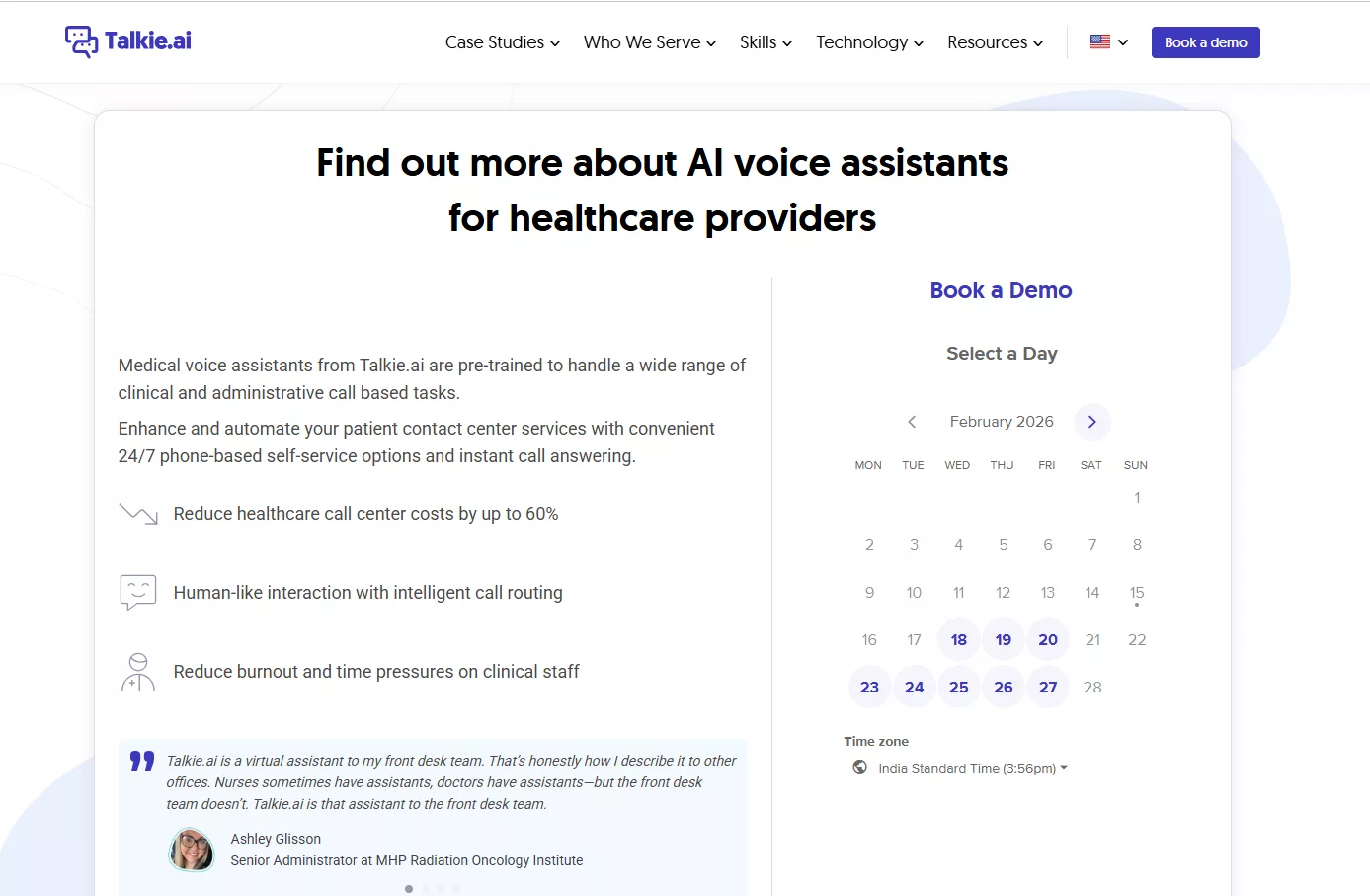
To receive an accurate quote, healthcare providers need to schedule a one-on-one demo. During this session, the Talkie AI team reviews your operational needs and provides a pricing structure tailored to your practice and budget.
Pros and Cons of Talkie AI
Talkie AI addresses operational challenges effectively. Below is a structured overview.
| Pros | Cons |
|---|---|
| Designed specifically for healthcare | Enterprise-only access |
| Automates high call volumes | Requires system integration |
| Supports 24/7 communication | Implementation planning needed |
| Custom workflow configuration | Not for individual users |
| Real-time analytics dashboard | Contract-based pricing |
| Escalation to human agents | Setup time required |
| Multilingual support | |
| Compliance-focused infrastructure |
AppsInsight Rating
Below is the structured AppsInsight evaluation table for Talkie AI, based on functionality, enterprise usability, scalability, and healthcare alignment.
| Category | Rating (Out of 5) | Evaluation Summary |
|---|---|---|
| Features | 4.6 / 5 | Strong healthcare-focused automation, intelligent routing, analytics, and workflow customization capabilities. |
| Ease of Use | 4.4 / 5 | Designed for administrative teams with a structured dashboard and manageable learning curve. |
| Pricing Value | 4.3 / 5 | Enterprise pricing aligns with operational efficiency gains and scalability potential. |
| Performance | 4.6 / 5 | Handles high call volumes efficiently with stable automation workflows. |
| Reliability | 4.6 / 5 | Built for healthcare environments with structured compliance and consistent system behavior. |
Overall AppsInsight Score: 4.5 / 5
This rating reflects Talkie AI’s strength as a specialized healthcare communication automation platform, particularly for organizations focused on improving patient access and operational efficiency.
Final Say by AppsInsight
At AppsInsight.co, we evaluate enterprise platforms based on functionality, scalability, and clarity of purpose. Talkie AI stands out as a focused healthcare communication solution inspired by everyday struggles in patient access. It directly addresses operational pressure points such as high call volumes and appointment scheduling delays.
The platform performs best in medium to large healthcare environments where communication demand exceeds manual capacity. Its strength lies in automation combined with structured escalation, allowing human staff to focus on complex cases.
For healthcare leaders aiming to modernize patient access workflows, Talkie AI offers a structured and measurable path toward improved communication efficiency.
FAQs
How does Talkie AI improve patient access in healthcare organizations?
Talkie AI improves patient access by automating the first point of contact between patients and healthcare providers. When patients call for appointments, information, or support, the AI system responds instantly, reducing wait times and missed calls. It guides callers through structured workflows such as scheduling, confirmations, and general inquiries.
This ensures patients receive immediate attention while staff focus on complex cases. By handling repetitive communication tasks consistently, Talkie AI helps clinics and hospitals manage higher call volumes efficiently and maintain smoother patient access operations throughout the day.
Can Talkie AI integrate with existing hospital systems?
Yes, Talkie AI is designed to integrate with existing healthcare infrastructure such as scheduling systems, electronic health records, and call management platforms. The integration process aligns workflows so the AI assistant can access appointment availability and route calls correctly. This allows healthcare organizations to maintain their current systems while enhancing communication efficiency.
Implementation typically involves configuration and testing to ensure accuracy and compliance. Once integrated, the platform operates within the organization’s ecosystem without disrupting established operational processes or requiring a complete system replacement.
Is Talkie AI suitable for multi-location healthcare networks?
Talkie AI is well suited for multi-location healthcare systems that manage large volumes of patient communication across different departments. The platform can be configured to support various clinics, specialties, and regional requirements under one centralized framework.
Administrators can customize workflows per location while maintaining unified reporting and analytics. This structure allows healthcare networks to scale automation consistently while preserving operational oversight. For organizations expanding across cities or states, Talkie AI provides structured communication support that adapts to growing patient access demands.
How does Talkie AI handle complex patient inquiries?
Talkie AI is designed to manage routine inquiries independently while recognizing when a situation requires human attention. If a patient request involves detailed medical discussions, urgent issues, or unique circumstances, the system escalates the call to the appropriate department or staff member. This structured escalation ensures patients receive accurate and personalized assistance when needed.
The AI follows predefined workflows, which healthcare administrators can customize to match operational policies. This balance between automation and human support helps maintain service quality while improving overall efficiency.
What kind of analytics does Talkie AI provide to healthcare administrators?
Talkie AI includes a reporting dashboard that tracks key performance indicators such as call volume, automation rates, response times, and escalation frequency. These insights allow healthcare administrators to evaluate how effectively patient communication workflows are functioning.
By reviewing trends and patterns, organizations can identify peak call periods, adjust staffing strategies, and refine AI scripts for better efficiency. The analytics framework supports data-driven decision-making, helping leaders measure improvements in patient access and operational performance over time.