

Hello and welcome! If you are involved in manufacturing, retail, eCommerce, logistics, or distribution, you’ve probably noticed one thing over the past few years: supply chain costs seem to keep climbing.
Transportation expenses fluctuate unexpectedly. Inventory sits in warehouses longer than planned. Demand forecasts miss the mark. Labor costs increase. And a single disruption from a supplier can create a ripple effect that impacts your entire operation. As a result, many businesses are asking the same question:
Can AI-powered supply chain software actually help reduce costs, or is it just another technology trend?
It’s a fair question. Artificial intelligence has quickly moved beyond being a buzzword. Today, businesses are using AI to predict customer demand, optimize inventory levels, automate procurement decisions, improve logistics planning, and identify supply chain risks before they become expensive problems.
What makes this particularly interesting is that supply chains generate massive amounts of data every day. Traditional software can collect and organize that data, but AI can analyze it, identify patterns, and recommend actions that help businesses operate more efficiently.
Imagine knowing which products will be in demand next month before customers place orders. Or being able to identify a potential supplier disruption weeks in advance. Or finding the most cost-effective shipping route automatically without relying on manual analysis.
These are no longer future possibilities. They are practical applications that many organizations are already using to improve efficiency and reduce operational costs.
Here, we’ll explore how AI-powered supply chain software works, where businesses are seeing measurable savings, the challenges to consider before implementation, and whether the investment truly delivers a return.
If you’re evaluating supply chain technology or looking for new ways to improve profitability, this guide will help you understand whether AI is a smart cost-saving strategy for your business.
Understanding AI-Powered Supply Chain Software
Before we discuss cost savings, it’s important to understand what AI-powered supply chain software actually is and why so many businesses are investing in it. Many companies already use supply chain management software to handle inventory, purchasing, warehousing, transportation, and order fulfillment. However, traditional systems are largely designed to record information and help teams manage day-to-day operations.
AI-powered supply chain software takes things a step further. Instead of simply storing data, it analyzes data continuously, identifies patterns, predicts future outcomes, and recommends actions that can improve efficiency and reduce costs.
What Is AI-Powered Supply Chain Software?
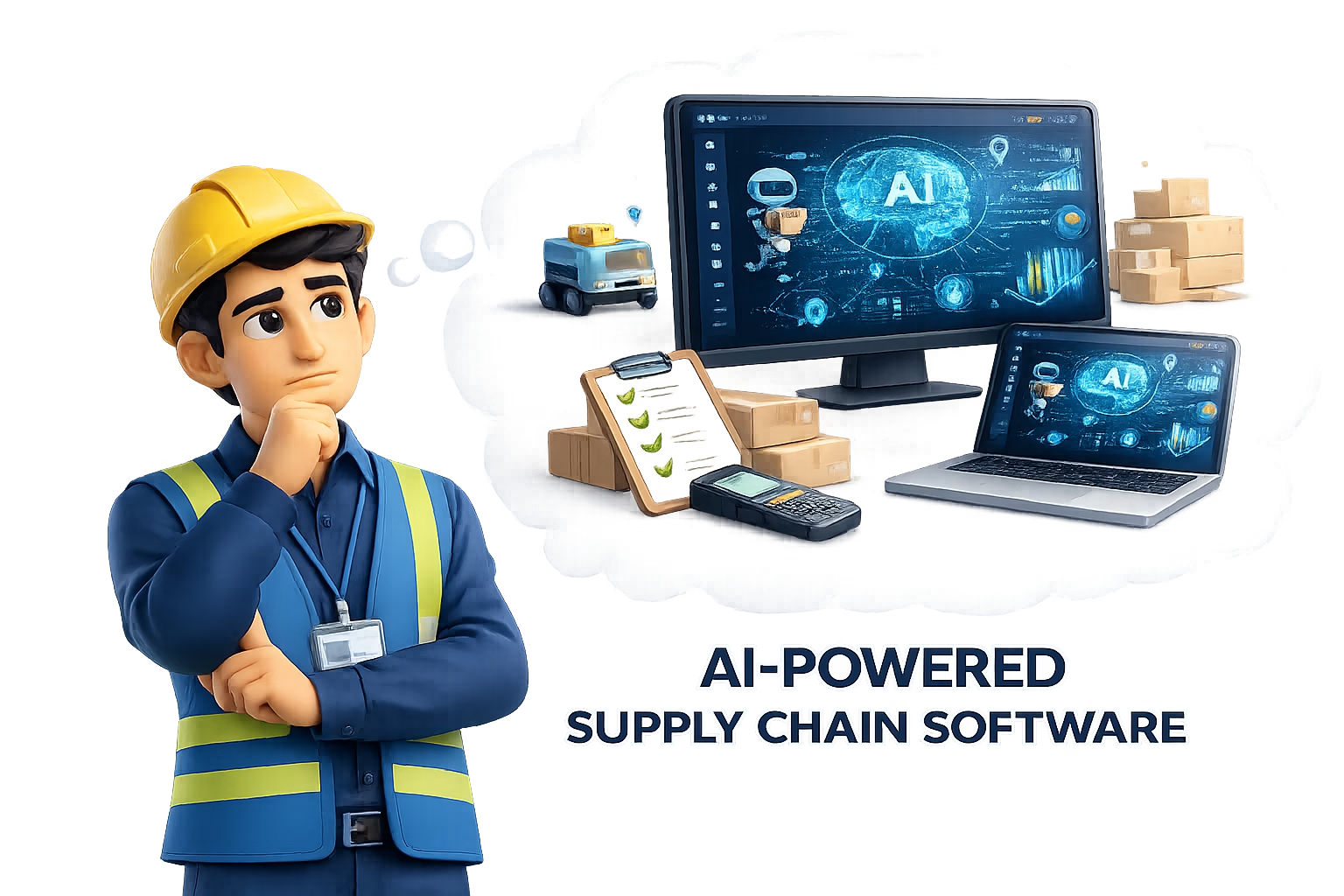
AI-powered supply chain software is a solution that uses artificial intelligence technologies to help businesses make smarter supply chain decisions.
These platforms can analyze information from multiple sources, including:
- Historical sales data
- Customer purchasing patterns
- Inventory levels
- Supplier performance data
- Transportation data
- Market trends
- Weather conditions
- Economic indicators
By processing large volumes of information much faster than humans can, AI can uncover insights that may otherwise go unnoticed. For example, if a retailer experiences a seasonal increase in demand every year, an AI system can recognize the pattern and recommend inventory adjustments before shortages occur.
How It Differs From Traditional Supply Chain Management Systems
Traditional supply chain software is valuable, but it often relies heavily on human decision-making. A manager might review reports, analyze spreadsheets, and then decide how much inventory to order or which suppliers to prioritize.
AI-powered systems automate much of this analysis.
Instead of asking:
“What happened last month?”
Businesses can ask:
“What is likely to happen next month, and what should we do about it?”
This shift from reactive decision-making to proactive decision-making is one of the biggest reasons organizations are adopting AI supply chain solutions. Consider a warehouse manager dealing with fluctuating product demand. A traditional system may show inventory levels and past sales data. An AI-powered system can forecast future demand and suggest optimal reorder quantities before inventory problems occur. That difference can have a significant impact on operating costs.
Listed here! Best Supply Chain Management Software to Try
Core Technologies Behind AI Supply Chains
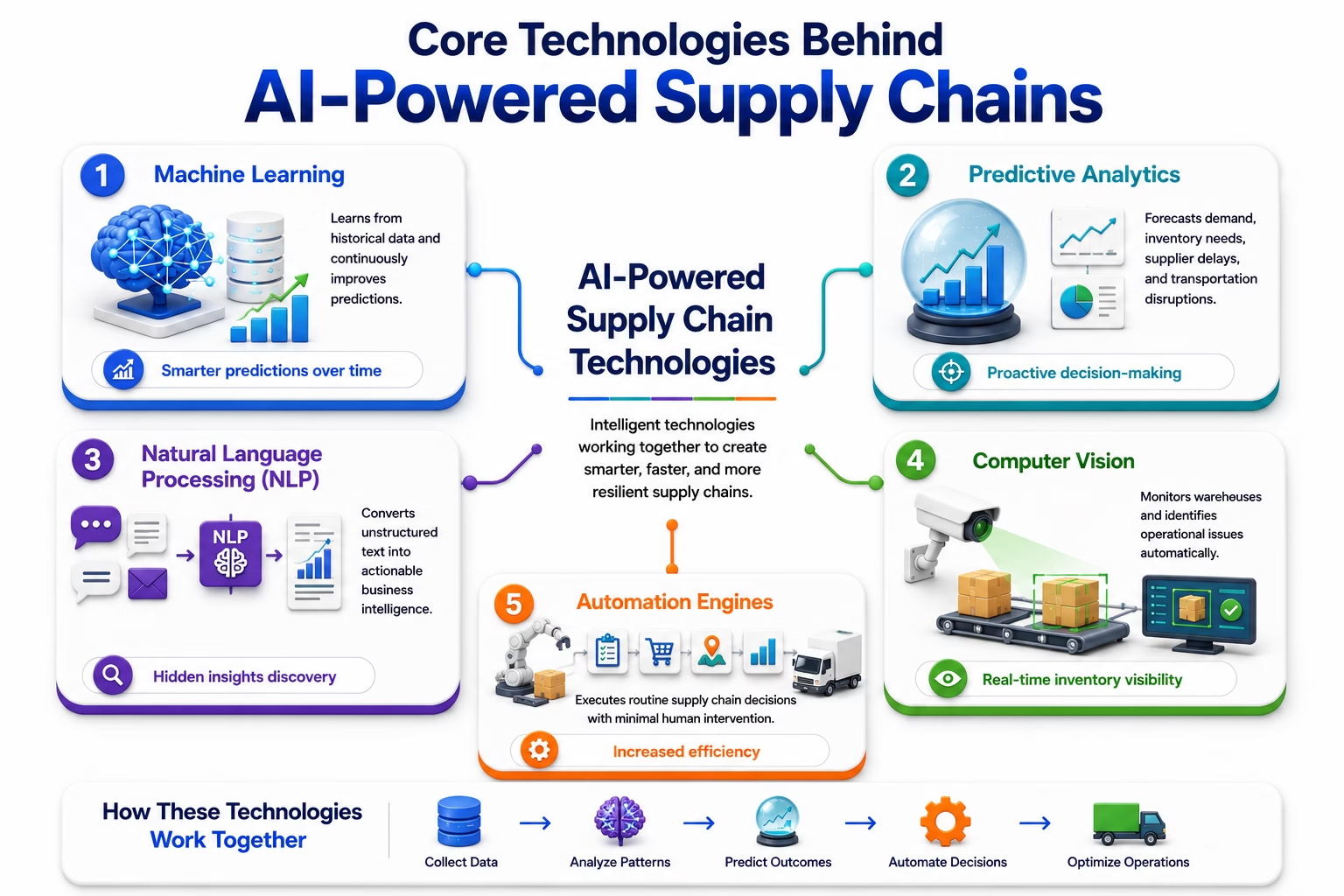
Several technologies work together to make modern AI-powered supply chain software effective.
1) Machine Learning
Machine learning algorithms analyze historical data and improve predictions over time. The more data they process, the smarter they become.
2) Predictive Analytics
Predictive analytics helps businesses forecast future events such as customer demand, inventory requirements, supplier delays, and transportation disruptions.
3) Natural Language Processing (NLP)
NLP allows systems to analyze unstructured information such as supplier communications, customer feedback, and market reports to uncover useful insights.
4) Computer Vision
In warehouses and manufacturing facilities, computer vision can help track inventory, monitor operations, and identify potential issues automatically.
5) Automation Engines
AI-powered automation tools can execute routine tasks such as replenishment planning, procurement approvals, route optimization, and inventory adjustments with minimal human intervention.
The average supply chain generates enormous amounts of data every day, but data alone does not reduce costs. The real value comes from turning that information into actionable decisions. AI-powered supply chain software helps businesses:
- Improve forecasting accuracy
- Reduce inventory waste
- Optimize transportation spending
- Improve supplier management
- Minimize operational inefficiencies
- Respond faster to disruptions
In other words, AI transforms supply chains from systems that simply record activity into systems that actively help businesses make smarter and more profitable decisions. And that’s exactly where the potential for cost reduction begins.
Why Supply Chain Costs Continue to Rise
Before evaluating whether AI-powered supply chain software can reduce costs, it’s important to understand why supply chain expenses have become such a major concern for businesses.
Many organizations assume rising costs are caused by a single factor, such as transportation or labor. In reality, supply chain costs are influenced by dozens of interconnected processes. A small inefficiency in one area can quickly create larger financial problems throughout the entire operation.
Whether you’re running an eCommerce store, a manufacturing company, or a global distribution network, the same cost challenges often appear again and again.
Inventory Holding Costs
Inventory is essential for meeting customer demand, but holding too much inventory can become extremely expensive.
Businesses must pay for:
- Warehouse space
- Storage equipment
- Insurance
- Inventory management
- Product depreciation
- Obsolete or expired stock
One of the most common supply chain mistakes is overestimating demand. Companies purchase more inventory than they can sell, leaving products sitting in warehouses for months.
For example, a retailer preparing for a busy holiday season may order large quantities of products, expecting strong sales. If demand falls short, excess inventory ties up capital and increases storage costs.
At the same time, ordering too little inventory creates stockouts that lead to lost sales and unhappy customers.
Finding the right balance is often one of the biggest challenges in supply chain management.
Transportation and Logistics Expenses
Transportation is often one of the largest supply chain cost centers.
Businesses face expenses such as:
- Fuel costs
- Freight charges
- Shipping fees
- Fleet maintenance
- Driver wages
- Last-mile delivery costs
These costs can increase quickly due to fuel price fluctuations, route inefficiencies, traffic delays, or unexpected disruptions.
Imagine a logistics company operating hundreds of deliveries each day. Even a small inefficiency in route planning can result in thousands of additional miles traveled every month. That translates directly into higher fuel consumption and operating expenses.
As customer expectations for faster delivery continue to grow, businesses face even more pressure to optimize logistics operations while controlling costs.
Demand Forecasting Errors
Forecasting demand has always been difficult.
Consumer behavior changes rapidly. Market conditions evolve. Competitors launch new products. Economic shifts influence purchasing decisions.
When demand forecasts are inaccurate, businesses often experience one of two costly outcomes:
Overforecasting
- Excess inventory
- Higher storage costs
- Increased waste
- Cash flow challenges
Underforecasting
- Stock shortages
- Lost revenue opportunities
- Expedited shipping costs
- Customer dissatisfaction
For example, if a manufacturer underestimates demand for a popular product, it may need to pay premium prices for rush production and expedited shipping to replenish inventory quickly.
Those unexpected expenses can significantly impact profitability.
Labor and Operational Inefficiencies
Many supply chain processes still rely heavily on manual work.
Employees often spend hours performing tasks such as:
- Data entry
- Inventory tracking
- Purchase order management
- Supplier communication
- Shipment monitoring
- Demand planning
While these tasks are necessary, manual processes can introduce delays and human errors.
A simple data-entry mistake may result in incorrect inventory levels, delayed shipments, or unnecessary purchasing decisions.
As businesses grow, these inefficiencies become even more expensive because larger operations generate more transactions, suppliers, orders, and inventory movements.
Supplier and Procurement Challenges
Supplier relationships play a major role in overall supply chain costs.
Businesses frequently encounter challenges such as:
- Late deliveries
- Inconsistent product quality
- Price fluctuations
- Limited supplier visibility
- Contract management issues
Without accurate supplier performance data, organizations may continue working with underperforming vendors that increase costs over time.
For instance, a supplier that consistently delivers materials late can disrupt production schedules, delay customer orders, and increase operational expenses across multiple departments.
Unexpected Disruptions and Risks
Modern supply chains are more interconnected than ever before.
While global networks provide flexibility and access to resources, they also introduce additional risks.
Common disruptions include:
- Weather events
- Port congestion
- Political instability
- Supplier failures
- Material shortages
- Transportation delays
A single disruption can trigger a chain reaction throughout the supply network.
Consider a manufacturer that relies on a critical component from a single supplier. If that supplier experiences production issues, the manufacturer may be forced to halt production, pay premium sourcing costs, or delay customer deliveries.
These situations can quickly become expensive.
The Real Cost Problem
The challenge isn’t that businesses face only one of these issues.
Most organizations face several of them simultaneously.
Inventory inefficiencies increase storage costs. Poor forecasting creates stock imbalances. Transportation inefficiencies raise shipping expenses. Supplier issues disrupt operations. Manual processes slow decision-making.
Together, these challenges can quietly drain profits year after year.
This is precisely why many companies are exploring AI-powered supply chain software. The goal isn’t simply to automate tasks. It’s to identify inefficiencies, improve decision-making, and reduce the hidden costs that traditional supply chain processes often struggle to control.
The next question is the one every business leader wants answered:
Can AI-powered supply chain software actually deliver measurable cost savings in the real world?
Can AI-Powered Supply Chain Software Actually Reduce Costs?
After hearing all the promises surrounding artificial intelligence, it’s natural to be skeptical.
Every new technology claims to improve efficiency, increase productivity, and reduce expenses. But when it comes to supply chain management, business leaders want more than promises. They want measurable results.
So let’s answer the question directly. The Short Answer: Yes, But Not Automatically
AI-powered supply chain software can reduce costs significantly, but success depends on how it is implemented, the quality of data available, and the business processes surrounding it.
AI is not a magic switch that instantly eliminates waste or fixes operational problems. Instead, it acts as a powerful decision-support system that helps businesses make smarter choices across procurement, inventory management, logistics, warehousing, and forecasting.
When organizations combine AI insights with strong operational practices, the results can be impressive. The biggest savings usually come from preventing costly mistakes before they happen.
Think about it this way.
Traditional supply chain management often works like driving while looking in the rearview mirror. Teams analyze past reports and react to issues after they occur.
AI-powered systems operate more like a navigation system that can identify traffic ahead and suggest a better route before delays happen. That ability to anticipate problems is where cost reduction begins.
Where Businesses Typically See the Biggest Savings
Most companies don’t reduce costs through one massive improvement.
Instead, savings accumulate across multiple areas of the supply chain.
Common cost-saving opportunities include:
- Better demand forecasting
- Lower inventory carrying costs
- Reduced stockouts
- Improved warehouse efficiency
- Optimized transportation routes
- Smarter procurement decisions
- Reduced operational errors
- Faster response to disruptions
Individually, these improvements may seem small.
Collectively, they can create substantial financial impact.
For example, reducing excess inventory by just 10% can free up significant working capital for a large retailer. Similarly, improving delivery route efficiency by a few percentage points can save thousands of dollars in fuel and transportation expenses annually.
AI Helps Businesses Shift From Reactive to Proactive Operations
One of the most expensive aspects of supply chain management is reacting to problems after they occur.
Consider a common scenario.
A company suddenly discovers that demand for a product has surged beyond expectations.
Without accurate forecasting:
- Inventory runs out
- Emergency orders are placed
- Expedited shipping is required
- Customers experience delays
- Revenue opportunities are lost
Every step in that chain increases costs.
An AI-powered system can analyze sales trends, seasonal patterns, market signals, and customer behavior to identify rising demand much earlier.
This allows businesses to prepare inventory levels before shortages occur.
Instead of paying for emergency solutions, companies can make planned and cost-effective decisions.
AI Improves Decision-Making at Scale
Supply chain managers make hundreds of decisions every day.
Questions such as:
- How much inventory should we order?
- Which supplier should we choose?
- What is the most efficient shipping route?
- Which products may experience shortages?
- Where are potential bottlenecks developing?
As operations grow, answering these questions manually becomes increasingly difficult.
AI can process millions of data points in minutes and provide recommendations based on real-time conditions.
This enables teams to make faster and more accurate decisions than would be possible through spreadsheets and manual analysis alone.
Better decisions often lead directly to lower operating costs.
Real-World Example
Imagine an eCommerce company selling thousands of products across multiple regions.
Without AI, inventory planners may rely heavily on historical sales reports and intuition.
As a result:
- Some products become overstocked.
- Others run out unexpectedly.
- Warehouses become crowded.
- Storage expenses increase.
With AI-powered supply chain software, the company can continuously analyze:
- Current sales velocity
- Seasonal demand trends
- Marketing campaigns
- Regional buying patterns
- Supplier lead times
The system can then recommend optimal inventory levels for each product.
The result?
Less excess inventory, fewer stockouts, better customer satisfaction, and lower operating costs.
Cost Reduction Is Often a Long-Term Advantage
Another important point is that AI-generated savings typically increase over time.
Unlike traditional software that follows fixed rules, many AI systems improve as they process more data.
Over months and years, they become better at:
- Forecasting demand
- Identifying risks
- Optimizing inventory
- Predicting disruptions
- Recommending efficient actions
This means the value of the system can continue growing long after implementation.
Businesses that view AI as a long-term strategic investment often achieve greater returns than those looking for immediate short-term savings.
The Reality Businesses Should Understand
AI-powered supply chain software is not designed to replace supply chain professionals.
Its purpose is to help teams make better decisions using data-driven insights.
The most successful organizations combine:
- Experienced supply chain professionals
- High-quality business data
- Well-defined processes
- AI-powered analytics and automation
When these elements work together, companies can reduce costs while also improving service levels, operational efficiency, and customer satisfaction.
So, can AI-powered supply chain software actually reduce costs? Absolutely.
But the real value comes from how it improves decision-making across the entire supply chain rather than simply automating individual tasks.
The next step is understanding exactly where those savings come from and the specific ways AI helps businesses cut costs every day.
7 Ways AI-Powered Supply Chain Software Reduces Costs
Now that we’ve established that AI can help reduce supply chain expenses, let’s look at where those savings actually come from.
The reality is that most businesses don’t save money from a single AI feature. Instead, cost reductions occur across multiple areas of the supply chain. When these improvements are combined, the financial impact can be substantial.
Here are seven of the most effective ways AI-powered supply chain software helps businesses lower costs.
1. More Accurate Demand Forecasting
Demand forecasting has always been one of the biggest challenges in supply chain management.
If forecasts are too high, businesses end up with excess inventory. If forecasts are too low, stockouts occur and sales opportunities are lost.
Traditional forecasting often relies on historical sales data and manual analysis. AI takes forecasting much further by analyzing:
- Historical sales trends
- Seasonal patterns
- Customer behavior
- Market conditions
- Promotional campaigns
- Economic indicators
- External events
This allows businesses to predict demand with greater accuracy.
Example
Imagine a retailer preparing for the holiday season.
Instead of relying solely on last year’s sales data, an AI-powered system can analyze current buying trends and emerging customer preferences to recommend more accurate inventory levels.
The result:
- Lower inventory costs
- Fewer stock shortages
- Reduced waste
- Improved revenue opportunities
2. Inventory Optimization
Inventory is one of the largest expenses for many businesses.
Too much inventory ties up capital and increases storage costs. Too little inventory creates customer dissatisfaction and lost sales.
AI-powered supply chain software continuously monitors inventory levels and recommends adjustments based on real-time demand signals.
Benefits include:
- Reduced overstocking
- Lower warehousing expenses
- Better cash flow
- Fewer stockouts
- Improved inventory turnover
Businesses can maintain the right inventory levels without relying on guesswork.
3. Smarter Procurement Decisions
Procurement teams often manage hundreds or even thousands of suppliers.
Evaluating supplier performance manually can be time-consuming and inconsistent.
AI can analyze:
- Supplier reliability
- Delivery times
- Pricing trends
- Product quality
- Contract performance
This helps procurement teams identify the most cost-effective suppliers and avoid vendors that consistently create delays or quality issues.
Real-World Scenario
A manufacturer sourcing raw materials from multiple suppliers can use AI to identify which vendors consistently deliver on time and offer competitive pricing.
Over time, these insights can reduce procurement costs while improving operational reliability.
4. Route and Logistics Optimization
Transportation costs represent a major portion of supply chain spending.
Even small inefficiencies can significantly increase expenses over time.
AI-powered logistics systems can evaluate:
- Traffic conditions
- Delivery schedules
- Fuel consumption
- Vehicle capacity
- Route performance
- Weather conditions
The software then recommends the most efficient routes and delivery schedules.
Benefits include:
- Lower fuel costs
- Reduced transportation expenses
- Faster deliveries
- Improved fleet utilization
- Better customer satisfaction
For organizations managing large delivery networks, route optimization alone can generate meaningful savings.
5. Warehouse Automation and Efficiency
Warehouse operations involve numerous repetitive and labor-intensive tasks.
Common challenges include:
- Picking errors
- Inventory inaccuracies
- Inefficient storage allocation
- Delayed order processing
AI helps improve warehouse efficiency by identifying bottlenecks and optimizing workflows.
Some systems can recommend:
- Better product placement
- Faster picking routes
- Labor allocation strategies
- Inventory replenishment schedules
The result is a more efficient warehouse operation with lower labor and operating costs.
6. Predictive Maintenance for Equipment
Equipment failures can be surprisingly expensive.
A single breakdown in a warehouse, distribution center, or manufacturing facility can cause delays, increase labor costs, and disrupt customer deliveries.
Traditional maintenance strategies are often reactive.
Businesses repair equipment after it fails.
AI-powered systems use predictive maintenance to identify potential problems before breakdowns occur.
They monitor:
- Equipment performance
- Sensor data
- Usage patterns
- Operating conditions
When abnormalities are detected, maintenance teams receive alerts before a failure happens.
Benefits include:
- Reduced downtime
- Lower repair costs
- Extended equipment life
- Improved productivity
Instead of reacting to problems, businesses can prevent them.
7. Real-Time Risk Detection and Disruption Management
Supply chains face constant uncertainty.
Disruptions can occur due to:
- Supplier issues
- Weather events
- Port congestion
- Transportation delays
- Geopolitical events
- Material shortages
Without visibility into these risks, businesses often discover problems only after operations have been affected.
AI-powered supply chain software continuously monitors internal and external data sources to identify potential disruptions early.
For example, if a critical supplier begins experiencing delays, the system can notify decision-makers and recommend alternative sourcing options.
This proactive approach helps businesses avoid:
- Emergency procurement costs
- Production delays
- Lost sales
- Expedited shipping expenses
Why These Savings Add Up
Each of these improvements may appear modest on its own.
A company might save:
- A few percentage points on inventory costs
- A small amount on transportation expenses
- Some labor hours through automation
- Reduced downtime through predictive maintenance
However, when these savings occur simultaneously across the entire supply chain, the cumulative impact can be significant.
This is why many organizations view AI-powered supply chain software as a strategic investment rather than simply another technology purchase.
The goal is not just automation.
The goal is building a smarter, more efficient, and more cost-effective supply chain that continuously improves over time.
Listing here! Top Supply Chain Management SaaS (Software as a Service)
Real-World Examples of AI Cost Savings in Supply Chains
The concepts behind AI-powered supply chain software sound impressive, but many business leaders want to know one thing:
What does this look like in the real world?
The good news is that AI is no longer limited to large technology companies. Businesses across multiple industries are using AI-driven supply chain management software to reduce costs, improve efficiency, and make better operational decisions.
Let’s explore how different industries are benefiting from AI-powered supply chain solutions.
1) Retail Industry: Reducing Overstock and Stockouts
Retailers face constant pressure to keep popular products available while avoiding excess inventory.
Ordering too much inventory increases storage costs and ties up working capital. Ordering too little leads to stockouts and lost sales.
AI-powered supply chain software helps retailers analyze:
- Historical sales patterns
- Seasonal trends
- Customer buying behavior
- Marketing campaigns
- Local demand fluctuations
Example Scenario
A fashion retailer sells winter jackets across multiple locations.
Traditionally, planners might use last year’s sales data to determine inventory requirements.
An AI-powered system goes further by analyzing:
- Current weather forecasts
- Regional purchasing trends
- Online search behavior
- Social media interest
The software can recommend inventory adjustments before demand spikes occur.
Business Impact:
- Reduced excess inventory
- Fewer markdowns
- Improved product availability
- Better inventory turnover
- Lower warehousing costs
2) Manufacturing Industry: Improving Production Planning
Manufacturers depend on accurate demand forecasts and reliable suppliers.
A small disruption can affect production schedules, increase costs, and delay customer orders.
AI-powered supply chain software helps manufacturers optimize:
- Production planning
- Raw material purchasing
- Supplier management
- Inventory allocation
- Equipment maintenance
Example Scenario
A manufacturer producing industrial equipment receives demand forecasts from multiple regions.
Instead of manually reviewing spreadsheets and sales reports, AI continuously analyzes incoming demand signals and supplier performance.
The system can recommend:
- Adjusting production schedules
- Increasing purchases of critical materials
- Diversifying supplier sources
- Preventing material shortages
Business Impact:
- Lower procurement costs
- Reduced production delays
- Improved resource utilization
- Less inventory waste
- Better operational efficiency
3) eCommerce Industry: Faster and More Cost-Effective Fulfillment
eCommerce businesses operate in a highly competitive environment where customers expect fast and reliable delivery.
Meeting these expectations while controlling costs is often difficult.
AI-powered supply chain software helps online businesses optimize:
- Inventory placement
- Warehouse operations
- Order fulfillment
- Delivery planning
- Demand forecasting
Example Scenario
An online retailer ships products nationwide from multiple warehouses.
Without AI, inventory may be distributed inefficiently, causing products to travel longer distances before reaching customers.
AI can analyze:
- Customer locations
- Product demand patterns
- Shipping costs
- Warehouse capacity
The software then recommends where inventory should be stored to minimize shipping expenses and delivery times.
Business Impact:
- Lower shipping costs
- Faster deliveries
- Reduced fulfillment expenses
- Higher customer satisfaction
- Improved profitability
4) Healthcare and Pharmaceutical Industry: Preventing Supply Shortages
Healthcare organizations face unique supply chain challenges.
Running out of critical medical supplies can impact patient care, while overstocking expensive products increases waste and storage costs.
AI-powered supply chain software helps healthcare providers manage:
- Medical inventory
- Demand forecasting
- Supplier reliability
- Product expiration tracking
- Distribution planning
Example Scenario
A hospital network manages thousands of medical products across multiple facilities.
AI analyzes:
- Historical usage patterns
- Seasonal healthcare trends
- Patient volume forecasts
- Supplier performance data
The system can identify potential shortages before they occur and recommend inventory transfers between locations.
Business Impact:
- Reduced waste from expired products
- Improved inventory accuracy
- Lower emergency purchasing costs
- Better resource allocation
- Enhanced patient care support
5) Logistics and Transportation Companies: Optimizing Delivery Networks
Logistics providers often operate large fleets and complex delivery networks.
Fuel costs, vehicle utilization, and route efficiency all have a direct impact on profitability.
AI-powered supply chain software helps optimize:
- Delivery routes
- Fleet utilization
- Load planning
- Driver scheduling
- Fuel consumption
Example Scenario
A transportation company manages hundreds of daily deliveries.
AI continuously evaluates:
- Traffic conditions
- Road closures
- Delivery priorities
- Vehicle availability
- Fuel usage patterns
Based on this information, the software adjusts routes dynamically to improve efficiency.
Business Impact:
- Lower fuel expenses
- Reduced vehicle wear and tear
- Faster delivery times
- Improved fleet productivity
- Better customer experience
What These Examples Tell Us
While every industry uses AI differently, a common pattern emerges.
Organizations are not necessarily reducing costs through one dramatic change.
Instead, they achieve savings by making hundreds of smarter decisions every day.
AI-powered supply chain software helps businesses:
- Forecast demand more accurately
- Optimize inventory levels
- Improve supplier management
- Reduce transportation costs
- Prevent operational disruptions
- Increase workforce efficiency
Over time, these improvements create measurable financial benefits while also improving service quality and customer satisfaction.
That is why AI has become one of the most important technologies shaping the future of supply chain management.
Key Features to Look for in AI-Powered Supply Chain Software
Not all AI-powered supply chain software is created equal. Many vendors promote AI capabilities, but the actual value depends on the features available and how effectively they solve real supply chain challenges.
If you’re evaluating supply chain management software, it’s important to look beyond marketing claims and focus on capabilities that can directly improve efficiency and reduce costs.
Here are the most important features for supply chain software to consider.
1) Predictive Analytics
Predictive analytics is one of the most valuable capabilities in AI-powered supply chain software.
Rather than simply showing what happened in the past, predictive analytics helps businesses understand what is likely to happen next. The system analyzes historical and real-time data to identify patterns and forecast future outcomes.
This can help businesses predict:
- Demand fluctuations
- Supplier risks
- Inventory shortages
- Delivery delays
- Market changes
Why It Matters
Businesses that anticipate problems early can take action before those issues become expensive. Instead of reacting to disruptions, they can proactively manage them.
2) Demand Forecasting
Demand forecasting is often the foundation of an efficient supply chain.
Advanced AI-driven forecasting systems analyze a wide range of data sources, including:
- Historical sales
- Seasonal trends
- Customer behavior
- Marketing activities
- Economic conditions
- External market signals
The goal is to generate more accurate demand predictions than traditional forecasting methods.
Why It Matters
Better forecasts help businesses:
- Reduce excess inventory
- Avoid stockouts
- Improve production planning
- Optimize purchasing decisions
Accurate forecasting directly supports supply chain cost reduction efforts.
3) Inventory Intelligence
Inventory management remains one of the largest cost centers for many organizations.
AI-powered inventory intelligence provides continuous visibility into inventory levels across warehouses, distribution centers, and retail locations.
The software can recommend:
- Reorder quantities
- Safety stock levels
- Inventory transfers
- Product allocation strategies
Why It Matters
Inventory intelligence helps businesses maintain the right balance between product availability and inventory costs.
This leads to:
- Lower carrying costs
- Improved cash flow
- Better inventory turnover
- Reduced waste
4) Supplier Performance Analytics
Supplier relationships play a critical role in supply chain success.
AI-powered supplier analytics helps organizations evaluate vendors using objective performance data rather than assumptions.
The software can track:
- Delivery reliability
- Lead times
- Product quality
- Pricing consistency
- Contract compliance
Why It Matters
Businesses can identify high-performing suppliers and reduce the risks associated with unreliable vendors.
This often results in:
- Lower procurement costs
- Fewer production disruptions
- Better supplier relationships
- Improved operational stability
5) Transportation and Route Optimization
Transportation expenses can represent a significant portion of supply chain spending.
AI-powered logistics optimization helps businesses improve delivery efficiency by analyzing:
- Traffic conditions
- Delivery schedules
- Vehicle capacity
- Fuel consumption
- Route performance
The system then recommends the most efficient transportation strategies.
Why It Matters
Optimized logistics can lead to:
- Reduced fuel costs
- Lower shipping expenses
- Faster delivery times
- Improved fleet utilization
For businesses managing large distribution networks, these savings can be substantial.
6) Real-Time Visibility Dashboards
One of the biggest challenges in supply chain management is limited visibility.
Without accurate information, decision-makers may struggle to identify issues before they affect operations.
AI-powered dashboards provide real-time visibility into:
- Inventory levels
- Supplier performance
- Shipment status
- Warehouse activity
- Demand forecasts
- Potential risks
Why It Matters
Real-time visibility allows teams to respond quickly to changing conditions and make more informed decisions.
This improves both efficiency and resilience.
7) Risk Detection and Alert Systems
Supply chain disruptions are becoming more common and more expensive.
AI-powered risk management tools continuously monitor internal and external data sources to identify potential threats.
Examples include:
- Supplier disruptions
- Severe weather events
- Transportation bottlenecks
- Market volatility
- Inventory shortages
When risks are detected, the system can alert stakeholders and recommend corrective actions.
Why It Matters
Early warnings allow businesses to avoid costly disruptions and maintain operational continuity.
8) Workflow Automation
Many supply chain processes still involve repetitive manual tasks.
AI-powered workflow automation can streamline activities such as:
- Purchase order generation
- Inventory replenishment
- Shipment tracking
- Supplier communication
- Data analysis
Why It Matters
Automation reduces manual effort, minimizes human error, and allows employees to focus on higher-value activities.
The result is improved productivity and lower operating costs.
10) Integration Capabilities
Even the most advanced AI-powered supply chain software can struggle if it cannot connect with existing systems.
Look for solutions that integrate with:
- ERP platforms
- CRM systems
- Warehouse management systems
- Transportation management systems
- Procurement platforms
- eCommerce systems
Why It Matters
Seamless integration ensures that data flows across the organization, enabling AI models to generate more accurate insights.
What Should Be Your Top Priority?
While every business has different requirements, the most valuable AI supply chain solutions typically excel in four core areas:
- Demand forecasting
- Inventory optimization
- Real-time visibility
- Predictive analytics
These capabilities often generate the fastest and most measurable returns on investment.
When evaluating AI-powered supply chain software, focus on how well the platform helps you make smarter decisions, reduce inefficiencies, and improve operational performance.
After all, the ultimate goal isn’t simply adopting AI. The goal is building a more efficient, resilient, and cost-effective supply chain.
Challenges Businesses Should Know Before Implementation
AI-powered supply chain software can deliver significant benefits, but it’s important to approach implementation with realistic expectations.
Many technology vendors focus heavily on success stories and cost-saving opportunities. While those benefits are achievable, businesses should also understand the challenges that often arise during adoption. Organizations that prepare for these obstacles are far more likely to achieve a strong return on investment.
Let’s look at some of the most common implementation challenges.
1) Initial Investment Costs
One of the first concerns many business leaders have is cost.
Implementing AI-powered supply chain software often requires investment in:
- Software licenses
- Cloud infrastructure
- Data integration
- Employee training
- Consulting services
- Process redesign
For large enterprises, these investments can be substantial.
Even small and mid-sized businesses may need to allocate budget for implementation and ongoing support.
The Reality
While upfront costs can seem high, many organizations evaluate AI investments based on long-term savings rather than short-term expenses.
The goal is to reduce costs over time through improved forecasting, inventory optimization, automation, and operational efficiency.
2) Data Quality Issues
AI systems are only as effective as the data they receive.
Unfortunately, many businesses struggle with:
- Incomplete records
- Duplicate data
- Inaccurate inventory information
- Outdated supplier data
- Inconsistent reporting processes
If poor-quality data enters the system, the resulting recommendations may also be inaccurate.
This is often referred to as the “garbage in, garbage out” problem.
Example
If inventory records are incorrect, an AI system may recommend ordering products that are already available in sufficient quantities.
Instead of reducing costs, this can create additional inefficiencies.
The Reality
Before implementing AI-powered supply chain management software, organizations should prioritize data cleansing and governance practices.
High-quality data is one of the most important factors in successful AI adoption.
3) Integration With Existing Systems
Most businesses already use multiple software platforms.
These may include:
- ERP systems
- Warehouse management systems
- Procurement platforms
- CRM solutions
- Transportation management software
- Accounting systems
Integrating AI-powered supply chain software with these existing systems can sometimes be complex.
Data must flow accurately between platforms for AI models to generate reliable insights.
The Reality
Organizations should evaluate integration capabilities early in the selection process and ensure vendors support their existing technology ecosystem.
5) Employee Adoption and Change Management
Technology alone does not create transformation.
People play an equally important role.
Employees who have relied on traditional processes for years may initially hesitate to trust AI-generated recommendations.
Common concerns include:
- Fear of job displacement
- Resistance to new workflows
- Lack of AI knowledge
- Concerns about accuracy
Without proper training and communication, adoption can slow down implementation efforts.
The Reality
The most successful organizations position AI as a tool that supports employees rather than replaces them.
When teams understand how AI helps improve decision-making, adoption often becomes much smoother.
6) Unrealistic Expectations
Artificial intelligence is powerful, but it is not perfect.
Some businesses expect immediate results after implementation.
In reality, AI systems often require time to:
- Learn from data
- Refine forecasting models
- Adapt to business processes
- Generate meaningful insights
Organizations expecting instant cost reductions may become frustrated if benefits take several months to materialize.
The Reality
AI should be viewed as a long-term strategic investment rather than a quick fix.
Many businesses experience increasing value as the system processes more data over time.
7) Cybersecurity and Data Privacy Concerns
Modern supply chains depend on large volumes of operational data.
This can include:
- Supplier information
- Inventory records
- Customer orders
- Transportation data
- Financial information
As businesses adopt cloud-based supply chain software, protecting sensitive data becomes increasingly important.
The Reality
Organizations should evaluate:
- Security certifications
- Data encryption practices
- Access controls
- Compliance standards
- Vendor security policies
Strong security measures help protect business operations while maintaining customer and supplier trust.
8) AI Recommendations Still Require Human Oversight
One common misconception is that AI can run an entire supply chain independently.
In practice, human expertise remains essential.
AI can identify patterns and generate recommendations, but supply chain professionals provide critical context that algorithms may not fully understand.
For example:
- Sudden regulatory changes
- Strategic business priorities
- Relationship-based supplier decisions
- Unique market conditions
Human judgment remains an important part of supply chain decision-making.
The Reality
The best results typically occur when AI and experienced professionals work together.
AI provides insights.
People make informed decisions.
Why These Challenges Shouldn’t Stop You
Reading through these challenges might make AI implementation sound difficult. However, it’s worth remembering that most transformative technologies come with learning curves.
The businesses seeing the greatest benefits from AI-powered supply chain software are not the ones that avoided challenges. They are the ones that planned for them.
By investing in:
- High-quality data
- Employee training
- Strong implementation strategies
- Realistic expectations
Organizations can overcome common obstacles and unlock meaningful cost savings.
In many cases, the long-term benefits far outweigh the short-term implementation challenges.
The key is approaching AI adoption as a strategic business initiative rather than simply a software purchase.
AI Supply Chain Software vs Traditional Supply Chain Software
Many businesses considering AI-powered supply chain software already use some form of supply chain management system.
This raises an important question:
If traditional supply chain software already manages inventory, procurement, warehousing, and logistics, why upgrade to an AI-powered solution?
The answer lies in how decisions are made. Traditional systems are excellent at collecting, organizing, and displaying data. AI-powered systems go beyond data management by analyzing information, predicting outcomes, and recommending actions. Let’s compare the two approaches.
Quick Comparison
| Feature | Traditional Supply Chain Software | AI-Powered Supply Chain Software |
|---|---|---|
| Data Processing | Historical data reporting | Real-time analysis and forecasting |
| Decision Support | Human-driven decisions | AI-assisted recommendations |
| Demand Forecasting | Rule-based forecasting | Predictive forecasting using multiple variables |
| Inventory Management | Static inventory controls | Dynamic inventory optimization |
| Risk Detection | Reactive monitoring | Proactive risk prediction |
| Route Planning | Manual or predefined routes | Intelligent route optimization |
| Automation Level | Limited automation | Advanced workflow automation |
| Adaptability | Fixed processes | Continuous learning and improvement |
| Scalability | Moderate | High |
| Cost Reduction Potential | Moderate | Significant long-term potential |
Forecasting Capabilities
One of the biggest differences between traditional and AI-powered supply chain software is forecasting accuracy.
Traditional systems typically rely on:
- Historical sales reports
- Spreadsheet analysis
- Manual planning
- Basic forecasting formulas
While these methods can work, they often struggle to adapt to rapidly changing market conditions.
AI-powered systems analyze a much wider range of variables, including:
- Real-time sales data
- Seasonal trends
- Economic indicators
- Customer behavior
- Marketing campaigns
- Supplier performance
Result
Businesses can make more informed inventory and procurement decisions, reducing both shortages and excess stock.
Inventory Management
Traditional inventory systems generally track stock levels and notify users when products reach predefined reorder points.
While helpful, these systems often rely on fixed rules that may not reflect changing demand patterns.
AI-powered inventory management takes a more dynamic approach.
The software continuously evaluates:
- Inventory turnover
- Demand forecasts
- Supplier lead times
- Regional demand patterns
- Product performance
Result
Organizations maintain optimal inventory levels while reducing carrying costs and minimizing waste.
Operational Efficiency
Traditional systems often require significant manual effort.
Employees may spend hours:
- Reviewing reports
- Updating spreadsheets
- Monitoring inventory
- Managing procurement activities
- Tracking supplier performance
AI automates much of this analysis.
Instead of manually searching for problems, businesses receive alerts, recommendations, and insights automatically.
Result
Teams spend less time on routine administrative tasks and more time focusing on strategic initiatives.
Risk Management
Traditional supply chain software generally identifies issues after they occur.
For example:
- A shipment is delayed.
- Inventory runs low.
- A supplier misses a delivery deadline.
By the time the issue is identified, costs may already be increasing.
AI-powered systems focus on prediction.
Using real-time data and predictive analytics, they can identify potential risks before disruptions occur.
Example
If a supplier’s delivery performance begins declining, AI can detect the trend early and recommend alternative suppliers before production schedules are affected.
Result
Businesses gain valuable time to respond proactively rather than reactively.
Automation and Decision-Making
Traditional software helps businesses manage operations.
AI-powered software helps businesses improve operations.
The difference may sound subtle, but it is significant.
Traditional systems often require managers to analyze data and determine next steps.
AI-powered systems can:
- Recommend purchase orders
- Optimize delivery routes
- Forecast inventory requirements
- Prioritize supplier relationships
- Identify operational bottlenecks
Result
Faster decisions, improved efficiency, and reduced operating costs.
Scalability for Growing Businesses
As businesses grow, supply chains become more complex.
More products.
More suppliers.
More warehouses.
More customer orders.
Managing this complexity manually becomes increasingly difficult.
AI-powered systems scale more effectively because they can analyze large volumes of data without requiring proportional increases in staff or resources.
Result
Businesses can support growth while maintaining operational efficiency.
Is Traditional Supply Chain Software Still Useful?
Absolutely.
Traditional supply chain management software remains valuable for many organizations, particularly those with:
- Smaller operations
- Simple supply chains
- Limited data availability
- Tight technology budgets
In fact, many businesses begin with traditional systems and gradually introduce AI capabilities as their operations become more complex.
AI should not always be viewed as a replacement.
In many cases, it serves as an enhancement that extends the capabilities of existing supply chain platforms.
Which Option Is Right for Your Business?
The answer depends on your goals.
If your primary objective is basic supply chain visibility and operational management, traditional software may be sufficient.
However, if you’re looking to:
- Reduce costs
- Improve forecasting accuracy
- Optimize inventory
- Increase automation
- Enhance decision-making
- Build a more resilient supply chain
Then AI-powered supply chain software offers clear advantages.
As supply chains become more data-driven and customer expectations continue to rise, businesses that leverage AI are often better positioned to respond quickly, operate efficiently, and maintain a competitive edge.
The question is no longer whether AI can support supply chain operations.
For many organizations, the question is how quickly they can take advantage of the opportunities AI provides.
Looking for? Best Container Tracking Software for Real-Time Shipment Tracking
How to Choose the Right AI-Powered Supply Chain Software
The market for AI-powered supply chain software is growing rapidly. Dozens of vendors now offer solutions that promise better forecasting, lower costs, smarter inventory management, and greater operational efficiency. But here’s the challenge: Not every platform will be the right fit for your business.
A solution that works well for a global manufacturer may be excessive for a mid-sized retailer. Similarly, a platform designed for eCommerce fulfillment may not meet the needs of a healthcare organization or logistics provider.
Choosing the right software requires more than comparing features. It requires understanding your business objectives and evaluating how well a solution aligns with them.
1) Define Your Business Goals First
Before evaluating software vendors, identify the specific problems you want to solve.
Ask yourself:
- Are inventory costs too high?
- Are forecasting errors creating stock shortages?
- Are transportation expenses increasing?
- Are supplier disruptions affecting operations?
- Are manual processes slowing down decision-making?
The clearer your objectives, the easier it becomes to evaluate potential solutions.
Example
If inventory management is your biggest challenge, prioritize platforms with strong inventory optimization and demand forecasting capabilities.
If logistics costs are the primary concern, route optimization and transportation analytics should receive greater attention.
2) Assess Your Data Readiness
AI depends heavily on data. Even the most advanced software cannot deliver reliable insights if the underlying data is incomplete or inaccurate. Before implementation, review:
- Inventory data quality
- Sales history
- Supplier information
- Transportation records
- Warehouse data
- Procurement data
Consider questions such as:
- Is the data accurate?
- Is it consistently updated?
- Is it stored across multiple disconnected systems?
Organizations with strong data foundations often experience faster AI adoption and better outcomes.
3) Evaluate Integration Capabilities
Supply chain operations rarely rely on a single software platform. Most businesses already use systems such as:
- ERP software
- CRM platforms
- Warehouse management systems
- Transportation management solutions
- Procurement tools
- eCommerce platforms
Your AI-powered supply chain software should integrate seamlessly with these existing systems.
Why This Matters
Disconnected systems create data silos. Data silos limit visibility and reduce the effectiveness of AI-powered analytics. When information flows smoothly between systems, AI models can generate more accurate recommendations and insights.
4) Focus on Core AI Capabilities
Many software providers advertise AI features, but the depth and quality of those capabilities can vary significantly. Look for solutions that offer proven functionality in areas such as:
- Demand forecasting
- Predictive analytics
- Inventory optimization
- Supplier intelligence
- Risk detection
- Workflow automation
- Real-time visibility
Avoid selecting software based solely on the number of features available. Instead, focus on the features that directly address your business challenges.
5) Consider Scalability
Your supply chain software should support both current operations and future growth. As your business expands, you may need to manage:
- More products
- Additional warehouses
- New suppliers
- Increased order volumes
- Expanded geographic markets
A scalable platform can grow alongside your business without requiring a complete system replacement.
Questions to Ask Vendors
- Can the platform support future growth?
- How does pricing change as usage increases?
- Can additional modules be added later?
- Does the system support multi-location operations?
Scalability becomes especially important for businesses planning rapid growth.
6) Review User Experience and Adoption Requirements
The most advanced software delivers little value if employees struggle to use it. Evaluate the platform’s:
- Interface design
- Dashboard usability
- Reporting capabilities
- Learning curve
- Mobile accessibility
Request product demonstrations whenever possible. Pay attention to how easily employees can access information and understand recommendations.
Remember
Successful AI adoption depends on people as much as technology. User-friendly systems often achieve higher adoption rates and better long-term results.
7) Analyze Vendor Support and Industry Expertise
Implementation is only the beginning of the journey. Strong vendor support can make a significant difference during deployment and ongoing optimization. Look for providers that offer:
- Implementation assistance
- Technical support
- Training programs
- Customer success services
- Industry-specific expertise
A vendor with experience in your industry may better understand your unique supply chain challenges.
8) Calculate Expected ROI
Many businesses focus heavily on software costs. A more effective approach is evaluating potential return on investment. Consider areas where the software could generate savings:
- Reduced inventory carrying costs
- Lower transportation expenses
- Fewer stockouts
- Improved productivity
- Reduced waste
- Better supplier performance
Example
If an AI-powered solution helps reduce inventory costs by 15% while improving order fulfillment performance, the long-term savings may significantly outweigh implementation expenses. ROI calculations help shift the conversation from cost to value.
9) Request Real-World Proof
Before making a final decision, ask vendors for evidence of success. Look for:
- Customer case studies
- Industry references
- Performance metrics
- ROI examples
- Client testimonials
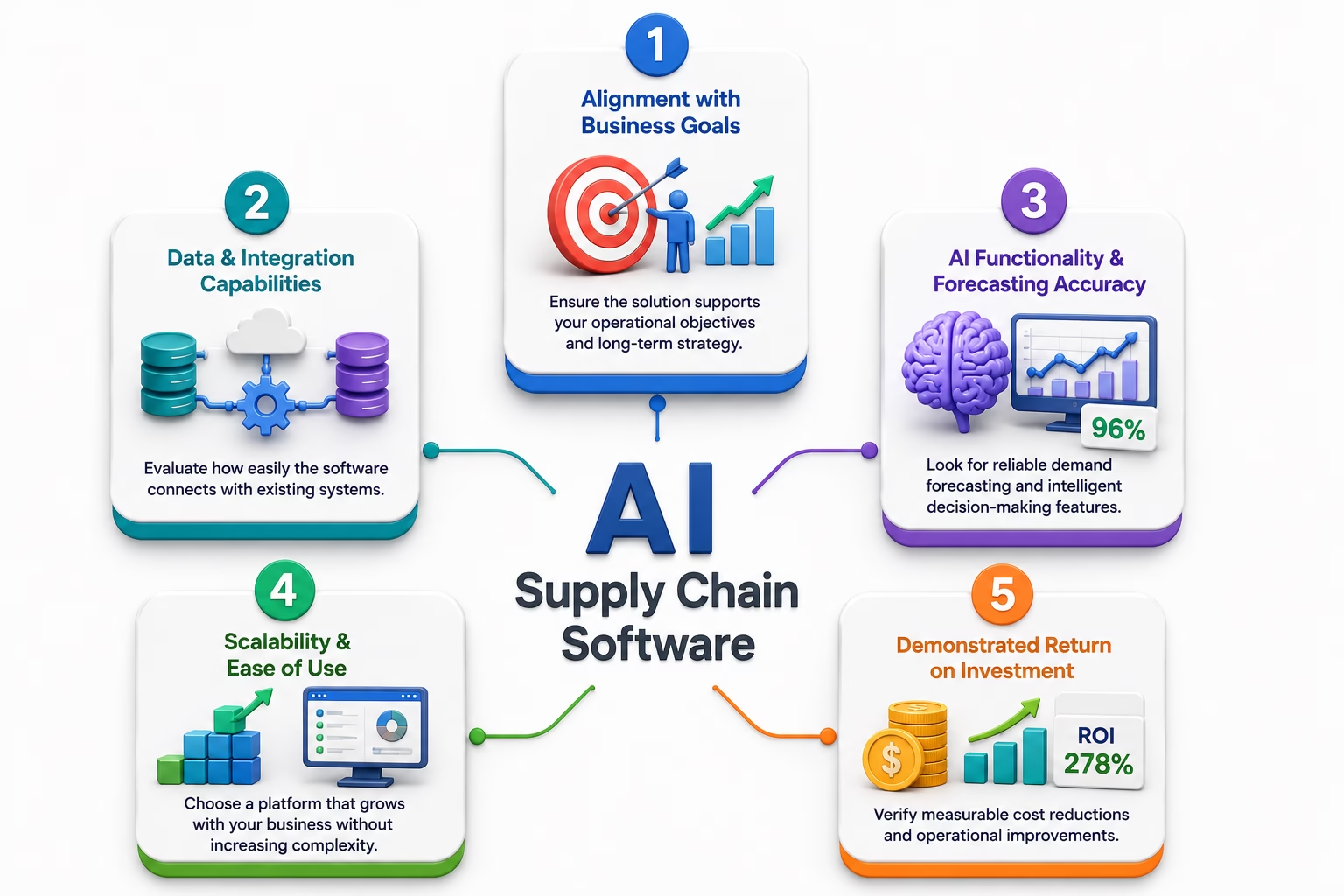
Real-world results often provide a more accurate picture of potential outcomes than marketing materials alone. When comparing AI-powered supply chain software vendors, prioritize these five areas:
- Alignment with business goals
- Data and integration capabilities
- AI functionality and forecasting accuracy
- Scalability and ease of use
- Demonstrated return on investment
The best software is not necessarily the platform with the most features. It’s the platform that helps your organization solve real supply chain challenges while creating measurable business value.
When chosen carefully, AI-powered supply chain software can become a strategic asset that supports growth, improves efficiency, and drives long-term cost reduction across the entire supply chain.
Future Trends in AI-Powered Supply Chain Management
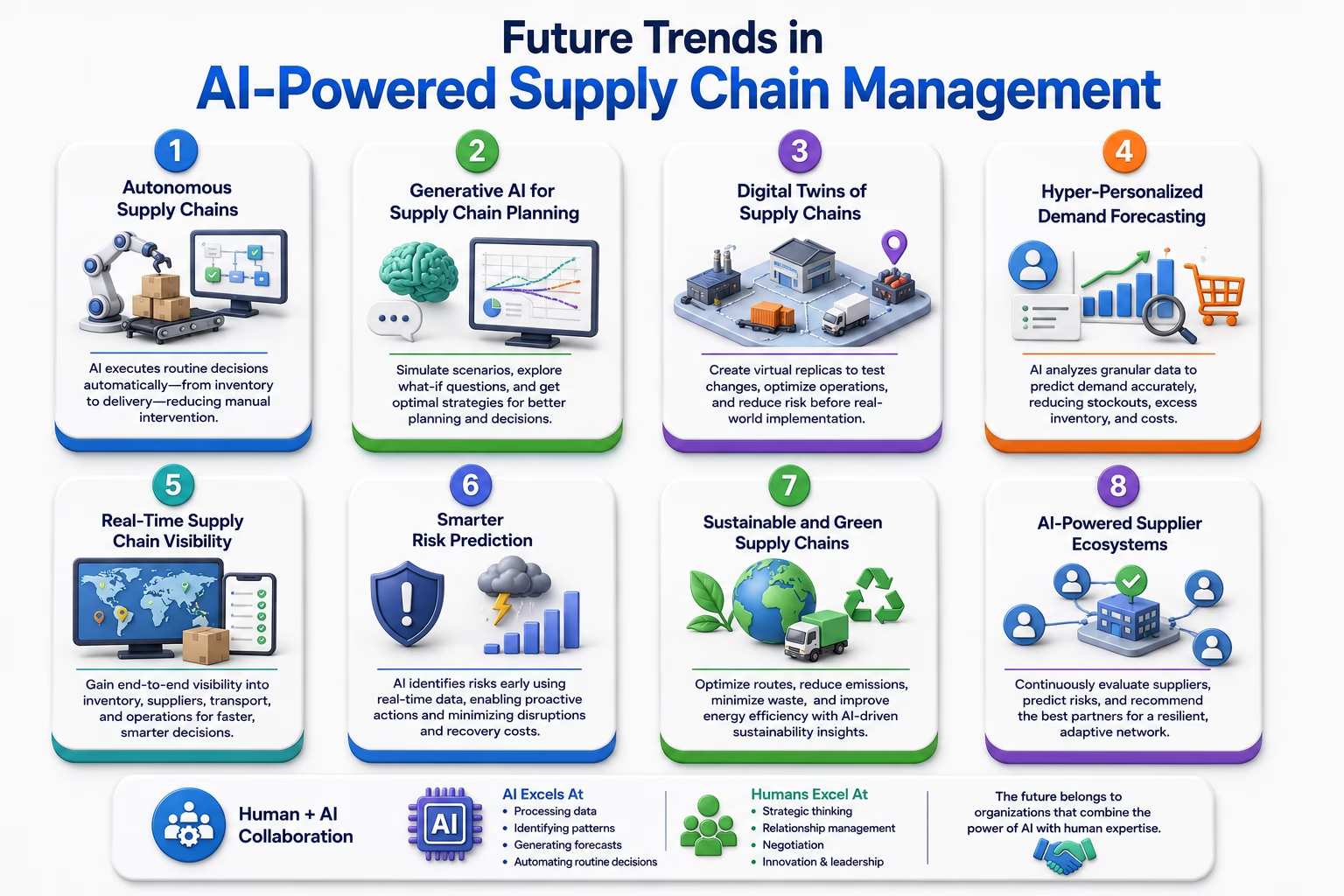
AI is already transforming supply chains, but what we are seeing today is only the beginning. As artificial intelligence technologies continue to evolve, supply chains are becoming more intelligent, connected, and autonomous. Businesses that understand these emerging trends will be better prepared to adapt, innovate, and stay competitive in the years ahead.
So, what does the future of AI-powered supply chain management look like?
1) Autonomous Supply Chains
One of the most exciting developments is the rise of autonomous supply chains. Today, AI helps businesses make recommendations. In the future, many routine decisions may be executed automatically with minimal human intervention.
For example, an autonomous system could:
- Detect declining inventory levels
- Analyze demand forecasts
- Select the best supplier
- Generate purchase orders
- Schedule deliveries
All without requiring manual approval for routine transactions. This doesn’t mean humans will disappear from supply chain management. Instead, professionals will focus more on strategy, risk management, and business growth while AI handles repetitive operational tasks.
2) Generative AI for Supply Chain Planning
Generative AI is beginning to play a larger role in business planning and decision-making. Rather than simply analyzing historical data, generative AI can help organizations explore multiple future scenarios and identify optimal strategies.
Imagine asking a supply chain platform:
“What happens if fuel prices increase by 20% next quarter?”
Or:
“How should we adjust inventory levels if demand rises by 15% during the holiday season?”
Generative AI can simulate different outcomes and provide recommendations based on potential business conditions.
This allows leaders to make more informed decisions before challenges arise.
3) Digital Twins of Supply Chains
Digital twins are becoming one of the most promising innovations in supply chain technology. A digital twin is a virtual representation of a real-world supply chain.
It mirrors:
- Warehouses
- Suppliers
- Transportation networks
- Inventory levels
- Production facilities
Businesses can use digital twins to test decisions in a virtual environment before implementing them in real operations.
Example
A company considering a new warehouse location could simulate how the change would affect transportation costs, delivery times, and inventory distribution. This reduces risk and improves decision-making.
4) Hyper-Personalized Demand Forecasting
Traditional forecasting often focuses on broad trends. Future AI systems will become increasingly capable of forecasting demand at highly detailed levels.
These systems may analyze:
- Individual customer behaviors
- Regional purchasing habits
- Real-time market conditions
- Weather patterns
- Social media trends
- Search activity
As forecasting becomes more precise, businesses can optimize inventory with greater accuracy. The result is lower carrying costs, fewer stockouts, and improved customer experiences.
5) Real-Time Supply Chain Visibility
Visibility has become a critical priority for modern supply chains. Future AI-powered platforms will provide even deeper real-time insights into operations across the entire supply network.
Businesses will gain instant visibility into:
- Inventory movements
- Supplier performance
- Transportation status
- Production schedules
- Potential disruptions
Instead of relying on periodic reports, decision-makers will have access to continuously updated intelligence.
This enables faster responses and more agile operations.
6) Smarter Risk Prediction
Global supply chains face increasing uncertainty. Economic changes, geopolitical events, weather disruptions, labor shortages, and supplier issues can all impact operations. Future AI systems will become more sophisticated at predicting and mitigating these risks.
Using data from thousands of internal and external sources, AI will identify vulnerabilities earlier and recommend proactive actions. Businesses that adopt advanced risk prediction tools will likely experience fewer disruptions and lower recovery costs.
7) Sustainable and Green Supply Chains
Sustainability is becoming a major business priority. Customers, investors, and regulators increasingly expect organizations to reduce environmental impact.
AI-powered supply chain software can support sustainability initiatives by helping businesses:
- Reduce transportation emissions
- Optimize delivery routes
- Minimize waste
- Improve energy efficiency
- Reduce excess inventory
Future AI platforms will likely include more advanced sustainability analytics, helping organizations balance profitability with environmental responsibility.
8) AI-Powered Supplier Ecosystems
Supplier management is evolving beyond basic performance tracking. Future systems will continuously evaluate supplier networks based on factors such as:
- Reliability
- Cost efficiency
- Quality performance
- Financial stability
- Risk exposure
AI may even recommend new suppliers automatically when risks emerge within existing networks. This creates a more resilient and adaptive supply chain ecosystem.
Despite rapid advancements, AI is unlikely to replace supply chain professionals. Instead, the future will be defined by collaboration between humans and intelligent systems.
AI excels at:
- Processing data
- Identifying patterns
- Generating forecasts
- Automating routine decisions
Humans excel at:
- Strategic thinking
- Relationship management
- Negotiation
- Innovation
- Leadership
The organizations that achieve the greatest success will combine both strengths.
What Businesses Should Do Today
While some of these trends may seem futuristic, many are already beginning to influence supply chain operations. Businesses do not need to wait for fully autonomous systems to benefit from AI.
The best approach is to start building AI capabilities now by focusing on:
- Data quality
- Supply chain visibility
- Predictive analytics
- Automation opportunities
- Employee readiness
Organizations that establish a strong foundation today will be in a much stronger position to take advantage of tomorrow’s innovations. The future of supply chain management is not simply about moving products more efficiently.
It’s about creating intelligent, adaptive, and data-driven supply chains that can anticipate change, respond quickly, and continuously improve performance. And AI is at the center of that transformation.
Want to know? Role of Technology in Supply Chain Management
Final Say: Can AI-Powered Supply Chain Software Actually Reduce Costs?
After examining the technology, use cases, benefits, and challenges, the answer is clear: Yes, AI-powered supply chain software can absolutely reduce costs.
However, the real value goes far beyond simple cost savings. AI helps businesses build smarter supply chains by improving forecasting accuracy, optimizing inventory levels, reducing transportation expenses, automating repetitive tasks, and identifying risks before they become costly disruptions.
The organizations seeing the strongest results are not using AI as a standalone solution. They are combining AI-driven insights with experienced teams, high-quality data, and well-defined operational processes.
Whether you’re managing a retail business, manufacturing operation, eCommerce brand, healthcare network, or logistics company, the potential benefits are difficult to ignore. As supply chains become increasingly complex and customer expectations continue to rise, traditional approaches alone may no longer be enough.
Businesses that embrace AI-powered supply chain management software today are positioning themselves for greater efficiency, stronger resilience, and long-term competitive advantage tomorrow.
The question is no longer whether AI belongs in the supply chain. The more important question is how quickly your organization can take advantage of what AI has to offer.
FAQs
What types of businesses benefit most from AI-powered supply chain software?
Businesses with complex supply chains typically see the greatest benefits. This includes manufacturers, retailers, eCommerce companies, logistics providers, distributors, healthcare organizations, and wholesale businesses. However, small and mid-sized businesses can also benefit as AI solutions become more accessible and affordable.
Can AI-powered supply chain software work with existing ERP systems?
Most modern AI supply chain solutions are designed to integrate with popular ERP, warehouse management, procurement, and transportation management systems. Integration capabilities should always be evaluated before purchasing a solution.
How long does it typically take to implement AI-powered supply chain software?
Implementation timelines vary depending on company size, data readiness, and integration complexity. Smaller deployments may take a few weeks, while enterprise-level implementations can take several months.
Does AI-powered supply chain software help during economic uncertainty?
AI can analyze changing demand patterns, supplier performance, inventory levels, and market signals in real time. This helps businesses adapt more quickly during economic shifts and uncertain market conditions.
What is the biggest factor that determines AI implementation success?
Data quality is often the most important factor. Even advanced AI systems require accurate, consistent, and up-to-date data to generate reliable forecasts and recommendations.